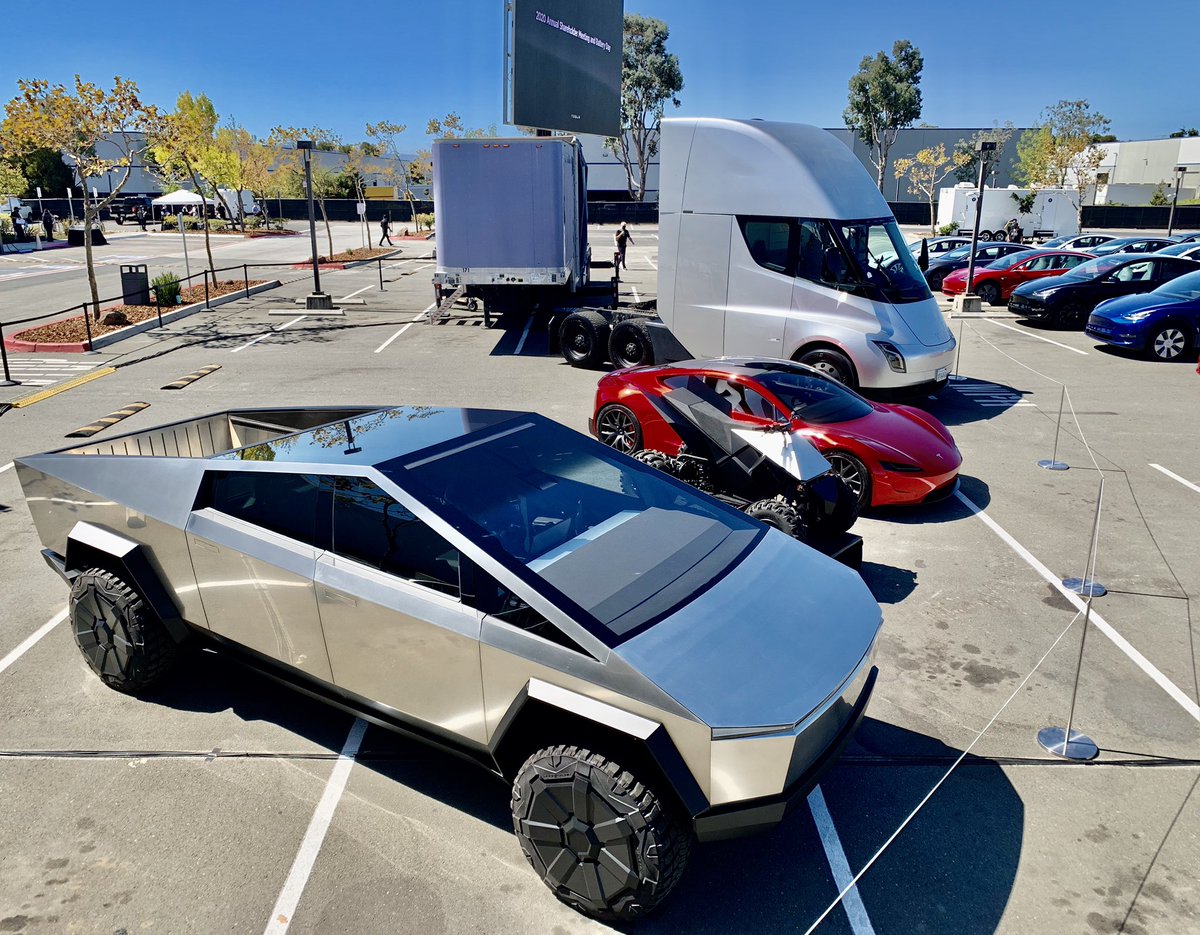
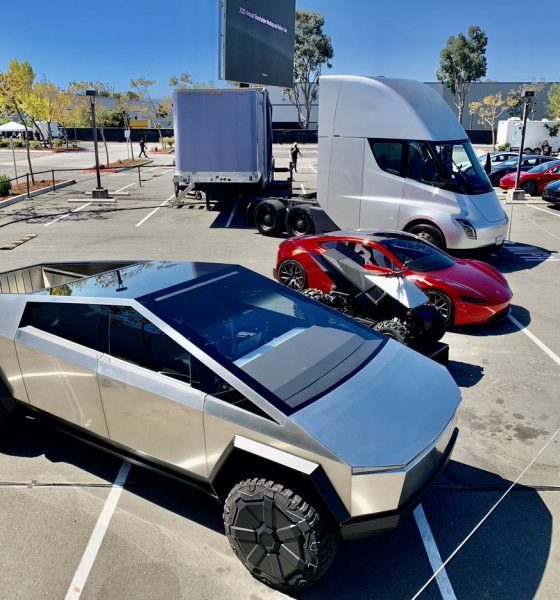

In June 2020, I wrote a newsletter called “How Tesla’s Elon Musk dunks on the competition just as their momentum builds,” where I dissected Tesla’s strategies to derail competition in its footsteps. It seems that anytime a competing automaker is about to make a substantial step forward, Musk or Tesla releases an update that simply takes away any attention from anyone else. In this week’s newsletter, I want to talk about what Elon Musk and Tesla can do in 2021 to combat an expanding EV market, and take momentum away from the companies that claim they are “the next Tesla.”
Rivian
With Rivian coming to the market soon with its R1T pickup and R1S SUV later this year, Tesla has a unique opportunity to halt the oncoming automaker’s momentum. Rivian, headed by CEO RJ Scaringe, has an adventurous, outdoorsy appeal to its consumers and its reservation holders, a strategy that truly speaks to the EV drivers who choose electric powertrains because of their environmental impact. Rivian is likely the first electric car company that will see its products regularly used in offroad settings, just what they’re geared for.
Tesla has always had a relatively luxurious connotation with its name, as its cars are usually sporty, sleek, and perfect for open road driving where the accelerator can occasionally hit the floorboards (not suggested or recommended by me). However, Rivian’s R1T, which sports a traditional pickup truck design, isn’t as talked about or as popular as the Tesla Cybertruck. On frequent occasion, the Cybertruck seems to come out of nowhere with a newly-released modification or design update at the hands of Elon Musk. With Musk revealing that the Cybertruck has been modified and reduced in size by 3%, there is no reason that Tesla won’t show new pictures of the all-electric “Cyberpunk” inspired pickup when Rivian is about to gain momentum. The conversation will almost surely switch back to Tesla because of its name, the truck’s “polarizing” design, and Tesla’s notoriety in the segment.
This is a preview from our weekly newsletter. Each week I go ‘Beyond the News’ and handcraft a special edition that includes my thoughts on the biggest stories, why it matters, and how it could impact the future.
The R1S is a little bit tougher of a cookie to crack for Tesla because it doesn’t have anything that really matches the design of Rivian’s SUV. The only thing that could derail attention from the R1S are details about Tesla’s electric van. However, with the Cybertruck, Roadster, and $25k vehicle projects being talked about already and delays due to battery constraints, there isn’t much hope to hearing about the Tesla Van in the near future.
Even still, something simple as renders or Musk even mentioning the possibility of an electric van will drive media into a frenzy. It will likely be one of the only things talked about in the automotive world for several days. While Rivian will release its R1S, it will get coverage, but Musk and Tesla will take priority, I’d assume.
Lucid
Lucid is a company that seems to have the best chance of competing with Tesla in terms of electric car performance. The Lucid Air Dream Edition Limited is one of the premier electric vehicles in terms of performance, and it proved it by setting records at the Laguna Seca raceway in California. Arguably the most sporty electric car since the Model S, the Air has Tesla roots as Lucid’s CEO and CTO is Peter Rawlinson, a former Tesla employee who helped with the Model S project.
The problem for Lucid is that Tesla has the Roadster coming out within the near future. Lucid has already delayed production due to the pandemic, and it won’t come until later this year. Tesla has put the Roadster on hold several times, as it is still in development for a few meteoric features, like hovering, that Elon Musk seems hellbent on figuring out. While the Lucid Air has incredible performance and range that is impressive in its own right, it doesn’t hold a candle to the performance, range, or suspense that Tesla Roadster fans have felt. Updates to the Roadster are unbelievably sought after by enthusiasts, and any small detail is eaten up instantaneously by those who are interested in the vehicle. It is fair to assume that if Lucid announces its initial deliveries of the Air, Tesla could counter it with an update to the Roadster, big or small.
Not to mention, Tesla could singlehandedly take most of Lucid’s appeal away with a quick 10-second clip of the Model S Plaid+ doing a quarter-mile drag. Many people would be interested in the Air’s most robust performance package until they see the 1.7-second 0-60 MPH from Tesla’s new Model S powertrain.
Legacy Automakers and OEMs
There are a lot of advantages here, and one of the biggest could be Tesla’s introduction of Giga Texas later this year. More than a production plant, this facility is set to be an entire experience. A boardwalk, entertainment, tours, you name it. Giga Texas will be a production facility that puts much of its competition to bed simply because of its appeal. It will likely be the most immersive, personal “tour” experience that anyone ever has at a vehicle production plant. Who other than Tesla to make it happen?
Tesla doesn’t have to do much different than what it has done for the past few years to take momentum away from legacy automakers. Continuing to build highly-effective, revolutionary electric cars is all Tesla needs to do to convince people that it is ahead of legacy car companies in this front. Not much needs to change.
Tesla does have its work cut out for it in Europe, though. European EV sales figures are dominated by Volvo, Kia, Renault, BMW, and Volkswagen. Tesla doesn’t have a car in the Top 20 in Europe yet this year, according to the EV Sales Blog. With Giga Berlin coming later this year as well, this will surely change. My guess is the Model Y cracks the Top 5 no later than three months after Giga Berlin’s initial rollout, simply due to demand, the appeal of the crossover body style in Europe, and the distinct advantage Tesla has over legacy car companies in terms of software.
Despite the tumble on Wall Street, Tesla still has plenty of time to turn 2021 around. With the EV sector growing this year as new manufacturers release their first products, Tesla has an opportunity to show that they’re still able to compete with the young guns of the EV industry. Tesla is sure to remain the top dog, and it could take some simple derailing of competition, just like it has done for years.
A big thanks to our long-time supporters and new subscribers! Thank you.
I use this newsletter to share my thoughts on what is going on in the Tesla world. If you want to talk to me directly, you can email me or reach me on Twitter. I don’t bite, be sure to reach out!
On behalf of the entire Teslarati team, we’re working hard behind the scenes on bringing you more personalized members benefits, and can’t thank you enough for your continued support!


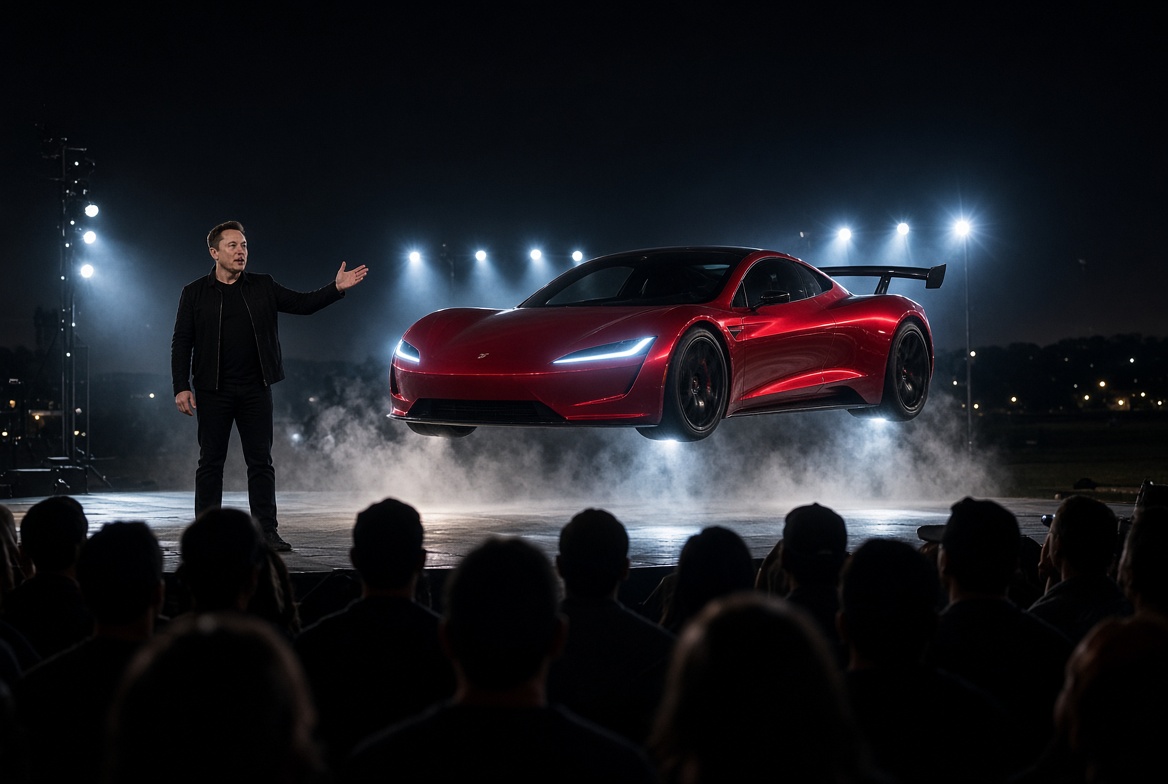
Tesla announced on Monday that the Roadster event scheduled for today would be postponed due to the need for it to be held outside.
Less than 24 hours later, CEO Elon Musk broadened that by stating it was due to high winds, immediately sending everyone into a frenzy over the Roadster’s potential ability to fly.
And realistically, it could definitely have to do with it flying, hovering, or hopping; whatever Tesla has in mind for this demonstration could not be impacted by wind. However, it might have nothing to do with the vehicle flying whatsoever, and instead could be a simple precaution, as the Roadster is a very unique vehicle with some already official specs that are just mind-blowing.
Tesla will very, very likely be showcasing both the acceleration rate and potentially even a top speed demo at the event in Waco. Both of these demonstrations, performed with a vehicle that has such incredibly fast metrics, could easily be impacted by wind as well.
Tesla Roadster event requires restricted airspace, and the FAA obliges
Top Speed Demo
At high speeds, aerodynamic forces are already overwhelmingly present. A crosswind or sudden gust adds a layer of sideways force that the tires must counter with slip angle. On a short demo course, that force can shove the car off the intended line, especially in a light car with a low frontal area and little mass to resist the push.
Electric cars, due to their battery packs, have an advantage of an extremely low center of gravity, giving them extra stability. However, the speeds at which the Roadster could travel at the demo could spell some issues if crosswinds are present.
Gusts are worse than a steady wind because the load changes faster than a driver can smoothly correct. That shows up as weaving or a late correction. Headwinds and tailwinds can also spell disaster. Headwinds cut a measured top speed but raise the power needed to get there or maintain it. Meanwhile, a tailwind can inflate the top speed, and downforce issues could become more noticeable.
Wind also loads the body unevenly. A low car can feel light on the upwind side or see a sudden change in downforce if the gust hits a wing or diffuser at an angle. Tire temperature and pressure might stay near a normal level, but lateral grip can be lost as the vehicle is spent fighting the wind.
Acceleration Demo
Launch and 0-60 MPH runs are shorter, so the car spends less time exposed to forces that could cause things to go awry. However, the first second is very sensitive, as a crosswind at launch could yaw the car before speed builds and prior to aerodynamic impact being too great. The driver will be required to correct traction control or manage how much the wheels are spinning, which will likely be corrected automatically by some sort of traction control system within the Roadster (we are fairly certain Tesla will implement something brilliant with it).
These things could cause an unstable run.
A headwind would increase drag as speed rises, while a tailwind would do the opposite. Meanwhile, surface effects, like wind-driven dust, light debris, or even rain, could reduce grip at the exact moment the tires are asked for peak longitudinal force. Standing water plus a crosswind is a common reason an acceleration attempt might be scrapped.
Flying or Not
No matter what Tesla has in store for the Roadster, waiting for ideal conditions is a great idea. People who follow and support the company, along with the engineers involved in the Roadster program, have been waiting nine years since the last unveiling for this moment. Everything should be ideal.
Some speculate that it’s just not ready, and that’s ridiculous. Why would Tesla even schedule the event — albeit prematurely — after nine years if it was not ready? Why would they jump the gun now?
We were all excited for today, but it truly is the most ideal thing in the world to wait two more weeks so everything, including the weather, can be perfect. The delay is simply worth it. But Tesla, seriously, make this the last one.
Elon Musk
SpaceX nails “Lucky 13” astronaut launch, leaning into Tesla tradition and superstition
SpaceX launched Crew-13 astronauts to the ISS Thursday, setting up a record fast Dragon docking.

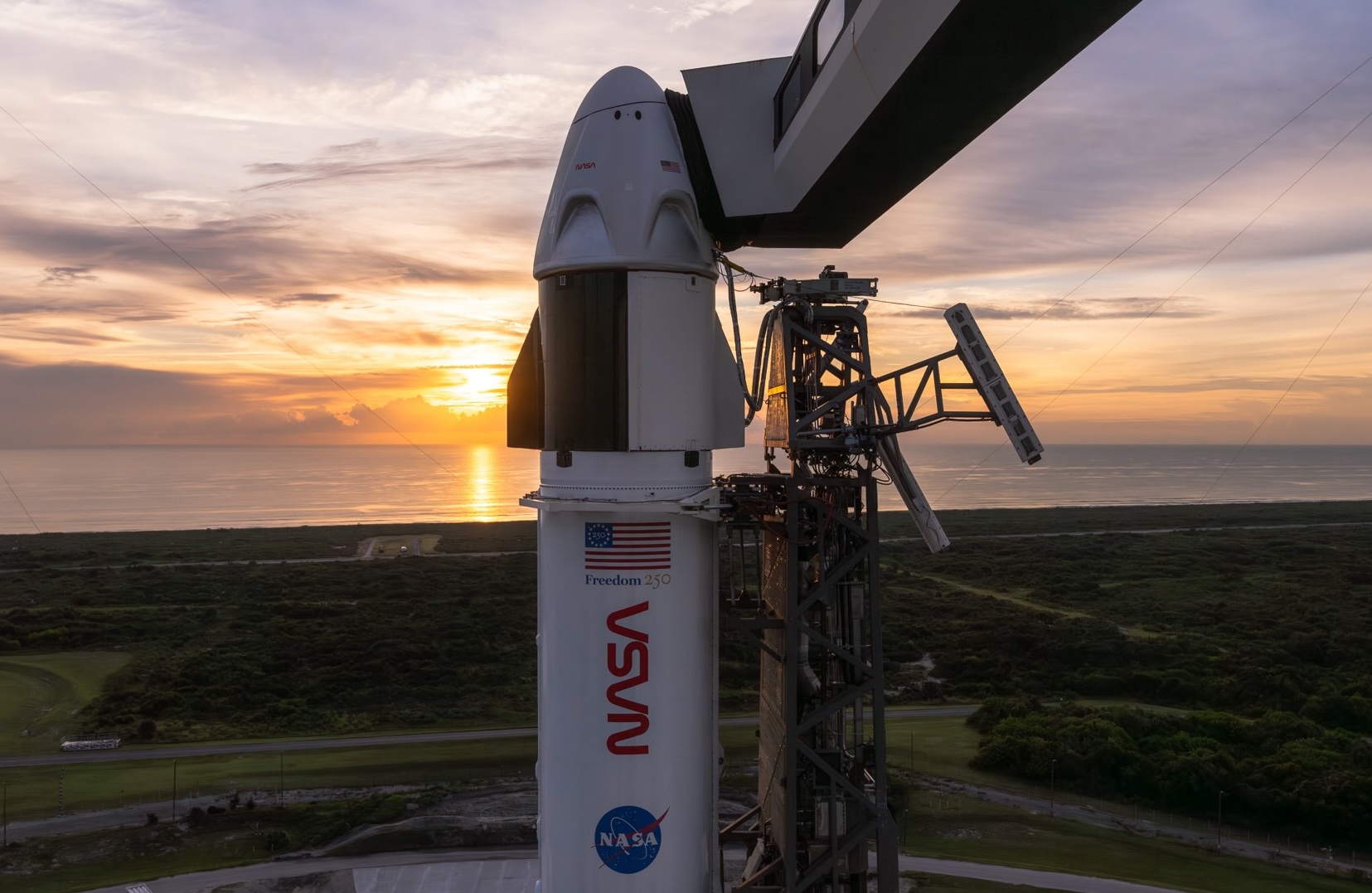
SpaceX launched NASA’s Crew-13 mission to the International Space Station on Thursday morning, getting four astronauts to orbit despite a forecast of thunderstorms and gusty winds that had threatened to push the flight to Friday.
Falcon 9 lifted off from Space Launch Complex 40 at Cape Canaveral Space Force Station at 11:10 a.m. ET carrying Dragon Grace, NASA confirmed. On board are NASA commander Jessica Watkins, NASA pilot Luke Delaney, Canadian Space Agency astronaut Joshua Kutryk and Roscosmos cosmonaut Sergey Teteryatnikov. The first stage booster, B1101, landed at Landing Zone 40 beside the pad on its third flight after previously supporting Crew-12 and a Starlink mission.
Liftoff of Crew-13! pic.twitter.com/vteT0DXMTh
— SpaceX (@SpaceX) October 1, 2026
It was the first spaceflight for Delaney, Kutryk and Teteryatnikov. Watkins, who flew on Crew-4 in 2022, became the first NASA astronaut to launch aboard a Crew Dragon twice.
Before launch, the crew rode to the pad in Teslas, a tradition on NASA’s SpaceX crew flights since 2020. This time the cars carried specialty plates reading “Lucky 13.” Watkins said the mission patch leans into the number on purpose, as a nod to Apollo 13 and the resilience of that crew.
Grace is now on a short trip to the station. Docking at the forward port of the Harmony module is scheduled for about 7 p.m. ET, roughly 7 hours and 50 minutes after liftoff, which Space.com notes would be the fastest Crew Dragon transit to the ISS yet. Most Dragon flights take around 15 to 24 hours to catch the station. Hatch opening is planned for 8:25 p.m. ET.
The launch came more than two weeks later than originally planned. An oxidizer leak was found in Grace’s propulsion system in August, and NASA and SpaceX added time for tests. That pushed back the return of Crew-12, which has been aboard the station since February and is now set to splash down off Southern California next week. Crew-13 is expected to stay about six months.
SpaceX rescue mission for stranded ISS astronauts nears end — Here’s when they’ll return home
SpaceX already holds NASA orders for crew rotations through Crew-17, while Boeing is preparing an uncrewed Starliner flight to the station as early as December.
Crew-13 was only the first of three SpaceX launches planned for Thursday, as Teslarati previewed on Wednesday. A Falcon 9 launched its Transporter-18 mission from California today, where Google will be launching its first orbital artificial intelligence (AI) test satellite. Meanwhile, Falcon Heavy is set to launch the classified NROL-97 mission for the National Reconnaissance Office from Launch Complex 39A at 11:53 p.m. ET. Its two side boosters will return to Landing Zones 1 and 2, which means Central Florida could hear up to three sonic booms in a single day. The busy stretch follows Starship’s Flight 14 on Monday, which reached orbit for the first time.
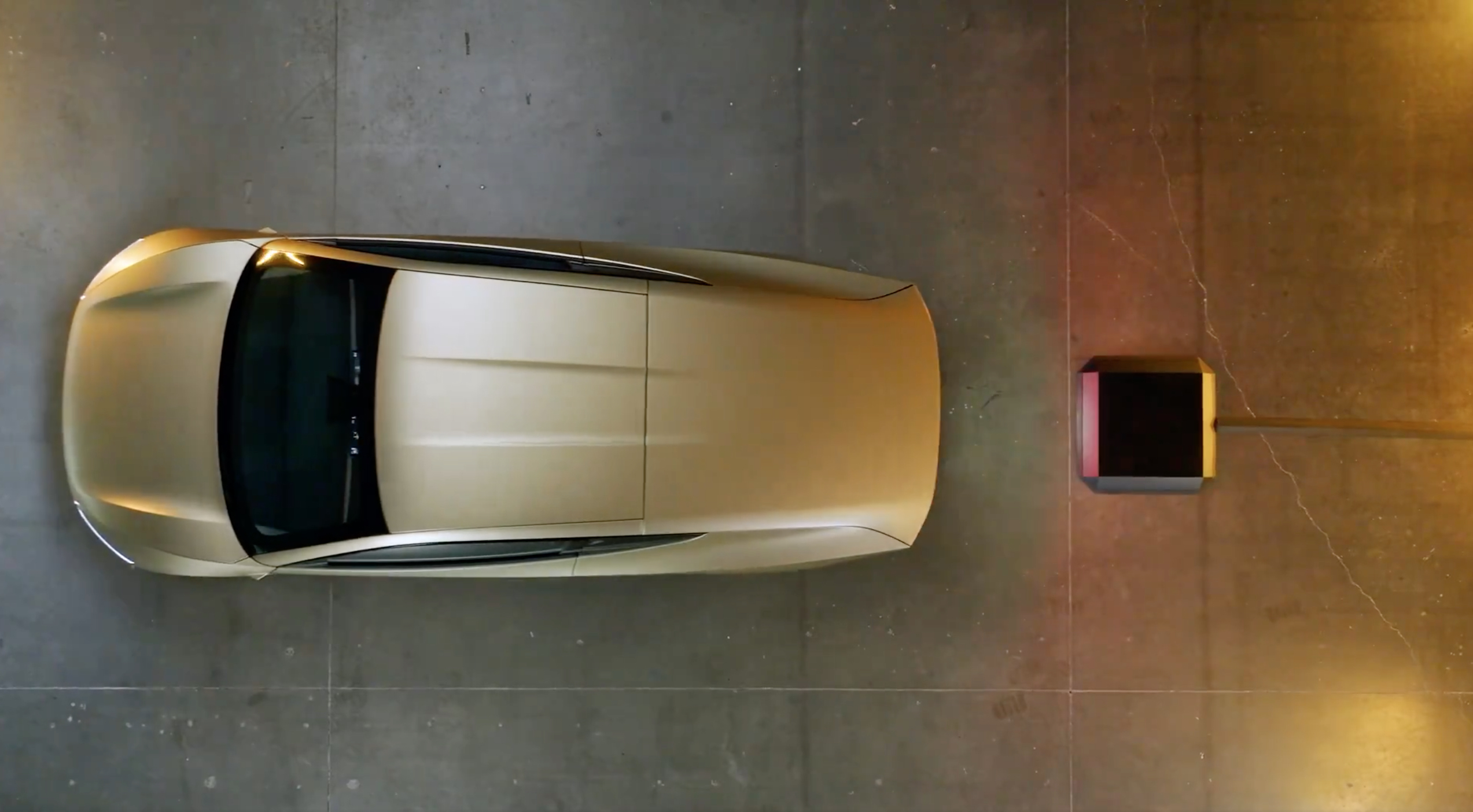
Tesla has moved its Wireless Charging efforts for its electric vehicles forward, as it had a new patent published today, one that it submitted back in March.
The patent describes a system for detecting foreign objects on the wireless charging pad under varying temperatures, aiming to mitigate any undesired results that could come from something being on top of the charging pad.
🚨 Tesla has a new patent application published today, which was submitted back in March, for a Wireless Charging Pad:
“The present disclosure relates to methods and systems that can reliably detect foreign objects on a wireless charging pad under varying temperatures. In some… pic.twitter.com/LIeLfZAuDJ
— TESLARATI (@Teslarati) October 1, 2026
The abstract of the patent states:
“The present disclosure relates to methods and systems that can reliably detect foreign objects on a wireless charging pad under varying temperatures. In some examples, an object detector can utilize a set of inductive coils included in resonant tanks, and excite the resonant tanks using signals in a range of frequencies including or near a nominal resonant frequency of the resonant tanks. The object detector can detect a metal object based on resistance of a coil increasing and inductance of the coil decreasing. By analyzing the shifts and/or distributions in resonant frequencies and output magnitudes (e.g., output voltage peaks), the object detector can distinguish between changes of frequencies and magnitudes caused by temperature and those caused by foreign objects to accurately detect the foreign objects.”
The object detection system will utilize a set of inductive coils included in resonant tanks, and “excite the resonant tank using signals in a range of frequencies including or near a nominal resonant frequency of the tanks.” Metal can be detected by an increase in the coil’s resistance and a decrease in the coil’s inductance.
By analyzing shifts or disruptions in resonant frequencies and output magnitudes, the system can detect foreign objects. These types of safeguards need to be implemented through the normal operation of the charging pads.
Tesla says its Cybercab wireless charging efficiency is ‘well above 90%’
Tesla plans to utilize wireless charging with Cybercab and Robotaxi-enabled units to help streamline the fully autonomous experience from A to Z. The last thing the company wants to do is have any sort of small obstruction preventing the rider from experiencing Robotaxi as intended.

Why Tesla Roadster unveiling delay might have nothing to do with it flying

SpaceX nails “Lucky 13” astronaut launch, leaning into Tesla tradition and superstition


