
Earlier this year, Tesla attracted a lot of attention and a good number of raised eyebrows when it invested $1.5 billion of its cash on Bitcoin. The move was unprecedented among automakers, and due to the carbon footprint of Bitcoin mining, even some of Tesla’s more environmentally-conscious supporters voiced their opposition to the investment.
So far, however, Tesla’s Bitcoin investment seems to be paying off. In the recently-held first-quarter earnings call, the EV maker announced that it had trimmed its cryptocurrency investment by about 10%. This resulted in the company gaining a profit of $101 million from the sale of its digital assets.
Bitcoin’s price is volatile by nature, though it has seen a notable rise in the past months. This seems to have positively affected Tesla, with the company noting in its Form 10-Q that the fair market value of its investment at the end of the first quarter was $2.48 billion. That’s some impressive returns, though Tesla noted that it intends to hold the cryptocurrency long-term.
“In the first quarter of 2021, we invested an aggregate $1.50 billion in bitcoin and began accepting bitcoin as a form of payment for our products in certain regions, subject to applicable laws. In the first quarter of 2021, we also sold an aggregate $272 million in bitcoin.
“Net of such sales, the fair market value of our bitcoin holdings as of March 31, 2021, was $2.48 billion. Based on our trading activity to date, we believe bitcoin is highly liquid, although we generally intend to hold our bitcoin long-term regardless of the manner of acquisition. However, digital assets may be subject to volatile market prices, which may be unfavorable at the times when we may want or need to liquidate them,” the company noted.
Tesla CFO Zachary Kirkhorn described the company’s rationale behind its Bitcoin investment in the recently-held Q1 2021 earnings call. According to the CFO, Tesla wanted to find a place that would produce some returns while ensuring liquidity for some of the cash that was not being immediately used. Bitcoin turned out to be a viable option.
“Elon and I were looking for a place to store cash that wasn’t being immediately used, trying to get some level of return on this, but also preserve liquidity… And bitcoin seemed at the time and so far has proven to be a good decision… But thinking about it from a corporate treasury perspective, we’ve been quite pleased with how much liquidity there is in the bitcoin market…
“When we did the sale later in March, we also were able to execute on that very quickly. And so as we think about kind of global liquidity for the business in risk management, being able to get cash in and out of the market is something that I think is exceptionally important for us,” Kirkhorn said.
Don’t hesitate to contact us for news tips. Just send a message to tips@teslarati.com to give us a heads up.



Give the gift of Tesla upgrades.
Shop for someone else or treat yourself. Get more shopping power with a Teslarati gift card.
Elon Musk
Elon Musk reveals Tesla’s next vehicle without a steering wheel
Elon Musk says Tesla plans a driverless Model Y for families too big for Cybercab.

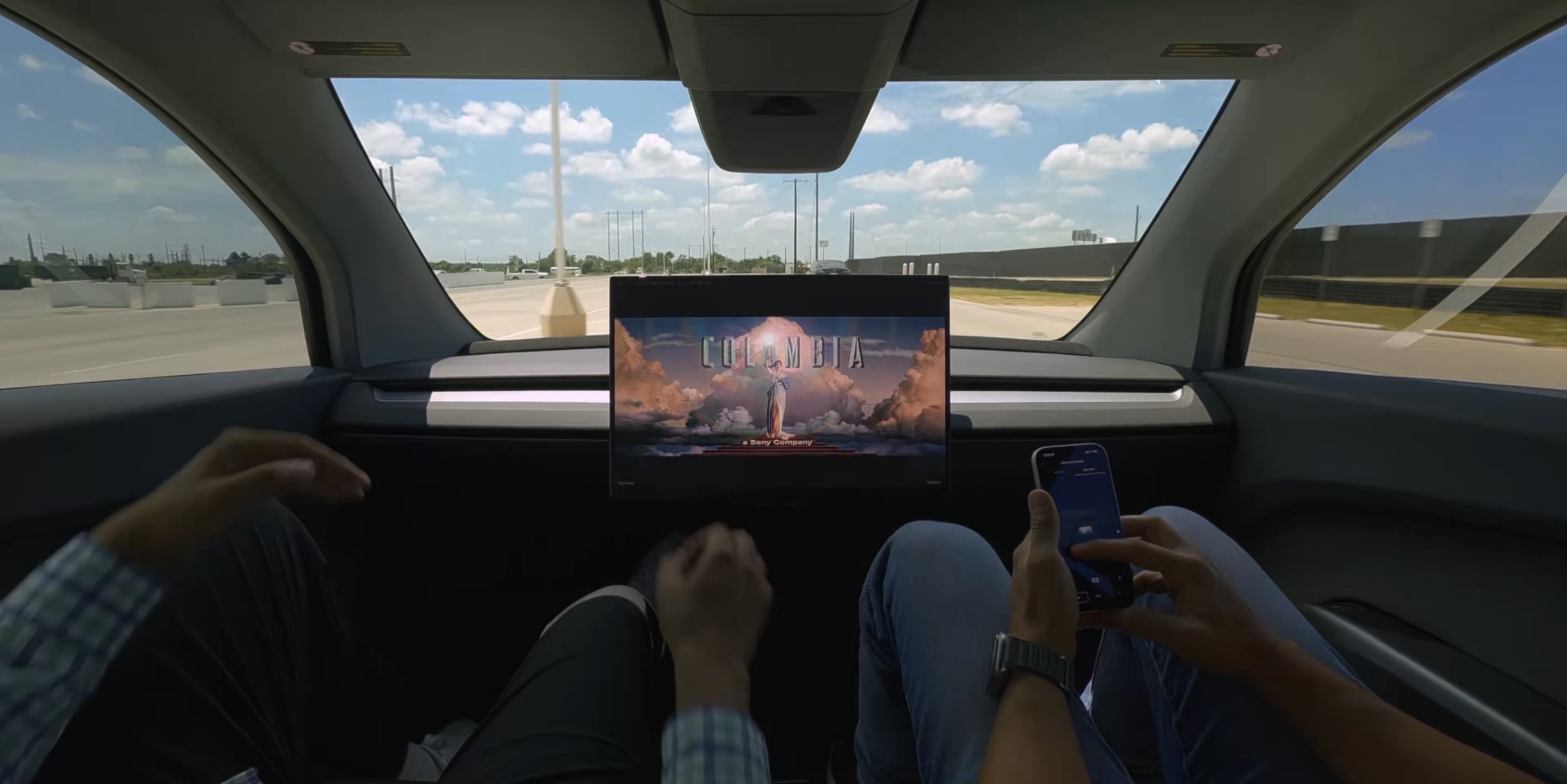
Tesla is planning a driverless version of the Model Y with room for six or seven people, Elon Musk said this week, giving families and groups an alternative to the two-seat Cybercab. Speaking remotely from China at the New York Times DealBook Summit on Wednesday, Musk said the vehicle would have no steering wheel or pedals. He did not give a launch date, price or production location.
The idea came up when Andrew Ross Sorkin asked whether Tesla would eventually stop selling conventional cars as it shifts Cybertruck capacity toward the Cybercab. Musk defended the two-seat design, saying average occupancy is about 1.2 people per car and that a two-seater covers roughly 90 percent of passenger miles. Bigger groups, he said, would be served by the larger autonomous Model Y.
Sorkin also mentioned he had ordered a Model Y L for his family and was still waiting on it. Musk called the six-seat, long-wheelbase SUV Tesla’s most popular car and suggested all Model Y production might need to move to the longer version. “It’s what most people seem to want,” Musk said, though he did not announce any change to Tesla’s production lines.
A driverless Model Y would add a third vehicle to Tesla’s autonomous lineup. Model Y Robotaxis already run 24 hours a day in eight cities, and Cybercab rides expanded to Dallas on Thursday after launching in Austin in September, as Teslarati reported. Tesla also began inviting select customers to buy a Cybercab for personal use last week at $29,990, with deliveries targeted for December.
Musk also addressed whether a Tesla and SpaceX merger should pay out under his compensation plan. Under the change in control terms of his 2025 CEO award, a deal could accelerate vesting, Electrek has noted. Musk said it should not. “I don’t think I should be compensated with any kind of award just for doing a merger. That would be unreasonable and not right,” he said. “You should keep your deals and stay true to your word.”
On the merger itself, Musk said the companies would “probably” be better together because of growing overlap in AI, chips and robotics, but stressed the decision rests with independent committees and shareholders, and that a Tesla vote “may or may not succeed.” Tesla holds its annual shareholder meeting on December 3, with merger talks reportedly progressing toward a possible announcement as soon as December.
Elon Musk
Elon Musk makes surprise stop at Giga Shanghai with a message for Tesla’s China team
Elon Musk flew overnight to Giga Shanghai to personally thank Tesla’s China and APAC teams.
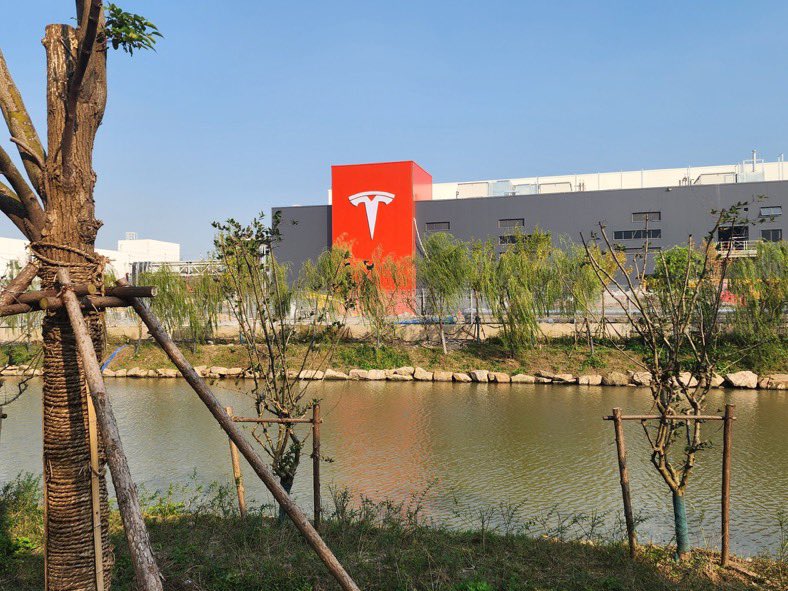
Elon Musk made an overnight stop at Gigafactory Shanghai on Thursday, flying in from Shenzhen to thank Tesla’s China and Asia-Pacific teams in person during a 24-hour trip to China. Tesla vice president Grace Tao confirmed the visit in a Weibo post, saying Musk met employees face to face, praised the Shanghai team’s manufacturing capabilities and execution, and discussed progress on driver assistance and humanoid robots.
Photos from the visit show Musk at the center of a large group of factory workers. “Let’s make the future look like the future,” he told the team, according to posts from the event that Musk shared on X. Attendees also said he urged employees to spend their time and resources on becoming truly useful and building products that matter to humanity, rather than chasing short-term speculation.
The trip was tied to APEC Leaders’ Week in Shenzhen, where Musk traveled as part of President Trump’s Asia delegation. It is also why he joined Wednesday’s New York Times DealBook Summit remotely, writing beforehand, “I will be in China, so it will be digital me.”
Before arriving in Shanghai, Musk met in Shenzhen with Ren Hongbin, chairman of the China Council for the Promotion of International Trade. A CCTV-affiliated account reported that Musk pledged Tesla would keep increasing production in China, though it gave no target or timeline.
Giga Shanghai remains Tesla’s most productive factory. It shipped 810,889 Model 3 and Model Y vehicles in the first ten months of 2026, up 21.4 percent from a year earlier, according to figures cited by Reuters, and Tesla’s third quarter update lists its installed capacity at more than 950,000 vehicles a year.
Most of that output is now leaving China. Of the 67,829 vehicles Shanghai shipped in October, 59,012 were exports, leaving 8,817 for domestic buyers. Tesla’s China retail sales were down 66 percent from a year earlier that month, the lowest since July 2022, according to CnEVPost.
Musk’s comments on driver assistance will be watched closely by Chinese owners, who are still waiting on a full rollout of Tesla’s supervised self-driving software. Musk said a year ago he hoped for full approval in China around early 2026, but Tesla has not announced a launch date, as Teslarati has reported. The country is also a key test of Musk’s broader pitch: autonomy and Optimus are the businesses he has said will make up the vast majority of Tesla’s future value.

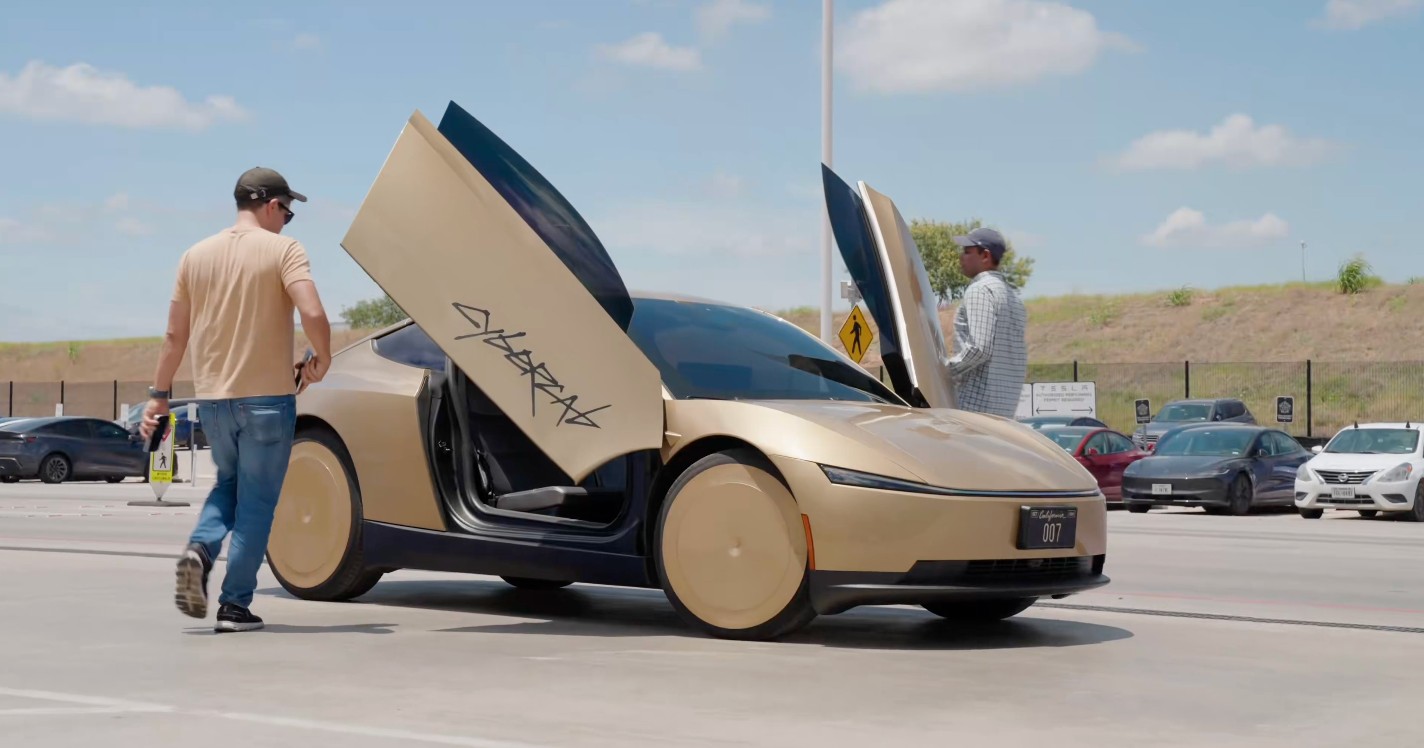
Tesla has opened public rides in its purpose-built Cybercab robotaxi in Dallas, the second U.S. city after Austin to receive the two-seat, steering-wheel-free vehicle.
On November 19, the company made it official with a post stating, “Howdy Dallas. Cybercab has arrived in your city.” Tesla has been teasing the expansion to Dallas for several weeks:
Howdy Dallas
Cybercab has arrived in your city https://t.co/4coXmRuIfz
— Robotaxi (@robotaxi) November 19, 2026
Riders can book through the Tesla Robotaxi app. Tesla had already been operating unsupervised Model Y Robotaxis in Dallas since April, the Cybercab addition brings its dedicated autonomous vehicle into the same network.
App notifications and the official post confirm the service is now available to the public, following a tease the day before and a commitment made on the October 21 Q3 2026 earnings call by AI software chief Ashok Elluswamy that Dallas would be next.
Cybercab rides first began in limited areas of Austin in early September 2026. After an invite-only event on September 3, public hailing started shortly thereafter. The Austin fleet grew rapidly, Musk later noted it had increased roughly tenfold in the first weeks, and the service has operated unsupervised, with hours expanding toward 24/7 coverage.
The vehicle, produced at Gigafactory Texas, features butterfly doors, no pedals or steering wheel, and relies entirely on Tesla’s unsupervised Full Self-Driving software.
Expanding Cybercab beyond Austin is a significant signal for several reasons. It shows Tesla moving from a concentrated pilot to multi-city deployment of its purpose-built robotaxi, validating that the software stack and vehicle-specific data accumulation can transfer to new environments.
Executives have described plans to reach additional cities by the end of 2026, using the same software alongside Model Y Robotaxis.
The move intensifies competition with Waymo, which operates larger unsupervised fleets across more markets, while reinforcing Tesla’s long-term bet on transportation-as-a-service as a core business. Most Cybercabs are expected to remain company-owned for the fleet rather than sold privately, allowing Tesla to control utilization and scale.
Your Tesla could be in the Robotaxi fleet next month, Elon Musk claims
Separately, Tesla has begun inviting select customers to purchase Cybercabs for personal use, with deliveries targeted for December.
Tesla priced the Cybercab $29,990 before taxes with a required $299 monthly Autonomy Subscription, and a $1,000 non-refundable deposit, with initial deliveries focused on Austin. Company leaders have emphasized that customer volumes will start small while the vast majority of vehicles stay in Tesla’s own Robotaxi network.

Elon Musk reveals Tesla’s next vehicle without a steering wheel

Elon Musk makes surprise stop at Giga Shanghai with a message for Tesla’s China team


