News
Tesla rivals Rivian and Lucid receive harsh prediction from Elon Musk

Elon Musk’s Tesla has survived through a tough, long, and treacherous road to profitability and electric vehicle dominance. Unfortunately for rivals Rivian and Lucid, Musk does not see the same bright light at the end of the tunnel, based on comments made on his social media platform X last night.
As both Rivian and Lucid reported earnings for Q4 2023 last night, Musk took to Twitter to discuss his impressions of both companies and how long they might last before things could come to a crashing halt.
In short, it does not look like an optimistic sentiment shared by Musk was in the plans. Both predictions seem to indicate eventual bankruptcy and potentially the end of operations, which would bring Tesla’s lead in the EV movement in the U.S. to a point of overwhelming dominance. Rivian and Lucid are two pure EV companies that continue to fight through tough economic times and challenging growth periods.
Rivian
Rivian and Tesla are somewhat complementary to one another, both contributing to the EV movement with a focus on expanding product lines, offering cheaper vehicles, and creating somewhat of a “brand,” specifically catering to those interested in supporting companies hellbent on bringing EVs to the forefront.
While the two have had a tumultuous past, including an employee poaching lawsuit, Tesla and Rivian are widely considered the two best EV companies in the United States, and there seems to be mutual respect there.
Rivian sets 2024 goals, including a 57,000 production target
However, Rivian is still navigating through tough times, ramping production and trying to race to profitability as fast as possible.
During its earnings call last night, it did indicate that it is still losing money on every car it builds, which is not uncommon in early operations. Musk believes, based on data, that Rivian would have roughly six quarters left before bankruptcy would have to be considered:
Current trajectory has them bankrupt in ~6 quarters. Maybe that trajectory will change, but so far it hasn’t. pic.twitter.com/tNNijQ3KwT
— Elon Musk (@elonmusk) February 22, 2024
The problem with Rivian, according to Musk, is not their product.
“Their product design is not bad,” Musk said, “but the actual hard part of making a car company work is achieving volume production with positive cash flow.”
Lucid
Lucid and Tesla are a different story entirely.
Evident from comments made by Musk for several years about Lucid CEO/CTO Peter Rawlinson’s job title with the Model S program at Tesla, there is still hostility between the two.
Musk has said that Rawlinson left Tesla when things got truly difficult, and it seems he still holds a bit of a grudge because of it.
Lucid posts Q4 2023 results, posts conservative FY 2024 target
Rawlinson’s Lucid is still alive mostly due to a strong investor in the Saudi Arabian Public Investment Fund, or PIF, which is the reason the company built a production facility in the country. It also is building cars for certain government organizations in Saudi Arabia.
Musk was sure to point out that Lucid’s survival is purely because of the PIF’s involvement:
Their Saudi sugar daddy is the only thing keeping them alive
— Elon Musk (@elonmusk) February 22, 2024
What if Rivian and Lucid actually do shut their doors?
While Tesla fans might see it as a way to dominate EV sales figures once again, and as a feather in their cap that the company they invested in survived, it would be bad to see both of these companies cease operations.
In reality, competition in the market is a positive. It pushes companies to innovate and creates product diversity, giving a wide variety of options for customers.
Additionally, the EV movement would take a huge blow if two major companies could not stay afloat. Rivian is the company with the better outlook because it is showing growth and progress in its EV efforts, but Lucid has heavy financial backers with essentially limitless money.


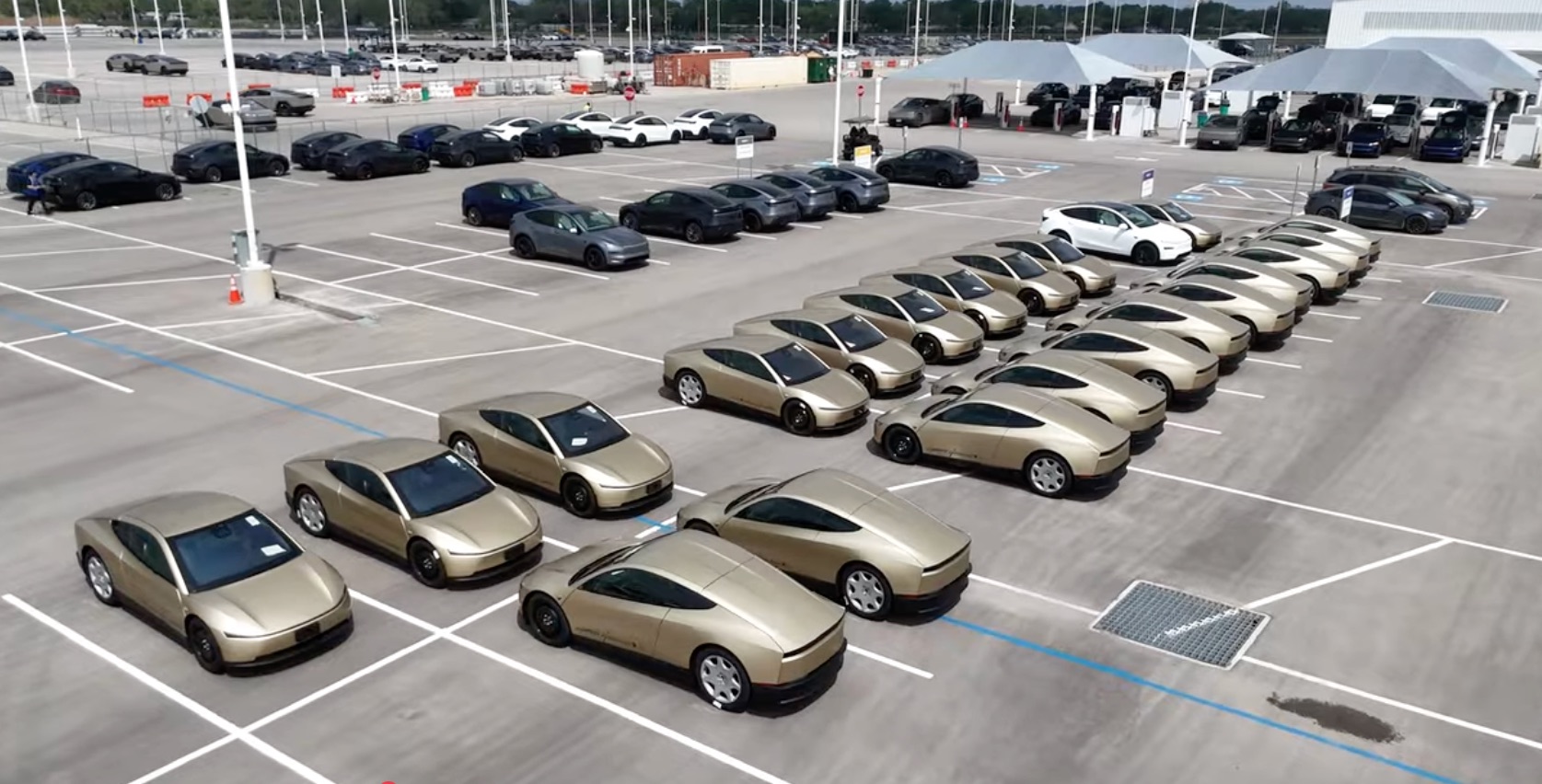
Tesla has quietly opened a public interest form for companies that want to buy fleets of its purpose-built Cybercab robotaxis, marking the first official channel for commercial purchases of the two-seat autonomous vehicle. The form went live on September 3, the same day Tesla hosted an invite-only Cybercab launch event in Austin, Texas.
Tesla titled the page “Help Us Build Our Robotaxi Network.” Applicants provide name, email, phone number, company name, and deployment region. They then select one or more categories: Cybercab fleet vehicle purchasing, mobility hubs and infrastructure, event collaboration, or other. Tesla says a representative will follow up with those who express commercial interest.
Tesla has introduced a new form that you can fill out if you are interested in purchasing a fleet of Cybercabs:
Form: https://t.co/Ut0yoiEyXD pic.twitter.com/uuaCXmksIO
— Sawyer Merritt (@SawyerMerritt) September 3, 2026
f
Until now, the company had no public ordering path for the vehicle, which was first shown as a concept at the October 2024 “We, Robot” event.
The Cybercab is designed from the ground up for unsupervised operation. It has no steering wheel and no pedals.
Regulatory filings list a 48-kilowatt-hour battery, a single 219-horsepower front motor, a curb weight of 3,113 pounds, and an EPA-adjusted range near 290 to 300 miles. Tesla has already registered dozens of the vehicles with Texas authorities and has been testing them on public streets around Austin.
Tesla Cybercab sightings broaden well outside of Austin with autonomy in focus
The company’s existing Robotaxi service, which currently uses modified Model Y vehicles in parts of Texas and Florida, is expected to add Cybercabs as production ramps up at Gigafactory Texas.
The form signals that Tesla is preparing to treat the Cybercab as more than an in-house fleet asset. Investors and operators have discussed buying groups of the vehicles and placing them on Tesla’s ride-hailing network, with Tesla taking a platform fee. High-profile figures have publicly stated plans to acquire fleets if Tesla allows third-party ownership.
The new page gives those parties a direct way to register interest rather than waiting for a conventional configurator.
Whether the form leads quickly to firm purchase agreements remains unclear. Regulatory approval for widespread unsupervised operation still varies by state, and Tesla has not published pricing or delivery timelines for fleet customers. The company has previously discussed a target price near $25,000 to $30,000 per vehicle.
For now, the form is an early signal that Tesla wants partners to help scale the network rather than operate every Cybercab itself.
Pairing the launch of the Cybercab fleet form with the Austin event is no coincidence. Tesla is inviting businesses to participate in the next phase of its Robotaxi plan at the moment the production vehicle first appears in public.
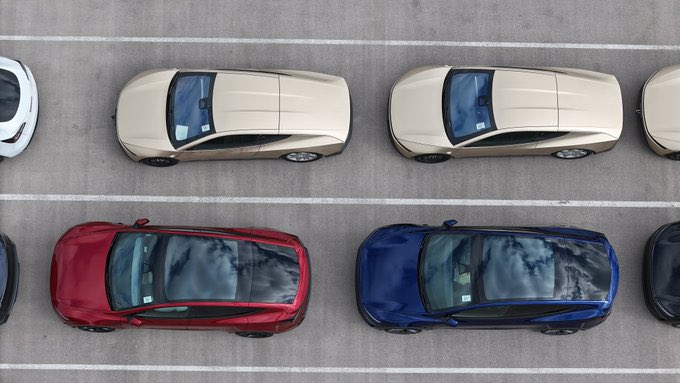
Tesla has updated its Robotaxi app so riders can pick which vehicle they want before they book. The latest in-app screens now show two options side by side: the two-seat Cybercab and the four-seat Model Y.
A screenshot circulating Thursday shows the change in practice. In Austin, a rider could choose a gold Cybercab for two people or a Model Y for four. Tesla’s updated description calls Cybercab “our first purpose-built autonomous vehicle,” designed for safety, accessibility, and comfort, and says the lineup is available only through the Robotaxi app.
Tesla has updated their Robotaxi page in the App Store. You’ll be able to select if you want a Cybercab or Model Y Robotaxi.
“Our Robotaxi vehicle lineup now includes Cybercab, our first purpose-built autonomous vehicle. Designed for safety, accessibility and comfort, Cybercab… pic.twitter.com/Jff4klilDr
— Sawyer Merritt (@SawyerMerritt) September 3, 2026
The distinction is more than cosmetic, and it’s important to note that Robotaxi refers to the platform, while Cybercab refers to a vehicle.
Model Y Robotaxis have carried the service since it opened in Austin in mid-2025 and later expanded to Dallas, Houston, and parts of Florida. Those vehicles are converted production SUVs that still have steering wheels and pedals.
Cybercab is different. It has no driver controls, butterfly doors, a low seat height meant to work with wheelchairs, extra trunk space for assistive devices, and braille on the handles. Tesla has registered dozens of the two-seaters with Texas regulators in the days leading up to its September 3 Austin event.
Giving riders a choice lets Tesla match the vehicle to the trip. Most rides involve one or two people, which is where Cybercab is meant to be cheaper and more efficient to operate. Groups of three or four, or anyone who needs more space, can still request a Model Y.
The same app handles booking, payment, cabin settings, and, on Cybercab, features such as phone-based door opening and in-cabin voice controls.
The update does not mean every city suddenly has both cars available. Cybercab support is listed for Austin first, and the purpose-built fleet is still small compared with the existing Model Y roster. Even so, the app change marks a shift from a single-vehicle pilot to a mixed fleet.
Riders can now choose between the compact, purpose-built robotaxi and the familiar SUV that launched the service.
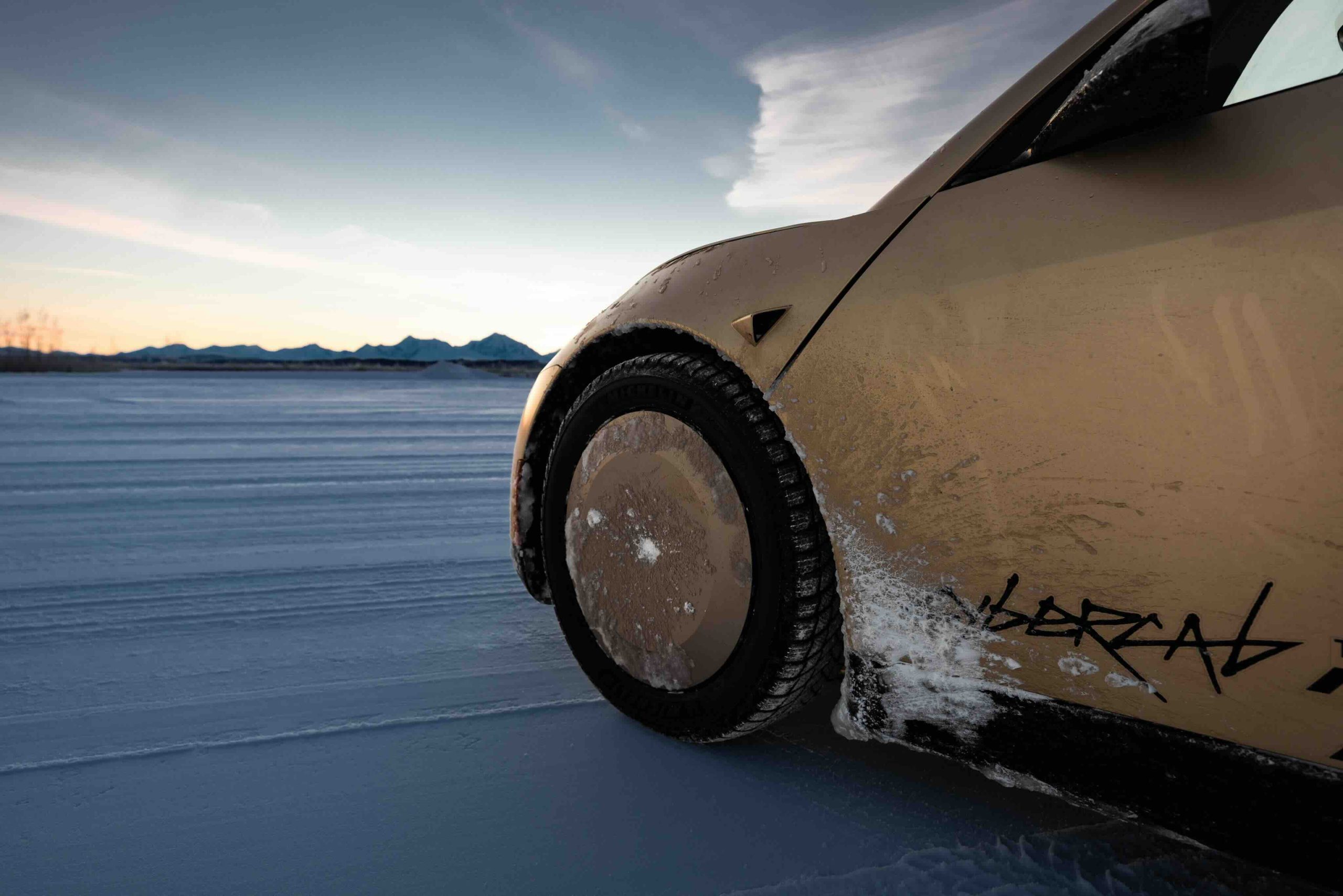
Tesla Cybercab sightings are broadening far and wide, well outside of downtown Austin, Texas, with autonomy in focus as the company plans to launch the all-electric, two-seater this evening in the Lone Star State.
Tesla is set to launch Cybercab to a small group of people this evening in a dedicated event in Austin, Texas. Public details on the event are relatively slim.
However, Tesla’s focus on Cybercab falls well outside of the downtown Austin area and is expanding well across the United States as things continue to move quickly with the company’s autonomous efforts in 2026. Today, various images of Cybercab fleets in interesting locations have started to circulate.
The most notable is a fleet of at least 20 Cybercabs at Miami International Airport in Florida. Spotted last night, the fleet is expansive and is indicative of a looming release of Cybercabs once regulatory boxes are checked off.
Tesla has already been operating the Robotaxi platform in Miami for several months, but this Cybercab fleet at the airport could be joining the ride-hailing platform as approvals arrive:
20+ Cybercabs spotted near Miami international airport. pic.twitter.com/ORLsw8yFhf
— Sawyer Merritt (@SawyerMerritt) September 3, 2026
Another fleet of Cybercabs was spotted at the Devon, PA showroom just outside of Philadelphia. We have seen several Cybercab units testing around the Philadelphia Metro Area, which is interesting considering Tesla does not have any active Robotaxi geofence in Pennsylvania.
Cybercab at the Devon location in PA has multiplied over the weekend. Seeing a few more test vehicles in the lot 👀 pic.twitter.com/DhJT4P1EkU
— Billy (@billykyle) August 22, 2026
Philadelphia would be an ideal location to test ride-hailing due to its dense tourist population, large, sprawling city layout, and to compete with other ride-hailing companies that operate in the city.
Expansive fleets of Cybercabs will be popping up in and around major cities throughout the rest of the year, if we were betting on it. Tesla has made it obvious that the Cybercab rollout will be aggressive and fast-paced, but within reason. Tesla is still prioritizing safety, so these testing phases will likely go on for some period of time before more members of the public are able to snag a Cybercab for a personal chariot.

Tesla hints its already prepping for Cybercab fleet orders

Tesla Robotaxi riders will face the best dilemma when booking a ride


