News
Tesla Giga Berlin protestors take to treehouses to halt factory expansion

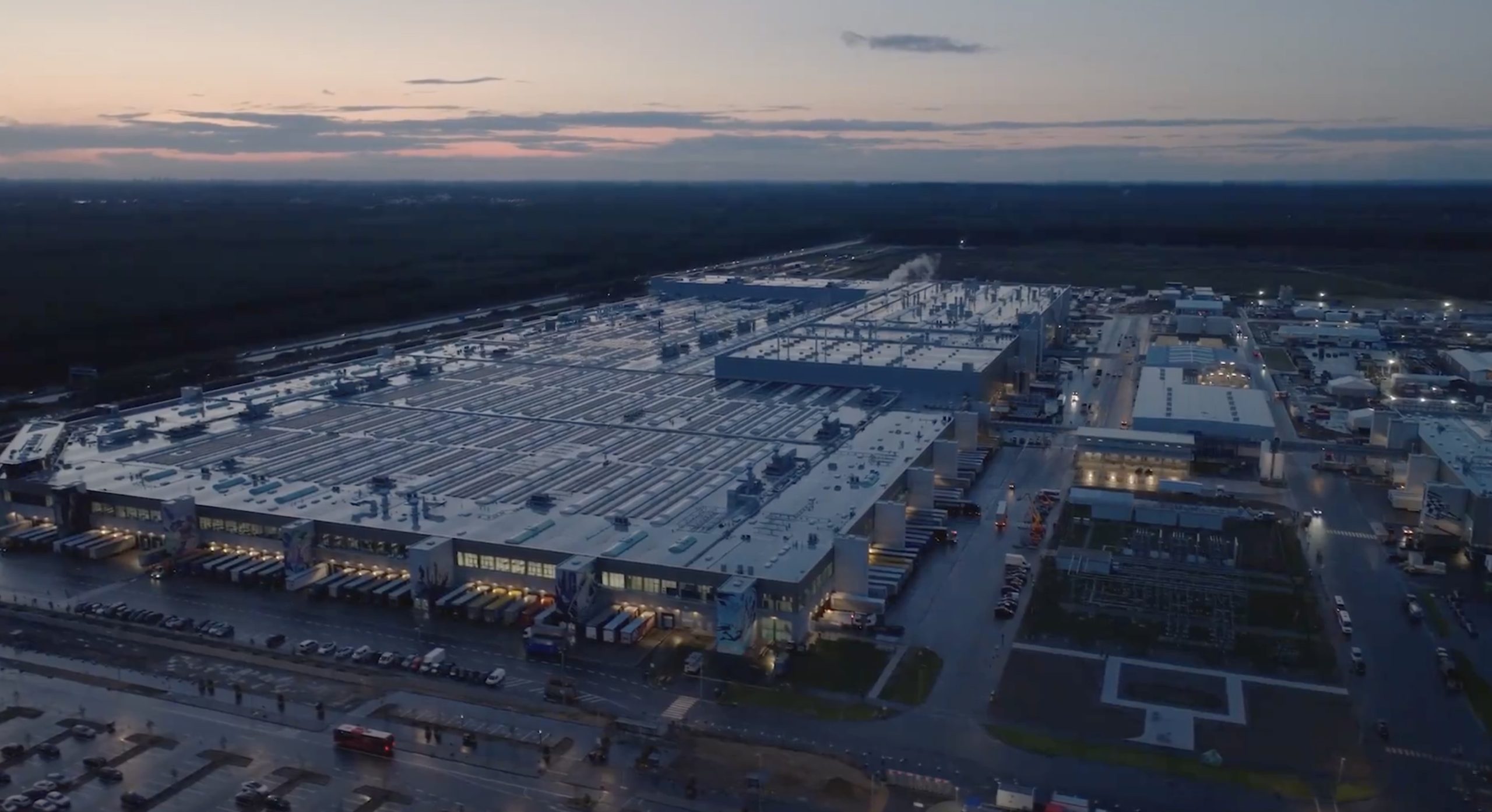
Tesla Giga Berlin protestors used treehouses to make their statements against the expansion of the company’s automotive production facility.
Tesla has been attempting to expand the factory to create more manufacturing space for a freight depot, warehouses, and a company kindergarten. However, protestors are against the idea and they are willing to stay for potentially weeks to get their point across.
According to reports, including one from the Associated Press, protestors have already established treehouses in one of the forests surrounding Gigafactory Berlin, pledging to stay for as long as it requires. Signs that read “Stop Tesla” and “Water is a Human Right” are also near the protestors and their new quarters.
It is obvious these groups are against the environmental aspect of the factory expansion, but it is incredibly ironic considering the company they are protesting is one of the most environmentally friendly when it comes to their products.
You gotta be kidding me!!
‼️ News: Tesla Giga Berlin expansion protesters building tree houses in nearby forest ?About 80 environmental activists are protesting against Tesla Giga Berlin’s expansion … by building tree houses in the forests near the factory.
The activists’… pic.twitter.com/cklyXUCcty
— Brian Basson (@BassonBrain) February 29, 2024
Police have decided that the protests will be allowed for the next two weeks, and on March 15, they could decide to break things up. However, it has been reported that law enforcement sees no need to interfere with what is going on currently.
Tesla is already dealing with pushback from the local water supplier, known as the Strausberg-Erkner Water Association (WSE).
The WSE has attempted to contact Tesla and warn them about exceeding wastewater limits. However, the organization said Tesla has not made any attempts to address or resolve the issue.
Tesla Giga Berlin gets a complaint from the local water association
Tesla has confronted these issues in the past:
“Wastewater is still produced from the operation of sanitary facilities and kitchens. With the elimination of industrial wastewater, the wastewater discharged from the [Giga Berlin] is composed like typical municipal wastewater.”
Since Tesla announced Giga Berlin in late 2019, it has dealt with environmental groups pushing back against its operation. This is simply the latest chapter in what has been a consistent effort by environmentalists to derail Tesla’s European production facility.
I’d love to hear from you! If you have any comments, concerns, or questions, please email me at joey@teslarati.com. You can also reach me on Twitter @KlenderJoey, or if you have news tips, you can email us at tips@teslarati.com.


Elon Musk
Elon Musk follows Trump’s lead, says a SpaceX name change is coming
Elon Musk says SpaceXAI will become SpaceXSI, marking its second rebrand in under three months.

Elon Musk wants to rename his artificial intelligence company again, less than three months after its last rebrand.
In a string of posts on X early Sunday morning, Musk wrote “No more AI,” followed by “SI” and “It’s better.” He then added, “SpaceX is a super intelligence company.” When a user asked whether SpaceXAI could become SpaceXSI, Musk replied, “Yes, we will make that change.”
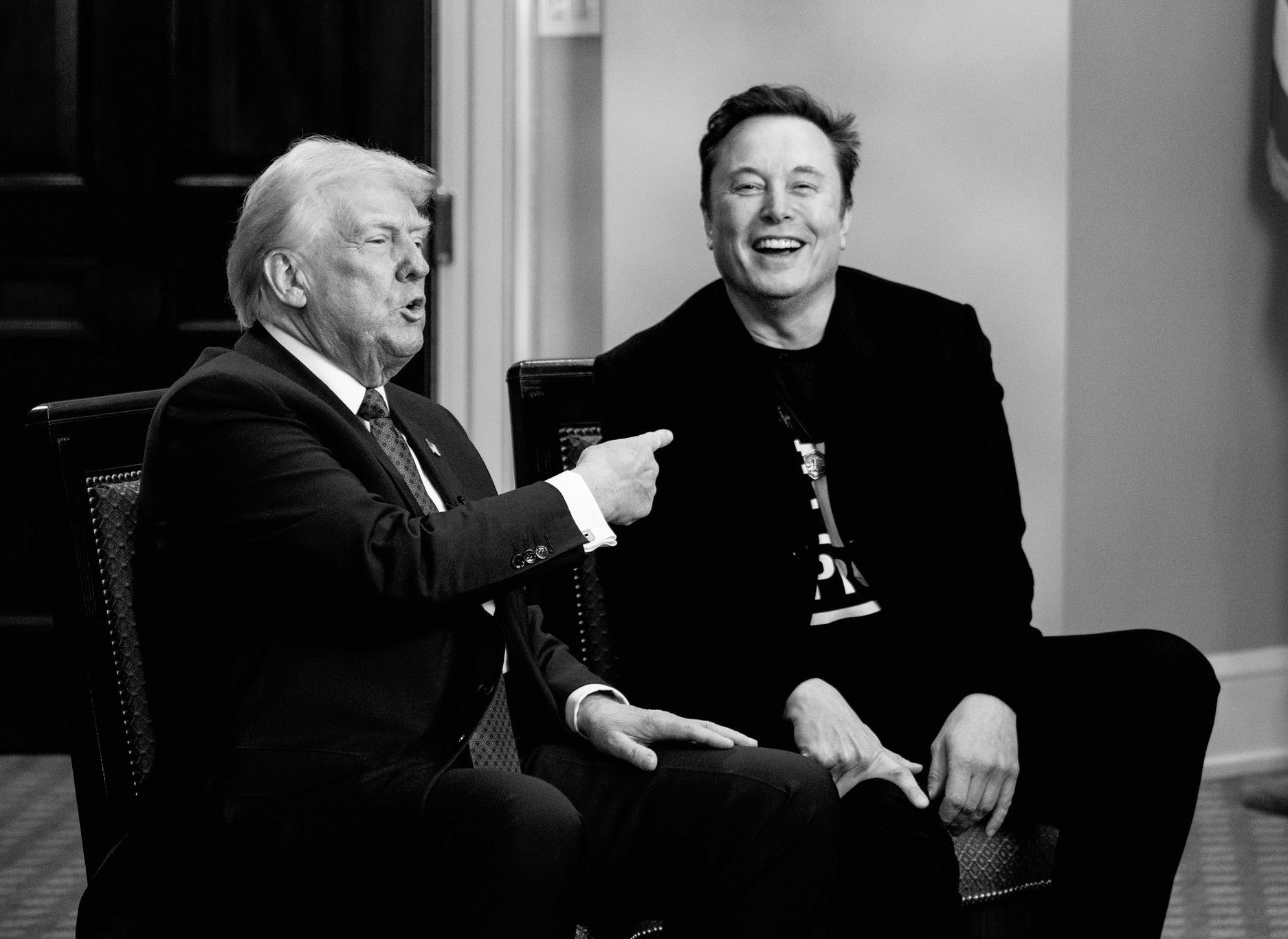
The posts extend a terminology push that began at the White House last week. On September 29, President Donald Trump signed an executive order directing federal agencies to replace “artificial intelligence” and “AI” with “Super Intelligence” and “SI” on government websites, policy documents and press releases. The same day, Musk sat beside Trump as the heads of the largest AI companies signed a voluntary safety accord, as Teslarati reported. Speaking to reporters afterward, Musk caught himself mid sentence: “I think it is worth highlighting the positive benefits of A.I. … S.I., pardon me.”
Elon Musk and Trump are closer than ever, and Tesla could be the big winner
SpaceXSI would be the third name for the business since February. SpaceX acquired xAI on February 2 in a deal that valued the combined company at $1.25 trillion. In May, Musk said xAI would be dissolved as a separate company, and on July 6 the division adopted the SpaceXAI name and a new logo that placed the xAI letters inside the SpaceX identity.
Musk gave no timeline. He did not say whether SpaceXSI would be a legal name change or a branding update, whether the @SpaceXAI handle on X would change, or how the shift would apply to products like Grok. The company had not issued a formal announcement as of Sunday morning.
The change would reach well beyond a chatbot. SpaceXAI now houses Grok, the X platform, the Colossus training clusters in Memphis and the coding tool Cursor, which SpaceX acquired in August. It also runs the orbital compute effort SpaceX is building around Nvidia hardware, which Musk said during the company’s first earnings call would be exclusive to Nvidia.
It’s unclear if rivals like Anthropic, OpenAI, Google, Meta and Nvidia have plans to also rename their companies or products. OpenAI CEO Sam Altman has continued to say “AI” in public, while Nvidia CEO Jensen Huang has gone partway, describing data centers as “super intelligence factories.”
The rename would also line up SpaceX’s AI branding with the federal government’s language as Musk takes on a new advisory role at the Pentagon, where he is helping lead the Project Meridian study on the future of warfare.
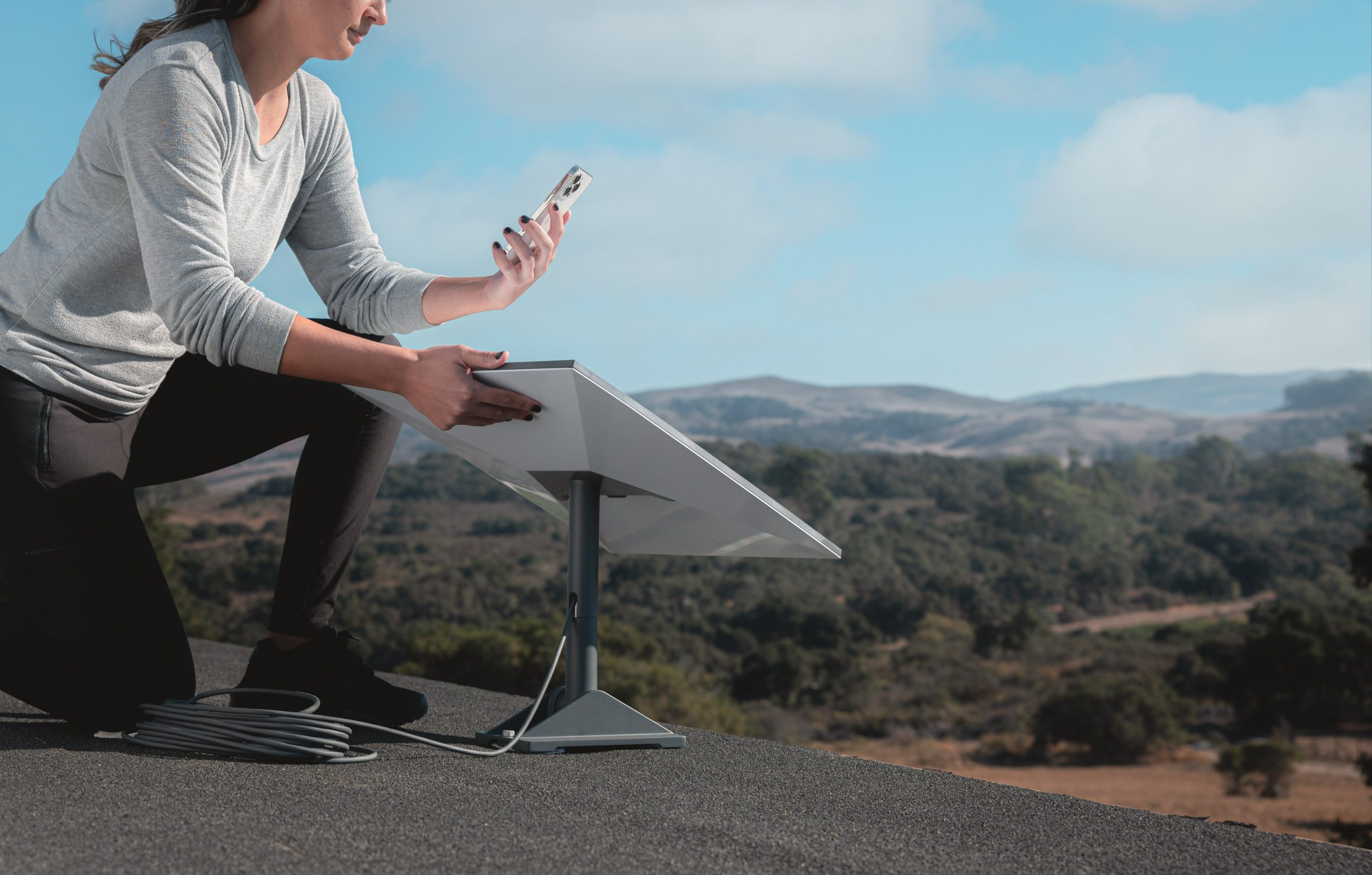
Starlink is launching a new beta path for ordinary property owners and local operators to turn a single Starlink kit into a small shared-access business for passive income.
Under the Starlink for Communities program, a host installs one dish and router setup in a location with nearby demand: an apartment complex, campground, rural crossroads, or event site. Neighbors or local users can buy short-term passes rather than full individual subscriptions, giving the Starlink provider a potential path to passive income.
Hour, day, and week passes cover one device. A month pass covers up to four. Starlink handles account creation, payments, access controls, and the satellite link itself. The host’s role is mainly placement, power, and basic upkeep, with earnings tied to each paid connection.
Big news! SpaceX is introducing a new @Starlink for Communities program that lets you earn money by providing Starlink internet to your neighbors or people nearby, who can pay for access by the hour, day, week, or month.
Neighbors pay for the access they need, while the person… pic.twitter.com/DtOUs0Ekvt
— Sawyer Merritt (@SawyerMerritt) October 1, 2026
The model echoes the passive-income vision long attached to Tesla’s Robotaxi plans, and it seems like it’s something Musk has hinted toward in the past as he believes AI will make the need to work relatively optional. In both cases, the platform owns the hard parts of matching, billing, and network management, while an individual supplies a physical asset that sits idle much of the time.
A Starlink host’s dish can serve multiple nearby users without each household buying and installing its own terminal. A Tesla owner, under the stated Robotaxi concept, would leave a vehicle enrolled in the fleet during unused hours so the car generates rides while the owner is at work or asleep.
Both arrangements convert under-utilized hardware into a revenue stream. They also let the company scale coverage or capacity without owning every endpoint.
Differences are practical. A Starlink kit is a fixed, relatively low-cost terminal whose main constraint is local congestion and line-of-sight. A Tesla Robotaxi is a mobile, high-value vehicle whose earnings depend on demand density, utilization rates, insurance, cleaning, and charging.
Starlink’s program is already accepting host applications in multiple countries and describes the revenue split as ongoing. Tesla’s owner-network version remains more aspirational.
The company currently operates a limited company-controlled robotaxi service in select areas and has solicited interest from fleet buyers for Cybercab vehicles, while private Full Self-Driving owners have not yet been able to dispatch their own cars for paid rides at scale.
Tesla primes Cybercabs for 4K streaming and high bandwidth gaming with Starlink integration
Starlink is a satellite broadband service operated by SpaceX that uses a constellation of low-Earth-orbit satellites to deliver internet to locations where terrestrial broadband is slow, expensive, or absent. It has grown to millions of subscribers worldwide by selling direct residential, mobile, and enterprise terminals, and have become widely available at a wide array at retail locations like Target and Best Buy.
The Communities program extends that reach by letting hosts resell short bursts of capacity to people nearby, while also providing high-speed internet access to those who are simply around a Starlink user.
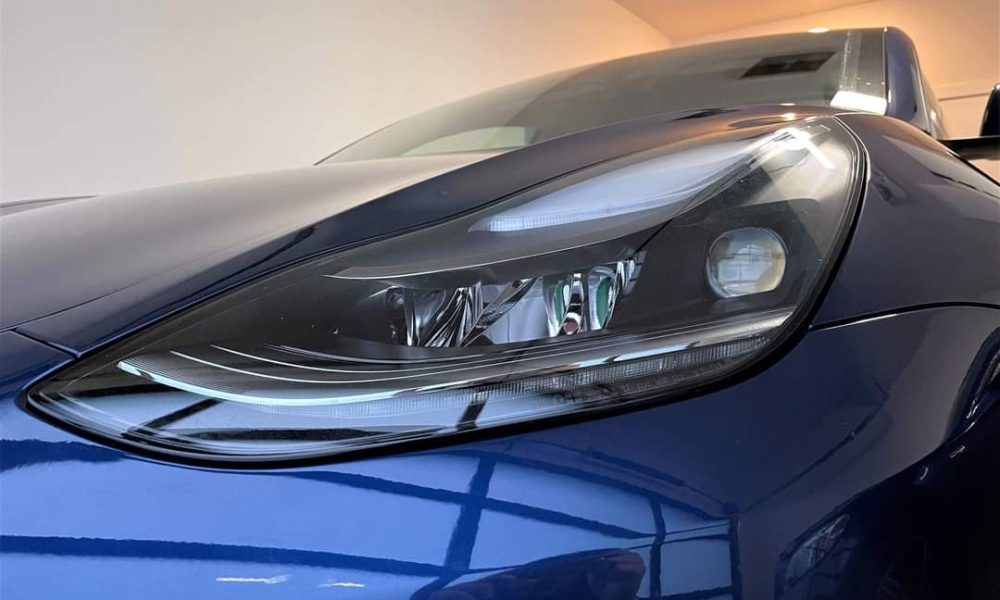
Tesla just upgraded its headlights through a software update, making them even better without any physical or hardware upgrade.
Tesla’s latest software update is quietly improving nighttime driving for a small number of owners. Version 2026.38 includes a new capability called Dynamic Headlight Leveling.
The feature automatically adjusts the aim of the low beams in response to driving conditions and nearby traffic, with the goal of giving the driver more usable light on the road while reducing glare for oncoming vehicles and traffic ahead.
2026.38 just dropped.
Model 3 gets Dynamic Headlight Leveling — low beams auto-aim around traffic for max visibility, less glare. Model 3 / Y (AMD HW3) also pick up sharper Tesla visuals + an enhanced park scene on the center display.
Legacy Intel cars get Supercharger Site… pic.twitter.com/45ac4AH6Vs
— Frunk To Trunk (@FrunkToTrunk) September 30, 2026
Unlike Tesla’s matrix high-beam system, which selectively dims individual LED segments to create shadows around other cars, Dynamic Headlight Leveling physically tilts the low-beam projectors. Internal motors respond to changes in vehicle pitch.
When the car accelerates hard, climbs a steep grade, or carries extra weight in the rear, the headlights can otherwise point higher than intended. The software counters that movement in real time so the beam stays aimed at the road surface rather than into the eyes of other drivers.
Early indications reveal the update is reaching a limited set of vehicles, including certain Model 3 and Cybertruck examples in the United States and the United Arab Emirates. The rollout does not appear tied to a single hardware revision, and Tesla has not published a broader schedule. It is simply a common waiting game until your car receives it.
The change arrives against a backdrop of wider complaints about headlight glare. Some earlier Model 3 and Model Y vehicles were the subject of an NHTSA recall related to excessive low-beam glare; the software adjustment offers a potential mitigation for cars equipped with the necessary leveling hardware. It does not replace adaptive high beams where those are already available, nor does it alter the basic low-beam pattern itself.
Instead, it keeps an existing beam pointed where it is most useful.
For drivers who have received the update, the system requires no new settings or user input. The headlights simply respond as road conditions and traffic change. As the feature reaches more vehicles, it adds another example of Tesla using over-the-air software to refine existing hardware rather than waiting for a new model year. Nighttime visibility and reduced glare for others are the practical results owners are expected to notice first.

Elon Musk follows Trump’s lead, says a SpaceX name change is coming

Starlink launches Communities Program for passive income through internet sharing


