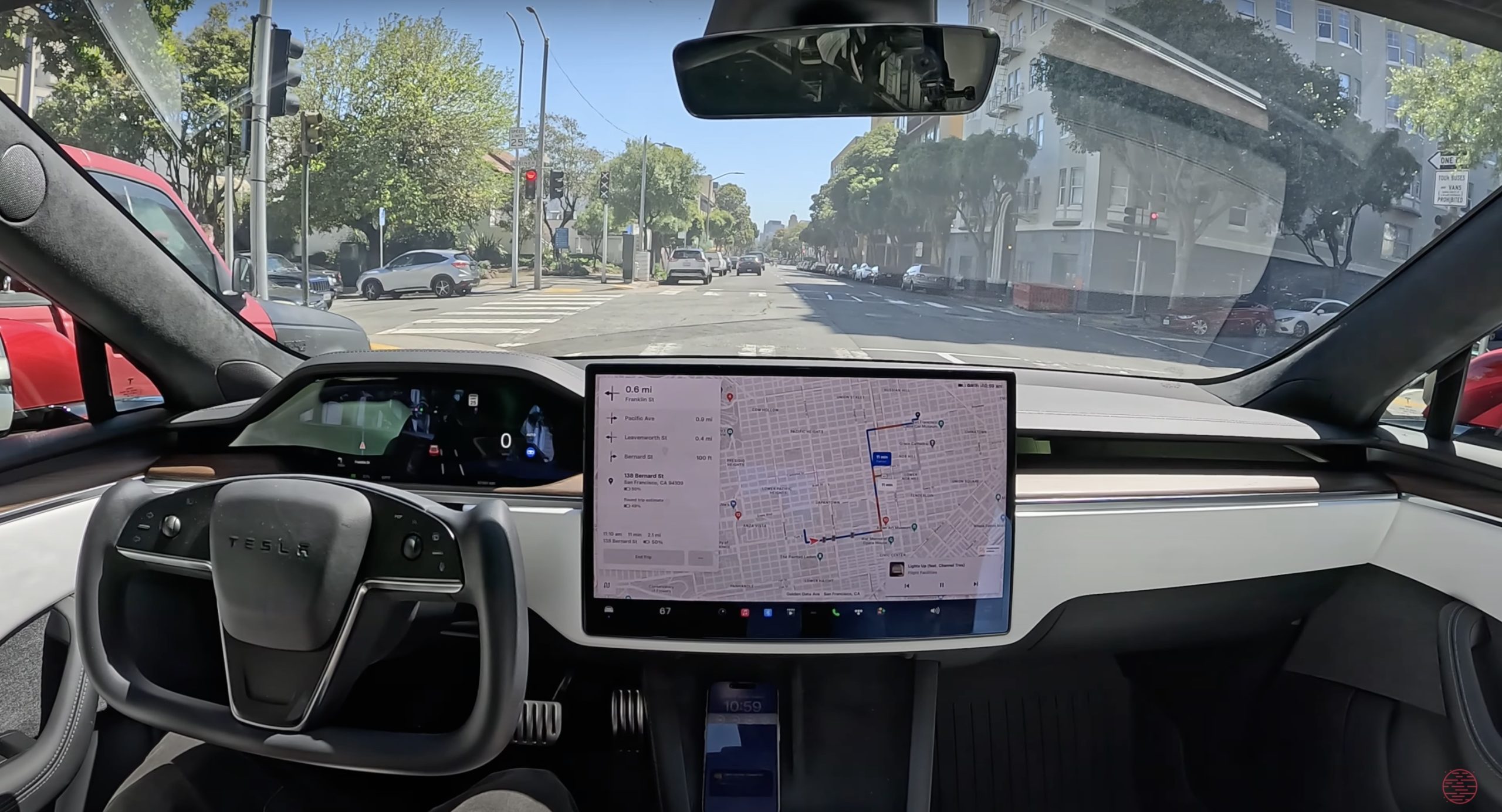

Tesla has started rolling out the latest software version of its Supervised Full Self-Driving (FSD) to customers, expected to include a few improvements, the combination of the network’s city and highway stacks, and the addition of the system to the Cybertruck.
On Friday, Tesla’s Supervised FSD v12.5.1 began deploying to some customer vehicles, as spotted by Not a Tesla App. The update is being deployed with software version 2024.20.15, and many have discussed and speculated about it in recent weeks as Elon Musk has teased some of its expected features. In addition, v12.5 is expected to feature the rollout of FSD to the Cybertruck, though it’s not entirely clear when.
The update features earlier and more natural lane changes, along with a few recently-talked-about features that have been expected to debut with the version.
The version has been highly anticipated for the past few months, given that Musk said in May that FSD would be released for the Cybertruck with v12.5. In the same thread, he said Tesla expected to begin the v12.5 rollout in late June, additionally featuring a major improvement to miles per intervention.
More recently, Musk also said that the FSD v12.5.x would finally combine city and highway software stacks. In addition, the new version allows drivers to wear sunglasses while FSD Supervised is engaged, whereas prior versions had the driver monitoring system nag drivers when going hands-free.
The CEO has also said that Tesla’s Actual Smart Summon will start deploying with FSD 12.5.x, noting that it was technically a “separate code” than FSD, though it will be bundled along with the software.
At the time of writing, Tesla hasn’t started rolling the update out to any HW3 vehicles, and Musk recently noted that the company would just be focusing on Model Y units with HW4 for the initial rollout of FSD v12.5. Once the software version is running well on those units, Musk says Tesla will then start deploying the update to other vehicles.
Tesla started rolling out FSD v12.4.3 earlier this month, with some highlighting many of the system’s improvements in videos.
The news also comes ahead of Tesla’s upcoming Robotaxi event, which has now been rescheduled for October, in which the company is set to unveil an upcoming Robotaxi platform based on FSD.
What are your thoughts? Let me know at zach@teslarati.com, find me on X at @zacharyvisconti, or send us tips at tips@teslarati.com.



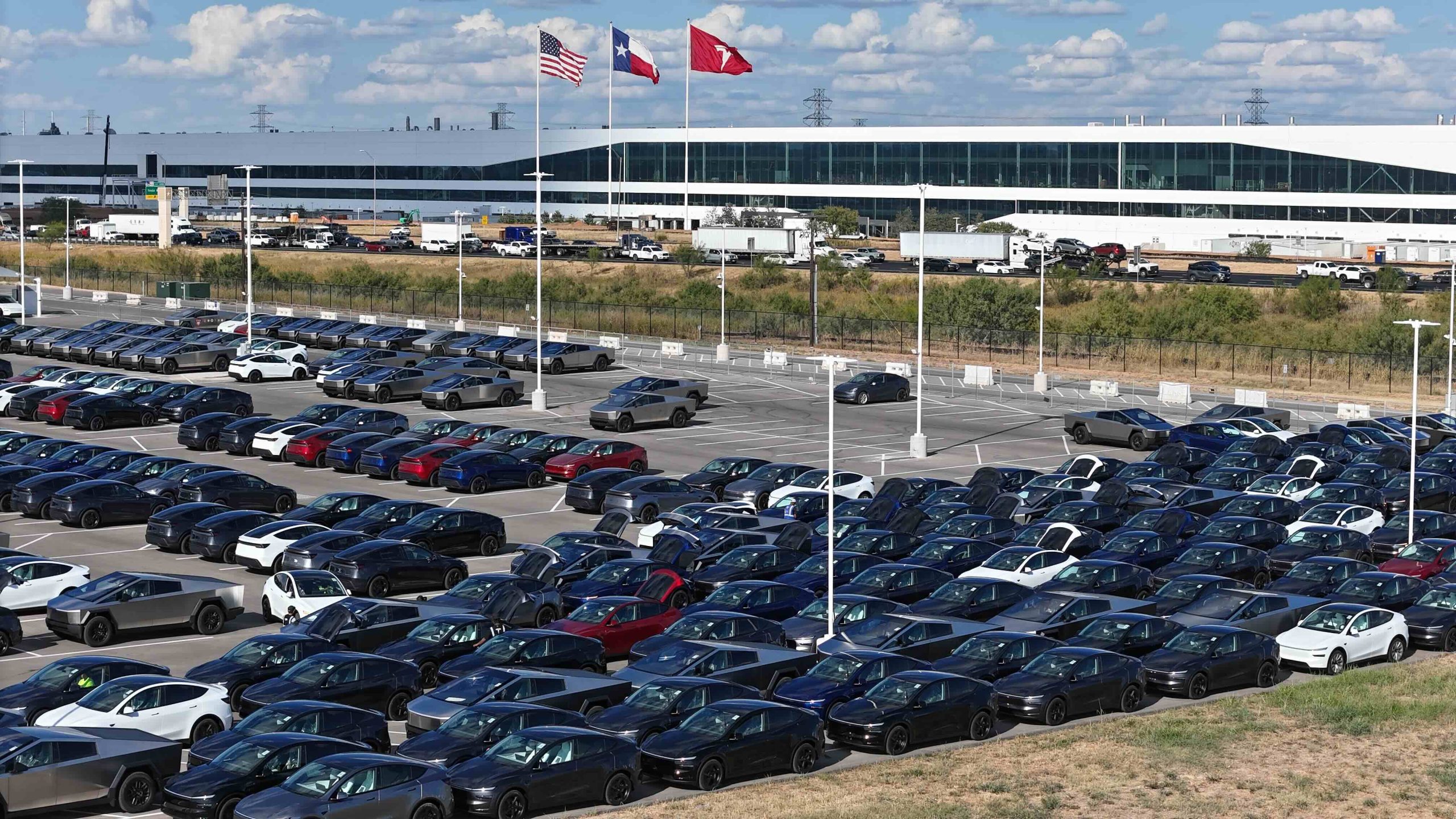
Tesla has expanded the operational geofence for its driverless Robotaxi service in Austin, Texas, marking the first such increase in some time. The updated Service Area for Robotaxi in Austin now spans about 288 square miles and is roughly 9 percent larger than the previous boundary.
This incremental growth adds approximately 24 square miles of coverage, bringing the prior zone of roughly 264 square miles into a broader footprint that better serves northern suburbs.
The expansion extends the geofence northward toward Pflugerville along the US 183 corridor, incorporating additional neighborhoods north of the Domain and areas such as Mesa Park. These additions include higher-end residential and commercial districts that previously sat just outside the allowed operating zone.
Riders can now request unsupervised trips that begin or end in these newly included locations, provided the entire route remains inside the digital boundary:
Tesla has just expanded its Robotaxi service area in Austin, Texas for the first time in 10 months.
The new service area is roughly 9% larger than the old one, and is about 288 square miles in total. pic.twitter.com/i4oBM1KfWS
— Sawyer Merritt (@SawyerMerritt) August 31, 2026
Tesla first launched public Robotaxi operations in Austin in mid-2025 with a modest initial zone of about 20 square miles. Subsequent enlargements in 2025 and early 2026 steadily grew the map until it covered much of the metropolitan area.
After the last major update roughly ten months earlier, the company held the boundary steady while it collected additional miles and refined the FSD suite.
The modest nine percent increase still matters for daily utility. Longer trips become possible, more residents gain access, and the fleet can accumulate more diverse real-world data across new road types and traffic patterns. Observers note that the added territory aligns with existing Tesla service infrastructure, which could support more efficient vehicle staging in the North end of Austin.
Although the geofence has grown, Tesla continues to operate a relatively small unsupervised fleet in the city. The company has emphasized safety and software readiness over rapid geographic scaling. This latest map update signals that Tesla remains committed to expanding Robotaxi availability in its home market as it prepares for further software improvements and potential Cybercab deployments.
The 288-square-mile zone now gives Austin riders one of the larger driverless service areas currently available in the United States.
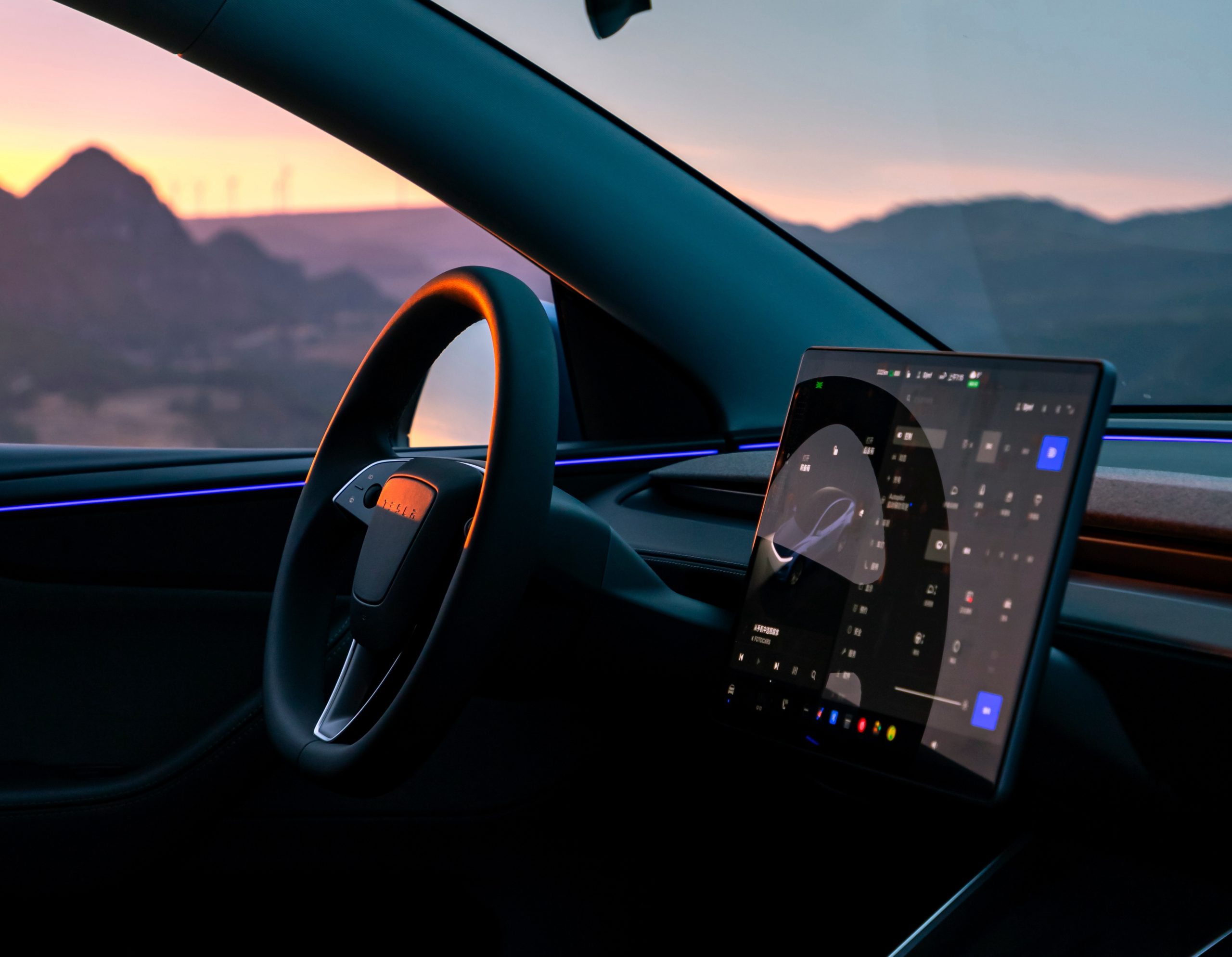
Tesla’s 2026 Summer Update turns Grok from a talking companion into a true in-car controller, with considerably expanded capabilities. Where the assistant once answered questions and handled navigation, it can now operate hardware and software through ordinary speech, including several requests at the same time.
Grok has become incredibly robust over the past few quarters, and this new ability that Tesla has included with its Summer Update is perhaps the clearest sign of just how capable it has become.
You can issue many commands to Grok at once, and each will be taken care of: anything from headlight control to climate adjustments to mirror folding can now all be taken care of with a simple sentence spoken toward Grok:
This is cool, you can now give Grok a ton of commands at once in your Tesla and it’ll do them all together.
The commands I gave:
• Fold mirrors
• Turn on wipers to fastest setting
• Change temp to 65°
• Open self-driving app
• Open gloveboxComes with Tesla’s 2026 Summer… pic.twitter.com/drZxoHrknv
— Sawyer Merritt (@SawyerMerritt) August 26, 2026
Here’s another example I used in my Model Y:
🚨 Using Grok to control the cabin temperature and turn on headlights in 2026 Model Y on FSD v14.3.8 and 2026.26.6.5 pic.twitter.com/7clgQkGABk
— TESLARATI (@Teslarati) August 27, 2026
Tesla’s official Release Notes list the core powers of Grok’s new capabilities: Grok can place phone calls from a paired phone, search a streaming service and queue music, adjust climate, and search the Controls panel. Drivers can also ask it questions about the vehicle or the latest features included in a recent software update.
It can also take care of driving settings, dynamics, and other relevant preferences that deal with how the car operates and handles.
Tesla Summer Update begins rolling out: a look at the new features
It’s also more of a use case than a novelty feature. Grok was great for learning about something that was being pondered while Full Self-Driving was taking care of the major automotive responsibilities, but it did have some useful functionality when it came to navigation.
Another less-noted improvement is the swift transition that Grok has from thinking of its answer to giving you one. In the past, it would take a few seconds for Grok to truly come up with a valuable response. It now seems that it is improving, at least slightly.
Tesla Full Self-Driving is set to get a major fix with pothole avoidance, a feature that CEO Elon Musk said recently was “coming soon.” The feature has been included within the FSD v14 release notes for some time as an upcoming improvement.
Potholes come in all shapes and sizes, but one thing is universal about them, and that is the fact that every driver wants to avoid them. Driving into or over a pothole can cause tire and wheel damage, alignment issues, and even, in some more severe instances, injury to occupants or major damage to a vehicle in despair.
Tesla Cybercab uses a unique strategy for picking up the right rider
Musk said late last night in a post that pothole avoidance while utilizing the Full Self-Driving suite is “coming soon.”
Coming soon
— Elon Musk (@elonmusk) August 31, 2026
Full Self-Driving, even in its most recent and robust forms, still has its shortcomings. While the suite has performed exceptionally well with avoiding on-road obstacles like cardboard boxes, horse droppings, car parts, and other debris, it still seems to struggle with recognizing certain things.
Potholes and other abrupt changes in a road’s layout are things that FSD still tends to struggle with. Perhaps the suite’s 3D modeling is still in need of some additional data or some sort of script that will help it to avoid a potentially destructive pothole or bump in the road that would be easily recognizable by the human eye.
Musk has mentioned pothole avoidance for some time, with the initial idea coming in April 2019 when an owner first requested the feature. Musk said that Tesla would “definitely” develop pothole avoidance.
In August 2020, Musk said Tesla was in the process of labeling bumps and potholes so cars can either slow down or steer around them altogether.
Tesla to utilize micro maps for pothole-detection in future update
Avoiding major disturbances in the road is a necessary feature for Full Self-Driving to have, especially as Tesla is working toward a fully autonomous program that will eventually allow every occupant in the vehicle to sleep, work, or enjoy leisure time while traveling.
That truly begins this week with the launch of Cybercab on Thursday.

Tesla expands driverless Robotaxi geofence in Austin

Elon Musk’s Grok can basically control anything in your Tesla now


