News
Tesla Diner becomes latest target of gloom and doom narrative

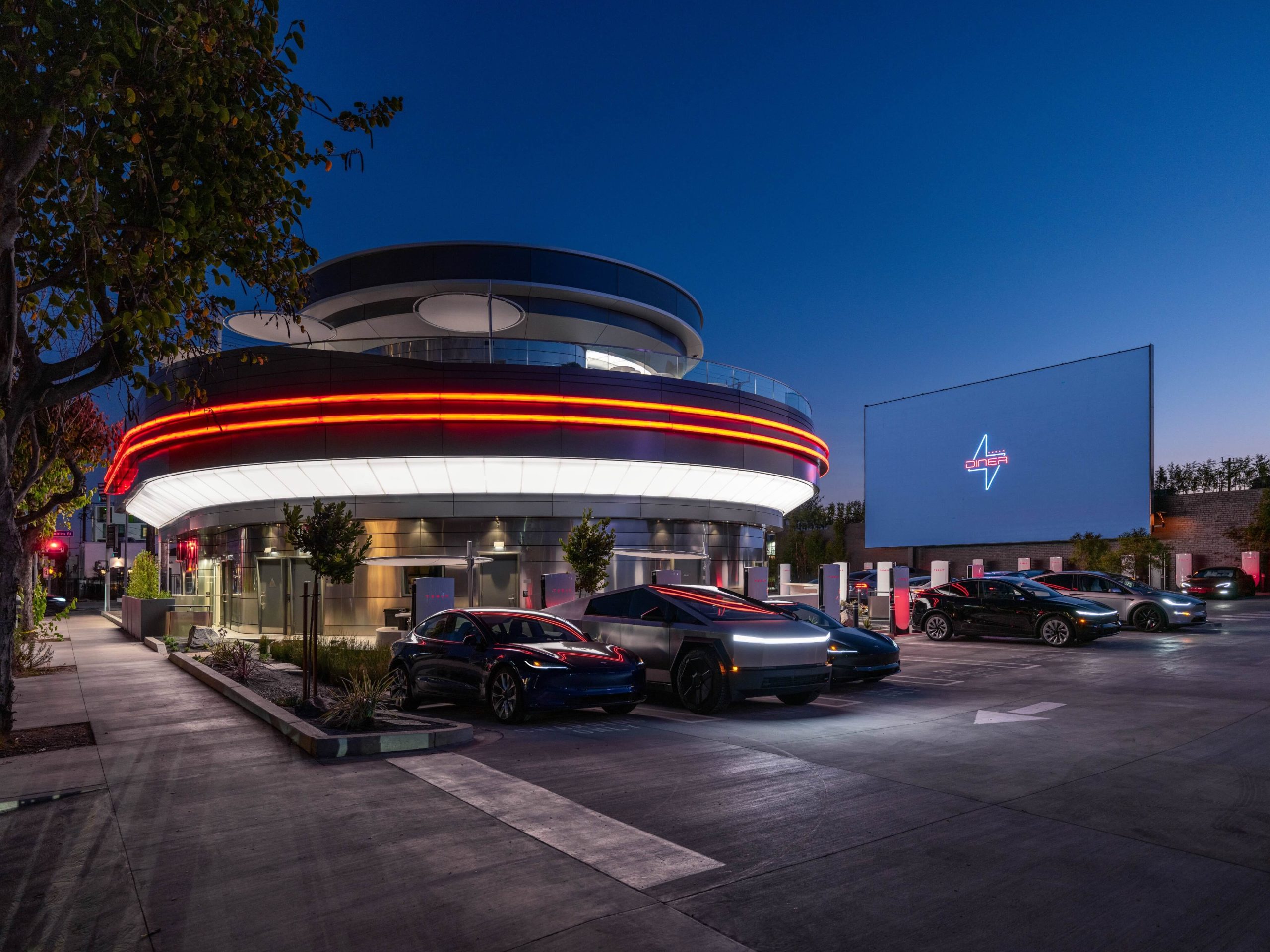
The Tesla Diner has been subject to many points of criticism since its launch in mid-2025, and skeptics and disbelievers claim the company’s latest novel concept is on its way down, but there’s a lot of evidence to state that is not the case.
The piece cites anecdotal evidence like empty parking lots, more staff than customers during a December visit, removed novelty items, like Optimus robot popcorn service and certain menu items, the departure of celebrity chef Eric Greenspan in November 2025, slow service, high prices, and a shift in recent Google/Yelp reviews toward disappointment.
The piece frames this as part of broader Tesla struggles, including sales figures and Elon Musk’s polarizing image, calling it a failed branding exercise rather than a sustainable restaurant.
This narrative is overstated and sensationalized, and is a good representation of coverage on Tesla by today’s media.
Novelty Fade is Normal, Not Failure
Any hyped launch, especially a unique Tesla-branded destination blending dining, Supercharging, and a drive-in theater, naturally sees initial crowds taper off after the “Instagram effect” wears down.
Tesla makes major change at Supercharger Diner amid epic demand
This is common for experiential spots in Los Angeles, especially pop-up attractions or celebrity-backed venues. The article admits early success with massive lines and social media buzz, but treats the return to normal operations as “dying down.”
In reality, this stabilization is a healthy sign of transitioning from hype-driven traffic to steady patronage.
Actual Performance Metrics Contradict “Ghost Town” Claims
- In Q4 2025, the Diner generated over $1 million in revenue, exceeding the average McDonald’s location
- It sold over 30,000 burgers and 83,000 fries in that quarter alone. These figures indicate a strong ongoing business, especially for a single-location prototype focused on enhancing Supercharger experiences rather than competing as a mass-market chain
It’s not a ghost town lol. The @Tesla Diner still had over 30,000 burger orders and 83,000 fries orders in Q4. The diner generated over $1M in revenue in Q4, a $4M annual run rate, which is more than the average McDonald’s…. pic.twitter.com/XvAGLUqxej
— Sawyer Merritt (@SawyerMerritt) January 4, 2026
Conflicting On-the-Ground Reports
While the article, and other similar pieces, describe a half-full parking lot and sparse customers during specific off-peak visits, other recent accounts push back:
- A January 2026 X post noted 50 of 80 Supercharger stalls were busy at 11 a.m., calling it “the busiest diner in Hollywood by close to an order of magnitude
TESLA DINER 🍔
Frantic!!!
Crazy busy. pic.twitter.com/wMbmr8SFFn
— Rich & Sharon (@HullTeslaModel3) January 4, 2026
- Reddit discussions around the same time describe it as not empty when locals drive by regularly, with some calling the empty narrative “disingenuous anti-Tesla slop.”
When we visited it last week it was packed. We had to wait to enter, get a table and go to the restroom. We were lucky to find a spot to charge.
— Rani G (@ranig) January 4, 2026
Bottom Line
The Tesla Diner, admittedly, is not the nonstop circus it was at launch–that was never sustainable or intended. But, it’s far from “dying” or an “empty pit stop.”
It functions as a successful prototype: boosting Supercharger usage, generating solid revenue, and serving as a branded amenity in the high-traffic EV market of Los Angeles.


News
SpaceX tells the FCC that Starship Flight 14 is going to orbit
SpaceX filed with the FCC for Starship Flight 14, its first true orbital launch attempt.

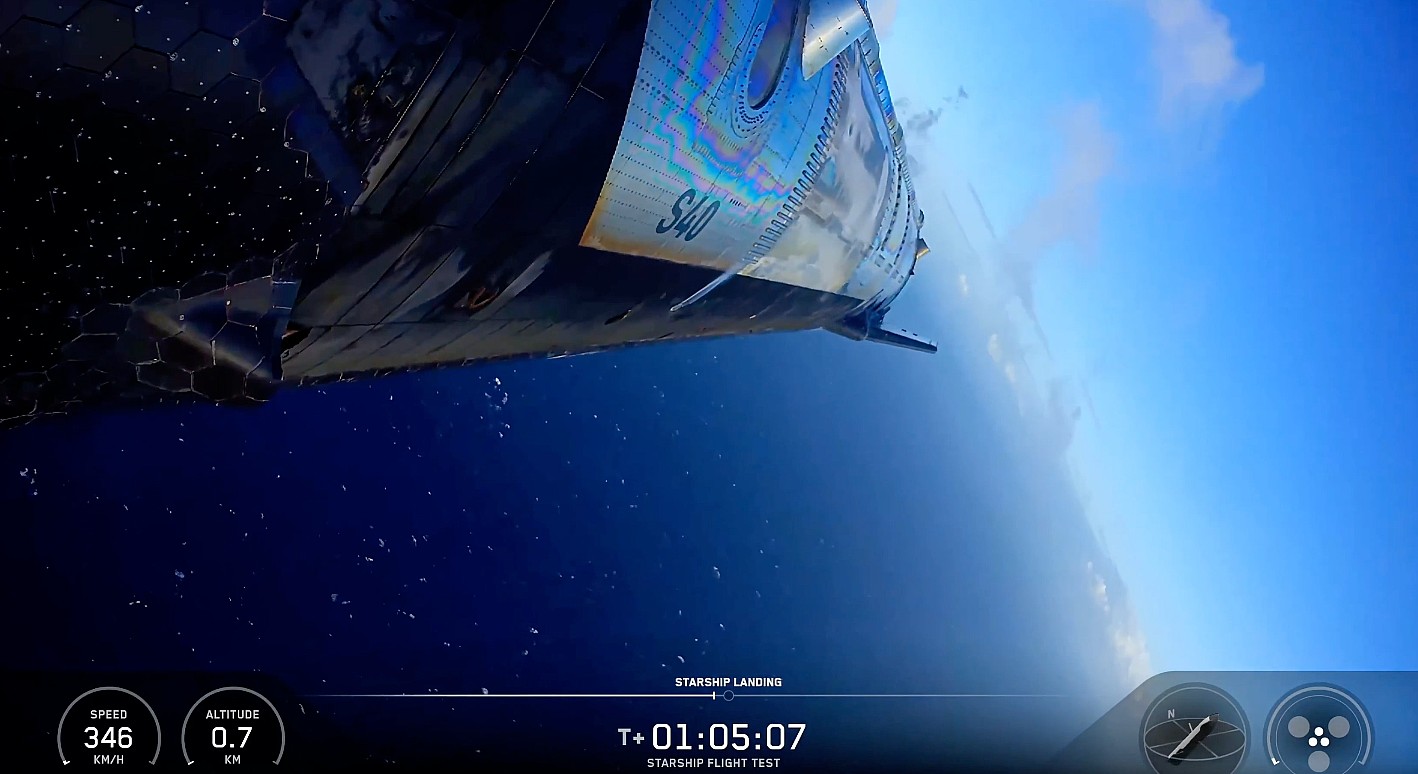
SpaceX has asked the Federal Communications Commission for permission to fly Starlink terminals during Starship’s fourteenth flight test, and the filing lays out a genuine trip to orbit, something the program has never attempted.
Every Starship flight so far, including Flight 13’s successful splashdown in the Indian Ocean on July 24, has flown a suborbital arc that ends with the ship reentering the atmosphere within the same hour it launches. The FCC paperwork describes a mission profile built around an actual orbital insertion instead.
The payload is the other half of the story. Flight 13 carried 20 production Starlink V3 satellites, but because that mission never reached orbit, the satellites reentered along with the ship rather than joining the constellation, something Teslarati covered in detail after SpaceX released footage shot from one of those satellites as it drifted away from Starship in space. Flight 14 is designed to close that gap. If the orbital insertion holds, the roughly 20 V3 satellites onboard would separate into an operational orbit and could eventually go into service, each one rated for about 1 terabit per second of downlink capacity by SpaceX’s own account.
SpaceX announces new Starbase for ‘thousands of Starship launches annually’
Elon Musk first flagged the orbital attempt during SpaceX’s August 4 earnings call, the company’s first as a public entity following its June IPO under the ticker SPCX. He also floated catching the ship with the Starbase tower on the same flight, an idea he walked back on August 20, saying the catch attempt would more likely come “in a few months,” as Teslarati reported at the time. Flight 14 will instead target a splashdown for the ship in the Indian Ocean, the same recovery method used since Flight 12.
Hardware has been catching up to the ambition. Booster 21 completed a full 33-engine static fire on August 28, and Ship 41 finished its own six-engine test the week before. An airspace briefing circulated to pilots on August 20 listed September 15 as the target date, later than the end of August window Musk mentioned on the earnings call, though SpaceX has not confirmed a launch date publicly and Starship schedules routinely slip while hardware and FAA paperwork line up.
The FCC filing itself does not guarantee a launch date. It covers communications authority, and not flight readiness, considering SpaceX still needs Ship 41 fully stacked and cleared by the FAA before Flight 14 can fly. But the filing is a real marker of intent and it puts a specific regulatory process behind what had so far only been Musk’s word on the earnings call.
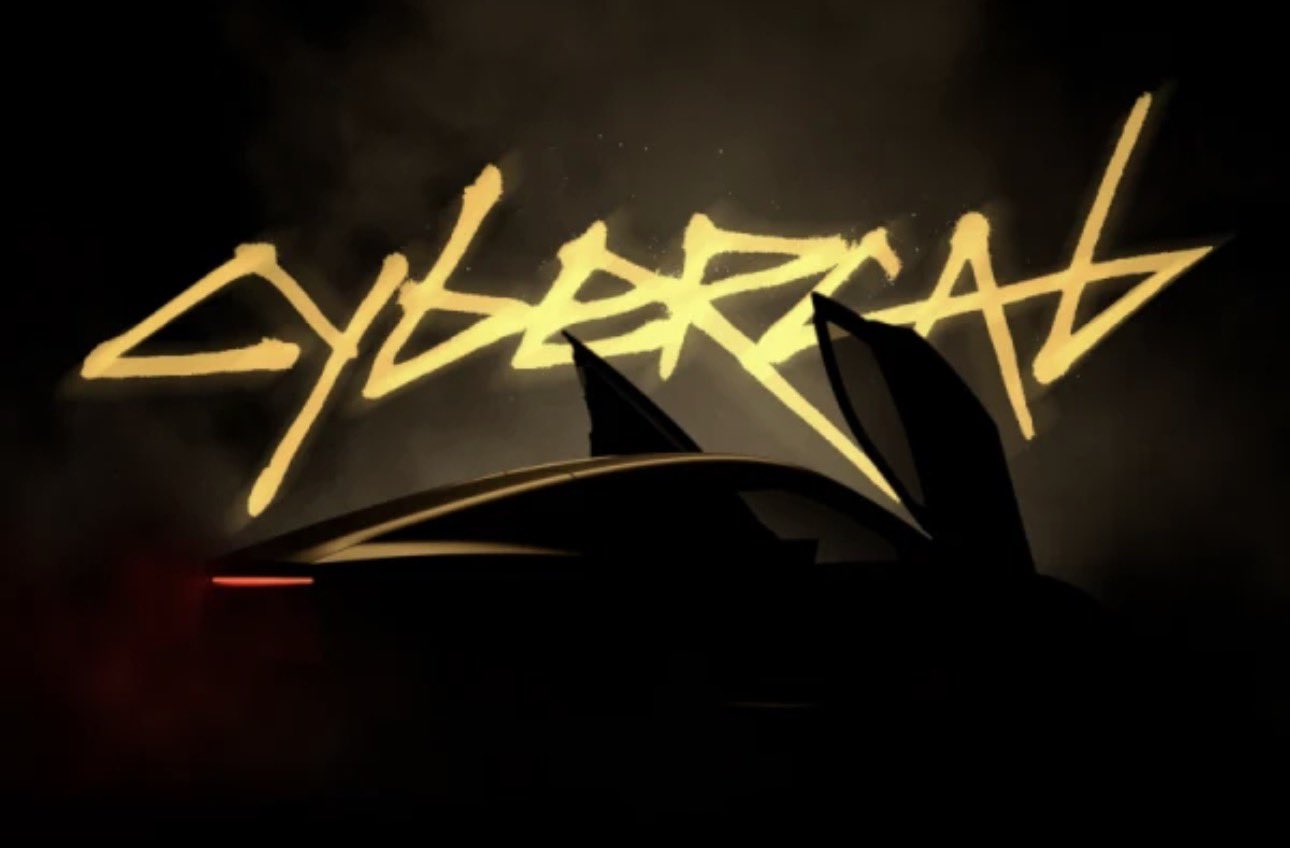
Tesla is set to launch Cybercab on Thursday at an event in Austin, Texas, which will officially bring the company’s first steering wheel-less and pedal-less vehicle to a limited number of consumers for the first time.
The event, which is invite-only, is still thin on details: we’ll be there, and it seems the event will be held at Gigafactory Texas, but the launch of this vehicle truly relies on it being operational outside of the factory and on public roads.
🚨 Close-Up look at Tesla Cybercab without steering wheel: pic.twitter.com/9TXCDeDCz7
— TESLARATI (@Teslarati) July 3, 2026
Nevertheless, there are some big things to expect, and other things to temper expectations on. For what it’s worth, we believe this event could be perhaps the biggest indication that Tesla is ready to truly enter a new phase and chapter in its historic story.
Tesla Cybercab’s First Foray into the Public with Real-World Riders
Cybercab will likely hit the streets of Austin and the surrounding areas, likely in the established geofence that Tesla has expanded on for the past 14 months. Just yesterday, Tesla expanded it once again by 9 percent.
Tesla will put, for the first time, a vehicle without any manual controls on public roads, likely without any help from teleoperators. This is a truly groundbreaking development if it comes through in this fashion: it would be groundbreaking for Tesla to roll out a truly driverless ride-hailing vehicle.
Cybercab Has Already Been Unveiled
This is not an unveiling event. Cybercab has been released for nearly two years, as Tesla first showed it to the public on October 10, 2024.
FIRST LOOK: Tesla ‘Cybercab’ Robotaxi makes its global debut
While there is some small speculation that Tesla could release the Roadster at the event as a surprise, it seems more likely the focus will be on the Cybercab and the huge accomplishment that will come with releasing a vehicle with no manual controls.
There Will Be a Lot of Hype
What’s important to remember about the Cybercab event is that Tesla will continue to prioritize safety and the rollout will likely be slow, just as it has been with Robotaxi.
One of the biggest complaints about Robotaxi is vehicle population, and the fact that the wait for a ride, at least in some instances, has been longer than most want to admit.
It will take time for this project to truly scale. It will take time for Tesla to roll this out in a large fashion. The important thing to note is that they are doing it, and they’re doing it with a vehicle that is completely engineered and built internally. That’s something no other ride-hailing service can say.
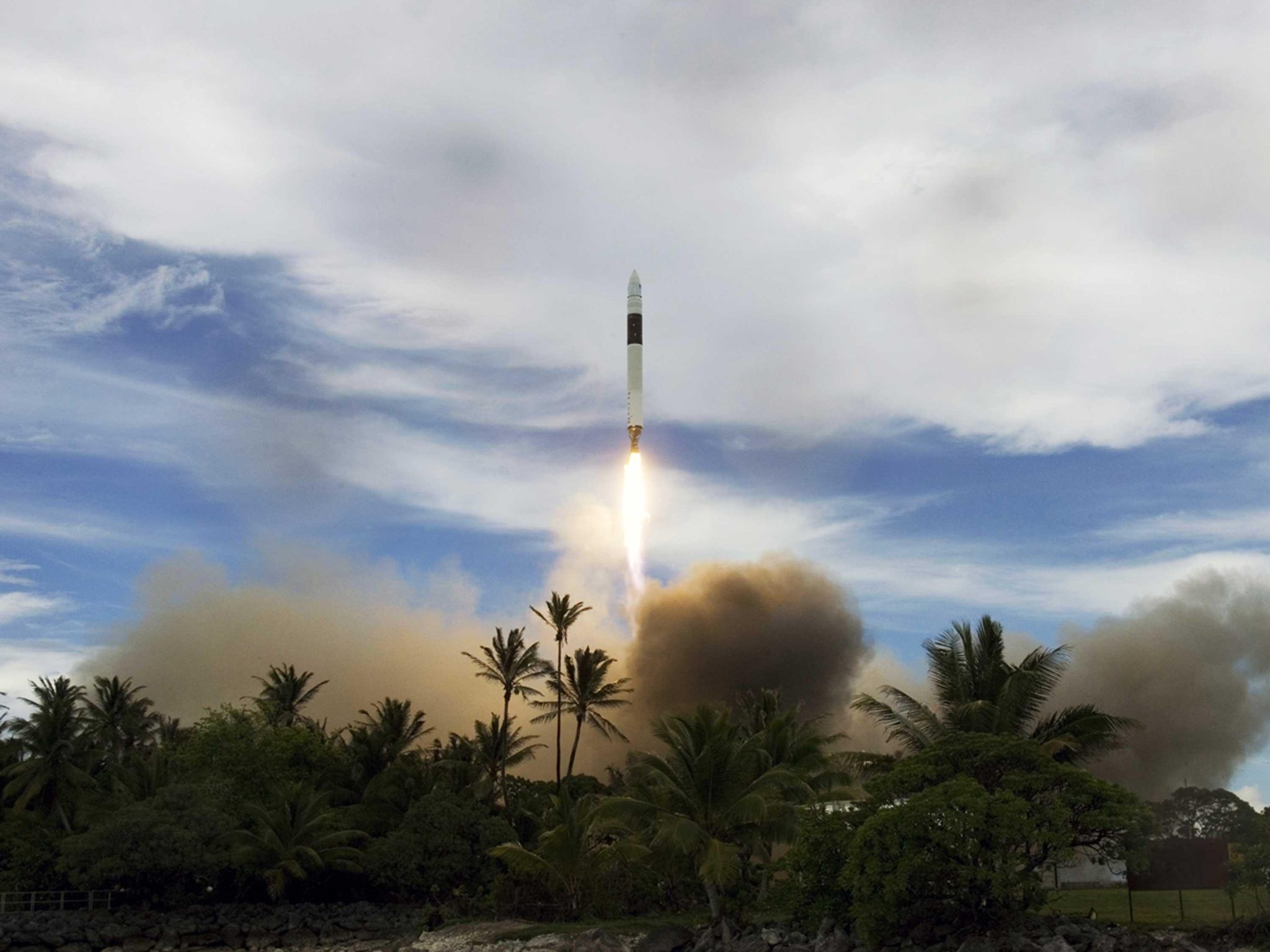
Elon Musk recently restated a fact that still defines SpaceX’s origin story: if Falcon 1’s fourth launch had failed, the company would not exist. The comment answered a reminder that after three consecutive losses, SpaceX had money for only one more attempt.
On X, Peter Diamandis said that the present-day acknowledgement of SpaceX’s success does not discount the rough start the company had. “Almost nobody remembers that Elon’s first rocket failed three times, and there was money for exactly only one more attempt.”
Musk said, “If the 4th launch had failed, SpaceX would not exist.”
If the 4th launch had failed, SpaceX would not exist
— Elon Musk (@elonmusk) August 30, 2026
In late 2008, the firm was nearly out of cash. Another failure would have ended payroll, closed the Hawthorne factory, and left the Falcon 9 and Dragon programs as unfinished drawings.
The first flight lifted off from Omelek Island on 24 March 2006. Thirty-three seconds later, a corroded aluminum fitting on a fuel line leaked. Kerosene ignited around the Merlin engine, control was lost, and the vehicle came apart. The small DARPA payload, FalconSAT-2, survived the short flight only to land on a storage shed near the pad. Investigators later traced the fitting to a materials mix-up that should never have reached the rocket.
Flight 2, on 21 March 2007, looked far better at first. The first stage burned cleanly and handed off to the Kestrel-powered upper stage. The vehicle crossed 100 kilometers and reached a peak of about 289 kilometers. Then propellant slosh in the second-stage tank started a circular coning motion that grew until the engine shut down. Telemetry faded as the stage tumbled, and SpaceX had reached space but not orbit. Over the next year, the team redesigned everything from the ground up, including tanks, baffles, and the new regeneratively cooled Merlin 1C.
That engine flew on Flight 3 on 2 August 2008. The first stage performed almost perfectly and reached 217 kilometers. After main-engine cutoff, leftover fuel in the cooling channels produced a faint residual thrust, roughly 10 pounds per square inch of chamber pressure. On a Texas test stand, the effect was invisible beneath ambient air pressure. In vacuum it was enough to push the spent first stage back into the second stage after separation. The stages collided, the upper stage spun, and the mission was lost. Musk later said a slightly longer delay before staging would have saved the flight.
Six weeks later, the team assembled Flight 4 from remaining parts and flew it on 28 September 2008 at 23:15 UTC. The payload was Ratsat, a 165-kilogram aluminum mass simulator built in-house. Staging was delayed so residual thrust could decay. The Kestrel ignited, the fairing split away, and nine and a half minutes after liftoff the vehicle was in orbit. After a coast, the second stage restarted, settling into a 621-by-643-kilometer path at 9.35 degrees inclination. Falcon 1 became the first privately developed liquid-fueled rocket to reach Earth orbit. Musk called the insertion “middle of the bull’s-eye.”
SpaceX restores a Falcon 1 rocket for 10th anniversary of first launch success
That success unlocked NASA’s Commercial Resupply Services award later that year. Without it, there would have been no Falcon 9, no reusable first stages, and no Dragon cargo or crew flights to the International Space Station. Launch prices would have remained far higher. Starlink’s constellation would not exist; broadband from low Earth orbit would still be a paper concept.
Ride-share markets, high launch cadence, and the current pace of lunar and Mars hardware would be years behind. Communications, Earth observation, and the cost of putting anything into space would look more like the 2000s than the 2020s.
One extra second of residual thrust in August 2008 would have written a different decade.

SpaceX tells the FCC that Starship Flight 14 is going to orbit

Tesla Cybercab Event: what to expect from Austin


