Elon Musk
Elon Musk reveals date of Tesla Full Self-Driving’s next massive release
Initially planned for a January or February release, v14.3 aims to add some reasoning and logic to the decisions that Full Self-Driving makes, which could improve a lot of things, including Navigation, which is a major complaint of many owners currently.

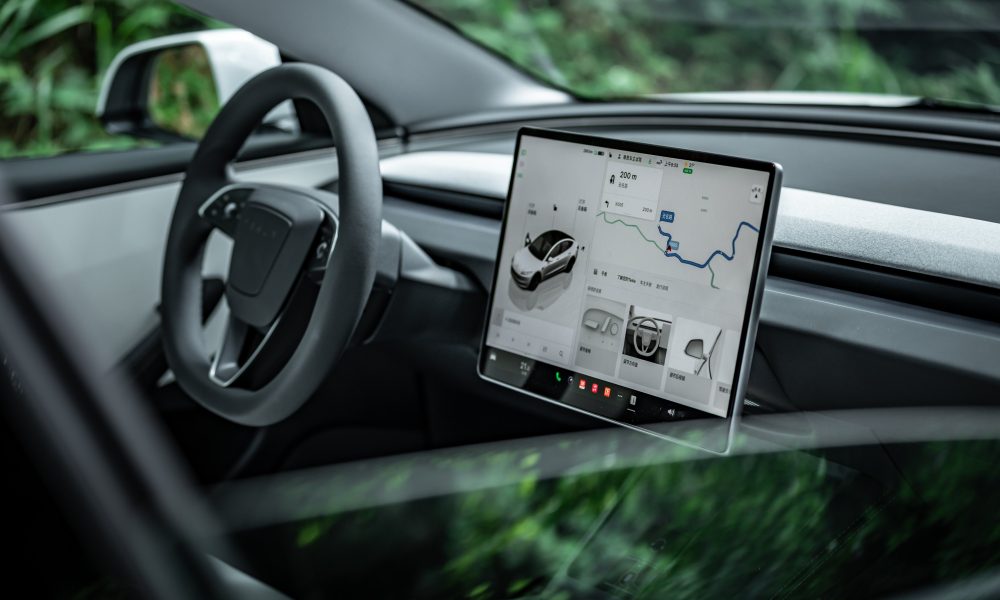
Tesla CEO Elon Musk revealed the date of Full Self-Driving’s next massive release: v14.3.
For months, Tesla owners with Hardware 4 have been utilizing Full Self-Driving v14.2 and subsequent releases. Currently, the most up-to-date FSD version is v14.2.2.5, which has definitely brought out mixed reviews. With releases, some things get better, and other things might regress slightly.
For the most part, things are better in terms of overall behavior.
However, many owners have been looking forward to the next release, which is v14.3, about which Musk has said many great things. Back in November, Musk said that v14.3 “is where the last big piece of the puzzle lands.”
He added:

Give the gift of Tesla upgrades.
Shop for someone else or treat yourself. Get more shopping power with a Teslarati gift card.
“We’re gonna add a lot of reasoning and RL (reinforcement learning). To get to serious scale, Tesla will probably need to build a giant chip fab. To have a few hundred gigawatts of AI chips per year, I don’t see that capability coming online fast enough, so we will probably have to build a fab.”
Initially planned for a January or February release, v14.3 aims to add some reasoning and logic to the decisions that Full Self-Driving makes, which could improve a lot of things, including Navigation, which is a major complaint of many owners currently.
Tesla Full Self-Driving v14.2 is a considerable improvement from early versions of the suite, but we have written about the somewhat confusing updates that have come with recent versions.
Tesla Full Self-Driving v14.2.2.5 might be the most confusing release ever
They’ve been incredibly difficult to gauge in terms of progress because some things have gotten better, but there seems to be some real regression on a handful of things, especially with confidence and assertiveness.
Give the gift of Tesla upgrades.
Shop for someone else or treat yourself. Get more shopping power with a Teslarati gift card.
Musk confirmed today on X that Tesla is already testing v14.3 internally right now. It will hit a wide release “in a few weeks,” so we should probably expect it by late April.
It’s in testing right now. Wide release in a few weeks.
— Elon Musk (@elonmusk) March 19, 2026
Overall, there are high hopes that v14.3 could be a true game changer for Tesla Full Self-Driving, as many believe it could be the version that Robotaxis in Austin, Texas, some of which are driverless and unsupervised, are running.
It could also include some major additions, including “Banish,” also referred to as “Reverse Summon,” which would go find a parking spot after dropping occupants off at their destination.
Give the gift of Tesla upgrades.
Shop for someone else or treat yourself. Get more shopping power with a Teslarati gift card.
What Tesla will roll out, and when exactly it arrives, all remain to be seen, but fans have been ready for a new version as v14.2.2.5 has definitely run its course. We have had a lot of readers tell us their biggest request is to fix Navigation errors, which seem to be one of the most universal complaints among daily FSD users.


Elon Musk
Elon Musk makes surprise stop at Giga Shanghai with a message for Tesla’s China team
Elon Musk flew overnight to Giga Shanghai to personally thank Tesla’s China and APAC teams.

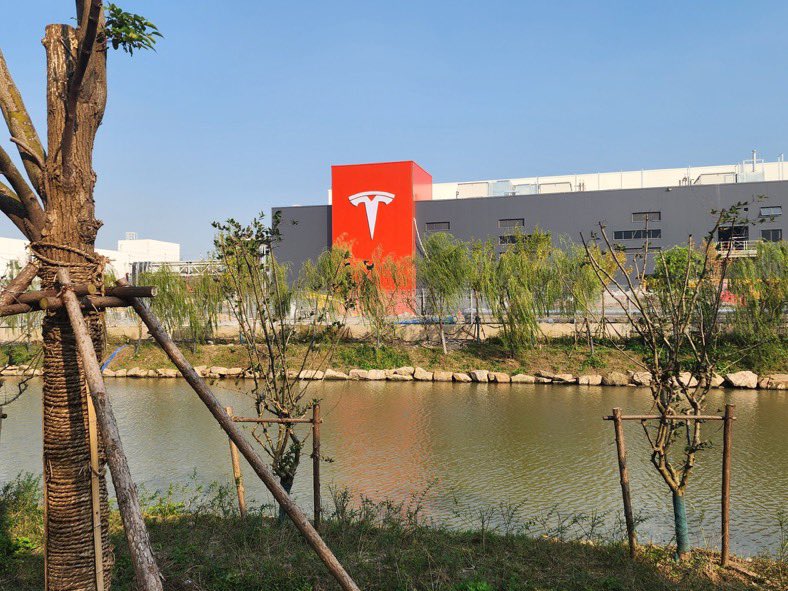
Elon Musk made an overnight stop at Gigafactory Shanghai on Thursday, flying in from Shenzhen to thank Tesla’s China and Asia-Pacific teams in person during a 24-hour trip to China. Tesla vice president Grace Tao confirmed the visit in a Weibo post, saying Musk met employees face to face, praised the Shanghai team’s manufacturing capabilities and execution, and discussed progress on driver assistance and humanoid robots.
Photos from the visit show Musk at the center of a large group of factory workers. “Let’s make the future look like the future,” he told the team, according to posts from the event that Musk shared on X. Attendees also said he urged employees to spend their time and resources on becoming truly useful and building products that matter to humanity, rather than chasing short-term speculation.
The trip was tied to APEC Leaders’ Week in Shenzhen, where Musk traveled as part of President Trump’s Asia delegation. It is also why he joined Wednesday’s New York Times DealBook Summit remotely, writing beforehand, “I will be in China, so it will be digital me.”
Before arriving in Shanghai, Musk met in Shenzhen with Ren Hongbin, chairman of the China Council for the Promotion of International Trade. A CCTV-affiliated account reported that Musk pledged Tesla would keep increasing production in China, though it gave no target or timeline.
Give the gift of Tesla upgrades.
Shop for someone else or treat yourself. Get more shopping power with a Teslarati gift card.
Giga Shanghai remains Tesla’s most productive factory. It shipped 810,889 Model 3 and Model Y vehicles in the first ten months of 2026, up 21.4 percent from a year earlier, according to figures cited by Reuters, and Tesla’s third quarter update lists its installed capacity at more than 950,000 vehicles a year.
Most of that output is now leaving China. Of the 67,829 vehicles Shanghai shipped in October, 59,012 were exports, leaving 8,817 for domestic buyers. Tesla’s China retail sales were down 66 percent from a year earlier that month, the lowest since July 2022, according to CnEVPost.
Musk’s comments on driver assistance will be watched closely by Chinese owners, who are still waiting on a full rollout of Tesla’s supervised self-driving software. Musk said a year ago he hoped for full approval in China around early 2026, but Tesla has not announced a launch date, as Teslarati has reported. The country is also a key test of Musk’s broader pitch: autonomy and Optimus are the businesses he has said will make up the vast majority of Tesla’s future value.
Elon Musk
Sean Duffy fires back at Elon Musk over free Starlink
Sean Duffy says the FAA picked a ground network over Starlink, and Musk isn’t impressed.
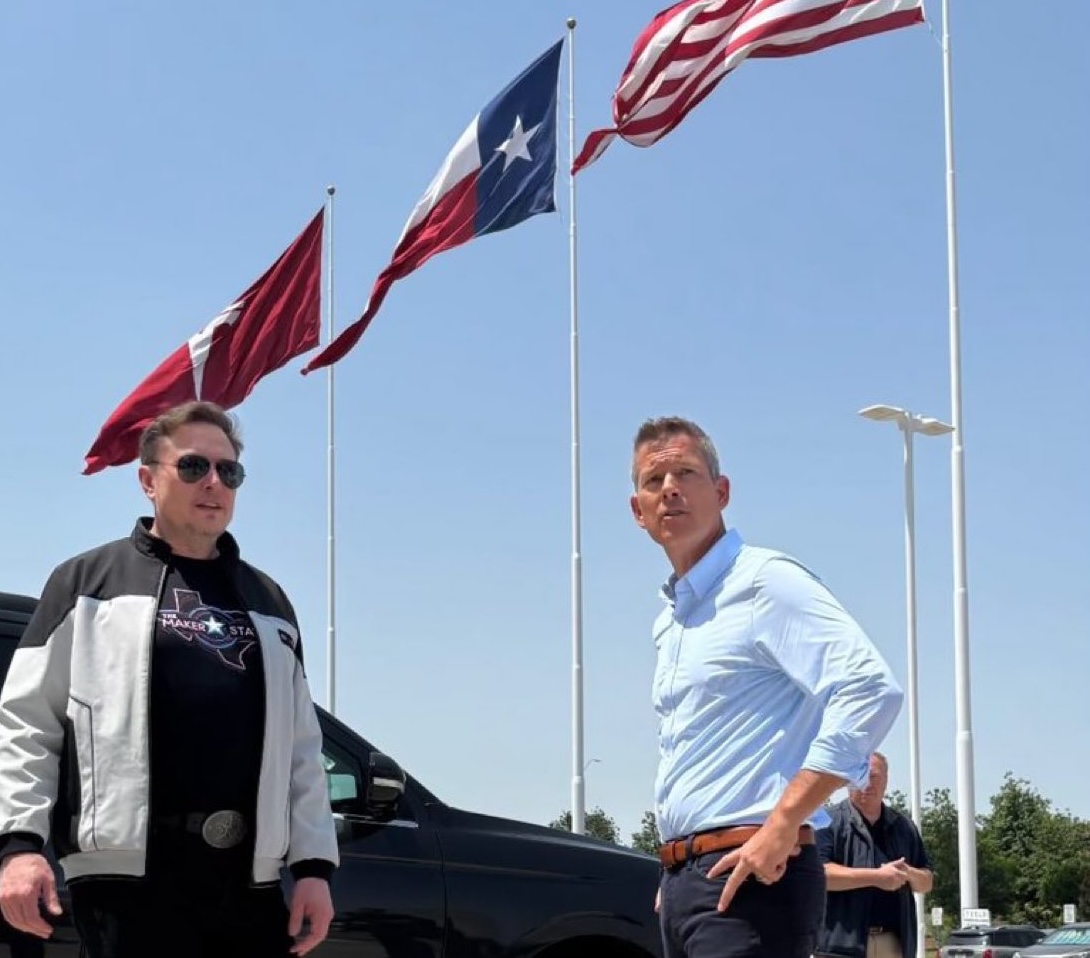
Transportation Secretary Sean Duffy has responded to Elon Musk’s claim that the Federal Aviation Administration turned down free Starlink terminals before last week’s nationwide ground stop, saying the department chose a ground-based network after running into problems with an earlier version of the satellite service. Musk’s reply was a single emoji: “🤦♂️.”
Speaking at a press conference, Duffy said Starlink had been useful in some parts of the system. “I’ve worked well with Elon, and he, Starlink was a great solution for some of our assets in Alaska, but we sent Starlink, in one of its prior iterations, to our tech lab, and, there was some issues that we had to navigate, and we thought that the best method is to have a network that’s based on the ground,” Duffy said, according to a transcript published by ZeroHedge. “Now, I think what he’s doing with Starlink and the speed is remarkable, but, our airspace is very big. We have assets everywhere. And so, again, we used him for different parts of the airspace.”
Duffy did not dispute that the offer was made. He also did not say what problems the FAA found during testing.
The exchange started Monday, when Musk wrote on X, “Free Starlinks for FAA were offered to Sec Duffy, but he said they were not needed. As it turns out, they were,” as Teslarati reported. That post came three days after the FAA grounded departures nationwide on November 13, when its legacy equipment became unstable as data flooded its telecommunications network at 1,000 connection attempts every four to five seconds. The FAA traced the flood to a radar site in Amarillo, Texas, and a radio site in El Dorado, Arkansas, where L3Harris had been installing a new router. Roughly 12,462 flights were canceled that day.
As I was saying …
Free Starlinks for FAA were offered to Sec Duffy, but he said they were not needed. As it turns out, they were.
— Elon Musk (@elonmusk) November 16, 2026
Duffy has also signaled frustration with L3Harris, which runs the FAA’s current network. “I want to get away from L3Harris and get to a new one, but they own the network,” he said. “I can’t cancel the network that they own.” He has asked Congress for $50 billion to modernize air traffic control, arguing against “a patchwork, a fix to a system that’s critical for every single family.”
The FAA’s position on satellite links predates this week. In a July 2025 letter to lawmakers, FAA Administrator Bryan Bedford said the agency “would not use Starlink (or any satellite service) as the sole communications technology” for safety-critical air traffic services. Reuters reported at the time that the FAA was not considering replacing its L3Harris and Verizon contracts with Starlink. Verizon’s FAA Enterprise Network Services contract, awarded in 2023, is valued at up to $2.4 billion over 15 years.
Musk first pressed the issue in February 2025, while he was leading the Department of Government Efficiency, writing that “the Verizon system is not working and so is putting air travelers at serious risk” before correcting himself days later to blame L3Harris. SpaceX said at the time it was supplying Starlink kits to the FAA at no cost and had no intent to take over any existing contract.
Tesla is gearing up Cybercab, its all-electric and fully autonomous ride-hailing vehicle, for a very public debut as it plans to start customer deliveries in December. However, the units that rolled out of Gigafactory Texas this morning seem to differ from what we have seen previously.
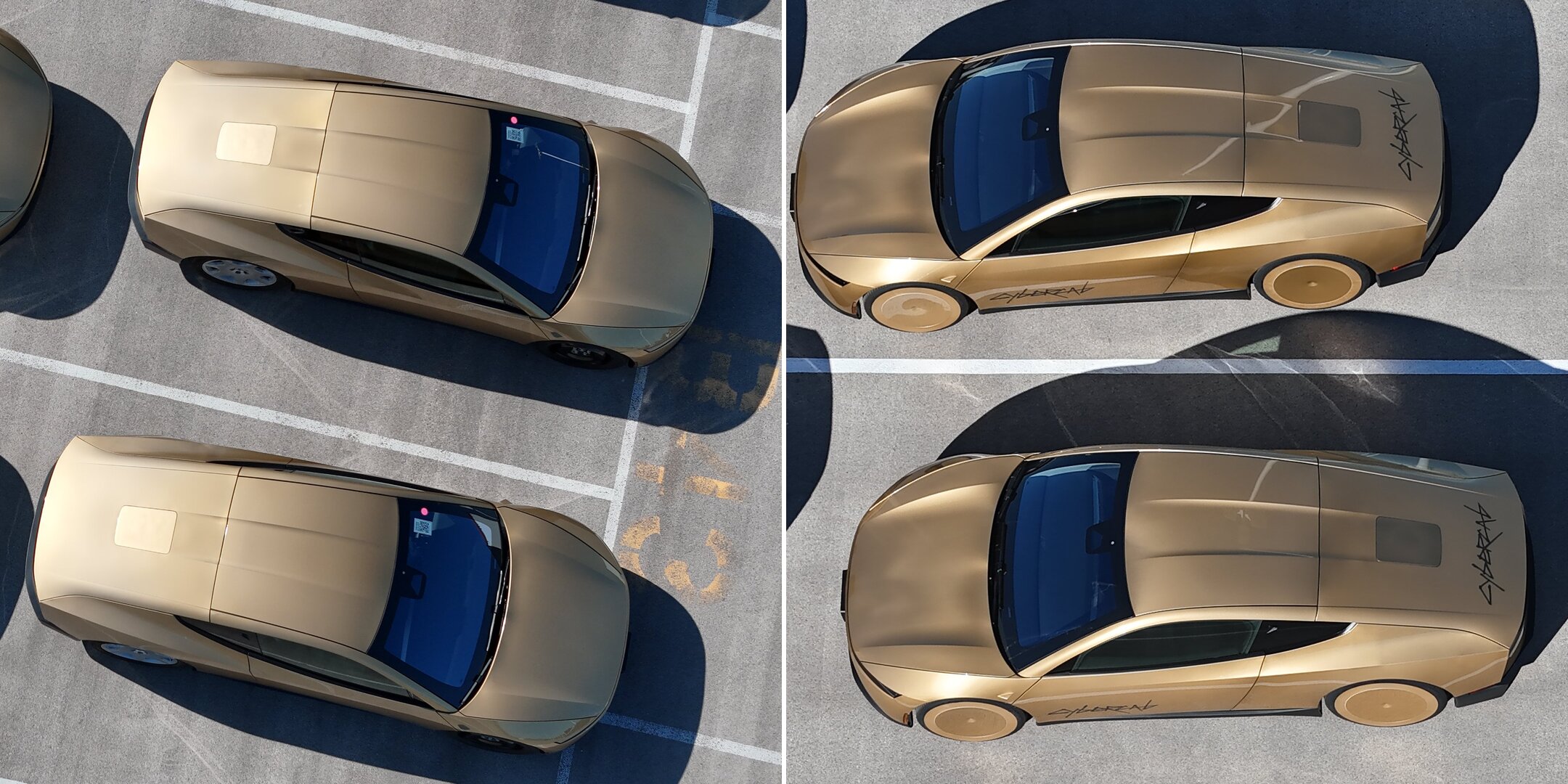
Aerial images captured by drone photographer Joe Tegtmeyer at Giga Texas on November 18 reveal a noticeable update to the appearance of Tesla’s Cybercabs equipped with Starlink. Rows of gold production vehicles sit in the outbound lot, each carrying a flush-mounted Starlink V5 terminal on the rear hatch that looks more refined than the version first shown months earlier.
When Tesla first unveiled the integration in July and displayed a physical example in August, the Starlink hardware appeared as a relatively distinct rectangular panel on the hatch. Later September footage of large numbers of Cybercabs leaving the factory still showed a lighter, more obvious rectangular cover that roughly matched the vehicle’s gold paint:
Images via Joe Tegtmeyer
The newest batch stands out for how cleanly the cover blends into the roof’s character lines. Observers and replies to Tegtmeyer’s post describe the result as tighter and more intentional, sitting flush and following the body contours rather than reading as an added panel.
All of the Cybercabs in the latest images also wear prominent “Cybercab” logos on the doors and rear hatch, confirming these are finished production units rather than early prototypes. They are staged near the factory building, end-of-line areas, and covered transport trailers, with some already lined up for shipment.
The scale and consistency of the installation point to factory tooling rather than retrofit work.
A secondary detail noted in related sightings is a darker tone to the Starlink cover compared with earlier lighter panels. Tegtmeyer himself left open whether the darker finish is deliberate. There are a variety of explanations for it: perhaps for thermal performance, signal characteristics, or simple visual identification—or simply a batch variation still being refined.
Either way, the overall effect is a more integrated, production-ready appearance. For a Robotaxi that relies on Starlink for fleet connectivity, passenger services, and backup data links in areas with weak cellular coverage, the cleaner hatch design is more than cosmetic.
It signals that Tesla is polishing the final visual and hardware details as Cybercab volumes continue to climb at Giga Texas ahead of broader Robotaxi deployment. The vehicles now look to be built with Starlink instead of it being added afterward.

Elon Musk makes surprise stop at Giga Shanghai with a message for Tesla’s China team

Tesla Cybercab without steering wheel and pedals expands public rides to Dallas


