News
Autonomous vehicle red tape gets slashed by Trump Administration

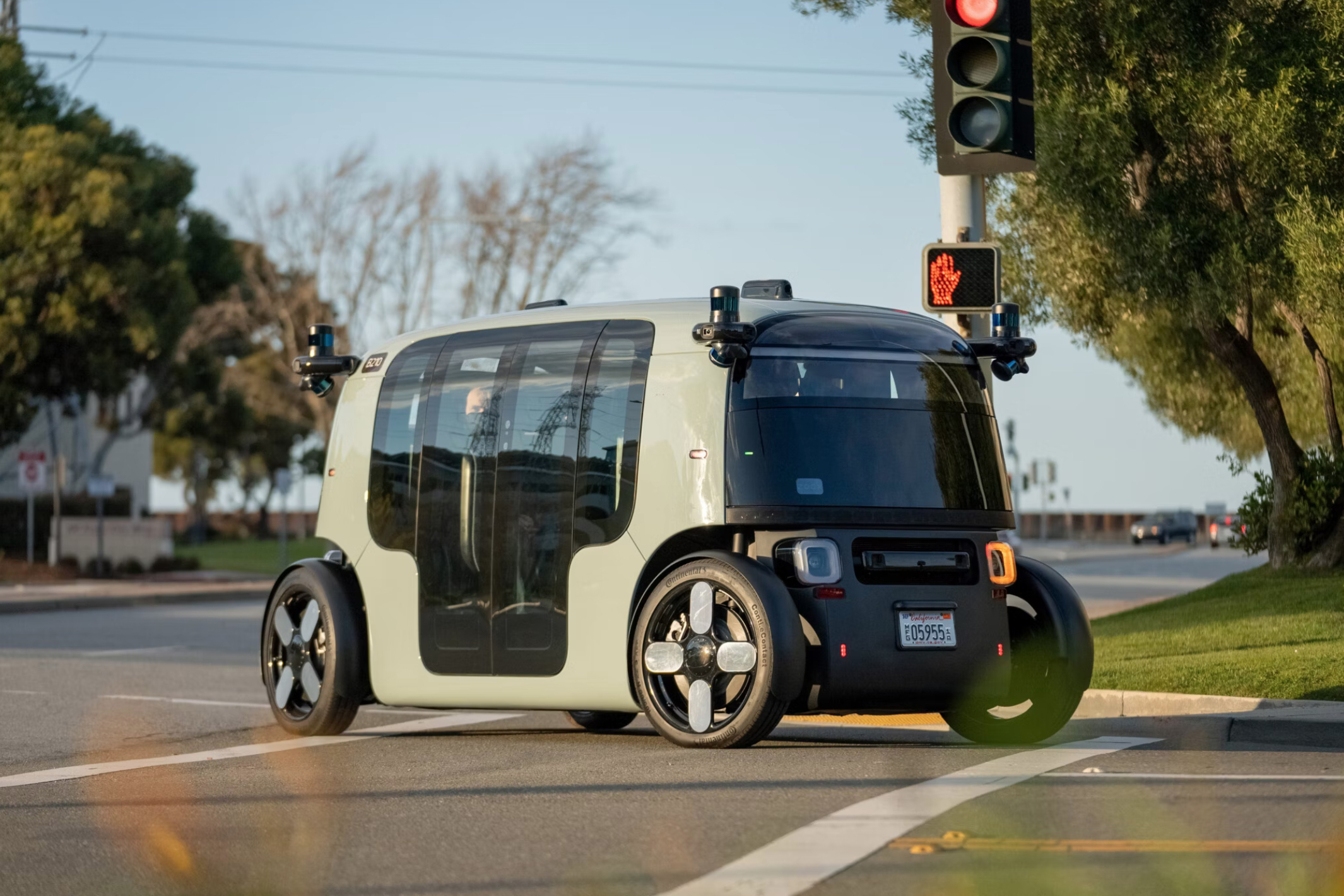
The Trump Administration today made several key moves to help with the deployment of autonomous vehicles by cutting overreaching red tape that has stifled growth and innovation for years.
The moves, which were put forth by the National Highway Traffic Safety Administration (NHTSA), aim to grant temporary exemptions to at least one company currently, although that could expand in the coming months. Additionally, it will work with organizations to develop standards and a sound but efficient regulatory landscape.
Zoox is the only company mentioned explicitly by the Trump Administration in its press release announcing the new terms today. They will receive a temporary two-year exemption that will allow the commercial deployment of up to 2,500 vehicles annually for two years.
There is a potential exemption for Robomart, Inc., which “requests a temporary exemption from certain FMVSS No. 500 requirements for a low-speed vehicle operated by an ADS without a human driver onboard. NHTSA will publish a separate notice seeking public comment on its merits once the initial evaluation is complete,” the agency said.
Here are the five new terms that Secretary Sean Duffy has implemented through the NHTSA today:
- Allow Zoox to commercially deploy its robotaxis through a temporary exemption.
This temporary exemption will allow the commercial deployment of up to 2,500 vehicles annually for two years, subject to an enhanced, adaptable oversight structure that can evolve as Zoox’s technology advances. - Accelerate development of first-ever AV performance standards through a partnership with SAE Industry Technologies Consortia (ITC).
This partnership will fund a three-year, $5 million “A2SCEND” consortium, bringing together experts to gather data and accelerate creation of the first-ever AV performance standards. This project will inform a single national standard for AV safety to eliminate the patchwork regulatory landscape that has stifled innovation for years. - Publish an interim final rule that allows vehicles manufactured prior to an exemption to be eligible for a commercial deployment exemption.
This rule will modernize the application process and improve access to exemptions for innovators, including AV developers, by granting the NHTSA Administrator the discretion to apply temporary exemptions to vehicles manufactured prior to the effective date of an exemption grant. - Streamline the application process for Part 555 exemptions by updating guidance and soliciting feedback from the public.
By updating the Part 555 exemption process—which allows automakers to temporarily sell a limited number of non-compliant vehicles, primarily to test new technologies—NHTSA is aiming to create a more flexible oversight structure for exemptions and summarize recent AV framework activities, including expanded exemption pathways, streamlined crash reporting, and ongoing efforts to modernize Federal Motor Vehicle Safety Standards (FMVSS). - Establish a new Federal Docket for public feedback on NHTSA’s updated safe AV development and deployment guidance.
NHTSA is updating its technical guidance for AVs for the first time since 2017—focusing on key safety areas like emergency responder interactions, safety management systems, remote assistance, and post-crash behavior to help the industry scale up driverless deployments safely.
Additionally, the NHTSA said it has modernized some safety standards by proposing updates to:
- FMVSS 102 – Transmission shifting
- FMVSS 103/104 – Windshield defrosting and wiping
- FMVSS 110 – Tire placards
- FMVSS 135 – Braking systems
- FMVSS 101 – Controls and displays
- FMVSS 108 – Vehicle lighting
- FMVSS 111 – Mirrors and rearview display
- FMVSS 126 – Electronic stability control systems
- FMVSS 201/208 – Sun visors and warning labels
These changes aim to make the regulatory process for autonomous vehicles more streamlined and efficient, which could help the U.S. gain dominance over autonomous vehicle systems moving forward.


Elon Musk
Elon Musk and Trump are closer than ever, and Tesla could be the big winner
Elon Musk sat beside Trump as AI leaders signed a voluntary White House safety accord.

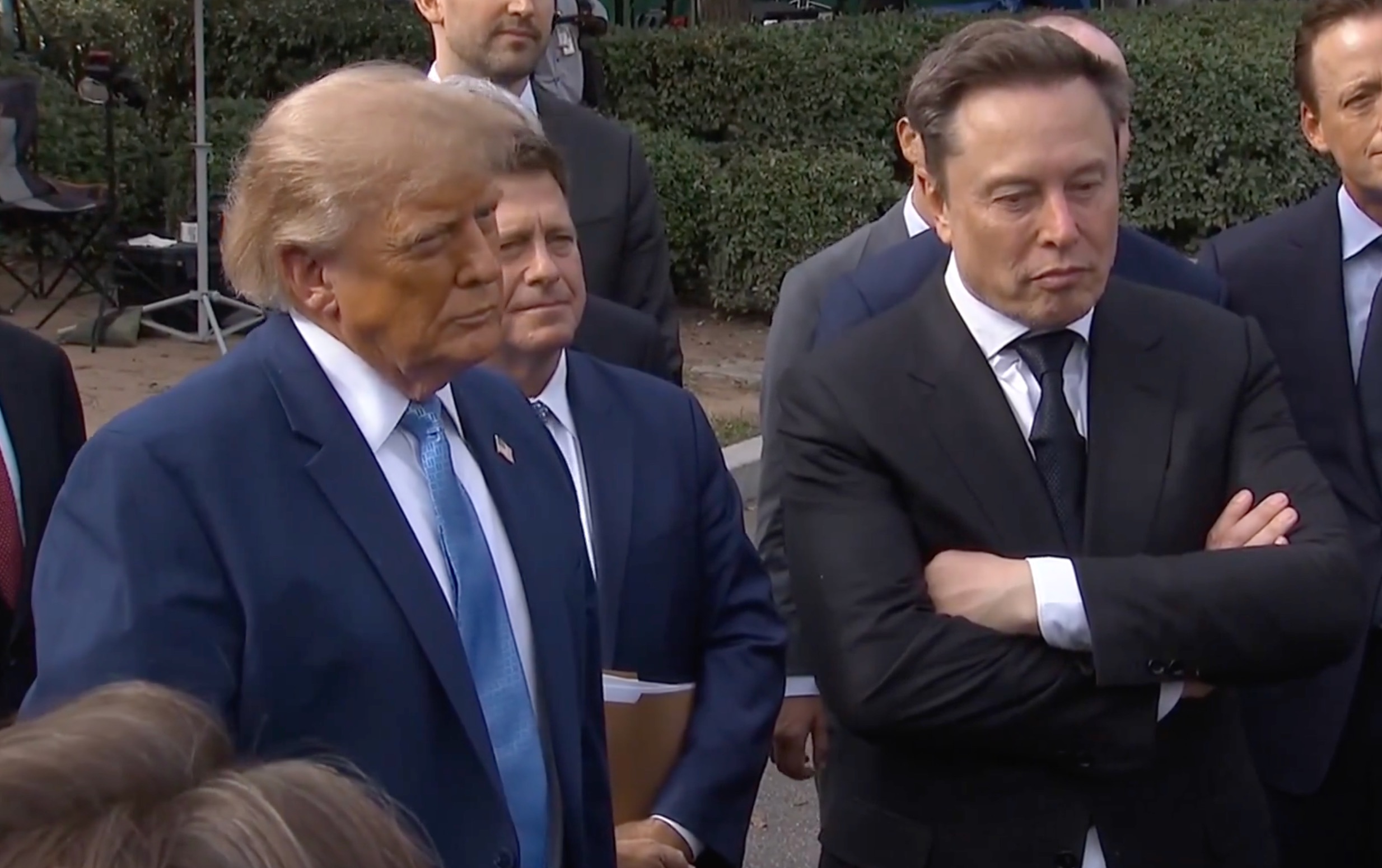
Elon Musk had the seat right next to President Donald Trump on Tuesday as the White House hosted the leaders of America’s biggest artificial intelligence companies for a lunch that ended with a voluntary industry accord on AI safety.
A seating chart Trump posted on Truth Social placed Musk at the president’s left in the East Room, with Nvidia CEO Jensen Huang on his right, according to an Associated Press reporter. Anthropic CEO Dario Amodei, OpenAI President Greg Brockman, Meta’s Mark Zuckerberg, Google’s Sundar Pichai, Microsoft’s Satya Nadella and Amazon founder Jeff Bezos also attended, along with Vice President JD Vance and House Speaker Mike Johnson.
🚨 Elon Musk is currently speaking to the media alongside President Trump after a meeting with AI Leaders in Washington today
Trump says AI is now being called “Super Intelligence” or SI pic.twitter.com/woJJqUVP9B
— TESLARATI (@Teslarati) September 29, 2026
After the lunch, Trump told reporters outside the West Wing that the executives had signed “The White House Accord on Superintelligence: A Joint Commitment on Frontier SI Responsibilities.” Johnson described it as a voluntary statement of principles built on “robust internal controls and layers of internal and external review,” while Zuckerberg said company boards would independently review reports from outside auditors. Trump called the document “morally binding,” said he would name a new AI czar within days, and signed an executive order formally renaming artificial intelligence “super intelligence,” CNBC reported.
Musk was not in the room for Tesla alone. Since SpaceX absorbed xAI, he runs the company behind Grok and one of the largest AI training operations anywhere. On September 25, he said another 220,000 Nvidia GB300 chips would come online at Colossus 2 within a week, with more expected in November and December.
“I think it is worth highlighting the positive benefits of A.I. … S.I., pardon me.”
“Thank you.”@elonmusk catches his own slip after calling the technology “A.I.” while speaking alongside President Trump and other tech leaders, quickly correcting himself to “super… pic.twitter.com/fH7CFileNb
— Fox News (@FoxNews) September 29, 2026
SpaceX confirms third massive compute deal at Colossus data center
Musk also used the trip to restate his energy ambitions. “SpaceX is aiming together with Tesla to do 200 gigawatts of solar production per year,” he said at an event in Washington. It is the same combined target he laid out that feeds directly into Terafab, the Tesla and SpaceX chip venture that will need enormous amounts of power.
The showing between Musk and Trump has come a long way, since the two had the very public split in mid 2025 after Musk opposed the “Big Beautiful Bill” and left DOGE. They reconciled at Charlie Kirk’s memorial that September, and Trump later called their relationship “good”. Since then, Musk has joined Trump’s China delegation in May and attended last week’s White House state dinner for Chinese President Xi Jinping.
For Tesla, that access to government official could pay dividends. As Teslarati noted in January, federal autonomy rules, NHTSA oversight and a single national standard for driverless vehicles all run through an administration Musk can more easily reach directly as Tesla works to scale Robotaxi and Cybercab beyond Texas.
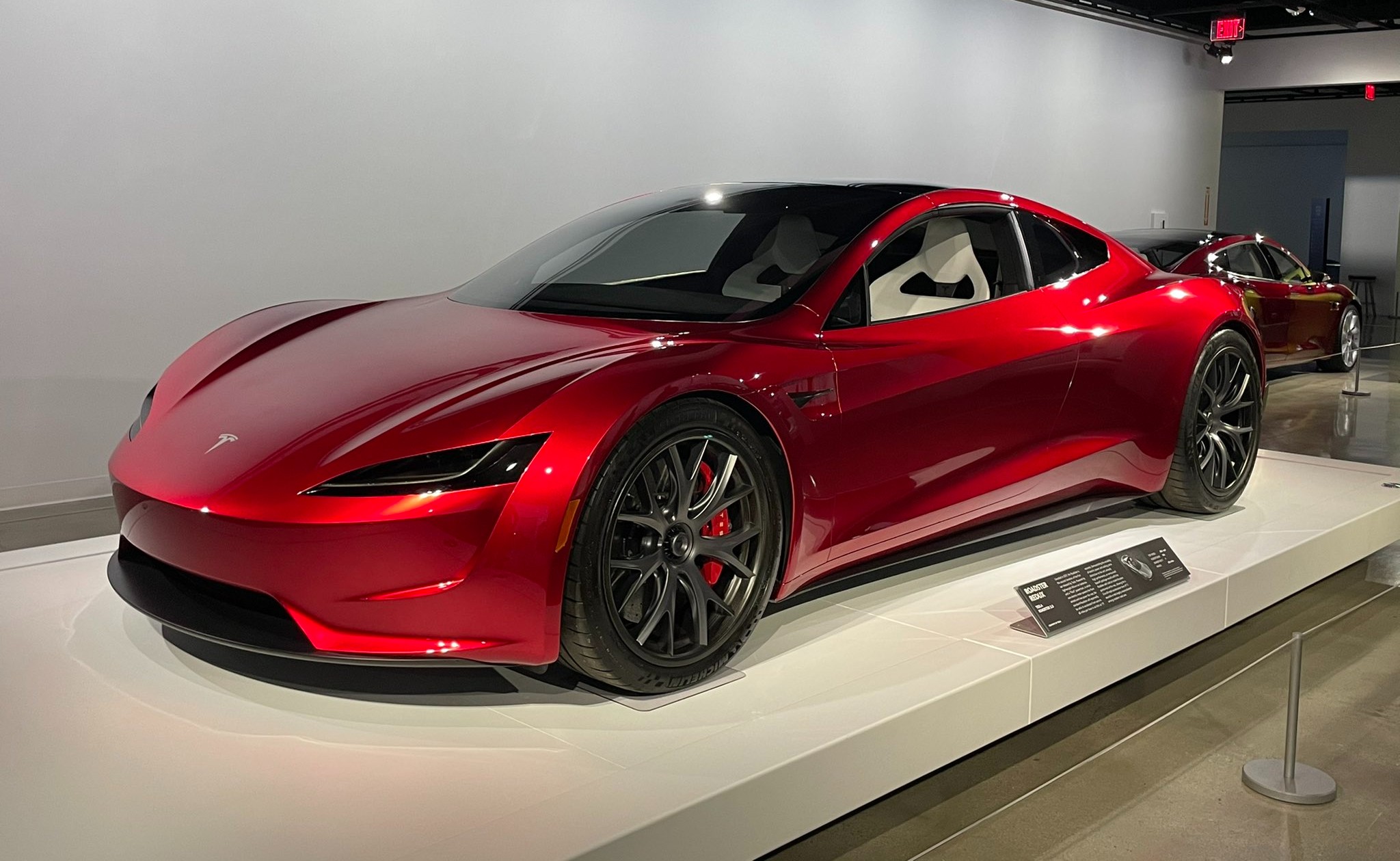
Ahead of its highly anticipated unveiling, Tesla’s upcoming Roadster received a new patent that aims to keep it grounded while enabling white-knuckle speeds.
The patent, which was granted on September 29, is titled “Electric Car Fan,” bluntly stating its design but not its purpose, which is further detailed in the text of the application. Interestingly, it comes two weeks before the Roadster event, which was delayed due to unfavorable weather on Thursday, which could cause issues, as Tesla revealed the event must be held outdoors.
🚨 The design uses electrically driven ducted fans, typically shown as a row of four at the rear, powered by the vehicle’s high-voltage battery.
The fans pull air from an underbody inlet, route it through ducts, and expel it from a larger rear outlet that functions as a… https://t.co/CHQB9u9UA3 pic.twitter.com/QVXmWTdggh
— TESLARATI (@Teslarati) September 29, 2026
The purpose is to solve a problem that is relatively unique to high-performance electric cars. Instant motor torque is useless if the tires cannot plant that force, and conventional wings and underbody tunnels generate downforce only when air is already rushing past the car. At launch, in slow corners, and under hard braking from modest speed, passive aerodynamic additions contribute essentially very little to downforce.
Tesla’s filing says that its fans can produce the downforce needed, independent of vehicle velocity, then ease off so the same hardware does not pile on drag at highway speeds, an issue that can come from excessive body modifications.
The hardware outlined in the patent is a ducted-fan package that is placed into the rear of the vehicle. An underbody inlet between the rear wheels feeds a duct that rises to a wide outlet in the diffuser. In that outlet are four axial fans, which are divided by vertical strakes. They will pull air from under the floor and press the chassis onto the pavement.
The language in the patent claims it can cut drag rather than add to it while simultaneously increasing downforce.
Tesla Roadster event requires restricted airspace, and the FAA obliges
The fans run from the high-voltage battery and a vehicle control system, so output can be modulated rather than left on as a fixed penalty.
There are additional strengths that can come from this design, like extra tire load at low speed, which can contribute to even more face-melting acceleration rates, decrease stopping distance, and sharper turn-in before a wing has air to work with. Adjustable fan speed lets the car add grip only when needed, so it can be catered to the force of a turn or acceleration.
These designs were previously used, and banned, in some competitive settings. The Brabham BT46B was banned in F1 competition for using a similar fan design and being labeled as too effective.
Tesla still lists the Roadster as having a sub-two-second 0-60 MPH time and a 250-plus-MPH top speed, and there are expectations for a SpaceX cold-gas thruster package that could not only increase acceleration but potentially cause the vehicle to hover.
It is important to note that a patent is not a production part, and packaging four fans in a rear diffuser, managing noise, and potential debris are all things Tesla must consider. With that being said, the patent being granted shows Tesla is designing the Roadster to go fast, but it is also attempting to use unique strategies to combat any issues it might have at those speeds.
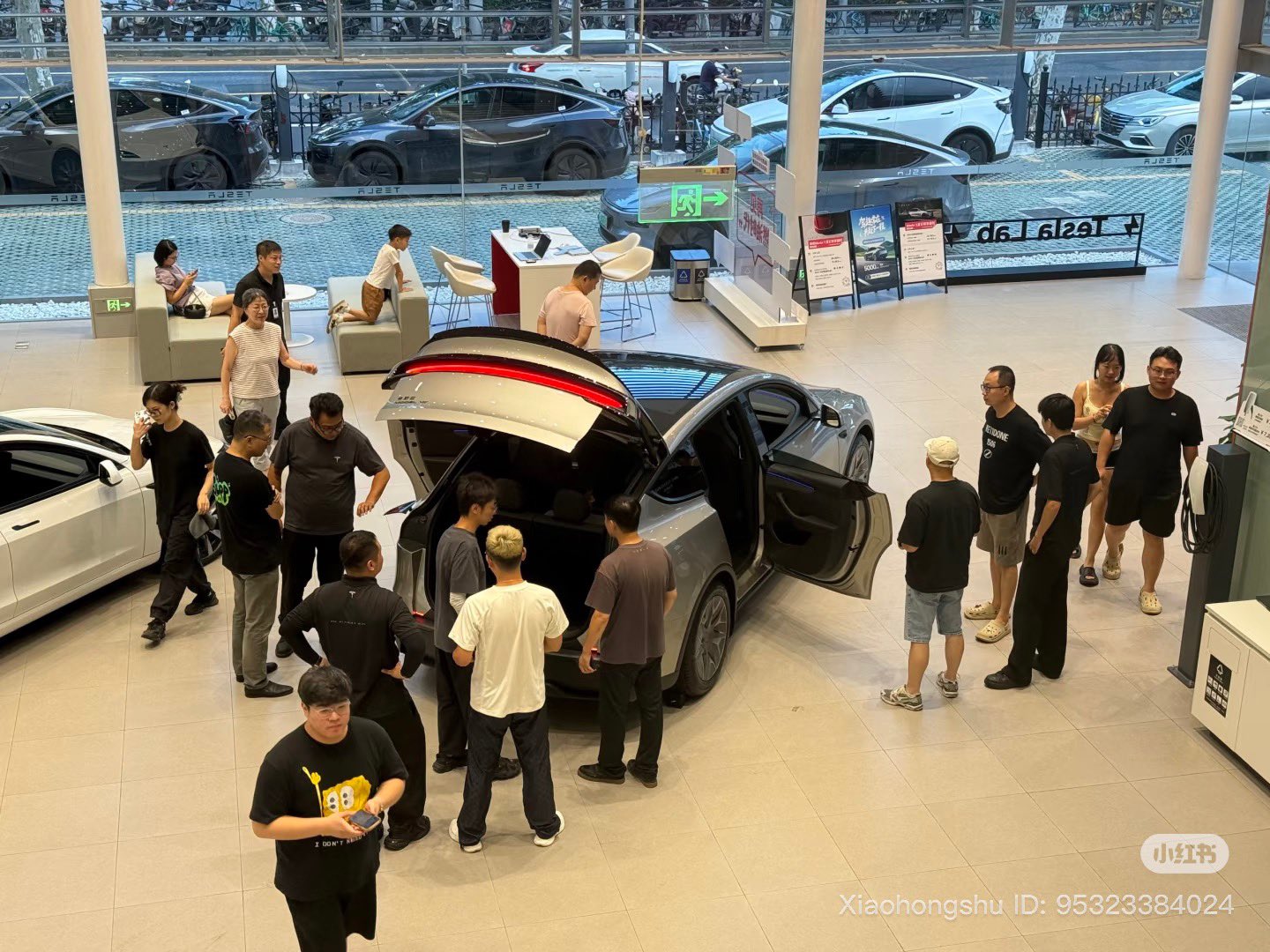
Tesla (NASDAQ: TSLA) showrooms have been picked clean ahead of the end of the third quarter of the year, as demand looks to be strong and delivery estimates for new vehicles are pushed into late 2026 and early 2027.
Tesla appears to have sold out of many of its Model 3 and Model Y trim levels in the United States, as only the Model Y RWD and Model Y All-Wheel-Drive are available for delivery before the end of the year.
Additionally, many showrooms are either completely empty or void of all but just one demo unit within the buildings themselves in an effort to bolster what could be one of Tesla’s best quarters in vehicle deliveries in recent memory.
I’m at Tesla right now and when I walked into their showroom I was shocked to see it basically empty.
I asked one of the people working there where all of the cars are “Gone – it’s the end of the quarter and we’ve sold out of everything… including the display vehicles”So… pic.twitter.com/rN7s3gE6sJ
— Devin Olsen (@DevinOlsenn) September 25, 2026
All the cars are gone from Tesla Century City!
All they have is Model Y L, a self-driving video playing on the background. I guess the best product is no product. Either that or they just sold the showroom cars. pic.twitter.com/mzCjWaXwww
— Whole Mars Catalog (@wholemars) September 26, 2026
Show room is empty. I asked and they have sold the demo cars too. Delivery numbers better be outstanding! pic.twitter.com/jq5N28Q6tZ
— Electric Brawl (@3lectricBrawl) September 22, 2026
Additionally, when I spoke to the guys at Tesla Mechanicsburg two weeks ago, when I returned the Model Y L, their third hauler of the week had just arrived, and every vehicle on it, along with every vehicle in their delivery lot, was accounted for and had a name attached to it for delivery.
Talking to the guys at the Mechanicsburg showroom on Friday, they couldn’t believe they had ANOTHER hauler coming in of cars for delivery—and each was accounted for
No car just sitting in inventory. They’re expecting a BIG quarter, and this is more than just the Y L https://t.co/ce801GkKVv
— TESLARATI (@Teslarati) September 21, 2026
Tesla saw a 25 percent increase in deliveries in Q2 compared to the same quarter the year before. The vast majority of the 480,126 units it delivered, 467,762 vehicles to be exact, were the Model 3 and Model Y.
In Q3 2025, Tesla delivered 497,099 vehicles, once again a figure that was dominated by the company’s two mass-market vehicles. Analysts have unusually wide predictions for this quarter, likely because so many firms missed the Q2 delivery figure by such a substantial margin; Wall Street predicted 408,000 cars, while Tesla delivered 480,000.
Goldman Sachs has Tesla slotted for 435,000 deliveries in Q3, while JPMorgan said it anticipates 482,000. The median guess is about 449,000 deliveries for Q3.
Interested in ordering a Tesla? Use my referral code for three free months of Full Self-Driving (Supervised) here.

Elon Musk and Trump are closer than ever, and Tesla could be the big winner

Tesla Roadster’s new patent preps white-knuckle speeds, keeping it grounded


