News
Tesla Full Self-Driving v14.3.7 early review: FSD saved me from an accident

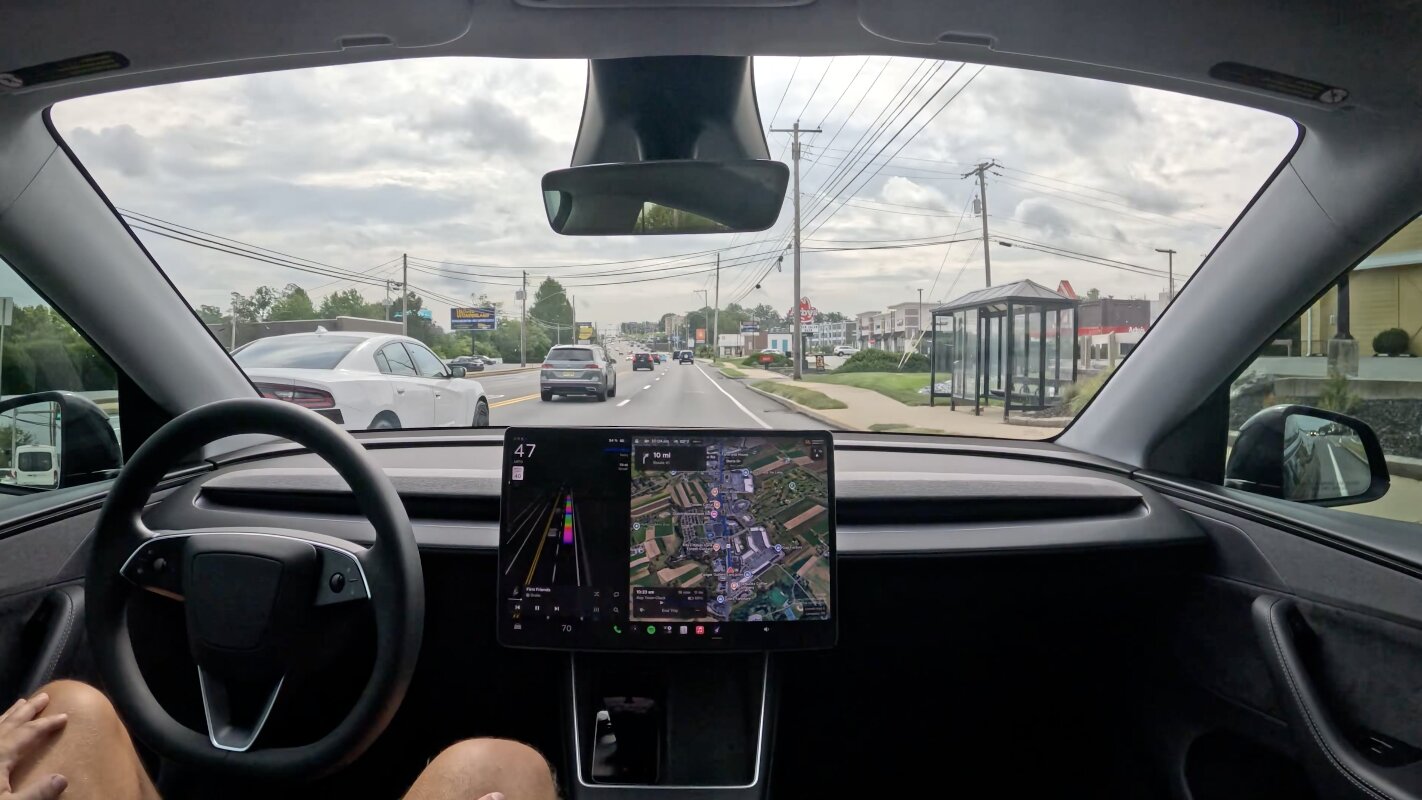
Tesla released Full Self-Driving version 14.3.7 yesterday, and after about 90 miles of testing today, it is evident there are some definite fixes from version 14.3.6, which I wrote about last week and called a regression.
Within the first 40 minutes of my drive on v14.3.7, it saved me from getting into an accident with an unaware Dodge Charger driver, and some of the things Tesla seemed to miss in v14.3.6 were definitely improved. All in all, the release so far has some really great performance, and I’m looking forward to testing it further.
For now, here’s everything I noticed with v14.3.7:
Overall Improvement
Just generally speaking from a ride perspective, this was a really great experience. A lot of the hesitancy I experienced on v14.3.6 was gone. There were no instances of brake-stabbing, wheel-jerking, or any uncertain or unconfident movements. It was void of anything that I felt made it timid with v14.3.6.
The one thing I do hope to see down the road is a smaller need to adjust Speed Profiles so often. Because Tesla calls FSD “Supervised,” I’m okay with needing to hit the scroll wheel a few times a drive.
However, I hope that things can be incrementally improved upon with speed. Sometimes it’s too fast; other times it’s too slow. It’s a difficult thing to hone in and refine, but I hope it eventually gets there.
I didn’t notice any significant left lane camping or any behaviors that were completely out of line. I am hopeful that this opinion does not change, but after driving a few days with this version and putting it in a variety of different situations, you are exposed to more behaviors, some of which are not necessarily what I’d prefer.
The big things to notice, at least in my experience thus far, are that the major issues with previous versions — meaning the braking stabbing and wheel jerking — simply weren’t there. That’s enough to already consider this progress compared to .6.
Manual Signal Override is More Responsive
On .6, I had quite a few issues with FSD ignoring my manually input turn signals. If Tesla wants to call it “Supervised,” then the car should not ignore any input the driver gives. If I touch the accelerator on FSD, the car speeds up.
🚨 Tesla FSD v14.3.7 obeying manual turn signals https://t.co/6eqToXpQfC pic.twitter.com/vHBlFQ4PDV
— TESLARATI (@Teslarati) August 2, 2026
The car did a great job of obeying my turn signals when I wanted it to change lanes, which is welcome.
Parking Lot Performance
Before .6, I traditionally took over in nearly every parking lot my car entered, because I knew it would not park somewhere that I wanted, and usually, it was just a tad too timid in this setting.
The one bright spot of .6 was how well it handled parking lots. This continued with v14.3.7:
I’m always really happy to see progress at all, but once parking preferences come to FSD, as long as this performance is still around, that could potentially be the biggest improvement I’ve seen in FSD in the year I’ve been using it personally on a daily basis.
Full Self-Driving Averts Disaster
A Dodge Charger changed into my lane without checking if I was there, running me off the road. FSD made the initial avoidance maneuver; I grabbed the wheel out of instinct, looked in my side mirror to ensure I had nobody following closely behind, hit the brake, and straightened the car back up to avoid a curb:
🚨 Guys this is why you all NEED to stay vigilant behind the wheel, even on Tesla Full Self-Driving
Human drivers are UNHINGED and have no idea what they’re doing anymore. This was a kid obviously younger than 20 years old with zero awareness.
First drive with v14.3.7 https://t.co/1vTbCMpCn8 pic.twitter.com/lz7KKEF6bj
— TESLARATI (@Teslarati) August 2, 2026
There have been quite a few responses to this video stating that I should never have grabbed the wheel. To be honest, I really wish I had not done so, because I do believe FSD would have avoided any sort of collision with anything, including the car or the curb.
However, this was the first time I had ever been this close to being hit while using FSD. My natural reaction was to take over. I think if I had had something like this happen before, my reaction might have been different.
Hitting the brake avoided hitting the curb, while FSD swerved to avoid the car. My concern after the car was clear of my front end was the curb. All in all, I’m really happy with how things turned out, and I think anyone could be a critic of how I handled it. I only had a split second to really make a decision, and thankfully, any damage was avoided.
It is clear FSD managed to avoid the car coming down before I was able to. I truly credit FSD for avoiding the collision.
What Needs to Improve
Better Recognition of Potholes, Uneven Roads, Sharp Changes in Roadway/Bumps
On Friday, my Fianceè and I were in the car, and FSD was driving us. We crossed over a roadway that has a traffic light, and FSD was traveling at 40 MPH on Standard, 5 MPH over the speed limit. Everything was more than reasonable.
However, the road we were crossing at the light has a major bump both as you start and finish crossing it. Without a speed reduction, your car can go airborne. The Tesla did just this on Friday on v14.3.6; it was an uncomfortable bounce that pretty much confirmed I would not ever let FSD go over again unless we were sitting at that intersection when there is a red light.
I even tried scrolling down into Sloth quickly, but I ended up just taking over:
This is that big bounce that I mentioned in the quoted post.
It’s just a tad too drastic to take at the speed FSD wants to go over it. You can see me quickly swipe down into Sloth, but I intervened. https://t.co/K20PK9ysBg pic.twitter.com/81Oc82ZJcZ
— TESLARATI (@Teslarati) August 2, 2026
A few people have said it remains related to the vision-based approach and its difficulty comprehending 3D. This is a huge issue because this can cause serious damage at certain speeds.
Navigation
Nothing new here. I still turn off “Online Routing” quite frequently to get the car to take logical routes from time to time.
Auto Wipers
Auto Wipers are just plain bad. I really hope Tesla just uses a rain sensor. I thought they had improved at one point, but I still get dry wipes, Speed 4 on a drizzle, and Speed 2 on a steady rain. In reality, these should be switched.
You can watch our full review of Tesla Full Self-Driving v14.3.7 below:
🚨 Tesla Full Self-Driving v14.3.7 saved me from an accident! FULL REVIEW: https://t.co/1vTbCMpCn8 pic.twitter.com/9mHmKVoMVA
— TESLARATI (@Teslarati) August 2, 2026



Give the gift of Tesla upgrades.
Shop for someone else or treat yourself. Get more shopping power with a Teslarati gift card.
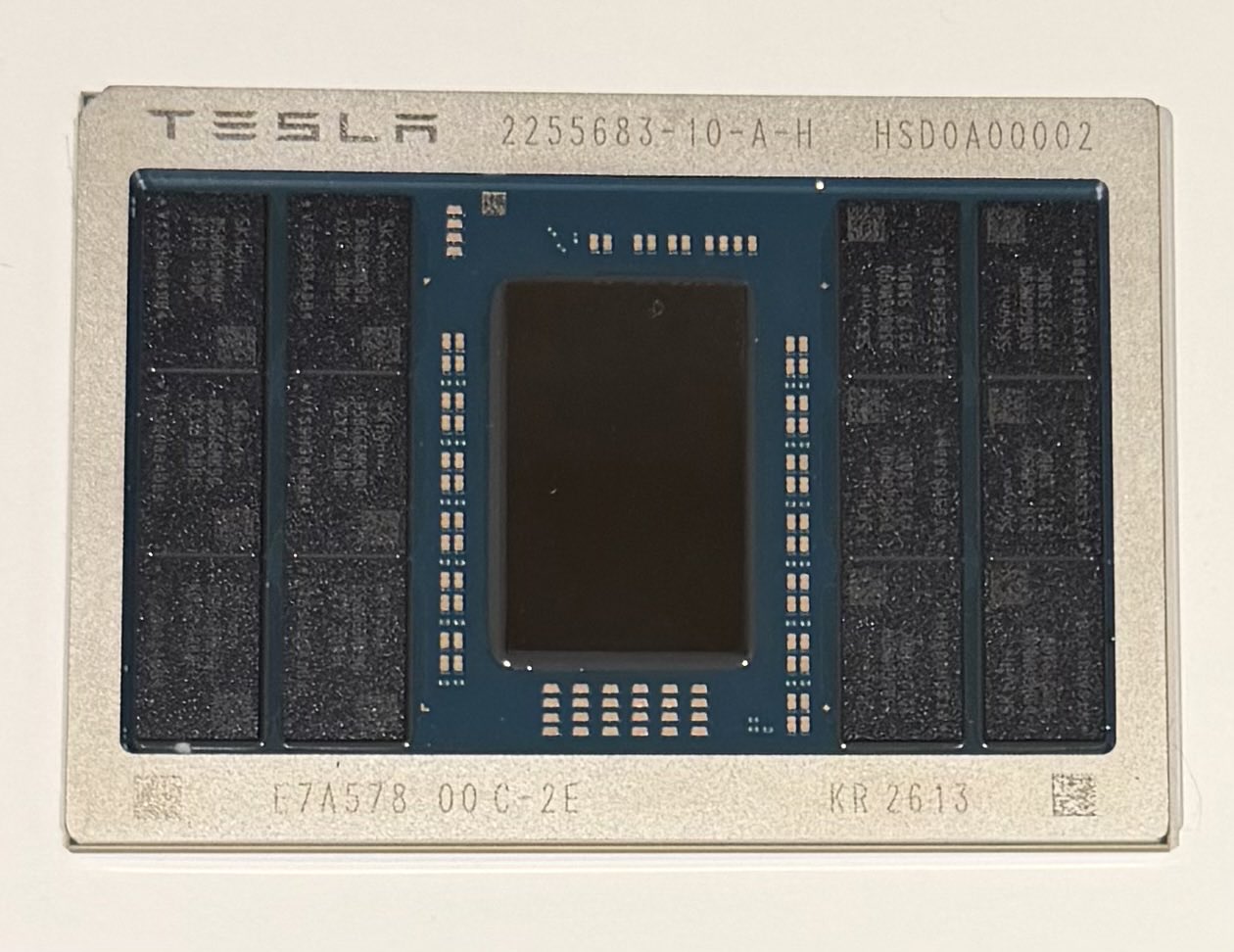
Tesla will set aside its AI5 chip exclusively for the Optimus robot, a product that CEO Elon Musk said he believes will one day be the biggest in the world. The decision sparked conversation regarding AI4’s prowess and capability as a self-driving chip, and less-than-fond memories of the Hardware 3 conundrum that many owners find themselves in to this day.
Musk stated on November 22 that Tesla vehicles will remain on the AI4 computer, which he said it sufficient to achieve “superhuman driving,” while the next generation AI5 chip will be set aside for Optimus. Musk was initially asked by a Hardware 3 Model Y owner when AI5 would appear in new cars.
@JBrunner8484 @BLKMDL3 @wholemars It’s going to Optimus. Cars will remain at AI4. That’s enough to solve superhuman driving.
— Elon Musk (@elonmusk) November 22, 2026
“It’s going to Optimus. Cars will remain at AI4. That’s enough to solve superhuman driving,” Musk wrote. The exchange quickly drew high engagement and follow-up questions from owners about potential retrofits for AI3 vehicles and the status of FSD.
The statement is consistent with some comments Musk made in the first quarter earnings call. In April, he said that AI5 would be prioritized for Optimus and the company’s AI training clusters rather than vehicles, because AI4 had already proven to offer enough computing capability for unsupervised self-driving at safety levels well above that of humans.
Musk also said on that call that Hardware 3 vehicles would lack the capacity for unsupervised self-driving, and that Tesla would be working on an upgrade plan for those owners if they wanted to bolster their cars with new cameras and a computer.
At one time, HW3 owners were led to believe fully unsupervised FSD would be capable with their vehicles. That revelation was dismissed and earlier this year, they were given clarity.
AI4, also known as HW4, is the computer currently installed in new Tesla vehicles. It powers recent FSD software, including the v15 series that introduced the “Reality View” overhead visualization generated in real time on the car’s AI accelerators. Tesla has also discussed an intermediate AI4+ or AI4.5 variant focused mainly on increased memory and modest performance gains, driven in part by rising memory and storage costs.
Tesla Full Self-Driving v15: Reality View review, new features explained
Musk noted around the same time that the AI4 computer itself had roughly doubled in cost due to those component price increases.
By directing AI5 toward Optimus, Tesla is allocating its highest-performance silicon to the humanoid robot and training infrastructure. AI5 has reached tape-out and entered pilot production, with broader volume manufacturing targeted for 2027.
The decision underscores Tesla’s view that vehicle autonomy can be solved on existing AI4 hardware while the more complex perception, planning, and motor-control demands of a general-purpose humanoid robot benefit from the next chip generation.
For current and prospective Tesla owners, Musk’s message is that AI4 cars already have the hardware headroom necessary for fully autonomous travel. Customers should see if as welcome clarification that could influence purchasing decisions for them moving forward.
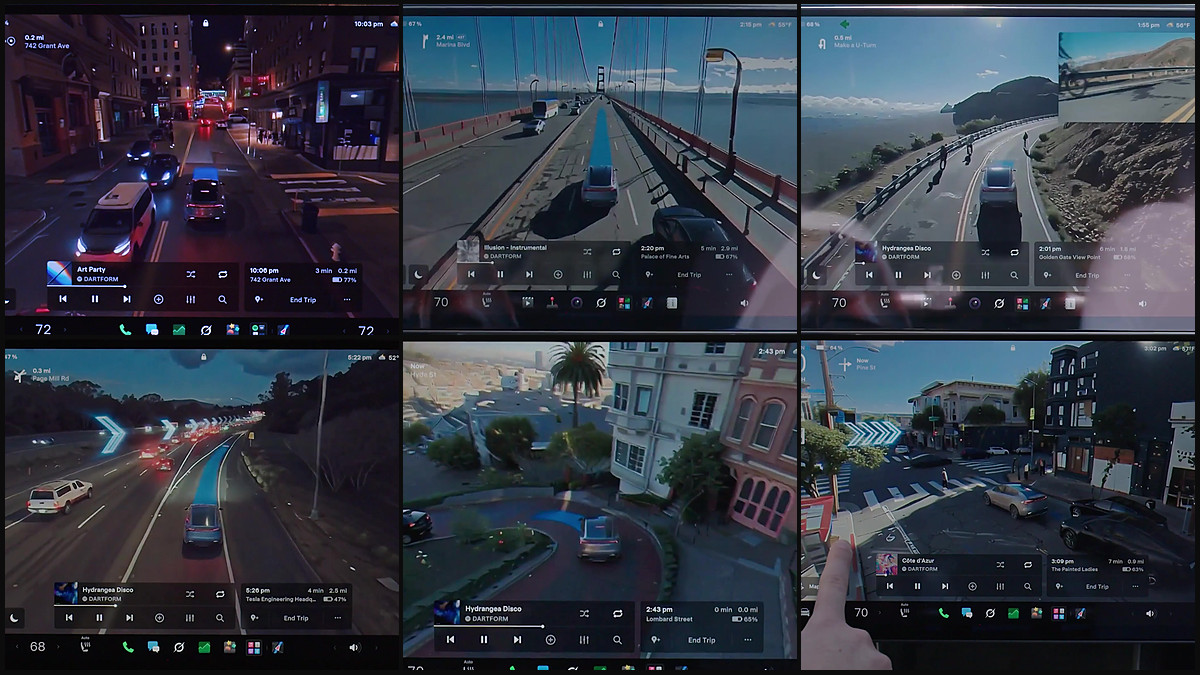
Tesla Full Self-Driving version 15’s biggest feature, “Reality View,” has one complaint, but in typical fashion, CEO Elon Musk already announced a solution.
Upon the release of the v15 Full Self-Driving suite on Saturday, one of the first impressions of the new Reality View feature is that there is a bit of input lag on the screen when dragging your finger to change perspectives. The rendering is also a fraction of a second behind what you would see out of your windshield.
Tesla Full Self-Driving v15: Reality View review, new features explained
Here’s my first impressions of the Reality View feature. You can hear me explicitly mention that it is not quite as responsive as past Driver Visualization techniques that Tesla has used:
🚨 Tesla Reality View – First Impressions https://t.co/uSTS94P8Qg
— TESLARATI (@Teslarati) November 22, 2026
Upon the initial impressions that we and many other Tesla owners put out, Musk was able to show that the company is aware of the slight latency in FSD v15, but it can be easily combatted.
He already has a solution that will resolve any lag or latency that is present:
“Currently, the latency is a bit high due to compute constraints, but we have ways to interleave newer UVE features along the diffusion transformer layers to cut roughly 35% of the latency.”
The primary near-term fix does not require new hardware. Tesla plans to interleave newer UVE features along the layers of the diffusion transformer. By injecting fresher encoder data deeper into the denoising process rather than relying solely on earlier features, the model can converge on accurate visualizations faster.
Musk estimated this change will cut roughly 35 percent of the latency.
Reality View is produced by a roughly 1-billion-parameter diffusion model that runs separately from the main driving stack. It draws on the same sequence of Tesla Universal Vision Encoder (UVE) features used by the larger 3-billion-parameter model that outputs driving actions. The system takes the previous Reality View frame, adds noise, and denoises it into the current visualization.
It generates short video chunks, eight images at 36 frames per second at UI-screen resolution, using half of one TRIP accelerator engine, processing every UVE frame at 18 Hz and spreading the work across four cycles.
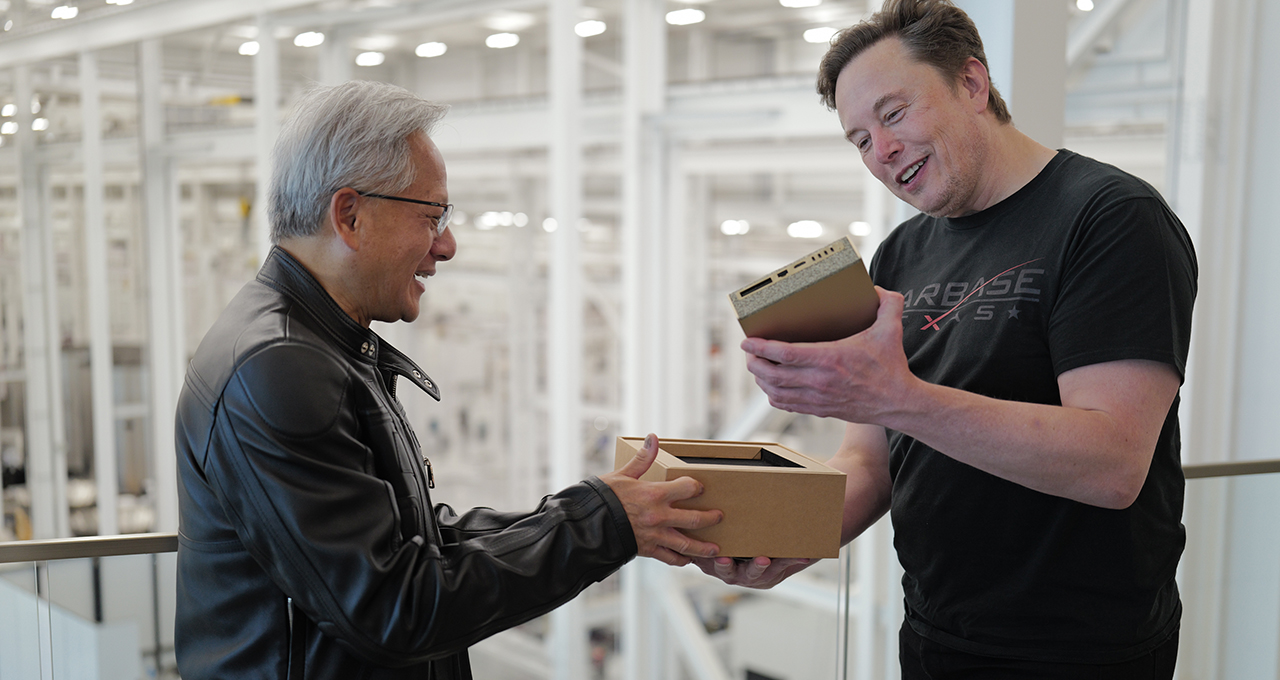
Tesla and SpaceXAI CEO Elon Musk has reacted to Jensen Huang’s return to NVIDIA as President, CEO, and Board Director, a move that Musk has been calling for since Huang was removed by the chip maker’s board.
“The mistake has been corrected,” Musk said as NVIDIA announced in a press release this morning that it would reinstate Huang as President, CEO, and Board Director:
The mistake has been corrected
— Elon Musk (@elonmusk) November 23, 2026
NVIDIA said that it “believes Jensen is the right person to lead NVIDIA, and that his reinstatement is in the best interests of our stockholders, employees, partners and customers,” according to Harvey C. Jones, Chair of the Board.
Huang said he was “honored” to return to the company and said he take his role “with the greatest humility and renewed commitment.”
After Huang was accused of having an affair with a Chinese spy and selling chips to China illegally, he was removed from NVIDIA’s CEO, President, and Board Chair role. This decision was met with a lot of pushback from NVIDIA’s partners, including Tesla and SpaceX, both of which utilize NVIDIA products for its SI efforts.
NVIDIA said it has recently formed a National Security and Export Control Committee to “oversee trade compliance and national security risks. The committee is engaging counsel with experience in national security matters, and such counsel will be retaining advisors with expertise in national security matters.”
The search for a Chief Compliance Officer is also underway, the company said in its release.
The broader implications for Tesla and SpaceXAI as Jensen’s return is now official are positive. Musk and Huang have a great relationship, so their partnership momentum sees a lot of benefits from his reinstatement. Additionally, SpaceXAI is building AI compute exclusively on NVIDIA GPUs.
Musk has said on various occasions that Huang is the best option for NVIDIA, stating that “there’s no one that can really replace Jensen.”
The biggest win for the three parties in the near-term is supply and delivery certainty is now restored. With proper management and Huang’s guidance, it is hard to believe NVIDIA will not pick right back up where it left off.
This gives Tesla and SpaceXAI time for their own chip efforts, and also keeps them locked into what Musk’s views as the leading architecture versus going to competitors or alternatives.
However, there are still some risks and uncertainty, especially considering the underlying investigations into Huang continue, and any residual national security scruitny could complicate government-related work or exports.

Tesla eyes AI5 chip as exclusive Optimus trait, not needed for self-driving

Tesla FSD v15’s ‘Reality View’ has one complaint and Musk has the solution


