News
Gigafactory Will Be Net Zero And Carbon Neutral
JB Straubel says the Tesla GigaFactory will be net zero and carbon neutral. It will get most of its power from solar panels mounted on the roof and nearby.

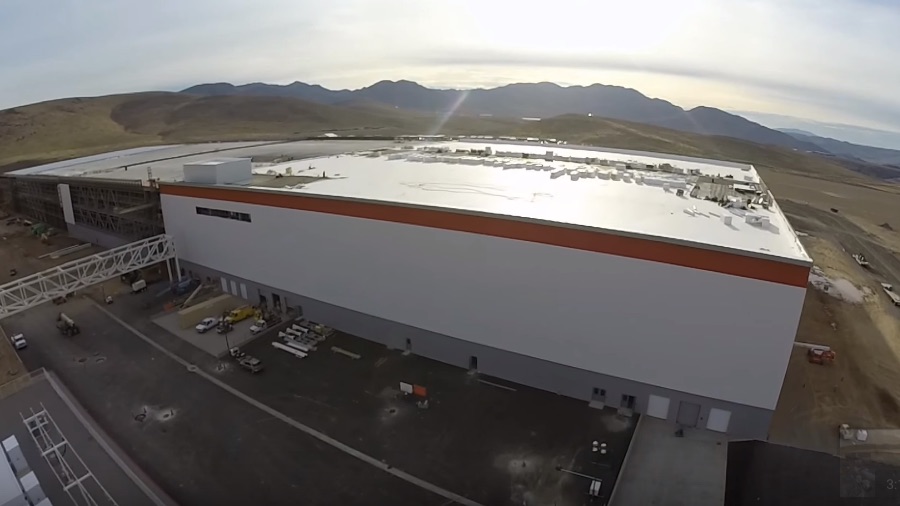

When Tesla Chief Technical Officer JB Straubel made a presentation at the University of Nevada last month, what he said in the Q&A session afterwards may have been more important that what he said during his talk. He told his audience that the Gigafactory will be a net zero facility producing as much energy as it uses.
“[F]rom the get-go, from the first concept of this factory, we wanted to make it a net zero facility,” Straubel said. “So…the most visible thing we are doing is covering the entire site with solar power. The whole roof of the Gigafactory was designed from the beginning with solar in mind. We kept all of the mechanical equipment off the roof. We didn’t put extra…penetrations through the roof that we didn’t need to and it’s a very, very clean surface that we can completely cover in solar. But that’s not enough solar, though. So we have also gone to the surrounding hillsides that we can’t use for other functions and we’re adding solar to those.”
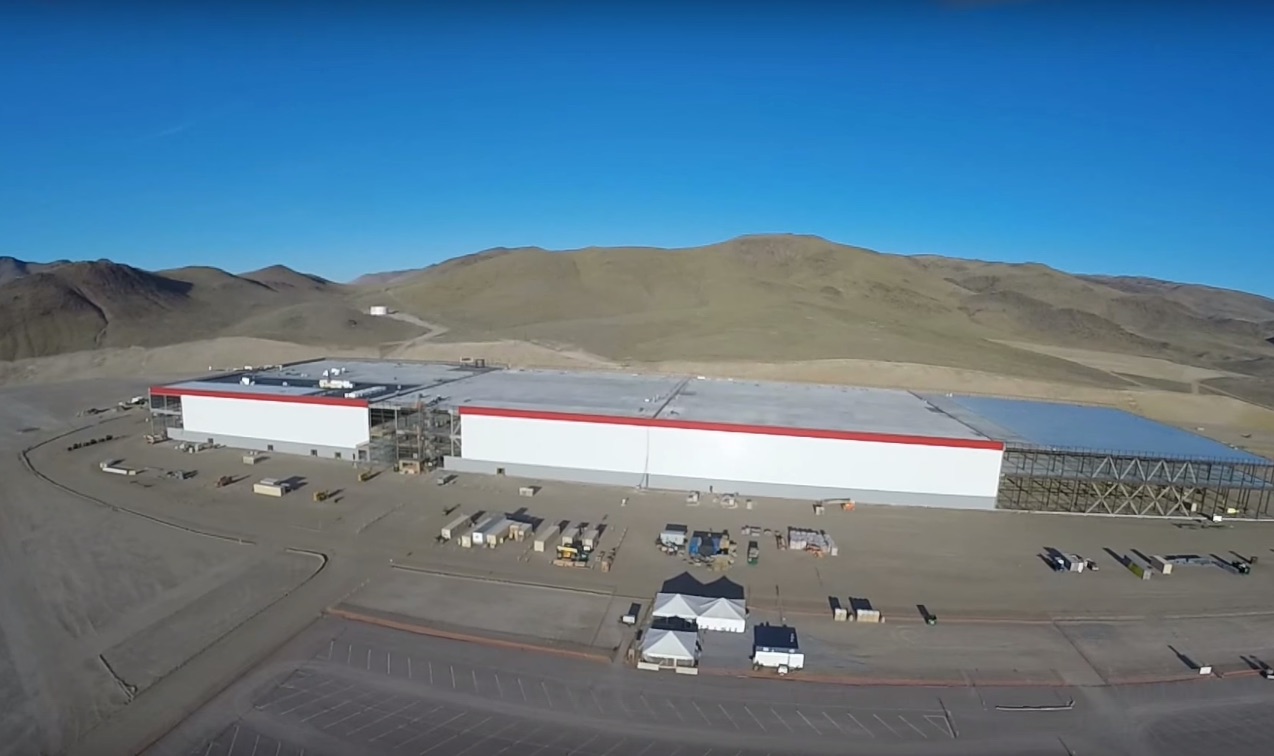
Drone video of Tesla Gigafactory from Sept, 2015
Net zero does not mean the factory won’t be connected to the grid. It means that it will put as much electricity back into the grid as it takes from it. One thing the Gigafactory will not be connected to, though, is a natural gas source. According to CleanTechnica, Straubel told his audience,
“[W]e took kind of a radical move in the beginning and said we are not going to burn any fossil fuels in the factory. You know, zero emissions. We are going to build a zero-emissions factory — just like the car. So, instead of kind of fighting this battle in hindsight, we just said we are not even going to have a natural gas pipeline coming to the factory, so we didn’t even build it. And it kind of forced the issue. When you don’t have natural gas, you know, none of the engineers can say, “Oh, but it will be more efficient, let me use just a little bit.” Sorry, we don’t even have it.”
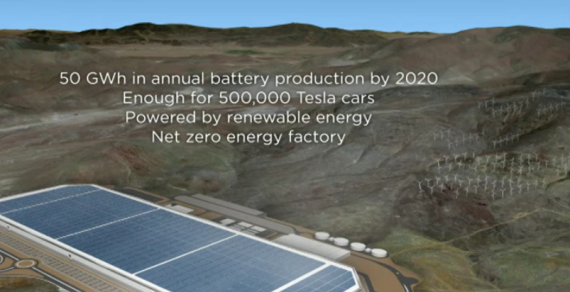
Tesla is committed to showing the world how to break its fossil fuel habit by building high quality electric cars. When it comes to its own manufacturing facility in Nevada, Tesla is not only talking the talk, it is walking the walk. Tesla has been telling us for sometime that the Gigafactory would be net zero and carbon neutral. It says so right on the artist’s rendering of what the building will look like.
Straubel is justifiably proud of the effort Tesla is making to have its Gigafactory be a model for all other manufacturers. When completed, the Gigafactory will not only be one of the largest buildings on earth, it will be an ongoing demonstration project for how to do business in a sustainable, carbon neutral manner. The process has taken a lot of thought and creative solutions, but Straubel made it clear to his audience that he and his colleagues have enjoyed the process.
“[I]t’s kind of been a fun activity and just, a lot of challenges that come up. But in every single step of the process, we have been able to reinvent and come up with solutions. There’s a heat pump technology that actually ends up way more efficient than just burning natural gas for steam. And then, we have a facility that has basically no emissions. The only emissions are related to the vehicles that might go there that aren’t electric or things like that. But we’ll try to attack that one piece at a time.” If Elon Musk has his way, all those old fashioned fossil fuel burning cars and trucks in the parking lot will soon be a thing of the past.
Related News



Give the gift of Tesla upgrades.
Shop for someone else or treat yourself. Get more shopping power with a Teslarati gift card.
Elon Musk
Elon Musk makes surprise stop at Giga Shanghai with a message for Tesla’s China team
Elon Musk flew overnight to Giga Shanghai to personally thank Tesla’s China and APAC teams.

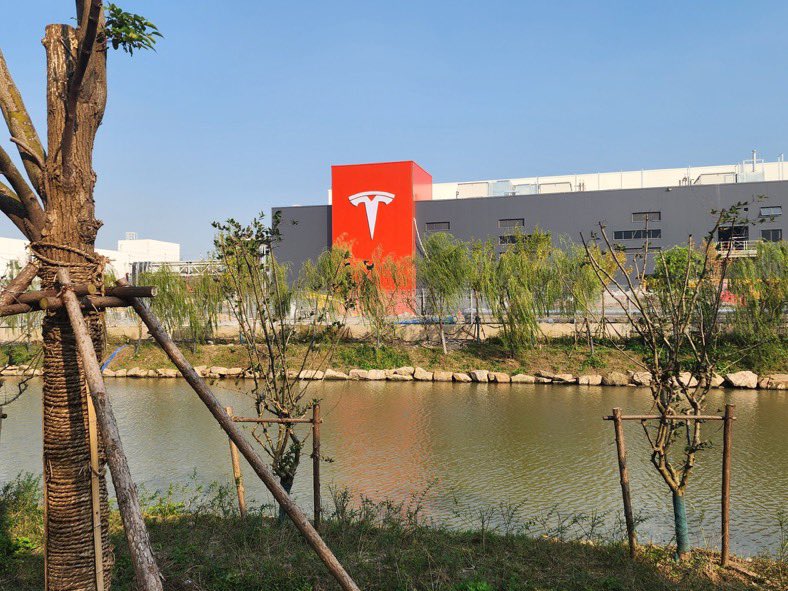
Elon Musk made an overnight stop at Gigafactory Shanghai on Thursday, flying in from Shenzhen to thank Tesla’s China and Asia-Pacific teams in person during a 24-hour trip to China. Tesla vice president Grace Tao confirmed the visit in a Weibo post, saying Musk met employees face to face, praised the Shanghai team’s manufacturing capabilities and execution, and discussed progress on driver assistance and humanoid robots.
Photos from the visit show Musk at the center of a large group of factory workers. “Let’s make the future look like the future,” he told the team, according to posts from the event that Musk shared on X. Attendees also said he urged employees to spend their time and resources on becoming truly useful and building products that matter to humanity, rather than chasing short-term speculation.
The trip was tied to APEC Leaders’ Week in Shenzhen, where Musk traveled as part of President Trump’s Asia delegation. It is also why he joined Wednesday’s New York Times DealBook Summit remotely, writing beforehand, “I will be in China, so it will be digital me.”
Before arriving in Shanghai, Musk met in Shenzhen with Ren Hongbin, chairman of the China Council for the Promotion of International Trade. A CCTV-affiliated account reported that Musk pledged Tesla would keep increasing production in China, though it gave no target or timeline.
Giga Shanghai remains Tesla’s most productive factory. It shipped 810,889 Model 3 and Model Y vehicles in the first ten months of 2026, up 21.4 percent from a year earlier, according to figures cited by Reuters, and Tesla’s third quarter update lists its installed capacity at more than 950,000 vehicles a year.
Most of that output is now leaving China. Of the 67,829 vehicles Shanghai shipped in October, 59,012 were exports, leaving 8,817 for domestic buyers. Tesla’s China retail sales were down 66 percent from a year earlier that month, the lowest since July 2022, according to CnEVPost.
Musk’s comments on driver assistance will be watched closely by Chinese owners, who are still waiting on a full rollout of Tesla’s supervised self-driving software. Musk said a year ago he hoped for full approval in China around early 2026, but Tesla has not announced a launch date, as Teslarati has reported. The country is also a key test of Musk’s broader pitch: autonomy and Optimus are the businesses he has said will make up the vast majority of Tesla’s future value.

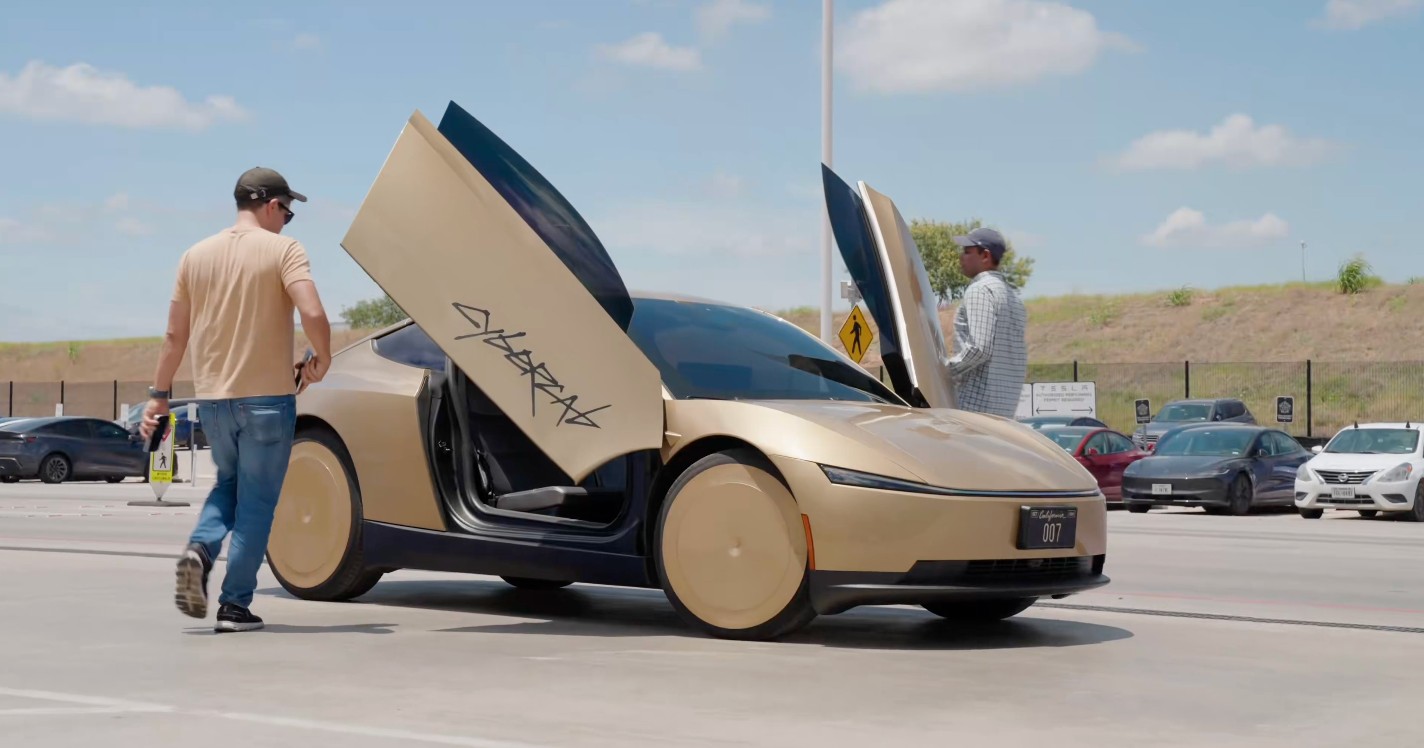
Tesla has opened public rides in its purpose-built Cybercab robotaxi in Dallas, the second U.S. city after Austin to receive the two-seat, steering-wheel-free vehicle.
On November 19, the company made it official with a post stating, “Howdy Dallas. Cybercab has arrived in your city.” Tesla has been teasing the expansion to Dallas for several weeks:
Howdy Dallas
Cybercab has arrived in your city https://t.co/4coXmRuIfz
— Robotaxi (@robotaxi) November 19, 2026
Riders can book through the Tesla Robotaxi app. Tesla had already been operating unsupervised Model Y Robotaxis in Dallas since April, the Cybercab addition brings its dedicated autonomous vehicle into the same network.
App notifications and the official post confirm the service is now available to the public, following a tease the day before and a commitment made on the October 21 Q3 2026 earnings call by AI software chief Ashok Elluswamy that Dallas would be next.
Cybercab rides first began in limited areas of Austin in early September 2026. After an invite-only event on September 3, public hailing started shortly thereafter. The Austin fleet grew rapidly, Musk later noted it had increased roughly tenfold in the first weeks, and the service has operated unsupervised, with hours expanding toward 24/7 coverage.
The vehicle, produced at Gigafactory Texas, features butterfly doors, no pedals or steering wheel, and relies entirely on Tesla’s unsupervised Full Self-Driving software.
Expanding Cybercab beyond Austin is a significant signal for several reasons. It shows Tesla moving from a concentrated pilot to multi-city deployment of its purpose-built robotaxi, validating that the software stack and vehicle-specific data accumulation can transfer to new environments.
Executives have described plans to reach additional cities by the end of 2026, using the same software alongside Model Y Robotaxis.
The move intensifies competition with Waymo, which operates larger unsupervised fleets across more markets, while reinforcing Tesla’s long-term bet on transportation-as-a-service as a core business. Most Cybercabs are expected to remain company-owned for the fleet rather than sold privately, allowing Tesla to control utilization and scale.
Your Tesla could be in the Robotaxi fleet next month, Elon Musk claims
Separately, Tesla has begun inviting select customers to purchase Cybercabs for personal use, with deliveries targeted for December.
Tesla priced the Cybercab $29,990 before taxes with a required $299 monthly Autonomy Subscription, and a $1,000 non-refundable deposit, with initial deliveries focused on Austin. Company leaders have emphasized that customer volumes will start small while the vast majority of vehicles stay in Tesla’s own Robotaxi network.
News
Tesla’s Cybercab fleet just had its biggest day ever
Tesla registered a record 200 Cybercabs in one day, and Dallas could be next up.
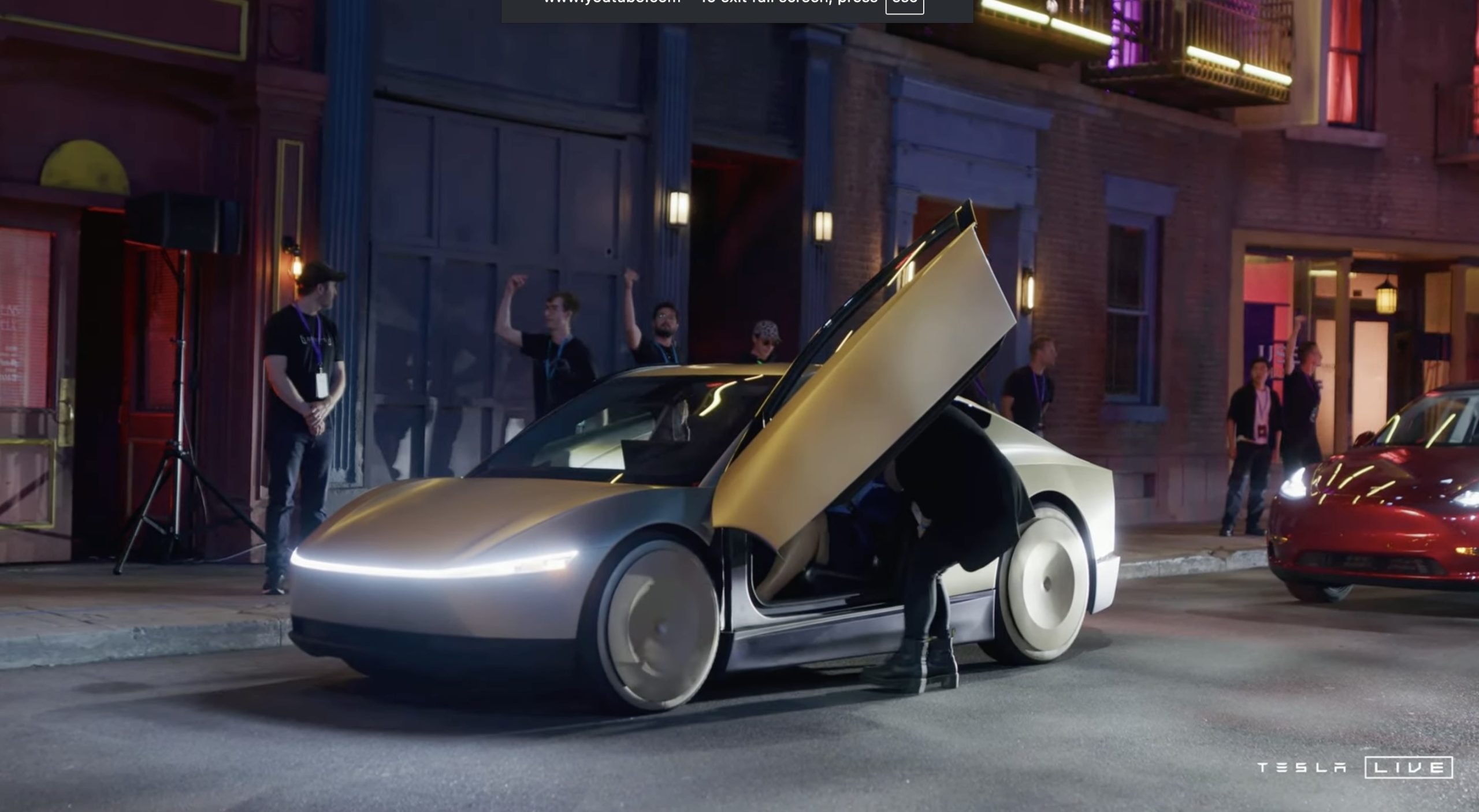
Tesla added a record 200 Cybercabs to its Texas Robotaxi fleet in a single day, pushing the purpose-built two-seater past 750 registered units in the state. The batch landed on the Texas Department of Motor Vehicles automated vehicle register at 3:45 p.m. CT on November 17 and included 200 Cybercabs and one Model Y. Tesla’s Cybercab count had sat at 573 since late October before the jump.
The additions also put Tesla back ahead of Waymo on the register. Tesla now has 1,507 vehicles registered for driverless operation in Texas against Waymo’s 1,321, a lead of 186. Waymo had been ahead by 15 vehicles before the batch arrived. Tesla first passed Waymo on November 10, as Teslarati reported, before Waymo briefly moved back in front.
🚨 There are more CYBERCABS in the Tesla Robotaxi fleet in Texas than Model Y! https://t.co/BdRK2LnnAP — TESLARATI (@Teslarati) November 18, 2026
Cybercabs now make up 51.3 percent of Tesla’s registered Texas fleet, at 773 units against 734 Model Ys. Waymo’s fleet in the state is split between 874 Jaguar I-PACEs and 447 Ojai vehicles.
The register does not say where vehicles will operate, and registration does not mean a car is carrying riders. Still, the timing lines up with Tesla’s plans for Dallas. On the company’s third quarter earnings call in October, AI chief Ashok Elluswamy said, “next month, we’ll be launching in Dallas,” and a video posted over the weekend showed more than 50 Cybercabs parked in rows at a Dallas lot, with more on a car carrier nearby. Tesla has not announced a start date.
Dallas is already one of Tesla’s busiest Robotaxi markets. Model Y Robotaxis there have run without anyone in the driver’s seat around the clock since November 11, and the city logged 608,130 miles with no safety monitor between January 22 and October 18, second only to Austin, according to Tesla’s first Robotaxi Safety Report. Public Cybercab rides have been limited to Austin since the vehicle joined the service in September.
The fleet growth comes as Tesla shifts more of its factory capacity toward the Cybercab. The company is winding down Cybertruck production at Giga Texas by the end of summer 2027 to make room, and announced this week a €3 billion expansion of Giga Berlin with a new building designed to produce up to 1 million Cybercabs a year starting in 2029, as Teslarati covered.
Some Cybercabs will soon go to private owners too. Tesla began inviting select customers to buy the vehicle for personal use last week at $29,990 with a required $299 monthly Autonomy Subscription, with deliveries targeted for December in the same five Texas cities where Robotaxi operates.

Elon Musk makes surprise stop at Giga Shanghai with a message for Tesla’s China team

Tesla Cybercab without steering wheel and pedals expands public rides to Dallas


