News
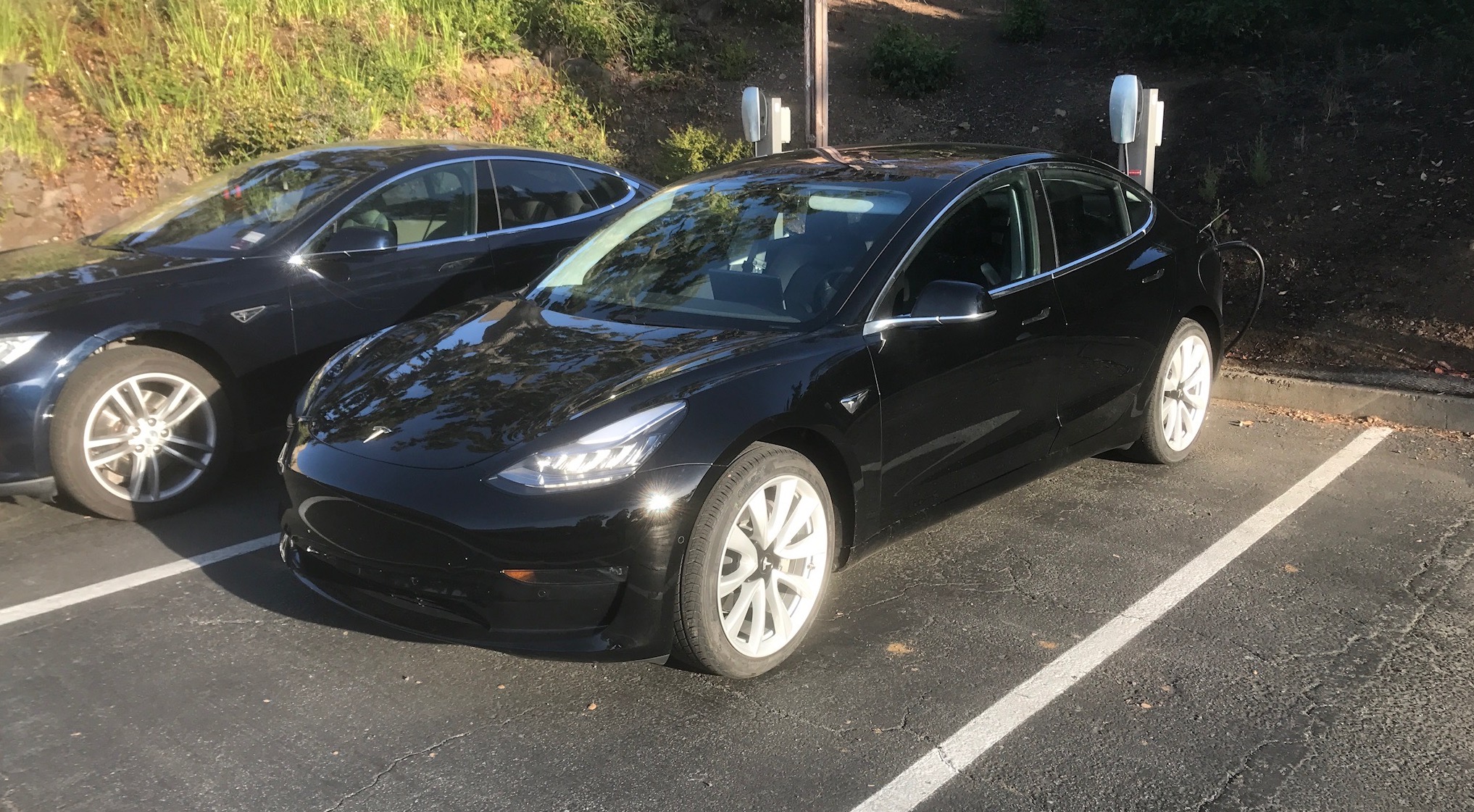
Is this Elon Musk’s personal Tesla Model 3 we just spotted at HQ?

Rumors swirled early Tuesday morning after a series of Model 3 photos rumored to be Elon Musk’s personal first production “SN1” vehicle were captured at Tesla’s Palo Alto headquarters.
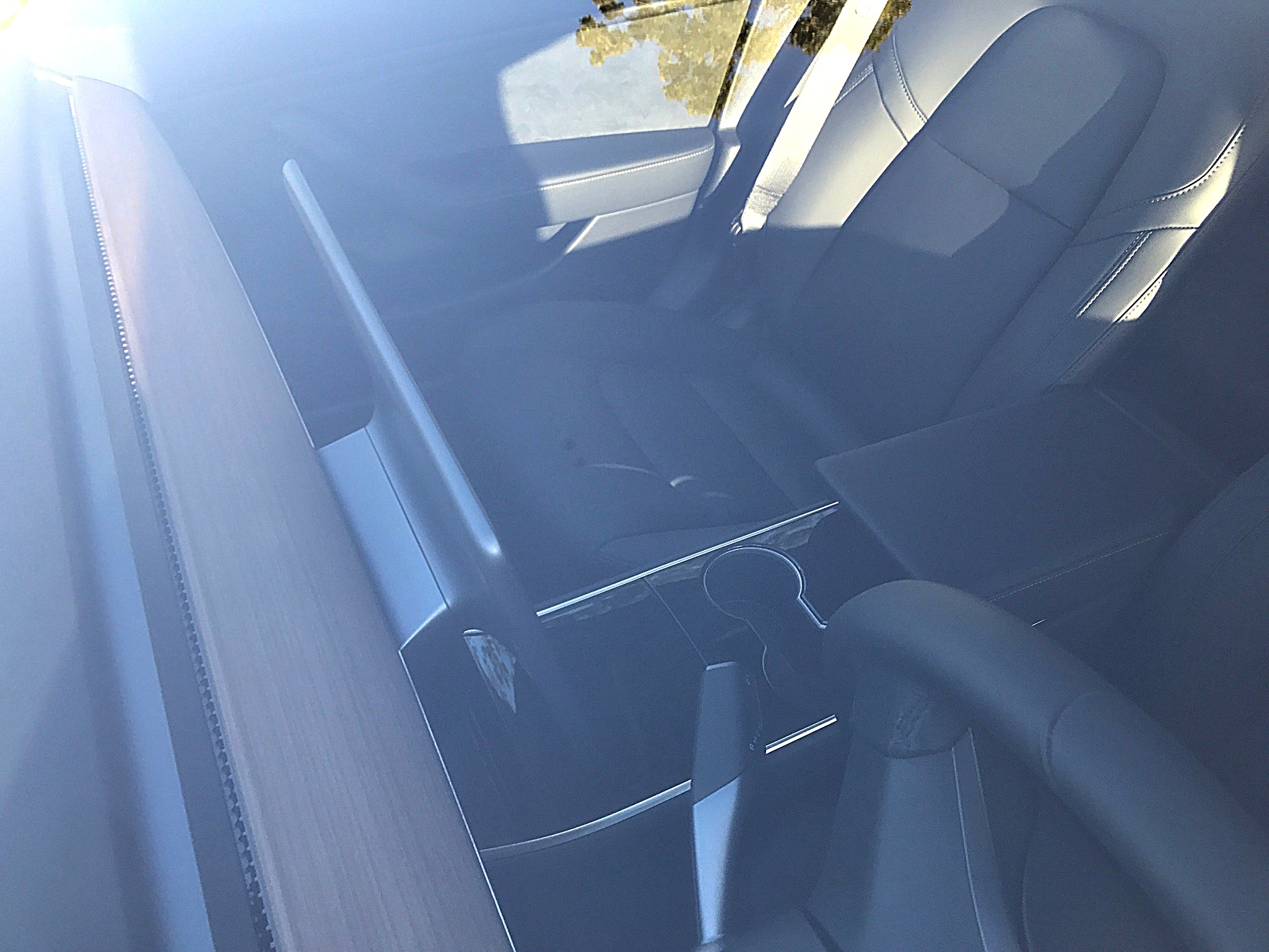
US Air Force veteran Jeff Meinke, and Teslarati app user who goes by “Crush”, submitted detailed pictures of the Model 3 interior, including a close-up look at the never-before-seen mounting point for the center display.
Jeff tells Teslarati that he was running his usual weekly, early morning routine of charging up at Tesla HQ before heading to a nearby meeting. A local resident of the Bay Area and soon-to-be three-time Tesla owner – Jeff currently owns a Model S P85, Model X 75D and has an early reservation for the Model 3 – he circled the parking lot to find a charger, before coming across a gorgeous black Tesla Model 3.
Though Tesla Valet at headquarters knows Jeff well, he tells us, it was during the early hours before valet attendants arrived on scene, typically at 7:30 a.m. Pacific Time and was on site before anyone had arrived. Not missing on the opportunity to take photos of the elusive Model 3, Jeff quickly snapped a few photos from his mobile phone and even had the opportunity to tinker with the Model 3 door handle.
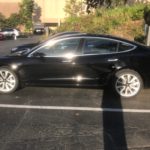
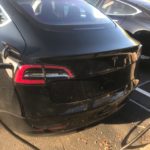
With parking sensors throughout, well-finished interior and no signs of it being a release candidate, and the fact that it was at Tesla HQ, community members quickly noted that this black Model 3 might have been Elon Musk’s personal “SN1” car or Tesla’s first production Model 3.
From the photos we also get a detailed look at how Model 3’s interior cupholder and center console will look like.
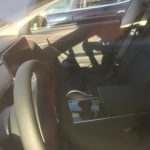
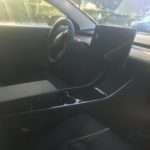
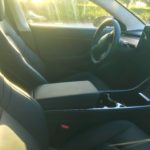
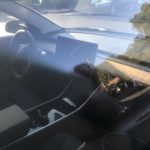
In speaking with Jeff and asking him why he didn’t take a photo of the Model 3 VIN, which would have surely confirmed whether the vehicle was Musk’s personal car with a 0001 trailing serial number, he tells us that it was just a matter of nerves and he wasn’t thinking about it. “I was just excited to be able to see the Model 3 in person, and frankly just wanted to shoot as many photos as I can before valet arrived.”
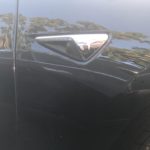
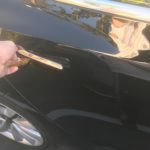
Jeff took the photos, left for his meeting, and upon returning noticed that the valet had arrived to start their early morning shift. He also noticed that the Model 3 was no longer there.
“When I returned to pick up my car it was no longer there. The valets told me that it was rare that there was one there charging overnight.” According to Jeff, the valet moved the vehicle into a nearby garage. Engaging in friendly conversation with the attendants, valet noted that it could have been Musk’s personal Model 3, and that previous shifts from the day before could have left it on the charger for Musk.
The attendants also notified Jeff that a “truckload of Model 3” was seen at headquarters recently. There was no indication whether these were the first 30 production Model 3s to be presented at next week’s delivery event, or one of the hundreds of release candidates produced.



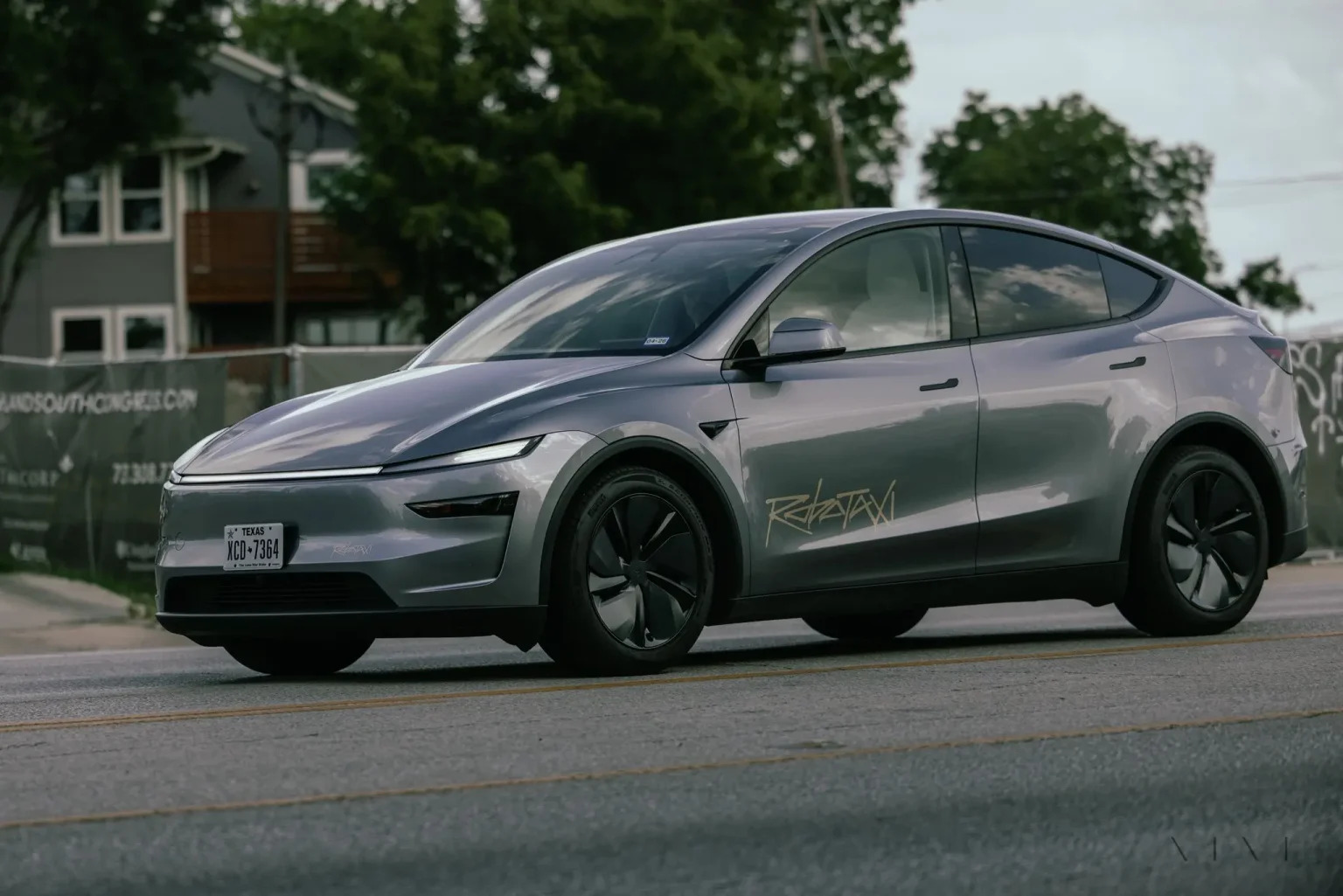
Tesla is now utilizing its in-house Robotaxi platform to give those waiting for their vehicles during Service visits rides instead of offering Uber credits or Loaner vehicles.
Tesla owners in Austin who bring vehicles in for service are receiving in-app prompts to use the company’s Robotaxi network while their cars are being worked on.
One recent notification, sent during a frunk repair, carried the heading “Try Robotaxi During Your Service Visit” and stated that while the vehicle is being serviced, the customer can take an autonomous Robotaxi ride to the next destination in Austin and download the Robotaxi app to get started.
Interesting. While my frunk gets fixed Tesla suggests taking a Robotaxi 😇 https://t.co/QiUbAmrp4a
— Wadesmith (@LanceWade) November 17, 2026
The suggestion arrives as Tesla has long relied on two main ways to keep customers mobile during longer service visits. Service centers have typically offered loaner vehicles drawn from a limited fleet; when those vehicles were unavailable, centers have issued Uber or Lyft credits. Uber credits were widely eliminated years ago, but some locations will still give them out.
Both approaches carry costs: loaner cars occupy inventory that could otherwise be sold, and third-party credits generate recurring expense.
Code discovered in Tesla app version 4.60.5 in September 2026 already listed “sv_transport_robotaxi” among the transportation options available for service appointments, alongside paid loaners and other alternatives, indicating the company had been preparing to route customers through its own autonomous fleet.
Your Tesla could be in the Robotaxi fleet next month, Elon Musk claims
Austin provides the clearest early example. The city remains Tesla’s primary Robotaxi market, with unsupervised Model Y and Cybercab vehicles operating across an expanded zone of roughly 400–440 square miles and running 24/7 since November 11. Public driverless service is also live in Dallas, Fort Worth, Houston, San Antonio, Miami, Orlando, and Tampa.
Directing service customers into this network keeps the vehicles utilized and reduces reliance on external rideshare credits, while giving owners practical experience with the Robotaxi app and vehicles during the repair window. Once service is complete, the same network can be used for the return trip without a staffed loaner handoff.
The Austin notification is the first public instance of the capability the September app code previewed. As Robotaxi expands into additional U.S. markets and the fleet grows, service centers in those cities are positioned to follow the same pattern, presenting autonomous rides as a primary transportation option during the service appointment rather than defaulting to loaner vehicles or third-party credits.
For customers, the change preserves mobility without the logistics of arranging a temporary car; for Tesla, it links the service operation more tightly to the expanding Robotaxi business.
Elon Musk
Sean Duffy fires back at Elon Musk over free Starlink
Sean Duffy says the FAA picked a ground network over Starlink, and Musk isn’t impressed.
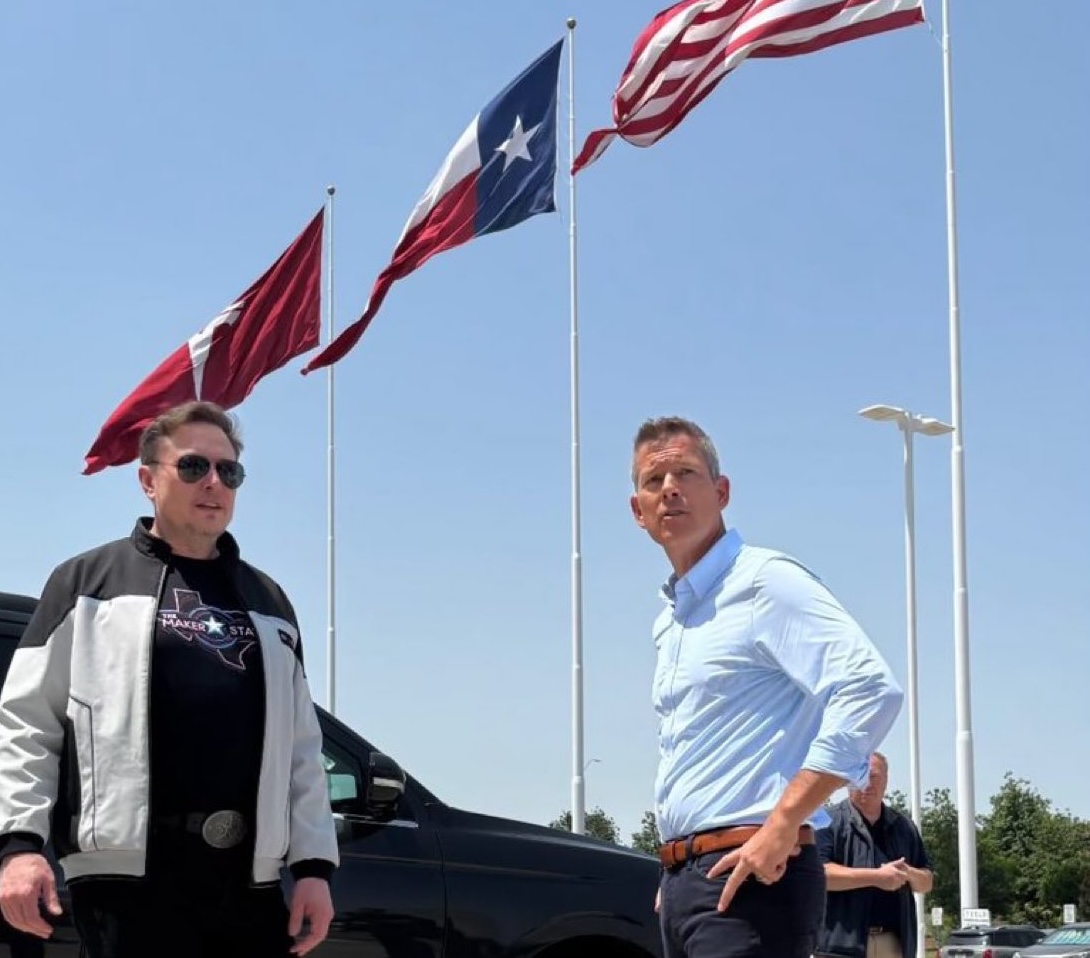
Transportation Secretary Sean Duffy has responded to Elon Musk’s claim that the Federal Aviation Administration turned down free Starlink terminals before last week’s nationwide ground stop, saying the department chose a ground-based network after running into problems with an earlier version of the satellite service. Musk’s reply was a single emoji: “🤦♂️.”
Speaking at a press conference, Duffy said Starlink had been useful in some parts of the system. “I’ve worked well with Elon, and he, Starlink was a great solution for some of our assets in Alaska, but we sent Starlink, in one of its prior iterations, to our tech lab, and, there was some issues that we had to navigate, and we thought that the best method is to have a network that’s based on the ground,” Duffy said, according to a transcript published by ZeroHedge. “Now, I think what he’s doing with Starlink and the speed is remarkable, but, our airspace is very big. We have assets everywhere. And so, again, we used him for different parts of the airspace.”
Duffy did not dispute that the offer was made. He also did not say what problems the FAA found during testing.
The exchange started Monday, when Musk wrote on X, “Free Starlinks for FAA were offered to Sec Duffy, but he said they were not needed. As it turns out, they were,” as Teslarati reported. That post came three days after the FAA grounded departures nationwide on November 13, when its legacy equipment became unstable as data flooded its telecommunications network at 1,000 connection attempts every four to five seconds. The FAA traced the flood to a radar site in Amarillo, Texas, and a radio site in El Dorado, Arkansas, where L3Harris had been installing a new router. Roughly 12,462 flights were canceled that day.
As I was saying …
Free Starlinks for FAA were offered to Sec Duffy, but he said they were not needed. As it turns out, they were.
— Elon Musk (@elonmusk) November 16, 2026
Duffy has also signaled frustration with L3Harris, which runs the FAA’s current network. “I want to get away from L3Harris and get to a new one, but they own the network,” he said. “I can’t cancel the network that they own.” He has asked Congress for $50 billion to modernize air traffic control, arguing against “a patchwork, a fix to a system that’s critical for every single family.”
The FAA’s position on satellite links predates this week. In a July 2025 letter to lawmakers, FAA Administrator Bryan Bedford said the agency “would not use Starlink (or any satellite service) as the sole communications technology” for safety-critical air traffic services. Reuters reported at the time that the FAA was not considering replacing its L3Harris and Verizon contracts with Starlink. Verizon’s FAA Enterprise Network Services contract, awarded in 2023, is valued at up to $2.4 billion over 15 years.
Musk first pressed the issue in February 2025, while he was leading the Department of Government Efficiency, writing that “the Verizon system is not working and so is putting air travelers at serious risk” before correcting himself days later to blame L3Harris. SpaceX said at the time it was supplying Starlink kits to the FAA at no cost and had no intent to take over any existing contract.
Tesla is gearing up Cybercab, its all-electric and fully autonomous ride-hailing vehicle, for a very public debut as it plans to start customer deliveries in December. However, the units that rolled out of Gigafactory Texas this morning seem to differ from what we have seen previously.
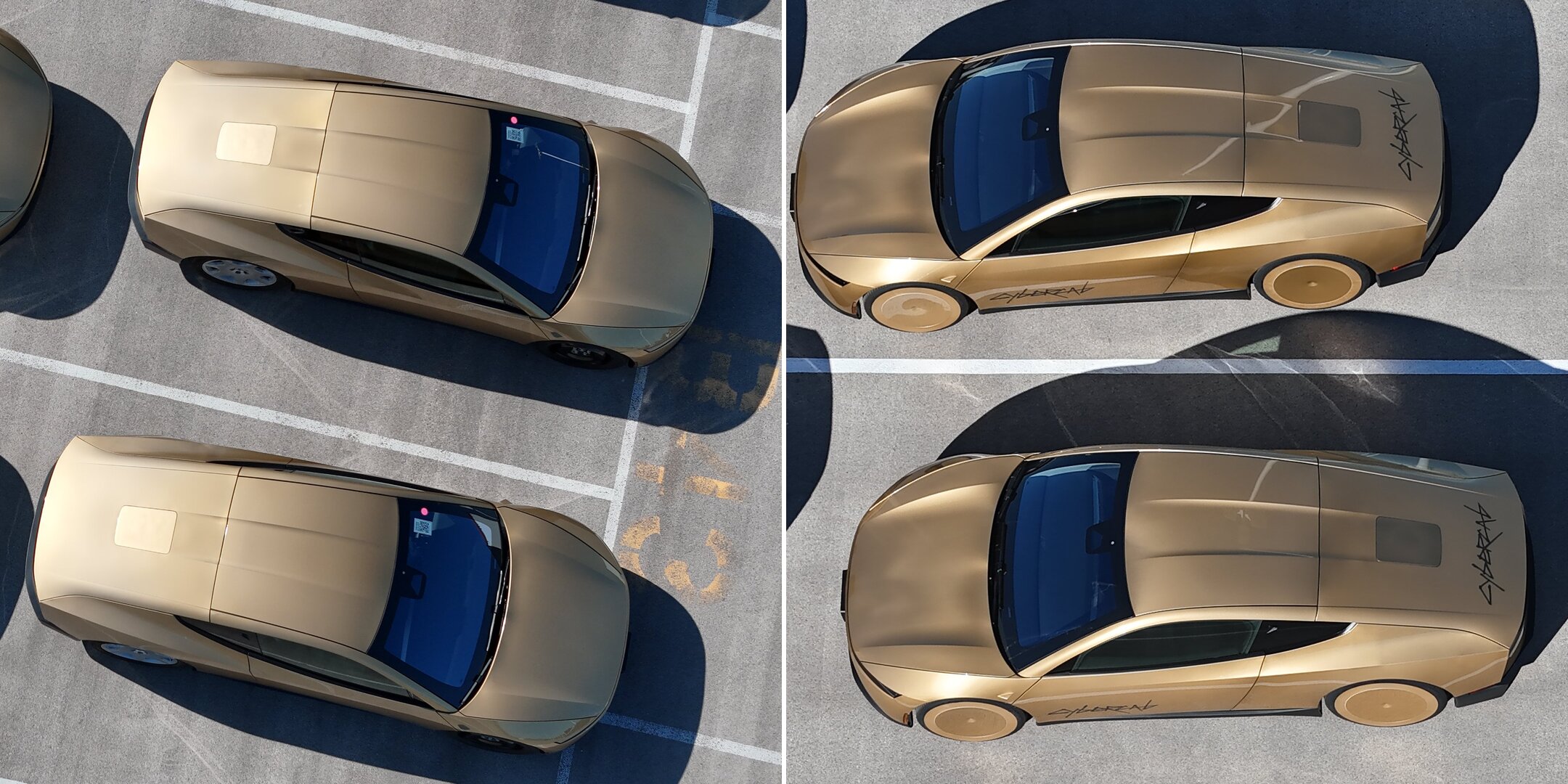
Aerial images captured by drone photographer Joe Tegtmeyer at Giga Texas on November 18 reveal a noticeable update to the appearance of Tesla’s Cybercabs equipped with Starlink. Rows of gold production vehicles sit in the outbound lot, each carrying a flush-mounted Starlink V5 terminal on the rear hatch that looks more refined than the version first shown months earlier.
When Tesla first unveiled the integration in July and displayed a physical example in August, the Starlink hardware appeared as a relatively distinct rectangular panel on the hatch. Later September footage of large numbers of Cybercabs leaving the factory still showed a lighter, more obvious rectangular cover that roughly matched the vehicle’s gold paint:
Images via Joe Tegtmeyer
The newest batch stands out for how cleanly the cover blends into the roof’s character lines. Observers and replies to Tegtmeyer’s post describe the result as tighter and more intentional, sitting flush and following the body contours rather than reading as an added panel.
All of the Cybercabs in the latest images also wear prominent “Cybercab” logos on the doors and rear hatch, confirming these are finished production units rather than early prototypes. They are staged near the factory building, end-of-line areas, and covered transport trailers, with some already lined up for shipment.
The scale and consistency of the installation point to factory tooling rather than retrofit work.
A secondary detail noted in related sightings is a darker tone to the Starlink cover compared with earlier lighter panels. Tegtmeyer himself left open whether the darker finish is deliberate. There are a variety of explanations for it: perhaps for thermal performance, signal characteristics, or simple visual identification—or simply a batch variation still being refined.
Either way, the overall effect is a more integrated, production-ready appearance. For a Robotaxi that relies on Starlink for fleet connectivity, passenger services, and backup data links in areas with weak cellular coverage, the cleaner hatch design is more than cosmetic.
It signals that Tesla is polishing the final visual and hardware details as Cybercab volumes continue to climb at Giga Texas ahead of broader Robotaxi deployment. The vehicles now look to be built with Starlink instead of it being added afterward.

Tesla Robotaxi takes over for Uber credits and loaners at Service locations

Sean Duffy fires back at Elon Musk over free Starlink


