News
Tesla Semi Supercharger stop teases sleeper features and 26-camera system

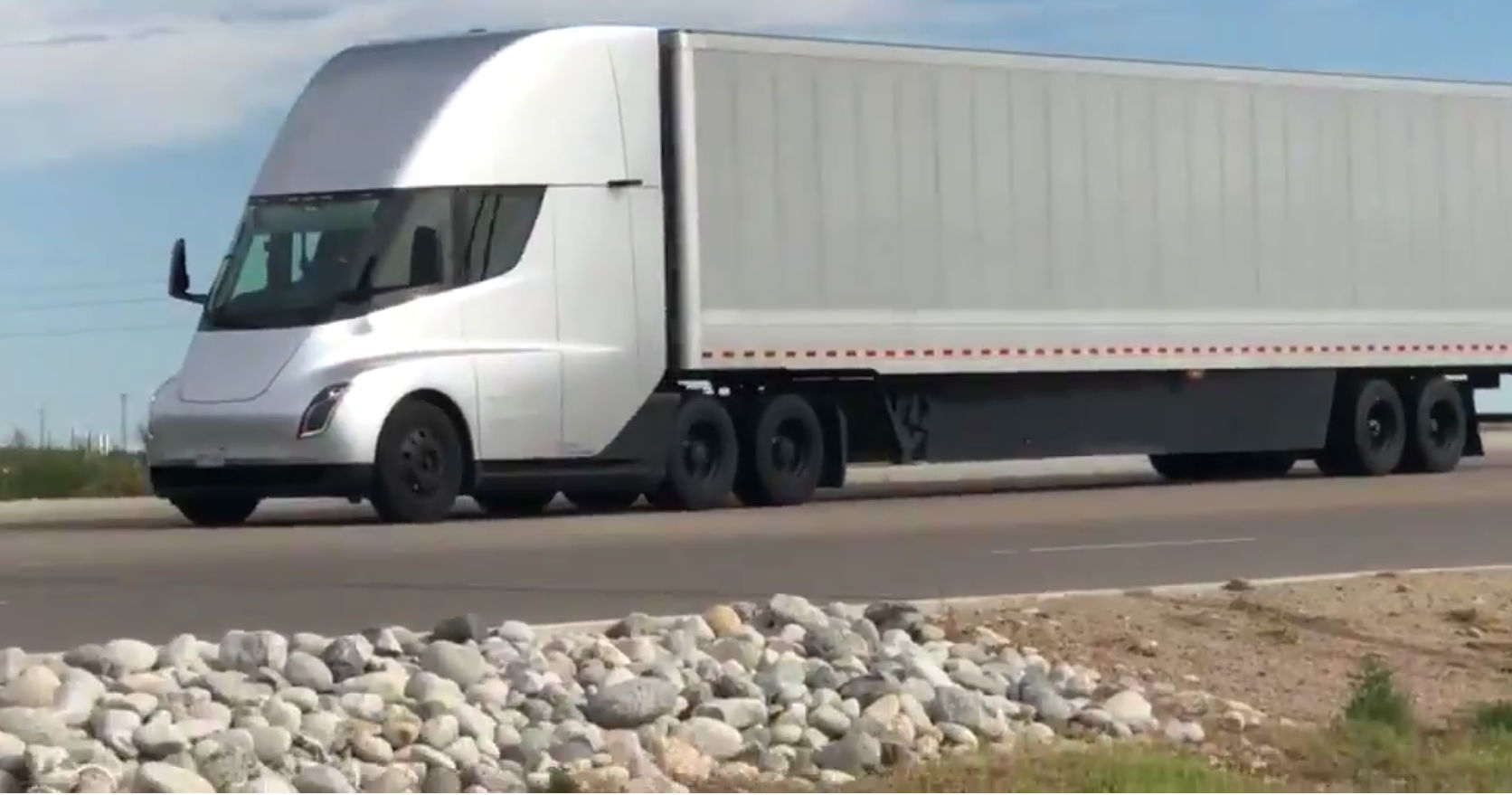
After being sighted on Des Moines, IA on Thursday, the Tesla Semi has been spotted smoothly gliding through Colorado. The Semi was sighted at the Brush, CO Supercharger, where Tesla’s employees accompanying the truck answered questions about the vehicle while it was charging.
The Tesla Semi sighting was shared by recording engineer Erik J. Martin on Twitter. Martin’s posts, one of which was retweeted by the official Tesla Twitter account, featured the Semi as it was rolling into the Brush Supercharger station. Erik mentioned in a series of posts that he was informed that the prototype is the short-range version of the truck, with a range of 300 miles. The Tesla engineers accompanying the vehicle reportedly noted that the Semi was hand-built and that it was largely made of carbon fiber as well.
— Erik J. Martin (@soundanswer) August 30, 2018
Being the short-range version of the electric truck, the Semi currently making its way across the United States is a daycab vehicle, though Tesla’s employees reportedly informed Martin that there would be a variant of the truck that would have space for sleeper features. Such features would be perfect for the long-range version of the electric truck, with drivers being able to take short naps while the Semi is charging at Tesla’s upcoming Megacharger network.
Also notable were the Semi’s cameras, of which there are 26 around the prototype. Tesla’s employees accompanying the Semi reportedly mentioned that there would likely be fewer cameras in the final iteration of the vehicle. Interestingly, while the Semi’s crew was very willing to address inquiries about the truck’s features, they were particularly secretive about the vehicle’s current charging system.
The Tesla Semi is designed to be supported by the upcoming Megacharger network, which is not operational yet. For now, the Semi is using Tesla’s current Supercharger network, though Erik noted that the engineers appeared to be using around 4-6 Superchargers to charge the all-electric Semi truck.
Yep! It was The closest superchargers. They hobble together an adhoc megacharger until those are built out in preparation for the roll out of production #teslasemi
— Erik J. Martin (@soundanswer) August 31, 2018
Tesla’s engineers also reportedly noted that so far, the only locations that have leaked the truck’s visit to their facilities were J.B. Hunt and UPS. This suggests that the Semi might have visited facilities of other reservation holders. One of these is Ruan Transportation Management Systems, which is based in Des Moines, IA. Ruan published a blog post about the Semi’s visit to their facility yesterday, even discussing some of the truck’s remote monitoring features.
“We will continue to be involved with the team at Tesla Motors as they introduce the trucks to the market,” said Cade. “We will work with them directly to ensure the vehicles will serve us and our customers to the level we both expect,” Ruan vice president of fleet services James Cade wrote in a blog post.
Tesla appears to be going full throttle in its efforts to refine the Semi before the vehicle enters production. The truck’s initial specs are already impressive, with its four Model 3-derived electric motors, its 0-60 mph time of 5 seconds flat, and its Class 8 hauling capacity. The Semi is also equipped with several key features, such as jackknife protection, near-infinite brake pads due to its powerful regenerative braking system, and Convoy Mode, a feature that allows the Semis to semi-autonomously draft in close proximity with each other, reducing energy usage from wind resistance.
Watch Erik J. Martin’s video outlining the information he received from the Tesla engineers accompanying the Semi below.



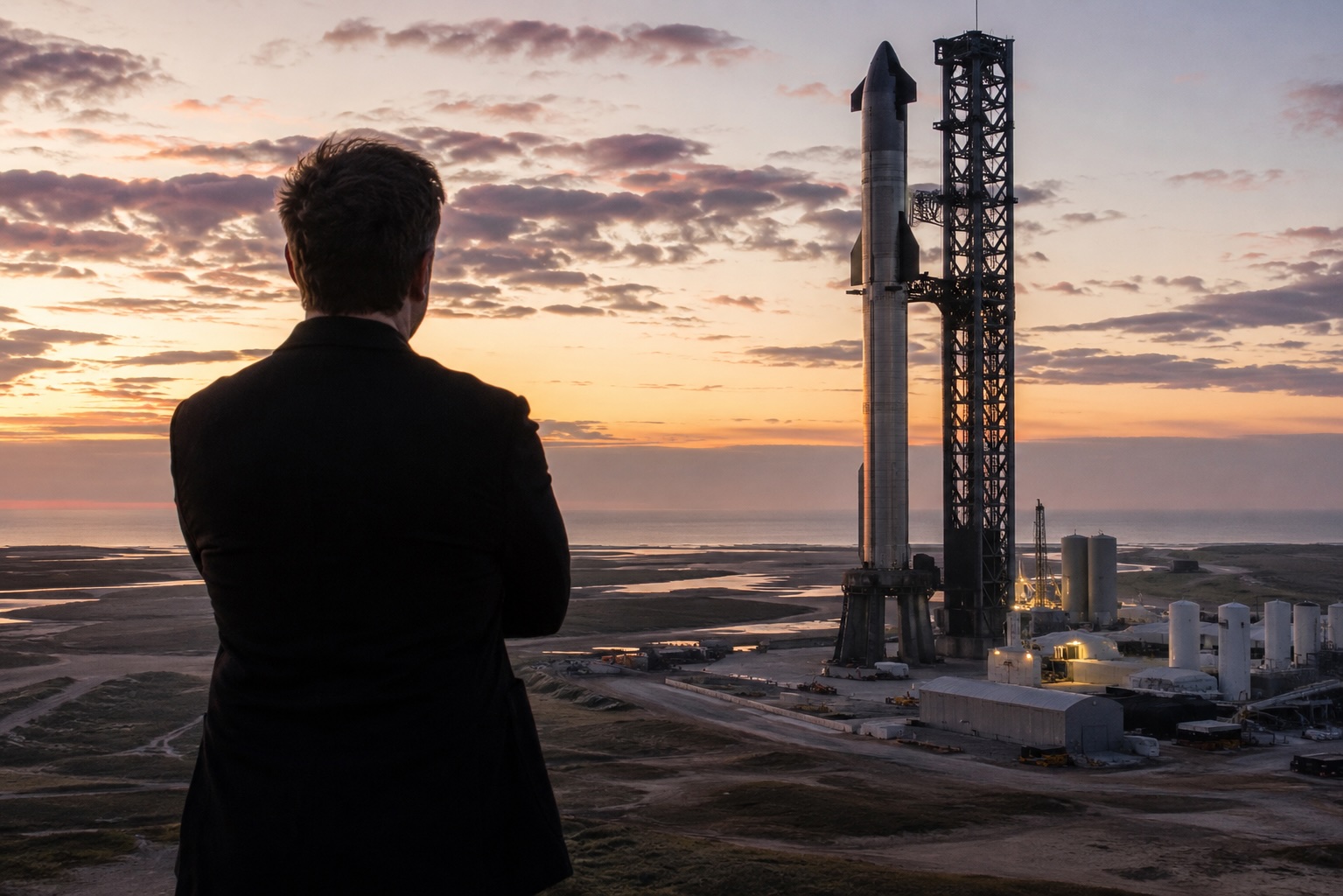
Elon Musk said he is planning to give “every one of his SpaceX shares to every kid in America” in 2027, stating that “this will be the first of many.”
SpaceX went public earlier this year, and its stock price has been relatively stable since leveling off shortly after its IPO. Based on its current price, it’s a gift of just over $10 billion to children across the United States.
It appears to be closely related to President Donald Trump’s bank accounts for children, which were set up earlier this year as Trump Accounts.
Just hours earlier, Anthropic had announced the establishment of its Anthropic Public Benefit Fund, “a new wholly-owned entity dedicated entirely to public benefit.” Musk responded by stating he recommended “giving the shares directly to the public,” and that he would be doing it that way.
Just a little bit later, Musk said children across the U.S. would be getting a share from him:
Next year, I will give one of my SpaceX shares to every kid in America.
This will be the first of many.
— Elon Musk (@elonmusk) October 19, 2026
There are roughly 70 million children, meaning someone under the age of 18, in the United States, according to the Federal Interagency Forum on Child and Family Statistics. Musk’s ownership of SpaceX stock shows he has around 849 million Class A shares of SpaceX stock, according to filings with the SEC.
Elon Musk revealed in a post on X that “Permits were impossible to get,” explaining the fate of The Boring Company’s most ambitious East Coast proposal.
The comment responded to a query about what became of his July 20, 2017 announcement that he had “just received verbal govt approval” for an underground Hyperloop connecting New York City, Philadelphia, Baltimore, and Washington, D.C., capable of carrying passengers from the Big Apple to the Nation’s Capital in just 29 minutes.
The Boring Company receives verbal ‘approval’ to build NY to DC Hyperloop tunnel
The 2017 post, which envisioned city-center stations and multiple elevators in each city, sparked immediate scrutiny. Local and state officials in New York, Philadelphia, Baltimore, and D.C. said they had no knowledge of any approval. A White House spokesperson confirmed only “promising conversations” about the transformative infrastructure.
Musk clarified shortly after that there was “still a lot of work” to do for formal approvals.
@cybrtrkguy Permits were impossible to get
— Elon Musk (@elonmusk) October 19, 2026
Limited progress followed, as Maryland Governor Larry Hogan’s administration issued a conditional utility permit and supported work near Fort Meade. In 2018, Washington, D.C., granted a preliminary permit for site preparation and excavation on a vacant lot at 53 New York Ave. NE in the NoMa neighborhood, which The Boring Company said could become a station.
A draft environmental assessment for a D.C.-Baltimore segment was released in 2019. Yet, by April 2021, the company had removed the project from its website, and the Federal Highway Administration reported receiving no indication of further interest. Communication with Maryland officials had ceased.
The full corridor would have required coordination among the District of Columbia, Maryland, Pennsylvania, New York, the Federal Highway Administration, the Army Corps of Engineers, the National Park Service, and other agencies.
Environmental reviews under the National Environmental Policy Act, utility clearances, and approvals for novel infrastructure added to the overall complexity of the project and its approval.
Speculation on the permitting barriers centers around a few factors, but a multi-state, multi-level route involving unproven high-speed vacuum-tube technology inherently triggers exhaustive safety, environmental, and engineering reviews that can stretch for years, even for conventional projects.
There are also other elements, of course, like officials who may face political exposure if a privately funded, untested system encountered anything such as cost overruns, delays, or safety issues. On the outset of this project, there were limited things such as engineering plans or demonstrated technology maturity, which also added to the potential skepticism.
The East Coast vision for Boring Co., once framed as a privately funded revolution that could reshape Northeast travel, quietly ended without construction of the promised network. Musk’s recent statement frames the outcome as a regulatory impasse, unfortunate but not unexpected.
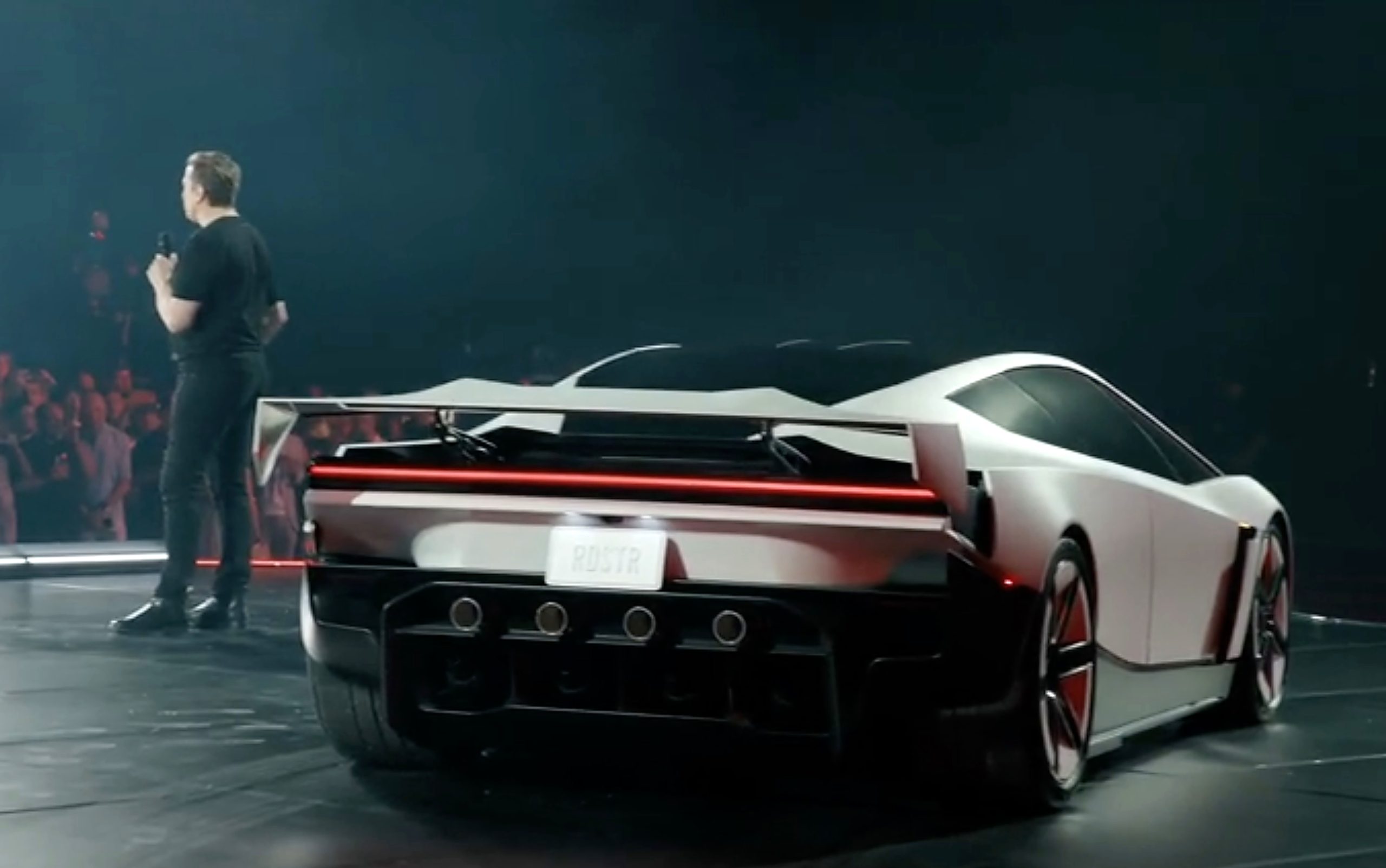
Tesla CEO Elon Musk took to his social media platform X on Sunday to remind everyone that the Roadster’s true meaning is not about company growth or adding dollars to shareholders’ pockets. Sometimes, you just do things because you can.
Following the Roadster’s epic unveiling event last Thursday, skeptics and critics of the company or the project itself came out to say that the vehicle is a pointless project because it is not geared toward growing the company, delivering supreme margins for profitability, nor does it contribute to the big picture of Artificial/Super Intelligence.
But that’s just the thing: Roadster is not meant to be some shareholder dream; it’s meant to be a vehicle that people buy just because it is something awesome, unique, and the first of its kind.
Tesla Roadster: Three configs, one can fly, 0-60 in 0.8 seconds
Musk had to remind those who are skeptical about the Roadster’s importance to the company mission that while it is not a major contributor to Tesla’s long-term goals, it is something that is being built just because it can be:
“Optimus and Cybercab will be the vast majority of Tesla’s value. The only things that will scale to incredible size (K2 and beyond) economically are super intelligence, robots, solar power, and mass to space. And, of course, if you have the first two, the rest will follow. But Roadster is super cool, so we’re doing it anyway.”
Musk has said on many occasions that Optimus would be the project that would make up the vast majority of Tesla’s value in the coming years.
Robotics will be a major focus of Tesla over the coming years, especially as Musk believes Optimus will enable work to be optional for humans and will enable what he calls “High Universal Income.”
Optimus and Cybercab will be the vast majority of Tesla’s value.
The only things that will scale to incredible size (K2 and beyond) economically are super intelligence, robots, solar power and mass to space.
And, of course, if you have the first two, the rest will follow.
But Roadster is super cool, so we’re doing it anyway.
— Elon Musk (@elonmusk) October 18, 2026
Cybercab will be a passive income opportunity for owners, Musk and Tesla have said for a very long time, as a fleet of self-driving vehicles will operate within a ride-hailing Robotaxi service that won’t require a human driver to be present.
Tesla investors are more than enthusiastic about the company’s future projects, at least from a general consensus perspective. However, it is important to note that the Roadster is a fun and cool project that pushes the boundaries of what people thought was possible for an automobile.
What we saw last week was the first true example of a flying car, and despite the backlash about how it might not contribute to Tesla’s grand ambitions, it’s okay to have fun sometimes, too.

Elon Musk will give ‘every kid in America’ a SpaceX share in 2027

Elon Musk reveals why Boring Co’s biggest East Coast project never happened

Tesla CEO Elon Musk reminds everyone about Roadster’s true meaning

SpaceX reveals how its 1 Million AI satellite network will work and prevent space collisions
Tesla Roadster: Three configs, one can fly, 0-60 in 0.8 seconds


