Energy
Tesla Solar Roof long-term review: Insights from a homeowner’s journey with Elon Musk’s solar tiles

If recent announcements by Tesla are any indication, the Solar Roof tiles will see a production ramp next year. Unveiled in October 2016, the Solar Roofs, which are PV modules that have the appearance of traditional roofing materials, were received warmly, with Tesla noting that the product was sold out “well into 2018” within the first few weeks of reservations being opened.
One of these reservation holders was Amanda Tobler. After initially living in a rental house from 2002 to 2004, Amanda and her family moved to a CA townhousein 2004, where they stayed for 12 years. The Toblers attempted to get solar panels installed on their townhouse then, though they were unsuccessful due to the area’s homeowners association prohibiting rooftop solar systems. Things changed in 2016, when Amanda and her family moved to a two-story suburban home in the Bay Area. This time around, the Toblers was free to add a solar system for their house.
The home that the family acquired, which was built in 1965, had an aging stamped metal roof that was nearly ready for replacement. In an emailed statement to Teslarati, Amanda noted that when they heard about the Solar Roof tiles, her family immediately thought that the product would be a perfect fit for their new home. Within days of Tesla opening reservations for the shingles in May 2017, the Toblers put down their $1,000 deposit.
In July 2017, Tesla sent someone over the home to conduct a site survey. As a way to determine the size of the PV system which would best fit the Toblers’ needs, Tesla asked for copies of past utility bills. Amanda notes that her family actually consumes a fair amount of power every month, especially since they charge two plug-in vehicles — a Nissan Leaf and a Chrysler Pacifica Hybrid — on a consistent basis. Considering the family’s average energy consumption, Tesla opted to install a 9.9 kW Solar Roof system on the house, paired with one Powerwall 2 unit.
-
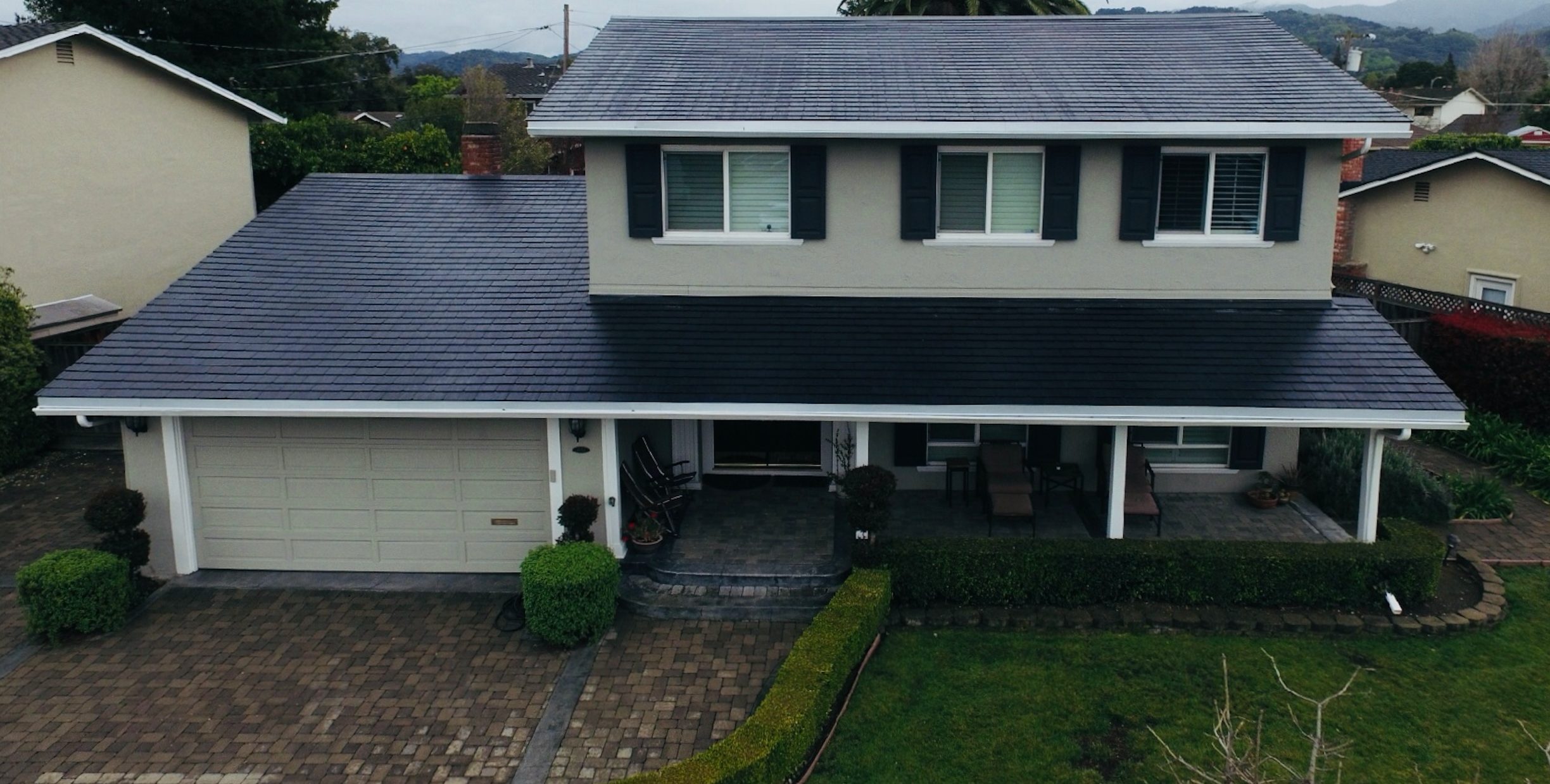
- A Solar Roof tile installation on a residential unit. [Credit: Amanda Tobler]
-
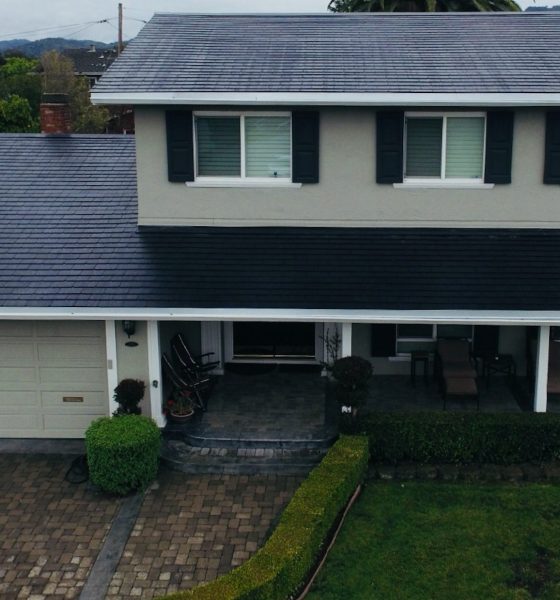
- A Solar Roof tile installation on a residential unit. [Credit: Amanda Tobler]
-
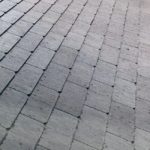
- A Solar Roof tile installation on a residential unit. [Credit: Amanda Tobler]
The Toblers’ home fitted with Tesla’s “Textured” Solar Roof tiles. [Credit: Amanda Tobler]
Tesla only manufactures two variants of the Solar Roof tiles today — Textured and Smooth — though other options such as Tuscan and Slate are due to enter production in the near future. In Amanda’s case, she opted for the Textured Solar Roof variant. Just as luck would have it, the Toblers’ home ended up becoming the first residential Solar Roof installation in the country, partly due to the roof’s simple design and the house’s proximity to the Fremont factory.
“I was told that we were chosen because we live in the Bay Area, which is convenient to the Tesla factory in Fremont. Additionally, we have simple roof lines, and they wanted a straightforward install in the beginning,” Amanda stated.
The Solar Roof installation took place in early March 2018. The entire process took about three weeks to complete, partly due to rains and Tesla’s discovery of a cedar shake roof underneath the house’s metal roof. Despite her house being built in 1965, and despite Tesla having to haul away two roofs instead of one, Amanda notes that the installation process, including the setup of the Powerwall 2 unit, remained seamless nonetheless. Even the permits for the solar system, which are required for homeowners, were handled by the electric car maker.
“Tesla took care of all permitting and getting permission to operate the solar roof. We did e-signing for plenty of documents in this process, but I didn’t have to complete any of them outside of providing a signature and date,” Amanda noted.
The Toblers were permitted to activate their Solar Roof tiles two weeks after the project was complete. Considering that the roof covered around 2,000 square feet, and that 40% of the tiles were solar, Amanda notes that the $62,000 she paid for the 9.9 kW system was not too far from the cost of a new premium roof and conventional solar panels. That said, she did mention that if her house didn’t really need new roofing, she probably would have opted for traditional solar panels instead to save on costs. Nevertheless, the homeowner pointed out that the aesthetics and functionality of the Solar Roofs have been worth the investment so far.
-
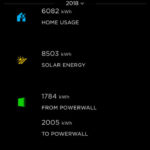
- The average stats for the Toblers’ Solar Roof over the past seven months. [Credit: Amanda Tobler]
-
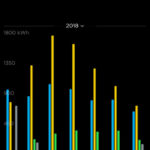
- The average stats for the Toblers’ Solar Roof over the past seven months. [Credit: Amanda Tobler]
-
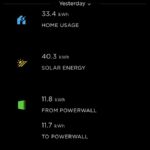
- A sample of the Solar Roof tiles’ daily stats. [Credit: Amanda Tobler]
-
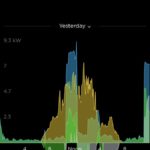
- A sample of the Solar Roof tiles’ daily stats. [Credit: Amanda Tobler]
At its peak, the Toblers’ Solar Roof tiles provided enough power for the family’s needs. [Credit: Amanda Tobler]
“The main value is that we got the new roof we needed and the solar we wanted in a slick package. Of course, the product is considerably more expensive than regular solar panels—you’re getting a roof and solar panels. If you consider the cost of purchasing a high-end roof with solar panels in the Bay Area, the cost wouldn’t be that far off from the cost of the Solar Roof.”
The Solar Roof tiles have held up well over the past seven months since the system was installed. The day after the Solar Roof tiles were activated, the homeowner woke up to her roof producing 4 kW of power, with 0.4 kW flowing straight into the house and the rest charging her Powerwall 2. At its peak during summer in June and July, the Solar Roof tiles were producing about 60 kWh in one day, which was more than enough to power the Toblers’ house and their two plug-in vehicles. As the days got shorter and more overcast amidst the approaching winter, though, the Solar Roof tiles generated less energy, now producing about 20 kWh a day.
Amanda’s observations with her Solar Roof tiles echo those of another Solar Roof early adopter, Tri Huynh from Northern CA. In an interview with Alex Guberman of E for Electric earlier this year, Tri noted that his Solar Roof installation, which covers his 1,000 square foot roof, produces about 3 kW during days when skies are overcast. While the generated power is not enough to charge his three Powerwall 2 batteries, Tri noted then that his Solar Roof helps him lower his electricity bill nonetheless.
When Elon Musk unveiled the Solar Roof tiles, he candidly remarked that the shingles, if they prove successful, could end up being a “Keeping up with the Joneses” situation. In Amanda’s case, her Solar Roof had attracted a notable amount of curiosity from her neighbors, especially when the system was being installed. Once it was operational, interested members of her community also paid a visit to Toblers’ home to learn about how the Solar Roof worked. That said, the homeowner notes that the attention her Solar Roof attracts has mellowed down since.
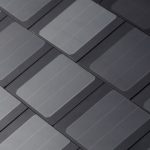

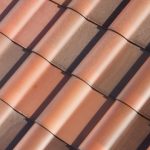
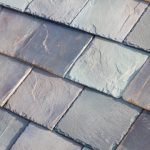
Tesla’s Solar Roof variants — Smooth, Textured, Tuscan, and Slate. [Credit: Tesla]
While the Solar Roof has performed well since it went online earlier this year, Amanda notes that the system still has some room for improvement. Her Powerwall 2, for one, faults about once a month, which makes the battery storage unit appear like it had lost connection with the system. So far, the Toblers have been manually resetting the Powerwall 2 to address the fault. In the event that the family is not home, Amanda states that the system eventually detects the error and automatically resets the Powerwall 2 after about four hours. Amanda describes these faults as a “minor annoyance,” particularly since the rest of the system has been consistently operating smoothly.
Tesla’s energy business, led by industrial-grade batteries like the Powerpack and novel residential products like the Solar Roof, is expected to see notable growth in the coming years. Billionaire investor Ron Baron, for one, estimates that Tesla Energy would likely be worth $500 billion on its own by 2030, equal to his estimates for the company’s more well-known electric car business. Considering that Tesla’s electric cars and energy products form an ecosystem of renewable solutions, the adoption of products like the Solar Roof would likely be as quick as the products’ production ramp.
During Tesla’s third-quarter earnings call, Elon Musk explained that the production of the Solar Roof is taking longer than expected due to the tiles’ long development cycle. The Tesla CEO did state, though, that Solar Roof production should see a production ramp in 2019. This was highlighted in a later announcement on Twitter, with Musk listing the solar tiles as one of Tesla’s high-priority products, directly after the Model Y. With Tesla focusing on both its electric car and energy business in 2019, the number of customers buying into the full Tesla ecosystem would likely increase. Amanda, for her part, notes that her family might do just that.
“The success of the vehicles played a big part of us choosing to trust Tesla in being a part of early solar roof adopters. It is very possible that we’ll become Tesla vehicle owners in the future,” she said.


Elon Musk
Google just picked SpaceX for its first step into orbital AI
Google will launch its first Project Suncatcher AI satellite on SpaceX’s Transporter-18 rideshare next week.

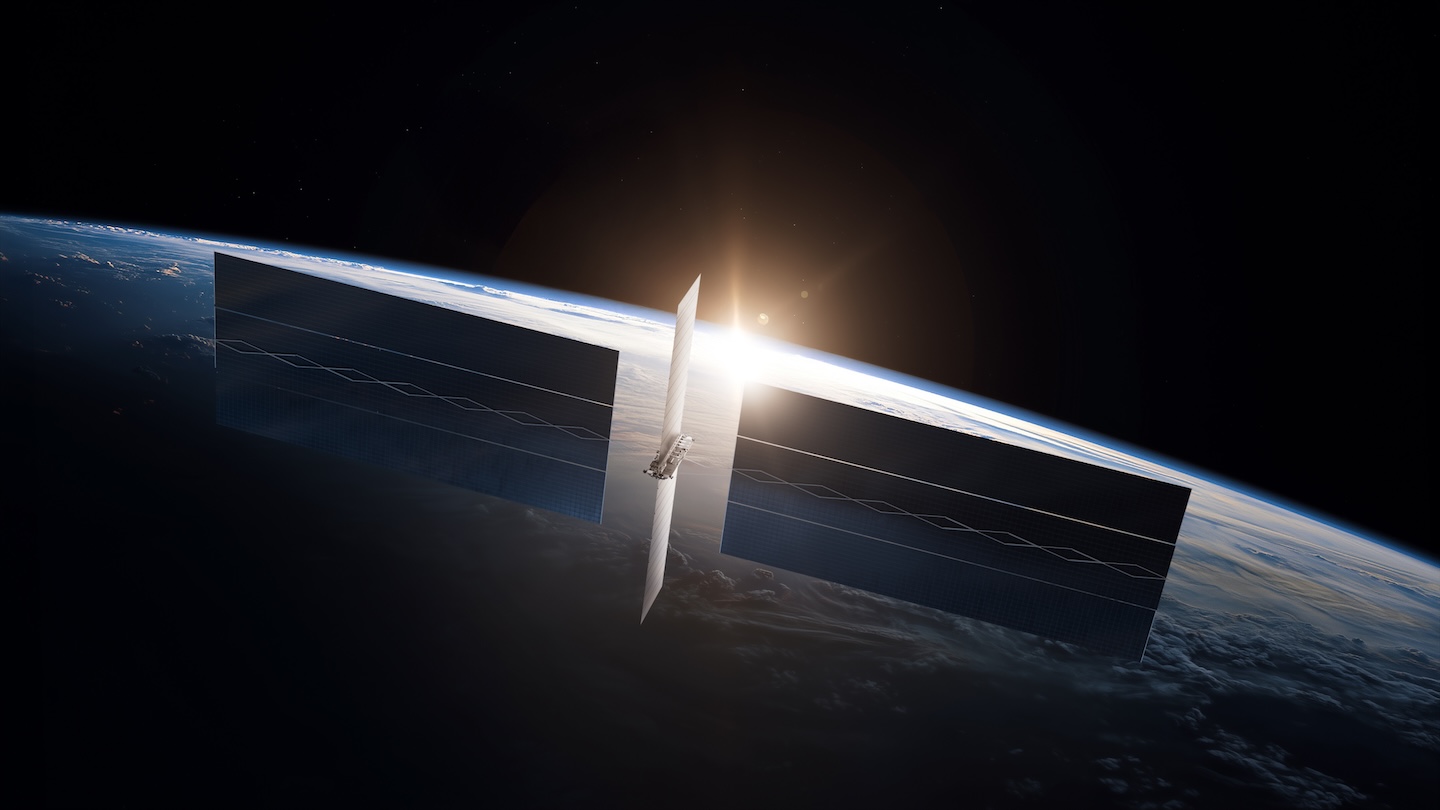
Google is about to put its own AI chips into orbit for the first time, and it is paying SpaceX to get them there.
The company said Thursday that the first in-orbit test of Project Suncatcher, its research effort to find out whether space can host large-scale AI computing, will fly next week on SpaceX’s Transporter-18 rideshare mission.
The satellite, called MVP, is about the size of a refrigerator and carries four of Google’s Tensor Processing Units, the same chips Google runs in its ground data centers. Google originally planned to launch two custom satellites in 2027, but chose to move faster by integrating its chips into a satellite.
MVP’s solar panels supply about one kilowatt of power, and Google will run Gemini models on the TPUs only in bursts of roughly 15 minutes before the chips shut down so the radiators can shed heat. In a blog post, Google said its Trillium TPUs survived vibration testing that mimicked sustained launch loads of up to 10g, with individual components seeing 50 to 100g, and handled a radiation dose greater than a five year mission would deliver.
SpaceX and Google mull massive partnership on Musk’s orbital data dream: report
Next week’s flight, slated for October 1, follows a relationship that became public in May, when Teslarati reported that Google was in talks with SpaceX for a launch deal tied to orbital data centers. Google also holds a stake of roughly 6% in SpaceX.
The two companies are chasing the same idea from very different starting points. SpaceX’s own orbital compute program is built around the AI1 satellite, a roughly 70 meter structure derived from Starlink V3 hardware that is designed for 150 kW of peak compute, about 150 times the power MVP will draw. Elon Musk has brushed off concerns about crowding orbit with those satellites, and SpaceX is building its Gigasat factory in Bastrop, Texas, to produce them, targeting an annualized rate of about 1 GW of space compute by the end of 2027.
Musk also posted on X on Thursday that “the amount of compute in space will obviously round up to 100% of all compute.”
Google has been more cautious in public. Its research estimates that launch prices need to fall below about $200 per kilogram before an orbital data center can compete with a ground facility on energy cost, a threshold the company believes could be reached around the mid 2030s. The Suncatcher team has said it expects the effort to remain a project rather than a product for years, which leaves the first real test of its hardware riding on a rocket from the company with the most aggressive timeline in the field.
Energy
Tesla Semi factory is getting a celebration nobody expected
Tesla will inaugurate its Nevada Semi factory September 24, five months after production quietly began ramping.
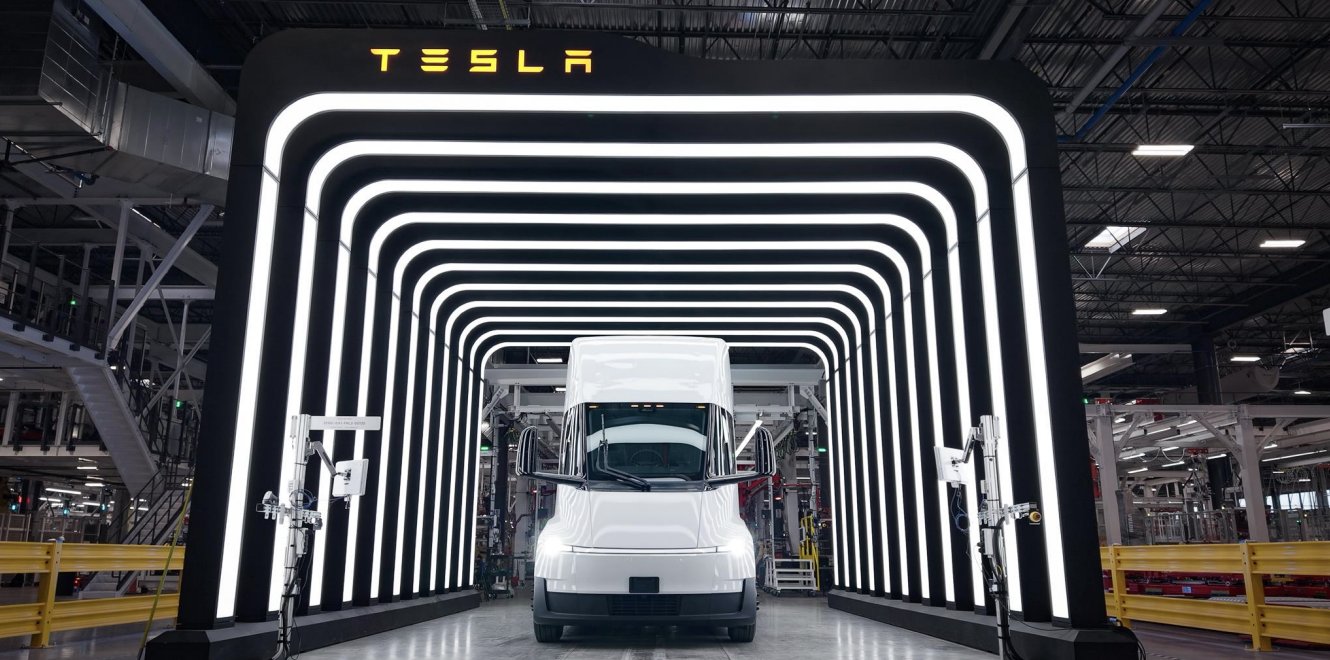
Tesla says it will officially inaugurate its new Semi factory in Nevada next month. The Tesla Semi account posted the announcement on X, sharing a graphic titled “Semi Rollout” with a date of September 24. No further details were given about the format of the event or who would attend.
While Tesla’s dedicated Semi plant in Sparks, adjacent to Gigafactory Nevada, opened back in April, with the first trucks rolling off the high volume line on April 29, the timing for the factory inauguration comes at a surprise. The ribbon cutting event five months into production is a break from how Tesla has usually handled its other factories, where the first truck or car off the line typically served as the milestone moment.
Inauguration of new Semi factory in Nevada next month pic.twitter.com/a8kAlxrOOn
— Tesla Semi (@tesla_semi) August 24, 2026
The 1.7 million square foot factory was built as part of a $3.6 billion expansion Tesla announced in early 2023, and it shares a site with the battery cell lines that feed the Semi’s structural pack, a decision meant to remove the supply bottleneck that delayed the truck for years. The plant is designed for 50,000 trucks a year at full ramp. Semi program director Dan Priestley has said production “is now ramping” rather than claiming it has reached scale.
Nine years passed between the Semi’s 2017 unveiling and this stage of production, with the truck slipping from an original 2019 target through hand built pilot units for PepsiCo and a slow build out of the Nevada plant. An inauguration event now gives Tesla a stage to talk up that ramp and reset expectations for how many trucks it can begin delivering at scale.
The September date also lines up with the Semi’s next milestone. Tesla confirmed the truck is heading to Europe with a full unveiling at the IAA Transportation trade show in Hannover, Germany, running September 15 through 20. Between the Nevada event and the Hannover reveal, Tesla has roughly a week and a half in September to make the case that the Semi is now a truck being built and sold on two continents rather than tested in a handful of fleets.


Tesla Energy has introduced the Powerwall Lease in conjunction with Tesla Electric, making the service available in Texas. This new option delivers whole-home backup power using two Powerwall units for a net monthly cost of $35 after credits, accompanied by a low fixed electricity rate.
Under the lease terms, customers pay a one-time order fee of $100. The base lease payment for the two Powerwalls is approximately $122 per month during the first year, subject to a 3 percent annual escalator thereafter. Enrollment in a qualifying Tesla Electric Backup plan or Virtual Power Plant plan provides an $87 monthly credit.
Powerwall Lease is now available with Tesla Electric in Texas
Whole-home backup for $35/month, with a low fixed electricity rate
– Two Powerwalls, $0 installation
– Storm Watch outage protection
– One app to manage it all pic.twitter.com/oTzqc6K3aF— Tesla Energy (@teslaenergy) August 13, 2026
This credit lowers the effective cost to roughly $35 per month plus applicable tax.
Installation of the standard system carries no additional charge. The package features Storm Watch for outage protection and allows complete management through a single Tesla application. The system supplies continuous whole-home backup capability.
The Powerwall system enables households to maintain electricity during severe storms that disrupt the utility grid. When outages occur, the batteries automatically provide seamless backup power to the home.
Tesla announces 100k Powerwalls are participating in Virtual Power Plants
Tesla Storm Watch monitors weather forecasts and ensures the units are fully charged ahead of anticipated severe weather events so that power remains available throughout the disruption, keeping lights, refrigeration, and other essential systems operating without interruption.
Availability is restricted to select Texas locations where retail electric choice exists. Participants must lease exactly two Powerwall units and maintain continuous enrollment with Tesla Electric. Solar panels cannot be included under this particular lease arrangement.
The monthly credit activates automatically once the system is installed, receives permission to operate, and enrollment is confirmed. To retain the credit, customers are required to stay enrolled in Tesla Electric and fulfill all program conditions.
Nonstandard installations that involve electrical upgrades or special permitting may lead to extra expenses and might impact eligibility for the credit, so be sure to check with either your installer or Tesla to ensure you will still qualify.

Elon Musk follows Trump’s lead, says a SpaceX name change is coming

Starlink launches Communities Program for passive income through internet sharing


