Investor's Corner
Tesla critic Bob Lutz vs. Elon Musk: A look back behind the bluster

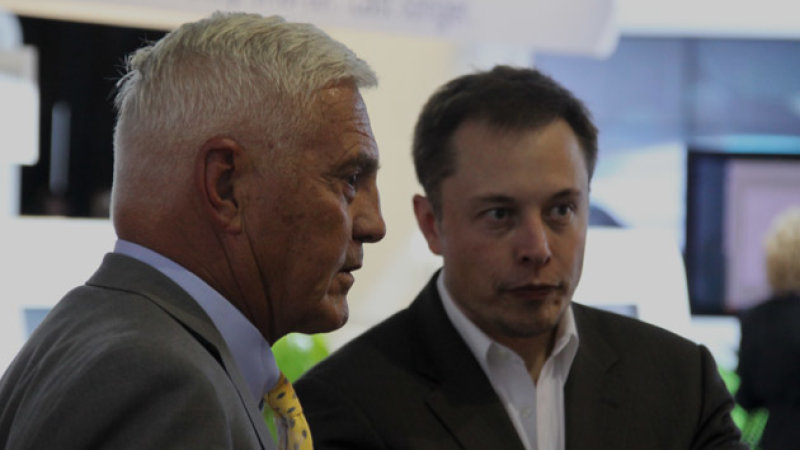
In this corner, the father of the Chevrolet Volt, an auto industry veteran who has held senior positions at Chrysler, Ford and BMW, an unlikely advocate for EVs – a cigar-chomping ex-Marine who has called climate change “a crock.” Bob Lutz!
In the other corner, the mastermind of PayPal, SolarCity, and SpaceX, the archetypal Silicon Valley entrepreneur, who wants to electrify transportation and save Planet Earth – and if that doesn’t work, he’ll take us to Mars to start over. Elon Musk!
Back in the day, Bob Lutz was a champion of Tesla and Musk, citing the Roadster as a major inspiration for the Volt, and saying that he would “always owe them a debt of gratitude for having kind of broken the ice.” After Lutz left GM, he founded Via Motors, which set out to build plug-in hybrid vans and pickup trucks for commercial fleets, but has had a difficult time finding its market. The 85-year-old Lutz has written extensively about the auto industry. For whatever reason, he has evolved into a harsh critic of EVs, and especially Tesla. In 2016, he compared Musk to the leader of a religious cult. (Musk responded on Twitter, saying, “Dear cult members, I love you.”)
Dear cult members, I love you https://t.co/1OzRaSQzhT
— Elon Musk (@elonmusk) October 26, 2016
Lutz launched his latest salvo against the California upstarts at a forum sponsored by a provider of insurance for collectible cars, suggesting that collectors buy a Model S now before Tesla goes belly-up. He had nothing but praise for the car itself: “A Model S, especially with the performance upgrades, is one of the fastest, best handling, best braking sedans that you could buy in the world today,” he said. “The acceleration times will beat any $350,000 European exotic.”
However, Lutz said Elon Musk “hasn’t figured out the revenues have to be greater than costs…when you are perennially running out of cash you are just not running a good automobile company. I don’t see anything on the horizon that’s going to fix that, so those of you who are interested in collector cars, may I suggest buying a Tesla Model S while they’re still available.”
Above: Bob Lutz starts to discuss Tesla and Elon Musk at the 1:06:19 mark in the video (Youtube: Hagerty via InsideEVs)
“Twenty-five years from now, [the Model S] will be remembered as the first really good-looking, fast electric car,” Lutz told the LA Times. “People will say ‘Too bad they went broke.’”
This time, Musk does not appear to have responded publicly to Lutz’s zinger, but naturally, a number of his disciples have come to his defense. Enrique Dans, writing in Forbes, notes his admiration for Lutz’s writings on the auto industry, but believes that “he has missed something enormously important. In fact, possibly the most important difference between the old and the new economy: fundamentally, timeframes.”
Lutz (along with legions of stock-market analysts) sees Tesla’s ongoing losses as a sign of the company’s inevitable failure. However, according to Dans, “Seeing the bottom line as the be-all and end-all of management is problematic…The principle that revenue must exceed costs is Management 101. The tricky bit is how you define the timeframe in which that has to happen.”
As anyone following the Tesla story knows by now, the company’s stock market valuation has no apparent connection to the number of vehicles it’s producing. Tesla’s market cap, currently around $59 billion, exceeds that of Ford, and rivals those of GM and Honda (which, interestingly, was once the subject of the same sort of criticism now leveled at Tesla). Stock-market pundits tend to see this lofty valuation as madness, proof of the irrationality of Elon Musk’s mindless minions. However, Enrique Dans finds the reason in fundamental differences in the companies’ missions, and the timeframes in which they expect to fulfill them.
If you parse the pedantic “mission statements” on the legacy automakers’ web sites, you’ll find that they basically amount to: “We want to sell cars.” Tesla’s mission statement is very different: “To accelerate the advent of sustainable transport by bringing compelling mass market electric cars to market as soon as possible.”
Tesla doesn’t just want to sell cars, it wants to change the world. This massive difference of ambition is reflected in the longer timeframe that Tesla envisions.
“In the economy Bob Lutz and other traditional car industry players understand, the goal and the metrics were clear: the quarterly results,” Dans writes. “If they were below what the analysts expected, bad; if they were higher, good. End of story. But the rules have changed…For today’s companies, profits are not the goal, they’re the cherry on the cake. Because the idea is, in the long term, to move toward an infinitely more ambitious goal, one that entails a whole new level of change. Companies that have grasped this can spend many years, even decades, without making a profit, as long as they are able to create a narrative that shows they are on the right track toward the defined goal.”
Tesla’s long road to ultimate triumph is not unprecedented – it’s a path that’s been trodden by other tech companies that set out to transform an industry. “For how many years did Amazon continue turning in negative quarterly results while its share price rose steadily?” asks Dans. “Did Jeff Bezos…supply his investors with drugs to maintain their confidence? Yes, he did, actually: a powerful substance called growth and clarity in the use of funds obtained. Amazon’s mission was never to sell stuff, but to change the world.”
Amazon is not the only example. In this age of instant communication, in which whole industries can be radically transformed, or even disappear, “reporting a profit each quarter has never been less important.”
“If Lutz is right, if the grand plans for a new economy that will change the world are bullshit, Tesla will go bust,” Dans concedes. “But if Tesla’s plans and strategy make sense, it may well spend a long time in the red, but it will end up as the auto industry’s benchmark.”
Change is taking place ever faster, and humans’ attention spans are growing ever shorter, so it may seem counter-intuitive that the timeline for corporate success should grow longer. However, even in the fast-paced internet era, changing the world, or even one industry, can’t be done in the space of one quarter. Tesla’s mission is a risky one, but so far investors are willing to accept that risk.
Bob Lutz and Elon Musk look at the world in two different ways, and they have very different visions of the future. Which one will prove prophetic? We shall see.
===
Note: Article originally published on evannex.com, by Charles Morris
Source: Forbes


Investor's Corner
New drone video shows Tesla’s Optimus Factory reaching a turning point
New drone footage shows Tesla’s dedicated Optimus factory steel frame nearing completion at Giga Texas.

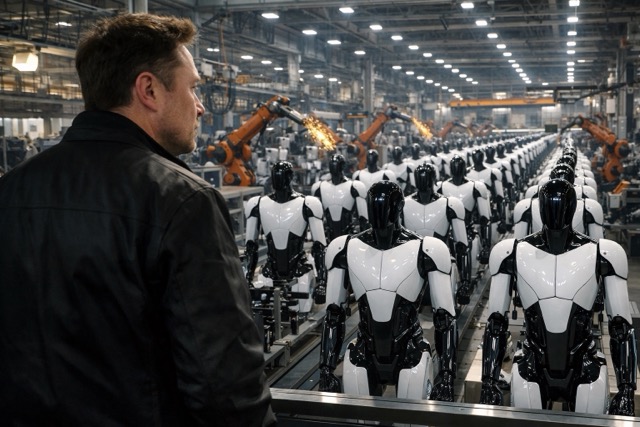
Tesla’s dedicated Optimus factory at Gigafactory Texas is closing in on a finished steel frame, according to drone footage posted Thursday afternoon by longtime site observer Joe Tegtmeyer. In the video, Tegtmeyer said structural steel assembly is now about five column grids away from reaching the building’s north perimeter beam, putting the primary skeleton in its final stretch roughly six months after Tesla broke ground on the North Campus site in late March.
The Giga Texas Optimus Factory latest update … construction keeps moving fast!
Steel assembly is now only about 5 column grids from the north perimeter beam. Concrete is going in on the three upper floors, rebar is still being laid for more pours, and footing / grade-beam work… pic.twitter.com/qvFPvwnYzW
— Joe Tegtmeyer 🚀 🤠🛸😎 (@JoeTegtmeyer) September 17, 2026
Tegtmeyer’s footage shows concrete already going in on three upper floors while crews continue laying rebar and pouring grade beam footings at ground level. That kind of parallel work, steel rising at one end of the site while concrete sets at the other, is a scheduling approach Tesla used at the original Giga Texas building and appears to be repeating here to save time before the plant’s targeted 2027 production start.
Teslarati has tracked the building’s progress since Tesla confirmed construction was officially underway in May, when the first steel structure went up on what was then bare, reclaimed land. The facility is part of a more than 5.2 million square foot expansion of Giga Texas’s North Campus that Tesla has said will eventually run nearly the length of the existing vehicle factory, over 4,000 feet, while sitting somewhat narrower. Musk has pegged the long term output target at 10 million Optimus units a year once the line is running at full capacity, a volume that would dwarf the one million unit pilot line Tesla is standing up separately at its Fremont, California factory.
Tesla Giga Texas to feature massive Optimus V4 production line
The Texas facility sits alongside another major buildout on the same campus. Terafab, the joint Tesla and SpaceX chip fabrication plant that will eventually supply the silicon running Optimus units in the field. Housing robot assembly and chip production on the same grounds is a deliberate supply chain decision, cutting down on the shipping and lead time that would otherwise sit between the two.
Tesla has not given an updated timeline beyond its previously stated goal of bringing high volume Optimus production online at the site in the summer of 2027. Fremont’s smaller pilot line began mass producing the current Gen 3 robot in January, with that plant expected to build tens of thousands of units this year primarily to generate the real world data Tesla needs to refine the robot’s software before Giga Texas ramps up. Six months of visible construction progress, tracked almost entirely through Tegtmeyer’s recurring drone flights, gives the clearest outside look yet at how seriously Tesla is treating that 2027 deadline.
Investor's Corner
Tesla and SpaceX take “Terafab” Trademark fight to Federal Court
Tesla and SpaceX sue a small Illinois firm after cease and desist letters over Terafab.

Tesla and SpaceX are asking a federal judge to rule that their planned Terafab chip factory does not infringe a small Illinois company’s trademark, a request that arrives only after months of quiet negotiation broke down this summer.
The dispute traces to May 18, when Tesla filed three U.S. trademark applications for “Terafab” and “Tesla Terafab,” covering semiconductor chips and related chip making services. TERA-print LLC, a nanotechnology company that has held a federal trademark for “Tera-Fab” since 2021, responded five days later with a cease and desist letter. According to the lawsuit, first reported by Reuters, TERA-print argued that Tesla and SpaceX’s use of “Terafab” would confuse consumers familiar with its own trademark, which covers a desktop photolithography printer sold to researchers for sensor and bioengineering work.
What stands out in the filing is the timing of TERA-print’s own paperwork. One day before sending that cease and desist letter, on May 22, TERA-print applied to expand its existing registration to cover semiconductor materials, silicon chips, nanoelectronic devices and AI design services, categories it had not previously claimed. Tesla and SpaceX call that filing opportunistic in their complaint, noting it arrived two months after Tesla’s public Terafab announcement and just days after Tesla’s own trademark applications went in.
Elon Musk launches TERAFAB: The $25B Tesla-SpaceXAI chip factory that will rewire the AI industry
By June 10, TERA-print was threatening to sue for federal trademark infringement, false designation of origin and unfair competition, the complaint states. Rather than wait to be sued, Tesla, SpaceX and SpaceXAI met with TERA-print six separate times between June and August trying to resolve the dispute directly. Those talks collapsed, and the companies filed for declaratory judgment this week in the U.S. District Court for the Western District of Texas, asking a judge to find that “Terafab” does not infringe TERA-print’s mark before TERA-print can file a claim of its own.
TERA-print isn’t backing down. The company told PCMag it discussed a settlement with Tesla as recently as September 2 and feels misled by what it called Tesla’s professed interest in settling. Its CTO, Andrey Ivankin, said TERA-print holds a Defense Department contract to fabricate semiconductors and partially owns Mattiq Inc., an AI company built on TERA-print’s products, and that the company will vigorously defend its rights.
Tesla and SpaceX argue the overlap is superficial. Terafab is planned as a $16.8 billion complex spanning roughly 100 million square feet at the Grimes County site SpaceX confirmed last month, built to produce chips for Optimus robots, Tesla’s AI computing needs and SpaceX’s orbital data center ambitions, a scale and purpose the companies say no reasonable consumer would confuse with a tabletop lab printer. TERA-print’s product line has stayed focused on lithography tools for biological and sensor research since it registered its mark in 2021.
The trademark fight is the second legal dispute tied to the Terafab project in the past week, following a separate SpaceX suit aimed at keeping company records about the facility out of public view, as KBTX reported. Whether construction proceeds under the Terafab name now depends on a federal judge in Austin.

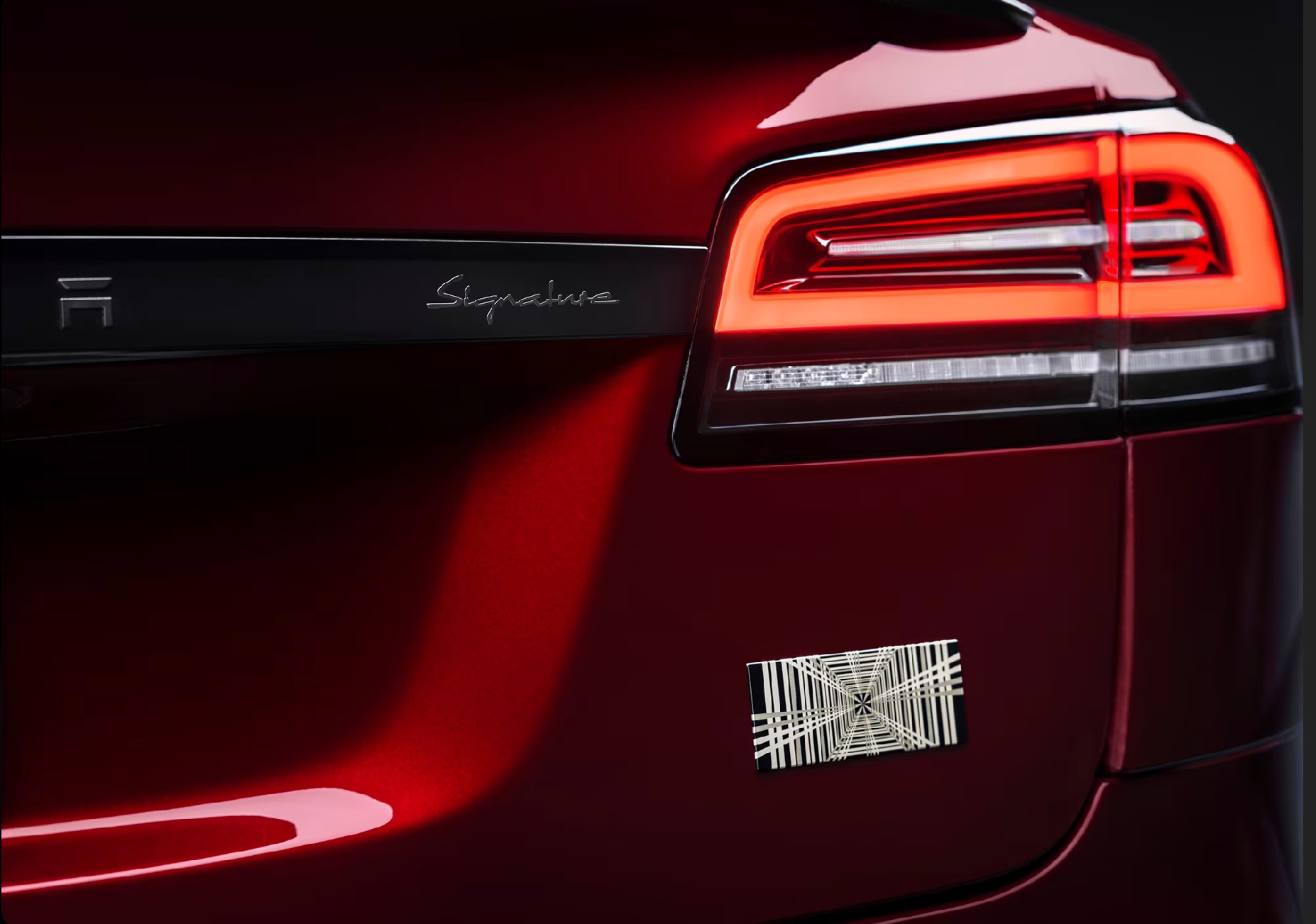
In a new interview on Wednesday, Tesla uber bull Ron Baron said that anyone looking to buy the company’s stock should do so as soon as they can.
Baron, founder and CEO of Baron Capital and one of Tesla’s most persistent institutional bulls, used a CNBC Squawk Box appearance on Wednesday to deliver a familiar message with fresh urgency: In his opinion, Tesla stock is a buy:
“The time to buy the stock is now. FSD is catching on, and it’s going to be bigger and bigger. 55% of new buyers are buying it (Teslas) with FSD. It’s going to be everywhere. It’s safer.”
The Baron Capital frontman’s case is built around Full Self-Driving. Tesla reported 1.48 million active FSD subscriptions in the second quarter, up 56 percent year over year, and company officials have said roughly 55 percent of new North American deliveries left with a subscription enabled.
Baron framed that attach rate as proof the product is moving from enthusiast extra to default expectation, and as a reason software, not just vehicle volume, should drive the next phase of value.
His conviction on Tesla shares is not theoretical, as Baron Capital made its first Tesla investment in 2014, after years of meetings that began around the 2010 IPO roadshow. The firm later built a large SpaceX position starting in 2017.
Ron Baron today in new interview on Tesla:
“The time to buy the stock is now. FSD is catching on, and it’s going to be bigger and bigger. 55% of new buyers are buying it (Teslas) with FSD. It’s going to be everywhere. It’s safer.” pic.twitter.com/Rv5PB0bVZ2
— Sawyer Merritt (@SawyerMerritt) September 16, 2026
Baron said those Musk-led bets have generated about $30 billion of the $71 billion in profits Baron Capital has produced for clients. He put the firm’s current exposure at roughly $25 billion in SpaceX and $5 billion in Tesla. Personally, he described SpaceX as his largest holding, at about $5 billion, with about $1.5 billion in Tesla and additional Tesla exposure through the firm’s funds.
That concentration is also a statement of loyalty. Asked about talk of a SpaceX-Tesla combination, Baron said he had already walked Elon Musk through arguments for and against a deal, then declined to repeat them on air. His public position was simpler: “Whatever you decide is better is what I’m going to support,” he said to Musk.
Baron also said that he picked up the farewell edition of the Model S after Tesla decided to sunset the vehicle earlier this year, calling it his favorite car he’s ever driven.

New drone video shows Tesla’s Optimus Factory reaching a turning point

Tesla and SpaceX take “Terafab” Trademark fight to Federal Court


