News
Lucid unveils Lunar Robotaxi in bid to challenge Tesla’s Cybercab in the autonomous ride hailing race
Lucid’s Lunar robotaxi is gunning for Tesla’s Cybercab in the autonomous ride hailing race

![Lucid Lunar robotaxi concept [Credit: Rendering by TESLARATI]](https://www.teslarati.com/wp-content/uploads/2026/03/lucid-lunar-robotaxi-concept-teslarati-rendering.jpg)
Lucid Group pulled back the curtain on its purpose-built autonomous robotaxi platform dubbed the Lunar Concept. Announced at its New York investor day event, Lunar is arguably the company’s most ambitious concept yet, and a direct line of sight toward the autonomous ride haling market that Tesla looks to control.
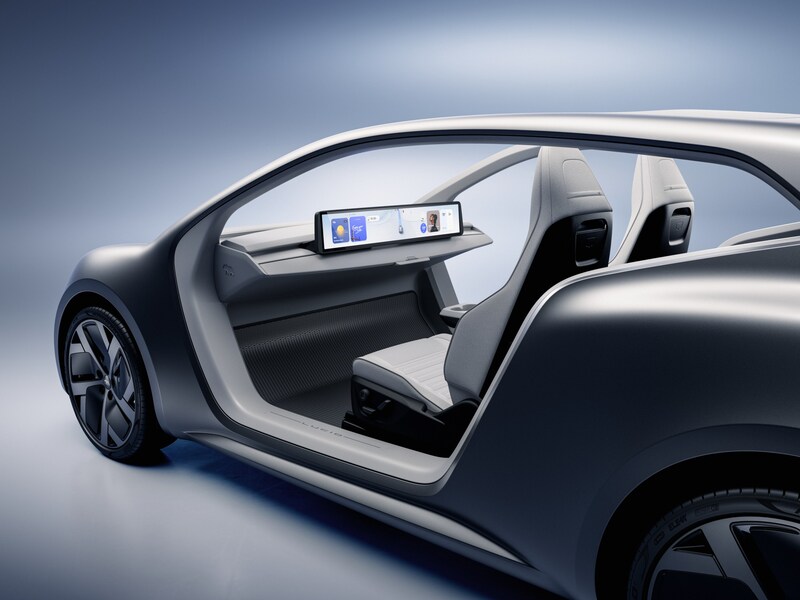
At Lucid Investor Day 2026, the company introduced Lunar, a purpose-built robotaxi concept based on the Midsize platform.
A comparison to Tesla’s Cybercab is unavoidable. The concept of a Tesla robotaxi was first introduced by Elon Musk back in April 2019 during an event dubbed “Autonomy Day,” where he envisioned a network of self-driving Tesla vehicles transporting passengers while not in use by their owners. That vision took another major step in October 2024 when, Musk unveiled the Cybercab at the Tesla “We, Robot” event held at Warner Bros. Studios in Burbank, California, where 20 concept Cybercabs autonomously drove around the studio lot giving rides to attendees.
Fast forward to today, and Tesla’s ambitions are finally materializing, but not without friction. As we recently reported, the Cybercab is being spotted with increasing frequency on public roads and across the grounds of Gigafactory Texas, suggesting that the company’s road testing and validation program is ramping meaningfully ahead of mass production. Tesla already operates a small scale robotaxi service in Austin using supervised Model Ys, but the Cybercab is designed from the ground up for high-volume, low-cost production, with Musk stating an eventual goal of producing one vehicle every 10 seconds.
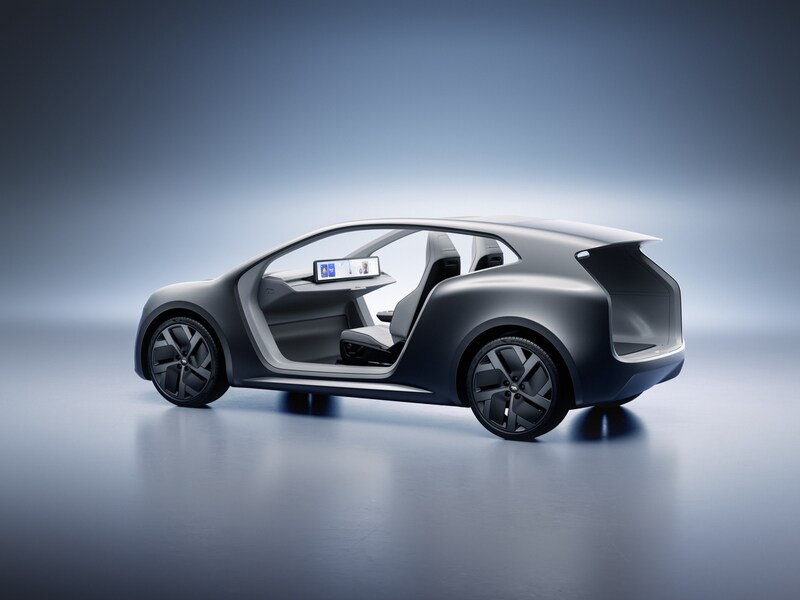
At Lucid Investor Day 2026, the company introduced Lunar, a purpose-built robotaxi concept based on the Midsize platform.
Into this landscape steps Lucid’s Lunar. Built on the company’s all-new Midsize EV platform, which will also underpin consumer SUVs starting below $50,000. The Lunar mirrors the Cybercab’s core philosophy of having two seats, no driver controls, and a focus on fleet economics. The platform introduces Lucid’s redesigned Atlas electric drive unit, engineered to be smaller, lighter, and cheaper to manufacture at scale.
Unlike Tesla’s strategy of building its own ride hailing network from scratch, Lucid is partnering with Uber. The companies are said to be in advanced discussions to deploy Midsize platform vehicles at large scale, with Uber CEO Dara Khosrowshahi publicly backing Lucid’s engineering credentials and autonomous-ready architecture.
In the investor day event, Lucid also outlined a recurring software revenue model, with an in-vehicle AI assistant and monthly autonomous driving subscriptions priced between $69 and $199. This can be seen as a nod to the software revenue stream that Tesla has long championed with its Full Self-Driving subscription.
Tesla’s Cybercab is targeting a price point below $30k and with operating costs as low as 20 cents per mile. But with regulatory hurdles still ahead, the window for competition is open. Lucid’s Lunar may not have a launch date yet, but it arrives at a pivotal moment, and when the robotaxi race is no longer viewed as hypothetical. Rather, every serious EV player needs to come to bat on the same plate that Tesla has had countless practice swings on over the last seven years.


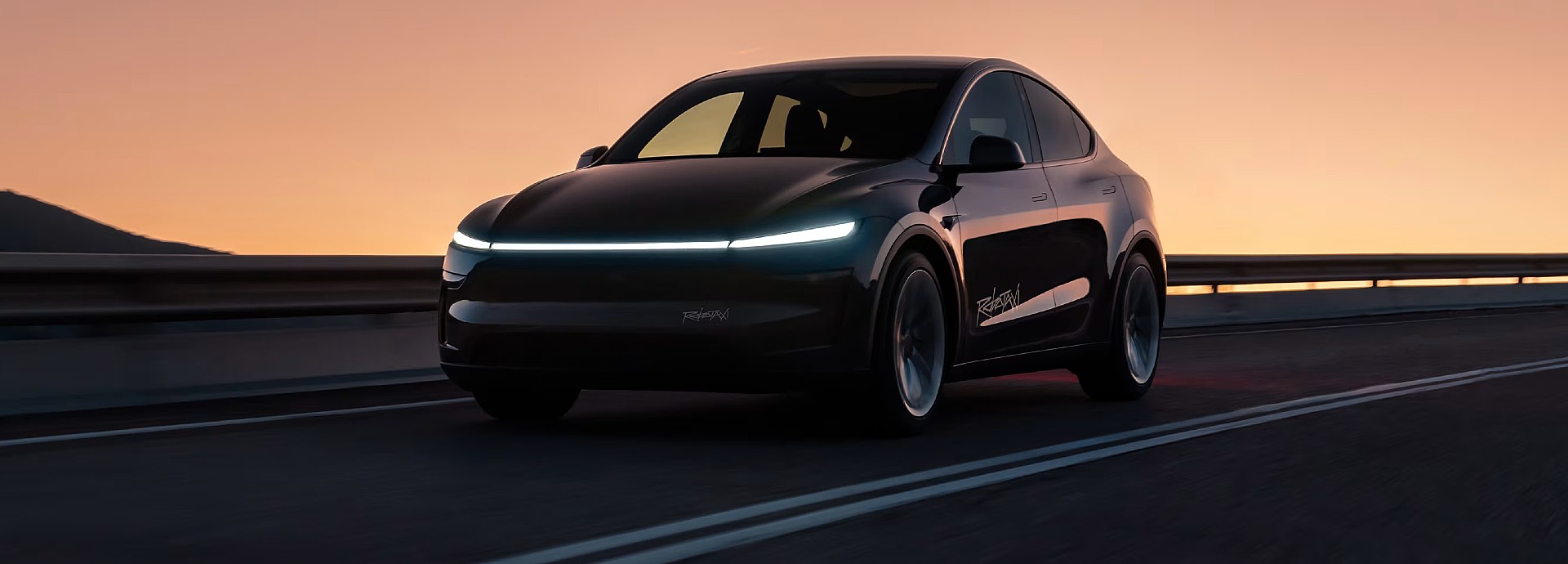
Tesla Robotaxi services in Austin have been operating since last Summer, but Tesla has admittedly been delayed in its expansion of the geofence, fleet size, and other details in a bid to prioritize safety as new technology rolls out.
But those barriers are being broken with new guardrails being removed from the program.
Tesla has achieved a significant advancement in its autonomous ride-hailing program. As of May 4, the Robotaxi fleet in Austin, Texas, has begun operating unsupervised during evening hours for the first time. This expansion moves beyond previous limitations that restricted unsupervised service to daylight hours, typically ending in mid-afternoon.
Tesla Robotaxi in Austin is operating unsupervised in the evenings for the first time today.
Previously in Austin, unsupervised operation ended mid-afternoon
— Robotaxi Tracker (@RtaxiTracker) May 4, 2026
The change brings Austin in line with operations in Dallas and Houston. Those cities have supported evening unsupervised runs since their initial launches in April, and both recently received additions of new unsupervised vehicles to their fleets. This coordinated progress across Texas strengthens Tesla’s regional presence and provides a broader testing ground for the technology.
This milestone carries substantial weight in the development of autonomous vehicles. Extending operations into low-light conditions meaningfully expands the Robotaxi’s operational design domain (ODD)—the specific environments and scenarios in which the system is approved to operate safely without human intervention.
Nighttime driving presents unique technical demands: diminished visibility, headlight glare from oncoming traffic, reduced contrast for identifying pedestrians and lane markings, and greater variability in camera sensor exposure.
Tesla’s pure vision approach, powered by neural networks trained on vast real-world datasets rather than lidar or pre-mapped routes, must handle these variables reliably. Demonstrating consistent unsupervised performance after sunset validates the robustness of the end-to-end AI stack and its ability to generalize across diverse lighting conditions.
Beyond technical validation, the expansion holds important operational and economic implications. Evening hours often coincide with peak urban demand for rides, including commutes, dining, and entertainment outings.
Enabling service during these periods increases daily vehicle utilization, allowing each Robotaxi to generate more revenue while gathering additional high-value training data. Higher utilization accelerates the virtuous cycle of data collection, model improvement, and further ODD growth.
Looking ahead, this step paves the way for more ambitious rollouts. Success in low-light environments positions Tesla to pursue near-24-hour operations, potentially integrating highways and expanding into varied weather patterns. Regulators worldwide frequently demand evidence of safe performance across day-night cycles before granting wider approvals.
Proven capability in Texas could expedite deployments in planned cities such as Phoenix, Miami, Orlando, Tampa, and Las Vegas during the first half of 2026.
Tesla confirms Robotaxi expansion plans with new cities and aggressive timeline
Moreover, scaling evening service supports Tesla’s long-term vision of a high-efficiency robotaxi network. Greater fleet productivity lowers the cost per mile, making autonomous mobility more accessible and competitive against traditional ride-hailing.
As the company iterates on software updates informed by nighttime data, reliability is expected to compound rapidly, unlocking denser urban coverage and longer-distance trips.
In summary, the introduction of an unsupervised evening Robotaxi service in Austin represents more than an incremental schedule adjustment. It signals a critical maturation of the underlying technology and sets the foundation for broader geographic and temporal expansion.
With Texas operations gaining momentum, Tesla is steadily advancing toward transforming urban transportation at scale.
Cybertruck
Tesla Cybercab just rolled through Miami inside a glass box
Tesla paraded a Cybercab in a glass display at Miami’s F1 Grand Prix event this week.
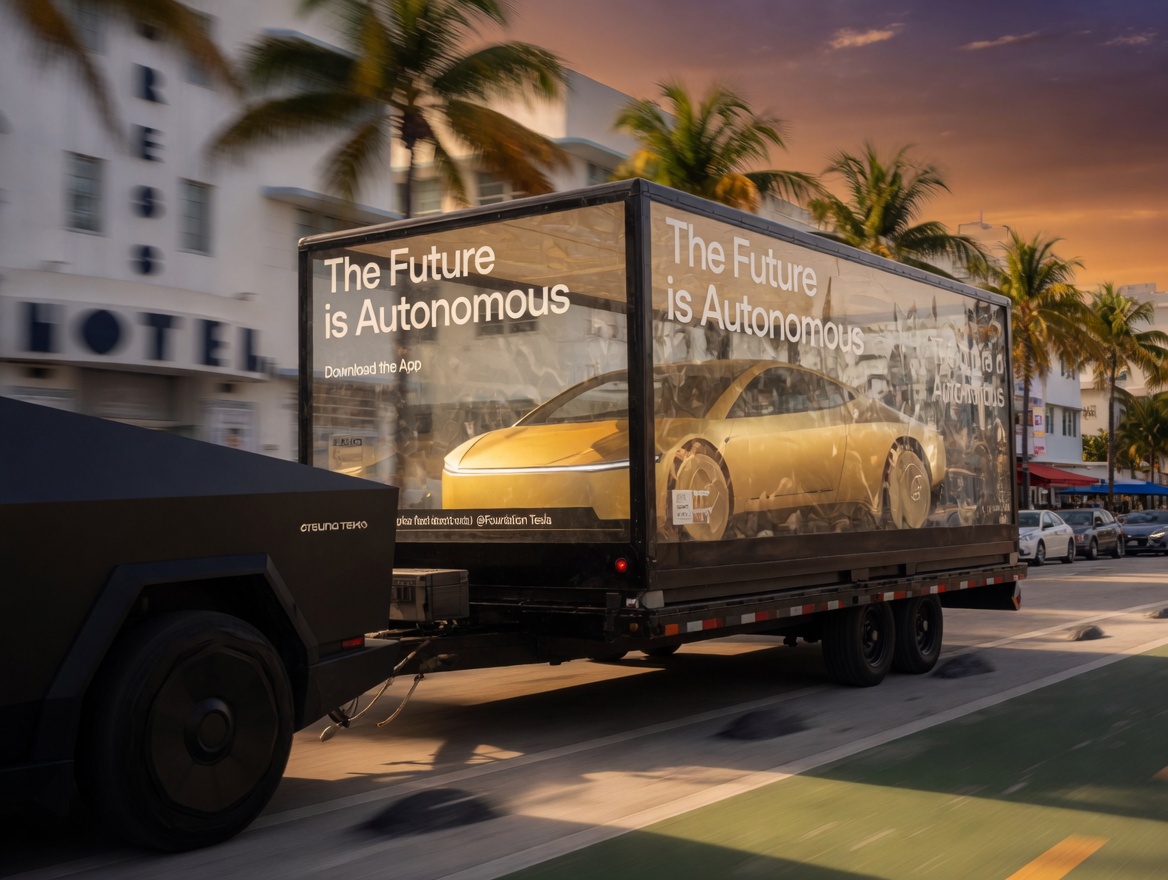
Tesla set up an “Autonomy Pop-Up” at Lummus Park in Miami Beach from April 29 through May 3, 2026, embedded within the official F1 Miami Grand Prix Fan Fest. The centerpiece was a Cybertruck towing the Cybercab inside a glass display case marked “Future is Autonomous,” rolling through the beachfront crowd.
Miami is on Tesla’s confirmed list of cities for robotaxi expansion in the first half of 2026, making the promotion a strategic promotion that lays groundwork in a target market.
This was not Tesla’s first time using Miami as a showcase city. In December 2025, Tesla hosted “The Future of Autonomy Visualized” at its Miami Design District showroom, coinciding with Art Basel Miami Beach. That event featured the Cybercab prototype and Optimus robots interacting with attendees. The F1 pop-up this week marks Tesla’s return to Miami and follows a pattern Tesla has been running since early 2026. Just two weeks before Miami, Tesla stationed Optimus at the Tesla Boston Boylston Street showroom on April 19 and 20, directly on the final stretch of the Boston Marathon, letting tens of thousands of runners and spectators meet the robot for free, generating massive earned media at zero advertising cost.
Tesla is sending its humanoid Optimus robot to the Boston Marathon
Tesla has confirmed plans to expand its robotaxi service to seven cities in the first half of 2026, including Dallas, Houston, Phoenix, Miami, Orlando, Tampa, and Las Vegas, building on the unsupervised service already running in Austin. Musk has said he expects robotaxis to cover between a quarter and half of the United States by end of year. On the production side, Musk told shareholders that the Cybercab manufacturing process could eventually produce up to 5 million vehicles per year, targeting a cycle time of one unit every ten seconds. Scaling robotaxis to 10 million operational units over the next ten years is a key condition of his compensation package, alongside selling 20 million passenger vehicles.
As for the Cybercab’s price, Musk has said buyers will be able to purchase one for under $30,000, with an average operating cost around $0.20 per mile. Whether those numbers hold through full production remains to be seen.
Cybercab at F1 Fan Fest in Miami
by
u/Joshalander in
teslamotors
News
Tesla Semi gets new product launch as mass manufacturing hits Plaid Mode
While the 1.2 MW Megacharger handles quick 30-minute en-route boosts, the Basecharger serves as a reliable overnight solution for longer dwell times at warehouses, distribution centers, fleet yards, and even, potentially, homes.

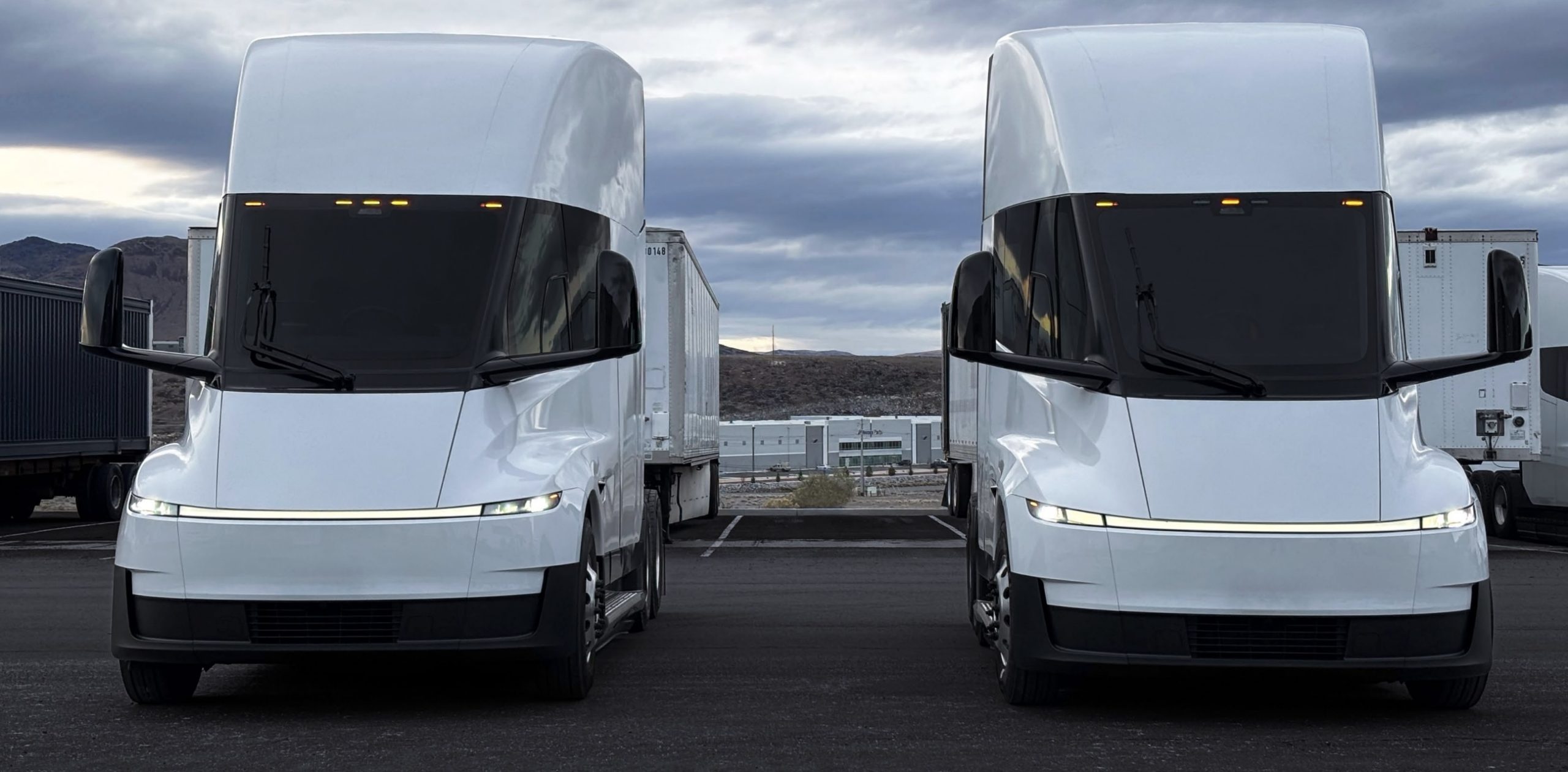
The Tesla Semi is getting a new production launch as mass manufacturing on the all-electric truck is gearing up to hit Plaid Mode.
Tesla has introduced a game-changing addition to its commercial charging lineup with the new 125 kW Basecharger for Semi. Launched this week as part of the new “Semi Charging for Business” program, this compact unit is purpose-built for depot and overnight charging of Tesla Semi trucks.
While the 1.2 MW Megacharger handles quick 30-minute en-route boosts, the Basecharger serves as a reliable overnight solution for longer dwell times at warehouses, distribution centers, fleet yards, and even, potentially, homes.
Our new 125 kW Basecharger is designed for longer dwell times and overnight charging of Semis. It’s the “home charging” for heavy-duty fleets.
It features a fully integrated design that eliminates the need for a separate AC-to-DC cabinet, simplifying installation. The 6 meter… https://t.co/ovy1C4PsRW pic.twitter.com/vBUCNMzs57
— Tesla Charging (@TeslaCharging) May 1, 2026
Delivering up to 60 percent of the Semi’s range in roughly four hours, perfect for overnight top-ups during mandated driver rest periods or while trucks are loaded or unloaded. Its fully integrated design eliminates the need for bulky separate AC-to-DC cabinets.
Tesla engineers tucked one of the power modules from a V4 Supercharger Cabinet directly inside the sleek post, resulting in a compact footprint. It also features a six-meter cable for layout flexibility. This is one thing that must have been learned through the V4 Supercharger rollout.
Installation and operating costs drop dramatically thanks to daisy-chaining. Up to three Basechargers can share a single 125 kVA breaker, slashing electrical infrastructure requirements. The unit outputs 150 amps continuous across an 180–1,000 VDC range, matching the Semi’s high-voltage architecture while supporting the MCS 3.2 standard.
Tesla Semi sends clear message to Diesel rivals with latest move
Priced from $40,000 for a minimum order of two units, the Basecharger is far more affordable than the $188,000 Megacharger setup for two posts. Deliveries begin in early 2027. Buyers also receive Tesla’s full network-level software, remote monitoring, maintenance, and a guaranteed 97 percent or higher uptime—critical for fleet reliability.
This launch arrives as Tesla accelerates high-volume Semi production at its Nevada factory, targeting 50,000 units annually. By pairing affordable depot charging with ultra-fast highway options, Tesla removes one of the biggest obstacles to electrifying Class 8 trucking: infrastructure cost and complexity.
Fleet operators stand to gain lower electricity rates during off-peak hours, dramatically reduced maintenance compared to diesel, and quieter yards at night. The Basecharger isn’t just another charger—it’s the practical bridge that makes large-scale electric semi adoption economically viable.
With the Basecharger handling “home” duties and Megachargers powering the road, Tesla is delivering a complete ecosystem that could finally tip the scales toward zero-emission freight. For trucking companies ready to go electric, the future just got a whole lot more charger-friendly.

Tesla Robotaxi service in Austin achieves monumental new accomplishment

Tesla Cybercab just rolled through Miami inside a glass box


