Lifestyle
Space Hero Extraordinaire: Elon Musk
Anyone that can break the cycle of bureaucracy and nay-sayers to get a country focused on things that are super important, things like clean energy and planetary exploration, is a hero in my book. For Elon Musk and the few others like him, wanting something “too bad” isn’t a weakness because the very things you want require that kind of commitment to be attainable. The proof of that concept? Four words: “The Falcon has landed.”

Just Another Dreamer
When I was a kid, I wanted nothing more in the world than to be an astronaut. I just knew it was my “calling”. I fed my space addiction as much as the school’s library would allow me to, and I couldn’t even fathom why every other kid in my grade didn’t want the same thing. I still remember laughing when one of them said he didn’t know who Neil Armstrong was, thinking it was a joke, and then being completely floored when he asked me why he should care about some “old” dude.
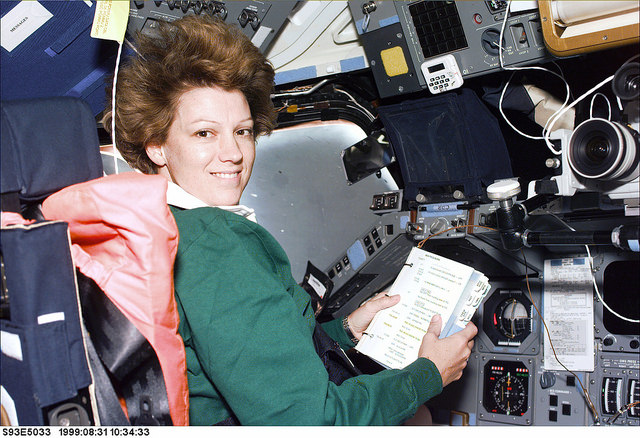
Columbia Commander Eileen Collins by NASA on The Commons is provided with no known copyright restrictions.
I was a total geek. I have no problem admitting that. I had even managed to convince my parents to send me to Space Camp in Huntsville, Alabama where I was selected to be my session’s shuttle commander. This was years before Eileen Collins had become the first female shuttle commander, so it was a big deal to me.
One day, another student told me that I would never become an astronaut because I wanted it “too bad”. I still hate that she was right, but I really can’t hate the reasons why it came to be true. Genetics are genetics, and not meeting a five-foot-four threshold combined with not having twenty-twenty vision are more or less non-starters for the space cowboy wannabes out there. Then life happened, I went down another path (or seven), and the shuttle program was shut down before I ever got the opportunity to see a launch in person.
Mars and Musk for the “Win”
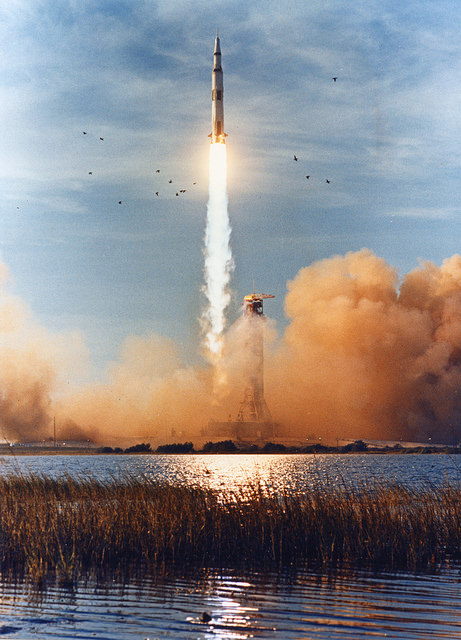
Apollo 8 Liftoff View by Project Apollo Archive is provided as part of the public domain.
When I finally made it to the Kennedy Space Center in Florida, it was the same week the very last shuttle had landed. As I stood in the bleachers where hundreds of others had sat to watch rockets take to the sky, gazing out at the launch pad that had held so much human spirit on it, I suddenly felt it again. The “calling”, renewed now with a slightly different purpose. Then I turned to my mostly disinterested brother and said, “Mike, this is my manifesto. One day, I’m going to be part of the effort that takes man to Mars. I got here too late for the moon and too late for the shuttle, but I’m not gonna give up. It’s too much a part of who I am, even today.” He laughed at me, of course, and probably rolled his eyes, but I wasn’t watching him. I was dreaming again.

The Final Shuttle by Brent Newhall is licensed under CC by 2.0.
That’s where Elon Musk came in for me. Cool rich guy does cool stuff with his money in an attempt to go cool places with his rockets, right? No, not really. It wasn’t that simple. I will even admit it took me a fairly long time to actually follow what he was doing. The words “commercial” and “space” just didn’t really mesh well together in my head. What could a business mentality really bring to the spirit of human space exploration that was pure enough to be worthy?
It took an interview with Elon on an episode of StarTalk Radio, hosted by Neil DeGrasse Tyson (your personal astrophysicist), to finally “get” what was special about him. This guy’s main concern in life was advancing humanity. It really seemed to me that money was a means to an end for him, not the end itself, and that was something I could respect in a big way. After that, it didn’t take very long for fascination to set in, and now I consider him to be one of my heroes.
OnInnovation Interview: Elon Musk by OnInnovation is licensed under CC by ND 2.0.
“Hero” is a word that tends to be thrown around a lot, but I think in this case it is definitely deserved. It’s about breaking the cycle. The space industry is heavy with bureaucracy, inefficiency that drives high costs, and “big guys” happy to stand in the way of any other “guys” hoping to get in on the action. New technology means less job security for those doing things the way it has always been done, and long-standing relationships between the “big guys” and NASA have kept the “little guys” focused mostly on space tourism rather than pure scientific pursuit or pushing the boundaries of what can be done and where we can go.
Elon Musk: Space Hero Extraordinaire
Enter Elon Musk with SpaceX. He decides he’s going to launch rockets that are better, cheaper, flown more often, and with Mars as the ultimate goal. Shockingly, it doesn’t entirely even matter to him whether he succeeds or not. It’s just that important and must be tried. He didn’t get into the space business to make money; he got in for sake of all of us.
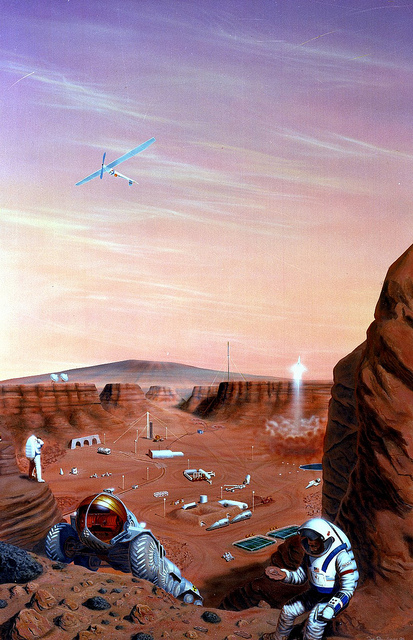
Exploration Imagery by NASA on The Commons is provided with no known copyright restrictions.
To be fair, Elon is not entirely unique in his desire to explore other planets, especially Mars. I remember watching an IMAX film during my week at Space Camp that had fantastic visuals explaining how we could terraform our red neighbor. I even remember thinking, “Oh, great! We do have a plan.” In reality though, we didn’t have a plan, or at least didn’t until Elon’s effect inspired people to demand one.
Anyone that can break the cycle of bureaucracy and nay-sayers to get a country focused on things that are super important, things like clean energy and planetary exploration, is a hero in my book. For Elon Musk and the few others like him, wanting something “too bad” isn’t a weakness because the very things you want require that kind of commitment to be attainable. The proof of that concept? Four words:
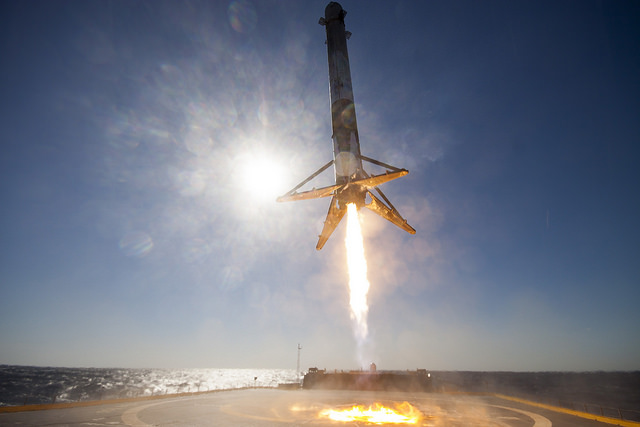
CRS-8 first stage landing by SpaceX is part of the public domain.
“The Falcon has landed.”
So that’s my angle, my two cents – whatever you want to call it. With SpaceX and Elon taking so much initiative, our future in the final frontier is finally happening again, and I am excited to both have the opportunity to watch everything unfold and to share my thoughts as it happens. I do plan on joining the effort directly, but more on that later. For now, the headlines are filled with the “next steps”, and there’s much to be said about them.


Elon Musk
Tesla’s golden era is no longer a tagline
Tesla “golden era” teaser video highlights the future of transportation and why car ownership itself may be the next thing to change.

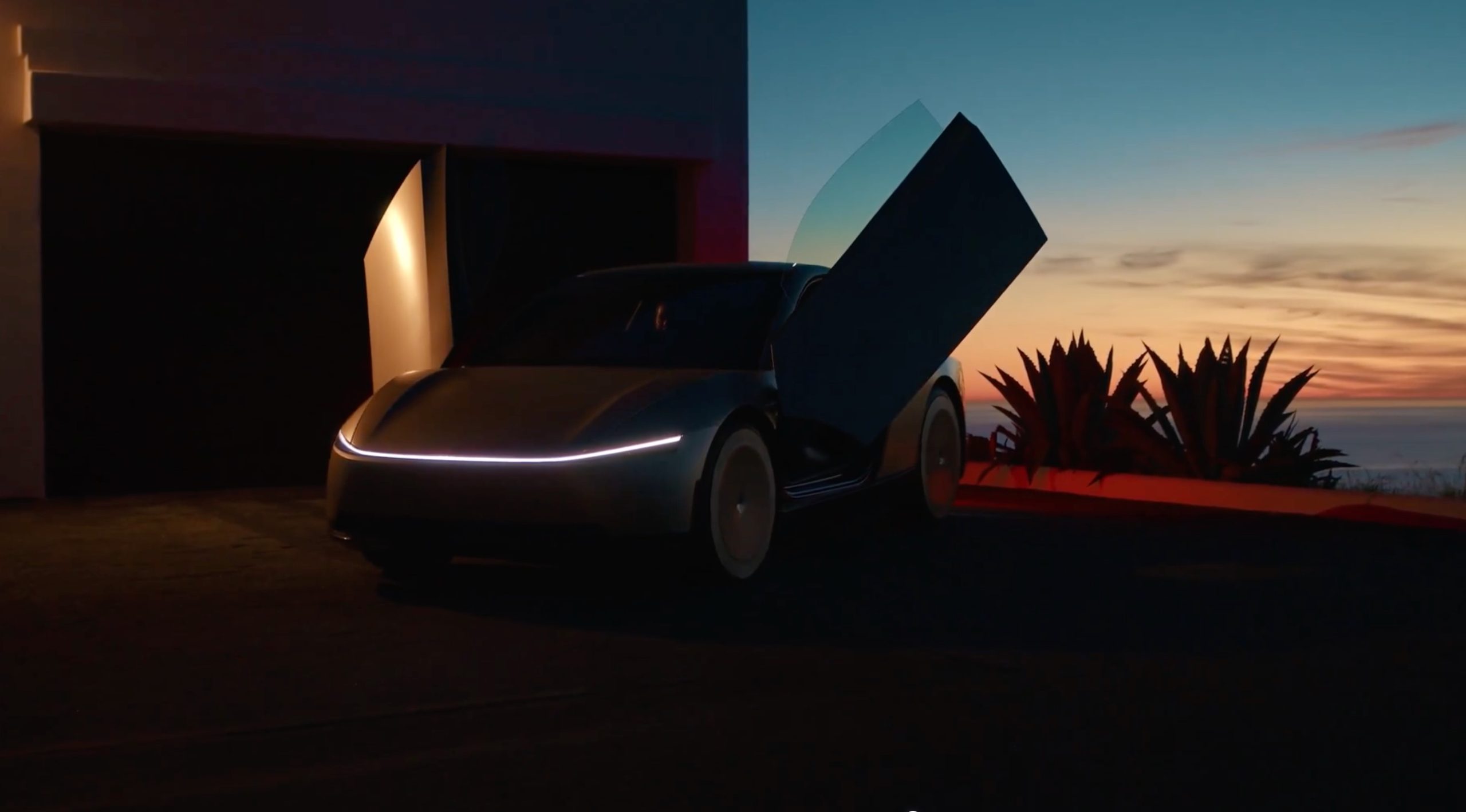
The golden age of autonomous ridesharing is arriving, and Tesla is making sure we can all picture a future that looks like the future. A recent teaser posted to X shows a Cybercab parked outside a home, and with a clear message that your everyday life may soon look like this when the driverless vehicles shows up at your door.
Tesla has begun the rollout of its Robotaxi service across US cities, and the production of its dedicated, fully-autonomous Cybercab vehicle. The first Cybercab rolled off the Giga Texas assembly line on February 17, 2026, with volume production now targeted for this month. Additionally, the Robotaxi service built around it is already running, without human drivers, in US cities.
Tesla Cybercab production ignites with 60 units spotted at Giga Texas
The Cybercab is built without a steering wheel, pedals, or side mirrors, designed from the ground up for unsupervised autonomous operation. Musk described the manufacturing approach as closer to consumer electronics than traditional car production, targeting a cycle time of one unit every ten seconds at full scale.
Drone footage from April 13, 2026 captured over 50 Cybercab units on the Giga Texas campus, with several clustered near the crash testing facility. Musk has noted that Tesla plans to sell the Cybercab to consumers for under $30,000, and owners will be able to add their vehicles to the Tesla robotaxi network when not in personal use, potentially generating income to offset the vehicle’s purchase cost. That model changes the math on vehicle ownership in a meaningful way, making a car something closer to a depreciating asset that can also earn by paying itself off and generate a profit.
During Tesla’s Q4 earnings call, the company confirmed plans to expand the Robotaxi program to seven new cities in the first half of 2026, including Dallas, Houston, Phoenix, Miami, Orlando, Tampa, and Las Vegas. The service already runs without safety drivers in Austin, and public road testing of the Cybercab has expanded to five states, including California, Texas, New York, Illinois, and Massachusetts.
Golden era pic.twitter.com/AS6pX2dK8N
— Tesla Robotaxi (@robotaxi) April 16, 2026
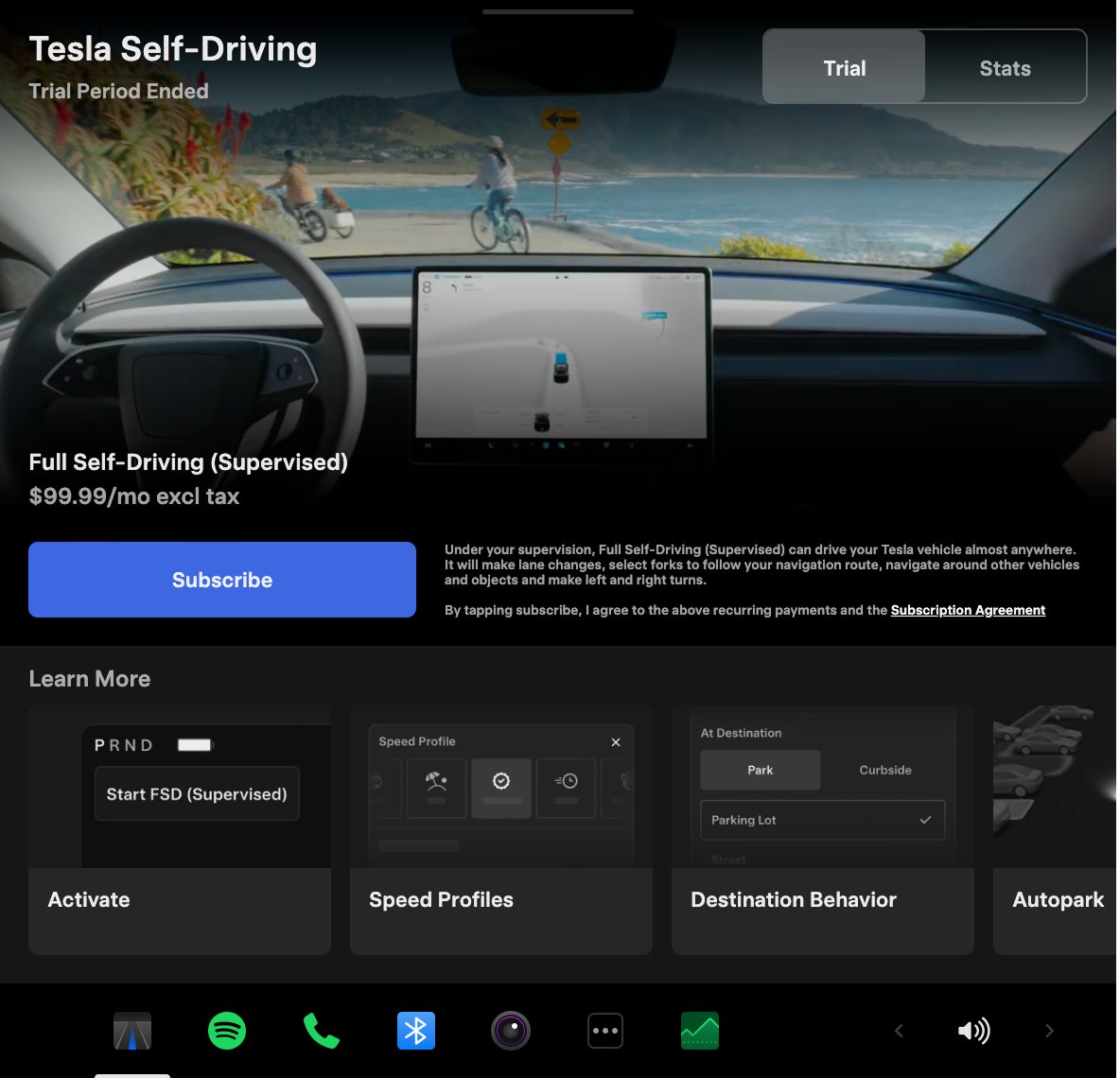
Tesla announced its Spring 2026 software update, and it’s the most feature-dense seasonal release the company has put out. The update covers twelve named changes spanning FSD, voice AI, safety lighting, dashcam storage, and pet display customization, among other things.
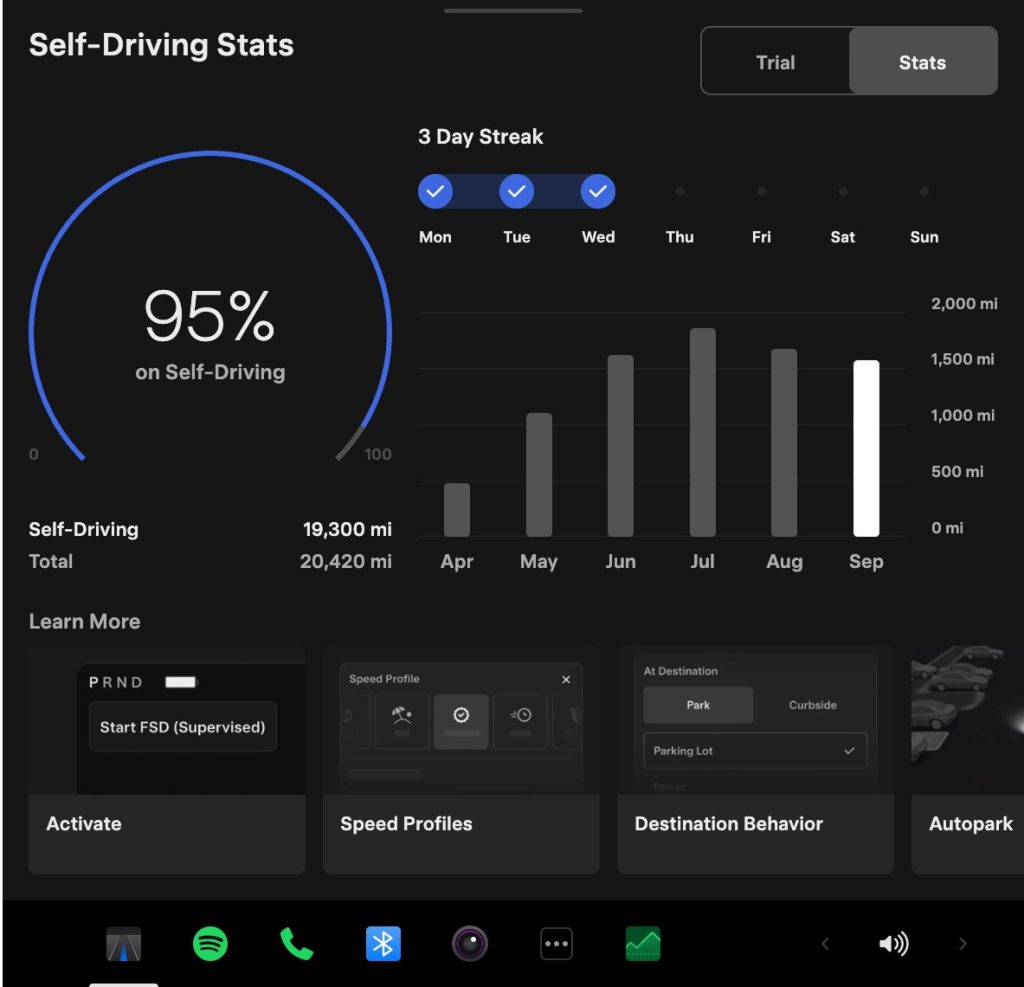
The centerpiece for owners with AI4 hardware is a redesigned Self-Driving app. The new interface lets owners subscribe to Full Self-Driving with a single tap and view ongoing FSD usage stats directly in the vehicle.
Grok gets its biggest in-car upgrade yet. The update adds a “Hey Grok” hands-free wake word along with location-based reminders, so a driver can now say “remind me to pick up groceries when I get home” without touching the screen. Grok first arrived in vehicles in July 2025, but each update has pushed it closer to genuine daily utility. Musk framed the broader vision clearly at Davos in January, saying Tesla is “really moving into a future that is based on autonomy.”
On safety, the update introduces enhanced blind spot warning lights that integrate directly with the cabin’s ambient lighting, building on the blind spot door warning that arrived in update 2026.8.
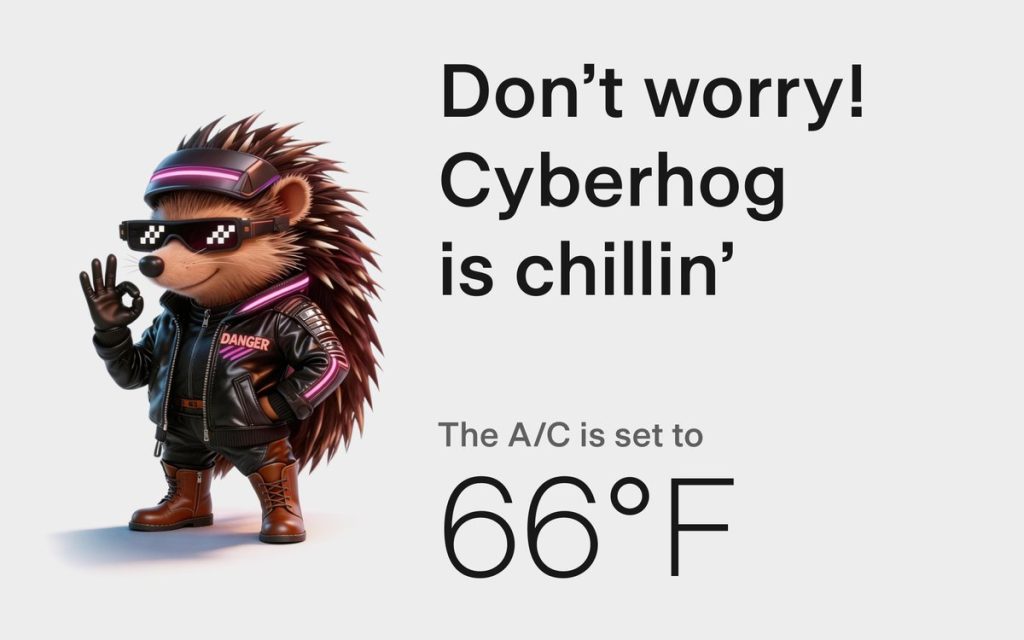
Dog Mode has been renamed Pet Mode and now lets owners choose a dog, cat, or hedgehog icon and add their pet’s name to the display.
Dashcam retention now extends up to 24 hours, up from the previous one-hour rolling loop, with a permanent save option for any clip. Weather maps now show rain and snow with better color differentiation and include the past hour of precipitation data along the route.
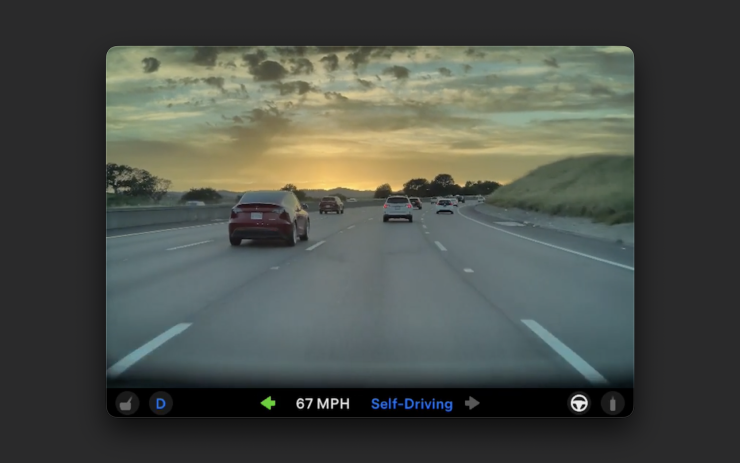
Tesla has now established a clear rhythm of two major OTA pushes per year. As with last year’s Spring update, that cycle started taking shape in 2025 with adaptive headlights and trunk customization. The 2025 Holiday Update then added Grok to the vehicle for the first time. This Spring follows that structure: the Holiday update introduces new architecture, and the Spring update broadens it across the fleet.
Two notable features still did not make it. IFTTT automations, which launched in China earlier this year, were held back from this North American release for unknown reasons, and Apple CarPlay remains absent, reportedly still delayed by iOS 26 and Apple Maps compatibility issues.
Below is the full list of feature updates released by Tesla.
— Tesla (@Tesla) April 13, 2026
Lifestyle
Tesla hit by Iranian missile debris in Israel
A Tesla in Israel absorbed a direct hit from missile debris, and the glassroof held.
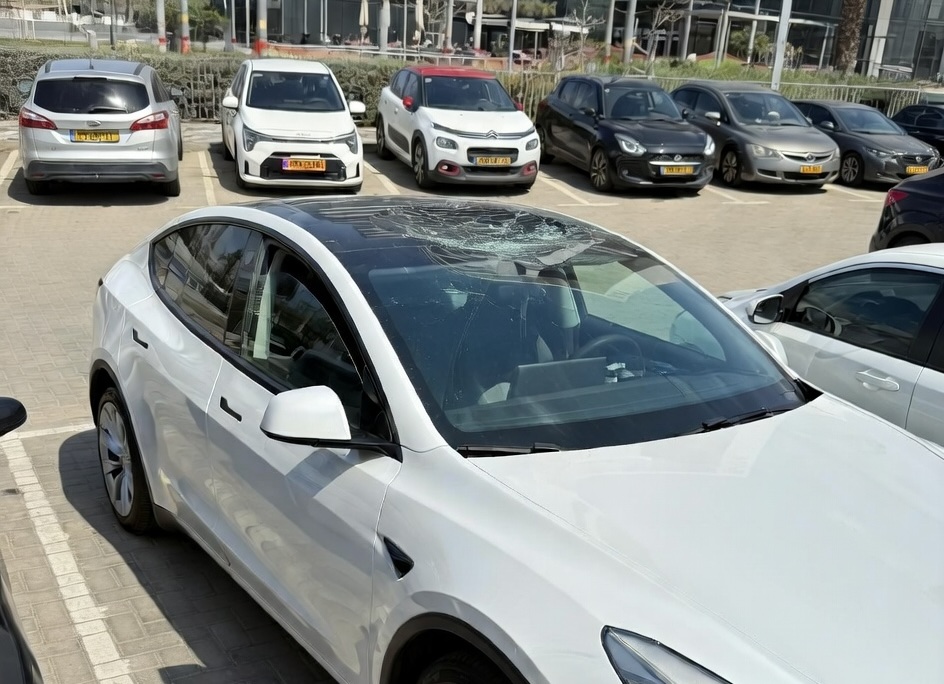
On March 30, 2026, Lara Shusterman was in Netanya, Israel when Iranian ballistic missiles triggered air raid sirens across the city. While she remained in safety, her 2024 Tesla Model Y did not escape untouched. A heavy piece of missile debris struck the car’s massive glass roof, leaving a deep crater but without shattering. In a Facebook post to the Tesla Israel community the following morning, Shusterman described what happened: “The glass did not shatter into dangerous shards. She stopped the damage and pushed the metal part to the ground.” She closed by thanking Elon Musk and the Tesla team for building what she called “security and a sense of trust even in extreme situations.”
Netanya is a coastal city in central Israel, roughly 18 miles north of Tel Aviv and has been among the areas most frequently struck during Iran’s ongoing missile campaign, following coordinated U.S. and Israeli strikes on Iranian military infrastructure. Falling shrapnel from intercepted missiles is a common occurrence.
-
- Tesla Model Y glass roof shattered from a piece of falling Iranian missile debris
-
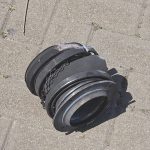
- A piece of Iranian missile debris that struck Lara Shusterman’s Tesla Model Y in Netanya, Israel on March 30, 2026, after being intercepted by Israeli air defenses.
-
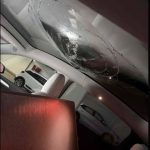
- Tesla Model Y glass roof shattered from a piece of falling Iranian missile debris
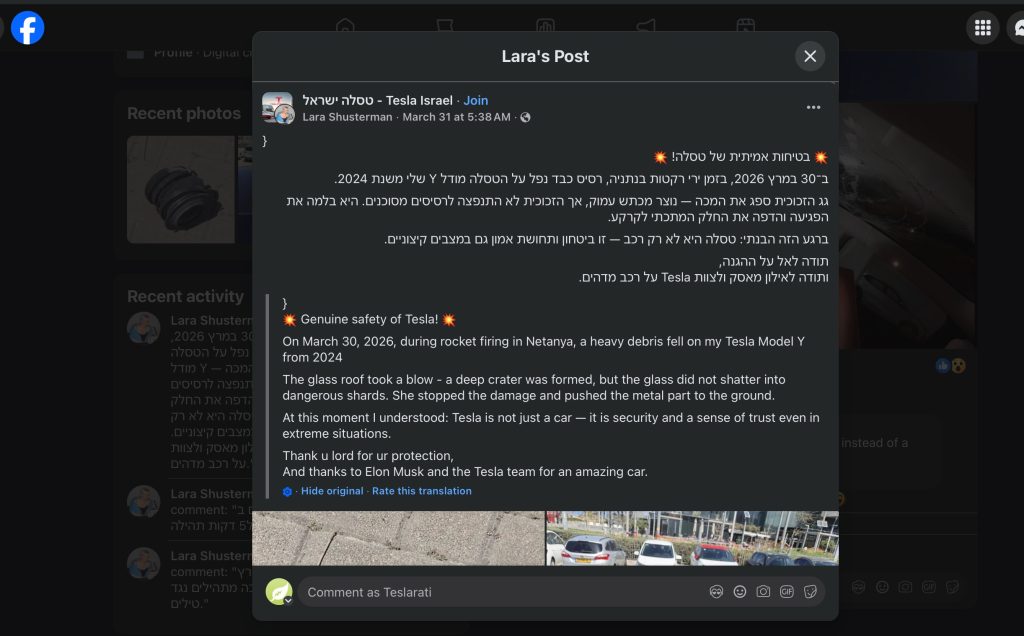
Source: Tesla Israel Facebook Group
The incident is a testament to Tesla’s structural engineering. Tesla’s glass roof is designed to support over four times the vehicle’s own weight. That strength has shown up in real-world accidents too. In 2021, a Model Y in California was struck by a falling tree during a storm, with the glass roof holding firm and the cabin remaining intact. In another widely reported incident, a Tesla Model Y plunged 250 feet off the cliff at Devil’s Slide in California in January 2023, with all four occupants, including two young children, surviving.
Disturbing details about Tesla’s 250-foot cliff drop emerge amid initial investigation
Tesla officially launched sales in Israel in early 2021 and captured over 60 percent of Israel’s EV market in the first year. The brand’s foothold in Israel remains significant. Tens of thousands of Teslas are now on Israeli roads, making incidents like Shusterman’s easy to corroborate. On the same week her Model Y took the hit, the U.S. Space Force awarded SpaceX a $178.5 million contract to launch missile tracking satellites, a separate but fitting reminder of how intertwined the Musk ecosystem has become with the realities of modern conflict.

Tesla expands Unsupervised Robotaxi service to two new cities

Tesla is pushing Robotaxi features to owner cars with Spring Update


