
SpaceX
SpaceX CEO Elon Musk says Starlink launch will reuse Falcon Heavy’s fairing

SpaceX CEO Elon Musk has revealed that the company successfully recovered both Falcon Heavy Flight 2 fairing halves intact and plans to reuse them this year on an operational Starlink launch.
This will be SpaceX’s first attempt to reuse Falcon payload fairings, a capability that could ultimately save up to 10% – around $6M – and countless production time per launch. Intriguingly, the Falcon Heavy fairing halves were recovered without the use of dedicated recovery vessel Mr. Steven – the vessel has been out of commission for months after an accident ripped off two of its four arms. Instead, the fairing halves parasailed to a soft ocean landing where SpaceX recovery experts aboard GO Searcher and GO Navigator carefully extracted both halves from the surface of the Atlantic. In order to reuse the fairing halves, SpaceX will need to somehow solve – if they haven’t already – the challenge of cleaning contaminated fairings.
How To Clean Your Fairing
The challenge of reusing payload fairings that have been some combination of immersed and thoroughly coated with salt water is by no means an easy one, evidenced primarily by the fact that no company or space agency has yet to try. As a temporary part of a rocket’s uppermost stage, every kilogram of weight present on the fairing can have an almost equally deleterious effect on that same rocket’s ability to place payloads in orbit. This is why the added complexity of additional deployable fairing mechanisms is universally accepted – by jettisoning fairings as soon as possible, rockets are able to carry significantly more payload to a given orbit.
This means that adding even more weight and complexity to fairings – optimized to be extraordinarily light for their often massive sizes – is avoided with extreme prejudice. This is the problem SpaceX faces in its quest to reliably recover and reuse fairings – how does one take fragile objects landing in the middle of the ocean after traveling no less than two kilometers per second (~1.2 mi/s) at apogees upwards of 100 km (62 mi) and prevent them from being destroyed, all while keeping them as light as possible?
SpaceX’s solution was to attach GPS-guided parafoils to each fairing half, as well as cold gas thrusters that allow the halves to orient themselves and remain stable between separation and parafoil deployment. Part two of that solution was to quite literally catch those floating halves out of the air with a giant, speedy boat outfitted with an equally giant net held up by four arms. Despite 5+ catch attempts and many, many controlled drop tests, that vessel – Mr. Steven – has never managed to successfully catch a Falcon fairing half. In early 2019, SpaceX moved the ship from California to Florida due to a launch drought facing the company’s West Coast launch facilities. Less than two weeks after arriving in Florida, an unknown accident resulted in the vessel losing both its net and two of its four arms to the sea, and Mr. Steven has since remained inactive – aside from infrequent trips out and about – in Port Canaveral.
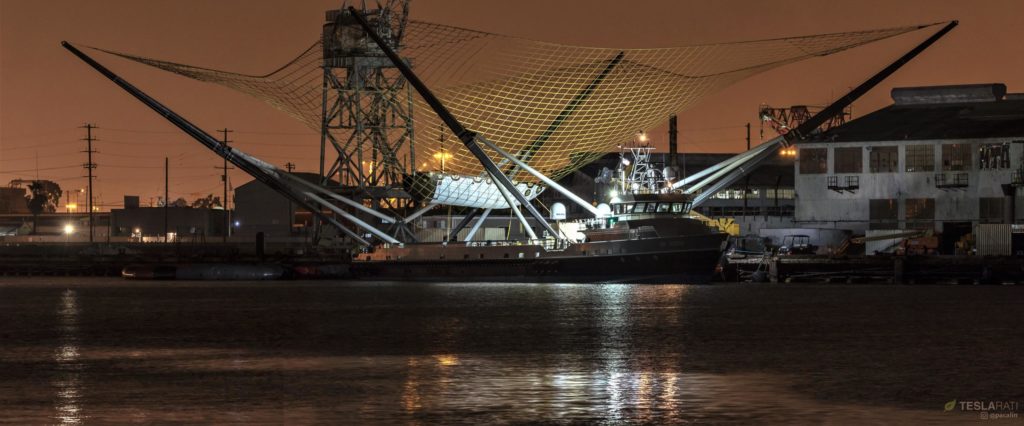
Judging from CEO Elon Musk’s twofold declaration that SpaceX will now reuse its first Falcon fairings without any involvement from Mr. Steven, it’s safe to say that success will sadly bring about the end of the leased fairing recovery vessel’s utility to SpaceX. However, there is a chance that this is not the case.
The fact that SpaceX is choosing to reuse a partially waterlogged fairing for the first time on an internal Starlink internet satellite launch suggests that whatever the solution may be, it may not be compatible – or at least kosher – with current industry standards. All prior reusability milestones have been tested on commercial launches after some sort of private agreement with the customers involved, including the first Falcon 9 booster reuse and the first instances of the same booster being launched for the third time. This is likely not fair to SpaceX or its excellent customers, though. The simpler explanation is that testing unproven technologies and hardware solutions on internal launches fundamentally minimizes the risk conveyed to paying customers that likely can’t afford to lose their spacecraft.
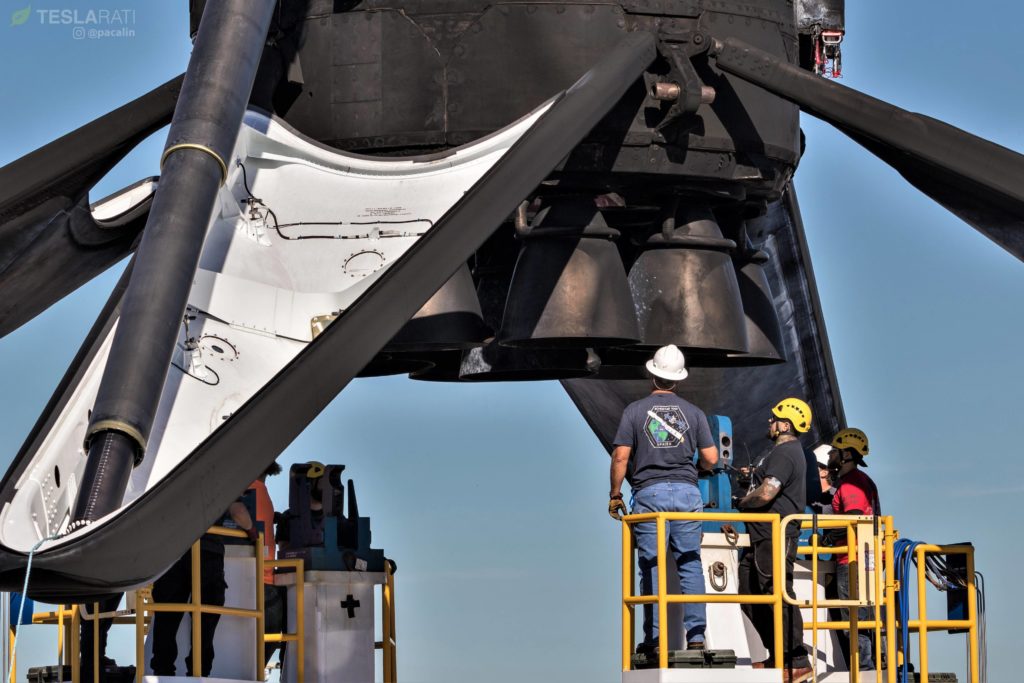
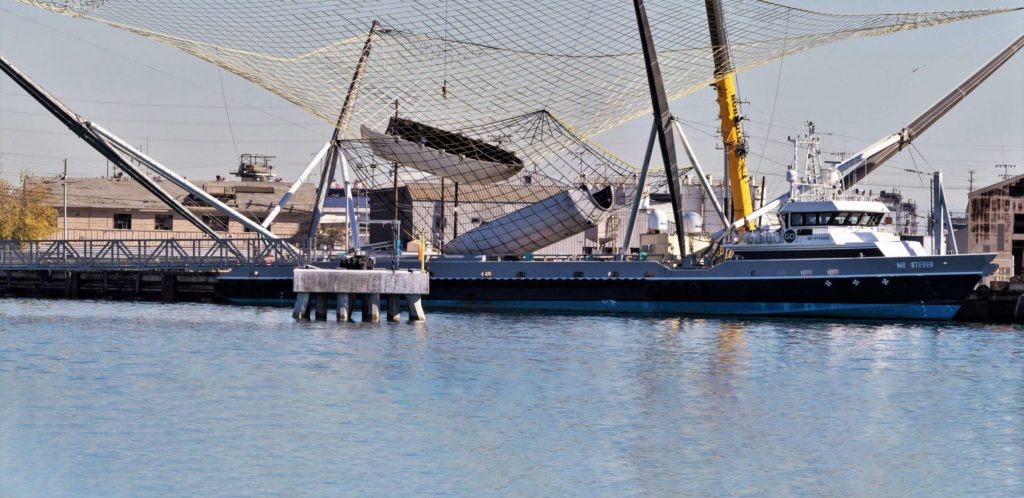
There remains one additional explanation: SpaceX’s solution for reusing waterlogged fairings is, in fact, too immature or is an unacceptable risk of contamination for customers relative to industry standards of design. Instead, SpaceX may have chosen to build some sort of contamination resistance into the clean-slate design of its Starlink satellites, something that would be impractical to expect of customers who have spacecraft that are either already designed or built. Redesigning – let alone rebuilding – complex systems is an extremely costly endeavor. However, wide-reaching changes are far easier to implement when starting from a functionally blank page, exactly where SpaceX is with its first-generation Starlink satellites. As such, SpaceX may have decided to do just this after it realized that catching fairings could be far harder than expected and would thus remain a major bottleneck for Starlink launches if left unsolved.
Finally, it’s unclear if Musk is referring to the very first operational Starlink launch – scheduled as early as May 2019 – or an additional follow-on mission later this year. Refurbishing and reflying fairings for the first time in just one month would be an extremely impressive achievement but may also be an impractical schedule for pathfinder technology development. For now, this serves as a reminder that SpaceX’s first operational Starlink launch is scheduled one month from now.
Check out Teslarati’s Marketplace! We offer Tesla accessories, including for the Tesla Cybertruck and Tesla Model 3.










News
SpaceX launches Ax-4 mission to the ISS with international crew
The SpaceX Falcon 9 launched Axiom’s Ax-4 mission to ISS. Ax-4 crew will conduct 60+ science experiments during a 14-day stay on the ISS.

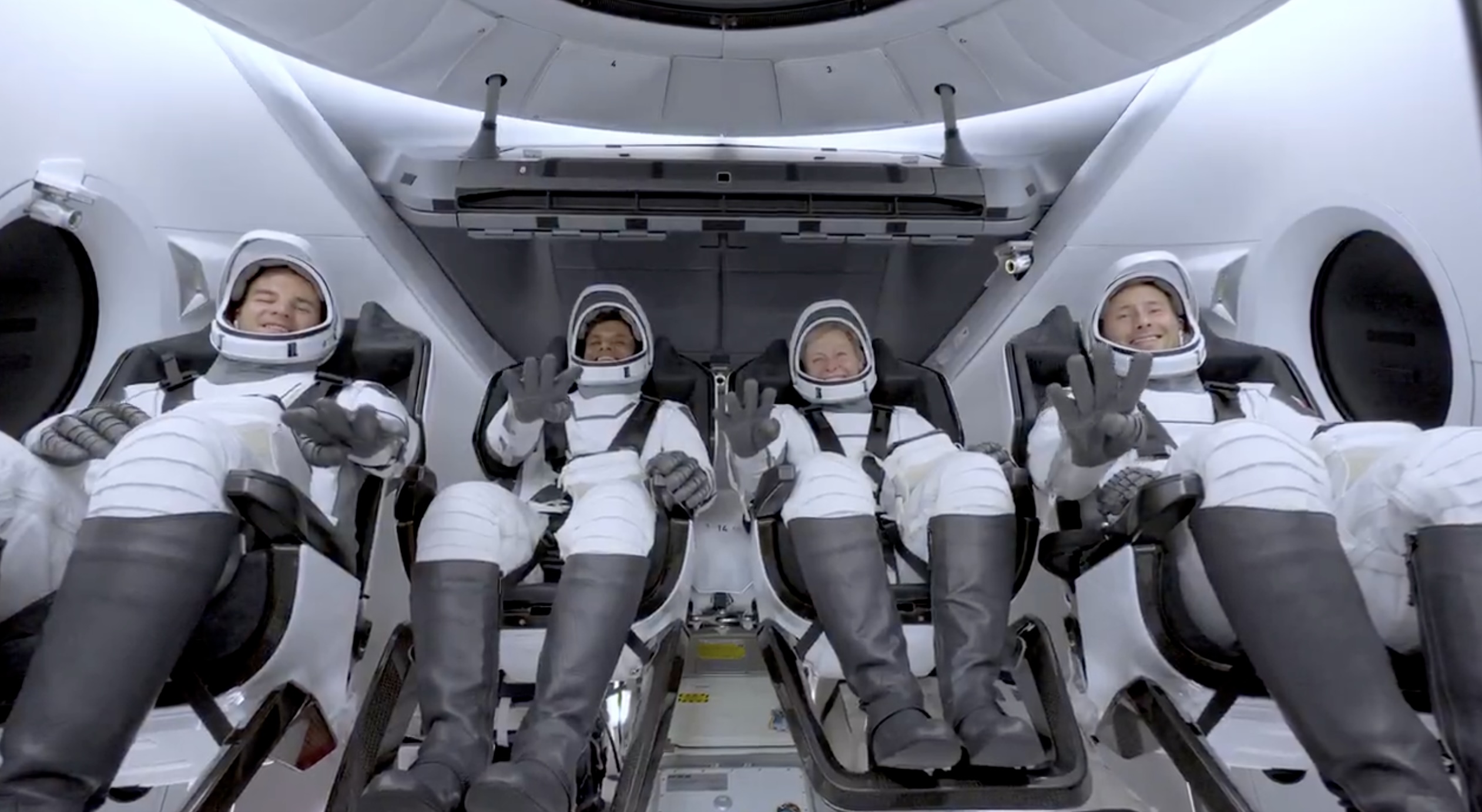
SpaceX launched the Falcon 9 rocket kickstarting Axiom Space’s Ax-4 mission to the International Space Station (ISS). Axiom’s Ax-4 mission is led by a historic international crew and lifted off from Kennedy Space Center’s Launch Complex 39A at 2:31 a.m. ET on June 25, 2025.
The Ax-4 crew is set to dock with the ISS around 7 a.m. ET on Thursday, June 26, 2025. Axiom Space, a Houston-based commercial space company, coordinated the mission with SpaceX for transportation and NASA for ISS access, with support from the European Space Agency and the astronauts’ governments.
The Ax-4 mission marks a milestone in global space collaboration. The Ax-4 crew, commanded by U.S. astronaut Peggy Whitson, includes Shubhanshu Shukla from India as the pilot, alongside mission specialists Sławosz Uznański-Wiśniewski from Poland and Tibor Kapu from Hungary.
“The trip marks the return to human spaceflight for those countries — their first government-sponsored flights in more than 40 years,” Axiom noted.
Shukla’s participation aligns with India’s Gaganyaan program planned for 2027. He is the first Indian astronaut to visit the ISS since Rakesh Sharma in 1984.
Axiom’s Ax-4 mission marks SpaceX’s 18th human spaceflight. The mission employs a Crew Dragon capsule atop a Falcon 9 rocket, designed with a launch escape system and “two-fault tolerant” for enhanced safety. The Axiom mission faced a few delays due to weather, a Falcon 9 leak, and an ISS Zvezda module leak investigation by NASA and Roscosmos before the recent successful launch.
As the crew prepares to execute its scientific objectives, SpaceX’s Ax-4 mission paves the way for a new era of inclusive space research, inspiring future generations and solidifying collaborative ties in the cosmos. During the Ax-4 crew’s 14-day stay in the ISS, the astronauts will conduct nearly 60 experiments.
“We’ll be conducting research that spans biology, material, and physical sciences as well as technology demonstrations,” said Whitson. “We’ll also be engaging with students around the world, sharing our experience and inspiring the next generation of explorers.”
SpaceX’s Ax-4 mission highlights Axiom’s role in advancing commercial spaceflight and fostering international partnerships. The mission strengthens global space exploration efforts by enabling historic spaceflight returns for India, Poland, and Hungary.
News
Starlink Cellular’s T-Mobile service to grow with third-party app data
From Oct 2025, T-Satellite will enable third-party apps in dead zones! WhatsApp, X, AccuWeather + more coming soon.
Starlink Cellular’s T-Mobile service will expand with third-party app data support starting in October, enhancing connectivity in cellular dead zones.
T-Mobile’s T-Satellite, supported by Starlink, launches officially on July 23. Following its launch, T-Mobile’s Starlink Cellular service will enable data access for third-party apps like WhatsApp, X, Google, Apple, AccuWeather, and AllTrails on October 1, 2025.
T-Mobile’s Starlink Cellular is currently in free beta. T-Satellite will add MMS support for Android phones on July 23, with iPhone support to follow. MMS support allows users to send images and audio clips alongside texts. By October, T-Mobile will extend emergency texting to all mobile users with compatible phones, beyond just T-Mobile customers, building on its existing 911 texting capability. The carrier also provides developer tools to help app makers integrate their software with T-Satellite’s data service, with plans to grow the supported app list.
T-Mobile announced these updates during an event celebrating an Ookla award naming it the best U.S. phone network, a remarkable turnaround from its last-place ranking a decade ago.
“We not only dream about going from worst to best, we actually do it. We’re a good two years ahead of Verizon and AT&T, and I believe that lead is going to grow,” said T-Mobile’s Chief Operating Officer Srini Gopalan.
T-Mobile unveiled two promotions for its Starlink Cellular services to attract new subscribers. A free DoorDash DashPass membership, valued at $10/month, will be included with popular plans like Experience Beyond and Experience More, offering reduced delivery and service fees. Meanwhile, the Easy Upgrade promotion targets Verizon customers by paying off their phone balances and providing flagship devices like the iPhone 16, Galaxy S25, or Pixel 9.
T-Mobile’s collaboration with SpaceX’s Starlink Cellular leverages orbiting satellites to deliver connectivity where traditional networks fail, particularly in remote areas. Supporting third-party apps underscores T-Mobile’s commitment to enhancing user experiences through innovative partnerships. As T-Satellite’s capabilities grow, including broader app integration and emergency access, T-Mobile is poised to strengthen its lead in the U.S. wireless market.
By combining Starlink’s satellite technology with strategic promotions, T-Mobile is redefining mobile connectivity. The upcoming third-party app data support and official T-Satellite launch mark a significant step toward seamless communication, positioning T-Mobile as a trailblazer in next-generation wireless services.
News
Starlink expansion into Vietnam targets the healthcare sector
Starlink aims to deliver reliable internet to Vietnam’s remote clinics, enabling telehealth and data sharing.

SpaceX’s Starlink expansion into Vietnam targets its healthcare sector. Through Starlink, SpaceX seeks to drive digital transformation in Vietnam.
On June 18, a SpaceX delegation met with Vietnam’s Ministry of Health (MoH) in Hanoi. SpaceX’s delegation was led by Andrew Matlock, Director of Enterprise Sales, and the discussions focused on enhancing connectivity for hospitals and clinics in Vietnam’s remote areas.
Deputy Minister of Health (MoH) Tran Van Thuan emphasized collaboration between SpaceX and Vietnam. Tran stated: “SpaceX should cooperate with the MoH to ensure all hospitals and clinics in remote areas are connected to the StarLink satellite system and share information, plans, and the issues discussed by members of the MoH. The ministry is also ready to provide information and send staff to work with the corporation.”
The MoH assigned its Department of Science, Technology, and Training to work with SpaceX. Starlink Vietnam will also receive support from Vietnam’s Department of International Cooperation. Starlink Vietnam’s agenda includes improving internet connectivity for remote healthcare facilities, developing digital infrastructure for health examinations and remote consultations, and enhancing operational systems.
Vietnam’s health sector is prioritizing IT and digital transformation, focusing on electronic health records, data centers, and remote medical services. However, challenges persist in deploying IT solutions in remote regions, prompting Vietnam to seek partnerships like SpaceX’s.
SpaceX’s Starlink has a proven track record in healthcare. In Rwanda, its services supported 40 health centers, earning praise for improving operations. Similarly, Starlink enabled remote consultations at the UAE’s Emirati field hospital in Gaza, streamlining communication for complex medical cases. These successes highlight Starlink’s potential to transform Vietnam’s healthcare landscape.
On May 20, SpaceX met with Vietnam’s Ministry of Industry and Trade, announcing a $1.5 billion investment to provide broadband internet, particularly in remote, border, and island areas. The first phase includes building 10-15 ground stations across the country. This infrastructure will support Starlink’s healthcare initiatives by ensuring reliable connectivity.
Starlink’s expansion in Vietnam aligns with the country’s push for digital transformation, as outlined by the MoH. By leveraging its satellite internet expertise, SpaceX aims to bridge connectivity gaps, enabling advanced healthcare services in underserved regions. This collaboration could redefine Vietnam’s healthcare infrastructure, positioning Starlink as a key player in the nation’s digital future.

Tesla reveals it is using AI to make factories more sustainable: here’s how

Tesla analysts believe Musk and Trump feud will pass

Tesla scrambles after Musk sidekick exit, CEO takes over sales


-
 Elon Musk1 day ago
Tesla investors will be shocked by Jim Cramer’s latest assessment
-

 News6 days ago
Tesla Robotaxi’s biggest challenge seems to be this one thing
-

 News2 weeks ago
Tesla’s Grok integration will be more realistic with this cool feature
-

 Elon Musk2 weeks ago
Elon Musk slams Bloomberg’s shocking xAI cash burn claims
-

 News2 weeks ago
Tesla China roars back with highest vehicle registrations this Q2 so far
-
 News2 weeks ago
Texas lawmakers urge Tesla to delay Austin robotaxi launch to September
-

 News2 weeks ago
Tesla dominates Cars.com’s Made in America Index with clean sweep
-
 Elon Musk1 week ago
First Look at Tesla’s Robotaxi App: features, design, and more