News
Tesla coding shows affordable model details, including potential price

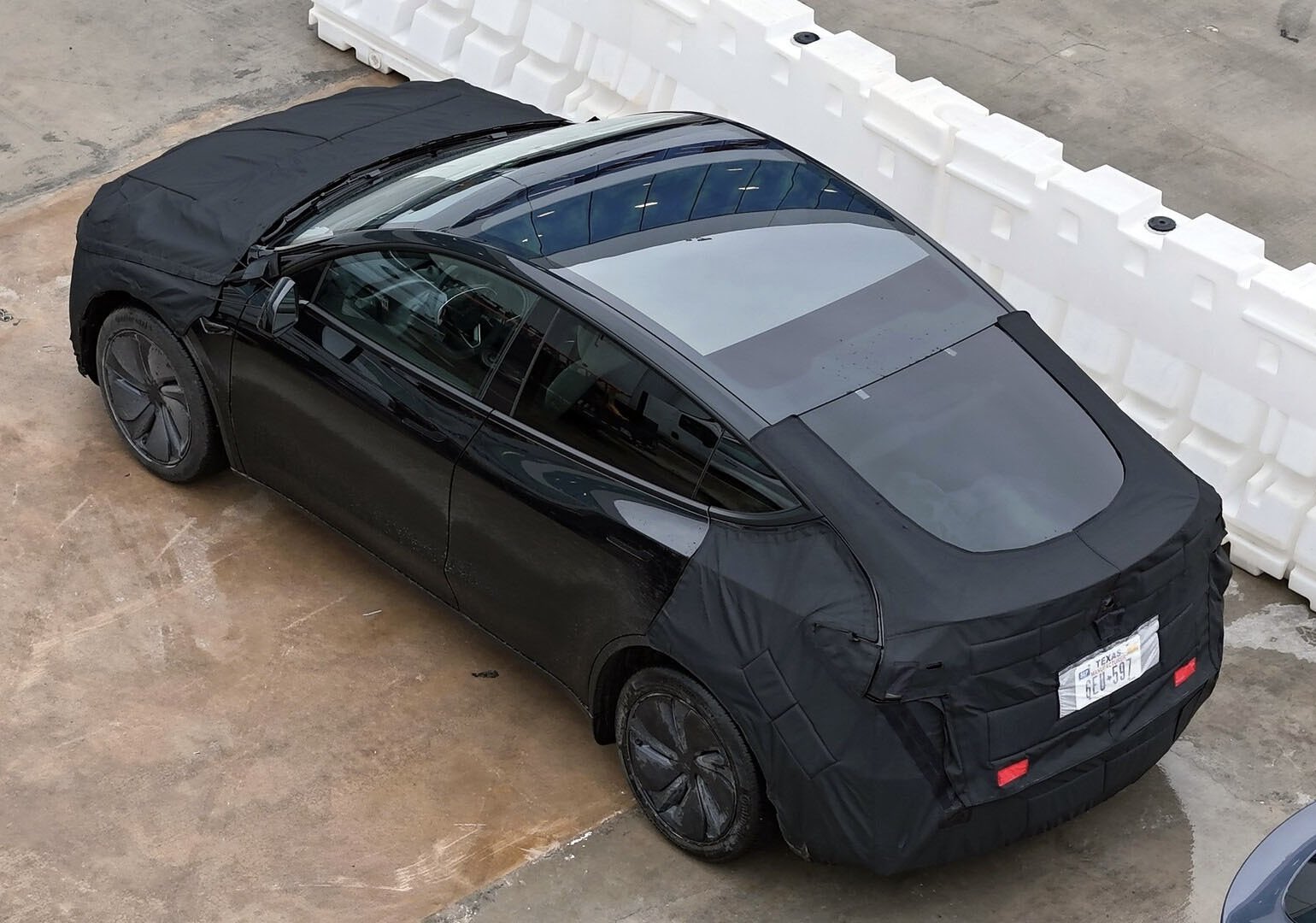
Coding within Tesla’s website appears to have potentially revealed some details of the affordable model it plans to launch, including its possible price.
Although these details are unconfirmed by the company, recent sightings of the vehicle have sparked significant speculation as to what it will offer.
Tesla said a few months back that it had already successfully built the first few test units of the affordable model. CEO Elon Musk revealed later that it would essentially be a stripped-down version of the Model Y with a handful of changes.
We had our first look at what those changes appear to be, as what is likely the new affordable model was spotted on roads near Gigafactory Texas yesterday. It is a Model Y body with some Model 3 features.
It lacks the light bar that the new Model Y has and instead equips headlights similar to those of the Model 3 “Highland.”
Affordable Tesla Model Y spotted without camouflage near Giga Texas
Other design changes appear to include no glass roof and new wheels. Some rumors have also indicated that Tesla plans to use a cheaper, textile interior, devoid of the flashy features that its other cars are equipped with, including no rear screen, no HEPA system, and manually adjustable second-row air vents.
However, coding within the Tesla website seemed to reveal some pretty significant details about the new affordable model, including its name, which differs from the E41 codename it was given, its price, and a complete list of features.
This was found by Tesla Newswire on X. Here’s what the coding showed for the car. Note that this was found in coding, and is not necessarily confirmation from Tesla regarding what it plans to offer:
- Name – Model Y Standard
- Price $39,990
- Redesigned front fascia
- Single-part headlights
- Front bumper camera
- No glass roof, noted as a “closed glass roof”
- 18″ Aperture wheels
- Manually adjustable steering wheel
- Textile décor
- 15.4″ front touchscreen
- No second-row touchscreen
- Manually adjustable air vents in the second row
- No HEPA system
- 75 cu. fu. cargo space
Here’s what the coding looked like:
Extract 2:
“interior_features”:{“basic”:[{“type”:”title”,”content”:”Interior”},{“type”:”basic[0]”,”content”:”Closed glass roof”},{“type”:”basic[2]”,”content”:”Second-row manual-adjust air vents”},{“type”:”basic[3]”,”content”:”Manual-adjust steering…
— The Tesla Newswire (@TeslaNewswire) October 1, 2025
Many believe these could be the specs and details of the new affordable model, but others think Tesla might be baiting the community. Tesla knows its fans well, and many of them are sharp enough to examine some of the core portions of its website, looking for clues.
The company is well aware that these breadcrumbs will be discovered, and could be putting anything to drive up interest and chatter about what it could release. It certainly seems as if the price tag is a tad high, which tends to push some skepticism about the coding.
However, we’ll take anything we can get at this point. It is important to note that this coding is not a confirmation of details from Tesla.


News
Elon Musk drops a bomb regarding Tesla Model S, X inventory
After more than a decade on the road, the original flagship sedan and SUV platforms are effectively at the end of the line. Production of new Model S and Model X vehicles has ceased, and custom orders were quietly halted in early April. What remains are roughly a few hundred factory inventory units scattered across the globe, mostly Plaid variants, and they are disappearing fast.
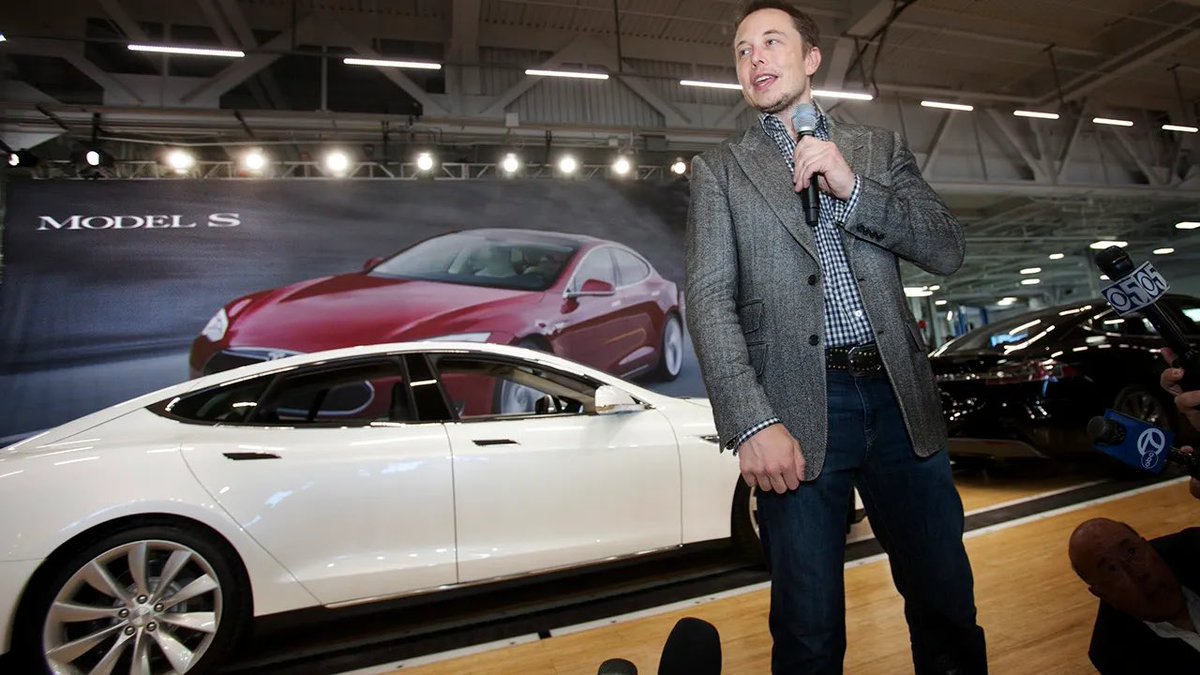
Elon Musk just dropped a bomb regarding Tesla Model S and X inventory, and as the company is phasing out the flagship vehicles, it sounds like the time to purchase one brand new is almost over.
Musk confirmed on Wednesday that there are “only a few hundred Tesla Model S & X cars left in inventory. Order now if you want one.”
Tesla is running out of units rather quickly.
The message from Musk reads like a final call for two of the company’s most storied vehicles.
Only a few hundred Tesla Model S & X cars left in inventory. Order now if you want one.
— Elon Musk (@elonmusk) April 8, 2026
After more than a decade on the road, the original flagship sedan and SUV platforms are effectively at the end of the line. Production of new Model S and Model X vehicles has ceased, and custom orders were quietly halted in early April. What remains are roughly a few hundred factory inventory units scattered across the globe, mostly Plaid variants, and they are disappearing fast.
The news marks the close of a remarkable 14-year chapter. Launched in 2012, the Model S redefined the electric vehicle with blistering acceleration, over-the-air updates, and a luxury interior that embarrassed traditional sedans.
The Model X followed in 2015, turning heads with its Falcon-wing doors and seating for seven.
Together, the Model S and Model X proved EVs could be desirable halo cars, not just eco-friendly commuters. Their departure clears factory space at Tesla’s Fremont plant for something the mass production of the Optimus humanoid robot, which Musk believes will be the greatest contributor to the company’s value.
Musk has repeatedly signaled that Tesla’s future lies beyond passenger cars. Resources once devoted to low-volume flagships are shifting toward autonomy, Robotaxis, and AI hardware. Optimus, the company’s general-purpose robot, is expected to handle manufacturing, household chores, and eventually complex labor.
In the short term, the scarcity has already driven prices on remaining inventory up by about $15,000, turning the last Model S and X into instant collector’s items.
Tesla uses Model S and X ‘sentimental’ value to enforce massive pricing move
The announcement underscores Tesla’s relentless pivot. While the Model Y continues to hold strong sales, the legacy S and X represented an earlier era of pure performance luxury.
The future has been paved by Tesla and Musk’s focus on autonomy, at least in the United States. Customers continue to call for a large SUV, which might be on the way after a recent nudge from Musk on X.
However, whatever the future holds, it has been forged by Tesla’s two flagship vehicles.
Once these final cars are gone, the Model S and Model X will live on only in driveways, forums, and the rear-view mirror of automotive history.
News
Tesla Cybercab production ignites with 60 units spotted at Giga Texas
Designed exclusively for unsupervised Full Self-Driving, the Cybercab promises to deliver safe, affordable, on-demand mobility without human drivers. Early units with temporary controls allow engineers to refine hardware and software in controlled settings before full autonomous fleets hit the roads.
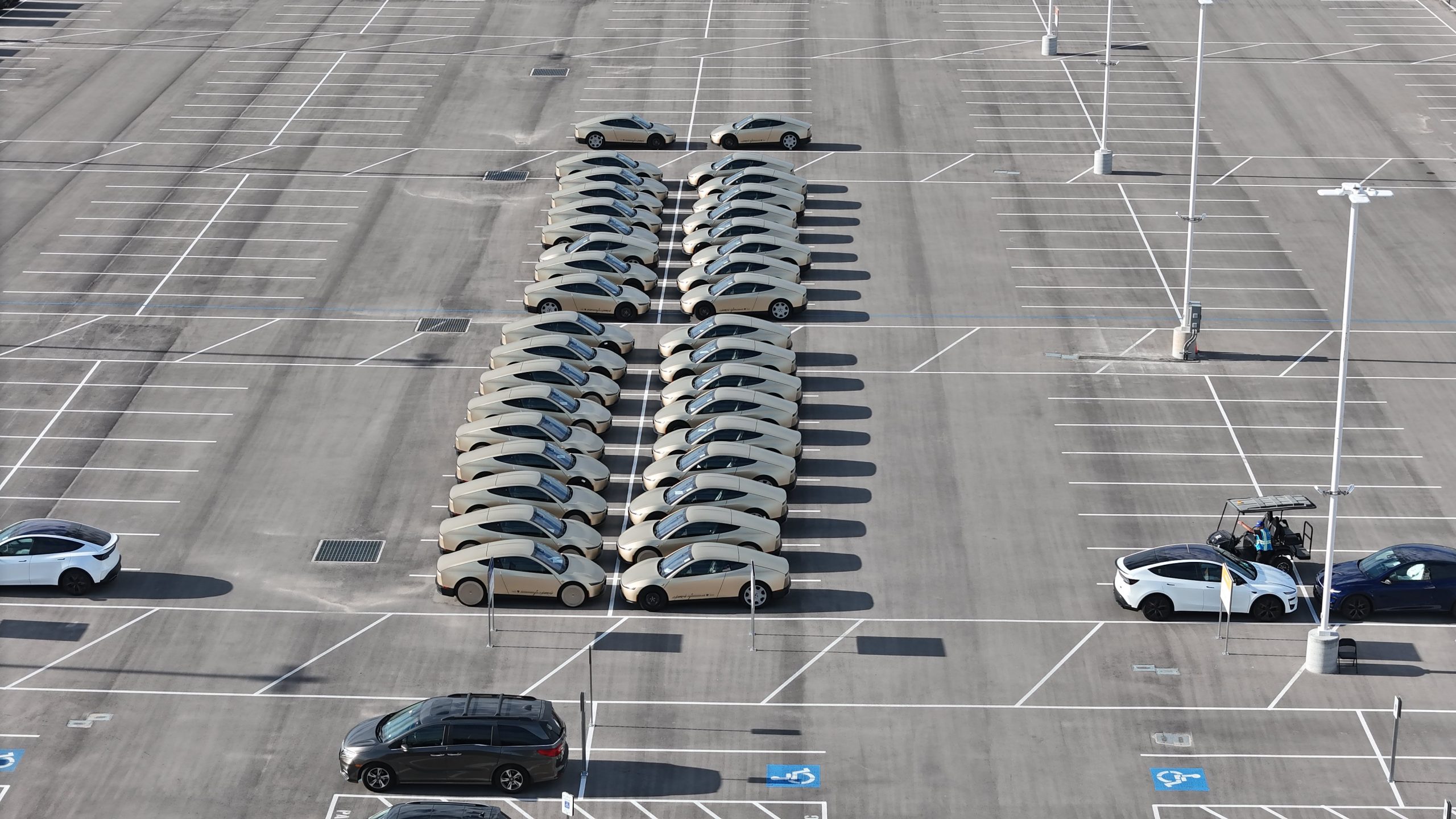
Tesla Cybercab production at Giga Texas seems to have ignited, as 60 units were spotted outside of the production facility on Wednesday, with speculation hinting the all-electric ride-hailing vehicle could be headed to the lineup sooner rather than later.
Interestingly, they were also spotted with steering wheels, which Tesla said the car would be void of.
Giga Texas observer and drone operator Joe Tegtmeyer shared on X a new post that revealed approximately 60 Cybercabs parked in two organized groups in the factory’s outbound lot—the largest concentration observed to date.
Happy 8 April (Wednesday) at Giga Texas, especially for those wanting an update on Cybercabs … I saw about 60 of them in two groups in the outbound lot today … the largest grouping yet!
Also, looks like at least some of these have white seats and most still have clearly… pic.twitter.com/mZbKH96bA7
— Joe Tegtmeyer 🚀 🤠🛸😎 (@JoeTegtmeyer) April 8, 2026
Tegtmeyer noted white seats inside several vehicles and clearly visible steering wheels on most. These are not yet the final steering-wheel-free production versions unveiled in 2024, but early units are likely undergoing validation testing for new features and real-world robotaxi operations across the country.
The timing could not be more symbolic. Tesla has consistently affirmed that mass manufacturing of the Cybercab would begin this month.
CEO Elon Musk has reiterated the April 2026 target multiple times, emphasizing that while initial output will be slow, following the classic S-curve of new-vehicle ramps, the Giga Texas line is being prepared to produce hundreds of units per week.
Tesla CEO Elon Musk outlines expectations for Cybercab production
The first Cybercab already rolled off the line in February, but April marks the official shift to volume production of this purpose-built, pedal- and steering-wheel-free autonomous vehicle.
These 60 Cybercabs signal far more than parked prototypes. They represent tangible proof that Tesla is executing on its ambitious robotaxi roadmap.
Designed exclusively for unsupervised Full Self-Driving, the Cybercab promises to deliver safe, affordable, on-demand mobility without human drivers. Early units with temporary controls allow engineers to refine hardware and software in controlled settings before full autonomous fleets hit the roads.
As production scales, Giga Texas, already home to Cybertruck production, will become the epicenter of Tesla’s autonomous revolution, targeting millions of vehicles annually in the years ahead.
For Tesla and its investors, this sighting underscores manufacturing excellence and timeline discipline. It counters skepticism about the company’s ability to deliver on next-generation vehicles amid a competitive autonomous landscape.
Broader implications are profound: lower transportation costs, reduced emissions, and safer roads as robotaxis proliferate. Musk’s vision of a future where Cybercabs operate 24/7, generating revenue for owners and riders alike, is now visibly underway.
With mass production officially ramping in April, today’s images are not just a snapshot of parked vehicles; they are the first frames of a mobility transformation. Tesla is not only meeting its commitments; it is accelerating toward an era where autonomy reshapes daily life. The Cybercab era has begun.
News
Tesla makes major rebound in European market with 4x in registrations
Tesla delivered a striking performance in Germany’s automotive market in March 2026, with new vehicle registrations more than quadrupling year-over-year, according to official data from the German Federal Motor Transport Authority (KBA).
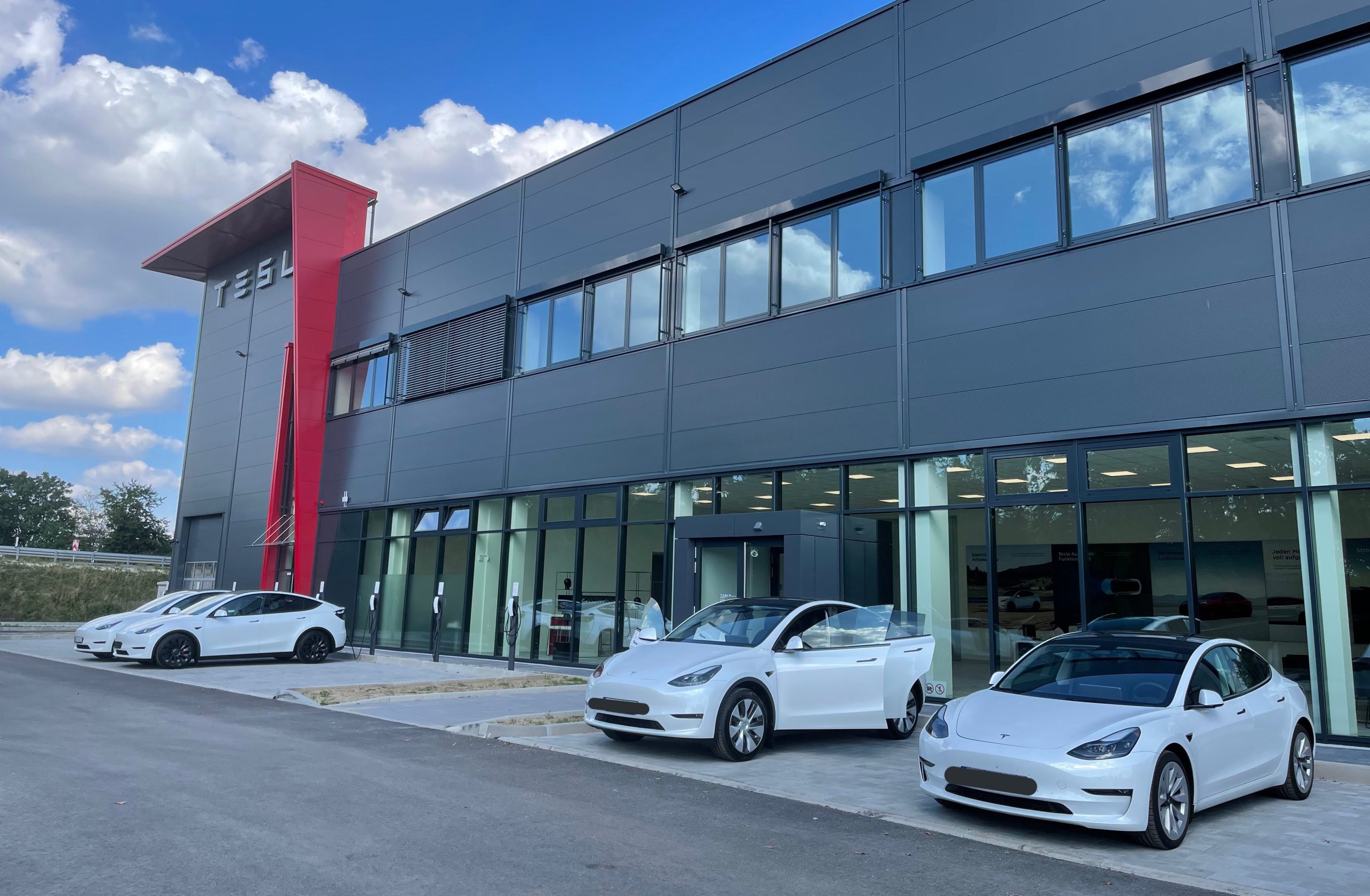
Tesla headlines will have you believe the company is dead to rights in Germany, selling nearly no cars, and stating consumers are more interested in other brands not run by CEO Elon Musk.
However, the latest data from Germany proves this might be a dying narrative.
Tesla delivered a striking performance in Germany’s automotive market in March 2026, with new vehicle registrations more than quadrupling year-over-year, according to official data from the German Federal Motor Transport Authority (KBA).
Newly registered Tesla vehicles jumped 315.1 percent to 9,252 units, marking the company’s strongest March on record in the country and signaling a sharp rebound after earlier challenges in the European market.
A big 4x from Tesla in Germany in March in vehicle registrations
Don’t let anyone tell you Tesla is dead in Europe https://t.co/24hyus1xTF pic.twitter.com/205yPwncRv
— TESLARATI (@Teslarati) April 7, 2026
The March surge accounted for roughly 72 percent of Tesla’s first-quarter total in Germany. Q1 registrations reached 12,829 vehicles, a 160 percent increase from the same period a year earlier. For context, the implied March 2025 figure was approximately 2,229 units—one of the brand’s weaker months in recent years.
These numbers underscore Tesla’s ability to capitalize on renewed demand in Europe’s largest car market, where the company had faced softening sales throughout much of 2025 amid heightened competition and broader economic pressures.
Germany’s overall new passenger car market also expanded in March, with 294,161 registrations—a 16 percent rise from the prior year. Battery-electric vehicles (BEVs) performed even more robustly, climbing 66.2 percent to 70,663 units and representing about 24 percent of all new car registrations.
Tesla’s 9,252 deliveries captured approximately 13.1 percent of the BEV segment for the month and roughly 3.1 percent of the total new car market, highlighting its continued leadership among pure-play electric brands despite growing competition from both domestic German manufacturers and Chinese entrants like BYD, which saw its own registrations surge 327.1 percent to 3,438 units.
The strong showing comes as Germany’s EV incentives and infrastructure investments continue to support adoption. Tesla’s lineup, anchored by the Model Y and Model 3, appears to have resonated with buyers seeking premium electric options.
Industry observers note that the concentrated March registrations, accounting for the bulk of the quarter, may reflect strategic inventory management, competitive pricing adjustments, or pent-up demand following a slower start to 2026.
This performance provides a much-needed bright spot for Tesla in Europe, where the brand had seen market share erosion in prior periods.
Tesla Model Y outsells all EV rivals in Europe in 2025 despite headwinds
With Q1 2026 registrations up significantly, Tesla has demonstrated resilience in a market that registered 699,404 new passenger cars for the quarter, up 5.2 percent overall. As the year progresses, sustained momentum in Germany could bolster Tesla’s European outlook, particularly if broader BEV growth persists amid evolving policy support and technological advancements.
The March 2026 data from the KBA paints a picture of Tesla’s renewed strength in Germany: a fourfold monthly leap, record quarterly gains, and a solid foothold in an expanding EV segment.
Whether this marks the beginning of a sustained recovery or a seasonal peak remains to be seen, but the numbers affirm Tesla’s enduring appeal in one of the world’s most competitive automotive landscapes.

Elon Musk drops a bomb regarding Tesla Model S, X inventory

Tesla Cybercab production ignites with 60 units spotted at Giga Texas


