News
Tesla Cybertruck’s tailgate will have a “flip stop” to prevent long cargo from slipping off the bed

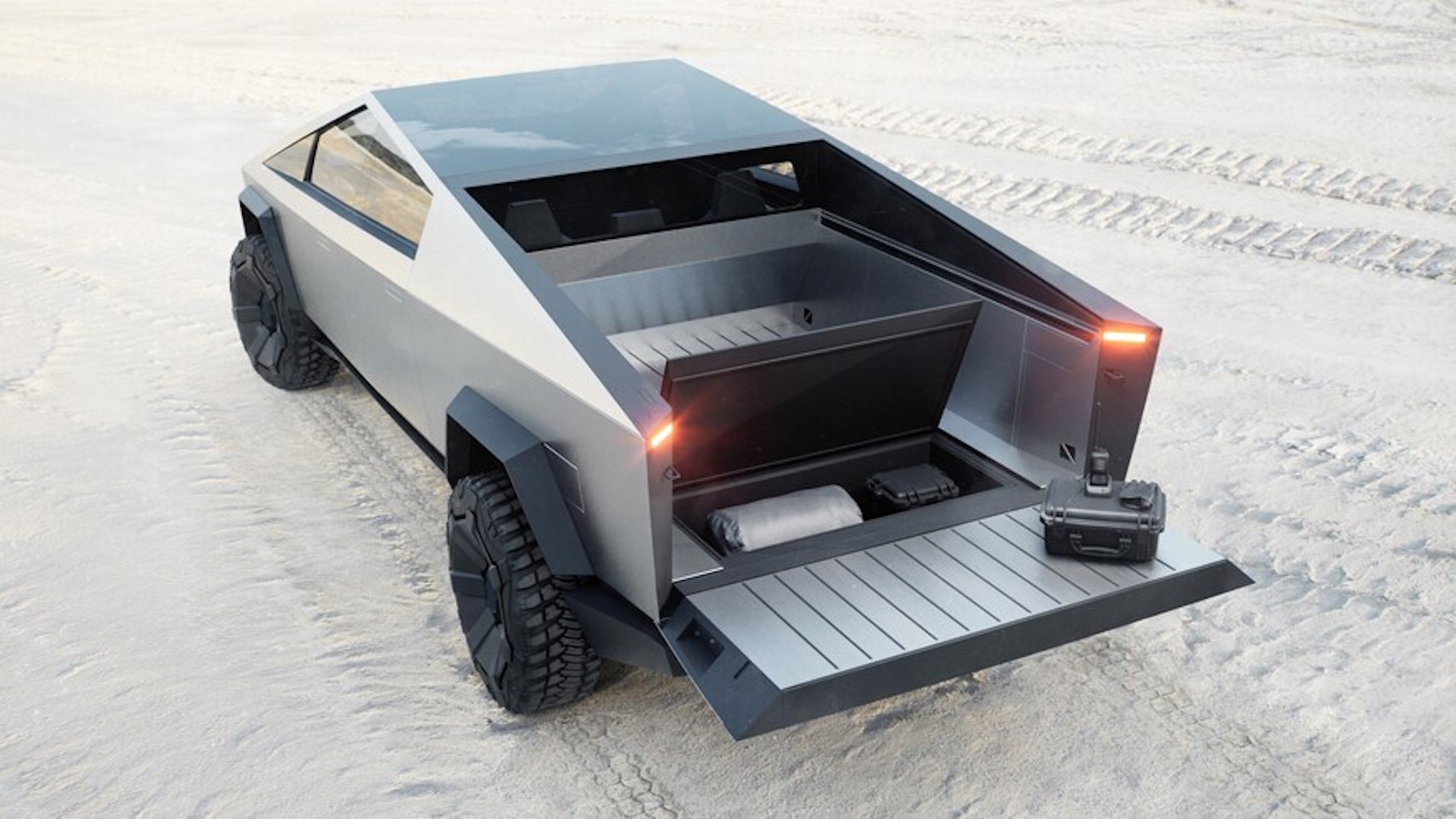
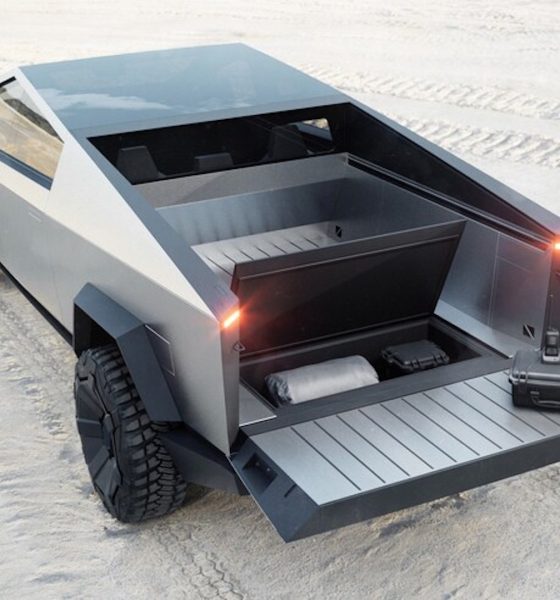
Tesla Cybertruck will be able to support extended-length cargo via a flip-up load stop on its tailgate, according to CEO Elon Musk.
Tesla fan Ron Pomeroy presented the potential problem to Musk, specifically the loading of a large sheet of 4’x8′ plywood which exceeds the electric pickup truck’s 6.5 ft. “vault” bed length. “Elon, nice owl. Now, how should I transport a standard 4X8 sheet of plywood in my Cybertruck? Can you add a flip stop to the tailgate?” noted Pomeroy over Twitter, to which Musk confirmed with a “yes”.
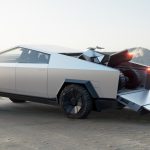
The flip stop, that’s in question, is a built-in flap on the inward side of a pickup truck’s lift gate that flips out and prevents long cargo from sliding off the truck bed. The section is hinged to the tailgate and can be folded back down when not in use. It’s essentially a tailgate within a tailgate.
https://twitter.com/MechnicalBeer/status/1202054733969494016?s=20
Yes
— Elon Musk (@elonmusk) December 3, 2019
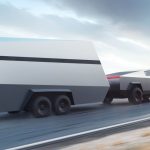
While the current prototype of the Tesla Cybertruck does not incorporate a flip stop to its design, adding one can only increase the versatile utility of the truck. Cybertruck will have a modular truck bed system that can include a Cybercamper and kitchen attachment. Similar in amenities to the all-electric Rivian R1T, such adaptability can be the convincing factor that pushes consumers to transition to all-electric pickup trucks.
Auto experts have also praised the new member of the Tesla garage. Jack Rickard foresees the Cybertruck to become astonishingly successful.
As Musk announced during the unveiling of the Cybertruck, Tesla’s electric ATV will come as an option. He also hinted that the Boring Company “Not-a-Flamethrower” may also be included.
The entry-level Cybertruck boasts of a towing capacity of over 7,500 lbs, a range of over 250 miles, and sprinting capability from 0 to 60 in less than 6.5 seconds. It offers a storage capacity of 100 cu.ft. It is Tesla’s boldest vehicle to date with a starting price of $39,990 that also shocked the electric vehicle community. Autopilot will also come as a standard feature along with an adaptive air suspension that can adjust to heavy loads and prevent the vehicle from being mangled.
-
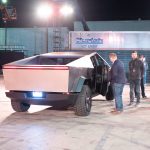
- Tesla Cybertruck giving test rides at Los Angeles unveiling event, Nov. 21, 2019 (Photo: Teslarati)
-
- Tesla Cybertruck 6.5 ft pickup bed “Vault” (Photo: Teslarati)
-
- Credit: Tesla
-
- (Credit: Teslarati)
-
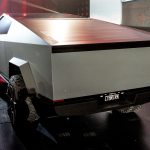
- Tesla Cybertruck stainless steel rear hatch (Photo: Arash Malek)



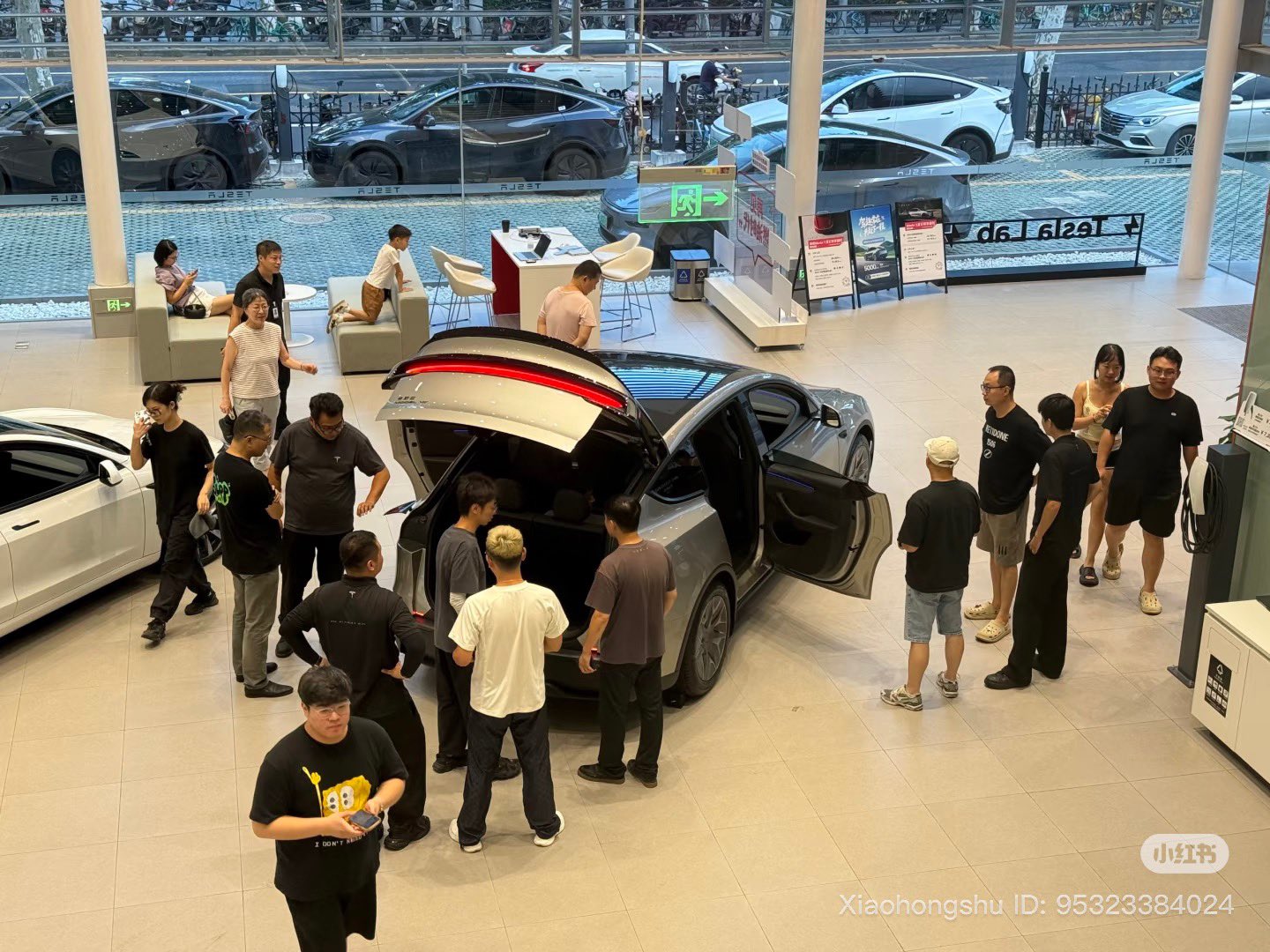
Tesla (NASDAQ: TSLA) showrooms have been picked clean ahead of the end of the third quarter of the year, as demand looks to be strong and delivery estimates for new vehicles are pushed into late 2026 and early 2027.
Tesla appears to have sold out of many of its Model 3 and Model Y trim levels in the United States, as only the Model Y RWD and Model Y All-Wheel-Drive are available for delivery before the end of the year.
Additionally, many showrooms are either completely empty or void of all but just one demo unit within the buildings themselves in an effort to bolster what could be one of Tesla’s best quarters in vehicle deliveries in recent memory.
I’m at Tesla right now and when I walked into their showroom I was shocked to see it basically empty.
I asked one of the people working there where all of the cars are “Gone – it’s the end of the quarter and we’ve sold out of everything… including the display vehicles”So… pic.twitter.com/rN7s3gE6sJ
— Devin Olsen (@DevinOlsenn) September 25, 2026
All the cars are gone from Tesla Century City!
All they have is Model Y L, a self-driving video playing on the background. I guess the best product is no product. Either that or they just sold the showroom cars. pic.twitter.com/mzCjWaXwww
— Whole Mars Catalog (@wholemars) September 26, 2026
Show room is empty. I asked and they have sold the demo cars too. Delivery numbers better be outstanding! pic.twitter.com/jq5N28Q6tZ
— Electric Brawl (@3lectricBrawl) September 22, 2026
Additionally, when I spoke to the guys at Tesla Mechanicsburg two weeks ago, when I returned the Model Y L, their third hauler of the week had just arrived, and every vehicle on it, along with every vehicle in their delivery lot, was accounted for and had a name attached to it for delivery.
Talking to the guys at the Mechanicsburg showroom on Friday, they couldn’t believe they had ANOTHER hauler coming in of cars for delivery—and each was accounted for
No car just sitting in inventory. They’re expecting a BIG quarter, and this is more than just the Y L https://t.co/ce801GkKVv
— TESLARATI (@Teslarati) September 21, 2026
Tesla saw a 25 percent increase in deliveries in Q2 compared to the same quarter the year before. The vast majority of the 480,126 units it delivered, 467,762 vehicles to be exact, were the Model 3 and Model Y.
In Q3 2025, Tesla delivered 497,099 vehicles, once again a figure that was dominated by the company’s two mass-market vehicles. Analysts have unusually wide predictions for this quarter, likely because so many firms missed the Q2 delivery figure by such a substantial margin; Wall Street predicted 408,000 cars, while Tesla delivered 480,000.
Goldman Sachs has Tesla slotted for 435,000 deliveries in Q3, while JPMorgan said it anticipates 482,000. The median guess is about 449,000 deliveries for Q3.
Interested in ordering a Tesla? Use my referral code for three free months of Full Self-Driving (Supervised) here.

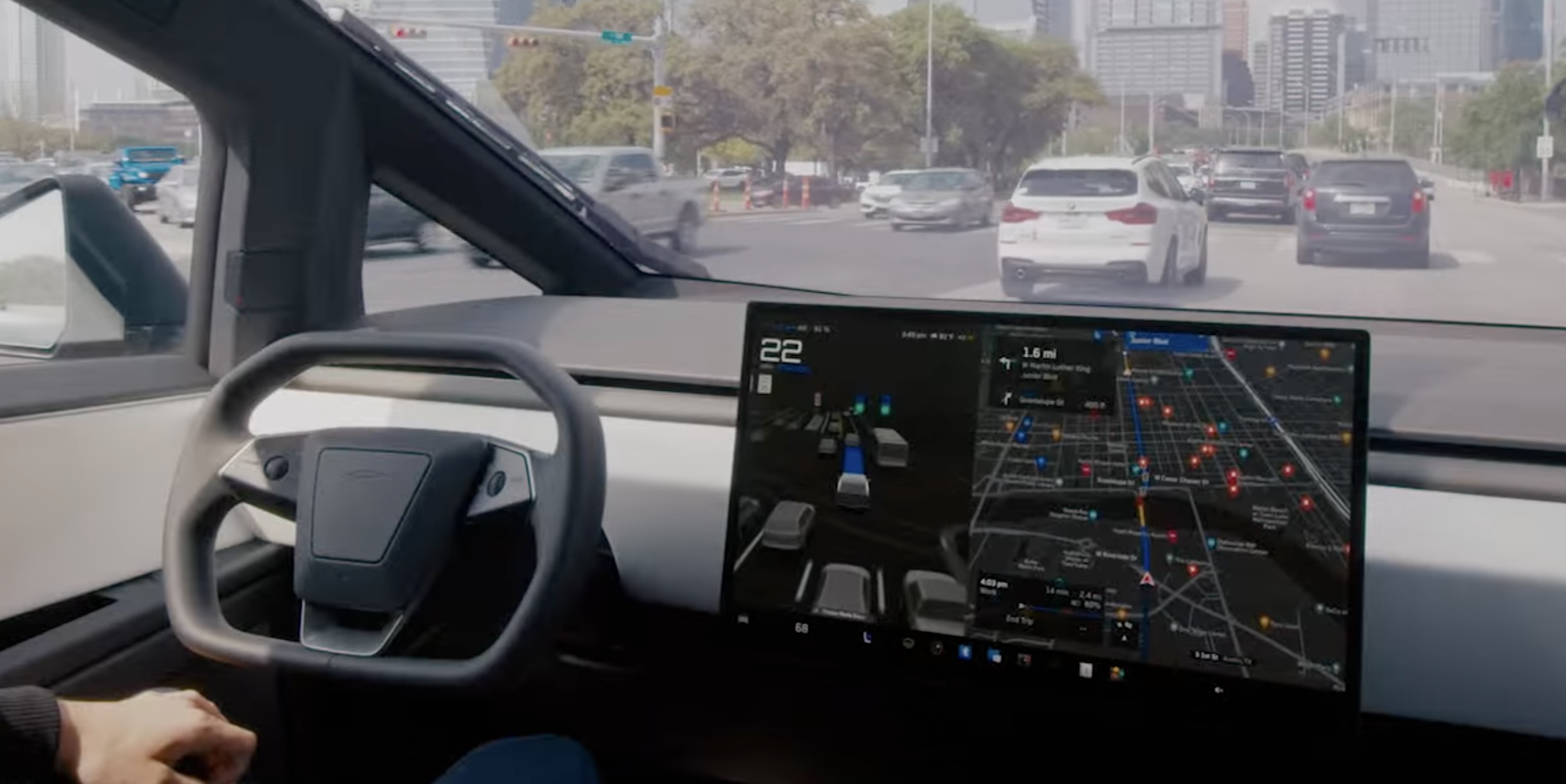
Tesla’s Automatic Collision Evasion feature can be seen in one of the first owner videos of it in action.
Tesla owner Spencer (@scotsrule08) posted on Monday that the feature “worked flawlessly,” saying FSD reengaged itself just as he was about to hit a curb. Ashok Elluswamy, who leads Tesla’s AI team, shared the clip and wrote, “A guardian angel always looking out for you.”
The video arrives in the middle of a staged rollout. Tesla first shipped Automatic Collision Evasion with FSD (Supervised) v14.3.9 in software update 2026.27.6 earlier this month, which Teslarati covered as it reached cars. Update 2026.27.10, which began going out on September 19, carried the feature improvements with FSD v14.3.10, according to release notes tracked by Not a Tesla App. The newer 2026.27.11 build is now reaching another wave of vehicles.
The new Automatic Collision Evasion feature worked flawlessly! FSD reengaged itself just as I was about to hit a curb.
Kudos @Tesla_AI team! 👏 pic.twitter.com/Fbp15HhpL2
— Spencer (@scotsrule08) September 28, 2026
The feature only runs on HW4 vehicles, and it requires an active FSD purchase or subscription with both FSD (Supervised) and Automatic Emergency Braking enabled. HW3 owners receive FSD v14.2 Lite in the same updates, but that build does not include collision evasion.
Tesla’s release notes describe two triggers. The first is an imminent frontal collision that braking alone may not prevent, in which case the car can activate FSD to steer, brake or accelerate around the hazard. That scenario is limited to highways below 85 mph, with no pedestrians or cyclists detected and no slippery road surface. The second covers a driver who appears inattentive, such as reaching into the back seat, or who seems to have switched off FSD by accident. Spencer’s curb clip appears to fall into that second category.
Tesla plans big safety improvements for Full Self-Driving v15
Once the system takes over, the accelerator is muted and light brake input will not cancel the maneuver. Drivers need to apply firm, deliberate steering force to take back control, and the car chimes to hand control back once the danger has passed.
Elluswamy recently noted that earlier hazard prediction, faster reaction time and better collision avoidance would arrive with FSD v15, the next major version.
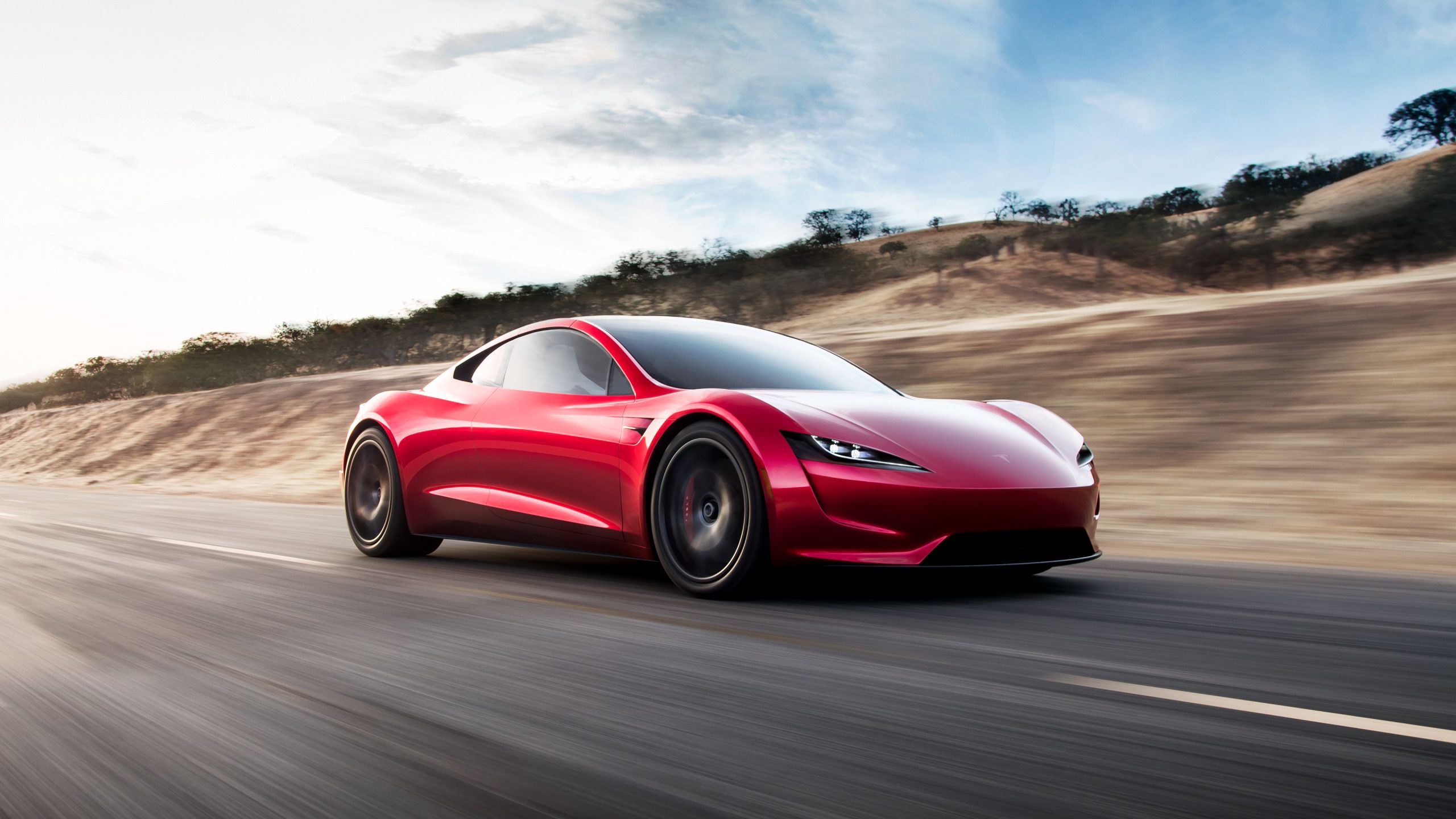
Tesla is delaying its event for the Roadster, moving it from this Thursday, October 1, to Thursday, October 15, due to unfavorable weather.
The company has said it has been tracking the weather for this Thursday closely with local meteorologists, and because the event can only be held outside, Tesla is making the call to delay it:
“We’ve been tracking the weather closely with local meteorologists, but given the severe conditions predicted & because this event can only be held outdoors, we’ve made the difficult decision to reschedule. New date is October 15. Additional details to follow.”
Roadster event update
We’ve been tracking the weather closely with local meteorologists, but given the severe conditions predicted & because this event can only be held outdoors, we’ve made the difficult decision to reschedule.
New date is October 15. Additional details to…
— Tesla (@Tesla) September 28, 2026
We are sure that this is bringing back PTSD for some Tesla fans, and we know it is not ideal, but this also reveals some things about the event. Tesla said that this can only be held outdoors, meaning it bodes well for the rumors that the vehicle could potentially hover.
Some believe that this was essentially confirmed by the FAA airspace restriction they were granted, but this could have been for a drone show or to keep drones from spying on the event.
Tesla Roadster is available for order once again following brief hold
The Roadster event has been long-awaited, and it is unfortunate that the weather is going to keep us all waiting a little bit longer.
The Tesla Roadster will be unveiled in Waco, Texas.

Tesla showrooms picked clean ahead of Q3 end as demand looks strong

Watch Tesla’s “guardian angel” FSD feature take over for collision evasion


