News
Tesla Cybercab might be getting a huge change
“If we have to have a steering wheel, it can have a steering wheel and pedals.”

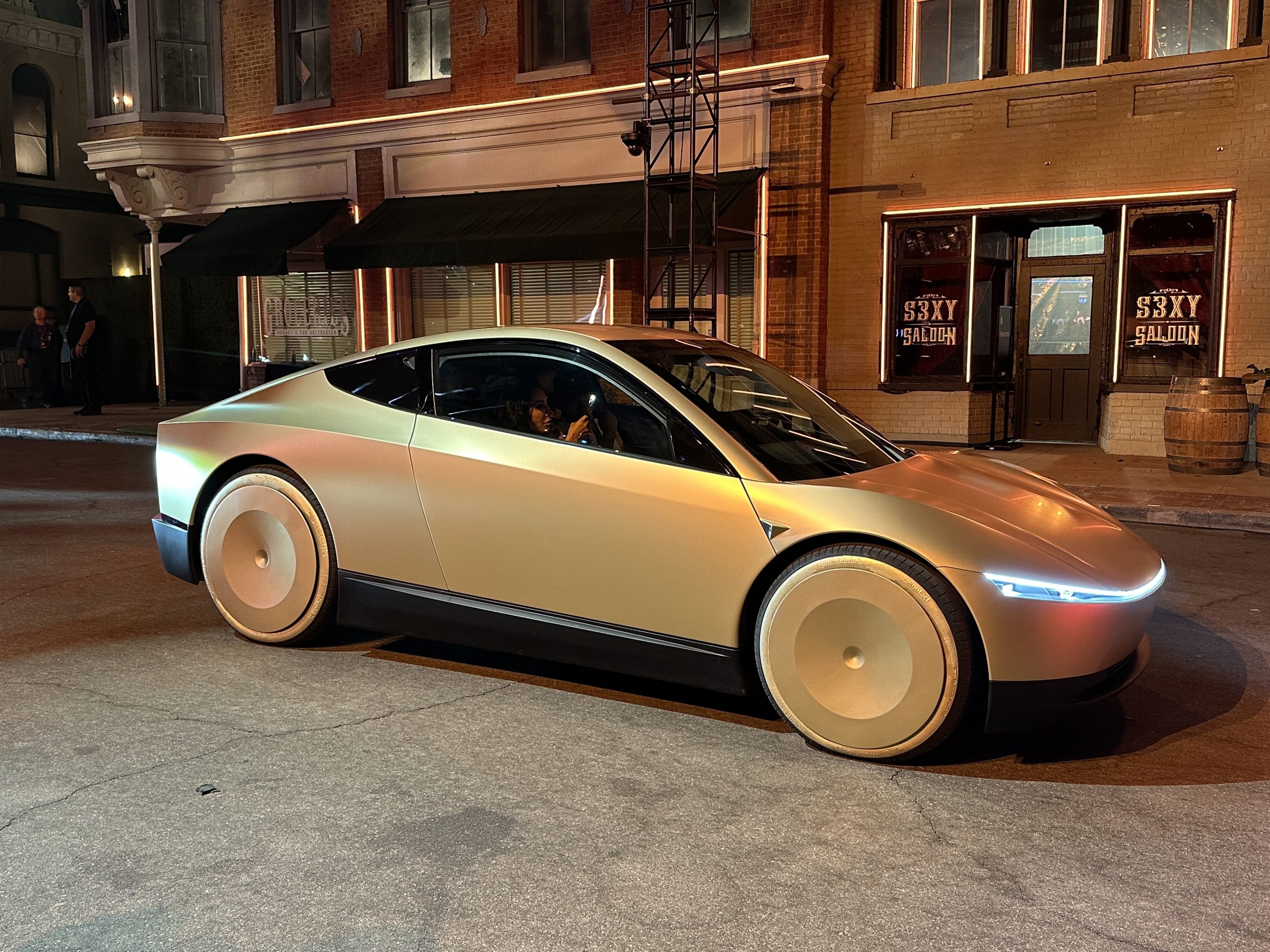
Tesla is planning to launch the Cybercab in the second quarter of next year, and it is designed to be fully autonomous, so much so that the company is planning to build it without a steering wheel or pedals.
However, a Tesla executive said today that the company could ditch that idea altogether in what would be a major shift from the plans the company, and especially its CEO Elon Musk, have announced for the Cybercab.
Earlier today, Robyn Denholm, the company’s Chair for the Board of Directors, revealed that Tesla would potentially switch up its plans for the Cybercab based on potential regulatory requirements.
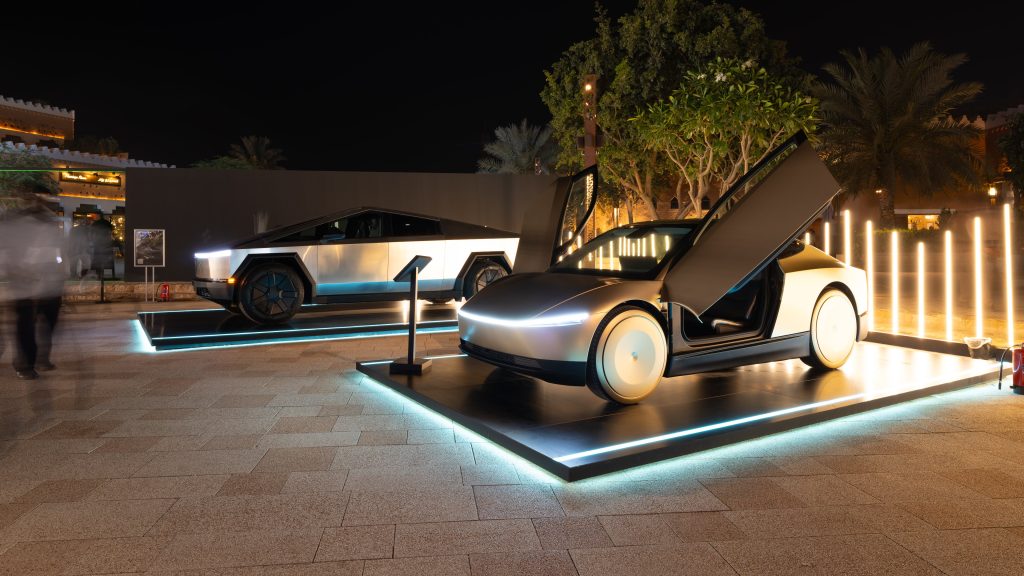
Credit: Tesla Europe & Middle East | X
Currently, even autonomous vehicles that operate for companies like Tesla and Waymo are required to have steering wheels and pedals. From a regulatory perspective, this could halt the plans Tesla has for Cybercab.
Denholm said in an interview with Bloomberg:
“If we have to have a steering wheel, it can have a steering wheel and pedals.”
Interestingly, Musk and Tesla have not veered away from the idea that the vehicle will be without these operational must-haves.
Since the vehicle was revealed last October at the We, Robot event in Los Angeles, Tesla has maintained that the car would be built without a steering wheel or pedals, and would equip two seats, which is what is statistically most popular in ride-sharing, as the vast majority of rides have only one or two passengers.
Musk doubled down on the plans for Cybercab as recently as last week, when he said:
“That’s really a vehicle that’s optimized for full autonomy. It, in fact, does not have a steering wheel or pedals and is really an enduring optimization on minimizing cost per mile for fully considered cost per mile of operation. For our other vehicles, they still have a little bit of the horse carriage thing going on where, obviously, if you’ve got steering wheels and pedals and you’re designing a car that people might want to go very direct past acceleration and tight cornering, like high-performance cars, then you’re going to design a different car than one that is optimized for a comfortable ride and doesn’t expect to go past sort of 85 or 90 miles an hour.”
Cybercab is fully conceptualized as a vehicle that has zero need for pedals or a steering wheel because it is aimed toward being fully reliant on a Level 5 autonomous platform.
Tesla is ramping its hiring for Cybercab vehicle manufacturing roles
Regulators could get in the way of this, however, and although the car could drive itself and be a great solution for ride-hailing, it might need to have these controls to hit the road in the future.


Elon Musk
Tesla FSD in Europe vs. US: It’s not what you think
Tesla FSD is approved in the Netherlands, but the European version differs from what US drivers use.

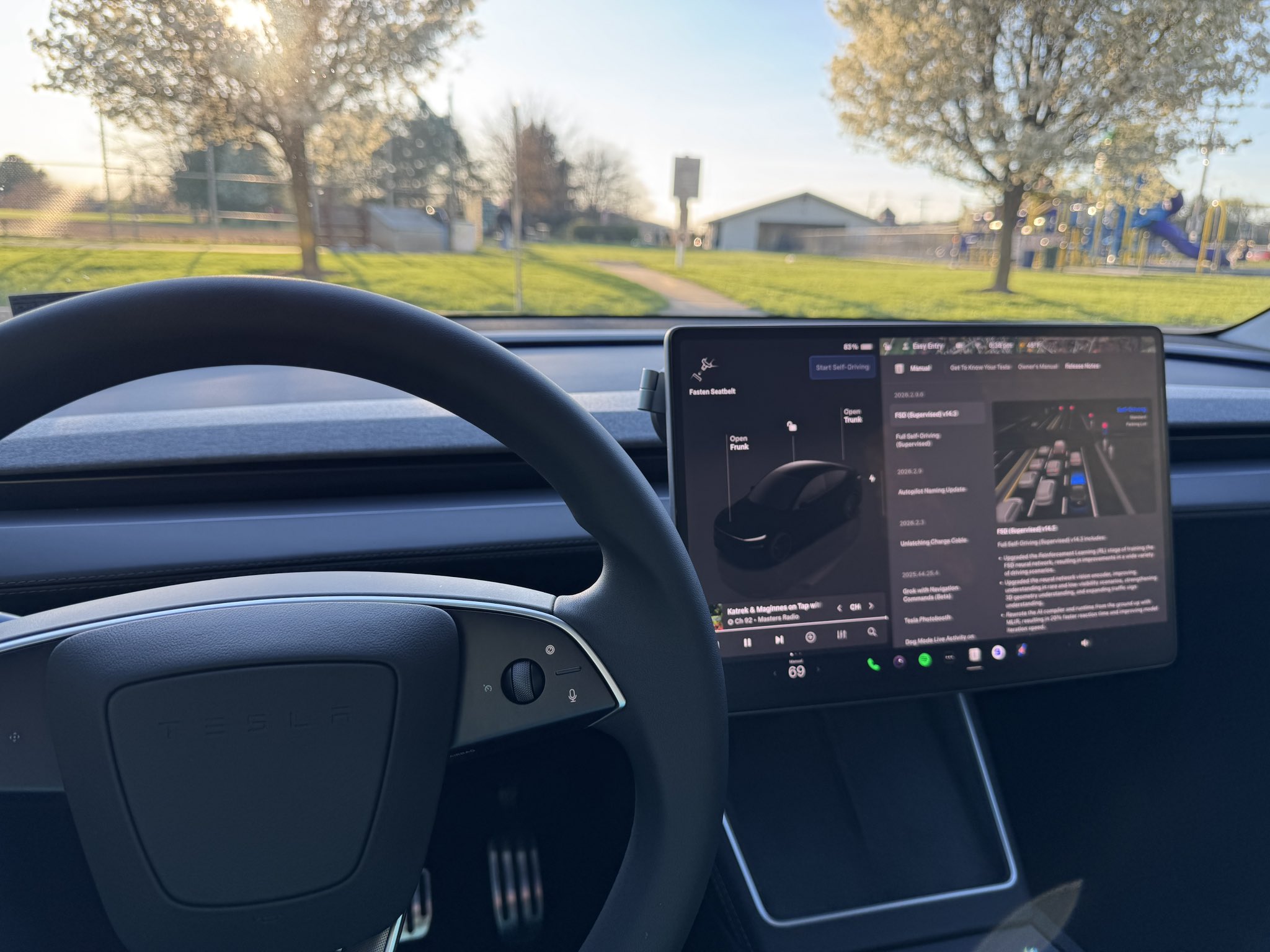
On April 10, 2026, the Dutch vehicle authority RDW granted Tesla the first European type approval for Full Self-Driving Supervised, making the Netherlands the first country on the continent to authorize Tesla’s semi-autonomous system for customer use on public roads.
As Teslarati reported, the RDW approval followed 18 months of testing, more than 1.6 million kilometers driven on EU roads, 13,000 customer ride-alongs, and documentation covering over 400 compliance requirements. Tesla Europe had been running public demo drives through cities like Amsterdam and Eindhoven since early 2026, giving passengers their first experience of the system on European streets.
The European version of FSD is not the same software US drivers use. The RDW’s own statement is direct, noting that the software versions and functionalities in the US and Europe “are therefore not comparable one-to-one.” We’ve compile a table below that captures the most significant differences between US-based Tesla FSD vs. European Tesla FSD that’s based on what regulators and Tesla have publicly confirmed.
| Feature | FSD US | FSD Europe (Netherlands) |
| Regulatory framework | Self-certification, post-market oversight | Pre-market type approval required (UN R-171 + Article 39) |
| Hands requirement | Hands-off permitted on highway | Hands must be available to take over immediately |
| Auto turning from stop lights | Available — navigates intersections, turns, and traffic signals autonomously | Available in EU build — confirmed in Amsterdam demo footage handling unprotected turns and signalized intersections |
| Driving modes | Multiple profiles including a more aggressive “Mad Max” mode | EU build is more conservative by default and errs on the side of restraint when it cannot confirm the limit |
| Summon | Available — Smart Summon navigates parking lots to driver | Status unclear — not confirmed as part of the RDW-approved feature set; urban FSD approval targeted separately for 2027 |
| Driver monitoring | Camera-based eye tracking | Stricter continuous monitoring with more frequent intervention alerts |
| Software version | FSD v14.3 | EU-specific builds that must be separately validated by RDW |
| Geographic restriction | US, Canada, China, Mexico, Australia, NZ, South Korea | Netherlands only; EU-wide vote pending summer 2026 |
| Subscription price | $99/month | €99/month |
| Full urban FSD scope | Available | Partial — separate urban application planned for 2027 |
The approval comes as Tesla is under real pressure to grow FSD subscriptions globally. Musk’s 2025 CEO compensation package, approved by shareholders, includes a milestone requiring 10 million active FSD subscriptions as one condition for his stock awards to vest. Tesla hit one million subscriptions during its Q4 2025 earnings call, which is a meaningful start, but still a long way from the target. Opening Europe as a market for subscriptions, rather than just hardware sales, directly accelerates that number.
Tesla has said it anticipates EU-wide recognition of the Dutch approval during summer 2026, which would extend FSD access to Germany, France, and other major markets through a mutual recognition process without each country repeating the full 18-month review. That timeline is Tesla’s projection, not a confirmed regulatory outcome. As Musk acknowledged at Davos in January 2026, “We hope to get Supervised Full Self-Driving approval in Europe, hopefully next month.”
News
Tesla’s troublesome Auto Wipers get a major upgrade
Tesla has quietly deployed a major over-the-air (OTA) update across its entire fleet, implementing a new patent that could finally solve one of the most complained-about features in its vehicles: the Auto Wipers.
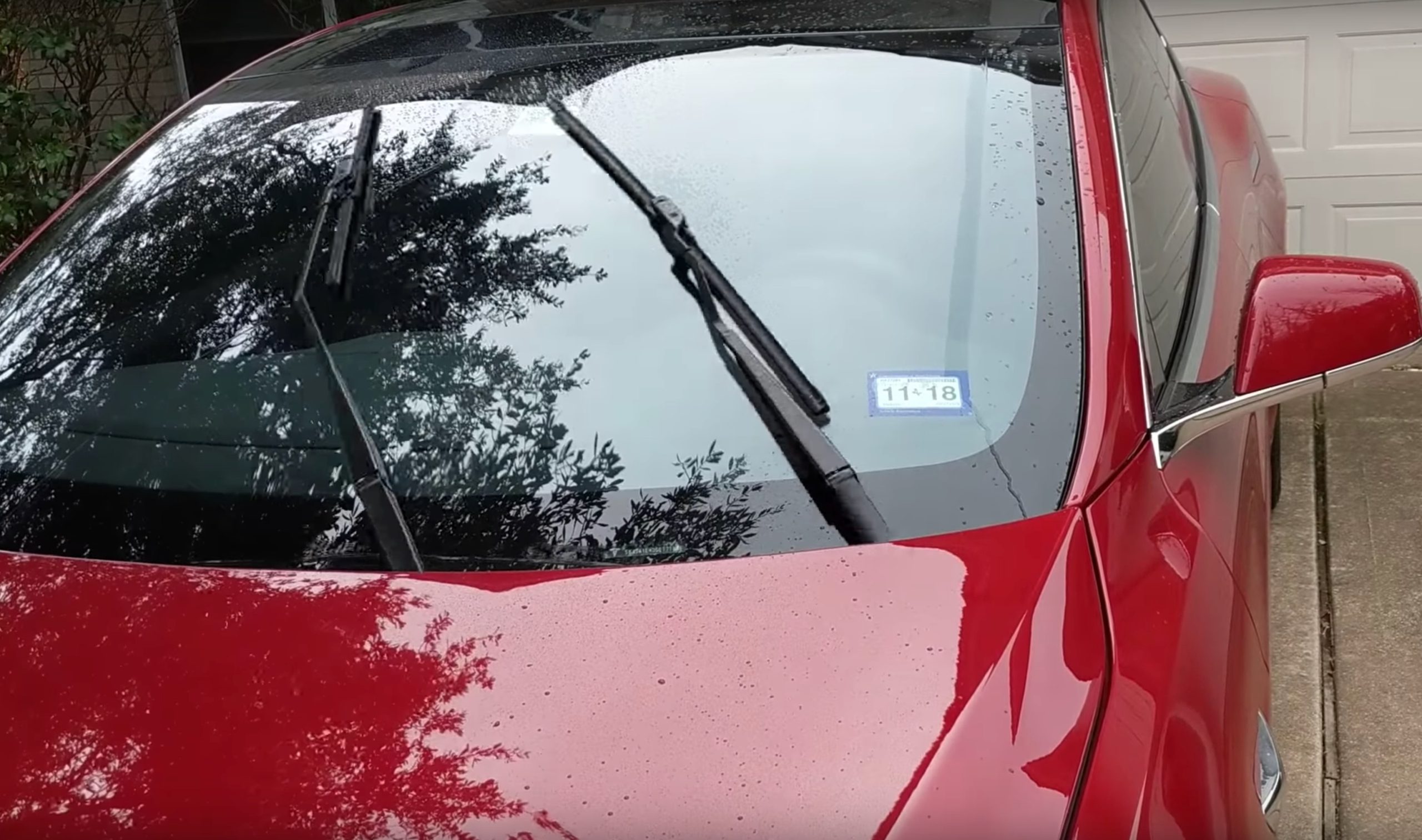
One of Tesla’s most complained-about features is that of the Auto Wipers, but they have recently received a major upgrade that impacts every vehicle in the company’s fleet, a company executive confirmed.
Tesla has quietly deployed a major over-the-air (OTA) update across its entire fleet, implementing a new patent that could finally solve one of the most complained-about features in its vehicles: the Auto Wipers.
Confirmed by senior Tesla AI engineer Yun-Ta Tsai on April 10, the improvement is based on patent US 20260097742 A1. It introduces an “energy balance model” that adds a tactile, physics-driven layer to the existing camera-based system—without requiring any new hardware.
🚨 Tesla has already implemented a new patent that improves the accuracy of the Auto Wiper system https://t.co/QjjKHKxSNv pic.twitter.com/mEbd04oJAu
— TESLARATI (@Teslarati) April 10, 2026
Tesla drivers have griped about auto wipers since the company ditched traditional rain sensors in favor of Tesla Vision around 2018.
Owners routinely report the wipers failing to activate in light drizzle or mist, leaving windshields streaked and visibility dangerously reduced. Just as often, they formerly blasted into high-speed mode on dry, sunny days, screeching across glass and risking scratches or premature blade wear.
This is a rare occurrence anymore, but many owners still report the feature having the wipers perform at the incorrect speed or frequency when precipitation is falling.
Tesla has tried repeatedly to fix the problem through software alone.
Early “Deep Rain” initiatives and the 2023 Autowiper v4 update used multi-camera video and refined neural networks, with Elon Musk promising “super good” performance. The 2024.14 update added manual sensitivity boosts, and later FSD versions claimed further gains. Yet complaints persisted.
Elon Musk apologizes for Tesla’s quirky auto wipers, hints at improvements
Vision systems struggle with edge cases—glare, bugs, reflections, or faint mist—because they rely purely on visual inference rather than physical detection
The new patent takes a different approach. The car’s computer constantly measures electrical power delivered to the wiper motor. It subtracts predictable losses—internal motor friction, linkage drag, and aerodynamic resistance—leaving only the friction force between the rubber blade and windshield glass.
Water lubricates the glass, sharply reducing friction; dry or icy surfaces increase it dramatically. This real-time “tactile” data acts as an independent check on the camera’s visual cues, instantly shutting down false triggers on dry glass and fine-tuning speed for actual rain.
The system can also detect ice and auto-activate defrost heaters, while long-term friction trends alert drivers when blades need replacing.
By fusing vision with precise motor-load physics, Tesla has created a hybrid sensor that is both elegant and cost-free. Owners have waited years for reliable auto wipers; this OTA rollout may finally deliver them.
News
Tesla Roadster unveiling set for this month: what to expect
As Tesla finally edges toward production and an updated reveal, enthusiasts aren’t asking for compromises; they’re demanding the original vision be honored. Here are five clear expectations that will come with the vehicle’s unveiling, which is still set for later this month, hopefully.
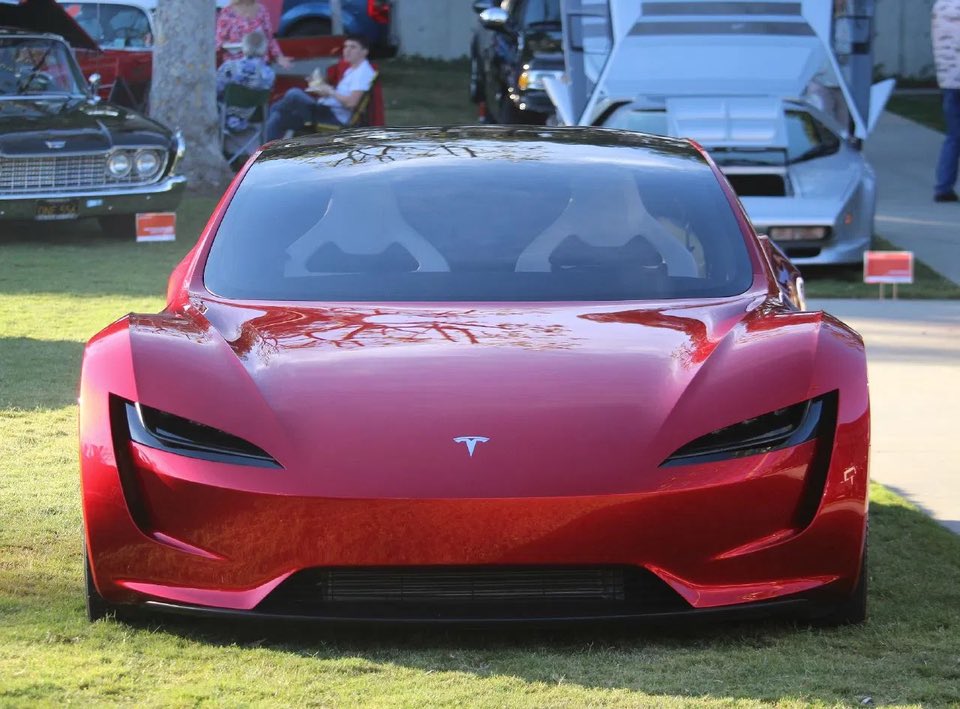
The Tesla Roadster has been the ultimate carrot on a stick since its 2017 unveiling. Promised as the fastest production car ever made, with 0-60 mph in under two seconds and a top speed over 250 mph, it has endured years of delays.
As Tesla finally edges toward production and an updated reveal, enthusiasts aren’t asking for compromises; they’re demanding the original vision be honored. Here are five clear expectations that will come with the vehicle’s unveiling, which is still set for later this month, hopefully.
Performance and Safety Do Not Go Hand in Hand, and That’s the Point
The Roadster is not a family sedan or a daily commuter. It is a no-holds-barred supercar meant to embarrass six-figure exotics on track days. Tesla should resist the temptation to load it with every passive-safety nanny and electronic guardian that dulls the raw feedback drivers crave.
Owners want to feel the road, not be shielded from it. Strip away unnecessary electronic limits so the car can deliver the visceral thrill Elon Musk originally described. Safety ratings will still be strong because of Tesla’s structural excellence, but the Roadster’s mission is speed, not coddling.
He said late last year:
“This is not a…safety is not the main goal. If you buy a Ferrari, safety is not the number one goal. I say, if safety is your number one goal, do not buy the Roadster…We’ll aspire not to kill anyone in this car. It’ll be the best of the last of the human-driven cars. The best of the last.”
Musk was clear that this will not be a car that will be the safest in Tesla’s lineup, but that’s the point. It’s not made for anything other than pushing the limits.
Tesla Needs to Come Through on a HUGE Feature
The Roadster unveiling would be wildly disappointing if it were only capable of driving. Tesla has long teased the potential ability to float or hover, and they need to come through on something that is along those lines.
The SpaceX cold-gas thruster package was never a joke. Musk, at one time, explicitly said owners could opt for a set of thrusters capable of lifting the car off the ground for short hops or dramatic launches. That feature is what separates the Roadster from every other hypercar on the planet.
If the production version arrives without it—or with a watered-down “maybe later” version—enthusiasts will feel betrayed. Deliver the thrusters, make them functional, and let the Roadster literally hover above the competition.
An Updated Design Might Be Warranted
It’s been nine years since Tesla first rolled off the next-gen Roadster design and showed it to the world.
The 2017 concept still looks sharp, but eight years is an eternity in automotive styling. The sharp lines and aggressive stance now compete against the angular Cybertruck and the next-generation vehicles rolling out of Fremont and Austin.
Tesla Roadster patent hints at radical seat redesign ahead of reveal
A subtle refresh, maybe with sharper headlights, revised aero elements, and modern materials, would keep the Roadster feeling current without losing its identity. Fans don’t want a complete redesign, just enough evolution to prove Tesla still cares.
Self-Driving Isn’t a Necessity for the Tesla Roadster
Full Self-Driving hardware and software belong in the Model 3, Model Y, and the upcoming robotaxi—not in a two-seat rocket built for canyon carving. The Roadster’s entire appeal is the direct connection between driver, steering wheel, and asphalt.
Offering FSD as standard would dilute the purity that separates it from every other Tesla. Make autonomy an optional delete or simply omit it. Let the Roadster remain the purest driving machine in the lineup, because that’s what it is all about.
Tesla Needs to Come Through on the Unveiling Timeline
The last thing Tesla needs right now is another complaint about not hitting timelines or expectations. This unveiling has already been pushed back one time, from April 1 to “probably in late April.”
Repeated delays have tested even the most patient fans. Whatever date the company now sets for the next major reveal or start of production must be met. No more “next year” promises. The Roadster has waited long enough. When it finally arrives, it must feel worth every extra month.
If Tesla hits these five marks, the Roadster won’t just be another fast car—it will be the machine that redefines what a Tesla can be. The world is watching.

Tesla FSD in Europe vs. US: It’s not what you think

Tesla’s troublesome Auto Wipers get a major upgrade


