Video
Tesla begins clearing trees at German Gigafactory 4 site ahead of groundbreaking event

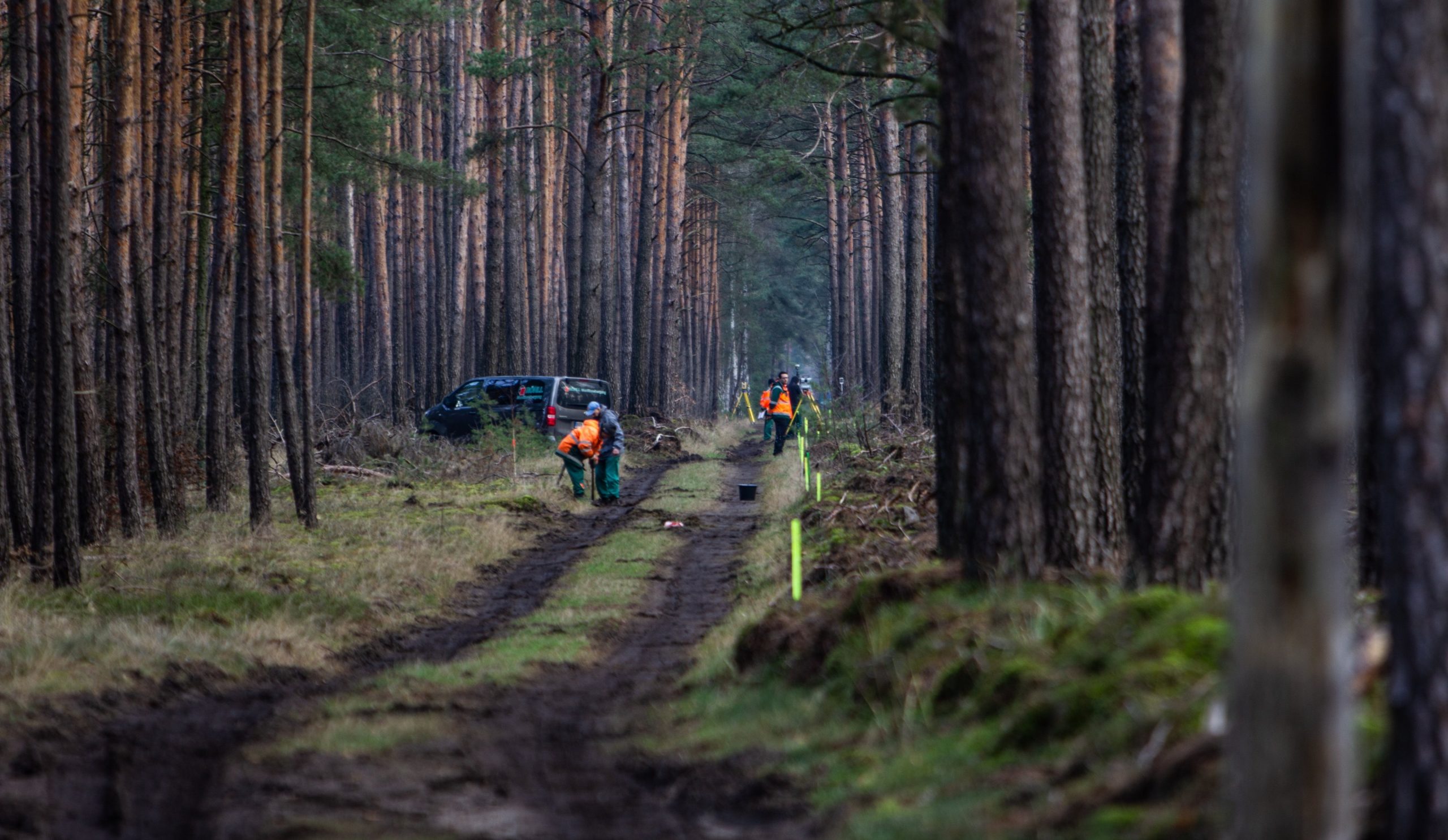
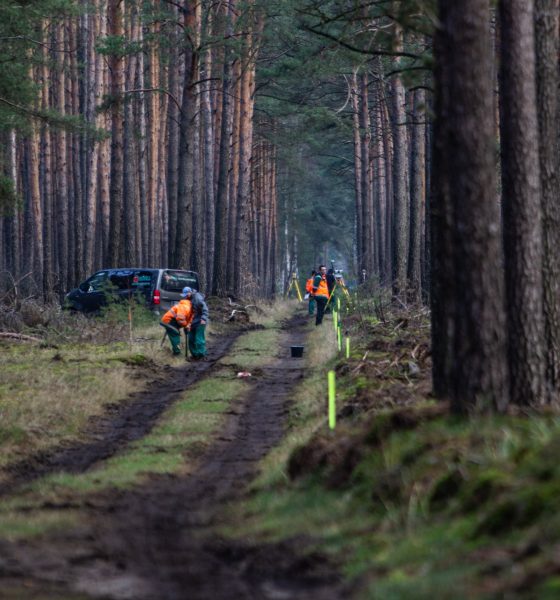
Crews in Germany have started preparations for the groundbreaking of Tesla’s Gigafactory 4. Recently-shared videos from the piece of land in Grünheide, Germany revealed that some trees are currently being cut down to make way for the upcoming electric car production plant.
Footage from @Gf4Tesla on Twitter shows trees being removed from the area along with the sounds of multiple chainsaws in the background. Trees must be removed from the forest by February 27, according to an environmental report on Gigafactory 4.
The report also indicates that a key focus is protecting the site’s extensive inhabitance of wildlife. Tesla must also set up reptile protection fences in January and perform a mandatory inspection of local caves to protect bats.
“Felling and clearing work in the forest must be completed by February 27 to avoidance ban (bird breeding). All trunks, stumps and branch cuts must be temporarily stored outside the planned construction site (pile) so that no birds settle there,” the report states on page 125.
Environmentalists have not been expected to protest or make any attempts at halting Tesla’s progress at the site. Tesla initially announced that deforestation would result in the company planting three times as many trees to replace those that have been cut due to Gigafactory 4’s construction.
Grünheide Mayor Arne Christiani has also stated that the trees located in this particular region are of “inferior quality.” This is a detail that he sees as one reason environmental groups are not focused on halting the removal of the forestry. Tesla seems focused on doing as little environmental damage as possible considering they are replanting three times as many trees and taking wildlife into consideration before starting the deforestation process.
Tesla purchased the 300-hectare lot that Gigafactory 4 will sit on after negotiating a price and finer details of the contract with the region’s officials. The company plans to begin producing the Model Y and Model 3 vehicles initially at rates of 3,000 vehicles per week beginning in July 2021, according to a recent report from the Brandenburg Gazette. Tesla has stated they plan to produce 500,000 vehicles at Gigafactory 4 annually.
The plans to build the European production plant were finally settled when Elon Musk was in Germany to accept an award that named the Model 3 as the “Best Midsize Car of the Year” in the country. Musk stated the site “will build batteries, powertrains & vehicles, starting with the Model Y,” shortly after accepting the award and announcing Gigafactory 4’s site.


Elon Musk
The Boring Company just doubled its tunneling power in Nashville
The Boring Company’s Prufrock MB2 is commissioned and ready to mine beneath Nashville’s streets.

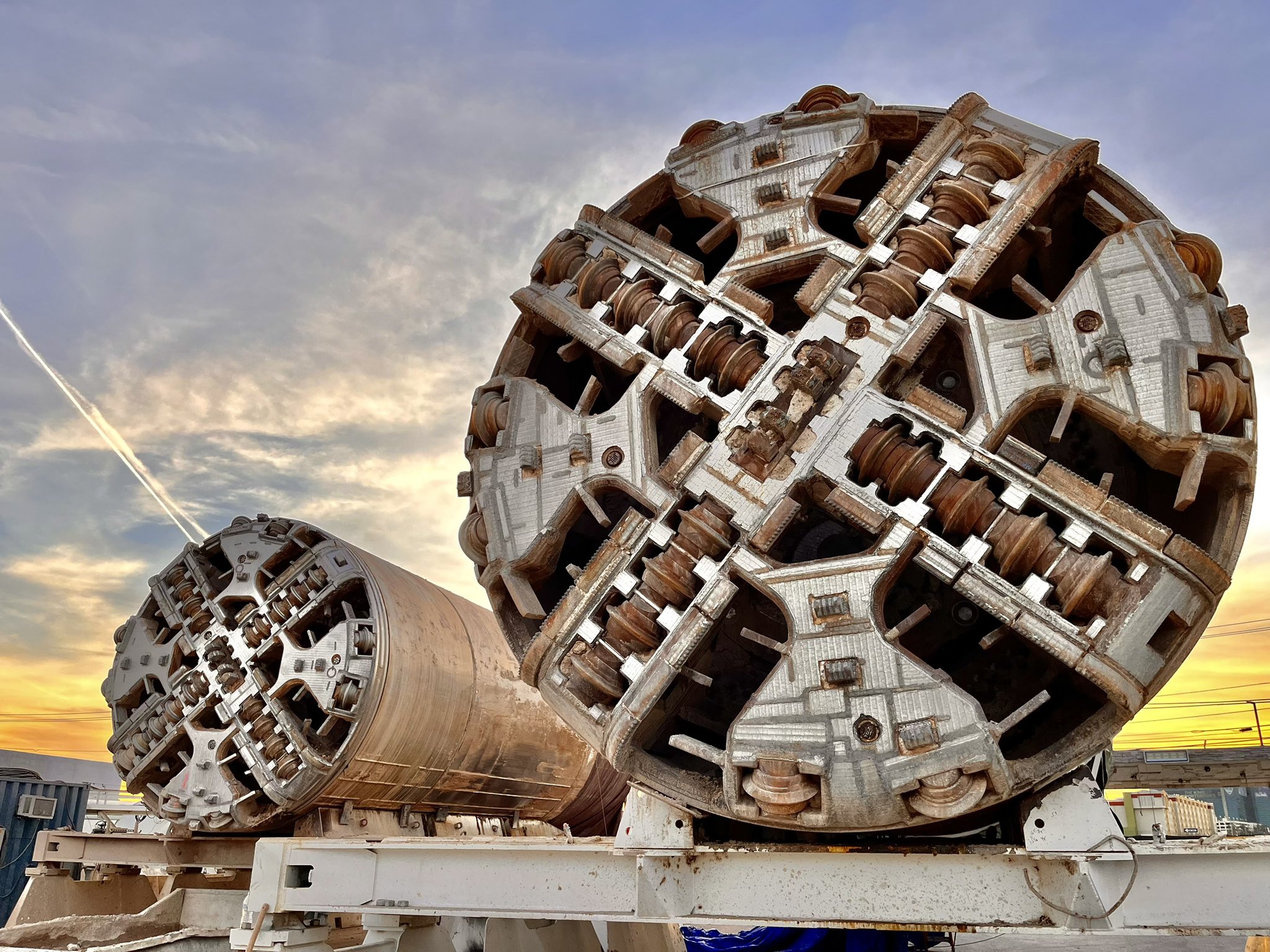
The Boring Company’s second tunnel boring machine, Prufrock MB2, is officially ready to dig in Nashville. The company confirmed the news on X, posting: “Prufrock-MB2 is ready to mine in Nashville! MB2 commissioning is complete, including the brief 11 rpm rotation shown here. Will MB2 catch up to MB1, who had quite the head start? And Prufrock-MB3 ships in August!”
MB2 arrives with meaningful improvements over its predecessor. Lessons learned from the launch and operation of MB1 have already been applied to MB2 to improve efficiency and prepare the machine for launch.
Traditional tunnel boring machines operate in a stop-and-go cycle, digging roughly five feet, halt, erect precast concrete segments to line the tunnel wall, then resume. That repeated interruption is one of the main reasons conventional tunneling is slow and expensive. Prufrock is designed to install the tunnel liner simultaneously with mining, eliminating the need to stop every five feet. The machine also skips the need for excavated launch pits. Prufrock arrives on a truck, tilts down, and launches into the ground within 24 hours. And when the tunnel is complete, it emerges from the ground and drives to its next launch site on a trailer, eliminating the need for expensive cranes or pit excavation. The machine is also fully electric and runs with zero people in the tunnel during normal operations, controlled remotely from a surface operations center.
Prufrock-MB2 is ready to mine in Nashville! MB2 commissioning is complete, including the brief 11 rpm rotation shown here.
Will MB2 catch up to MB1, who had quite the head start?
And Prufrock-MB3 ships in August! pic.twitter.com/TTrMql2aRg
— The Boring Company (@boringcompany) June 17, 2026
It won’t be long before we hear of another major update on The Boring Company’s Music City Loop project – a planned underground transit network beneath Nashville that would move passengers in electric vehicles through a series of tunnels at highway speeds, and bypassing surface traffic entirely. Nashville was selected in part because of its strong rock conditions that suits the Prufrock machines well, and relatively less regulatory hurdles.
Progress has been steady on multiple fronts. All 37 permits and approvals required ahead of tunneling have been obtained, out of 45 total. Key wins include a fully executed TDOT tunnel permit authorizing 25 miles of tunnel, unanimous airport authority approval for a Nashville International Airport station, and the city’s first residential station agreement serving downtown tower residents.
With MB1 already tunneling, MB2 now commissioned, and MB3 shipping in August, Nashville is becoming something of a live proving ground for scaled tunnel boring. The broader ambition is not limited to one city. The Boring Company’s stated goal is to make underground transportation a practical alternative to surface roads across major metro areas. Nashville is one of many cities, including a successful Las Vegas tunnel system, where that idea is being put to the test at real speed.
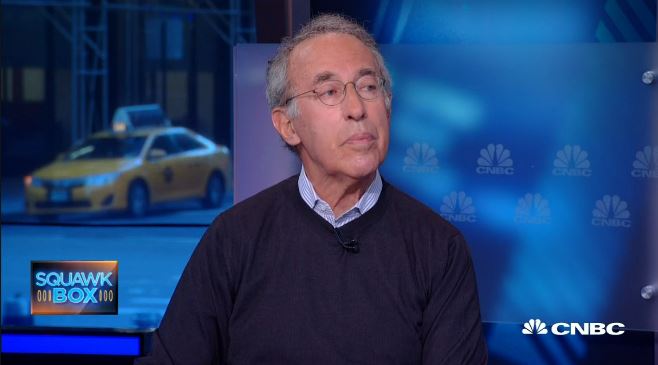
Renowned investor Ron Baron, founder and CEO of Baron Capital, has once again demonstrated his unwavering faith in Elon Musk’s ventures.
Just after SpaceX’s record-breaking IPO, Baron announced he purchased an additional $1 billion in SpaceX (NASDAQ: SPCX) shares. This move pushes Baron Capital’s total holdings in the company to a staggering $25 billion in market value, underscoring one of the most successful private-to-public investment stories in recent history.
Baron’s relationship with SpaceX dates back to 2017, when his firm began investing approximately $1.75–2 billion through secondary markets and employee tender offers at valuations around $20–22 billion.
By the time of the IPO, which valued SpaceX at over $2 trillion with shares closing near $161, those early stakes had generated more than $13 billion in unrealized gains. Post-IPO, Baron’s position ballooned further, reflecting the company’s meteoric rise driven by reusable rocketry, Starlink’s global satellite internet constellation, Starshield defense applications, and ambitious plans for orbital infrastructure.
In a recent interview, Baron articulated his bullish outlook with characteristic enthusiasm.
Ron Baron said today that he bought $1 billion of @SpaceX IPO shares last Friday, and said that all of Baron Capital’s $SPCX holdings are now worth $25 billion.
“I think we’re going to make hundreds of billions of dollars; If you read the prospectus, you realize what they… pic.twitter.com/U8F471KtJS
— Sawyer Merritt (@SawyerMerritt) June 15, 2026
“I think we’re going to make hundreds of billions of dollars,” he stated, emphasizing that SpaceX’s achievements in rocketry and satellite technology are “not possible for anyone else to accomplish.” He envisions the company as a cornerstone of humanity’s multi-planetary future, potentially reaching valuations of $10–30 trillion within 10–15 years.
Baron has repeatedly affirmed he has no plans to sell, viewing SpaceX as a “lifetime investment” alongside Tesla.
Tesla bull Ron Baron reveals $100M SpaceX investment, sees 3-5x return on TSLA
This conviction stems from SpaceX’s unparalleled execution. The company has revolutionized access to space with Falcon 9 reusability, deployed thousands of Starlink satellites, and is advancing Starship for Mars missions and point-to-point Earth transport.
Baron highlights emerging opportunities like space-based AI data centers and direct-to-cell satellite connectivity, positioning SpaceX at the forefront of a new space economy projected to generate trillions in value.
Critics may question the lofty projections amid high valuations and execution risks, but Baron’s track record speaks volumes. His Tesla holdings, initiated in the mid-2010s, have also delivered outsized returns. As one of the largest institutional holders of SpaceX pre-IPO, Baron Capital’s funds, such as Baron Partners, benefited immensely from valuation markups.
Baron’s $1 billion IPO purchase signals deep confidence in SpaceX’s post-IPO trajectory. In an era of short-term market noise, his strategy exemplifies patient capital: backing visionary leadership and transformative technology.
For investors watching the space sector, it serves as a powerful endorsement that the final frontier may indeed yield the next great wealth-creation engine. As Baron puts it, SpaceX isn’t just building rockets—it’s trying to “save humanity” by expanding our horizons beyond Earth.
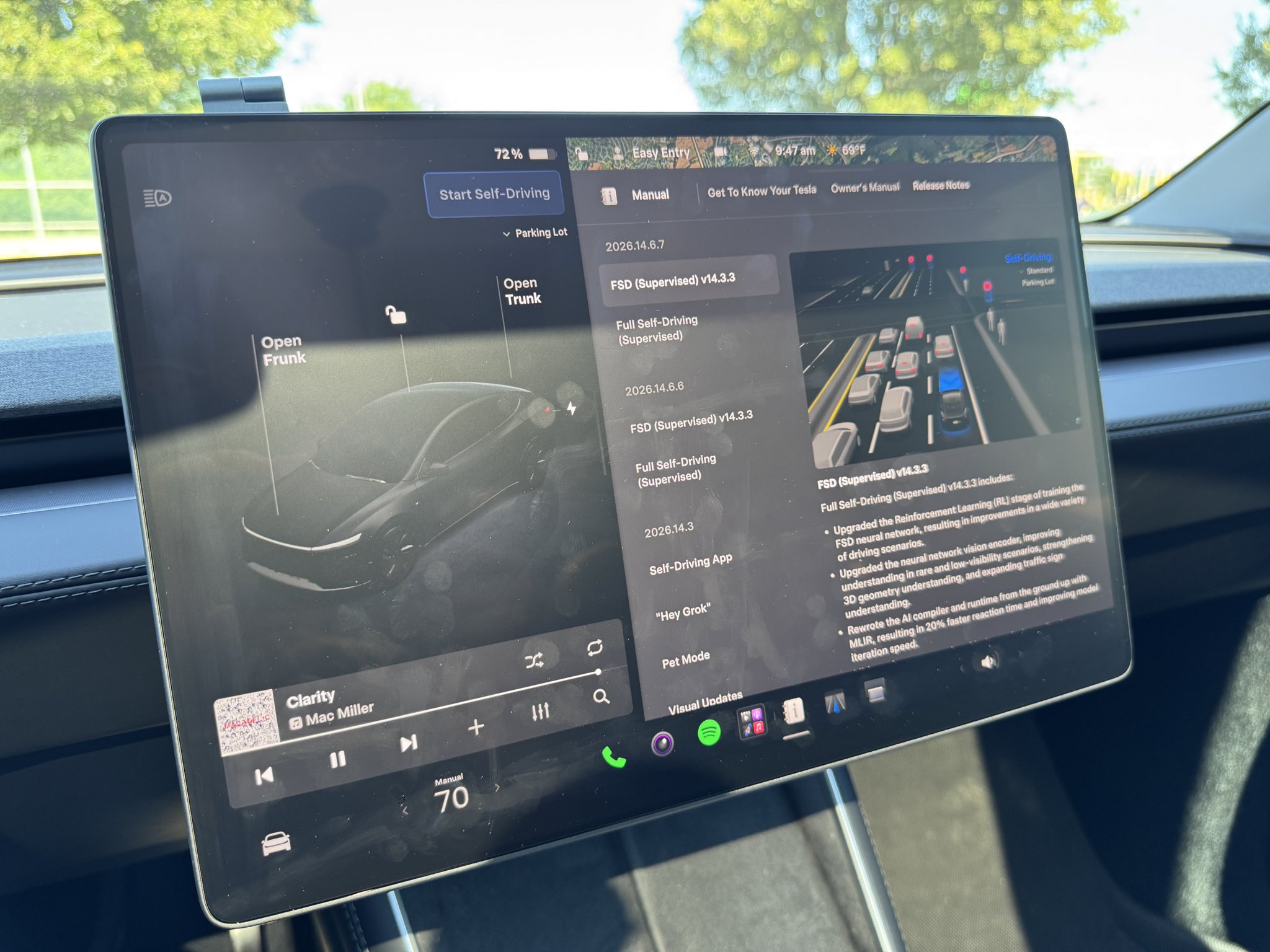
Tesla Full Self-Driving v14.3.3 driver monitoring was reportedly scaled back in recent releases, but a new version that was released in the early hours of June 3 aimed to do a better job of keeping those in control of their cars honest, according to release notes.
The release notes for FSD v14.3.3, via Software Version 2026.14.6.7 added:
“Improved driver monitoring system sensitivity with better eye gaze tracking, eye wear handling, and higher accuracy in variable lighting conditions.”
However, Tesla said this was already enabled in the first rollout of FSD v14.3.3 in late May. We tested it anyway, especially as the Standard Speed Profile seemed less-than-worried about what you were doing during operation.
I decided to try out the Hurry and Mad Max Speed Profiles for this test, and it gave me results that I would have expected. Tesla has evidently ramped up driver monitoring based on the Speed Profile you are using to travel.
The more aggressive the Speed Profile, the more on the hook you will be for taking your attention away from the road. Our testing showed that Mad Max was less likely to allow you to do normal things like change music or adjust navigation without getting an on-screen warning or nag from the driver monitoring system.
Hurry Mode Results
On Hurry, the driver monitoring system on FSD v14.3.3, via Software Version 2026.14.6.7, was more restrictive than Standard but less restrictive than Mad Max. I found that I could scroll through music options for a considerable amount of time, more than 30 seconds:
Roughly :31 between first touching the center screen and getting the first nag
— TESLARATI (@Teslarati) June 3, 2026
Standard gave me about 80 seconds of phone scrolling with absolutely no nags or warnings in a previous test. It is worth noting that this was a previous branch of v14.3.3, but Standard is such a goodie-two-shoes on the road that it is my impression it would not change much.
Here’s an 80-second phone nag test on Tesla FSD v14.3.3.
No alerts, no nagging, no annoyance. https://t.co/1dxvTOw5Cn pic.twitter.com/vYViFpjfoK— TESLARATI (@Teslarati) May 29, 2026
Mad Max Results
I spent the majority of the drive on Mad Max to see how it truly reacted to the driver having their attention elsewhere. While I did do a short phone test, I am aiming to steer away from those and use the center screen. I think it is a valid criticism that the phone test is dangerous and, not to mention, illegal in Pennsylvania. Changing the navigation and music is a more reasonable, more responsible, and safer test.
With Mad Max being the fastest and most aggressive Speed Profile, I anticipated this being the quickest mode to give me an alert that I needed to look at the road. That was the case with music:
🎥 Testing Tesla FSD v14.3.3 (via 2026.14.6.7) nags on Mad Max https://t.co/qZALU2OujY pic.twitter.com/XddOJ0D47x
— TESLARATI (@Teslarati) June 3, 2026
As well as adjusting Navigation, when I received two nags:
🎥 Testing Tesla FSD v14.3.3 (via 2026.14.6.7) nag while adjusting navigation
Two nags here https://t.co/qZALU2OujY pic.twitter.com/xa3dtaDG1L— TESLARATI (@Teslarati) June 3, 2026
These nags were more than reasonable, and I think it’s probably good that Tesla is ramping up the driver monitoring. I do believe that it should be relatively strict across all of the Speed Profiles, especially with phone use. When using the center screen, the nag intervals should be based on the speed profile you are utilizing at the time.
These driver monitoring adjustments are a great thing to have while FSD is still under its “Supervised” moniker, but I expect Tesla to continue pushing the limits on what it will allow, especially considering CEO Elon Musk has hinted that phone use is capable with the more recent versions.
You can watch the full drive on YouTube below:

Tesla looks keen to bring larger Model Y L to the U.S.

One of Tesla’s biggest threats just got banned in the U.S.


