News
Tesla’s LA Diner and Supercharger gets its first full drive-in screen

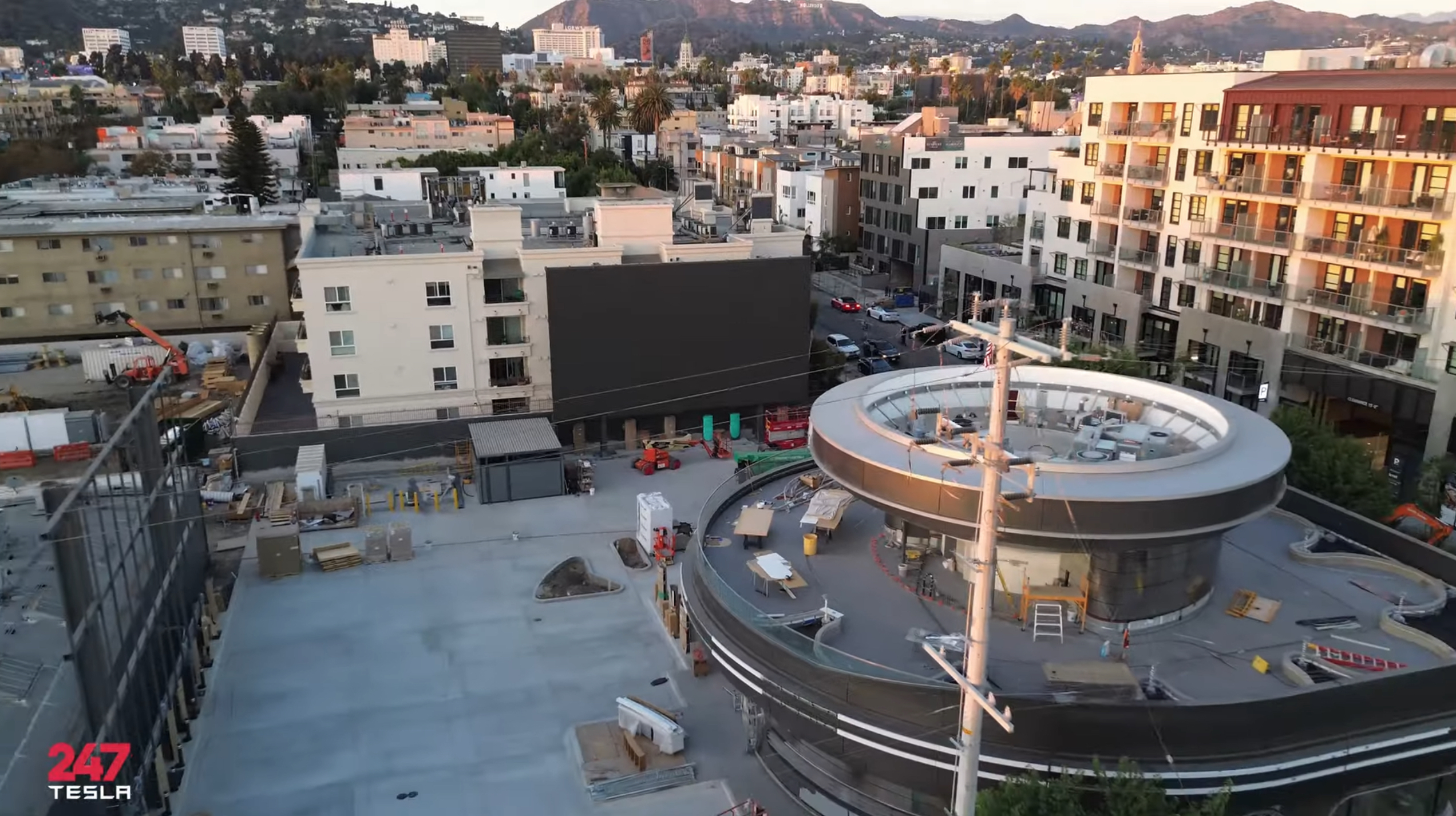
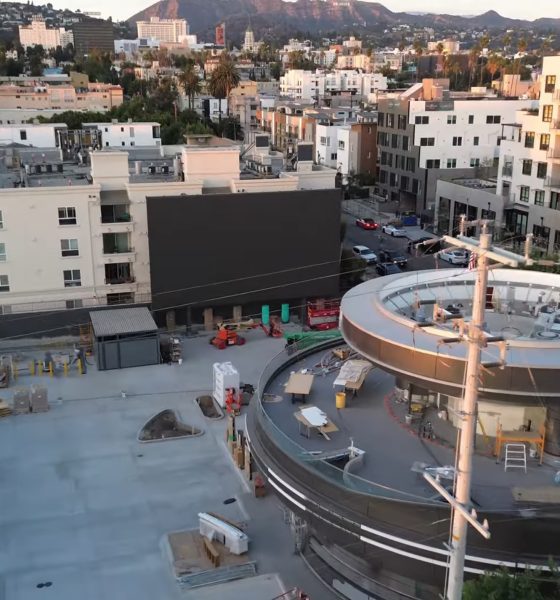
Tesla has been hard at work on its Southern California diner, Supercharger, and drive-in movie theater location over the past year or so, and a recent update shows that the site has finally gotten its first full movie screen.
In a video update shared by drone observer and YouTube channel 247Tesla over the weekend, you can see the frame for the screen on the Northern side of the lot now covered with a 45-foot LED display, as the site begins to take shape on the drive-in side of things. The site is eventually expected to feature clips from the best movies in history, according to Elon Musk’s original musings about the project back in 2018.
Credit: 247Tesla | YouTube Credit: 247Tesla | YouTube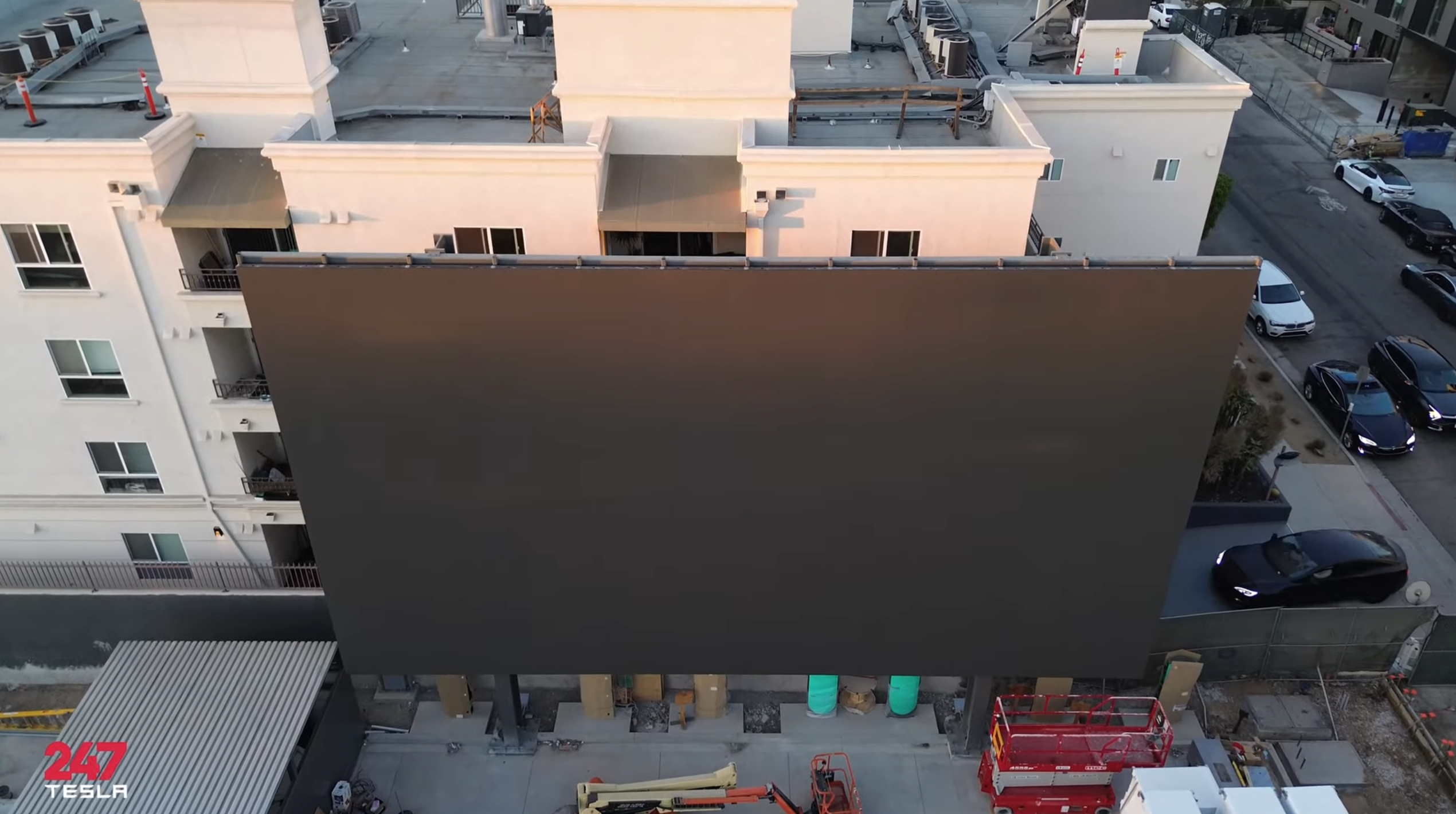
The screens, one of which still needs the final LED display, will run from 7:00 a.m. to 11:00 p.m., while the diner and charging stations will be open 24 hours a day, according 247Tesla. The screens will also reportedly be visible from both the diner building and the Supercharging stations.
In addition to the first LED screen being installed, the site is getting more conduit work, while the main door to the diner building has been fully completed following the initial placement of the glass panels around two weeks ago.
Check out the latest updates from the Tesla Diner below, as captured by 247Tesla.
https://www.youtube.com/watch?v=5KmRdFv9_e0
Tesla put up the frame for the first screen on the Northern side of the lot (the one that now features an LED display) back in March, following up with the second frame in July due to a power line blocking the whole Western side of the parking area.
Located at 7001 Santa Monica Blvd., the site was originally approved for as many as 32 charging posts, and as can be seen now, at least some of them going in are Tesla’s next-gen V4 Superchargers. It’s also expected to feature a 1950s-style diner with waiters on roller skates, rock and roll, and the multi-level seating that’s now taking shape.
 -
-
Tesla first broke ground on the Tesla Diner site last September, with the first structures for the restaurant building going up in November. Along with the construction progress the company has made, the company has also started hiring for the Tesla Diner, so we may even see the unique charging project operational by the end of the year.
See the Tesla Diner’s construction progress in January:
Tesla’s progress on Supercharger with diner, drive-in seen in aerial footage
Need accessories for your Tesla? Check out the Teslarati Marketplace:
- https://shop.teslarati.com/collections/tesla-cybertruck-accessories
- https://shop.teslarati.com/collections/tesla-model-y-accessories
- https://shop.teslarati.com/collections/tesla-model-3-accessories
What are your thoughts? Let me know at zach@teslarati.com, find me on X at @zacharyvisconti, or send us tips at tips@teslarati.com.




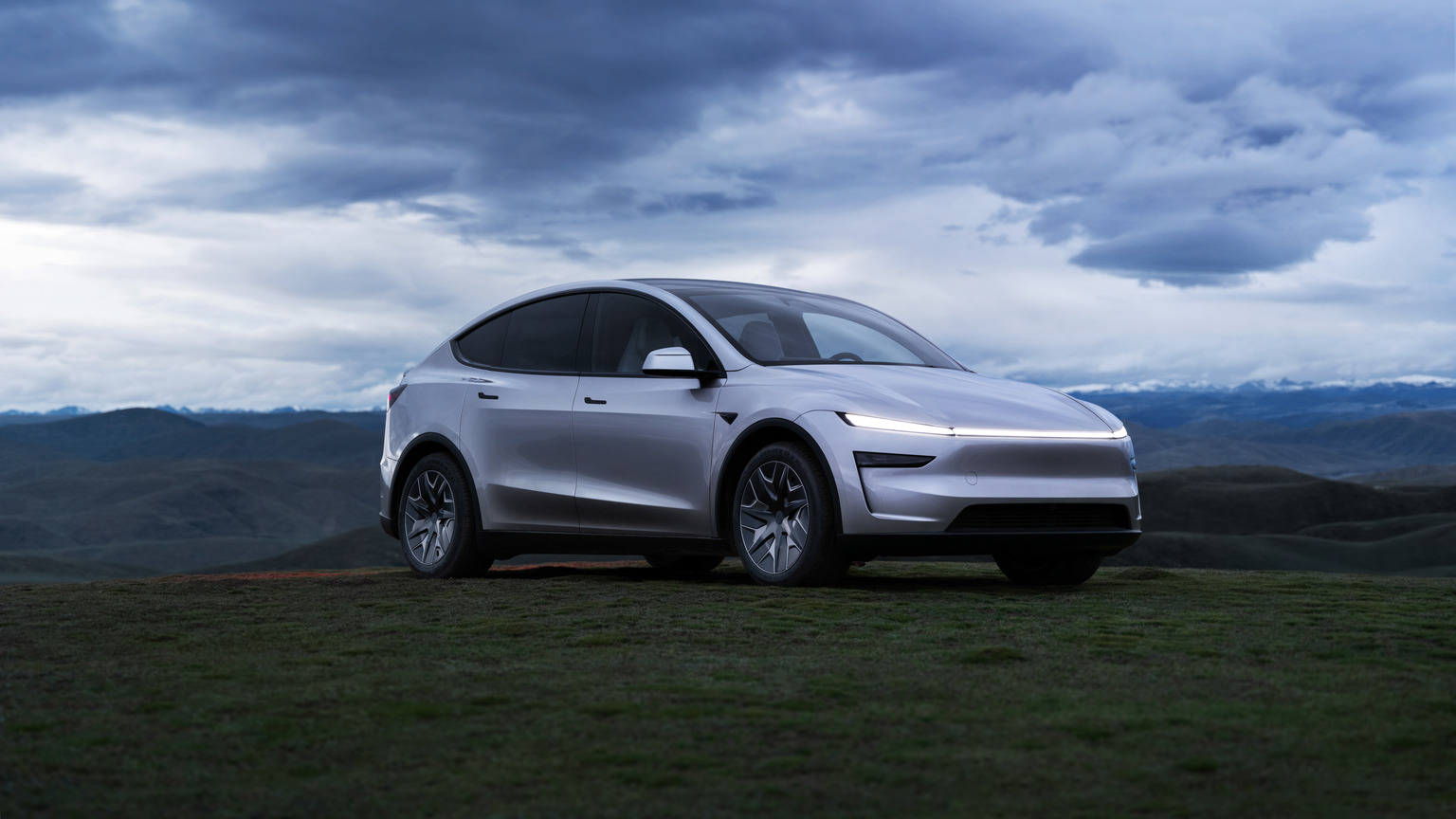
Tesla flexed the new features of the Model Y L with a dedicated media event at the company’s Diner on Santa Monica Boulevard in Los Angeles.
The Model Y L is the extended-wheelbase version of the all-electric crossover, which has been voted the best-selling car in the world on three occasions. The vehicle is already rolling off production lines at Gigafactory Texas, and first deliveries are slated to take place later this year.
Tesla brings Model Y L ‘Launch Series’ to the U.S. at $61,990
Teslarati was invited to the event, but due to some scheduling conflicts, we could not make it to Los Angeles. Instead, we will have our hands on a media unit sometime in August, so we’ll be able to spend some more extended time with the Model Y L.
However, plenty of those who made it to LA shared some cool features that set the Model Y L apart from the Model Y.
Multi-Row Climate Control
Tesla fitted the Model Y L with full climate control on all three rows on the front screen. It can be adjusted by selecting which row you’d like to modify on the right-hand side of the touch screen:
The Model Y L has a little row of icons on the right side of the climate screen so the front passenger can more quickly jump to whatever row they want to control. pic.twitter.com/uJS44mgCvk
— Sawyer Merritt (@SawyerMerritt) July 30, 2026
-
Better Rear Window Visibility
One of the strangest things about the Model Y, especially the Juniper iteration, is the rear window has extremely limited visibility when looking into the rearview mirror.
Tesla has improved upon this with the Model Y L:
This is a drastic difference. https://t.co/wTdhitD5aA pic.twitter.com/z6hFs0Jkss
— TESLARATI (@Teslarati) July 30, 2026
PowerShare will be included
Model Y L will come with PowerShare in North America, with an 11.5kW output to your home. Tesla said it would require Powerwall 3 for operation.
Wireless Charging Pad
There has been some speculation that Tesla would upgrade the wireless charging pads in the United States, but this is not the case.
-
Tesla owner fixes common feature complaint with crafty DIY retrofit
Tesla confirmed that it does not come with the cooled pads as the Y L in China does. This is because North America has not adopted Qi charging yet.
Thermal Management Improvements
These improvements in the Model Y L were seen with thermal management:
- Up to 15% faster cabin cooling
- +23% thermal efficiency gained in hot weather, 7 miles of real-world range gained
- 8x more solar energy reflection off of glass roof
- 30% reduction in solar energy entering the cabin
Some of the thermal management improvements in the new Model Y L Premium:
• Up to 15% faster cabin cooling
• Up to 15 min faster cabin cooling in sunny conditions
• +23% thermal efficiency gained in hot weather +7 miles of real-world range gained
• +10 miles recovered after… pic.twitter.com/jZirFWFdtO— Sawyer Merritt (@SawyerMerritt) July 31, 2026
Demand
Tesla said the Model Y L is almost sold out in the U.S. It comes with
-
- 1 year of FSD Supervised
- 1 year of Supercharging
- 1 year of Premium Connectivity
- Free exterior paint color, interior, and wheel option at no additional cost
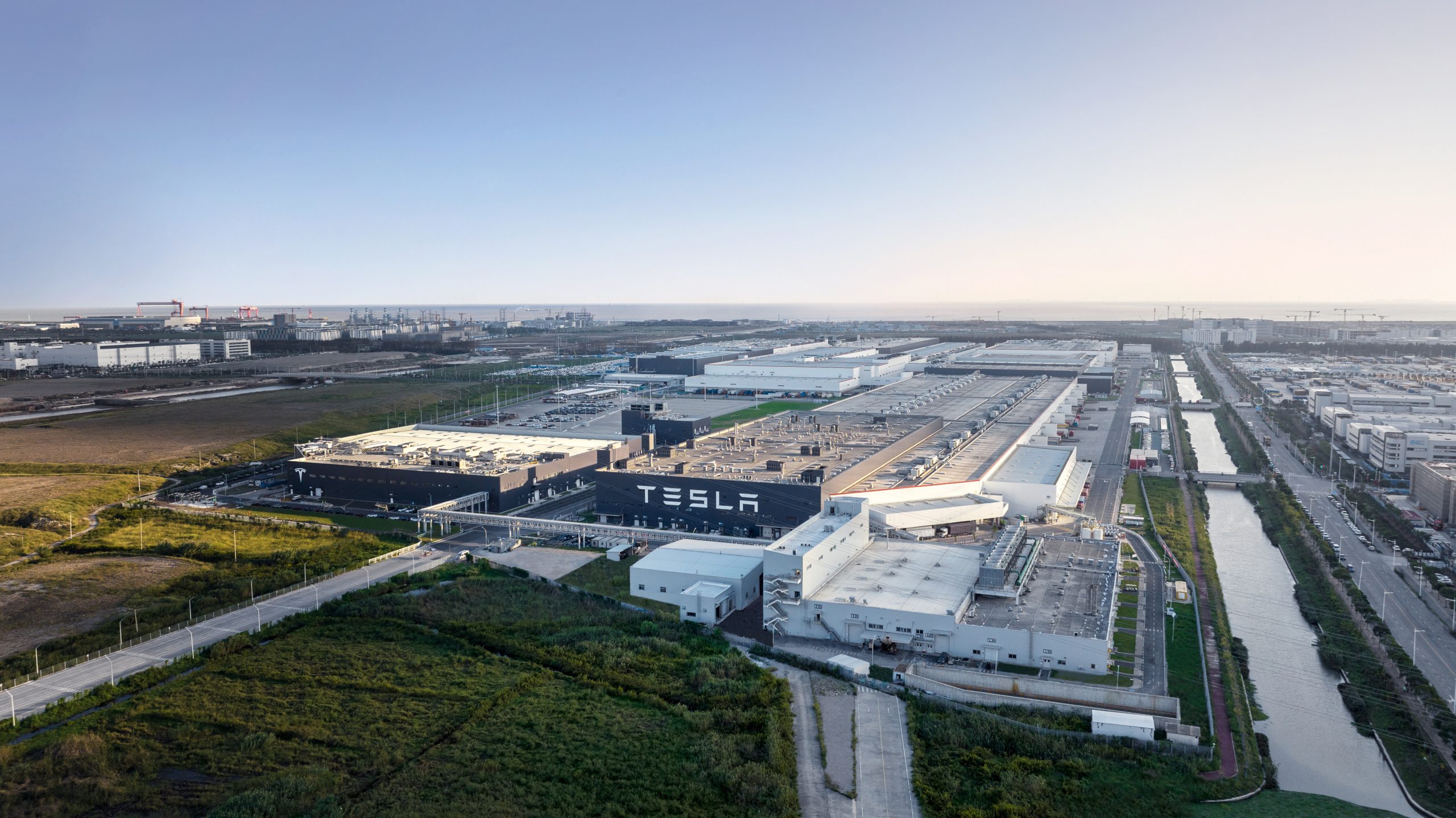
Tesla CEO Elon Musk took to his social media platform X on Thursday night to deny a ridiculous rumor regarding the sale of the company’s Chinese vehicle production plant, Gigafactory Shanghai.
On Thursday, the Wall Street Journal, citing sources familiar with the matter, claimed in a scathing new report that Tesla was exploring a potential sale of the entire China business in an effort to help bolster a potential merger between SpaceX and Tesla.
Musk immediately denied the rumor not once but twice, initially calling it “fake news,” and then calling it “absurdly fake news” in a separate post just a few moments later:
This is fake news
— Elon Musk (@elonmusk) July 31, 2026
The original poster of the Wall Street Journal article that Musk saw deleted the initial post sharing the headline and the rumored sale of Tesla’s China business.
This has never even come up in a discussion ever.
Absurdly fake news.
-People should assume news is fake until proven otherwise.
— Elon Musk (@elonmusk) July 31, 2026
The report seemed absolutely and unequivocally false to begin with; Tesla’s business in China is among the most important pieces of the company’s business. Not only does the factory supply vehicles for the domestic market, but also for various other markets in Asia and Europe.
China is also one of the largest automotive markets in the world, and Tesla has performed well there despite the robust competition.
The speculation regarding a Tesla and SpaceX merger has started to gain steam this year as the space exploration company went public just a month ago. There has been speculation that Musk will bridge all of his companies under one “umbrella company,” and analysts believe this could happen before the end of the decade.
The Tesla and SpaceX merger everyone is talking about is quietly building
-
This is the latest iteration of Musk’s very evident war on mainstream media. Reports regarding any of Musk’s companies are quick to get the dreaded “false” or “fake news” response from the CEO when they are unfounded.
Elon Musk
Tesla AI boss reveals how big Optimus is going to get
Tesla’s Optimus chief corrected himself on X, confirming a staggering 10 million robot production target.

![Tesla Optimus Gen 3 [Credit: Tesla]](https://www.teslarati.com/wp-content/uploads/2026/03/tesla-optimus-gen3-diner.jpg)
Tesla’s Optimus program has a new number attached to it, after Ashok Elluswamy, the executive who has run the humanoid robot program since June 2025, posted a three word correction on X Thursday, “Correction, 10 million robots.”
The line clarifies the long term annual capacity Tesla is building toward its planned second Optimus production line at Gigafactory Texas, a figure Musk has cited repeatedly since last year’s shareholder meeting.
The scale is worth noting, because ten million robots a year would mean Tesla building more units annually than most countries sell in new cars. Tesla has framed this as a second line, not the first. The buildout is happening in two phases: a roughly one million unit per year line inside Tesla’s Fremont factory, installed on the floor space vacated when Model S and Model X production ended earlier this year, and a much larger dedicated facility under construction at Giga Texas that broke ground on its first steel structure in May. That Texas facility is the one Elluswamy’s correction refers to, and is expected to reach volume production sometime in 2027.
Correction, 10 million robots https://t.co/0z4nyQNTzp
— Ashok Elluswamy (@aelluswamy) July 30, 2026
Tesla Optimus project fires up as Musk sees production line progress
Elluswamy took over Optimus from Milan Kovac last summer and has spent the months since talking up the program’s trajectory. Elon Musk has also floated the ten million figure at Tesla’s 2025 shareholder meeting.
-
Ending Model S and Model X production to make room for the first Optimus line was one of the more consequential manufacturing decisions in the company’s recent history, retiring two flagship vehicles in favor of a robot that has yet to enter mass production. Musk has previously estimated per unit production costs at $20,000 to $25,000 once Tesla reaches a million units a year, though he hasn’t said what that cost looks like at ten times the volume.

Tesla Model Y L’s new features flexed at unveiling event at Diner

Tesla CEO Elon Musk denies ridiculous Gigafactory Shanghai rumor
![Tesla Optimus Gen 3 [Credit: Tesla]](https://www.teslarati.com/wp-content/uploads/2026/03/tesla-optimus-gen3-diner-80x80.jpg)


