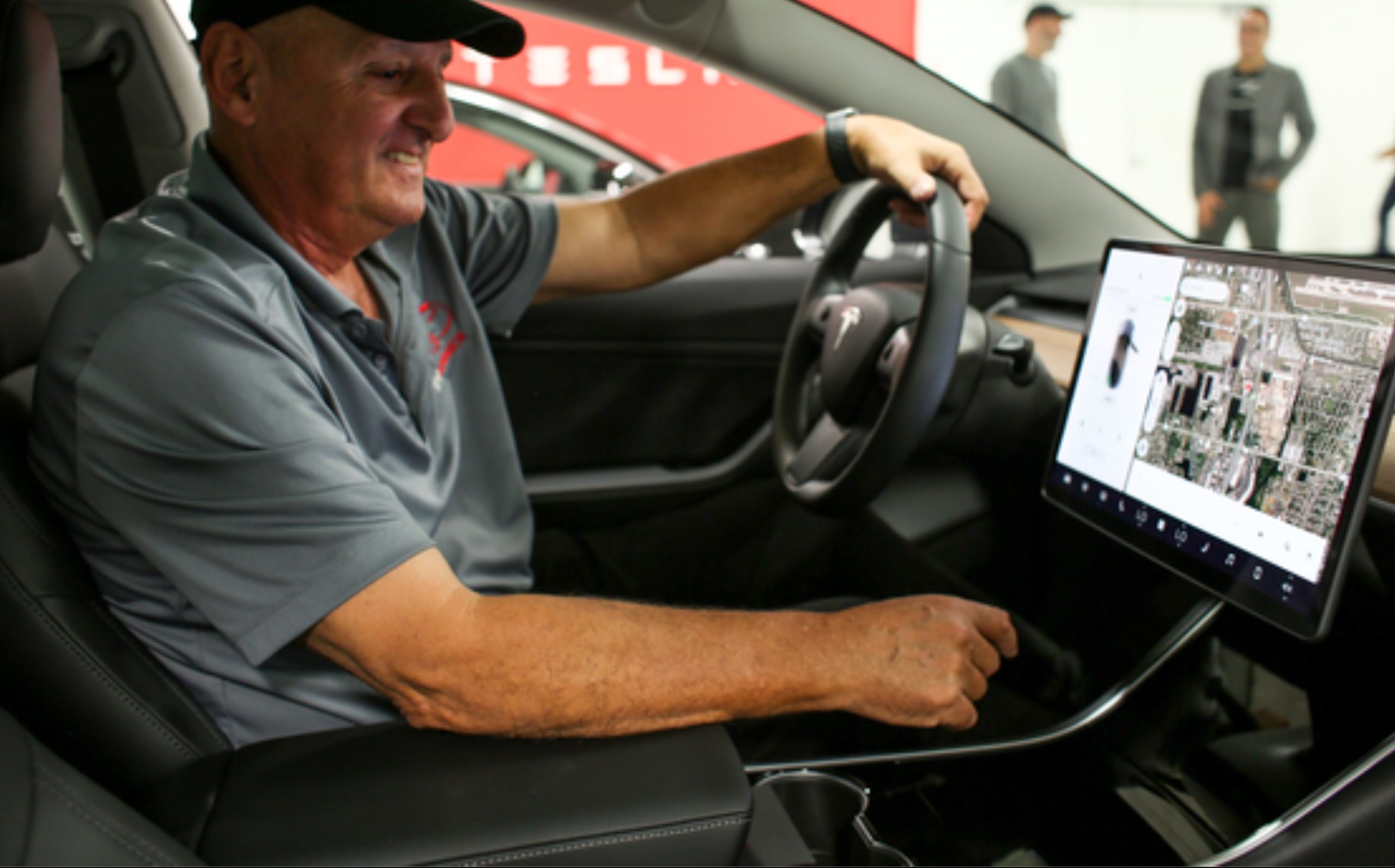

Lots of reviews discuss Model 3—its performance and driving attributes, its interior and exterior design, the basic functionality achieved through the landscape display and a myriad of other features.
I’ve now been driving my Model 3, one of the first in South Florida, for about a week, and I’d like to share some of my observations about the car, without repeating what most of you may already know after seeing reviews performed by mass media and big name Youtubers.
 |
Above: There it is… my midnight silver Model 3 delivery at Tesla’s service center in Dania Beach, Florida (Photo: EVANNEX)
First, the big picture—Model 3 is a truly transformational vehicle. It provides high performance, long range, and a premium aesthetic at a broadly affordable price. But you already knew that. Let me talk about what you may not know—the good things and the things that might need some improvement.
Now, full disclosure—many of the early owners of Model 3 have been past owners of Model S or Model X. I’m one of those people. I’ve had over five years of driving experience with Model S and almost two with Model X. Many of my observations naturally lead to comparisons between S, X and 3. I’ll save most of that for another post.
So, let’s begin …
Charging Speed. The first time I tried to charge Model 3 in my garage, I was surprised to learn that Model 3 charging using the new Tesla Universal Mobile Charging Cable (UMC) is limited to a maximum of 32 amps. That means that charging on a 240V 40-amp, NEMA 14-50 outlet will get you about 22 – 24 miles of range per hour of charging. That’s not great, but it’ll be absolutely fine for overnight charging.
 |
Above: Charging the Model 3 (Photo: EVANNEX)
Because I also own a Model X with an old UMC, I immediately swapped out the new UMC for the old one and achieved a full 40-amps and a charging rate of between 32 and 38 miles of range per hour (actually more efficient than either Model S or X). The difference between the old UMC and the new UMC is pretty significant!
If you’re the owner of an older Model S or X, hold on to your old UMC and use it instead of the cable that comes with Model 3. And if you’re a first time Tesla owner and you want faster charging at home, you might want to consider buying an old UMC through the used components marketplace.
Information Placement and Ergonomics. Every reviewer mentions the lack of a binnacle—the place directly in front of the driver where a conventional speedometer and other instrumentation appears. You get over this in about 5 minutes.
 |
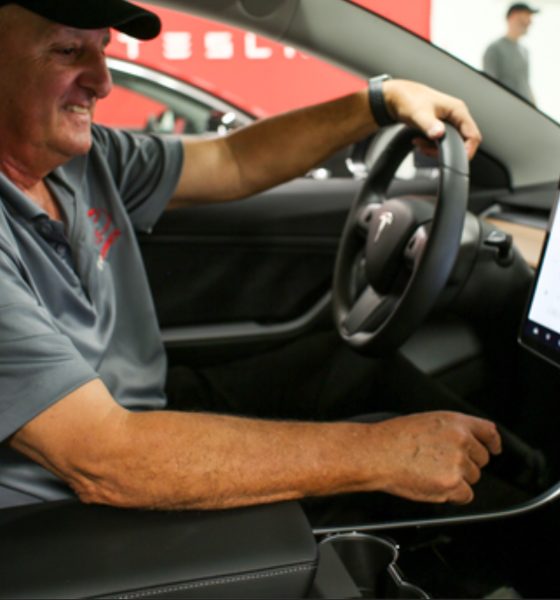
Above: Sitting in the Model 3, I find the UI easy to learn (Photo: EVANNEX)
The placement of the speedometer and other critical driving information and functions on the left-hand side of the landscape display works well. It can be scanned with no more eye movement that required to scan the binnacle.
However, because this critical information takes up some of the screen real estate, all other functionality is pushed right on the display. In general, it’s not a big problem, but it can be annoying and possibly even distracting if you must reach or look to the far right side of the display (say, for example, to see turn-by-turn directions from the nav system). There are a number of ways this can be remedied through a software update, and I suspect Tesla will do so in the near future.
Audio. I’m not an audiophile, but the sound system in Model 3 is really, really good—crisp with clearly defined high frequencies and solid bass. The “immersive sound” option makes all the difference—be sure you turn it on. In my opinion, the Model 3 sound system is better than the standard sound system in Model S or Model X. The user interface is serviceable, but I suspect that it will evolve over the coming months.
Interior Features. The Model 3 interior design language is minimalist and sleek. Visually, there is little design ‘noise’ to break the smooth flow of the interior geometry. It is, in my view, groundbreaking.
One reviewer from CNN lamented the fact that there were no buttons and knobs in the driver compartment, a clear indication that he completely misunderstands the design intent and has no clue about the future of automobiles. But I digress.
Although Model 3 has a collection of typical interior features including lighted visor mirrors (an inside joke for Model S owners), the primary focus is the center console. As the guy who designed the very first center console for Model S—EVANNEX’s critically acclaimed Center Console Insert (the CCI)—I’d like to commend Tesla for a well-executed center console for Model 3. It contains everything you’ll need to store your stuff, charge and view your smartphone display, and easy access your USB and 12V ports. It provides closed storage with smoothly operating covers and doors.

Tesla Model 3 installed with a 1080P dash cam solution
Three quibbles:
1. The standard gloss black surface of the center console shows every fingerprint, every spec of dust and every droplet of liquid that might inadvertently spill. Therefore, the surface becomes messy very quickly.
2. The center console surface is smooth and quite attractive, but its smoothness is also a minor liability. The center console is where the driver puts stuff—keys, ID cards, a pencil, even a smartphone when it’s not in its own compartment. As I mentioned, Model 3 is nimble, and during a quick turn, everything the driver places on the center console surface goes flying. It’s happened to me a few times already.
3. In my opinion, the physical height of center console violates the interior design language. It’s unnecessarily high. Hopefully, a future iteration will place the top of the center console at the same height as the seat cushion, allowing this important element to better blend with the interior. Sure, you’ll lose a little vertical storage space, but you’ll gain a better aesthetic.
Exterior Features. I love Model 3’s exterior—clean, simple, and efficient. For sticklers, the panel gaps on my vehicle were consistently good at approximately 4 to 5 mm throughout, indicating a solid manufacturing process. The trunk opening is much larger than many feared it would be and with the rear seats folded down, you can load a 72” L x 36” wide x 16 “H box into the car. That’s a big box! The trunk hatch requires a bit of a push to close.
 |
Above: A look at my Model 3 with the 18″ aero caps (Photo: EVANNEX)
The doors open wide for easy entry. Their signature feature is the J-handles that rotate outward to open. I have two minor quibbles with the doors.
1. The J-handles are very cool, rotating outward with a push on the ‘fat’ part of the handle. The problem is that gripping the handle to pull the door open can be a challenge if you use the wrong hand. On the driver side, your left hand is the one you want to use, but if you’re carrying, say, a grocery bag in your left hand, opening the driver door with your right hand can require a little bit of arm twisting. When you approach the driver door, try to remember to have your left hand free. The opposite applies on the passenger side. From a design perspective, a future improvement might be to have the door handle spring open and stay that way until a pull on the thin end occurs. It would then return to the closed position.
2. You have to be conscious of making sure that your door closes properly. In many cases, a seemingly proper push of the door will leave it slightly ajar. The problem is that the window remains slightly lowered during closing, and if you don’t notice the problem and walk away, its possible for rain to enter your passenger compartment. Be careful with this and check your doors for full closure during your early weeks of ownership.
Suspension and Ride. Most big name reviewers agree that Model 3 is a driver’s car with a tight suspension, very little roll, and nimble response. Its spring suspension allows you to feel the road, and it’s likely that some owners will accuse Model 3 of a harsh ride. I would characterize the ride as typical of a true sports sedan.
 |
Above: In order to improve the 18″ wheel aesthetics, I removed the aero caps, and installed Model S silver center caps (which also fit Model 3), chrome gorilla lug nuts, and black track/red insert wheel bands (Photo: EVANNEX)
But here’s something that you should know. The body sits relatively high above the ground. With standard 18 or 19-inch wheels, there’s a lot of space between the outer perimeter of the tire and the wheel well fender cut out. Those owners who want a closer-to-the-ground look will undoubtedly remedy this with special suspension packages in the aftermarket.
Wheels and Tires. The OEM tire and wheel packages for Model 3 are pretty pedestrian. They get the job done and look okay, but if you’re like me and believe that wheels are probably the most important element, other than body design, to a vehicle’s overall exterior aesthetic, there’s a lot of opportunities for you to improve the look of your Model 3. I moved immediately to make a wheel change.
 |
Above: My Model 3 with new 20″ AG M580 wheels installed (Photo: EVANNEX)
It is true that there are considerations you must address before you buy aftermarket wheels—additional cost and the possibility of poor fit or tire interference. It also worth noting that they’re frowned upon by Tesla, but that won’t stop tens of thousands of Model 3 owners from making a switch. My advice:
Order your Model 3 with standard 18-inch wheels and tires, then, if you’re so inclined, upgrade to aftermarket 19s or 20s to improve the exterior aesthetic. The EVANNEX-AG staggered wheels on my Model 3 are the 20s, which fit the Model 3 perfectly with no interference, and I think, give the car a very cool premium look with a muscular feel. They’ve already gotten a lot of very positive comments. This approach is somewhat more expensive than opting for the OEM 19s provided by Tesla for a $1600 premium, but I think the result is worth it.
For those that are curious, my wheels are AG M580, 20×8.5 front and 20×10 rear. I opted for Michelin PilotSport 4S tires, 245/35/20 front and 274/30/20 rear. There are other less expensive tire options. By the way, the rolling diameter of the AG 20s and tires is within one percent of OEM 19s, so there is virtually no impact on speedometer or other driving functions.
Summary. I waited almost two years for my Model 3. Overall, it’s exceeded my expectations in almost every category. But like every car, it’s not perfect. I’m confident that Tesla will remedy almost all of the quibbles and minor issues I mention in this post quickly. And for other things, we at EVANNEX will try our best to provide those of you Model 3 owners (or reservation holders) with the ability to make this near perfect car perfect for you.
 |
Above: Loving the new look (Photo: EVANNEX)
Bottom line—the Model 3 was definitely worth the wait!
===
Note: Article originally published on evannex.com, written by Roger Pressman — author of Getting Ready for Model 3, and, founder of Electric Vehicle University. Note: If you’re located in South Florida, feel free to view this Model 3 in-person at a special event this Sunday (just be sure to RSVP).


Elon Musk
NASA’s first human outpost on the Moon starts now – SpaceX on deck
NASA named the rovers, landers, and vendors that will build America’s first Moon Base.

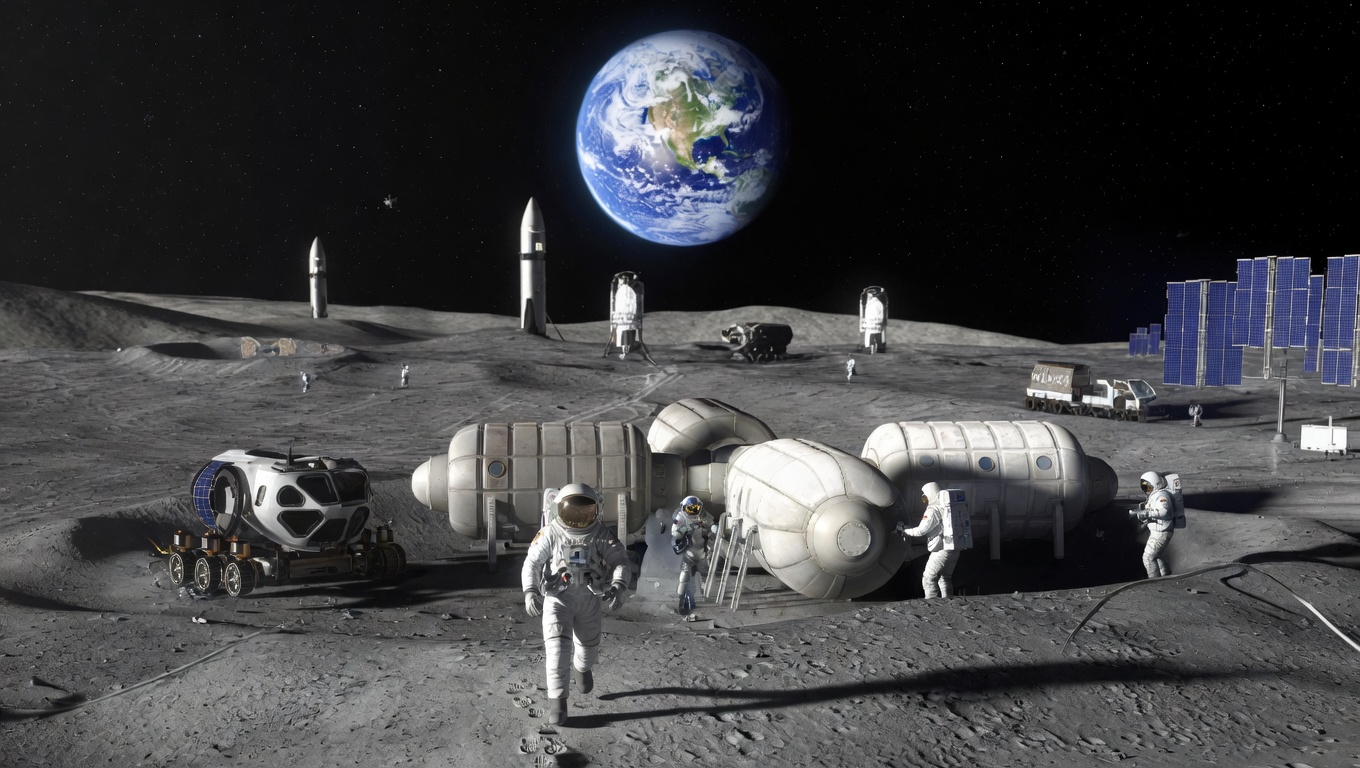
NASA has laid out its most detailed Moon Base plan to date, describing a permanent outpost near the Moon’s south pole that the agency intends to build over the coming decade as a direct stepping stone to Mars. “The Moon Base will be America’s and humanity’s first outpost on another celestial world,” NASA Administrator Jared Isaacman said, adding that every mission crewed and uncrewed “will be a learning opportunity as we return to the lunar surface, build the infrastructure to stay, and master the skills required to live and operate in one of the most demanding and dangerous environments imaginable.”
The plan is structured in three phases involving both uncrewed and crewed missions to deliver equipment, vehicles, and infrastructure to the surface, with the first three moon base missions targeted to launch before the end of 2026.
Moon Base I, targeting fall 2026, will use Blue Origin’s Blue Moon Mark 1 lander to deliver scientific instruments to the Shackleton Connecting Ridge, the same region where Artemis astronauts will land. Moon Base II will send Astrobotic’s Griffin lander carrying more than 1,100 pounds of cargo including Astrolab’s FLIP rover to begin developing mobility systems on the surface. Moon Base III will carry the Lunar Vertex science mission on Intuitive Machines’ Nova-C Trinity lander to study lunar swirls near the south pole, with ESA and Korean science payloads aboard.
On the rover side, NASA awarded Astrolab $219 million and Lunar Outpost $220 million to build the first phase of Lunar Terrain Vehicles, with both rovers targeted for deployment to the lunar surface by 2028. Astrolab’s crewed rover weighs roughly 2,000 pounds and can reach over 6 mph. Lunar Outpost’s Pegasus rover can operate autonomously or via remote control at over 9 mph. Blue Origin separately received $188 million with an option worth $280.4 million to deliver cargo landers for rover transport.
NASA also confirmed that MoonFall, a mission deploying four survey drones to scout Artemis landing sites, has selected Firefly Aerospace to build the transport spacecraft, with a 2028 launch target.
SpaceX sits at the center of that commercial layer. SpaceX holds the NASA Human Landing System contract for the Starship-derived lander that will put astronauts on the surface under Artemis IV, currently targeting 2028. Before that can happen, SpaceX must demonstrate in-orbit propellant transfer at scale, a process requiring multiple Starship tanker launches to fuel a single mission. Water ice at the lunar south pole is central to the base’s long-term viability, as it can be converted into drinking water, breathable oxygen, and rocket fuel, directly reducing dependence on Earth resupply. That resource loop becomes far more practical if Starship can land and be refueled on or near the Moon itself.
Elon Musk has publicly stated that Starship V3, which recently completed its first flight, should be capable enough for initial Mars missions. The Moon Base plan announced Tuesday is the infrastructure layer that connects everything between those two ambitions, and SpaceX is the only American company currently contracted to build the rocket that gets humans to either destination.
Elon Musk
Tesla ditches India after years of broken promises
Tesla has ditched its plans to build a factory in India after years of failed negotiations.
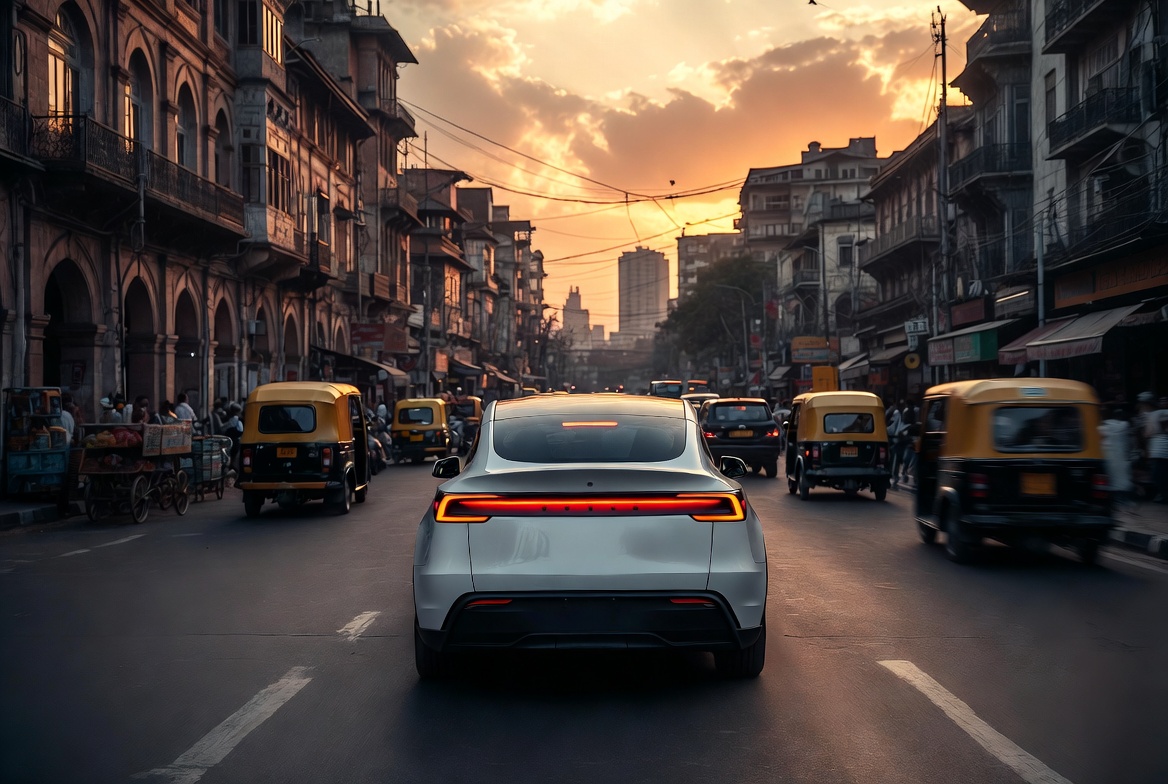
Tesla’s long-running effort to establish a manufacturing presence in India is officially over. India’s Minister of Heavy Industries H.D. Kumaraswamy confirmed on May 19, 2026 that Tesla has informed authorities it will not proceed with a manufacturing facility in the country.
Tesla first signaled serious interest in India around 2021, when it began hiring local staff and lobbying the Indian government for lower import tariffs. The ask was straightforward: reduce duties enough for Tesla to test the market with imported vehicles before committing capital to a local factory. India’s position was equally firm, with an ask of Tesla to commit to manufacturing first, then receive tariff relief. Neither side moved, and the talks quietly collapsed.
Tesla to open first India experience center in Mumbai on July 15
India had offered a policy that would reduce import duties from 110% down to 15% on EVs priced above $35,000, provided companies committed at least $500 million toward local manufacturing investment within three years. Tesla declined to participate. The tariff standoff was only part of the problem. Analysts pointed to significant gaps in India’s local supply chain, inadequate industrial infrastructure, and a mismatch between Tesla’s premium pricing and the purchasing power of India’s automotive market as additional factors that made the investment difficult to justify.
First signs of an unraveling relationship came in April 2024, when Musk abruptly cancelled a planned trip to India where he was set to meet Prime Minister Modi and announce Tesla’s market entry. By July 2024, Fortune reported that Tesla executives had stopped contacting Indian government officials entirely. The government at that point understood Tesla had capital constraints and no plans to invest.
The more fundamental issue is that Tesla’s existing factories are currently operating at approximately 60% capacity, making a commitment to building new manufacturing capacity in a new market difficult to defend to investors. Tesla will continue selling imported Model Y vehicles through its existing showrooms in Mumbai, Delhi, Gurugram, and Bengaluru, but local production is no longer part of the plan.
Elon Musk
Trump’s invite for Elon just reshuffled Tesla’s big Signature Delivery Event
Tesla rescheduled its final Model S farewell to May 20 after Musk joined Trump in China.
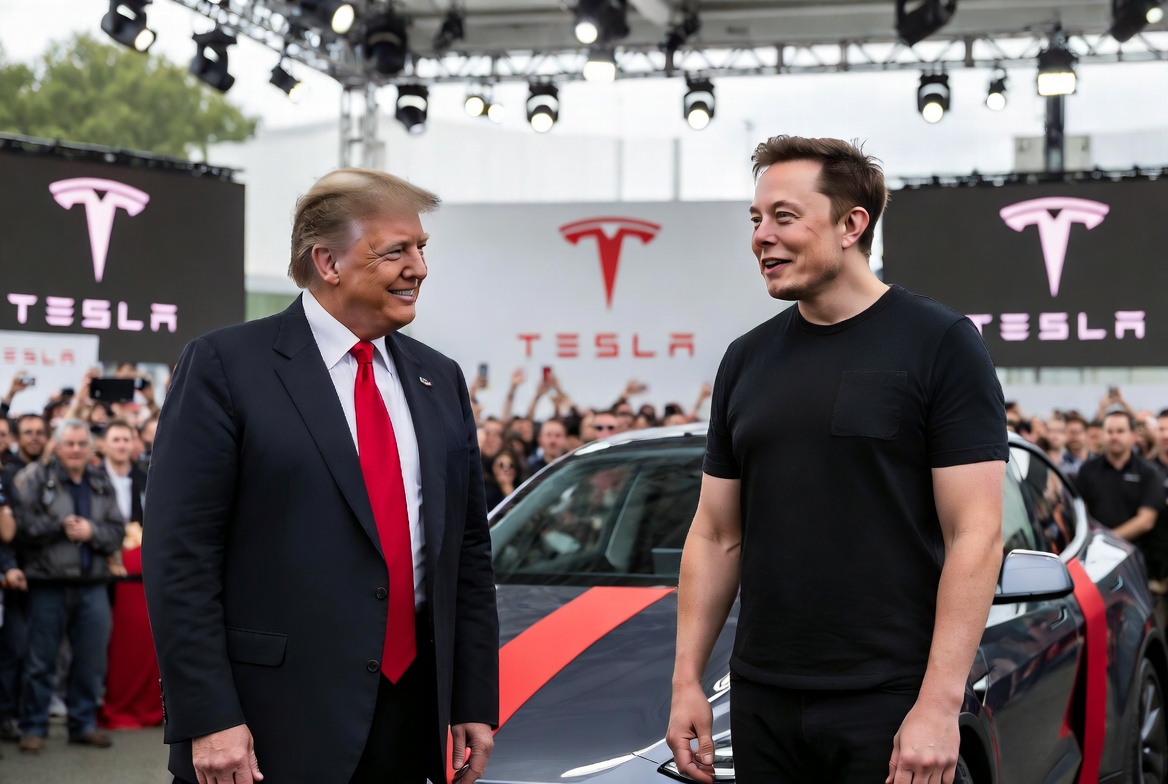
Tesla has rescheduled its Model S and Model X Signature Edition delivery event to Wednesday, May 20, 2026, after abruptly calling off the original May 12 celebration. The event will take place at Tesla’s factory at 45500 Fremont Boulevard in Fremont, California, the same location where the Model S first rolled off the line in 2012. Invitees received a follow-up email asking them to reconfirm attendance and download a new QR code ticket, with Tesla noting that all travel and accommodation expenses remain the buyer’s responsibility.
The reason behind the original cancellation came into focus the same day it was announced. President Trump invited Elon Musk, Apple’s Tim Cook, BlackRock’s Larry Fink, Boeing’s Kelly Ortberg, and executives from Goldman Sachs, Blackstone, Citigroup, and Meta to join his trip to China this week for a summit with President Xi Jinping. The agenda covers trade, artificial intelligence, export controls, Taiwan, and the Iran war, following weeks of escalating friction between Washington and Beijing over AI technology, sanctions, and rare earth exports. Trump wrote on Truth Social, “I am very much looking forward to my trip to China, an amazing Country, with a Leader, President Xi, respected by all.”
Tesla launches 200mph Model S “Gold” Signature in invite-only purchase
The vehicles at the center of all this are the last Model S and Model X units Tesla will ever build. Priced at $159,420 each, the 250 Model S and 100 Model X Signature Edition units come finished in Garnet Red with a one-year no-resale agreement, giving Tesla right of first refusal if the owner decides to sell. As Teslarati reported, the Model S defined Tesla’s early identity as a serious luxury automaker, and the Fremont factory line that built it is now being converted to manufacture Optimus humanoid robots.
Musk’s inclusion in the China delegation drew attention given his very public relationship with Trump, and the invitation signals the two have moved past and past grievances. Trump originally brought Musk on to lead the Department of Government Efficiency following his inauguration, and despite a sharp public dispute in mid-2025, the two have appeared together repeatedly in recent months. A seat on the China trip, the most diplomatically consequential visit of Trump’s current term, puts Musk back at the table on U.S. economic policy at a moment when Tesla’s China revenue remains one of the company’s most important financial pillars.

Tesla’s Robotaxi dreams just took a massive step toward reality

The Tesla and SpaceX merger everyone is talking about is quietly building


