


Tesla opened its Supercharger Network to non-Tesla EVs in China recently.
“Today, Tesla’s pilot open Supercharger Network in mainland China is officially opened! [We’re] giving electric car owners a better charging experience and continuing to promote the charging technology and services. ? A better era of travel is accelerating!” Tesla China’s Weibo account stated—roughly translated.
Tesla China’s infographic also tied the open Supercharger Network back to Master Plan Part 3. It noted that opening the Supercharger Network would provide more non-Tesla EVs with a better charging experience and would help accelerate new energy vehicle adoption in China.
Tesla is slowly launching the open Supercharger Network, starting with 10 stations in Beijing and Shanghai to accommodate about 37 non-Tesla electric vehicles. Tesla also plans to open 120 destination charging stations, covering 25 provinces and municipalities, to non-Tesla EVs in China.


In Beijing, the following Supercharger stations will be open to non-Tesla EVs: Baolong Building, Guohai Plaza, Palazzo Aegean, Daxing Longhu Paradise Street, and Vanke Times Center Ten Mile Fort. The Supercharger stations in Shanghai that will be servicing non-Tesla EVs include the Jiadi Center, Rujin Building, 21st Century Tower, Baokuang International Building, and Jing’an International Center Phase I.
Tesla China invited non-Tesla EV owners to download the Tesla app version 4.20.69 or later to use the Supercharger Network. It provided a short and clear tutorial video instructing non-Tesla EVs on the charger process at open Superchargers.

Give the gift of Tesla upgrades.
Shop for someone else or treat yourself. Get more shopping power with a Teslarati gift card.
With the Supercharger Network, Tesla China promises 100% charging coverage to electric vehicles. Telsa opened 1,600 Supercharger stations in China with over 10,000 charging stalls. It also deployed 700 destination charging stations with more than 2,000 Supercharger piles.
The Teslarati team would appreciate hearing from you. If you have any tips, contact me at maria@teslarati.com or via Twitter @Writer_01001101.



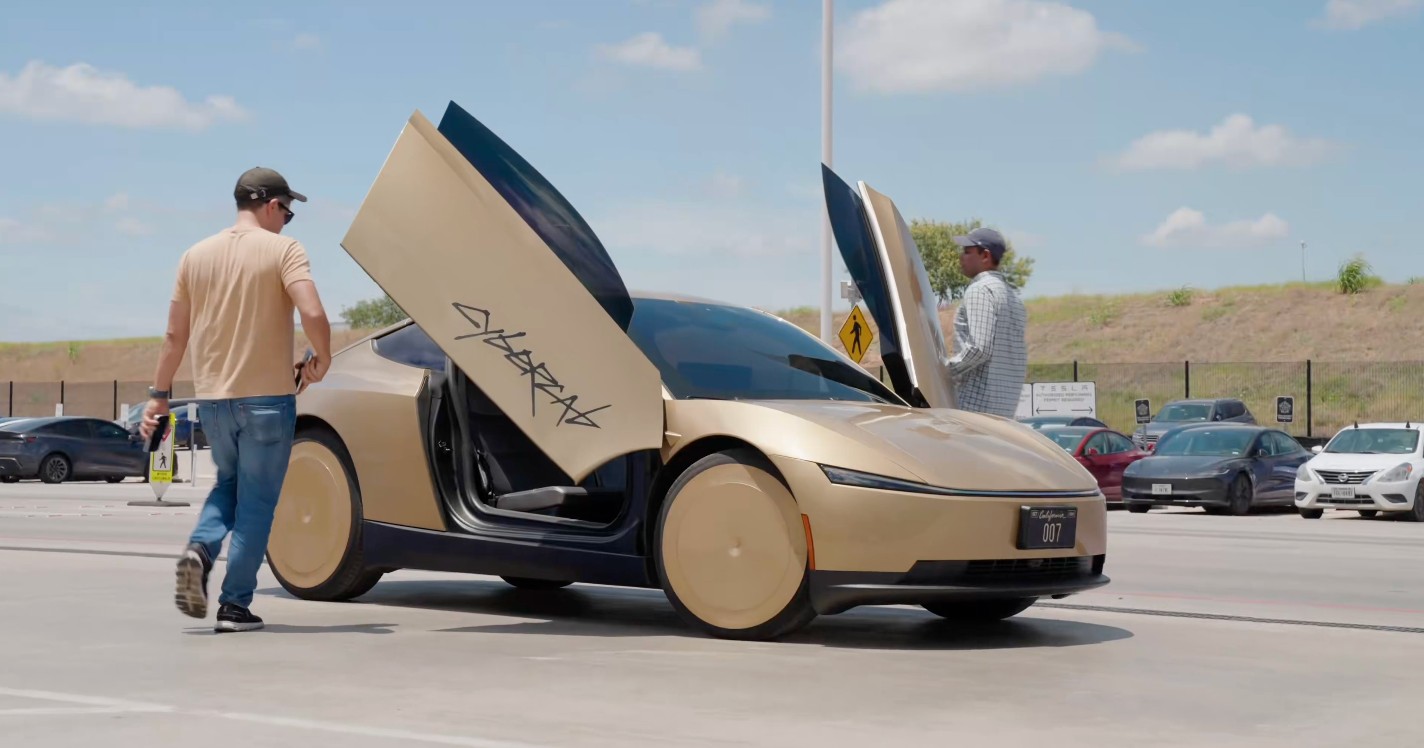
Tesla has opened public rides in its purpose-built Cybercab robotaxi in Dallas, the second U.S. city after Austin to receive the two-seat, steering-wheel-free vehicle.
On November 19, the company made it official with a post stating, “Howdy Dallas. Cybercab has arrived in your city.” Tesla has been teasing the expansion to Dallas for several weeks:
Howdy Dallas
Cybercab has arrived in your city https://t.co/4coXmRuIfz
— Robotaxi (@robotaxi) November 19, 2026
Riders can book through the Tesla Robotaxi app. Tesla had already been operating unsupervised Model Y Robotaxis in Dallas since April, the Cybercab addition brings its dedicated autonomous vehicle into the same network.
App notifications and the official post confirm the service is now available to the public, following a tease the day before and a commitment made on the October 21 Q3 2026 earnings call by AI software chief Ashok Elluswamy that Dallas would be next.
Cybercab rides first began in limited areas of Austin in early September 2026. After an invite-only event on September 3, public hailing started shortly thereafter. The Austin fleet grew rapidly, Musk later noted it had increased roughly tenfold in the first weeks, and the service has operated unsupervised, with hours expanding toward 24/7 coverage.
The vehicle, produced at Gigafactory Texas, features butterfly doors, no pedals or steering wheel, and relies entirely on Tesla’s unsupervised Full Self-Driving software.
Expanding Cybercab beyond Austin is a significant signal for several reasons. It shows Tesla moving from a concentrated pilot to multi-city deployment of its purpose-built robotaxi, validating that the software stack and vehicle-specific data accumulation can transfer to new environments.
Executives have described plans to reach additional cities by the end of 2026, using the same software alongside Model Y Robotaxis.
The move intensifies competition with Waymo, which operates larger unsupervised fleets across more markets, while reinforcing Tesla’s long-term bet on transportation-as-a-service as a core business. Most Cybercabs are expected to remain company-owned for the fleet rather than sold privately, allowing Tesla to control utilization and scale.
Your Tesla could be in the Robotaxi fleet next month, Elon Musk claims
Separately, Tesla has begun inviting select customers to purchase Cybercabs for personal use, with deliveries targeted for December.
Tesla priced the Cybercab $29,990 before taxes with a required $299 monthly Autonomy Subscription, and a $1,000 non-refundable deposit, with initial deliveries focused on Austin. Company leaders have emphasized that customer volumes will start small while the vast majority of vehicles stay in Tesla’s own Robotaxi network.
News
Tesla’s Cybercab fleet just had its biggest day ever
Tesla registered a record 200 Cybercabs in one day, and Dallas could be next up.

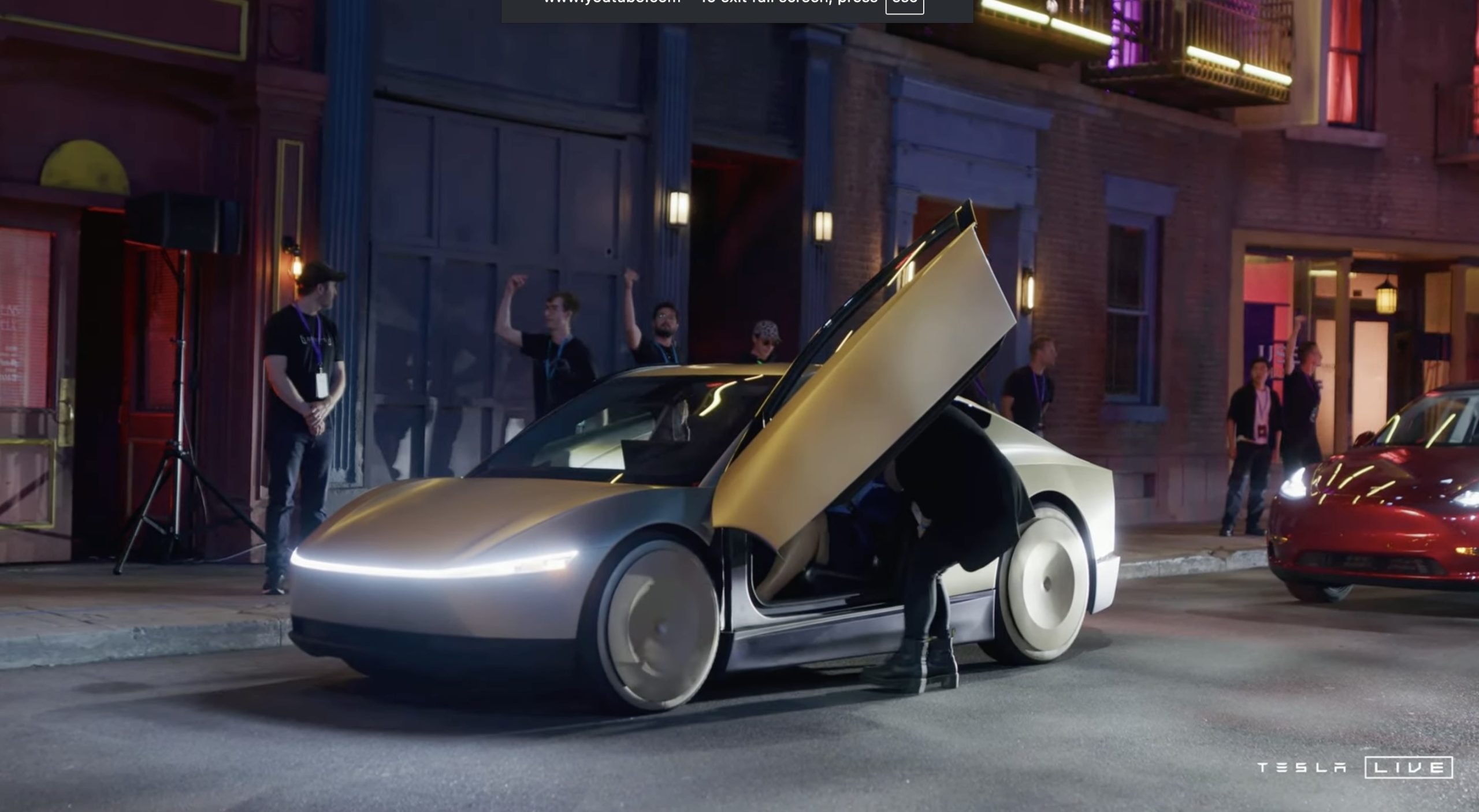
Tesla added a record 200 Cybercabs to its Texas Robotaxi fleet in a single day, pushing the purpose-built two-seater past 750 registered units in the state. The batch landed on the Texas Department of Motor Vehicles automated vehicle register at 3:45 p.m. CT on November 17 and included 200 Cybercabs and one Model Y. Tesla’s Cybercab count had sat at 573 since late October before the jump.
The additions also put Tesla back ahead of Waymo on the register. Tesla now has 1,507 vehicles registered for driverless operation in Texas against Waymo’s 1,321, a lead of 186. Waymo had been ahead by 15 vehicles before the batch arrived. Tesla first passed Waymo on November 10, as Teslarati reported, before Waymo briefly moved back in front.
🚨 There are more CYBERCABS in the Tesla Robotaxi fleet in Texas than Model Y! https://t.co/BdRK2LnnAP — TESLARATI (@Teslarati) November 18, 2026
Cybercabs now make up 51.3 percent of Tesla’s registered Texas fleet, at 773 units against 734 Model Ys. Waymo’s fleet in the state is split between 874 Jaguar I-PACEs and 447 Ojai vehicles.
The register does not say where vehicles will operate, and registration does not mean a car is carrying riders. Still, the timing lines up with Tesla’s plans for Dallas. On the company’s third quarter earnings call in October, AI chief Ashok Elluswamy said, “next month, we’ll be launching in Dallas,” and a video posted over the weekend showed more than 50 Cybercabs parked in rows at a Dallas lot, with more on a car carrier nearby. Tesla has not announced a start date.
Give the gift of Tesla upgrades.
Shop for someone else or treat yourself. Get more shopping power with a Teslarati gift card.
Dallas is already one of Tesla’s busiest Robotaxi markets. Model Y Robotaxis there have run without anyone in the driver’s seat around the clock since November 11, and the city logged 608,130 miles with no safety monitor between January 22 and October 18, second only to Austin, according to Tesla’s first Robotaxi Safety Report. Public Cybercab rides have been limited to Austin since the vehicle joined the service in September.
The fleet growth comes as Tesla shifts more of its factory capacity toward the Cybercab. The company is winding down Cybertruck production at Giga Texas by the end of summer 2027 to make room, and announced this week a €3 billion expansion of Giga Berlin with a new building designed to produce up to 1 million Cybercabs a year starting in 2029, as Teslarati covered.
Some Cybercabs will soon go to private owners too. Tesla began inviting select customers to buy the vehicle for personal use last week at $29,990 with a required $299 monthly Autonomy Subscription, with deliveries targeted for December in the same five Texas cities where Robotaxi operates.
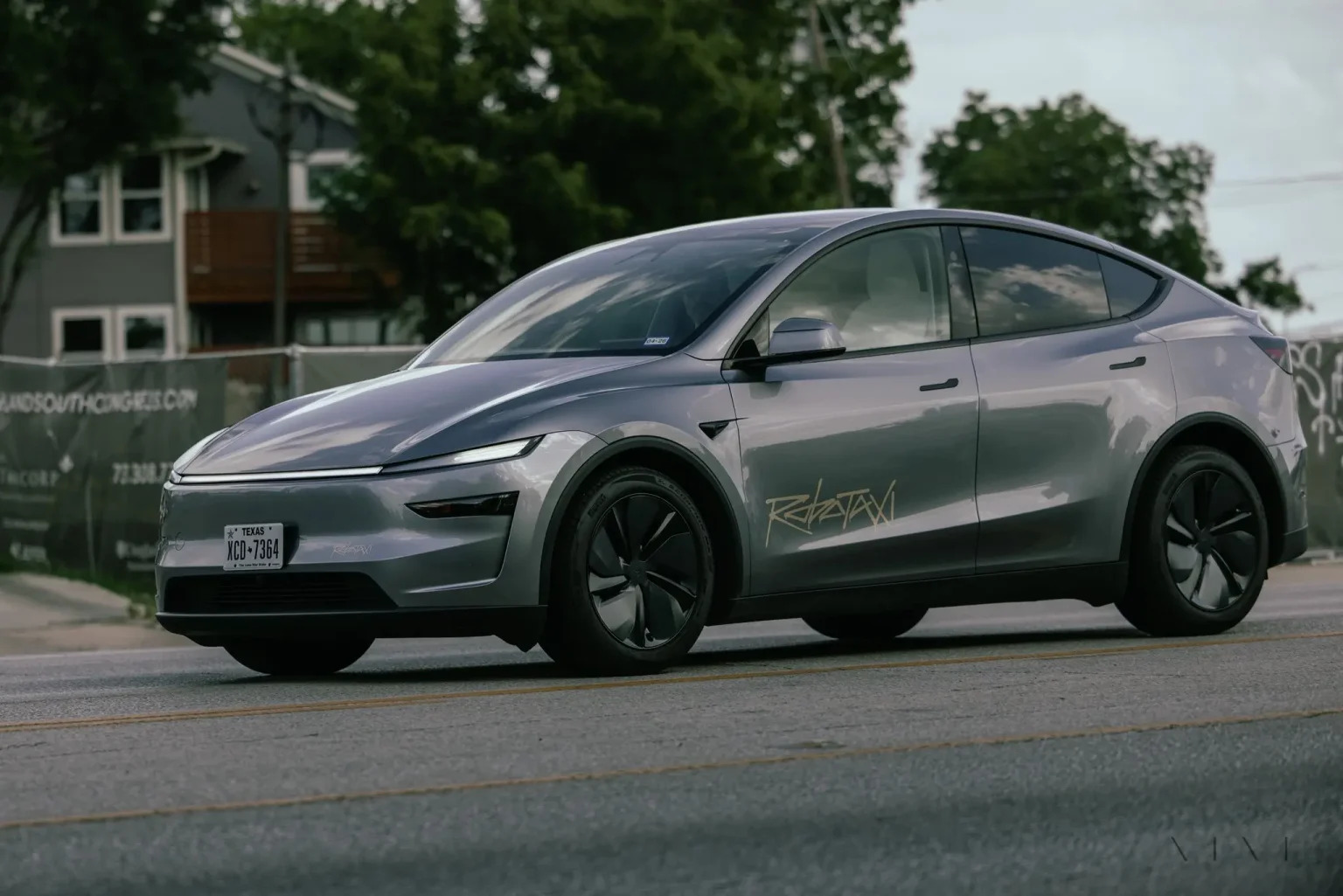
Tesla is now utilizing its in-house Robotaxi platform to give those waiting for their vehicles during Service visits rides instead of offering Uber credits or Loaner vehicles.
Tesla owners in Austin who bring vehicles in for service are receiving in-app prompts to use the company’s Robotaxi network while their cars are being worked on.
One recent notification, sent during a frunk repair, carried the heading “Try Robotaxi During Your Service Visit” and stated that while the vehicle is being serviced, the customer can take an autonomous Robotaxi ride to the next destination in Austin and download the Robotaxi app to get started.
Interesting. While my frunk gets fixed Tesla suggests taking a Robotaxi 😇 https://t.co/QiUbAmrp4a
— Wadesmith (@LanceWade) November 17, 2026
The suggestion arrives as Tesla has long relied on two main ways to keep customers mobile during longer service visits. Service centers have typically offered loaner vehicles drawn from a limited fleet; when those vehicles were unavailable, centers have issued Uber or Lyft credits. Uber credits were widely eliminated years ago, but some locations will still give them out.
Both approaches carry costs: loaner cars occupy inventory that could otherwise be sold, and third-party credits generate recurring expense.
Code discovered in Tesla app version 4.60.5 in September 2026 already listed “sv_transport_robotaxi” among the transportation options available for service appointments, alongside paid loaners and other alternatives, indicating the company had been preparing to route customers through its own autonomous fleet.
Your Tesla could be in the Robotaxi fleet next month, Elon Musk claims
Austin provides the clearest early example. The city remains Tesla’s primary Robotaxi market, with unsupervised Model Y and Cybercab vehicles operating across an expanded zone of roughly 400–440 square miles and running 24/7 since November 11. Public driverless service is also live in Dallas, Fort Worth, Houston, San Antonio, Miami, Orlando, and Tampa.
Directing service customers into this network keeps the vehicles utilized and reduces reliance on external rideshare credits, while giving owners practical experience with the Robotaxi app and vehicles during the repair window. Once service is complete, the same network can be used for the return trip without a staffed loaner handoff.
The Austin notification is the first public instance of the capability the September app code previewed. As Robotaxi expands into additional U.S. markets and the fleet grows, service centers in those cities are positioned to follow the same pattern, presenting autonomous rides as a primary transportation option during the service appointment rather than defaulting to loaner vehicles or third-party credits.
For customers, the change preserves mobility without the logistics of arranging a temporary car; for Tesla, it links the service operation more tightly to the expanding Robotaxi business.

Tesla Cybercab without steering wheel and pedals expands public rides to Dallas

Tesla’s Cybercab fleet just had its biggest day ever


