News
Tesla posts job opening for next-generation Roadster production
Elon Musk teased a major demonstration at the Tesla Design Studio in Hawthorne, scheduled for the end of the year.

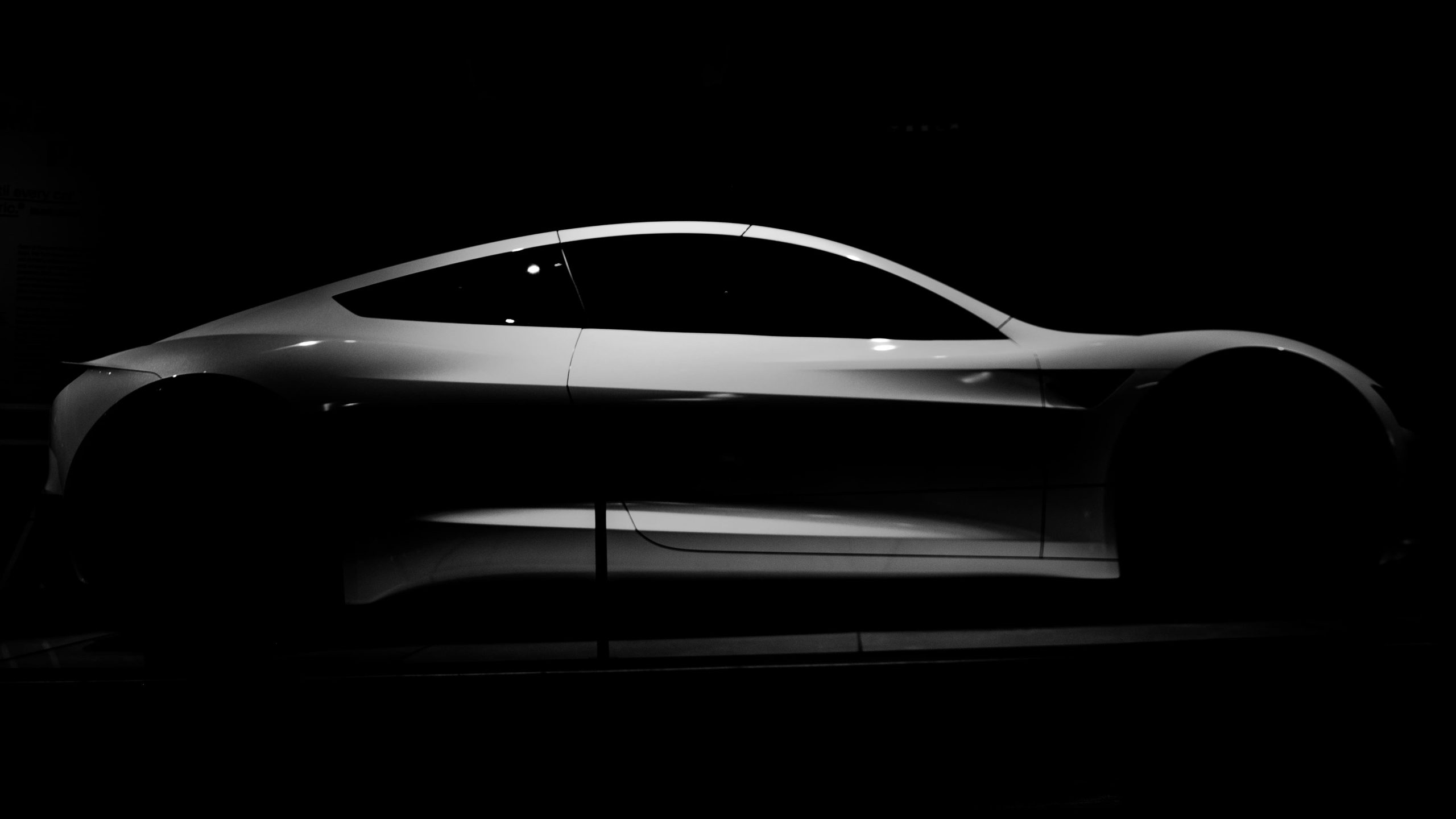
Tesla has opened its first job listing specifically for the next-generation Roadster, hinting at some substantial progress on the company’s long-awaited flagship all-electric supercar.
The company is looking for a Manufacturing Engineer to support the development and launch of new battery manufacturing equipment, which would likely be pivotal to the Roaster, considering its teased performance and range.
Tesla’s next-generation Roadster batteries
As per Tesla’s Careers website, the Roadster Manufacturing Engineer’s tasks would include ideating equipment concepts, developing specifications, validating processes, and addressing production bottlenecks. Tesla emphasized that the position involves collaboration across domestic and international sites, supporting equipment factory acceptance tests and assisting operations teams, with expected travel under 50 percent.
“In this role, you will take large-scale manufacturing systems for new battery products and architectures from the early concept development stage through equipment launch, optimization, and handover to local operations teams. Battery development is at the heart of our company, and this is an exciting opportunity to work directly on the central challenges for the all-new Roadster product architecture while still in its early development stages,” the job listing noted.
The opening marks one of the first public hiring efforts explicitly tied to the next-gen Roadster, suggesting that the vehicle’s development might be approaching its initial manufacturing phase. The fact that the new Roadster’s first job opening is related to its battery is interesting, as the vehicle was unveiled with a range of 620 miles way back in late 2018. Though at the time, Elon Musk also noted that the Roadster would be fitted with a 200 kWh battery, twice the size of the batteries used in the Model S and Model X.
Musk teases “most epic demo ever” and fuels Roadster speculation
Back in July, Elon Musk teased a major demonstration at the Tesla Design Studio in Hawthorne, California, scheduled for the end of the year. Musk shared on X that he had just visited the studio, calling the upcoming event the “most epic demo ever by one of year. Ever.”
The statement immediately prompted speculations that Tesla may finally be ready to reveal the production version of the next-generation Roadster. Originally unveiled alongside the Semi in 2018, the Roadster has remained under wraps while the company scaled production of other models. Since its unveiling, however, the Roadster’s rollout has been pushed back in favor of the original Model Y, the refreshed Model S and X, the Cybertruck, the refreshed Model 3, the Semi, and the new Model Y.
At the time of its unveiling, the next-generation Roadster was teased to be nothing short of a monster, with a 0-60 mph time of 1.99 seconds and a top speed of over 250 mph. Elon Musk also teased that the next-generation Roadster would have a range of 620 miles per charge. Later, the CEO noted that the Roadster should be able to achieve a 0-60 mph launch of less than 1 second, thanks to the vehicle’s SpaceX package. Musk has also noted recently that the next-generation Roadster would be “beyond a car.”


Cybertruck
Tesla Cybertruck just won a rare and elusive crash safety honor
Only the most outstanding of performances in crash tests can warrant an IIHS Top Safety Pick+ award, as vehicles listed with that ranking must achieve “Good” ratings in the small overlap front, updated side, and updated moderate overlap front tests, along with “Acceptable” or “Good” headlights standard on all trims.

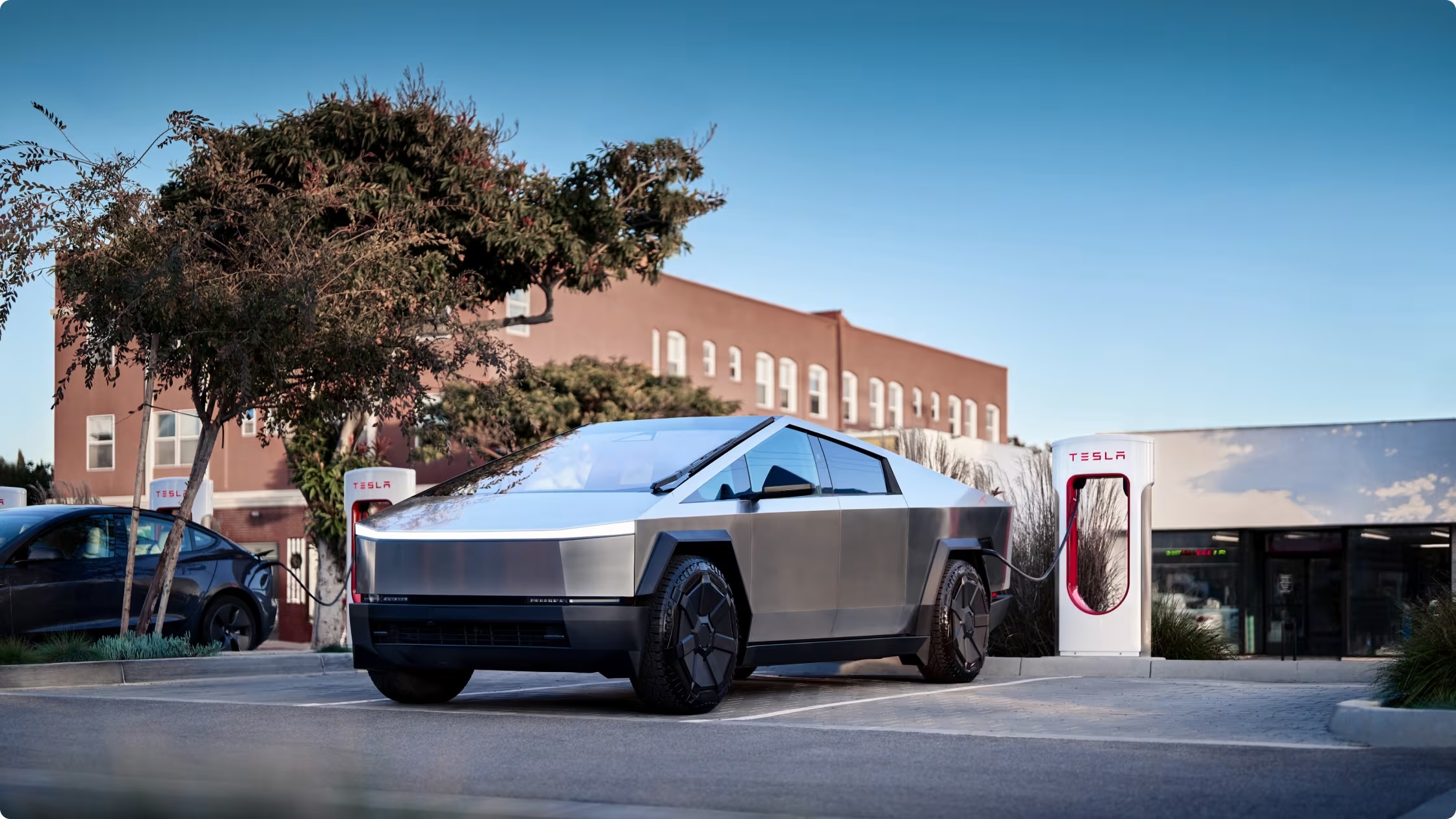
Tesla Cybertruck landed a rare and elusive safety honor from the Insurance Institute for Highway Safety (IIHS). It was the only pickup truck in the U.S. market to do so.
The IIHS rewarded the Cybertruck with the Top Safety Pick+ honors, the highest marks a vehicle can receive from the agency.
Only the most outstanding of performances in crash tests can warrant an IIHS Top Safety Pick+ award, as vehicles listed with that ranking must achieve “Good” ratings in the small overlap front, updated side, and updated moderate overlap front tests, along with “Acceptable” or “Good” headlights standard on all trims.
🚨 Absolutely insane.
Tesla Cybertruck was the ONLY pickup on the market to be awarded a Top Safety Pick+ rating by the IIHS
The safest rating out there belongs to Cybertruck 📐 pic.twitter.com/Y8gLOqaL0d
— TESLARATI (@Teslarati) March 24, 2026
Cybertruck was the only truck to also win an NHTSA Five-Star Safety rating, making it the only pickup available on the market to be recognized with top marks from both agencies.
There are a multitude of options for pickups in the U.S. market, as it is one of the most popular vehicle types for consumers in the country. Pickups are great vehicles for anyone who does any sort of hauling or is just looking for extra space for any variety of reasons.
Pickups are also inherently safer than other body types on the road, mostly because they are larger and heavier, making them more favorable against other vehicle types in the event of a collision. However, Tesla has a significant advantage in safety with its vehicles because it engineers them to not only be safer in collisions, but also easier to repair.
The Cybertruck managed to achieve “Good” ratings, the highest marks available by the IIHS, in all three Crashworthiness categories, as well as “Good” ratings in both Crash Avoidance and Mitigation assessments.
It also received “Good” ratings across all driver and pedestrian crash-test performance metrics, except for one, where it earned an “Acceptable” rating for rear passengers in the Chest category.
The Cybertruck’s outstanding crash test performance has won it this incredible mark as the pickup still tends to be one of the more polarizing vehicle designs on the market.
It is no secret that Tesla has struggled with demand of the Cybertruck due to pricing, but the recent rollout of a trim that was temporarily priced at just $59,990 showed plenty of people want the all-electric pickup.
Elon Musk
Elon Musk’s Boring Co. Tunnel Vision Challenge ends with a surprise for Louisiana, Maryland and Dallas
The Boring Company stunned three cities today, awarding New Orleans, Baltimore, and Dallas free underground Loop tunnels.

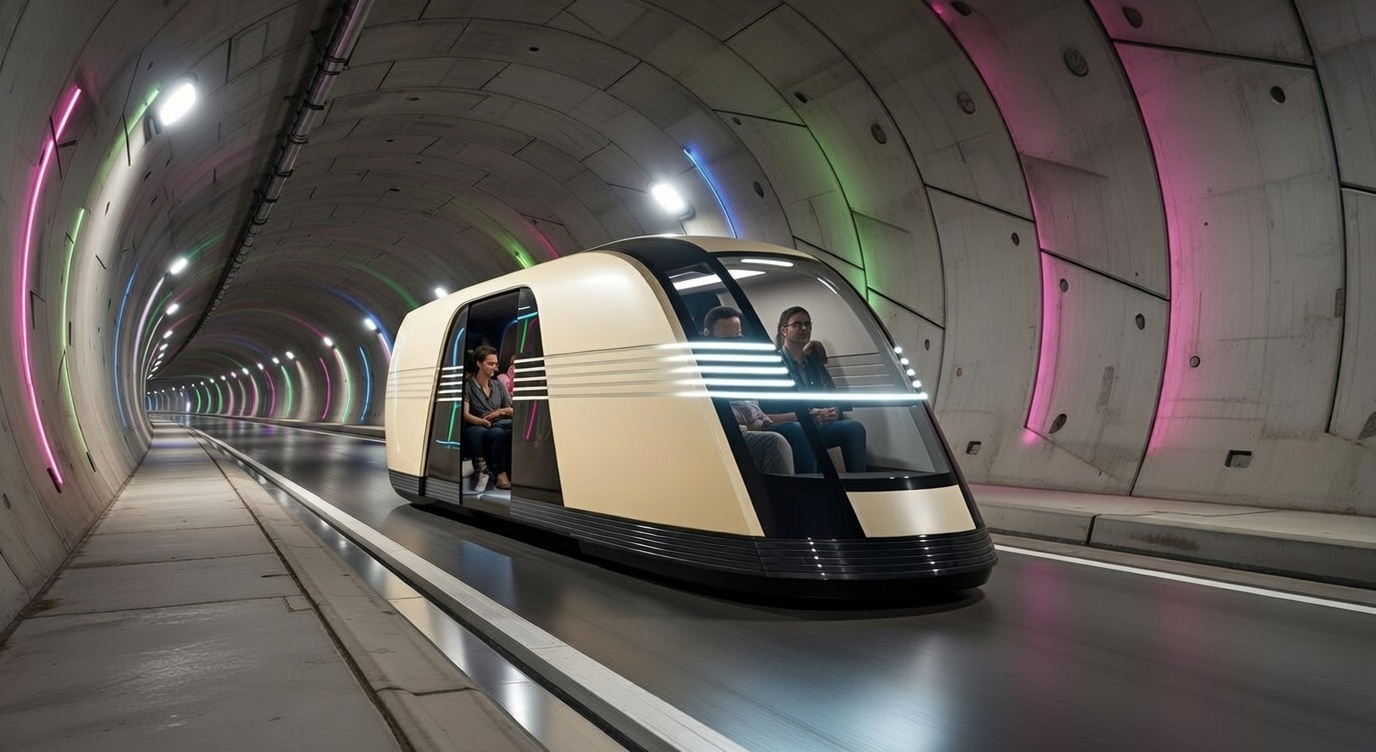
Elon Musk’s The Boring Company (TBC) announced today that it is building free underground Loop tunnels in three American cities: New Orleans, Louisiana; Baltimore, Maryland; and Dallas, Texas. The company had promised one winner when it launched the Tunnel Vision Challenge in January. After receiving 487 submissions, it selected three, committing to fund and construct all of them pending a feasibility review, entirely at its own expense. For a company that has faced years of skepticism over the gap between its promises and its delivered projects, choosing to expand its commitment rather than narrow it is a notable shift in both scale and accountability.
All three projects will now enter a rigorous, fully funded diligence phase that includes meetings with elected officials, regulators, community and business leaders, geotechnical borings, and a complete investigation of subsurface utilities and infrastructure. TBC confirmed that all costs associated with this diligence process are 100% funded by the company. If all three projects pass feasibility, all three get built. If only one clears the bar, that one gets built. The company’s willingness to fund the due diligence regardless of outcome removes one of the most common early-stage barriers that kills promising infrastructure proposals before they leave a spreadsheet.
Beyond the three winners, TBC announced it will continue working with two additional entrants it found compelling enough to pursue independently: the Hendersonville Utility Tunnel in Hendersonville, Tennessee, and the Morgan’s Wonderland Tunnel in San Antonio, Texas, which would notably serve one of the nation’s premier theme parks built specifically for guests with special needs.
The challenge also coincides with TBC’s most active construction period to date. The company recently began drilling on the Music City Loop near the Tennessee State Capitol in Nashville, and in February it broke ground on a Loop in Dubai. Musk has long argued that the fundamental problem with urban infrastructure is cost and bureaucratic inertia, not engineering. “The key to solving traffic is making going 3D either up or down,” he said in 2018, a conviction now reflected in a company structure built to absorb the financial risk that typically stalls public projects for years.
Music City Loop could highlight The Boring Company’s real disruption
The Tunnel Vision Challenge’s most underappreciated element may be what it produced beyond three winners. Submissions came from individuals, companies, and governments across states including Alaska, Arkansas, Colorado, Kansas, Louisiana, Maryland, New York, and Texas, as well as from international entrants. Musk captured the underlying logic years ago when he said, “Traffic is driving me nuts. I’m going to build a tunnel boring machine and just start digging.” Today, three American cities are counting on exactly that.
Tunnel Vision Challenge results!
We’ve been overwhelmed with the amazing submissions…so we are announcing three winners!
The Thrilling Three are:
– NOLA Loop (New Orleans, LA)
– Ravens Loop (Baltimore, MD)
– University Hills Loop (Dallas, TX)What happens next? TBC and the… https://t.co/cY2ULftfiK
— The Boring Company (@boringcompany) March 24, 2026
News
Tesla launches first ‘true’ East Coast V4 Supercharger: here’s what that means
What truly distinguishes this installation from the hundreds of “V4” stalls already scattered across the network? Most existing V4 dispensers, rolled out since 2023, feature welcome upgrades like longer cables, built-in touchscreen displays, integrated credit-card readers for non-Tesla users, and improved ergonomics.
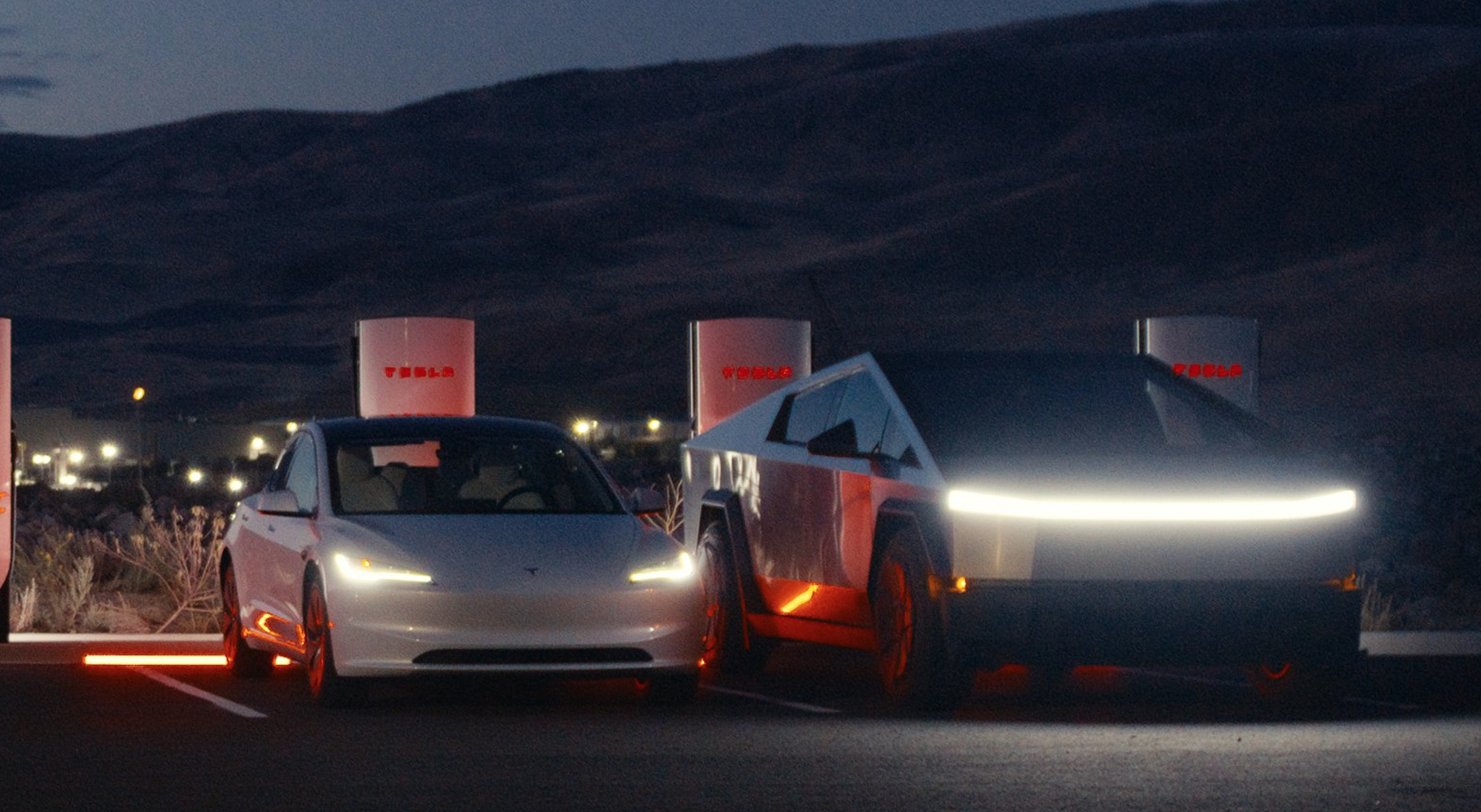
Tesla has launched its first “true” V4 Supercharger on the East Coast, and while that may be sort of confusing, here’s what we mean by that.
Tesla has opened its first true V4 Supercharging station on the East Coast in Kissimmee, Florida, just south of Orlando.
The eight-stall site, powered by an advanced 1.2 MW V4 power cabinet, is capable of delivering up to 500 kW, making it one of only four fully operational 500 kW-capable V4 stations in the United States.
Pricing is dynamic and competitive, as Tesla owners pay $0.40 per kWh during peak hours (8 a.m. to midnight), dropping to an attractive $0.20/kWh off-peak (midnight to 8 a.m.).
Non-Tesla EVs, which can now plug directly into the NACS ports thanks to the open standard, are charged a premium—$0.56/kWh peak and $0.28/kWh off-peak—reflecting Tesla’s strategy to monetize network access while rewarding its own customers.
What’s Makes This a “True” V4 Supercharger
What truly distinguishes this installation from the hundreds of “V4” stalls already scattered across the network? Most existing V4 dispensers, rolled out since 2023, feature welcome upgrades like longer cables, built-in touchscreen displays, integrated credit-card readers for non-Tesla users, and improved ergonomics.
However, nearly all of these have been paired with legacy V3 power cabinets. These hybrid setups, sometimes informally called V3.5, deliver charging curves virtually identical to standard V3 stations, typically topping out at 250-325 kW depending on the vehicle and site conditions.
In contrast, Kissimmee’s true V4 architecture incorporates next-generation 1.2 MW power cabinets. These support battery voltages up to 1,000 V (double the 500 V of V3 systems) and can push up to 500 kW per stall.
NEWS: Tesla has opened its first true V4 Supercharging station on the East Coast, capable of delivering up to 500 kW charging speeds.
• Location: Kissimmee, Florida (near Orlando)
• 8 charging stalls
• Fees for Tesla owners: $0.40/kWh ($0.20/kWh off-peak)
• Fees for all… pic.twitter.com/E8AkaibWsC— Sawyer Merritt (@SawyerMerritt) March 19, 2026
One compact cabinet efficiently powers all eight stalls, slashing the physical footprint and reportedly keeping deployment costs under $40,000 per stall, far cheaper than earlier designs.
Right now, the primary beneficiary is the Cybertruck, which can achieve dramatically faster charging at low states of charge.
Everyday models like the Model 3 and Model Y see little immediate difference in peak speeds, but the hardware lays the groundwork for future vehicles with higher-voltage batteries.
Tesla launches faster Cybertruck charging at all V4 Superchargers
This milestone signals Tesla’s accelerating push toward a high-power, future-proof Supercharger network.
As true V4 sites multiply, charging times will shrink, grid efficiency will improve, and the entire EV ecosystem, Tesla and non-Tesla alike, will benefit from the infrastructure lead Tesla continues to expand. For drivers in central Florida, the Kissimmee station is more than just another charging stop; it’s a glimpse of the faster, smarter charging era that’s finally arriving.

Tesla Cybertruck just won a rare and elusive crash safety honor

Elon Musk’s Boring Co. Tunnel Vision Challenge ends with a surprise for Louisiana, Maryland and Dallas


