News
Tesla is ramping up its hiring for the Cybercab production team
As can be seen on Tesla’s Careers website, three new Cybercab-related positions are currently available at Giga Texas.

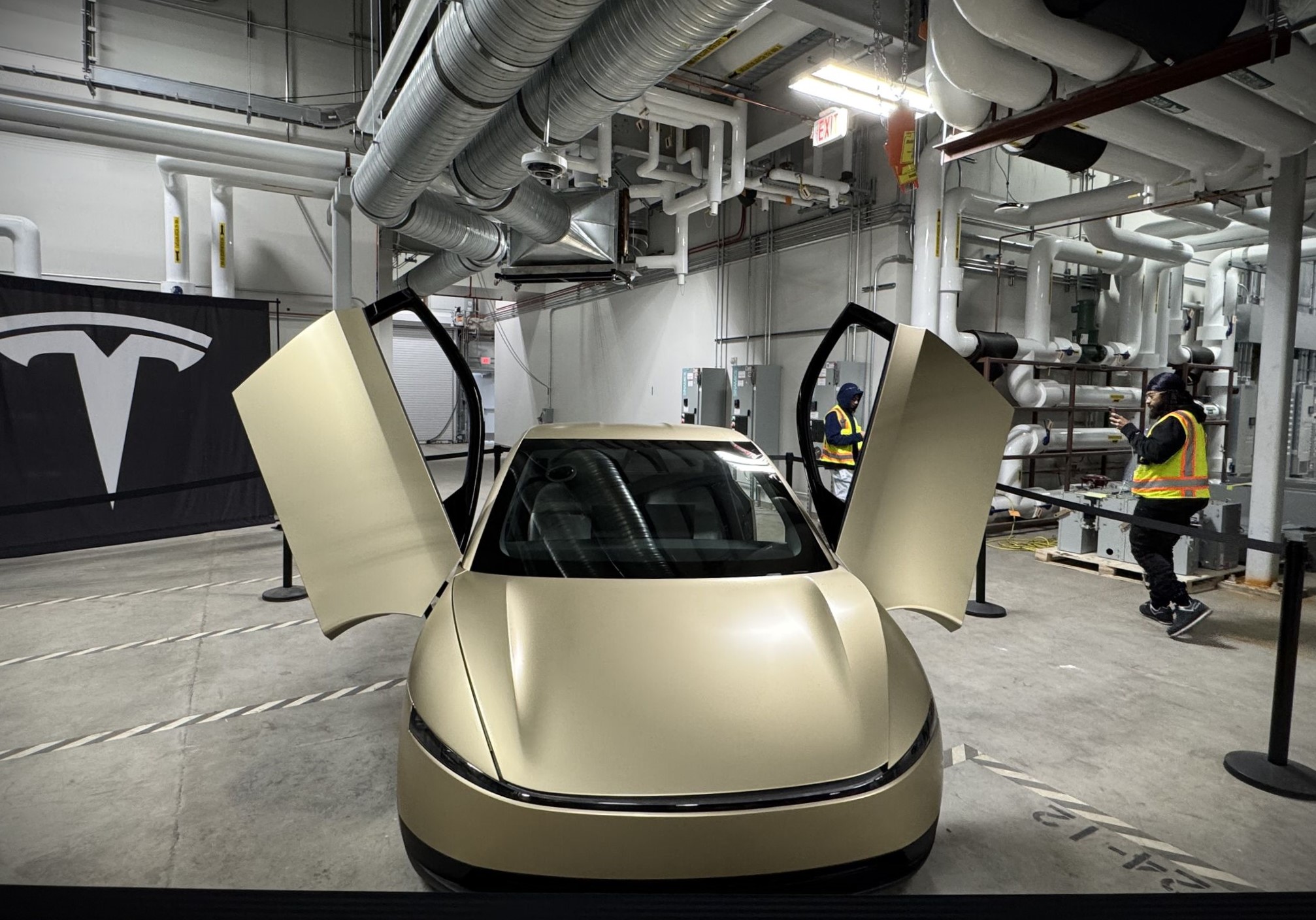
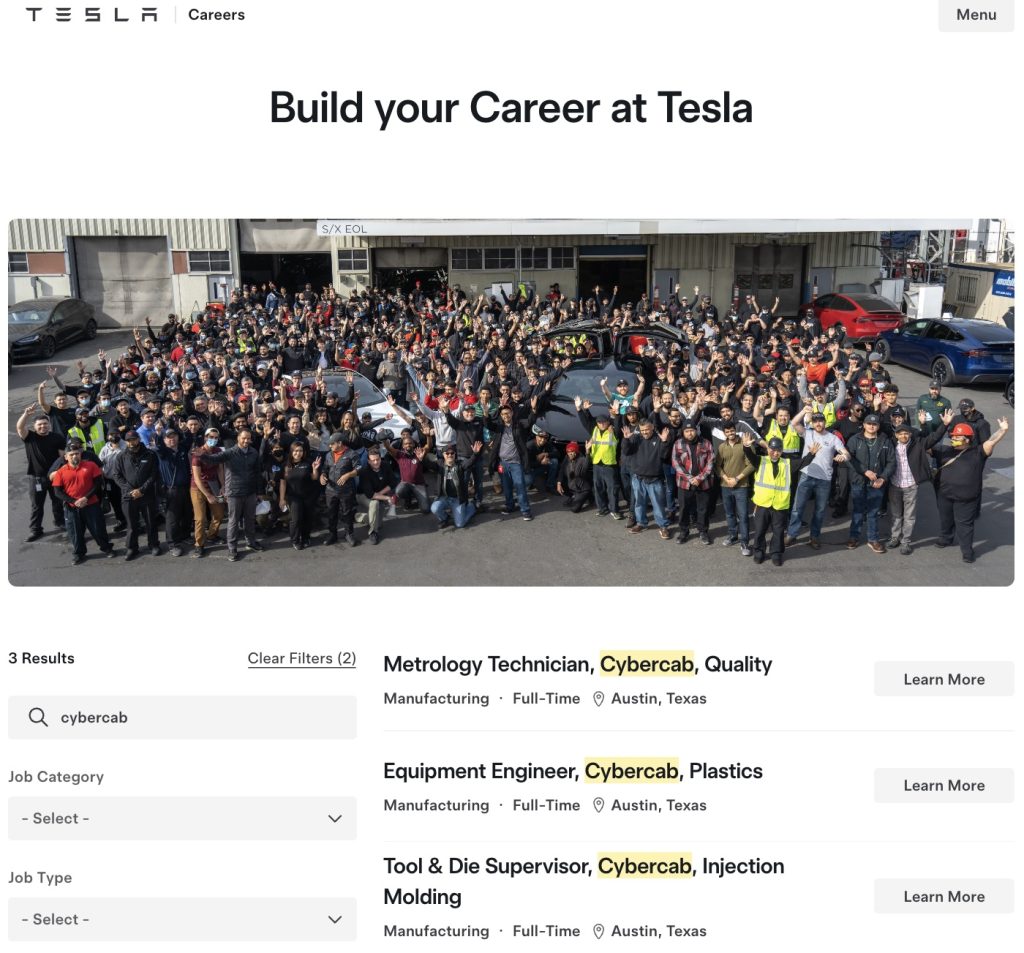
Tesla appears to be ramping up its Cybercab team at Giga Texas. As per recent observations by the Tesla community, three new job listings on the automaker’s Careers site suggest that the company is starting to add more critical personnel for the autonomous two-seater’s production.
New Cybercab jobs
As can be seen on Tesla’s Careers website, three new Cybercab-related positions are currently available. Tesla is looking for a Metrology Technician, who will work on the Cybercab’s Quality team; an Equipment Engineer who will work on the Cybercab’s Plastics team; and a Tool & Die Supervisor, who will work in the Injection Molding team.
All three positions are based in Austin, Texas, which is quite unsurprising as Giga Texas is the only facility today that has the capability to produce the vehicle. The Cybercab’s production is quite different compared to Tesla’s other vehicles, as it is the first car that would be produced using the company’s “Unboxed” process.
Unlike any car that’s produced before
Elon Musk has previously said the Cybercab will be Tesla’s highest-volume vehicle, targeting an annual rate of 2 million units. He also mentioned that the vehicle’s manufacturing line will not resemble an automotive production line at all. Instead, it would resemble a high-speed consumer electronics line, which should pave the way for one Cybercab to be produced every few seconds.
“If you’ve seen the design of the Cybercab line, it doesn’t look like a normal car manufacturing line. It looks like a really high-speed consumer electronics line. In fact, the line will move so fast that actually people can’t even get close to it. I think it’ll be able to produce a car ultimately in less than 5 seconds,” Musk stated during Tesla’s All-Hands meeting earlier this year.


Elon Musk
Elon Musk announces disappointing Tesla Optimus update
In a post on X on March 31, Musk stated that Optimus 3 is mobile but requires some finishing touches before it is ready to be shown to the world. This update comes on the final day of the first quarter, a period when Tesla had previously signaled expectations for a Gen 3 reveal.


Elon Musk announced a disappointing update to the unveiling of Tesla Optimus and its third-generation iteration, missing a timeline it aimed to hit in the first quarter of the year.
Musk has confirmed that the highly anticipated Optimus Gen 3 humanoid robot is already walking around and operational, yet the public unveiling will face a short delay as the company applies final refinements.
In a post on X on March 31, Musk stated that Optimus 3 is mobile but requires some finishing touches before it is ready to be shown to the world. This update comes on the final day of the first quarter, a period when Tesla had previously signaled expectations for a Gen 3 reveal.
Optimus 3 is walking around, but needs some finishing touches before it’s ready to be shown
— Elon Musk (@elonmusk) March 31, 2026
The announcement follows reports of Optimus Gen 3 appearing at the Tesla Diner in Los Angeles, where it was observed serving and moving about until sunset. Images and videos shared by observers captured the robot in action, highlighting its progress in real-world mobility.
Tesla had aimed to showcase the production intent version of Optimus Gen 3 during the first quarter of 2026, positioning it as a major step toward factory deployment and eventual commercial availability. Musk has described the robot as featuring advanced capabilities, including highly dexterous hands with significant degrees of freedom, powered by Tesla’s AI systems for complex tasks.
This minor postponement aligns with Tesla’s iterative approach to development. Earlier statements from Musk indicated that Gen 3 would represent the most advanced humanoid robot yet, designed primarily for internal factory use before scaling to external customers.
Elon Musk’s $10 Trillion robot: Inside Tesla’s push to mass produce Optimus
Production timelines point toward low-volume output starting in the summer of 2026, with volume ramp-up targeted for 2027. The delay underscores the company’s commitment to quality over speed, ensuring the robot meets rigorous standards for safety and performance in practical environments.
Optimus represents a cornerstone of Tesla’s long-term vision beyond electric vehicles. Musk has repeatedly emphasized that successful humanoid robotics could transform industries by addressing labor shortages and enabling new forms of productivity.
Competitors in the space continue to advance their own platforms, yet Tesla’s vertical integration, from custom actuators to end-to-end AI training, positions Optimus as a potential leader. Community reactions on social media range from excitement over visible progress to impatience with shifting timelines, a familiar pattern in Tesla’s innovation journey.
Investors and enthusiasts view Optimus as critical to Tesla’s valuation, potentially surpassing its automotive business in scale. With the robot already demonstrating walking and basic interactions, the finishing touches likely involve software polishing, hardware fine-tuning, and reliability enhancements.
Musk’s update suggests the reveal could arrive in the coming weeks or months, maintaining momentum toward broader deployment.
As Tesla pushes the boundaries of physical artificial intelligence, this latest development keeps Optimus in the spotlight. The company continues to prioritize rapid iteration while delivering on its promises to shareholders and customers. The robotics revolution at Tesla appears closer than ever, promising profound impacts on manufacturing, services, and daily life in the years ahead.
Elon Musk
Countdown: America is going back to the Moon and SpaceX holds the key to what comes after
NASA’s Artemis II launches Wednesday, sending humans near the Moon for the first time since 1972.

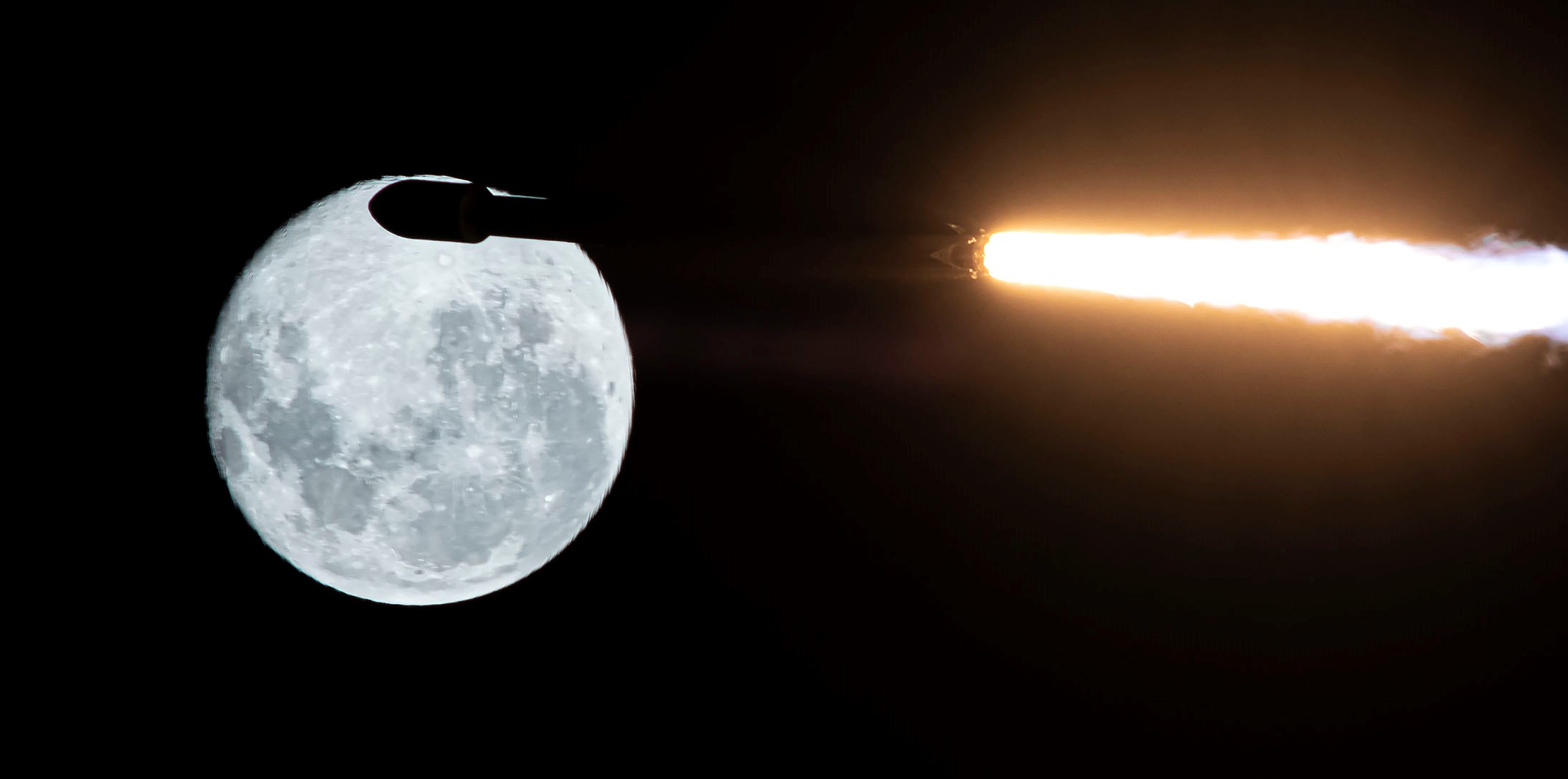
For the first time since Apollo 17 touched down on the lunar surface in December 1972, the United States is sending humans back toward the Moon. NASA’s Artemis II mission is set to launch as early as this week from Kennedy Space Center in Florida, carrying four astronauts on a 10-day journey around the Moon and back to Earth. It will not land anyone on the surface this time, but it is the first crewed flight in over half a century to travel beyond low Earth orbit, and it sets the stage for Elon Musk’s SpaceX missions to follow.
The mission uses NASA’s Space Launch System rocket and the Orion spacecraft, which will fly around the Moon before splashing down in the Pacific Ocean around April 10. For context, an uncrewed Artemis I flew the same path in 2022, proving the hardware worked. Artemis II now tests it with people aboard.
According to NASA’s official countdown blog, launch preparations are on track with an 80 percent chance of favorable weather. “Hey, let’s go to the moon!” Commander Wiseman told reporters upon arriving at Kennedy Space Center.
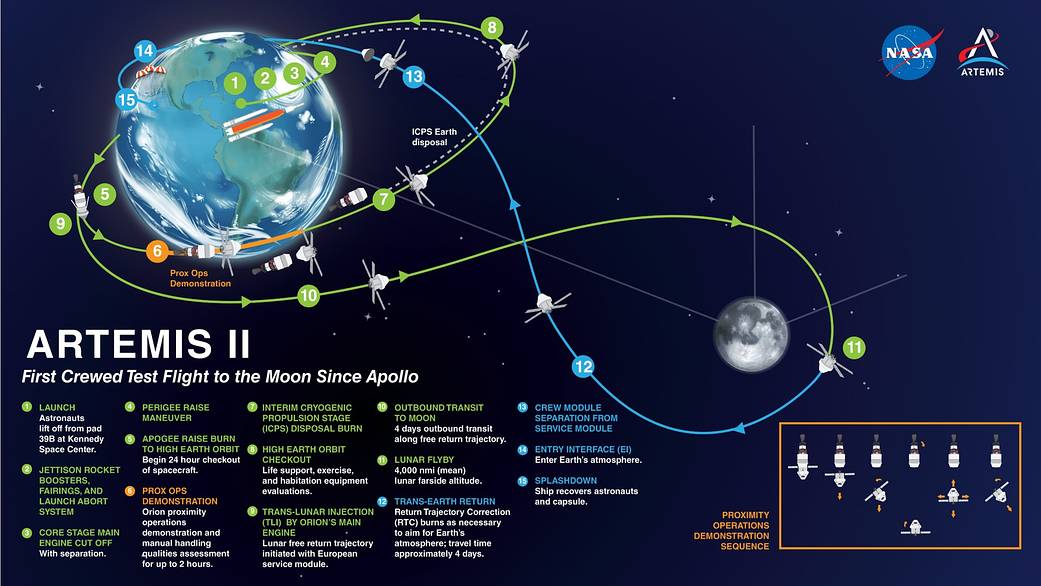
Source: NASA
Beyond Artemis II lies the lander question, and that is where SpaceX enters directly. In 2021, NASA awarded SpaceX a $2.89 billion contract to develop the Starship Human Landing System, a modified version of Starship designed to ferry astronauts from lunar orbit to the surface. The original plan called for SpaceX to deliver that lander for Artemis III, which was to be the first crewed lunar landing. Timing for Starship development, however, caused NASA to restructure the mission sequence entirely.
Before SpaceX’s Starship Human Landing System (HLS) can put anyone on the Moon, it has to solve a problem no rocket has demonstrated at scale, which is refueling in orbit. Because the Starship HLS requires approximately ten tanker launches worth of propellant loaded into a depot in low Earth orbit before it has enough fuel to reach the lunar surface, SpaceX plans to conduct this refueling process using its upgraded V3 Starship. And until that demonstration flies and succeeds, the Starship moon lander remains a question mark.
SpaceX’s Starship V3 is almost ready and it will change space travel forever
In February 2026, NASA Administrator Jared Isaacman confirmed that Artemis III, now planned for mid-2027, and will instead test lunar landers in low Earth orbit, with the actual landing pushed to Artemis IV that’s targeted for 2028.
Musk responded to earlier criticism of SpaceX’s schedule by posting on X that his company is “moving like lightning compared to the rest of the space industry,” and added that “Starship will end up doing the whole Moon mission.” The contract competition was also reopened in October 2025 by then NASA chief Sean Duffy, who cited Starship’s delays and said the agency needed speed given China’s own stated goal of landing astronauts on the Moon by 2030.
They won’t. SpaceX is moving like lightning compared to the rest of the space industry.
Moreover, Starship will end up doing the whole Moon mission. Mark my words.
— Elon Musk (@elonmusk) October 20, 2025
Artemis came from the first Trump administration’s 2017 Space Policy Directive 1, which directed NASA to return humans to the Moon. The program picked up pace through the 2020s, with the Orion spacecraft and SLS taking years to develop at enormous costs. SpaceX entered the picture in 2021 as the chosen lander contractor, tying the commercial space sector into what had historically been an all government undertaking.
Whether SpaceX’s Starship ultimately carries astronauts to the lunar surface or shares that role with Blue Origin’s competing lander, this week’s Artemis II launch is the necessary first step. Getting four humans to the Moon’s vicinity and back safely is the proof of concept everything else depends on.
Elon Musk
Elon Musk debunks latest rumors about SpaceX IPO
Musk has swiftly put to rest circulating reports suggesting that SpaceX would exclude popular retail brokerages Robinhood and SoFi from its highly anticipated initial public offering. In a direct response posted on X on March 31, Musk stated simply, “These reports are false,” addressing widespread speculation fueled by a Reuters article.
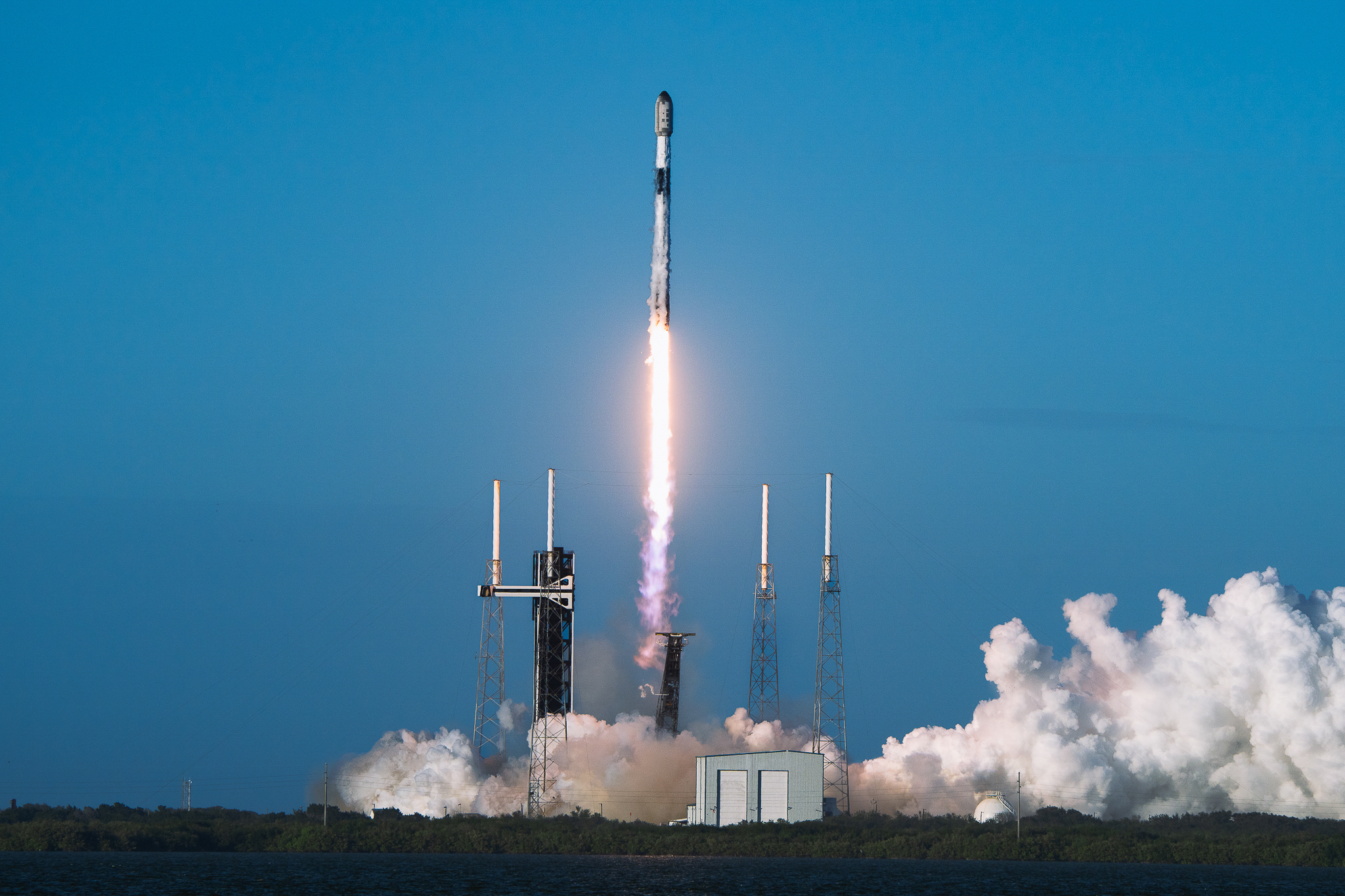
Tesla and SpaceX CEO Elon Musk debunked the latest rumors about the space exploration company’s initial public offering (IPO), which has been the subject of a wide array of speculation over the last few weeks.
With SpaceX likely heading to Wall Street to become a publicly-traded stock in the coming months, there is a lot of speculation surrounding how it will happen, whether the company will potentially combine with Tesla, and more.
Tesla and SpaceX to merge in 2027, Wall Street analyst predicts
But the latest rumors have to do with where SpaceX will list the stock.
Musk has swiftly put to rest circulating reports suggesting that SpaceX would exclude popular retail brokerages Robinhood and SoFi from its highly anticipated initial public offering.
In a direct response posted on X on March 31, Musk stated simply, “These reports are false,” addressing widespread speculation fueled by a Reuters article.
These reports are false
— Elon Musk (@elonmusk) March 31, 2026
The Reuters report, published March 30, claimed that Morgan Stanley’s E*Trade was in talks to lead the sale of SpaceX shares to small U.S. investors.
Sources indicated that Robinhood and SoFi, despite pitching for roles, faced potential exclusion from the retail allocation, with Fidelity also competing for a piece of the action. The story quickly spread across financial media, raising concerns among retail investors eager to participate in what could be one of the largest IPOs in history.
SpaceX has a reported valuation nearing $1.75 trillion, and Musk’s plan to allocate up to 30 percent of shares to individual investors — far above the typical 5-10% — had generated massive excitement.
Musk’s concise denial immediately calmed the narrative. The original X post quoting the rumor garnered significant engagement, with users expressing relief that everyday investors would not be sidelined.
This episode reflects Musk’s hands-on approach to SpaceX’s public debut.
Earlier reporting revealed plans for an unusually large retail slice to leverage Musk’s dedicated fan base and stabilize post-IPO trading. SpaceX aims to file potentially as early as this period, building on momentum from its Starship program and Starlink growth.
The IPO could mark a transformative moment, potentially elevating Musk’s status further while democratizing access to a company long reserved for accredited investors and institutions.
The rumor’s quick debunking also revives debates about retail access in high-profile listings. Robinhood gained popularity during the 2021 meme-stock surge but faced criticism for past trading restrictions.
SoFi has positioned itself as a modern financial platform for younger investors. Excluding them could have limited participation from tech-savvy retail traders who form a core part of Musk’s supporter base across Tesla and SpaceX.
While details remain fluid, Musk’s intervention reinforces commitment to broad accessibility. As preparations advance, investors await official filings. For now, the message is clear: rumors of restricted retail access were overstated, keeping the door open for widespread participation in SpaceX’s public chapter.
This development comes amid broader market enthusiasm for space and technology stocks. Musk’s transparency through X continues to shape public perception, distinguishing SpaceX’s path from traditional Wall Street norms. With retail allocation potentially reaching 30 percent, the IPO promises to be both commercially massive and culturally significant.

Elon Musk announces disappointing Tesla Optimus update

Countdown: America is going back to the Moon and SpaceX holds the key to what comes after

Elon Musk debunks latest rumors about SpaceX IPO

Elon Musk says Tesla is developing a new vehicle: ‘Way cooler than a minivan’

Elon Musk launches TERAFAB: The $25B Tesla-SpaceXAI chip factory that will rewire the AI industry


