Elon Musk
Tesla Robotaxi launch draws attention from regulators, mainstream media milks it
The Tesla Robotaxi launch has resulted in some questions from the NHTSA, a typical thing for early launches. Media is milking it as a huge thing.

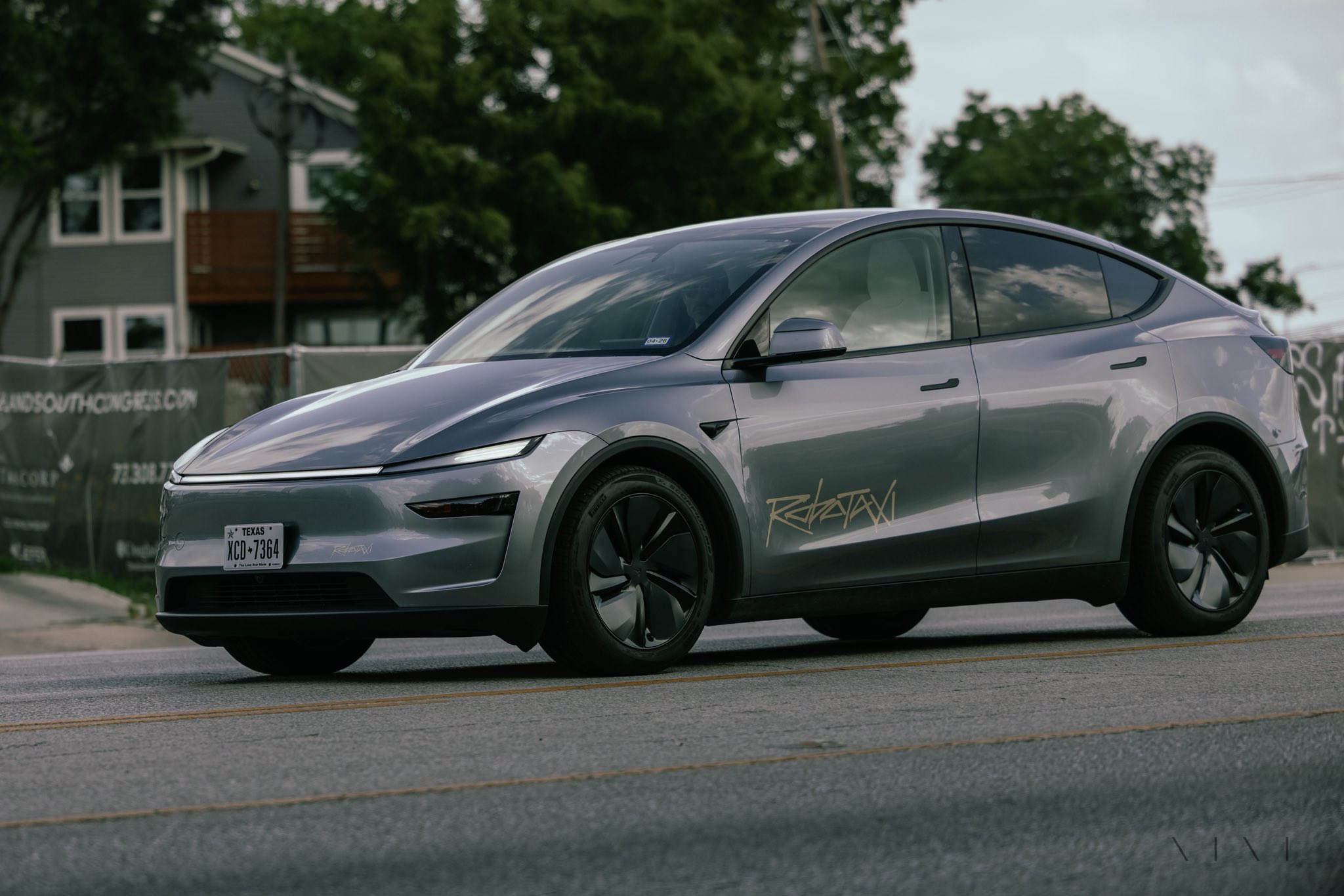
Tesla launched its Robotaxi platform in a limited capacity earlier this week in Austin, Texas, and after hundreds of rides have been taken, some instances have caught the attention of the National Highway Traffic Safety Administration (NHTSA).
However, the information the NHTSA is requesting is routine and totally normal for the early stages of a rollout of this magnitude. But that did not stop mainstream media from milking it into something controversial, when it really is not.
Tesla Robotaxi riders tout ‘smooth’ experience in first reviews of driverless service launch
Various outlets reported on the NHTSA’s request to Tesla for additional information regarding things seen in videos online.
The NHTSA said it is “aware of the referenced incidents and is in contact with the manufacturer to gather additional information.” Bloomberg initially reported on the NHTSA’s request for information.
The thing is, the NHTSA has often reached out to companies right after it launches a driverless vehicle service. Both Waymo and GM’s Cruise, as well as Amazon’s Zoox, have had the NHTSA reach out to them regarding the launch of their driverless ride-hailing services.
The headlines for Tesla are significantly different:
- “Tesla’s Robotaxis Have Already Caught this US Safety Agency’s Attention“
- “Tesla’s Robotaxis have already caught the attention of federal safety regulators“
- “US safety regulators contact Tesla over erratic robotaxis“
Reviews from riders in Austin have stated the Robotaxi platform is “smooth” and “comfortable,” with many ranting and raving about the advantages the new ride-hailing service has over others. Not only is it being monitored by a safety monitor in the passenger seat, but there are also other things that make it unique.
One of the most notable is that your Robotaxi will automatically sync entertainment and streaming settings.
The sensationalism that the media tends to use with Tesla is a big reason the company did not invite mainstream outlets to the event. Instead, reporters were seen waiting for Early Access invitees to exit their cars to ask them questions.
Many denied the inquiries:
“Can I talk to you, I’m with Reuters”
> No
🤣🤣 @BeardedTesla @SawyerMerritt pic.twitter.com/jGUdakGzx1
— Robin (@xdNiBoR) June 22, 2025
Elon Musk responded to that video by saying “Lmao,” an acronym for “laughing my ass off.”


Elon Musk
Elon Musk’s Terafab project locks up massive new partner
Terafab, first revealed by Musk in March, is a massive joint-venture semiconductor complex planned for the North Campus of Giga Texas in Austin.
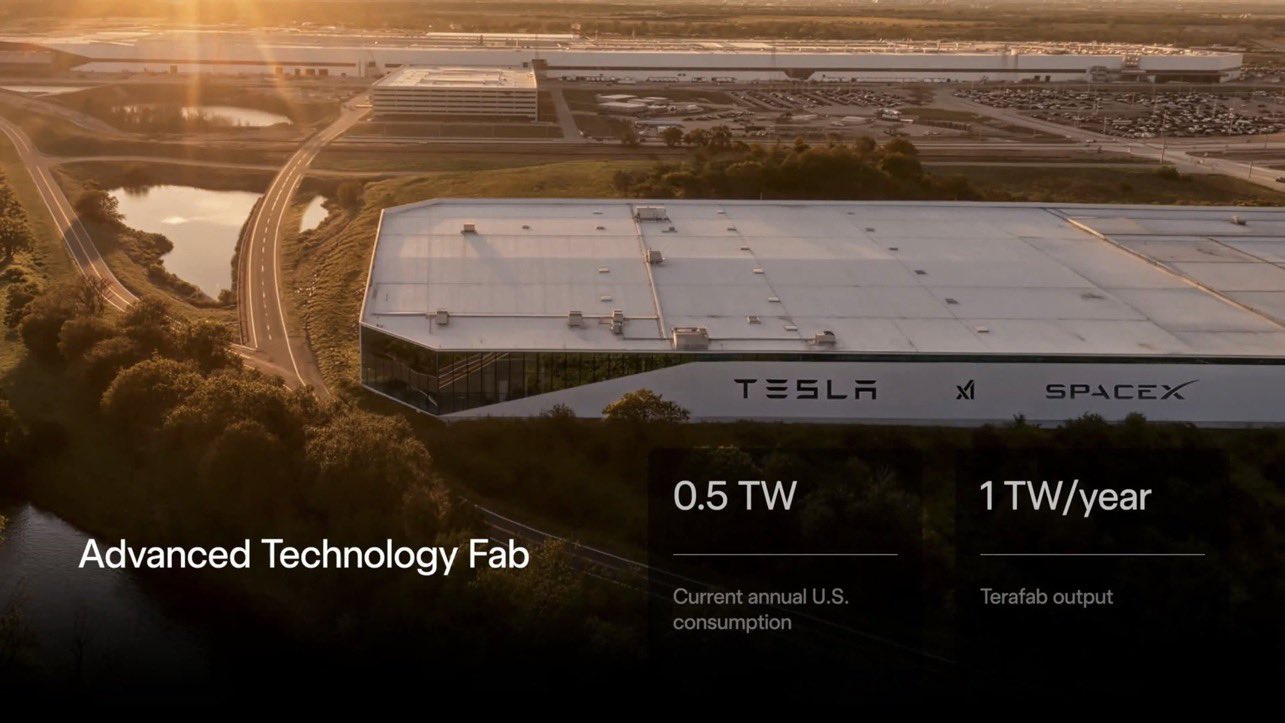
Elon Musk’s Terafab project just locked up a massive new partner, just weeks after the new project was announced by Tesla, SpaceX, and xAI, the three companies that will be direct benefactors from it.
In a landmark announcement on April 7, Intel joined Elon Musk’s Terafab project as a key partner alongside Tesla, SpaceX, and xAI. The collaboration focuses on refactoring silicon fabrication technology to deliver ultra-high-performance chips at unprecedented scale.
Intel CEO Lip-Bu Tan hosted Musk at Intel facilities the prior weekend, underscoring the partnership’s momentum with a public handshake.
Intel is proud to join the Terafab project with @SpaceX, @xAI, and @Tesla to help refactor silicon fab technology.
Our ability to design, fabricate, and package ultra-high-performance chips at scale will help accelerate Terafab’s aim to produce 1 TW/year of compute to power… pic.twitter.com/2vUmXn0YhH
— Intel (@intel) April 7, 2026
Terafab, first revealed by Musk in March, is a massive joint-venture semiconductor complex planned for the North Campus of Giga Texas in Austin. Valued at $20–25 billion, it aims to consolidate the entire chip-making pipeline, design, fabrication, memory production, and advanced packaging in a single location. It should eliminate a majority of Tesla’s dependence on third-party chip fab companies.
The facility will manufacture two primary chip types: energy-efficient edge-inference processors optimized for Tesla’s Full Self-Driving (FSD) systems, Cybercab and Robotaxi, and Optimus humanoid robots, and high-power, radiation-hardened variants for SpaceX satellites and xAI’s orbital data centers.
Elon Musk launches TERAFAB: The $25B Tesla-SpaceXAI chip factory that will rewire the AI industry
The project’s audacious goal is to produce 1 terawatt (TW) of annual compute capacity, roughly 50 times current global AI chip output.
Production is expected to begin modestly and scale rapidly, addressing Musk’s warning that chip supply could soon become the biggest constraint on Tesla, SpaceX, and xAI growth. By vertically integrating manufacturing tailored to their exact needs, Terafab eliminates supply-chain bottlenecks and accelerates iteration for AI training, inference at the edge, and space-based computing.
Intel’s participation is strategically vital. The company will contribute expertise in advanced process technology, high-volume fabrication, and packaging to help Terafab achieve its aggressive targets. For Intel, the deal strengthens its foundry business and positions it as a critical U.S. player in the AI hardware race.
For Musk’s ecosystem, it secures domestic, purpose-built silicon at a time when global capacity meets only a fraction of projected demand for hundreds of millions of robots and orbital AI infrastructure.
This is the latest chapter in Intel-Tesla ties. In November 2025, Musk publicly stated at Tesla’s shareholder meeting that partnering with Intel on AI5 chips was “worth having discussions,” amid concerns about TSMC and Samsung capacity.
Exploratory talks followed, with Intel eyeing custom-AI opportunities. The Terafab integration transforms those conversations into concrete collaboration.
The Intel-Terafab alliance carries broader implications. It bolsters U.S. semiconductor sovereignty, drives innovation in cost- and power-efficient AI silicon, and supports Musk’s vision of exponential progress in autonomy, robotics, and space.
As AI compute demand surges, this partnership could reshape the industry, delivering the silicon backbone for a new era of intelligent machines on Earth and beyond.
Elon Musk
Tesla Full Self-Driving feature probe closed by NHTSA
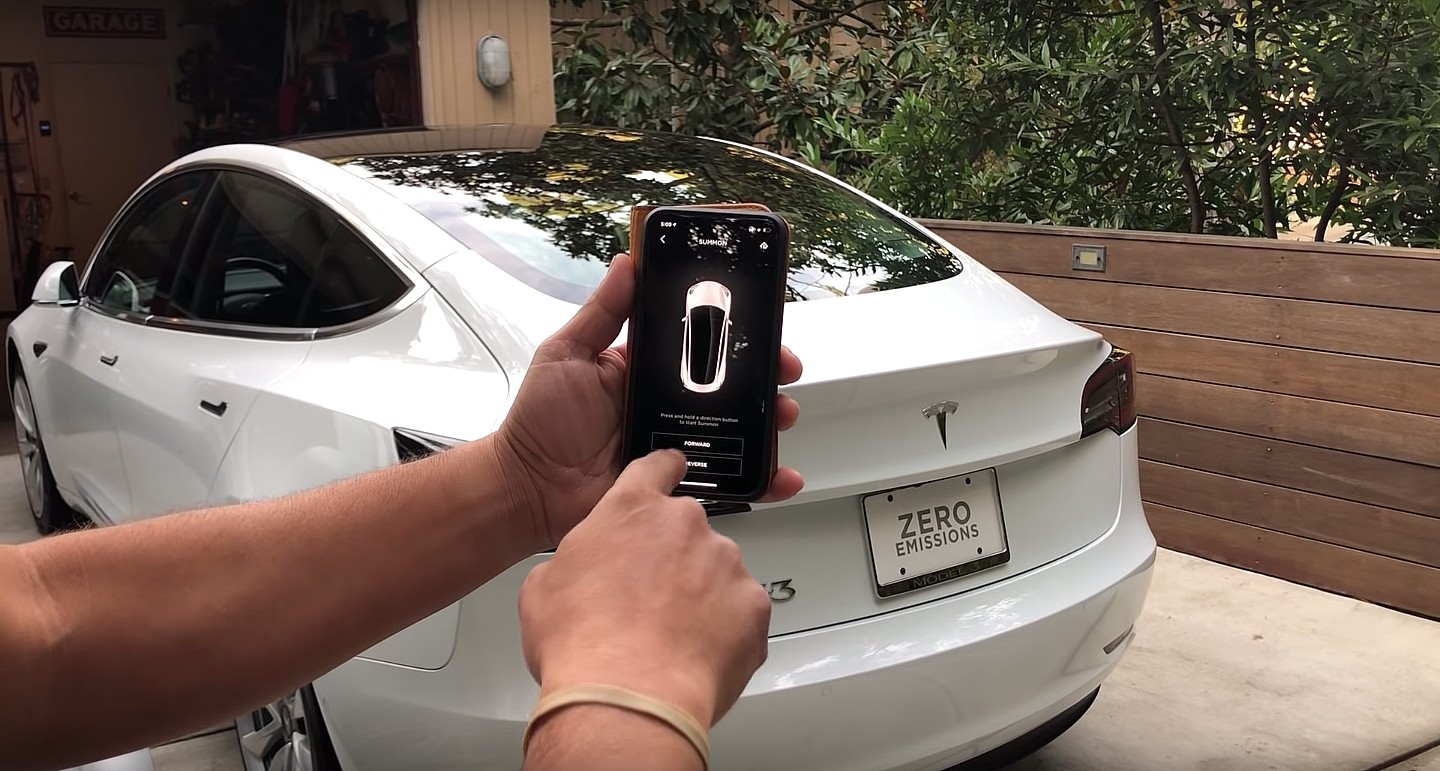
Actually Smart Summon allows owners to move their parked Tesla via a smartphone app remotely, directing the vehicle short distances in parking lots or private property while the driver supervises from the phone.
A probe into a popular Tesla self-driving feature has been closed by the National Highway Traffic Safety Administration (NHTSA) after over a year of scrutiny from the government agency.
The NHTSA has officially closed its investigation into Tesla’s Actually Smart Summon (ASS) feature, marking a regulatory win for the electric vehicle maker after more than a year of scrutiny.
Here’s our coverage on the launch of the probe:
Tesla’s Actually Smart Summon feature under investigation by NHTSA
The preliminary investigation, opened last January, examined roughly 2.59 million Tesla vehicles equipped with the feature across the Model S, Model X, Model 3, and Model Y lineups. ASS is not available for Cybertruck currently.
Actually Smart Summon allows owners to move their parked Tesla via a smartphone app remotely, directing the vehicle short distances in parking lots or private property while the driver supervises from the phone.
Here’s a clip of us using it:
Summon has had some good performances for me in the past
This was in October: https://t.co/w69Zp2bqeg pic.twitter.com/PVXSRj19E0
— TESLARATI (@Teslarati) April 5, 2026
Introduced as an upgrade to the original Smart Summon, the feature was designed to enhance convenience but drew attention after reports of low-speed incidents where vehicles bumped into stationary objects like posts, parked cars, or garage doors.
The NHTSA’s Office of Defects Investigation reviewed 159 incidents, including one formal Vehicle Owner’s Questionnaire complaint and media reports.
Notably, all events occurred at very low speeds, resulted only in minor property damage, and involved zero injuries or fatalities. The agency determined that the incidents were “extremely rare”, a fraction of one percent across millions of Summon sessions, and did not indicate a systemic safety-related defect.
A key factor in the closure was Tesla’s proactive response through over-the-air (OTA) software updates.
During the probe, Tesla deployed at least six updates that improved camera-based object detection, enhanced neural network performance for obstacle recognition, and refined the system’s response to potential hazards. These iterative improvements, delivered wirelessly to the entire fleet, addressed the primary concerns around detection reliability and operator reaction time.
Critics of Tesla’s autonomous features had initially pointed to the crashes as evidence of rushed deployment, especially given the feature’s reliance on the company’s vision-only Full Self-Driving (FSD) stack. However, NHTSA’s decision to close the case without seeking a recall underscores the low-severity nature of the events and the effectiveness of software-based fixes in modern vehicles.
It definitely has its flaws. I used ASS yesterday unsuccessfully:
It was pouring when I left the gym so I tried to Summon my Model Y
It turned the opposite way and drove out of range, stopping here and forcing me to walk even further across the lot in the rain for it 🤣
One day pic.twitter.com/iD10c8sriB
— TESLARATI (@Teslarati) April 5, 2026
However, improvements will come, and I’m confident in that.
The closure comes as Tesla continues to push boundaries with its autonomous driving ambitions, including unsupervised FSD rollouts and robotaxi initiatives. For owners, the ruling reinforces confidence in Actually Smart Summon as a convenient, low-risk tool rather than a hazardous experiment.
While broader NHTSA reviews of Tesla’s higher-speed FSD capabilities remain ongoing, this outcome highlights how data-driven analysis and rapid OTA remediation can satisfy regulators in the evolving landscape of automated driving technology.
Tesla has not issued an official statement on the closure, but the move is widely viewed as bullish for the company’s autonomy roadmap, reducing one layer of regulatory overhang and allowing focus on further refinements.
Elon Musk
Tesla uses Model S and X ‘sentimental’ value to enforce massive pricing move
By slashing production and creating immediate scarcity, the company has transformed these remaining vehicles into limited-edition relics. The price hike is not driven by rising material costs or new features.
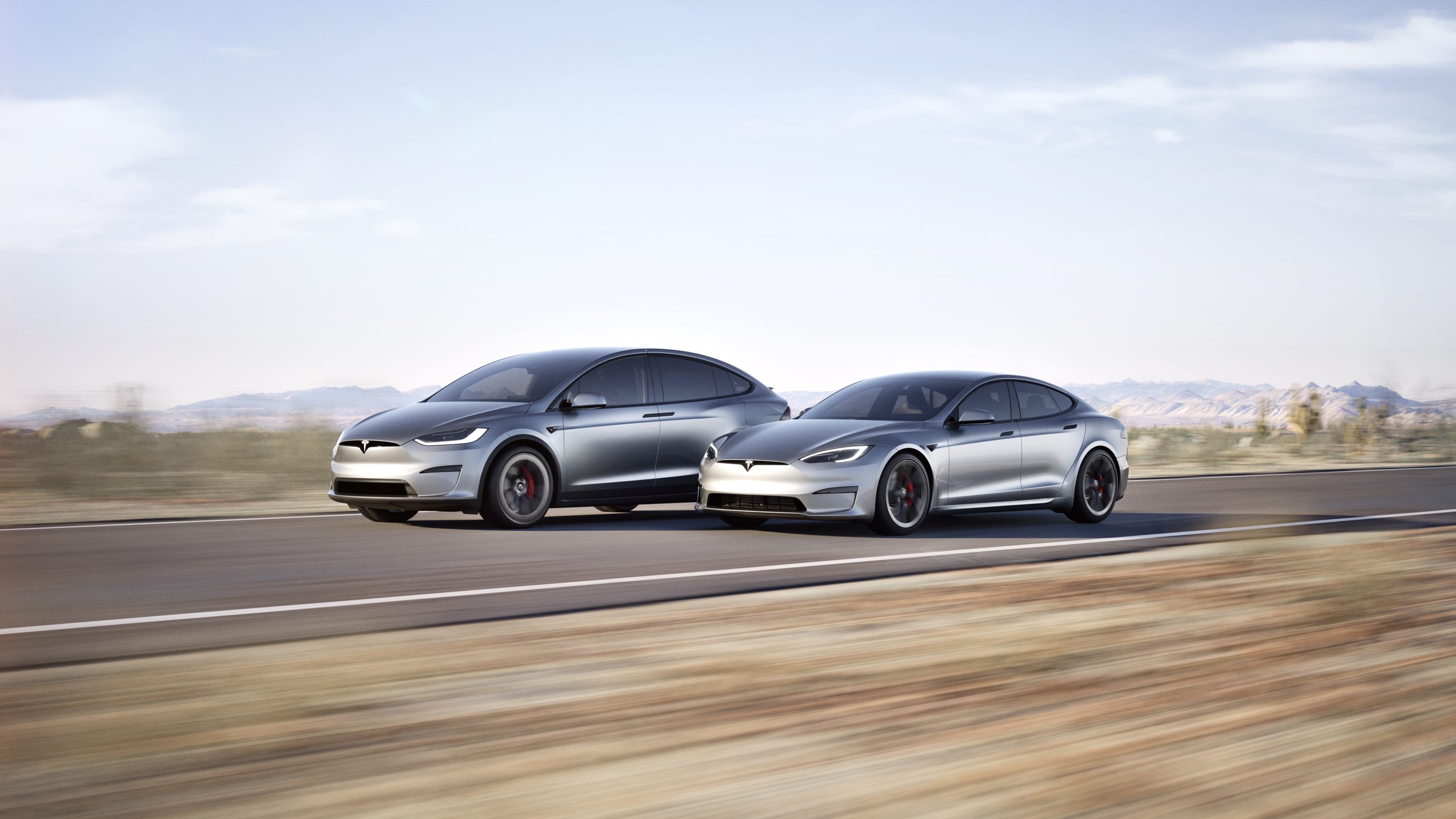
Tesla is using the “sentimental” value that CEO Elon Musk talked about with the Model S and Model X to enforce one of the most massive pricing moves it has ever applied as it begins to phase out the flagship vehicles.
Tesla quietly executed one of its most calculated pricing plays yet. After officially ending production of the Model S and Model X, the company raised prices on every remaining new and demo unit by roughly $15,000.
The refreshed starting prices now sit at:
- $109,990 for the Model S AWD
- $124,900 for the Model S Plaid
- $114,900 for the Model X AWD
- $129,900 for the Model X Plaid
NEWS: Tesla has raised the price on all remaining new (and demo) Model S and Model X vehicles left in inventory by $15,000.
New starting prices:
• Model S AWD: $109,990
• Model S Plaid: $124,900
• Model X AWD: $114,900
• Model X Plaid: $129,900 pic.twitter.com/qBEhsYAfXr— Sawyer Merritt (@SawyerMerritt) April 5, 2026
Every vehicle comes fully loaded with the Luxe Package, Full Self-Driving Supervised, four years of premium connectivity and service, and lifetime free Supercharging. What looks like a simple inventory adjustment is, in reality, a masterclass in monetizing nostalgia.
These are not ordinary cars. For many owners, the Model S and Model X represent the purest expression of Tesla’s original promise—the sleek, over-engineered flagships that proved electric vehicles could be faster, quieter, and more desirable than their gasoline counterparts.
Tesla removes Model S and X custom orders as sunset officially begins
They are the vehicles that carried Elon Musk’s vision from Silicon Valley startup to global automaker.
The final units rolling off the line carry an emotional weight that numbers alone cannot capture. Buyers are not simply purchasing transportation; they are acquiring a piece of Tesla history, the last examples of the very models that defined the brand’s first decade.
Tesla, with this move, understands this sentiment deeply.
By slashing production and creating immediate scarcity, the company has transformed these remaining vehicles into limited-edition relics. The price hike is not driven by rising material costs or new features.
It is driven by the knowledge that a certain segment of buyers, loyalists, collectors, and enthusiasts, will pay a premium precisely because these cars are about to disappear. The strategy converts emotional attachment into margin.
Where other automakers might discount outgoing models to clear lots, Tesla is betting that sentiment is worth more than volume.
The move also quietly rewards existing owners. Scarcity instantly boosts resale values for the hundreds of thousands of Model S and X already on the road, reinforcing brand loyalty among the very people who helped build Tesla’s reputation.
In the end, Tesla’s pricing decision reveals a sophisticated understanding of its audience. As the company pivots toward next-generation platforms, it has found a way to extract one final, lucrative chapter from its heritage.
For buyers willing to pay the new prices, the premium is not just for the car; it is for the feeling of owning the last true originals. Tesla has turned sentiment into strategy, and in the process, reminded everyone that even in the EV era, emotion remains a powerful line on the balance sheet.

Tesla Full Self-Driving v14.3 rolls out: here’s what’s new

Tesla Model Y ownership review after six months: What I love and what I don’t


