News
Tesla Semi & Convoy Mode are a perfect fit for EU Commission’s updated mobility strategy

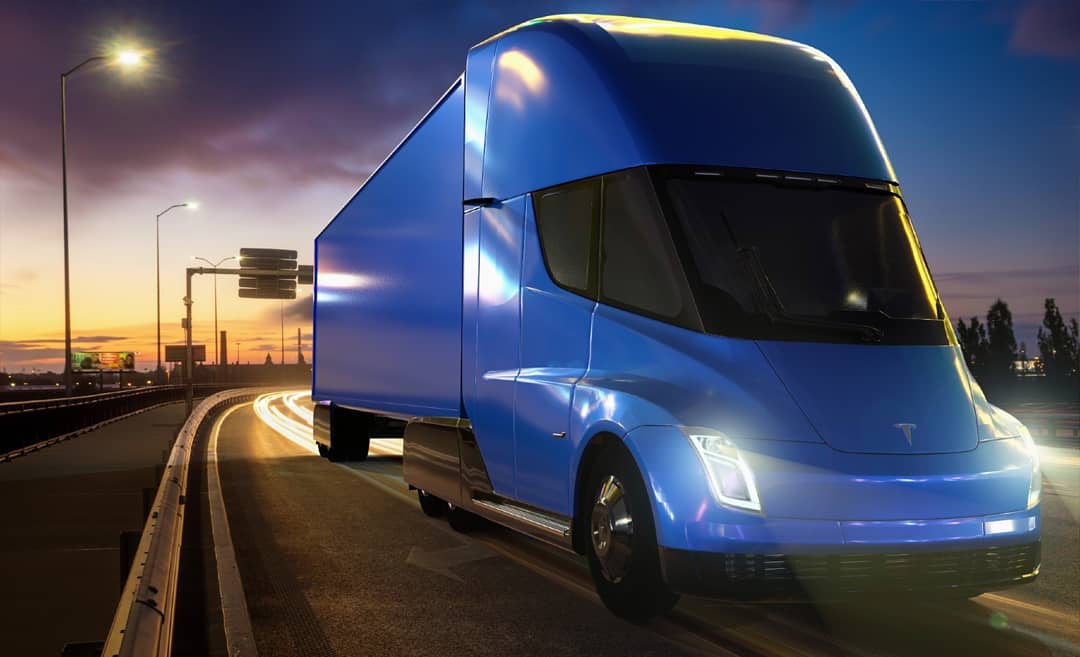
The Tesla Semi and its Convoy Mode feature could gain a strong foothold in Europe now that the EU Commission has released its plans to promote sustainable and smart transportation options in the region. The EU Commission released its Sustainable and Smart Mobility strategy last week.
The strategy focused on three key factors, namely sustainability, smart mobility, and resilience. It included goals for the passenger car industry, but also prominently discussed making public transportation and heavy-duty vehicles carbon neutral.
Zero-Emission Lorries and the Tesla Semi
The EU Commission plans to have at least 30 million zero-emission cars and 80,000 carbon neutral lorries, or heavy duty trucks like the Tesla Semi, in operation by 2030. It will propose a revision in CO2 standards for cars and vans in Europe by June 2021 and review carbon standards for heavy-duty vehicles by 2022.
The EU Commission’s plans for zero-emission lorries puts the Tesla Semi in an advantageous position. Besides being carbon neutral, the Tesla Semi also aligns with the EU Parliament’s truck manufacturing law.
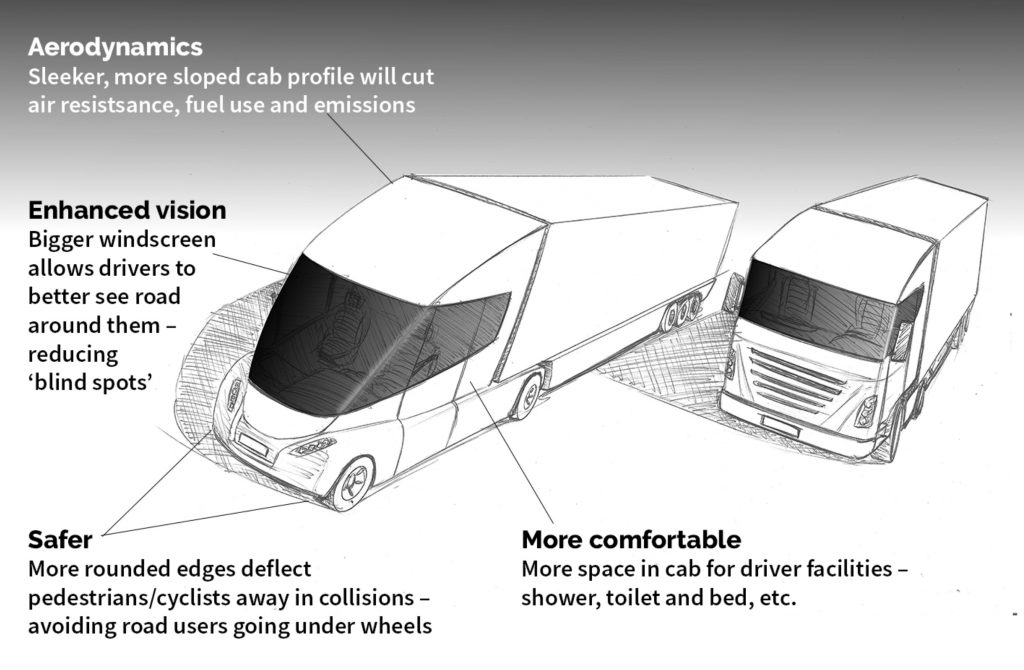
Last year, the EU Parliament voted for a law that required heavy-duty vehicle manufacturers to produce more aerodynamic, energy efficient trucks. Regulations in the law depicted a truck with 80-90 cm cabs and bigger windshields for a better view of the road. The European Federation for Transport and Environment released an illustration of the EU Parliament’s ideal heavy-duty vehicle design and it was very similar to the Tesla Semi.
Between the EU Commission and EU Parliament, it seems the game has been set for Tesla. The scales seems to tip more in favor for Tesla and the Semi when the Commission’s Smart Mobility plan comes into play.
Tesla Semi’s Convoy Mode in Europe
As for Smart Mobility, the EU Commission wants to proactively create favorable conditions for the development of new technologies. The Commission even stated that it would provide “all necessary legislative tools for their [new technologies’] validation.”
Support for autonomous vehicles is specifically mentioned in the EU Commission’s strategy, giving the Tesla Semi yet another advantage in Europe’s heavy-duty vehicle industry. Tesla’s advanced driver-assist software, Full Self-Driving, has been laid with some restrictions in Europe, but that may change in the future.
Tesla’s autonomous software development will definitely make it to the Semi and one feature in particular could be a gamer changer in the industry–Convoy Mode. Back in 2017, when Tesla unveiled the Semi, Elon Musk shared that the company’s Class 8 truck was already capable of Convoy Mode, which would allow multiple Semis to semi-autonomously draft in close proximity with each other. Since then, Tesla’s FSD and Autopilot software have gone through vast improvements, suggesting that Convoy Mode only improved as well.
Trucking veteran Sean Chenault was impressed by the Semi’s feature set and was particularly taken by Convoy Mode. “Having autonomous vehicles, you don’t need to pay a driver, and you don’t need to worry about hours of services,” he said. The trucking industry has been struggling with a shortage of drivers lately due mostly to safety concerns. Features like Convoy Mode have been one possible solution to solving driver shortage.
The Tesla Semi’s place in the EU Future
Chenault said the Semi was “a good thing for the trucking industry as a whole.” And it may be good for the EU Commission’s Sustainable and Smart Mobility strategy, too, specifically when it pertains to lorries.
Tesla’s business as an all-electric car maker would definitely benefit for the EU Commission’s new strategy. Tesla has already been gaining some more ground in Europe over the years with the Tesla Model 3. Next year could be another big year for Tesla in Europe with Giga Berlin and the release of the Model Y in the region. With the Semi in the picture, Tesla could cement itself as a key player in the region’s transportation sector.


Cybertruck
Tesla Cybertruck gets long-awaited safety feature
Tesla has announced the rollout of its innovative anti-dooring protection feature to the Cybertruck via the 2026.8 software update.

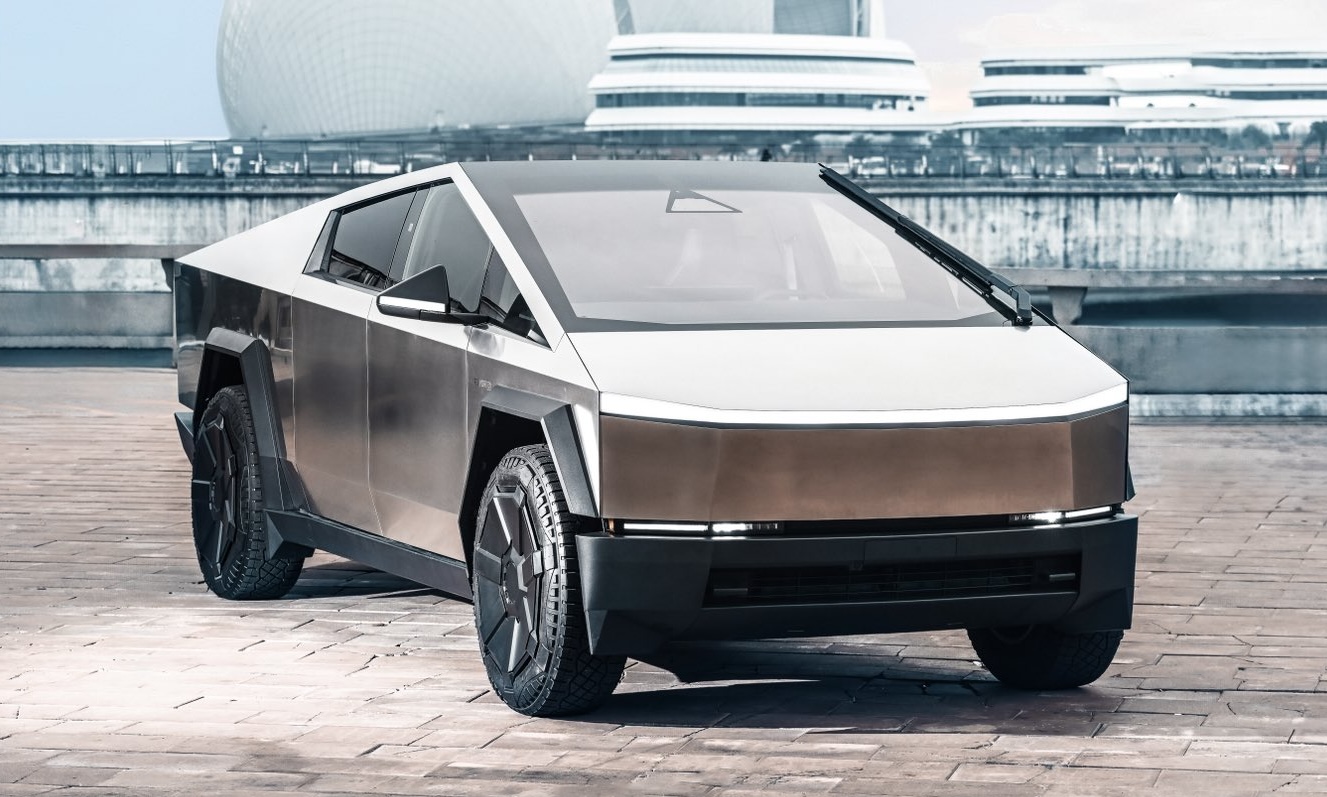
Tesla is rolling out a new and long-awaited feature to the Cybertruck all-electric pickup, and it is a safety addition geared toward pedestrian and cyclist safety, as well as accidents with other vehicles.
Tesla has announced the rollout of its innovative anti-dooring protection feature to the Cybertruck via the 2026.8 software update.
This safety enhancement uses the vehicle’s existing cameras to detect approaching cyclists, pedestrians, or vehicles in the blind spot while parked. Upon attempting to open a door, if a hazard is detected, the system activates: the blind spot indicator light flashes, an audible chime sounds, and the door will not open on the initial button press.
Drivers must wait briefly and press the button again to override, providing crucial seconds to avoid an accident.
Anti-dooring protection now rolling out to @Cybertruck
This feature comes standard on every new Model 3, Model Y & Cybertruck – using cameras to delay door opening if a cyclist, pedestrian or other vehicle is detected approaching in your blind spot
— Tesla North America (@tesla_na) March 17, 2026
The feature, also known as Blind Spot Warning While Parked, comes standard on every new Model 3 and Model Y, and is now extending to the Cybertruck. Leveraging Tesla’s vision-based system without requiring new hardware, it represents a cost-effective software solution that builds on community suggestions dating back to 2018.
This technology addresses the persistent danger of “dooring,” where a driver opens a car door into the path of a passing cyclist or pedestrian.
Tesla implemented this little-known feature to make its cars even safer
Dooring incidents are alarmingly common in urban environments.
According to Chicago data, in 2011 alone, there were 344 reported dooring crashes, accounting for approximately 20 percent of all bicycle crashes in the city, nearly one incident per day.
While numbers have fluctuated (dropping to 11 percent in 2014 before rising again), dooring consistently represents 10-20 percent of bike-related crashes in major cities.
A national analysis of emergency department data estimates over 17,000 dooring-related injuries treated in the U.S. over a decade, with many involving fractures, contusions, and head trauma, particularly affecting upper extremities.
By automatically intervening, Tesla’s system not only protects vulnerable road users but also safeguards its owners from potential liability and enhances overall road safety.
As cities promote cycling for sustainable transport, features like this demonstrate how advanced driver assistance and camera systems can evolve beyond highway driving to everyday urban scenarios.
Enthusiastic responses on social media highlight appreciation for the proactive safety measure, with some calling for broader rollout to older models where hardware permits. Tesla continues to push the boundaries of vehicle safety through over-the-air updates, making its fleet smarter and safer over time.
Elon Musk
Tesla Roadster is ‘sorcery and magic’ and might be worth the wait, Uber founder says
Perhaps the wait will be worth it, especially according to Uber founder Travis Kalanick, who recently teased the Roadster’s potential capabilities based on what he has heard from internal Tesla sources.
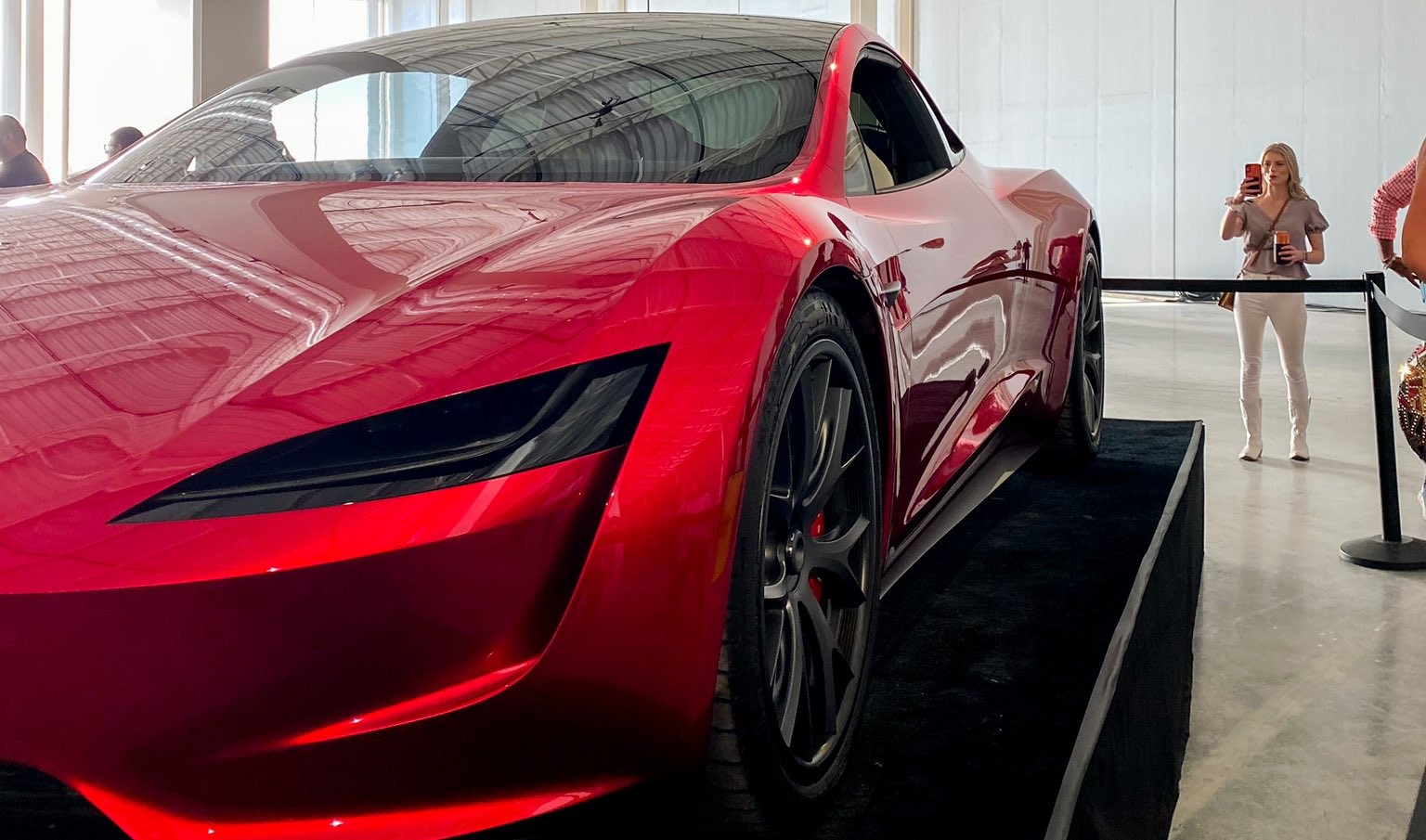
Tesla is planning to unveil the Roadster in late April after years of waiting. But the wait might be worth it, according to Travis Kalanick, the founder of Uber, who recently shed some light on his expectations for the all-electric supercar.
We all know the Roadster is supposed to have some serious capability. CEO Elon Musk has said on numerous occasions that the Roadster will be unlike anything else ever produced. It might go from 0-60 MPH in about a second, it might hover, it might have SpaceX cold gas thrusters.
However, the constant delays in the Roadster program and its unveiling event continue to send Tesla fans into confusion because they’re just not sure when, or if, they’ll ever see the finished product.
Perhaps the wait will be worth it, especially according to Uber founder Travis Kalanick, who recently teased the Roadster’s potential capabilities based on what he has heard from internal Tesla sources.
Kalanick said on X:
When I’ve run into people who are in the know, I inquire, they tell me nothing, but their eyebrows raise and their eyes widen in a way that can only mean something of sorcery and magic is coming…
— travis kalanick (@travisk) March 17, 2026
Musk has said this vehicle is not going to be geared for safety, and that, “If safety is your number one goal, do not buy the Roadster.”
There has been so much hype regarding the Roadster that it is hard to believe the company could not come through on some kind of crazy features for the vehicle.
However, the latest delay that Tesla put on the unveiling event is definitely eye-opening, especially considering it is the latest in a series of pushbacks the company has put on the vehicle for the past several years.
Tesla has made several jumps in the Roadster project over the past few months, as it has ramped up hiring for the vehicle and also applied for a patent for a new seat design.
The car has been a back-burner project for Tesla, as it has been focusing primarily on autonomy and the rollout of Robotaxi and Cybercab. Additionally, its other vehicle projects, like the Model 3 and Model Y refreshes, took precedence.
Tesla still plans to unveil the Roadster next month, so we can hope the company can stick to this timeframe.
Cybertruck
Elon Musk clarifies viral Tesla Cybertruck accident with driver logs
Musk has come out to say that the driver logs have already shown that the driver “disengaged Autopilot four seconds before crashing,” in a post on X.
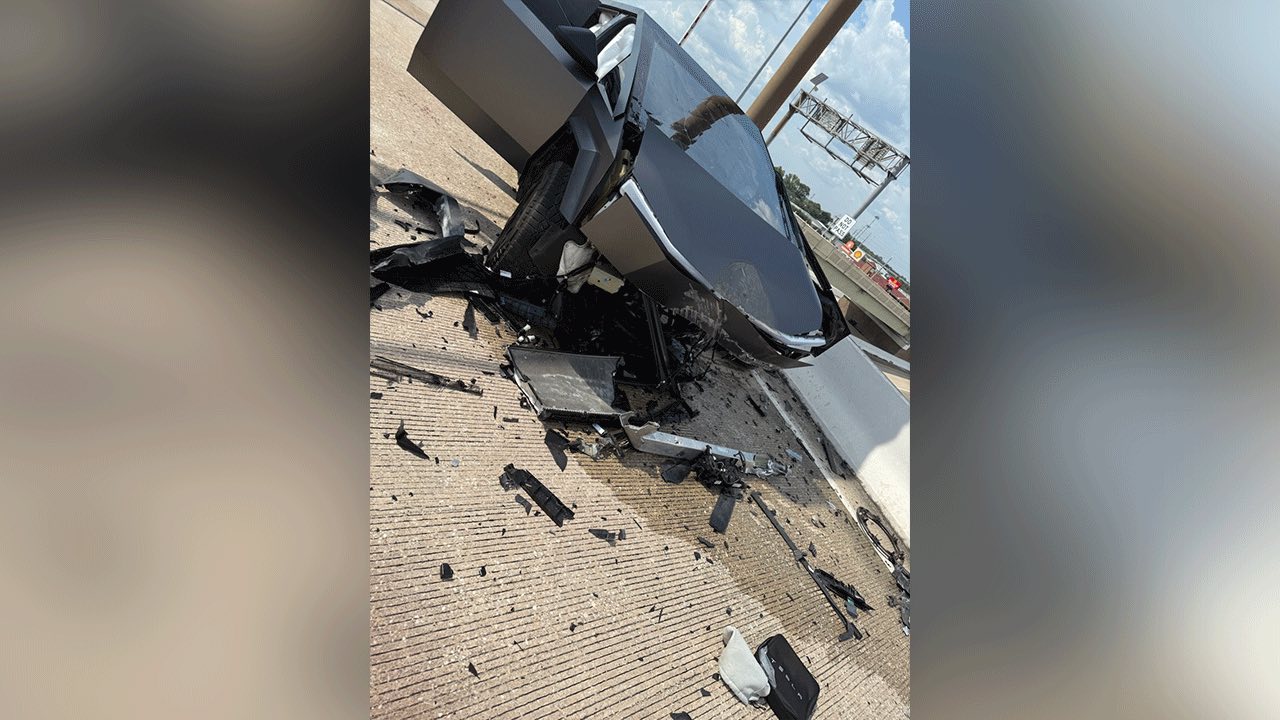
Tesla CEO Elon Musk has clarified some details regarding the viral Tesla Cybertruck accident with company driver logs, which show various metrics at the time of an incident.
The logs have been used in the past to pull responsibility off of Tesla when the automaker’s Full Self-Driving (Supervised) or Autopilot platforms are blamed for a collision or accident. It appears this will be no different.
On Tuesday, a video of a Cybertruck crashing into an overpass barrier in August 2025 was shared by Fox Business in a story that reported a woman was suing the automaker for $1 million in a liability and negligence case.
In the suit, Justine Saint Amour said that, “Something terrifying happened, without warning, the vehicle attempted to drive straight off an overpass.” Her attorney, Bob Hilliard, said Amour “tried to take control, but crashed into the barrier and was seriously injured (mostly her shoulder, neck, and back).”
The Tesla Model Y is leading China’s electric SUV segment by a wide margin
Tesla vehicle crashes are widely popular to report by mainstream media outlets because of the sensationalism of the event. Oftentimes, these outlets will include Tesla in the headline, especially because it will pique the interest of the masses, as most who read the story are waiting to see the claim that Autopilot or Full Self-Driving was the culprit of the accident.
However, Tesla has access to the logs of every vehicle in its fleet, which will show the various metrics, like whether either FSD or Autopilot was active, if the accelerator was pressed, the speed, and other important factors.
Musk has come out to say that the driver logs have already shown that the driver “disengaged Autopilot four seconds before crashing,” in a post on X.
Logs show driver disengaged Autopilot four seconds before crashing
— Elon Musk (@elonmusk) March 18, 2026
If the logs do show this, which Tesla will likely have to prove in court, the real question would be why did the Amour disengage the suite?
Tesla’s Full Self-Driving suite is still not fully autonomous, meaning the driver cannot pull attention away from the road and must be ready to take over the vehicle at all times.
It will be interesting to see how this particular case pans out, especially considering the clip that was released by the law firm starts at about four seconds before the collision. Tesla logs have dispelled media reports in the past that have accused the company’s suite of being responsible for an accident, so there will be some major attention on what is proven in this particular case.

Tesla Cybertruck gets long-awaited safety feature

Tesla Roadster is ‘sorcery and magic’ and might be worth the wait, Uber founder says


