News
Tesla states Giga Berlin workforce is stable, rejects media report
As per the electric vehicle maker, production and employment levels at the facility remain stable.

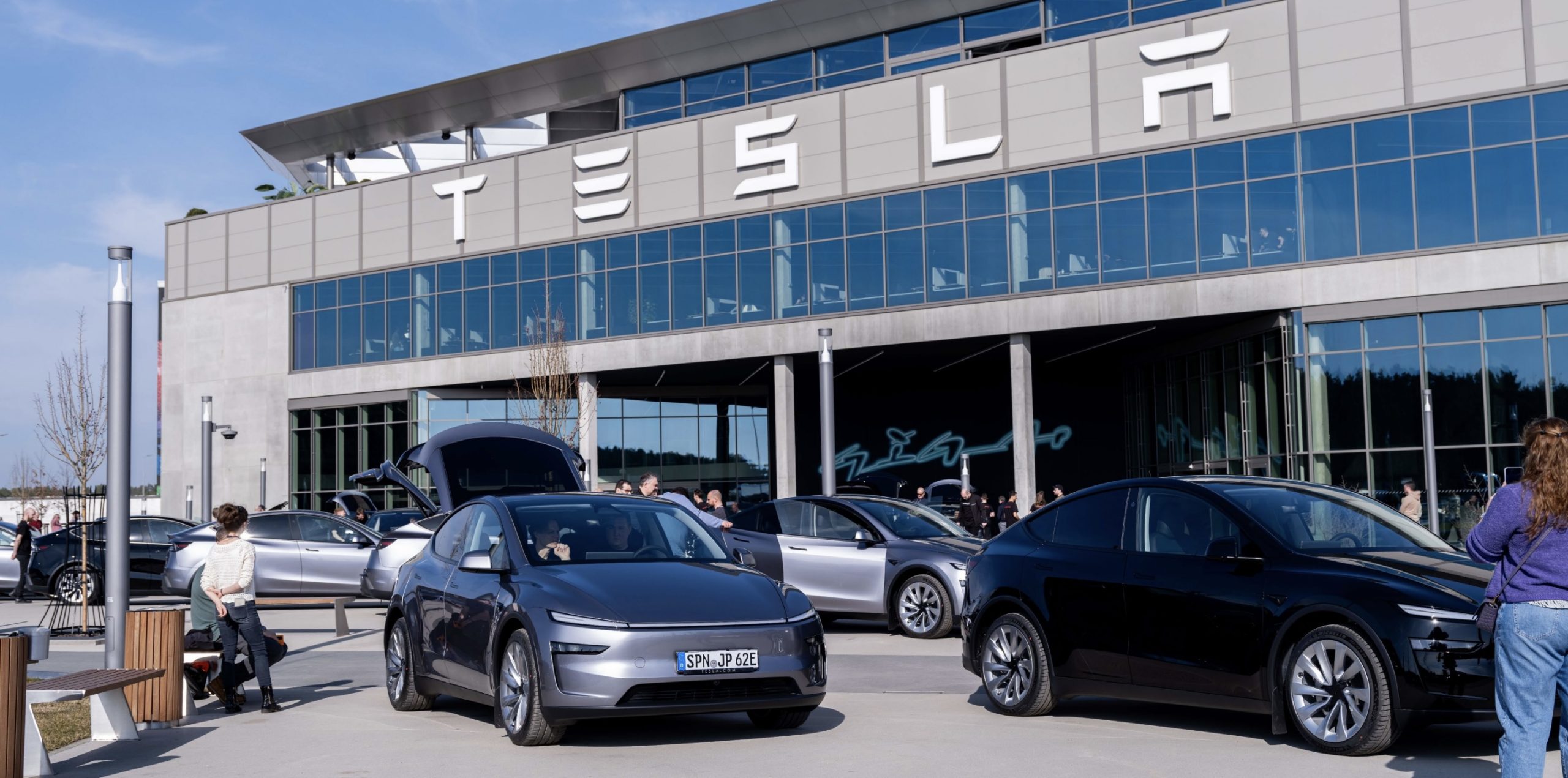
Tesla Germany has denied recent reports alleging that it has significantly reduced staffing at Gigafactory Berlin. As per the electric vehicle maker, production and employment levels at the facility remain stable.
Tesla denies Giga Berlin job cuts report
On Wednesday, German publication Handelsblatt reported that Tesla’s workforce in Gigafactory Berlin had been reduced by about 1,700 since 2024, a 14% drop. The publication cited internal documents as its source for its report.
In a statement to Reuters, Tesla Germany stated that there has been no significant reduction in permanent staff at its Gigafactory in Grünheide compared with 2024, and that there are no plans to curb production or cut jobs at the facility.
“Compared to 2024, there has been no significant reduction in the number of permanent staff. Nor are there any such plans. Compared to 2024, there has been no significant reduction in the number of permanent staff. Nor are there any such plans,” Tesla noted in an emailed statement.
Tesla Germany also noted that it’s “completely normal” for a facility like Giga Berlin to see fluctuations in its headcount.
A likely explanation
There might be a pretty good reason why Giga Berlin reduced its headcount in 2024. As highlighted by industry watcher Alex Voigt, in April of that year, Elon Musk reduced Tesla’s global workforce by more than 10% as part of an effort to lower costs and improve productivity. At the time, several notable executives departed the company, and the Supercharger team was culled.
As with Tesla’s other factories worldwide, Giga Berlin adjusted staffing during that period as well. This could suggest that a substantial number of the 1,700 employees reported by Handelsblatt were likely part of the workers who were let go by Elon Musk during Tesla’s last major workforce reduction.
In contrast to claims of contraction, Tesla has repeatedly signaled plans to expand production capacity in Germany. Giga Berlin factory manager André Thierig has stated on several occasions that the site is expected to increase output in 2026, reinforcing the idea that the facility’s long-term trajectory remains growth-oriented.


Elon Musk
Elon Musk says Tesla is developing a new vehicle: ‘Way cooler than a minivan’
It sounds as if Tesla could be considering a new vehicle to fit the mold of what a larger family would need, and as fans have been demanding it for several years and the company is phasing out the Model X, its only family-geared vehicle, it sounds as if it could be the perfect time.

Tesla CEO Elon Musk said the company is developing a new vehicle, and it will be “way cooler than a minivan.”
It sounds as if Tesla could be considering a new vehicle to fit the mold of what a larger family would need, and as fans have been demanding it for several years and the company is phasing out the Model X, its only family-geared vehicle, it sounds as if it could be the perfect time.
There are a handful of things Musk could be talking about, and as many Tesla owners have wanted a vehicle along the lines of a minivan for hauling around their family, speculation has persisted about what the company would do in terms of developing something for that exact use case.
There were several options, and some of them seemed to be already available. Musk posted on X yesterday that the Cybertruck has three sets of isofix attachments and could fit three child seats or three adults, and it seemed to be a way to deflect plans for a new, larger vehicle as a Model Y L appeared to be present at Giga Texas.
There is also the Robovan, the large people mover that Tesla unveiled at the “We, Robot” back in 2024.
Something way cooler than a minivan is coming
— Elon Musk (@elonmusk) March 25, 2026
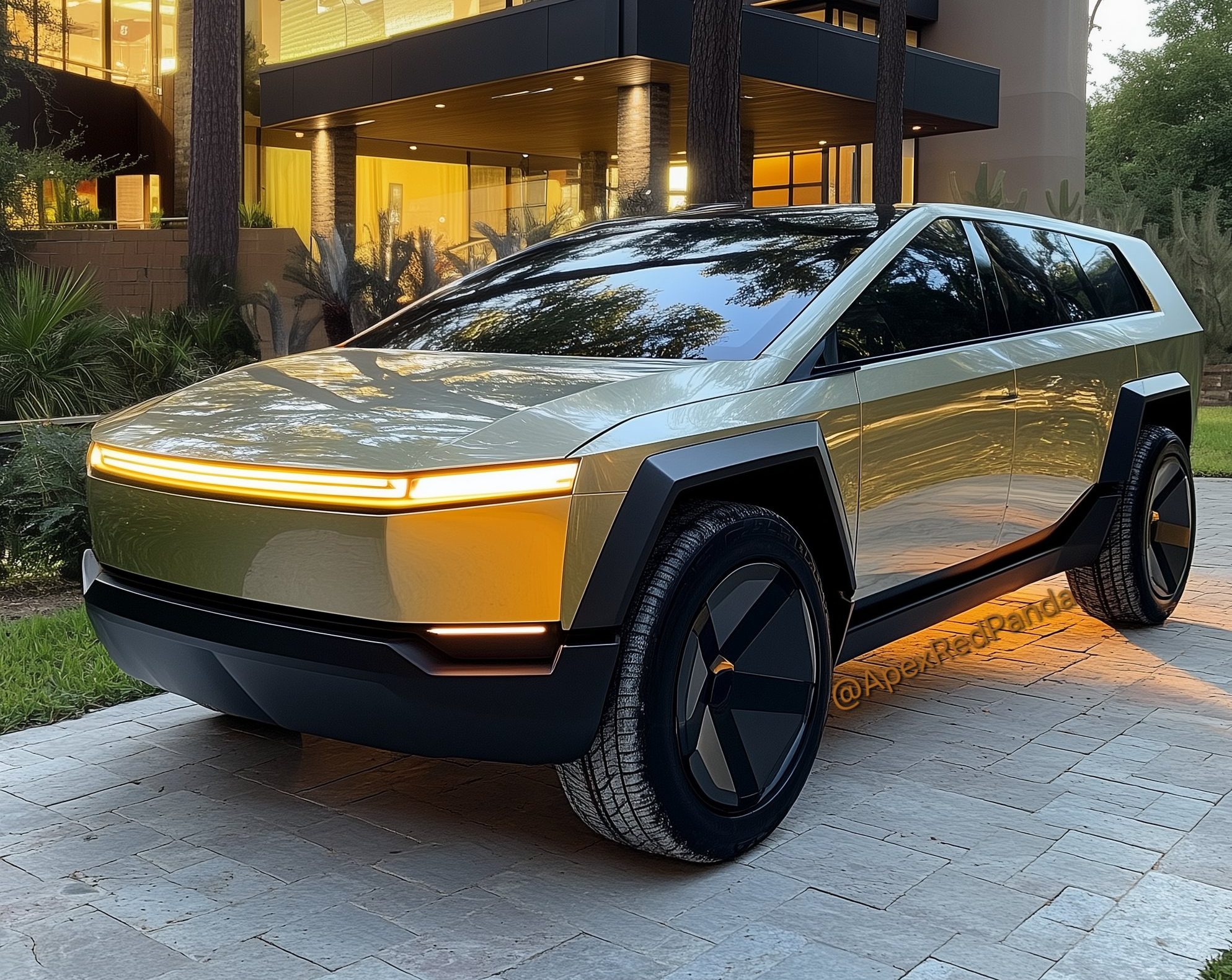
However, it seems Tesla could be developing something like a CyberSUV, something that is going to be large enough to haul around a car full of kids, but could be developed with the company’s aesthetic of the company’s most recent releases: this would likely include a light bar and a more sleek, futuristic look.
We’ve mocked up some potential looks for Tesla’s speculative vehicle in the past:
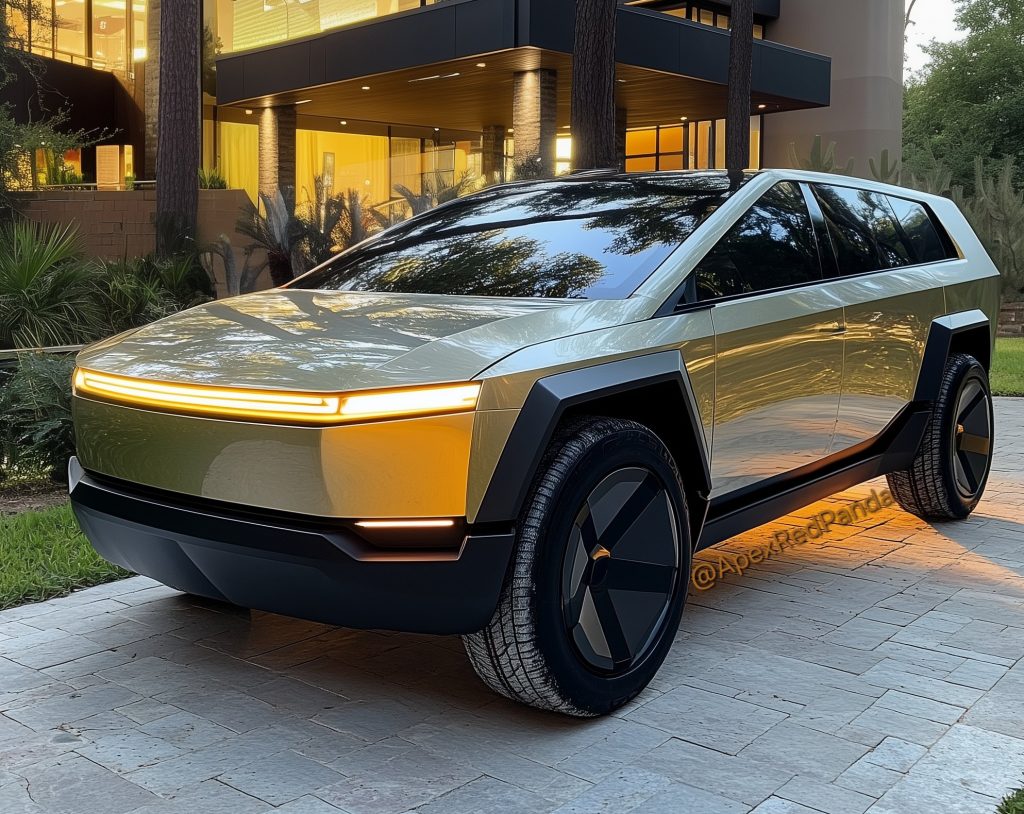
Tesla has teased the potential of a CyberSUV in the past, showing off clay models that it developed back in September in a teaser video called “Sustainable Abundance.”
Fans and owners have been calling for this development for a very long time, and it seems like Tesla might be ready to finally answer the call on a large SUV. With the segment being dominated by combustion engine vehicles, Tesla could truly disrupt the large SUVs that have been mainstays.
The Chevrolet Tahoe and GMC Yukon would feel some additional pressure, and it would be possible for Tesla to infiltrate some of those sales and pull consumers to electric powertrains.
As the Model S and Model X sunset process is truly hitting full swing, it might be time to consider Tesla’s next option in terms of vehicle development.
Elon Musk
Elon Musk’s $10 Trillion robot: Inside Tesla’s push to mass produce Optimus
Tesla’s surging Optimus job listings reveal a company sprinting from prototype to one million robot production.

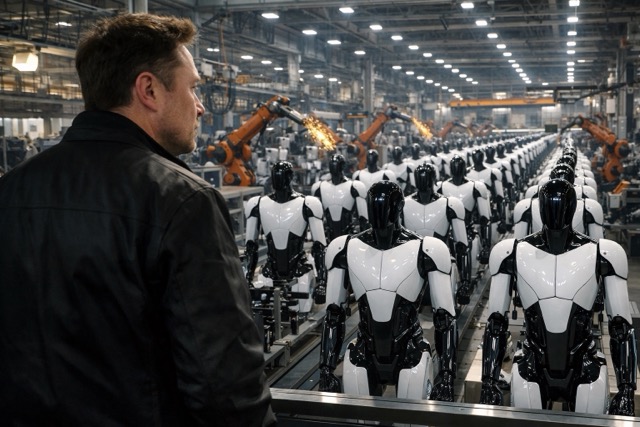
Tesla is accelerating its push to bring the Optimus humanoid robot to high volume production, and its recent job listings tells the story as clearly as any earnings call.
With well over 100 Optimus related job openings now posted across its U.S. facilities, Tesla is signaling a critical pivot for the program, moving it from a captivating tech demo to a serious manufacturing endeavor. Roles span the full spectrum of the product lifecycle, from Robotics Software Engineers and Manufacturing Engineers to Mechanical Integration Engineers and AI Engineers focused on world modeling and video generation. One active listing for a Software Engineer on the Optimus team asks candidates to build scalable and reliable data pipelines for Optimus manufacturing lines and develop automation tools that accelerate analysis and visualization for mass manufacturing.
Tesla is racing toward a one million unit annual production target. The clearest signal yet that Tesla is treating Optimus as its primary business came on January 28, 2026, during the company’s Q4 2025 earnings call. Musk announced that Tesla is ending production of the Model S and Model X, and will repurpose those lines at its Fremont, California factory to build Optimus humanoid robots.
A production intent prototype of Optimus Version 3 is planned to be ready in early 2026, after which Tesla intends to build a one million unit production line with a targeted production start by the end of 2026. To support that ramp, Tesla broke ground on a massive new Optimus manufacturing facility at Gigafactory Texas in late 2025, with ambitions to eventually reach 10 million units per year.
Tesla Giga Texas to feature massive Optimus V4 production line
The business case for scaling this aggressively is rooted in labor economics. Musk has stated that “Optimus has the potential to be the biggest product of all time,” reasoning that if Tesla can produce capable humanoid robots at scale and reasonable cost, every task currently performed by human labor becomes a potential application. In a separate statement, Musk framed Optimus’s long term importance even more bluntly, saying it could surpass Tesla’s vehicle business in scale with the potential to generate $10 trillion in revenue.
The industries Tesla is targeting first are those most burdened by repetitive physical labor. Early applications include manufacturing assembly, material handling and quality inspection, as well as logistics tasks like loading, unloading, sorting, and transporting goods in warehouses and distribution centers. Longer term, Tesla’s vision is for Optimus to penetrate household, medical, and logistics scenarios at the scale of a smartphone rollout.
News
Tesla officially begins sunset of Model S and Model X
In the latest move to show Tesla is planning to eliminate the Model S and Model X from production, the company’s Korean arm has officially set a firm cutoff date of March 31, 2026, for new orders of both models.
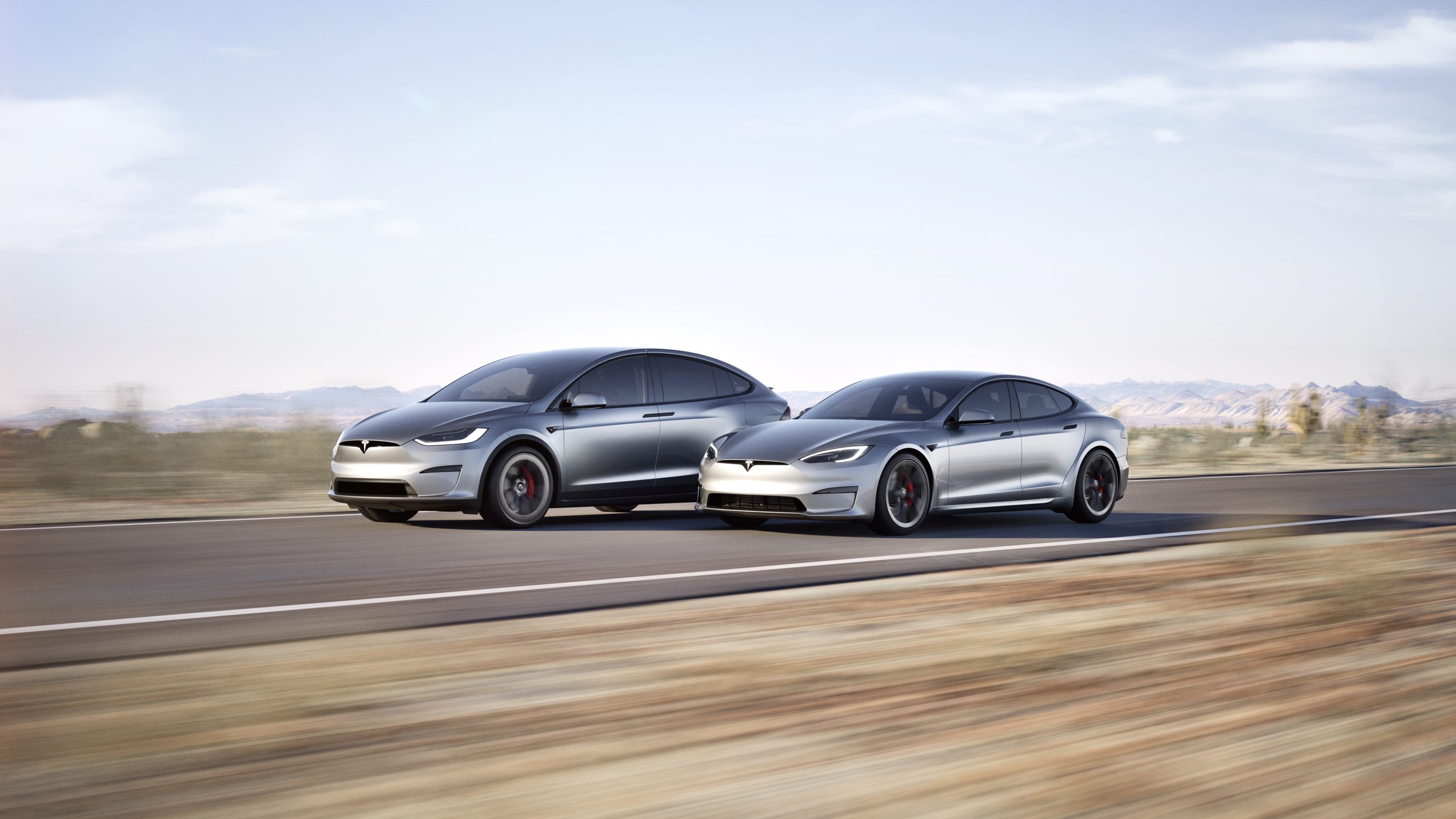
Tesla has officially started its process of sunsetting the Model S and Model X just months after the company confirmed it would stop producing the two flagship vehicles in 2026.
This step marks the end of an era for the vehicles that helped establish not only Tesla’s prowess as an automaker but also its status as a disruptor in the entire car industry. While these two cars have done a tremendous amount for Tesla, the signal that it is time to wind down their production has evidently arrived.
In the latest move to show Tesla is planning to eliminate the Model S and Model X from production, the company’s Korean arm has officially set a firm cutoff date of March 31, 2026, for new orders of both models.
This is the first time Tesla has announced a hard global deadline for the Model S and X, as after that date, only existing inventory will be available in South Korea.
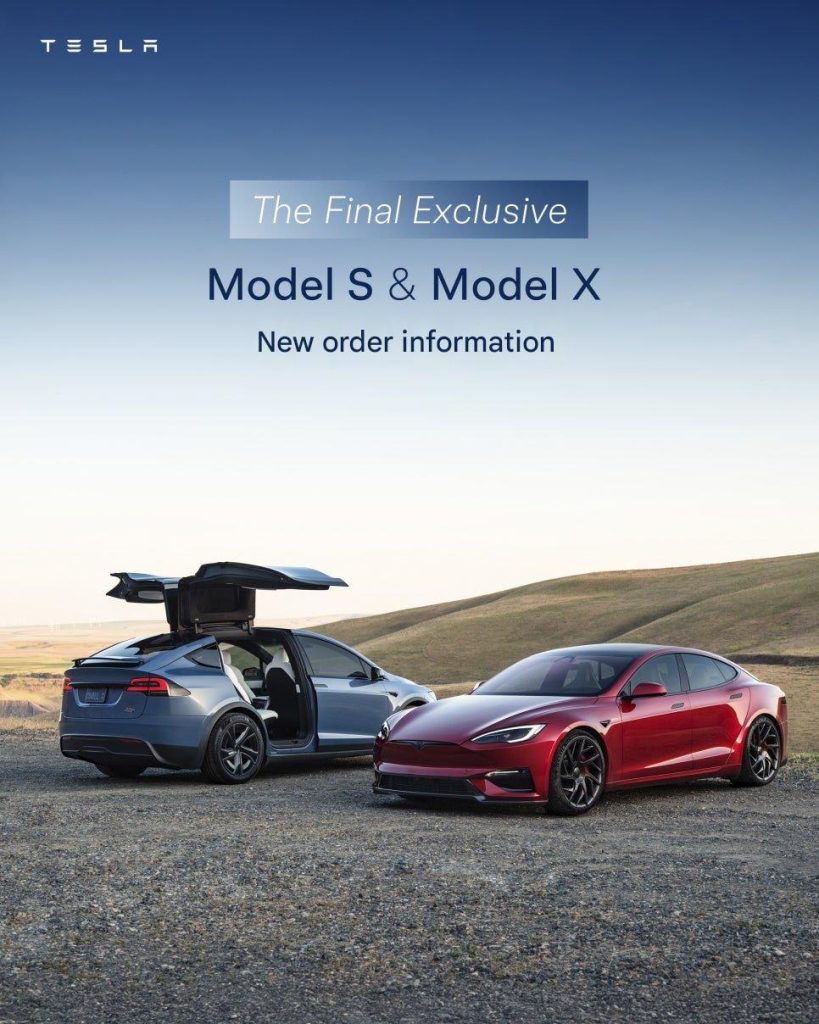
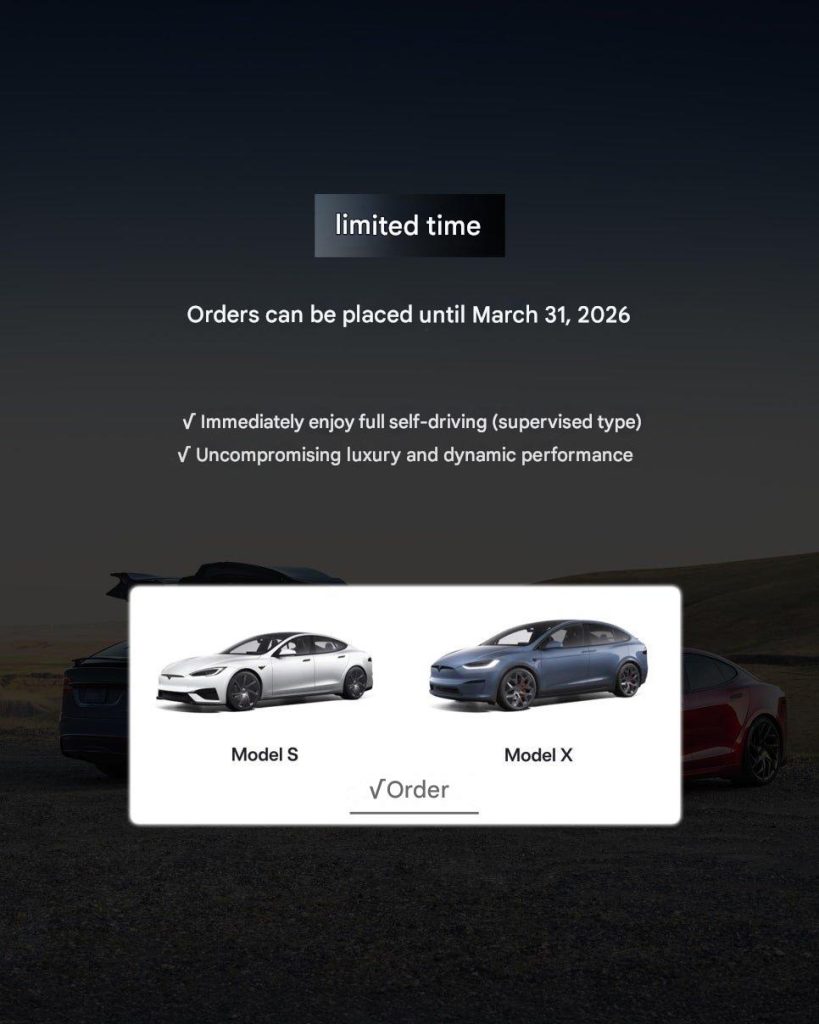
The move to bring closure to the Model S and Model X aligns with CEO Elon Musk’s plans for Tesla moving forward. During the Q4 2025 Earnings Call in January, Musk said the two cars deserved an “honorable discharge” for what they have done for the company.
The long-running programs are primarily being removed so that manufacturing lines can be repurposed for high-volume manufacturing of the Optimus humanoid robot. Tesla is targeting a production rate of up to one million units each year.
The Model S and Model X being removed from Tesla’s plans is a tough choice, but it was one that was written on the wall. Sales of these premium models have declined sharply in recent years, and even with Plaid configurations that are performance-forward, the company still has had trouble getting them sold.
In 2025, the Model S and Model X together accounted for roughly 3 percent of Tesla’s global deliveries, down significantly from prior periods as competition intensified in the luxury EV segment and buyers shifted toward more affordable options like the Model 3 and Model Y.
The Model S saw sales drop over 50 percent year-over-year in some quarters, while the Model X faced similar pressures from rivals, including the Rivian R1S and BMW iX.
Despite their dwindling volume, the Model S and Model X remain technological showcases. The Plaid variants deliver blistering acceleration, advanced Full Self-Driving capability, and luxurious interiors.
The phase-out paves the way for Tesla’s strategic pivot toward autonomy, robotics, and higher-volume vehicles.
Tesla brings closure to flagship ‘sentimental’ models, Musk confirms
Fremont will continue producing the refreshed Model 3 and Model Y, ensuring the factory remains a key automotive hub while expanding into robotics. Tesla has stated that the shift is not expected to result in job losses and could increase headcount as Optimus production ramps up.
For Tesla fans, the sunset represents a bittersweet moment. The Model S, introduced in 2012, proved EVs could compete with luxury sedans, while the Falcon-wing-door Model X set new standards for family haulers. Owners can expect continued software support and service for years to come.
Many fans have pushed for the Model X to hang around due to its appeal for families.
With the two cars heading out, Tesla’s priority now becomes its future products, especially that of the Optimus robot, which is the main reason for the S/X platform’s conclusion.

Elon Musk says Tesla is developing a new vehicle: ‘Way cooler than a minivan’

Elon Musk’s $10 Trillion robot: Inside Tesla’s push to mass produce Optimus

Tesla officially begins sunset of Model S and Model X

What is Digital Optimus? The new Tesla and xAI project explained

Elon Musk’s Boring Co. Tunnel Vision Challenge ends with a surprise for Louisiana, Maryland and Dallas


