Investor's Corner
Top 10 questions Tesla investors want answered in the Q3 2022 earnings call

Tesla (NASDAQ:TSLA) is holding its third-quarter earnings call after markets close tomorrow, October 19, 2022. As in previous quarters, Tesla investors have voted for the top questions that they want the company’s executives to answer at the upcoming Q3 2022 earnings call.
As noted by Say, the questions that Tesla investors have submitted for the third quarter earnings call represent inquiries from retail and institutional investors.
Following are the Top 10 questions from Institutional Tesla investors:
- Given the stringent battery content and assembly requirements for consumer tax credit eligibility under the Inflation Reduction Act, can you speak to Tesla’s ability to meet those thresholds in each of 2023, 2024, and 2025 with your existing and planned supply chain?
- What updates can you offer on the backlog and recent order intake trends, especially outside of the US (and specifically in China)?
- Do you still expect 50% annualized growth for the foreseeable future? Is this also true for specifically the Chinese domestic market? Do you expect to need to cut vehicle prices or offer incentives in any market to sustain demand, or has demand remained stable or is even rising?
- Can you tell us more about the product + feature roadmap beyond new models and FSD, and specifically for the interior and powertrain of existing vehicle models?
- We keep hearing of the dire energy crisis in Germany this Winter. What are Tesla’s plans to combat power cuts, and will there be any delays in the ramp-up in production from Giga Berlin because of this?
- How is production planning going for the Cybertruck? What is the initial Phase 1 production target? When can we expect an update on pricing and final design?
- What is the progress of the 4680 cell ramp, and what factors determine whether vehicles get 2170 vs. 4680 cells, and how will that change in the next year?
- Can you share a little bit more on the production ramp targets for the Semi now that production has started?
- Can you talk about how Tesla could adjust if we were to enter a prolonged recession, including new product prioritization, investment flexibility (new factory, factory expansion, service/support infrastructure), productivity/cost measures, and demand stimulation alternatives?
- The progression from Tesla’s first platform with S / X to the second platform with 3 / Y led to a 50% reduction in COGS. When do you see Tesla’s third platform being released, and what level of COGS reduction could you achieve?
The following are the Top 10 questions from Retail Tesla investors.
- You had said previously that FSD Hardware 4 would most likely come first in Cybertruck. Is that still the current plan? Do you expect there to be an upgrade path for Hardware 3 cars to Hardware 4?
- Is a share buyback being considered at the moment?
- How have Tesla’s battery cell production and material sourcing plans evolved with the recent passage of the Inflation Reduction Act that includes production credits for batteries and EVs?
- Do you see deliveries softening in Q4 due to people waiting to take delivery after 1/1/23 when the new tax credits take effect?
- Where’s/When’s the next Gigafactory being built?
- Any new updates on Tesla Solar Roof, new efficiencies, and spread across the US?
- Is Robotaxi/FSD rollout still on track for year-end in the USA?
- The rising cost of FSD is a big factor in people not upgrading to a new version. I have a 2020 Model Y with FSD and won’t upgrade to a 2023 because I can’t afford $15k FSD. I also cannot get $15k resale value for my old one. Will you allow transferring FSD to new cars?
- What are the major obstacles Tesla is facing in achieving a 10K/week run rate at Giga Berlin and Giga Austin?
- What is your forward-looking guidance on demand in the early half of 2023, given the macroeconomic situation we find ourselves in?
Tesla’s Q3 2022 earnings call will be held at 5:30 p.m. Eastern Time on Wednesday, October 19, 2022. A webcast of the Q3 2022 earnings call is linked here.
Disclaimer: I am long TSLA.
Don’t hesitate to contact us with news tips. Just send a message to simon@teslarati.com to give us a heads up.


Investor's Corner
Tesla crushes Wall Street expectations, beats delivery estimates by over 15 percent

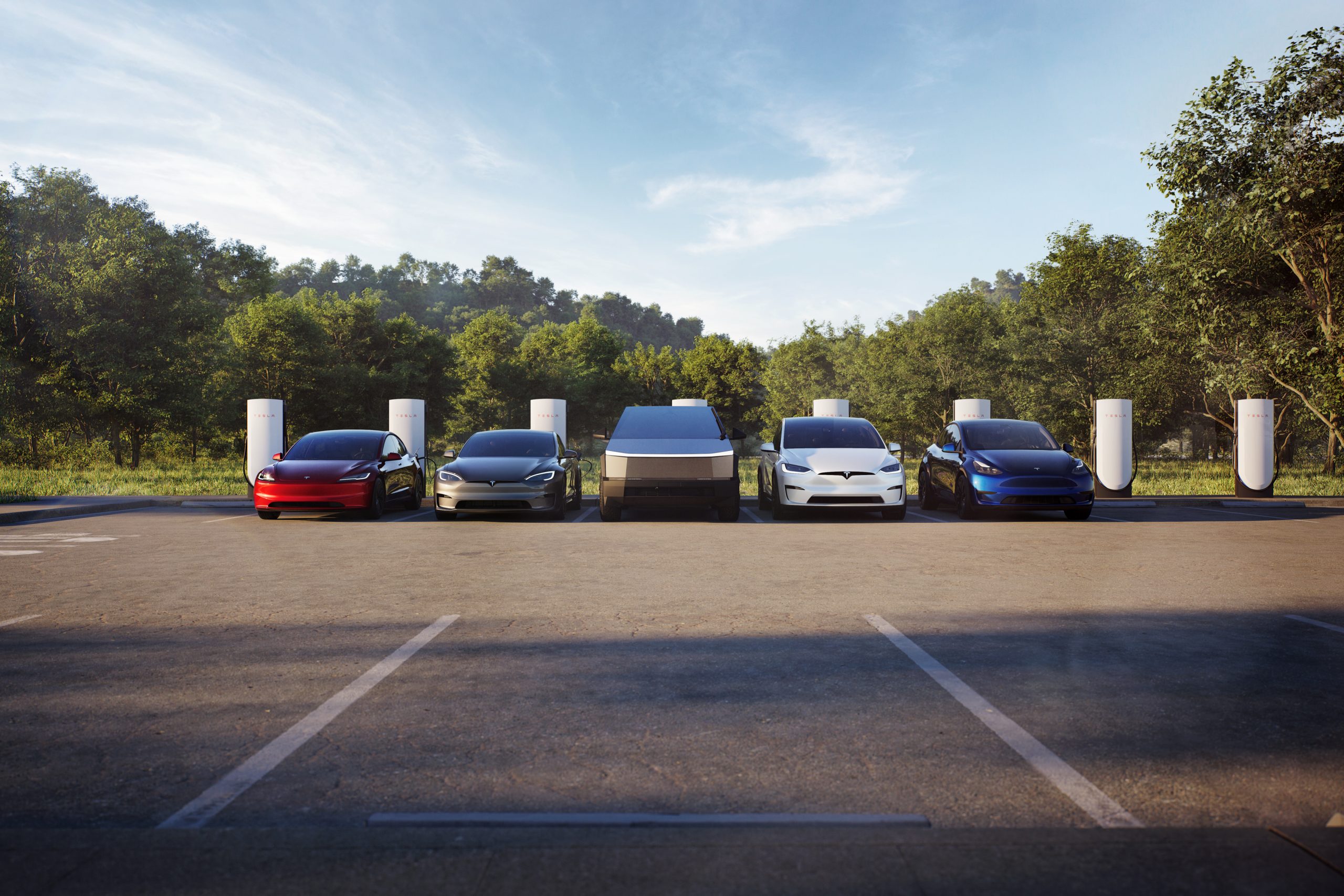
Tesla (NASDAQ: TSLA) beat Wall Street expectations of 406,000 vehicles delivered in Q2 by reporting 480,126 deliveries for the three months ending in June.
Tesla reported it delivered 467,762 Model 3 and Model Y units, while 12,364 Model S, Model X, and Cybertrucks switched hands during the quarter. The Model S and Model X were officially sunset this past quarter and will no longer be part of the company’s Production & Delivery reports moving forward.
🚨 BREAKING: Tesla delivered 480,126 vehicles in Q2, ANNIHILATING Wall Street expectations of 406,000. Production was reported at 451,758.
Deliveries:
Model 3/Y: 467,762
Other Models: 12,364Production:
Model 3/Y: 442,936
Other Models: 8,822 https://t.co/TTHwQAsKt8 pic.twitter.com/7qI4Zj6FE5— TESLARATI (@Teslarati) July 2, 2026
The quarter is a pleasant surprise and a good rebound from Q1, when Tesla slightly missed the Wall Street consensus of 365,645 cars by reporting 358,023 deliveries for the first three motnhs of the year.
Energy storage deployments also provided some strength in Tesla’s delivery report, hitting 13.5 GWh for Q2. This is a particular division of Tesla’s business that has been overwhelmingly robust over the past few years, truly being a strong point of the company’s overall model.
For the year, Tesla analysts still predict deliveries to trend in the 1.69 million unit region, a modest 3 to 5 percent increase from the 1.64 million cars the company delivered last year. Tesla will likely return to more sequential and noticeable year-over-year growth as the Cybercab project starts to ramp up considerably in the next few years.
Tesla has some other potential catalysts to spur vehicle deliveries, too. Not only is it expecting Cybercab to truly start making a change in the next few years, but other vehicles could be entering the company’s lineup.
Tesla sends production Cybercab with no steering wheel, pedals to on-road testing
The slightly longer Model Y L has been a highly speculated release candidate in the U.S. It has already done incredibly well in China, and U.S. buyers have been wanting slightly more interior space than the Model Y. Now that the Model X is gone, it is more needed than ever.
Q2 highlights a pretty stable automotive division within Tesla, and no true concerns arise from these figures, especially considering it managed to beat expectations convincingly.
Investor's Corner
Tesla gets its latest short from Michael Burry: ‘Happy it jumped back to this level’
Tesla short seller Michael Burry, the subject of the film “The Big Short,” where he was portrayed by Steve Carell, has revealed he has opened a new bet against the stock.
In a new update to his Substack newsletter in a post titled “Trading Post June 30, 2026,” Burry revealed a new set of bets against Tesla, Caterpillar, NVIDIA, Applied Materials Inc., and the iShares Semiconductor ETF.
In regard to Tesla, Burry wrote:
“And finally I shorted Tesla at 416.22. Happy it jumped back to this level.”
This means Burry likely opened his new short position after the company’s recent rally on Wall Street, which saw Tesla shares sink in mid-May, only to recover to well over the $400 mark. Currently, shares trade at around $427.
The company saw a big Tuesday as shares climbed considerably, over 10 percent. The size of the Tesla short was not provided, nor did Burry give any information on the position’s structure, the number of shares, dollar value, or whether options were used in the short.
The Tesla and SpaceX merger everyone is talking about is quietly building
Over the years, Burry has been one of the more vocal critics of Tesla, calling its share price “media inflated,” and saying it was “ridiculously overvalued” as recently as December.
The company has largely transitioned away from being known as an automotive company and instead is much more widely regarded as an AI play, mostly due to its Full Self-Driving efforts, Optimus robot development, and data collection related to both.
This has not pulled those skeptics away from being vocal about their distaste for how Tesla is valued, but there’s no denying that the company is a global force in many things, including sustainable energy, automotive, and AI.
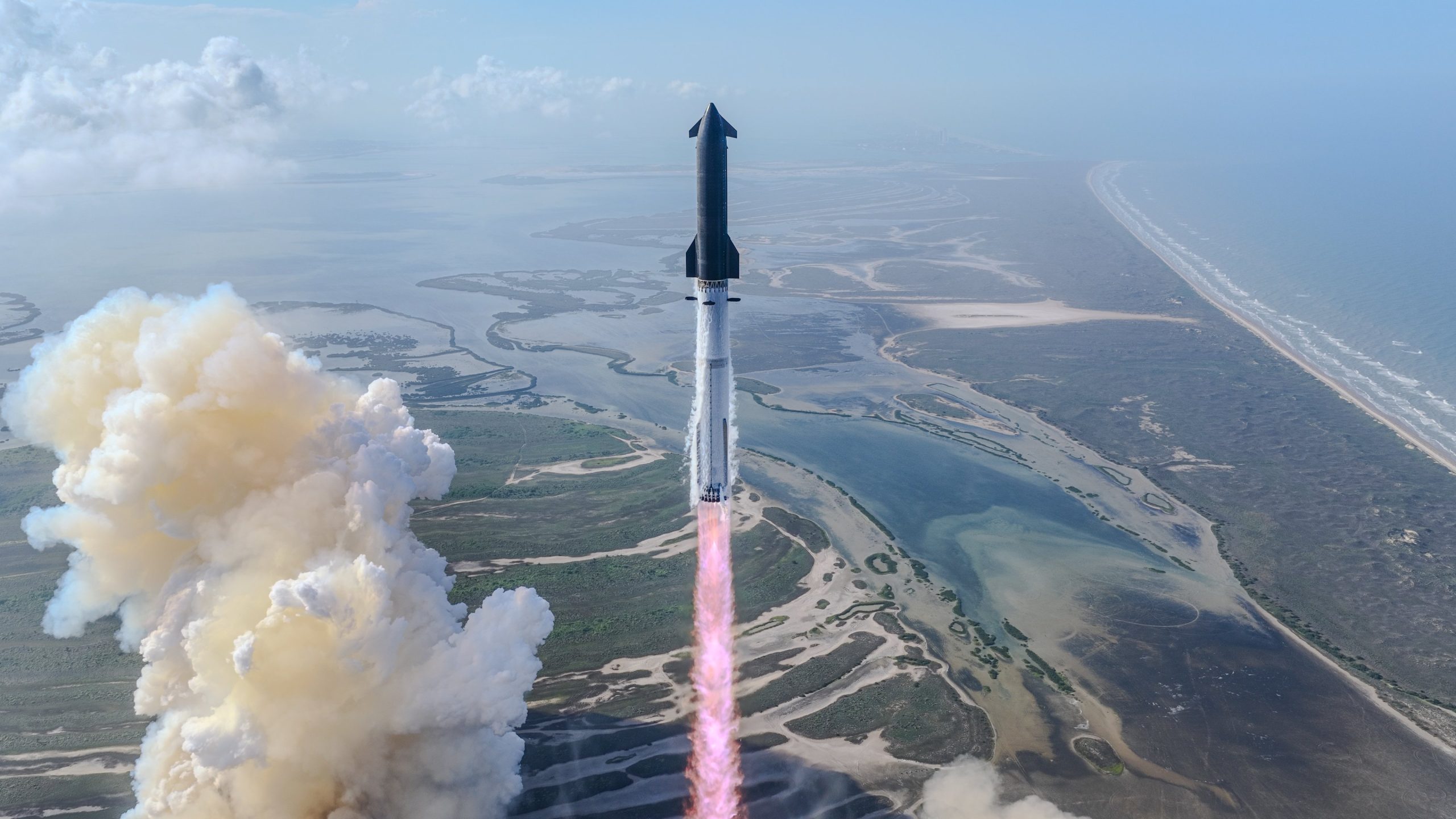
Wedbush Securities is initiating stock coverage on SpaceX (NASDAQ: SPCX), marking the first comments on the company since it went public several weeks ago. Wedbush and its analyst handling coverage, Dan Ives, are widely bullish on fellow Musk company Tesla (NASDAQ: TSLA).
Ives wrote his first note initiating coverage of SpaceX shares on Wednesday with a $190 price target and an ‘Outperform’ rating. The firm believes the company is well positioned off of its IPO because of its wide array of projects, including AI compute power and infrastructure, connectivity projects, and launches.
“We view SpaceX as one of the most differentiated assets within the tech market with a strong footprint across its three core markets, with Starlink driving success with connectivity,” Ives wrote, “Starship launches leading to a demand flywheel and increasing deal flow for its Colossus clusters.”
Elon Musk called it Epic: The full story of SpaceX’s Starship Flight 12
Wedbush leans heavily on Starlink, which they say is the “profitability driver given the strength of its recurring revenue base of ~12 million subscribers as of June 5th.” Ives believes Starlink is still in the “early innings” of penetrating the global telecommunications and broadband market, as it only holds less than a 1 percent share. However, this number is sure to increase over time.
It also highlights the importance of Starship, which it says is an “essential layer” of SpaceX’s overall success. SpaceX developing and displaying the ability to reuse rockets is a major cost and reliability advantage “as it reduces the necessary hardware launch costs while generating a feedback loop for future flights to improve their launch flight rate without accelerating capex spend.”
Finally, SpaceX’s recent AI/Compute projects are also very elementary, Ives writes. It is worth mentioning Wedbush said its $190 price target is derived from a valuation forecast that sees the company yielding roughly $2.48 trillion of implied enterprise value.
There are also some factors that Wedbush did not take into account with its initial coverage. The firm wrote in the note:
“We note that there is optional value coming from Starship’s accelerating scale towards sub-$200/kg unit economics, orbital data centers, and enterprise AI monetization as these factors could drive meaningful upside but these face major hurdles, so we do not take that into account with our valuation.”
SpaceX shares are down just over 2 percent today, trading at around $167 at the time of publication.

Texas man charged in fatal Tesla crash where he blamed Autopilot

Tesla’s strong Q2 deliveries: Four key drivers behind the surprise


