
News
Trump’s tech meeting focused on jobs, education, and more

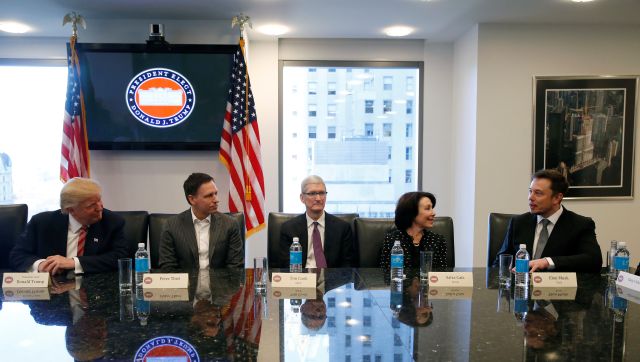
Yesterday’s meeting of the most influential technology leaders and the Trump transition team focused on several topics related to our national economy and its intersection with the technology sector.
YouTube featured a 3-minute or so live stream of Trump’s welcome to his top tier technology guests. The tension was palpable, as many present had not supported a Trump 2016 Presidential bid and now foresee less technology sector spending with Trump in the White House. Moreover, according to Andrew Bartels, a Forrester principal analyst, recent Trump appointments, such as cabinet secretaries, “are explicitly hostile to the mission of their agencies.” With a Trump administration leading the country, Forrester Research has cut back its growth estimate for the U.S. tech market in 2017 to 4.3 percent from 5.1 percent.
The individuals present often held dichotomous views on issues like net neutrality, dissemination of fake news, censorship, and antitrust issues. For example, the president-elect’s vocal stance on immigration, which could limit H1-B skilled worker visas as part of a clampdown on cheaper foreign labor, could create difficulties for companies like Facebook and Microsoft, as a change in their hiring practices would elevate their expenditures and affect their overall profitability.
Conversely, areas of agreement for the group of tech entrepreneurs were corporate tax cuts and repatriation of capital being held abroad, reports CBS News.
One topic at the 90-minute meeting between Trump and the tech CEOs was how to create a U.S. economy with home-grown and high-paying jobs. IBM CEO Ginni Rommety recently wrote an op-ed piece in USA Today discussing their company plans to hire 25,000 people in the U.S. and invest $1 billion over the next four years in “new collar” jobs via employee vocational training. “We are hiring because the nature of work is evolving – and that is also why so many of these jobs remain hard to fill.”
That “evolving” workforce demands new training, which was another important topic of conversation at the Trump tech summit. The U.S. workforce will require employees with skills that are relevant to jobs such as cloud computing technicians and services delivery specialists.
This focus on becoming a reflexive workforce was contained in remarks that Jeff Bezos of Amazon later issued. In a statement, he related how he “shared the view that the administration should make innovation one of its key pillars, which would create a huge number of jobs across the whole country, in all sectors, not just tech — agriculture, infrastructure, manufacturing — everywhere.”
That innovation will be crucial to obtain one Trump administration goal of higher pay across U.S. jobs, as the Bureau of Labor Statistics found that the area of highest job creation at the end of 2015 was home health aides, who earn less than $25,000 per year. That barely exceeds the U.S. poverty level for a family of four.
Those present included Elon Musk; Jeff Bezos of Amazon; Tim Cook of
Apple; Sheryl Sandberg of Facebook; Larry Page and Eric Schmidt of Alphabet, Google’s parent company; and Satya Nadella of Microsoft.
“This is a truly amazing group of people,” the president-elect said in a conciliatory gesture. “There’s nobody like you in the world. In the world! There’s nobody like the people in this room.” The tech leaders smiled politely at the president-elect, recognizing that the tech summit could provide a boost to big-cap technology stocks, which have lagged in an otherwise surprisingly robust post-election rally.
Future Trump administration quarterly meetings with the select tech leaders will be organized by Mr. Trump’s son-in-law and adviser, Jared Kushner.


News
Tesla FSD user in China shares insights after months of use: “Not a single safety intervention”
Tesla FSD users in China tend to push the system to its absolute limits.

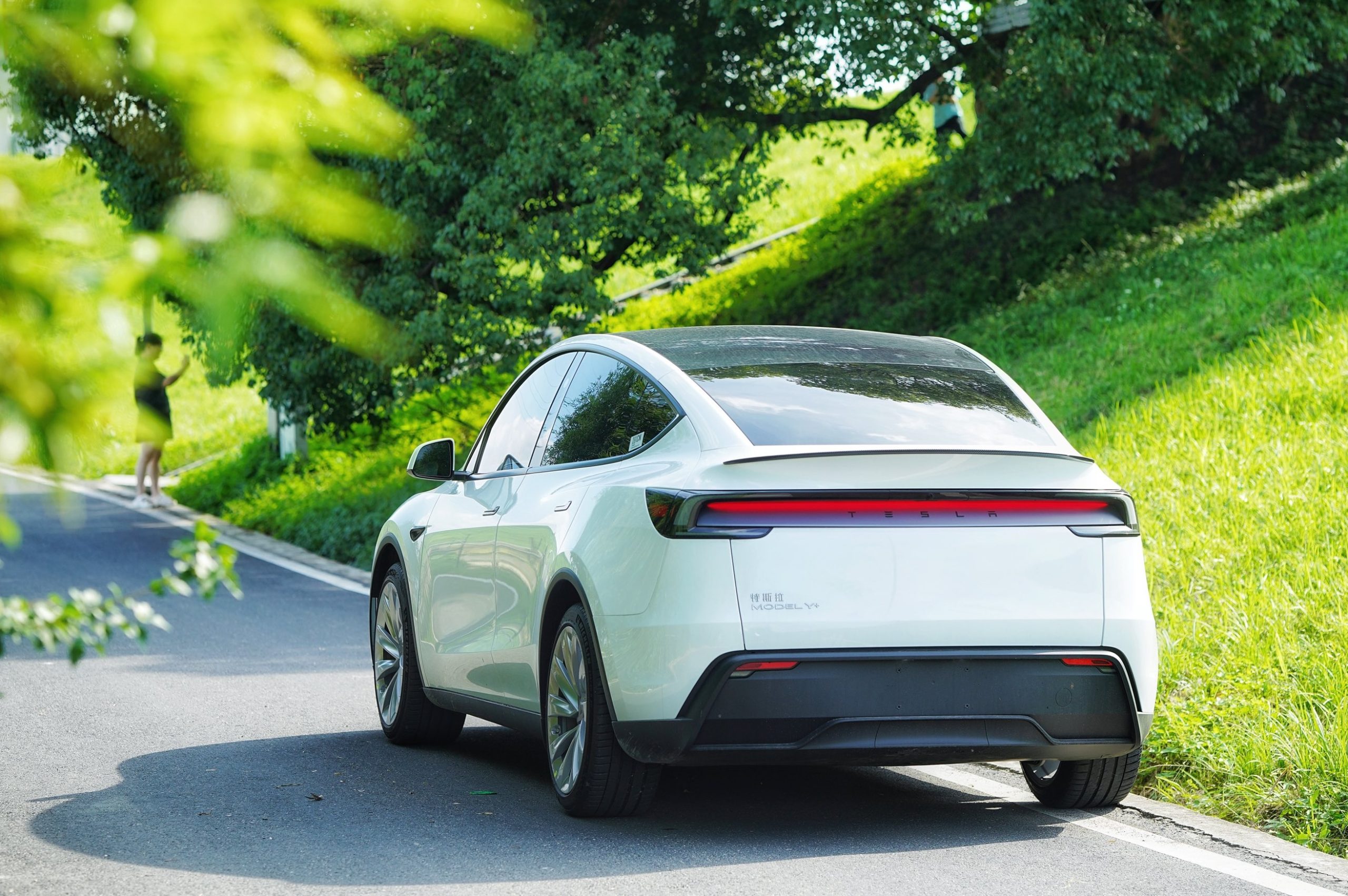
Tesla’s Full Self-Driving (FSD) system appears to be quietly winning over drivers in China. Although its rollout in February 2025 has not been followed by additional notable updates, recent accounts from local drivers suggest that Tesla’s approach to full self-driving may be outperforming its rivals on Chinese roads.
Tesla’s FSD exhibits smooth and cautious performance on real roads
As noted in a post shared by EV watcher @ray4tesla, a driver who has used Tesla’s FSD in China for two months described a well-calibrated, human-like driving experience. The driver also noted that Tesla’s FSD system is very cautious, perhaps even too careful at times.
“On narrow roads, it slows down appropriately; on major roads, it picks up speed. When there are a lot of pedestrians or electric scooters, it’s overly cautious — almost too polite,” the driver wrote.
Even more interestingly, the driver emphasized that despite frequent usage, there has been zero safety interventions since FSD was enabled in the vehicle. “In the two months I’ve been using FSD, I haven’t had even a single safety intervention,” the driver wrote.
Huawei ADS test triggers multiple safety takeovers
The user compared FSD to Huawei’s ADS system, which they tested for about 90 minutes in an Aito M9 SUV. According to the driver, Huawei’s ADS struggled to deliver consistent performance.
“Then I tried the M9 (Huawei ADS) for an hour and a half. When it needed to speed up, it lagged; and on tight, narrow roads, it suddenly accelerated — honestly, it was pretty scary. The acceleration and braking felt jerky, and you could clearly tell it was being driven by a machine (robotic vibe),” the driver wrote.
The user reported four safety interventions with Huawei’s ADS system within just 30 minutes while driving on rough, construction-heavy roads. “In construction zones and on rough roads, there were four safety interventions in just 30 minutes. And if you know what a ‘safety intervention’ means — that’s essentially four near-collisions,” the driver added.
While anecdotal, the account from the Tesla owner is quite significant since FSD users in China tend to push the system to its absolute limits. Since its rollout earlier this year, Tesla drivers in China have been recorded testing FSD on unpaved mountain roads, extremely narrow streets, busy cities, and wooded paths that barely have any road at all, among others.
Elon Musk
Tesla begins expanding Robotaxi access: here’s how you can ride
You can ride in a Tesla Robotaxi by heading to its website and filling out the interest form. The company is hand-picking some of those who have done this to gain access to the fleet.

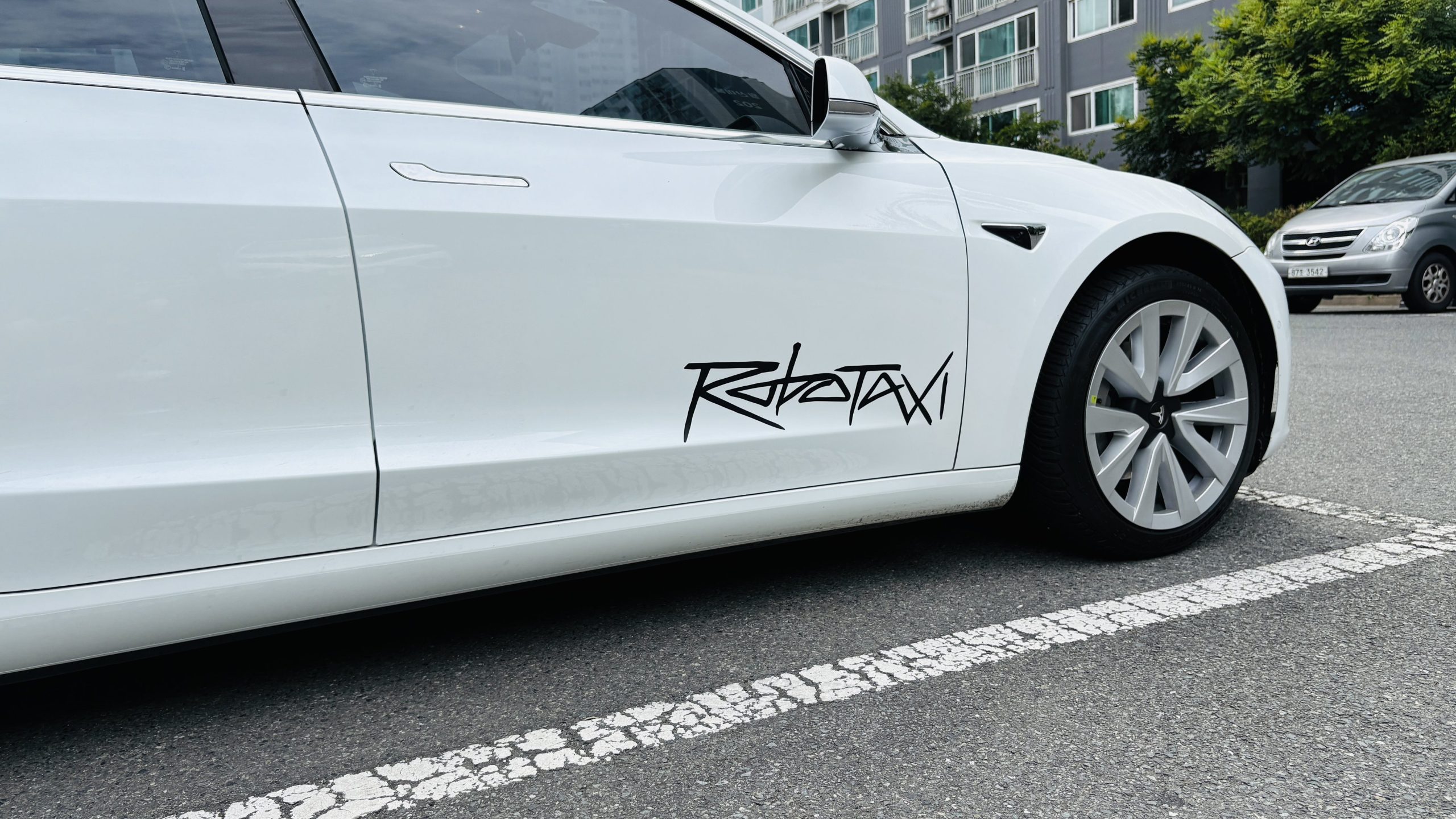
Tesla has begun expanding Robotaxi access beyond the initial small group it offered rides to in late June, as it launched the driverless platform in Austin, Texas.
The small group of people enjoying the Robotaxi ride-hailing service is now growing, as several Austin-area residents are receiving invitations to test out the platform for themselves.
The first rides took place on June 22, and despite a very small number of very manageable and expected hiccups, Tesla Robotaxi was widely successful with its launch.
Tesla Robotaxi riders tout ‘smooth’ experience in first reviews of driverless service launch
However, Tesla is expanding the availability of the ride-hailing service to those living in Austin and its surrounding areas, hoping to gather more data and provide access to those who will utilize it on a daily basis.
Many of the people Tesla initially invited, including us, are not local to the Austin area.
There are a handful of people who are, but Tesla was evidently looking for more stable data collection, as many of those early invitees headed back to where they live.
The first handful of invitations in the second round of the Robotaxi platform’s Early Access Program are heading out to Austin locals:
I just got a @robotaxi invite! Super excited to go try the service out! pic.twitter.com/n9mN35KKFU
— Ethan McKanna (@ethanmckanna) July 1, 2025
Tesla likely saw an influx of data during the first week, as many traveled far and wide to say they were among the first to test the Robotaxi platform.
Now that the first week and a half of testing is over, Tesla is expanding invites to others. Many of those who have been chosen to gain access to the Robotaxi app and the ride-hailing service state that they simply filled out the interest form on the Robotaxi page of Tesla’s website.
That’s the easiest way you will also gain access, so be sure to fill out that form if you have any interest in riding in Robotaxi.
Tesla will continue to utilize data accumulated from these rides to enable more progress, and eventually, it will lead to even more people being able to hail rides from the driverless platform.
With more success, Tesla will start to phase out some of the Safety Monitors and Supervisors it is using to ensure things run smoothly. CEO Elon Musk said Tesla could start increasing the number of Robotaxis to monitors within the next couple of months.
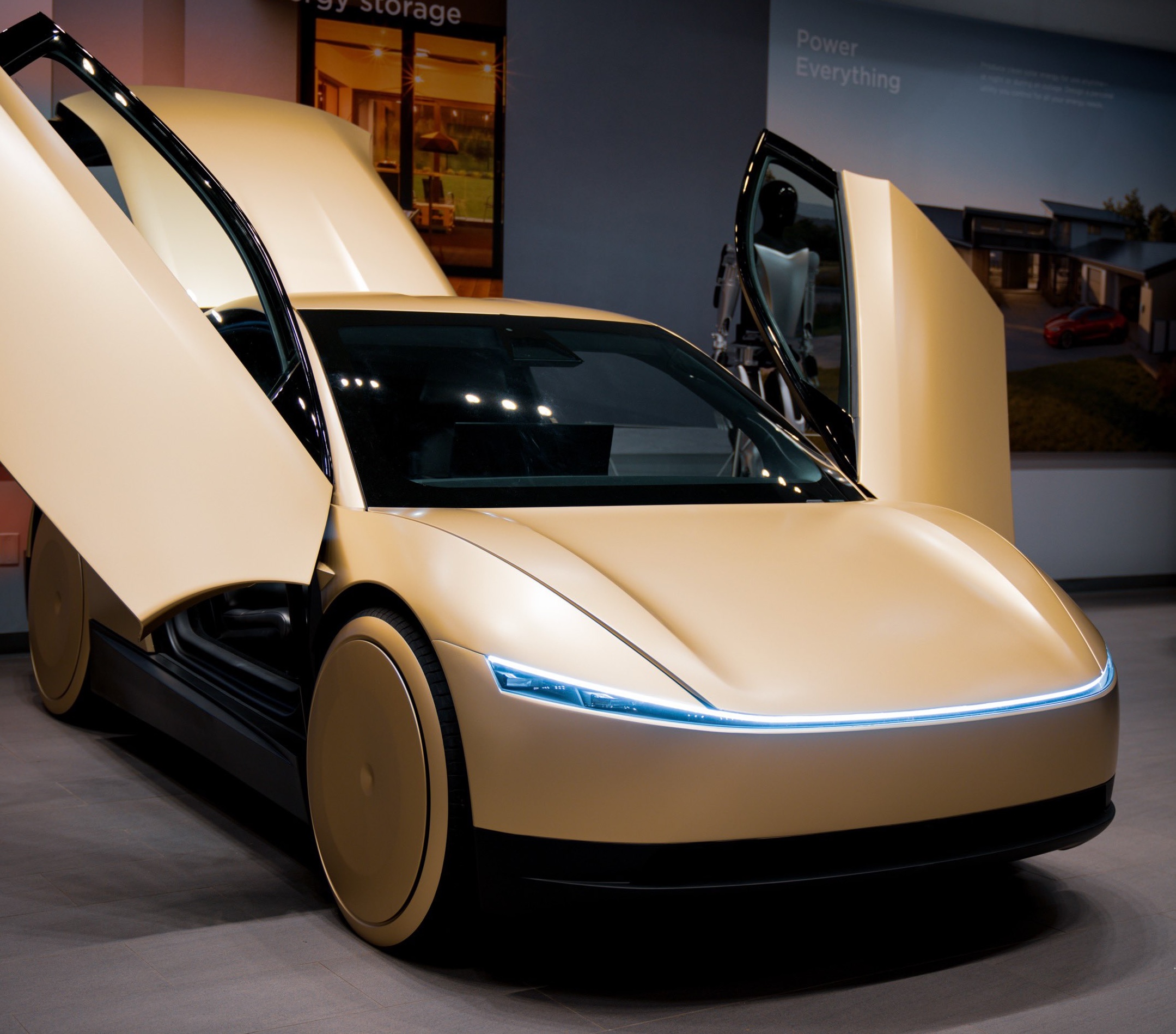
A Tesla analyst today said that investors should not lose sight of what is truly important in the grand scheme of being a shareholder, and that any near-term drama between CEO Elon Musk and U.S. President Donald Trump should not outshine the progress made by the company.
Gene Munster of Deepwater Management said that Tesla’s progress in autonomy is a much larger influence and a significantly bigger part of the company’s story than any disagreement between political policies.
Munster appeared on CNBC‘s “Closing Bell” yesterday to reiterate this point:
“One thing that is critical for Tesla investors to remember is that what’s going on with the business, with autonomy, the progress that they’re making, albeit early, is much bigger than any feud that is going to happen week-to-week between the President and Elon. So, I understand the reaction, but ultimately, I think that cooler heads will prevail. If they don’t, autonomy is still coming, one way or the other.”
BREAKING: GENE MUNSTER SAYS — $TSLA AUTONOMY IS “MUCH BIGGER” THAN ANY FEUD 👀
He says robotaxis are coming regardless ! pic.twitter.com/ytpPcwUTFy
— TheSonOfWalkley (@TheSonOfWalkley) July 2, 2025
This is a point that other analysts like Dan Ives of Wedbush and Cathie Wood of ARK Invest also made yesterday.
On two occasions over the past month, Musk and President Trump have gotten involved in a very public disagreement over the “Big Beautiful Bill,” which officially passed through the Senate yesterday and is making its way to the House of Representatives.
Musk is upset with the spending in the bill, while President Trump continues to reiterate that the Tesla CEO is only frustrated with the removal of an “EV mandate,” which does not exist federally, nor is it something Musk has expressed any frustration with.
In fact, Musk has pushed back against keeping federal subsidies for EVs, as long as gas and oil subsidies are also removed.
Nevertheless, Ives and Wood both said yesterday that they believe the political hardship between Musk and President Trump will pass because both realize the world is a better place with them on the same team.
Munster’s perspective is that, even though Musk’s feud with President Trump could apply near-term pressure to the stock, the company’s progress in autonomy is an indication that, in the long term, Tesla is set up to succeed.
Tesla launched its Robotaxi platform in Austin on June 22 and is expanding access to more members of the public. Austin residents are now reporting that they have been invited to join the program.

Tesla FSD user in China shares insights after months of use: “Not a single safety intervention”

Tesla begins expanding Robotaxi access: here’s how you can ride

Tesla analyst issues stern warning to investors: forget Trump-Musk feud


-
 Elon Musk3 days ago
Tesla investors will be shocked by Jim Cramer’s latest assessment
-
 News1 week ago
Tesla Robotaxi’s biggest challenge seems to be this one thing
-
 Elon Musk2 weeks ago
Elon Musk slams Bloomberg’s shocking xAI cash burn claims
-
 News2 weeks ago
Texas lawmakers urge Tesla to delay Austin robotaxi launch to September
-
 Elon Musk2 weeks ago
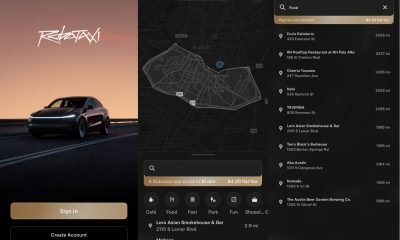
First Look at Tesla’s Robotaxi App: features, design, and more
-
 Elon Musk2 weeks ago
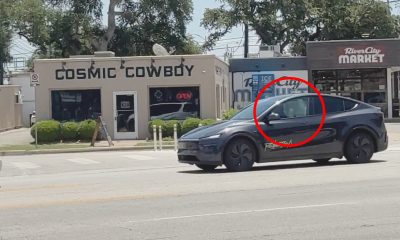
Tesla Robotaxis are becoming a common sight on Austin’s public roads
-
 Elon Musk2 weeks ago
xAI’s Grok 3 partners with Oracle Cloud for corporate AI innovation
-
 News2 weeks ago
SpaceX and Elon Musk share insights on Starship Ship 36’s RUD