Elon Musk
xAI’s Memphis data center receives air permit despite community criticism
xAI welcomed the development in a post on its official xAI Memphis account on X.

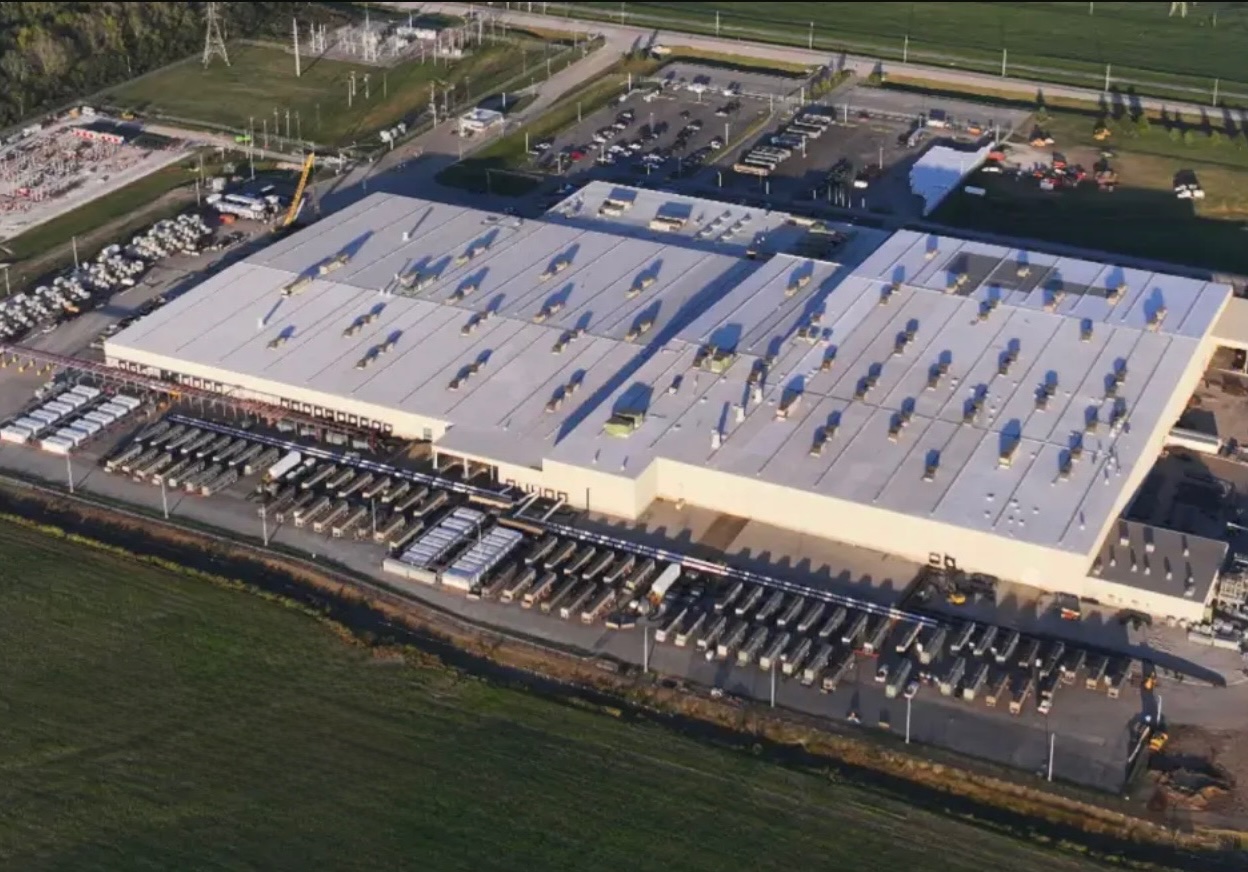
Elon Musk’s artificial intelligence startup xAI has secured an air permit from Memphis health officials for its data center project, despite critics’ opposition and pending legal action. The Shelby County Health Department approved the permit this week, allowing xAI to operate 15 mobile gas turbines at its facility.
Air permit granted
The air permit comes after months of protests from Memphis residents and environmental justice advocates, who alleged that xAI violated the Clean Air Act by operating gas turbines without prior approval, as per a report from WIRED.
The Southern Environmental Law Center (SELC) and the NAACP has claimed that xAI installed dozens of gas turbines at its new data campus without acquiring the mandatory Prevention of Significant Deterioration (PSD) permit required for large-scale emission sources.
Local officials previously stated the turbines were considered “temporary” and thus not subject to stricter permitting. xAI applied for an air permit in January 2025, and in June, Memphis Mayor Paul Young acknowledged that the company was operating 21 turbines. SELC, however, has claimed that aerial footage shows the number may be as high as 35.
Critics are not giving up
Civil rights groups have stated that they intend to move forward with legal action. “xAI’s decision to install and operate dozens of polluting gas turbines without any permits or public oversight is a clear violation of the Clean Air Act,” said Patrick Anderson, senior attorney at SELC.
“Over the last year, these turbines have pumped out pollution that threatens the health of Memphis families. This notice paves the way for a lawsuit that can hold xAI accountable for its unlawful refusal to get permits for its gas turbines,” he added.
Sharon Wilson, a certified optical gas imaging thermographer, also described the emissions cloud in Memphis as notable. “I expected to see the typical power plant type of pollution that I see. What I saw was way worse than what I expected,” she said.


Elon Musk
Elon Musk’s xAI wins permit for power plant supporting AI data centers
The development was reported by CNBC, citing confirmation from the Mississippi Department of Environmental Quality (MDEQ).

Mississippi regulators have approved a permit allowing Elon Musk’s artificial intelligence company xAI to construct a natural gas power plant in Southaven. The facility is expected to support the company’s expanding AI infrastructure tied to its Colossus data center operations near Memphis.
The development was reported by CNBC, citing confirmation from the Mississippi Department of Environmental Quality (MDEQ).
According to the report, regulators “voted to approve the permit” of xAI subsidiary MZX Tech LLC to construct a power plant featuring 41 natural gas-burning turbines “after careful consideration of all public comments and community concerns.”
The Mississippi Department of Environmental Quality stated that the permit followed a regulatory review process that included public comments and community input. Jaricus Whitlock, air division chief for the MDEQ, stated that the project met all applicable environmental standards.
“The proposed PSD permit in front of the board today not only meets all state and federal permitting regulations, but goes above and beyond what is required by law. MDEQ and the EPA agree that not a single person around our facilities will be exposed to unhealthy levels of air pollution,” Whitlock stated.
The planned facility will help provide electricity for xAI’s AI computing infrastructure in the Memphis region.
The Southaven project forms part of xAI’s efforts to scale computing capacity for its artificial intelligence systems.
The company currently operates two major data centers in Memphis, known as Colossus 1 and Colossus 2, which provide computing power for xAI’s Grok AI models. xAI is also planning to build another large data center in Southaven called Macrohardrr, which would be located in a warehouse previously used by GXO Logistics.
Large-scale AI training requires substantial computing power and electricity, prompting technology companies to develop dedicated energy infrastructure for their data centers.
SpaceX President Gwynne Shotwell previously stated that xAI plans to develop 1.2 gigawatts of power capacity for its Memphis-area AI supercomputer site as part of the federal government’s Ratepayer Protection Pledge. The commitment was announced during an event with United States President Donald Trump.
“As part of today’s commitment, we will take extensive additional steps to continue to reduce the costs of electricity for our neighbors. xAI will therefore commit to develop 1.2 GW of power as our supercomputer’s primary power source. That will be for every additional data center as well. We will expand what is already the largest global Megapack power installation in the world,” Shotwell said.
“The installation will provide enough backup power to power the city of Memphis, and more than sufficient energy to power the town of Southaven, Mississippi where the data center resides. We will build new substations and invest in electrical infrastructure to provide stability to the area’s grid.”
Elon Musk
Tesla China teases Optimus robot’s human-looking next-gen hands
The image was shared by Tesla AI’s account on Weibo and later reposted by Tesla community members on X.

A new teaser shared by Tesla’s China team appears to show a pair of unusually human-like hands for Optimus.
The image was shared by Tesla AI’s account on Weibo and later reposted by Tesla community members on X.
As could be seen in the teaser image, the new version of Optimus’ hands features proportions and finger structures that look strikingly similar to those of a human hand. Their appearance suggests that they might have dexterity approaching that of a human hand.
If the image reflects a new generation of Optimus’ hands, it could indicate Tesla is continuing to refine one of the most critical components of its humanoid robot.
Hands are widely viewed as one of the most difficult engineering challenges in robotics. For Optimus to perform complex real-world work, from manufacturing tasks to household activities, its hands would need to be the best in the industry.
Elon Musk has repeatedly described Optimus as Tesla’s most important long-term product. In posts on social media platform X, Musk has stated that Optimus could eventually become the first real-world Von Neumann machine.
In theory, a Von Neumann machine is a self-replicating system capable of building copies of itself using available materials. The concept was originally proposed by mathematician John von Neumann in the mid-20th century.
“Optimus will be the first Von Neumann machine, capable of building civilization by itself on any viable planet,” Musk wrote in a post on X.
If Optimus is expected to carry out complex work autonomously in the future, high levels of dexterity will likely be essential. This makes the development of advanced robotic hands a key step towards Musk’s long-term expectations for the product.
Elon Musk
SpaceX weighs Nasdaq listing as company explores early index entry: report
The company is reportedly seeking early inclusion in the Nasdaq-100 index.
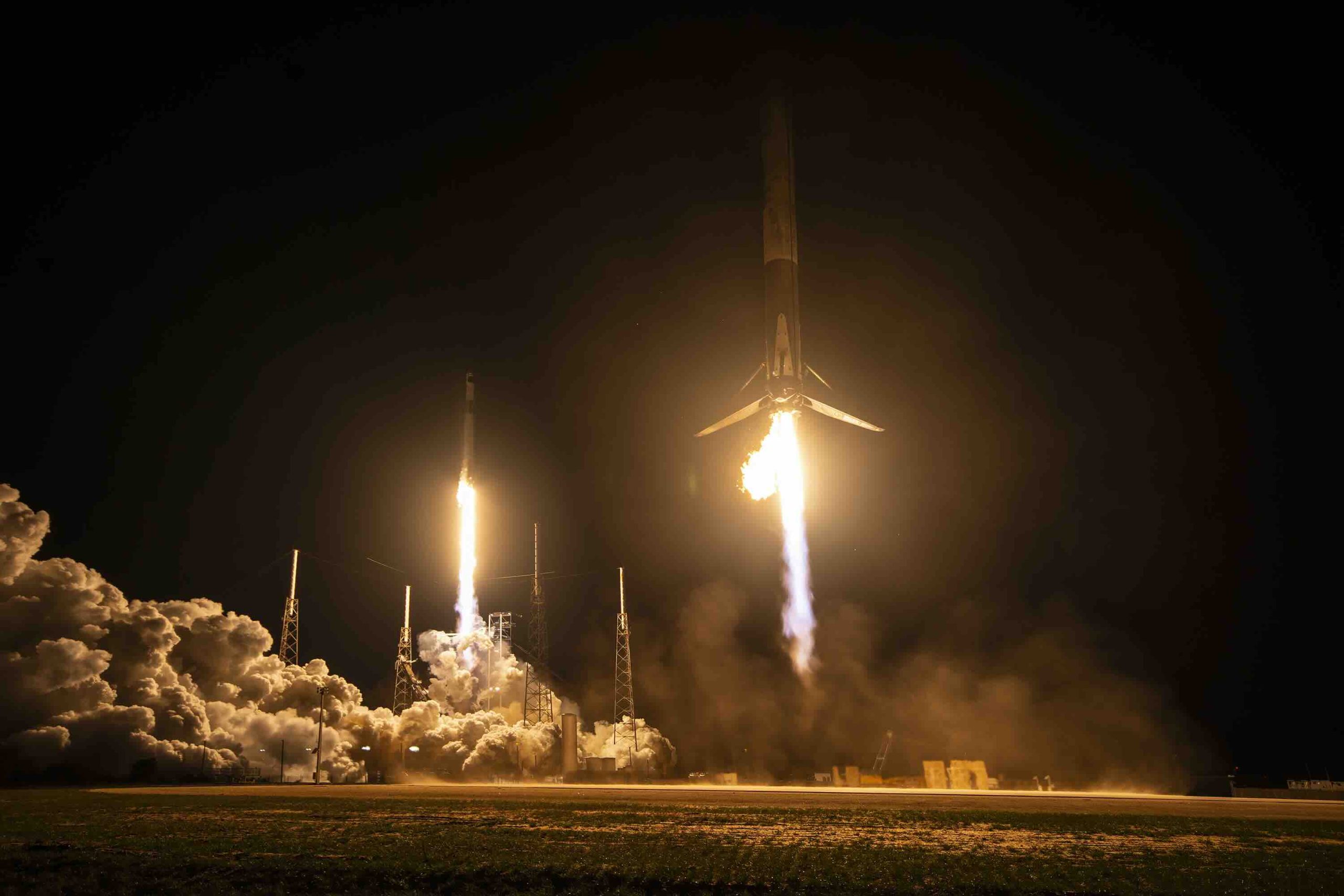
Elon Musk’s SpaceX is reportedly leaning toward listing its shares on the Nasdaq for a potential initial public offering (IPO) that could become the largest in history.
As per a recent report, the company is reportedly seeking early inclusion in the Nasdaq-100 index. The update was reported by Reuters, citing people familiar with the matter.
According to the publication, SpaceX is considering Nasdaq as the venue for its eventual IPO, though the New York Stock Exchange is also competing for the listing. Neither exchange has reportedly been informed of a final decision.
Reuters has previously reported that SpaceX could pursue an IPO as early as June, though the company’s plans could still change.
One of the publication’s sources also suggested that SpaceX is targeting a valuation of about $1.75 trillion for its IPO. At that level, the company would rank among the largest publicly traded firms in the United States by market capitalization.
Nasdaq has proposed a rule change that could accelerate the inclusion of newly listed megacap companies into the Nasdaq-100 index.
Under the proposed “Fast Entry” rule, a newly listed company could qualify for the index in less than a month if its market capitalization ranks among the top 40 companies already included in the Nasdaq-100.
If SpaceX is successful in achieving its target valuation of $1.75 trillion, it would become the sixth-largest company by market value in the United States, at least based on recent share prices.
Newly listed companies typically have to wait up to a year before becoming eligible for major indexes such as the Nasdaq-100 or S&P 500.
Inclusion in a major index can significantly broaden a company’s shareholder base because many institutional investors purchase shares through index-tracking funds.
According to Reuters, Nasdaq’s proposed fast-track rule is partly intended to attract highly valued private companies such as SpaceX, OpenAI, and Anthropic to list on the exchange.

Tesla Cybercab display highlights interior wizardry in the small two-seater

Elon Musk’s xAI wins permit for power plant supporting AI data centers


