


Tech company and newly-minted automaker Xiaomi already started preparing for the YU7 single motor launch in 2025.
China’s Ministry of Industry and Information Technology (MIIT) recently released its catalog of vehicles that are up to receive approval for public sale.
According to CN EV Post, China’s MIIT catalog is the last step before an automaker receives approval to sell their new vehicle in the Chinese auto market. Based on the catalog, the Xiaomi YU7 single motor has a peak power of 235 kW with a lithium iron phosphate (LFP) battery from FinDreams Battery— BYD’s battery production arm.
In December 2024, Xiaomi filed with the MIIT for the YU7 Dual-Motor variant which features front and rear motors with a peak power of 220 kW and 288 kW, respectively. The Xiaomi YU7 Dual-Motor uses Li-ion ternary batteries from CATL.
The Xiaomi YU7 was included in the catalog. The Chinese public may submit feedback or comments on any of the cars in the MIIT catalog, including the Xiaomi YU7, between January 11 and January 17. The Chinese company aims to launch the YU7 SUV by June or July 2025.

The Teslarati team would appreciate hearing from you. If you have any tips, contact me at maria@teslarati.com or via Twitter @Writer_01001101.


News
SpaceX hid behind another name in the Arizona desert, and now it’s going big
SpaceX puts a $50 billion price on its Arizona supercompute campus ahead of December’s hearing.

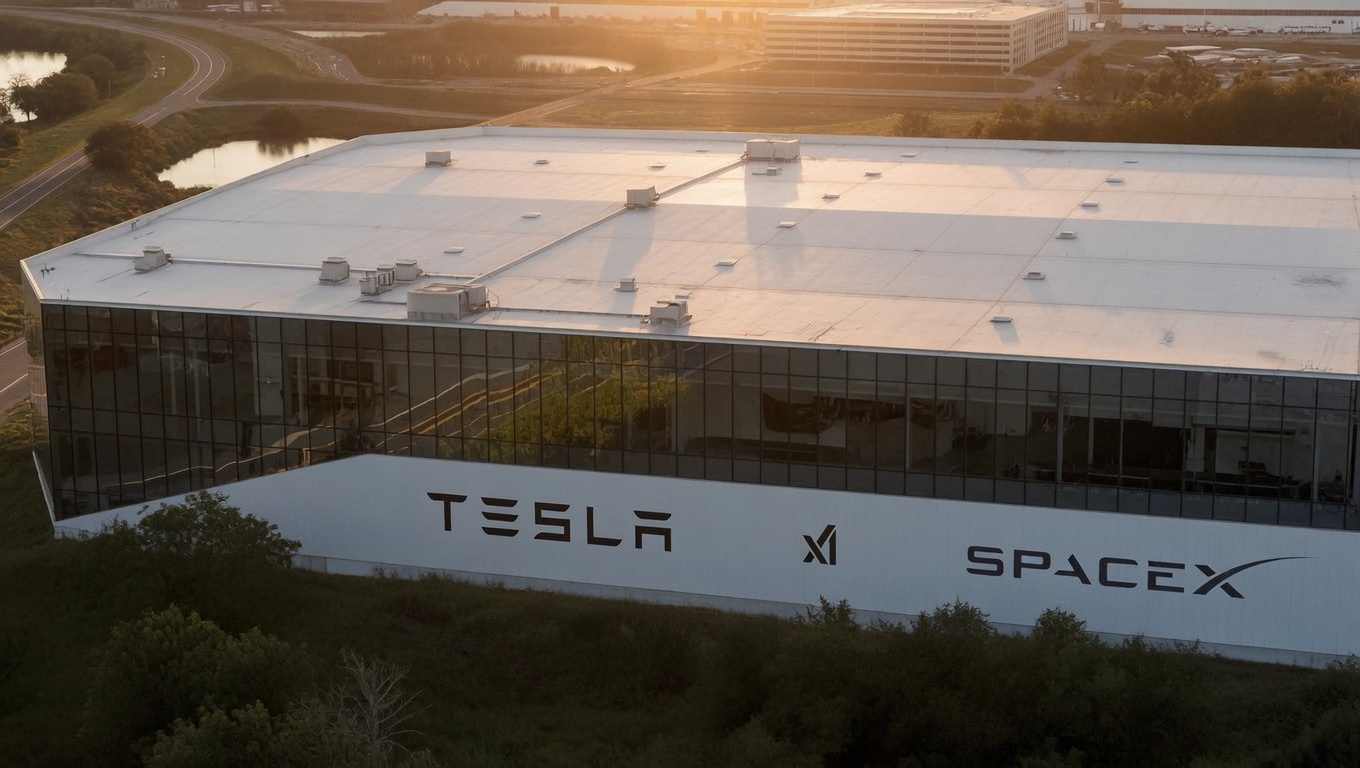
SpaceX has put a price tag on the supercomputer campus it wants to build in the southern Arizona desert. In a statement Thursday, the company said it is pursuing a roughly $50 billion supercompute campus in Cochise County, about 80 miles east of Tucson. Together with a separate facility planned at Starbase, Texas, the two projects add up to more than $74 billion in planned investment.
The Arizona figure had not been disclosed before. SpaceX’s involvement only became public on November 4, when company representatives hosted a packed town hall at Cochise Elementary School for an application filed under the name Tombstone Resources LLC. A SpaceX representative told residents the filing used another name because putting SpaceX on it “draws attention” from outside the county, local station KVOA reported.
The application describes a 747-acre site near the Willcox Playa with up to nine buildings of about 493,000 square feet each. SpaceX plans to bring the campus online in four phases of roughly 1.5 GW, reaching 6 GW at full build, backed by a 24 GWh battery system and about $3.6 billion in grid upgrades. At that size, it would draw about 2.5 times more power than every data center in Maricopa County combined, according to an Arizona Republic analysis.
SpaceX says the project will create about 5,500 construction jobs and 1,000 permanent jobs, and that it could cut electricity bills for members of the local cooperatives by up to 20 percent. The campus would use dry cooling with no industrial groundwater use. Its application estimates ongoing water needs of 7 to 10 acre-feet a year, roughly what 20 to 30 homes consume.
Power is the bigger question. The site sits next to the Apache Generating Station, a coal and natural gas plant with about 1 GW of capacity that had been slated to retire by 2028. SpaceX told residents its investment could expand the station to more than 6 GW.
Local opposition is organized. A petition asking the county to deny the permit has gathered about 2,400 signatures, and the nearby playa is a landing spot for federally protected sandhill cranes, which SpaceX says its design accounts for. The Cochise County Planning and Zoning Commission will hold a public hearing on December 9 in Bisbee, with written comments due November 27. If approved, construction could start in March 2027.
The Texas project faces a vote the same day. The Starbase City Commission will consider a property tax abatement for SpaceX’s $24 billion gas plant and supercompute facility at its own December 9 hearing, as Teslarati reported. SpaceX said Thursday the Starbase site has already generated more than 3,000 construction jobs, and it committed $220 million to Brownsville’s water and wastewater systems, $40 million of which has been paid.
Both campuses would expand a footprint still centered on the Memphis area, where SpaceX’s Colossus data centers run largely on gas turbines and the company won a permit for a power plant in Southaven, Mississippi earlier this year. SpaceX ended the third quarter with 1.7 GW of nameplate compute. The Arizona campus alone, at full build, would be more than three times that size.
Elon Musk
Nvidia’s board meets on Jensen Huang, and Elon Musk already has an answer
Elon Musk says it would be an honor to hire Jensen Huang amid Nvidia turmoil.
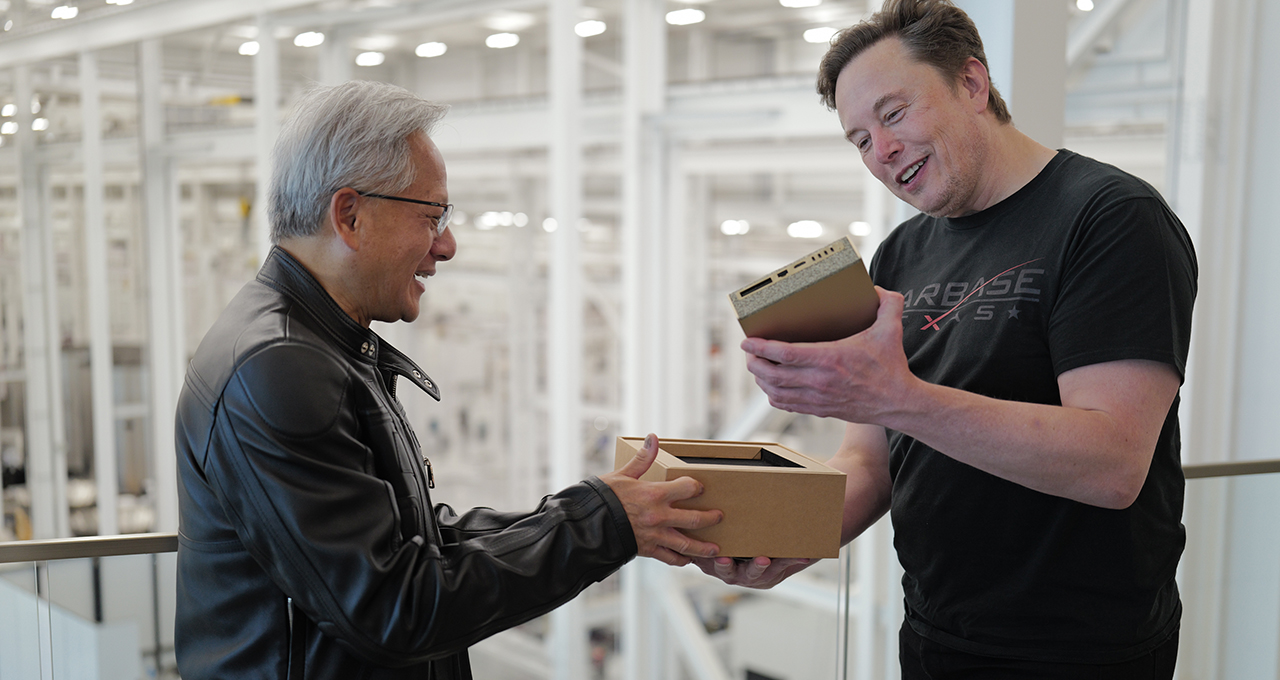
Elon Musk says he would welcome Jensen Huang at one of his companies if Nvidia’s board decides to push out its longtime chief executive.
On Wednesday evening, the financial account ZeroHedge posted “Elon please hire Jensen” on X. Musk replied roughly two hours later: “That would be an honor.” Neither Huang nor Nvidia had responded publicly as of Wednesday night.
Musk’s reply came as Nvidia’s board met to decide Huang’s future. The Wall Street Journal reported that directors were preparing to oust him following reports of two extramarital relationships. One involves Alice Huang, a Singapore-based businesswoman whom U.S. intelligence officials reportedly believe was working for China’s Ministry of State Security. The New York Times separately reported a relationship with Kimberly Powell, Nvidia’s vice president of health care. Huang acknowledged being unfaithful in a memo to employees on Sunday but gave no details.
@zerohedge That would be an honor
— Elon Musk (@elonmusk) November 12, 2026
Under Nvidia’s bylaws, a majority of its 11 directors can remove the CEO with or without cause. Bloomberg reported that the board has been working with an outside firm on possible replacements and may name an interim chief, with CFO Colette Kress seen as the likely pick. Nvidia shares fell more than 8 percent in extended trading, according to CNBC, and the company is scheduled to report quarterly earnings on November 17.
Musk has more riding on Nvidia’s leadership than most tech executives. In August, he told investors on SpaceX’s first earnings call as a public company that it would build its AI infrastructure exclusively on Nvidia hardware, calling Vera Rubin “the best architecture.” SpaceX is also working with Nvidia on the compute payload for Starmind, its planned orbital AI constellation. In October, SpaceX said it had a binding commitment for a roughly $40 billion lease of Vera Rubin GPUs and related equipment, with the leases expected to begin in the first half of 2027.
The scale of that dependence is already enormous. On its Q3 call, SpaceX said it was bringing roughly 200,000 to 220,000 Nvidia GB300 GPUs online each month and expects 2.5 to 3 GW of nameplate compute by the end of the year. That buildout is now reaching new sites like the proposed $24 billion power plant and supercomputer campus at Starbase.
The relationship between the two executives also goes back nearly a decade. Huang has often told the story of personally delivering Nvidia’s first DGX-1 AI supercomputer to Musk in 2016, when no other customer wanted one. “Nobody wanted to be part of it, except for Elon,” Huang said on the Joe Rogan Experience last December.
Musk did not say what role Huang might fill, and his reply stops short of a formal offer. Huang co-founded Nvidia in 1993 and still owns about 3.6 percent of its stock, so any move to a Musk company would depend on whether, and how, he leaves the chipmaker he has run for more than three decades.

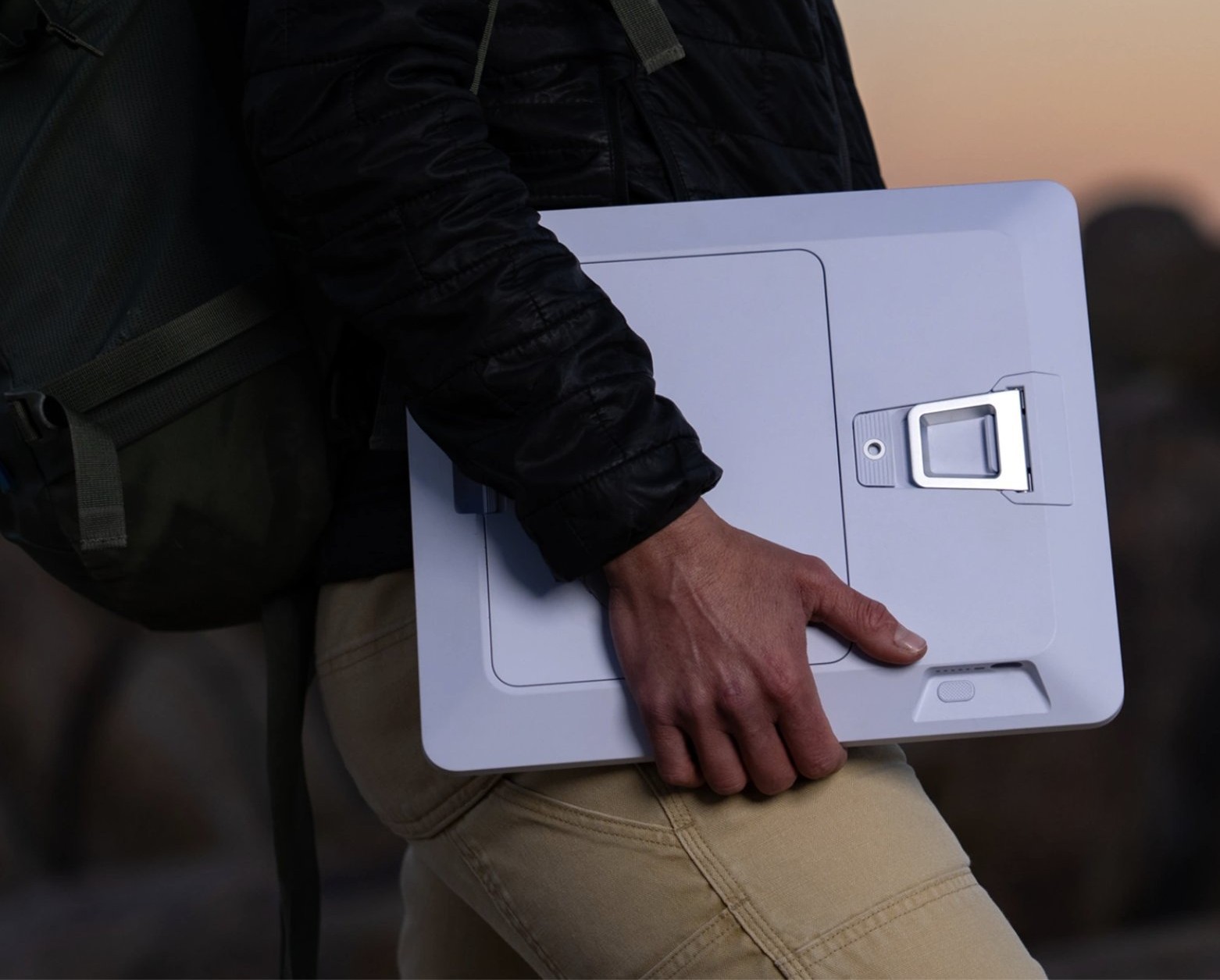
SpaceX officially launched the Starlink Mini 2 on November 10, delivering the first portable Starlink terminal designed around independent power.
Invitation-only preorders for select U.S. customers are priced at $999 plus tax, a figure that includes a full year of Roam Unlimited service valued at roughly $2,100. A refundable $100 deposit reserves the kit, with the balance due at shipment, expected to begin in mid-December. Broader availability is listed as coming soon.
Starlink just unveiled Mini 2, its next-gen portable dish.
Quick-swap battery, up to 4.5 hrs per charge
USB-C power
Built-in Wi-Fi
Online in about 60 secondsPreorders are open now. https://t.co/QawqgbswrQ
— TESLARATI (@Teslarati) November 10, 2026
The headline feature is the quick-swap 71 Wh battery. Clipped to the rear of the dish without tools, it delivers up to 4.5 hours of connectivity on a single charge.
The 490-gram pack includes its own USB-C port and LED indicators, so users can charge a spare separately and swap it in seconds while staying online. Starlink notes that the terminal can continue operating while the battery charges or run directly from a 60 W USB-C source. The retail box includes one battery, a 60 W USB-C charger, and a 3-meter cable.
Beyond power, the Mini 2 is thinner at 23.1 mm (versus 38.5 mm on the original Mini) while measuring 263 × 314 mm. With the battery and kickstand attached it weighs 1.6 kg.
Built-in Wi-Fi 6 expands coverage to up to 1,800 square feet, an IP67 rating protects against dust and water, and a standard 1/4-20 tripod thread plus physical power button round out the design. Field of view remains 110 degrees, and the unit retains support for mobile use.
For travelers, campers, and remote workers, the swappable battery removes the longstanding requirement for an external power bank or vehicle outlet that defined the first Mini. Spare packs sold separately further extend runtime, turning the compact terminal into a more self-contained solution.
While the bundled $999 invitation price sits well above the original Mini’s current $149 starting point, the included year of service and genuine untethered operation mark a clear step forward in portable satellite internet.

SpaceX hid behind another name in the Arizona desert, and now it’s going big

Nvidia’s board meets on Jensen Huang, and Elon Musk already has an answer


