Lifestyle
Comic book artist reimagines Tesla’s Model X as a Transformers robot

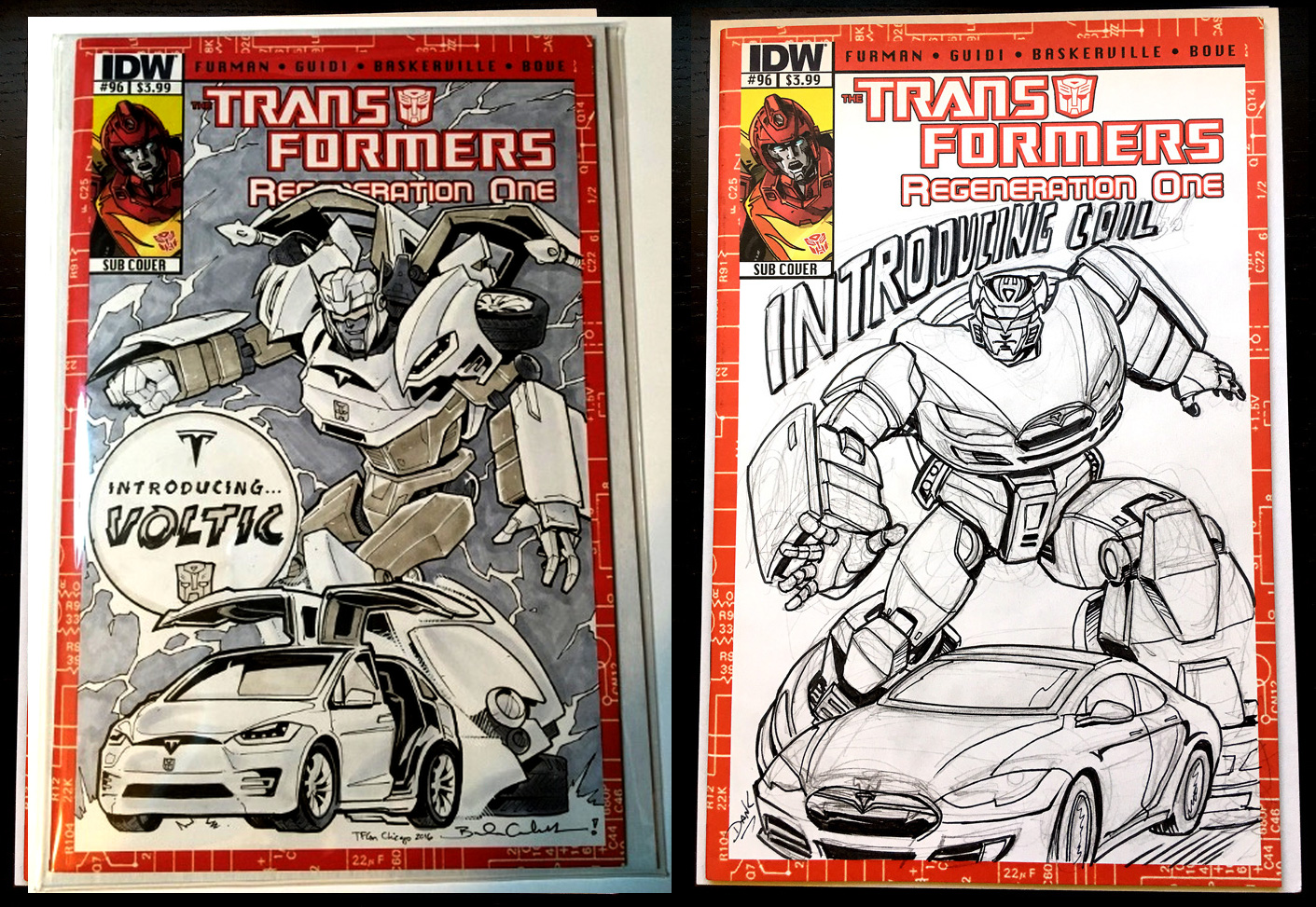
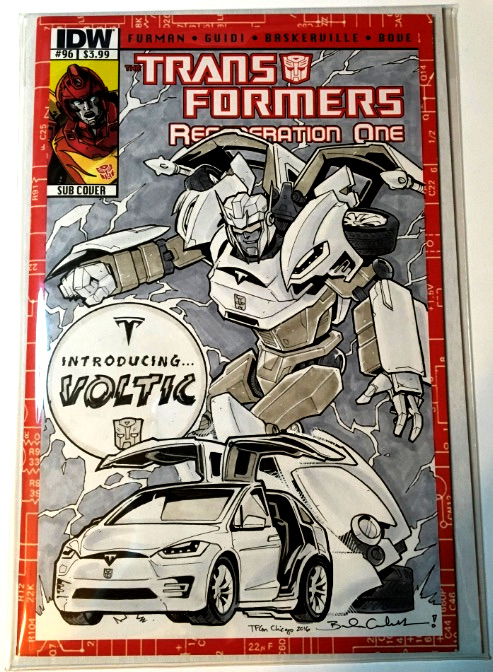
Die hard Transformers fan and c0host to the TransMissions podcast, Youseph Tanha, surely has the most unique one-of-a-kind Tesla Model X on the planet. Equipped with its own Falcon Wing missiles – that’s right, missiles – and the ability to transform into a two story tall robot, Tanha’s Model X which goes by the name ‘Voltic’ is undoubtedly more than meets the eye. At least in comic book form.
We caught up with Tanha, who goes by the name Yoshi, to learn more about his unique project that would immortalize Tesla’s Model X and Model S as a generation one Transformer.
How did this project come about?
I’m an old school G1 Transformers fan. (G1 is how a person refers to the original Transformers toys, cartoon, animated movie, and comic books of the 80s.) I believe it was in 2002 that comic book companies started to experiment with releasing comic books with blank covers, (also known as sketch covers). The idea being that comic book fans would buy these blank comics and take them to comic convention where comic artists would do up a sketch for them for a fee.
In recent years these blank covers have become more popular. I don’t believe we’ve come close to the apex of their potential yet. I put together a short video talking about this on my blog.
The original Marvel Comics Transformers run ended in in 1991 after 80 issues. The ending of this series was rushed due to lack luster sales at the time. In 2012, After acquiring the comic rights, IDW Publishing gathered one of the original writers and several of the original artist of the Marvel Transformers comic together for 21 issues and give them a chance to give the comic book a proper closing. That comic book series was called Transformers: Regeneration One and ended in 2014.
From these 21 issues, 4 were blank sketch covers. The one used for the ‘Voltic’ project is issue 96.
I’ve wanted to commission a Transformers comic book artist for the ‘Voltic’ project for nearly a year. For me it was just finding the right Transformers artist and time.
 -
-
Later this month, I’ll be attending a Transformers Convention (TFCon) in Chicago. This year’s TFCon has round up an impressive number of Transformers comic book artist, including Brendan Cahill. When I found out Mr. Cahill would be attending TFCon, I contacted him to request a comic sketch cover art commission that I could pick up at the convention. This way I not only get a commission piece I want, but I also get to shake hands with the person who created it.
In my original e-mail to Mr. Cahill, I pitched two ideas to him for the commission. He chose the Tesla idea. Here is the pitch.
“Custom G1 Transformer. Modeled after the TESLA Model X car. In both car and bot mode. I have an OptimusPrime photo attached to this e-mail to show you what I’m going for as far as showing both modes at the same time. On the cover I would like written, “Introducing Voltic”. I want to make sure that the drawing shows the TESLA and Autobot Logos in appropriate places. I’m Also attaching a couple of TESLA Model X images for reference. I would like the vehicle mode to show off one, if not both, gull wing doors.”
That was it. The correspondence afterword dealt with the cost of the work and where to mail the blank comic book too. Didn’t really give him any other impute on the design. He just uses my references as a guide and it turned out the way I wanted it to.
The name, ‘Voltic’ comes form the video game, Grand Theft Auto 5 of which I’m a big fan of. The game has a parody of TESLA called ‘COIL’ and their car model is the Voltic.
I also want to add that earlier in the year I had commissioned a different artist to make a Model S Transformers.
A sketch of @TeslaMotors Model S. @elonmusk https://t.co/9D2yfh4j42 pic.twitter.com/PmMluAL4lw
— Yoshi (@YousephTanha) June 29, 2016
-
Is this officially recognized by IDW and will it make it into print?
Nope. Not at all. But wouldn’t it be cool if it was?
The character is original to myself and Mr. Cahill. As far as I know, IDW Publishing has no plans to make a Transformer character model after a Tesla vehicle. I imagine if they wanted to do this they would be requires to pay Tesla for the rights to use their vehicle’s likeness. I also don’t think it fits with the current direction that IDW has taken characters and story in their current on going transformers comics.
What are some of the attack and defense mechanisms that ‘Voltic’ has over other Transformers?
I have put zero thought into this. Originally, the transformers story takes place in the 80s. The Transformers crash landed on earth and their alt modes (Vehicle modes) where based on the technology of the time. Optimus Prime is a flat nosed MACK Truck. Bumble Bee is a VW Beatle. Star Scream is a F-22 Raptor, and so on. Its fun to think if the story took place in 2016 that one of those Transformers would have been a Tesla. it’s almost silly to think that wouldn’t happen today.
Mr. Cahill clearly had fun with this project and added some missiles to the falcon wing doors. But I’ve put zero thought into Voltic’s unique abilities. Mostly because I probably would end up writing 5 pages about it if i started. I can tell you, like all Transformers, he would have an internal repair system in place and advanced communications abilities.
-


Elon Musk
India tells Elon Musk’s X to “Follow the Law” in latest censorship update
Elon Musk says X now exposes government censorship, but India’s secrecy laws complicate that promise.
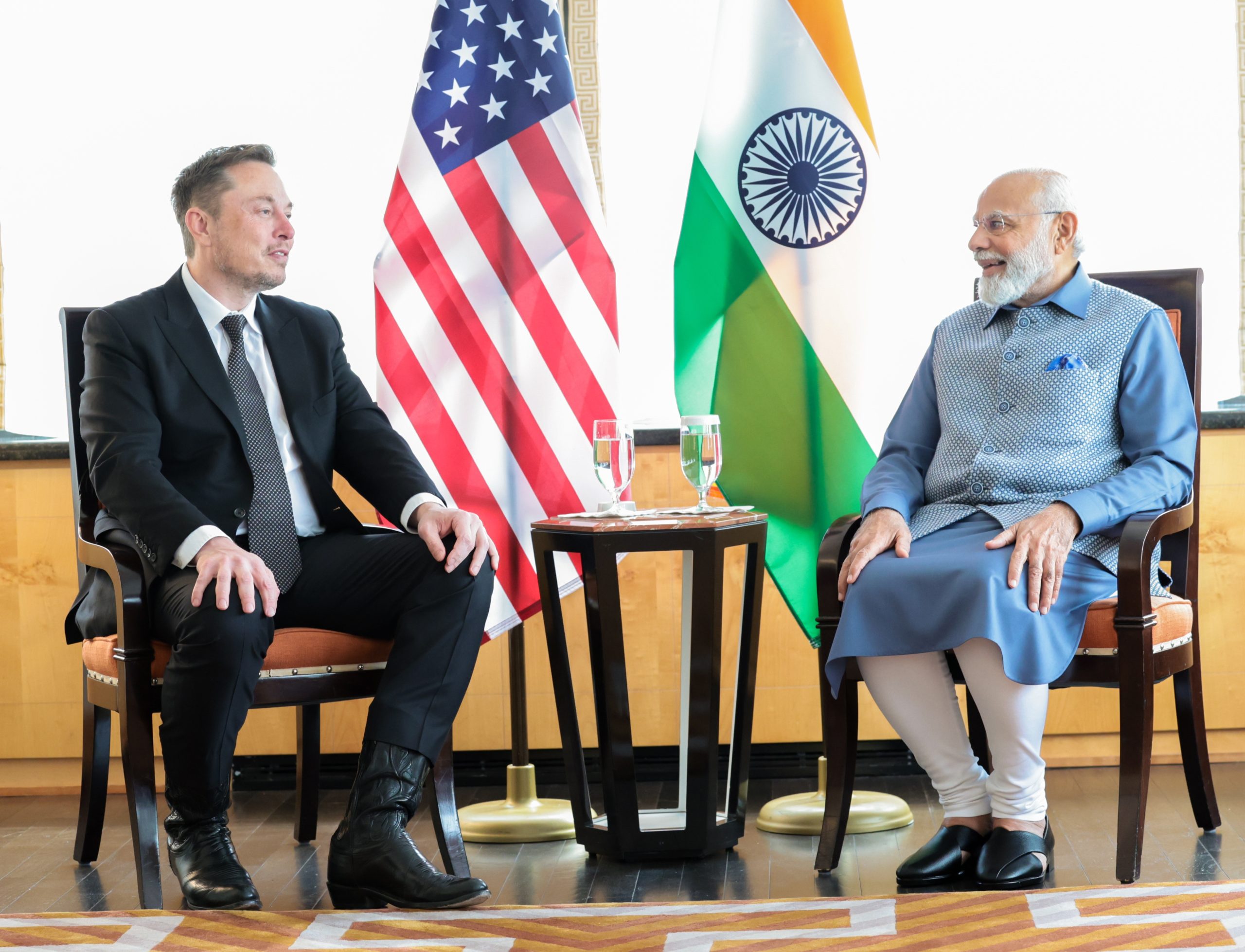
Elon Musk’s promise to make government censorship requests on X “clearly visible” is running into a wall in India, where the law forbids the very disclosure Musk is promising.
On August 15, Musk responded to an update from X’s open-source algorithm team by writing “Any censorship required by governments is now clearly visible.” The claim referred to a change X pushed two days earlier to its public xai-org/x-algorithm repository, which now includes a controversial filter written directly into the code. The filter suppresses posts from 665 accounts flagged by Brazil’s Superior Electoral Court from appearing in the For You feed of any viewer located in Brazil, unless the viewer already follows the account. The election tied to the filter is scheduled for October 4.
India’s government wasn’t as impressed, and responded on Monday that “X will have to follow the law of the land,” in response to Musk’s transparency push covered by the Times of India. The problem is structural rather than political. India issues content blocking orders under Section 69A of its IT Act, and Rule 16 of the accompanying 2009 Blocking Rules requires those orders to stay confidential. Publishing an India equivalent of the Brazil filter, naming specific accounts and citing specific government orders, would itself violate Indian law. Government use of Section 69A has grown from roughly 6,000 orders a year between 2018 and 2023 to about 24,300 in 2025, according to a Tech Times report.
The contrast puts Musk’s transparency pledge in an odd spot. It works largely as advertised in Brazil, where electoral law requires disclosure and X can point to specific account IDs and a specific court order in public code. It cannot work the same way in India, where the law requires the opposite. X users in India will keep seeing content disappear from search and their feeds without any public accounting of why, even as X tells the rest of the world that its censorship compliance is now inspectable.
This isn’t the first time X’s fights with a national government have shaped how the platform operates. Brazil’s Supreme Court ordered X to suspend the accounts of sitting lawmakers and journalists in 2024, a standoff that cost X its Brazilian revenue for months and froze Starlink’s local accounts before the investigation into Musk and X was closed in March with no evidence of wrongdoing found. X also sued California over a state law requiring moderation disclosures, arguing the mandate itself violated the First Amendment.
Whether India’s government pursues anything beyond a public statement remains to be seen. For now, the mismatch between what X can legally publish and what different governments legally allow it to publish is the real story behind Musk’s seven word claim.
-
Lifestyle
Tesla’s driverless Cybercab just passed a big test with State Governor
Florida’s governor rode Tesla’s Cybercab at a closed test track and called the experience impressive.
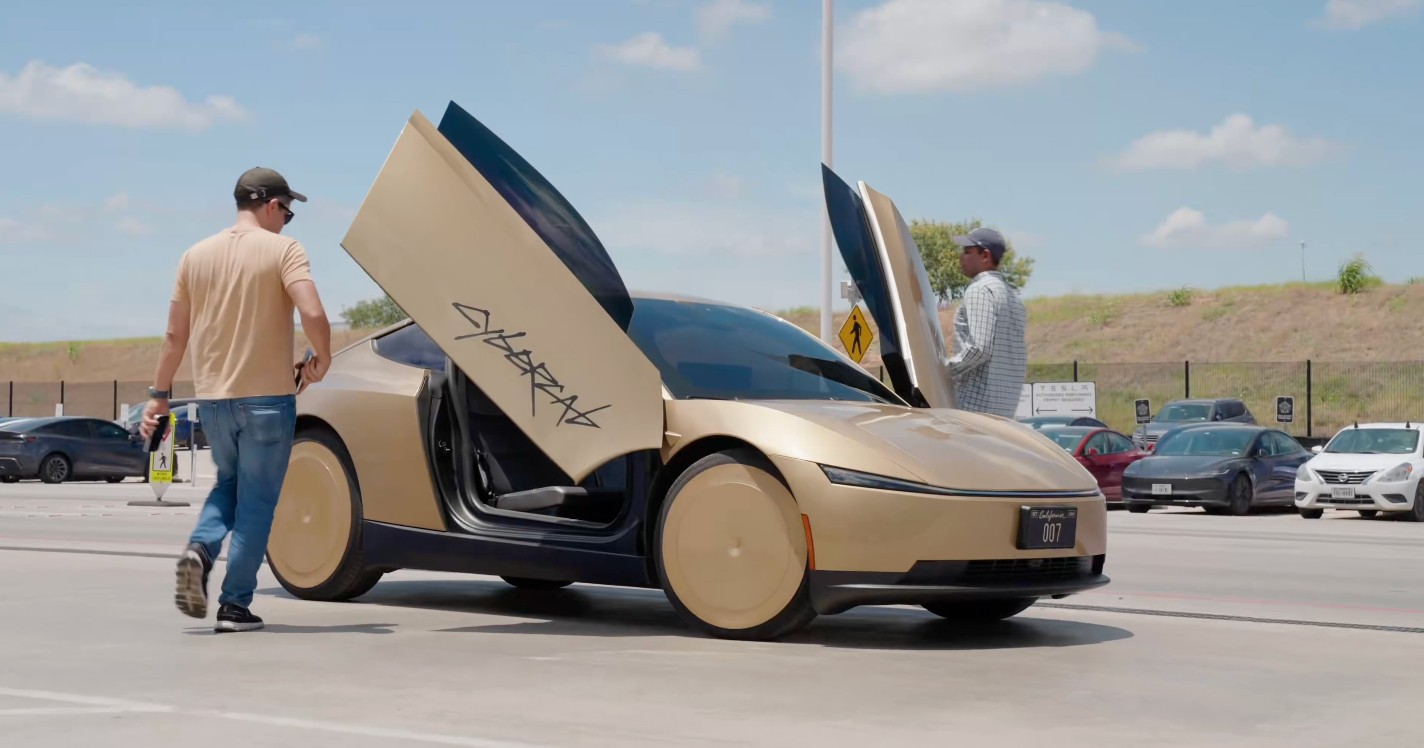
Florida Governor Ron DeSantis rode in a Tesla Cybercab on a closed test track this week and came away impressed, posting on X that the vehicle “successfully navigated all hazards — a kid running into the street, a crash with police stopping traffic, a Model S cutting us off, etc.” He called the ride “impressive.”
The stop was part of a broader event Monday at SunTrax, a 775 acre state owned proving ground in Auburndale that Florida built specifically to test autonomous and connected vehicles before they reach public roads. Standing next to a gold Cybercab, DeSantis described the car in plain terms: “You go in there and you just sit. You have a screen. There’s no steering wheel, no pedals. Clearly these things could be very beneficial.”
We took a ride on a robotaxi on the Suntrax course and it successfully navigated all hazards — a kid running into the street, a crash with police stopping traffic, a Model S cutting us off, etc.
Impressive! https://t.co/FVAkzFLz3r
— Ron DeSantis (@RonDeSantis) August 11, 2026
DeSantis paired the praise with a caveat that has followed autonomous vehicles since the category existed. “You don’t want to be in an autonomous vehicle and it drives you into a ditch. That would not be good,” he said, framing safety validation as the gate before wider deployment.
SunTrax, the 2.25 mile oval which the state calls the only high speed autonomous vehicle test track in the Southeast, can simulate rain, pedestrian crossings, hills and crowded urban conditions at highway speeds, letting companies push a car past what an early public rollout would risk. Tesla, Waymo and Beep all use the facility, and Florida’s regulatory approach, among the most permissive for autonomous vehicles in the country, doesn’t require a human operator inside a fully autonomous car.
-
Tesla has reason to want the blessing of Florida and states beyond, as the Cybercab entered volume production at Gigafactory Texas this spring and has since self certified as SAE Level 4 under Texas law. Public road testing so far has kept a safety monitor in the passenger seat, and Florida is where Tesla has been expanding its existing Model Y based Robotaxi service instead, adding Miami in July and then Orlando and Tampa two weeks later. A closed track endorsement from a sitting governor doesn’t change any of that, but it does put Tesla’s newest hardware in front of a state that has already shown it will move fast on rules.
Elon Musk
The real reason Elon Musk wants every car connected to space
Elon Musk says all cars will eventually need Starlink to handle massive AI bandwidth demand.
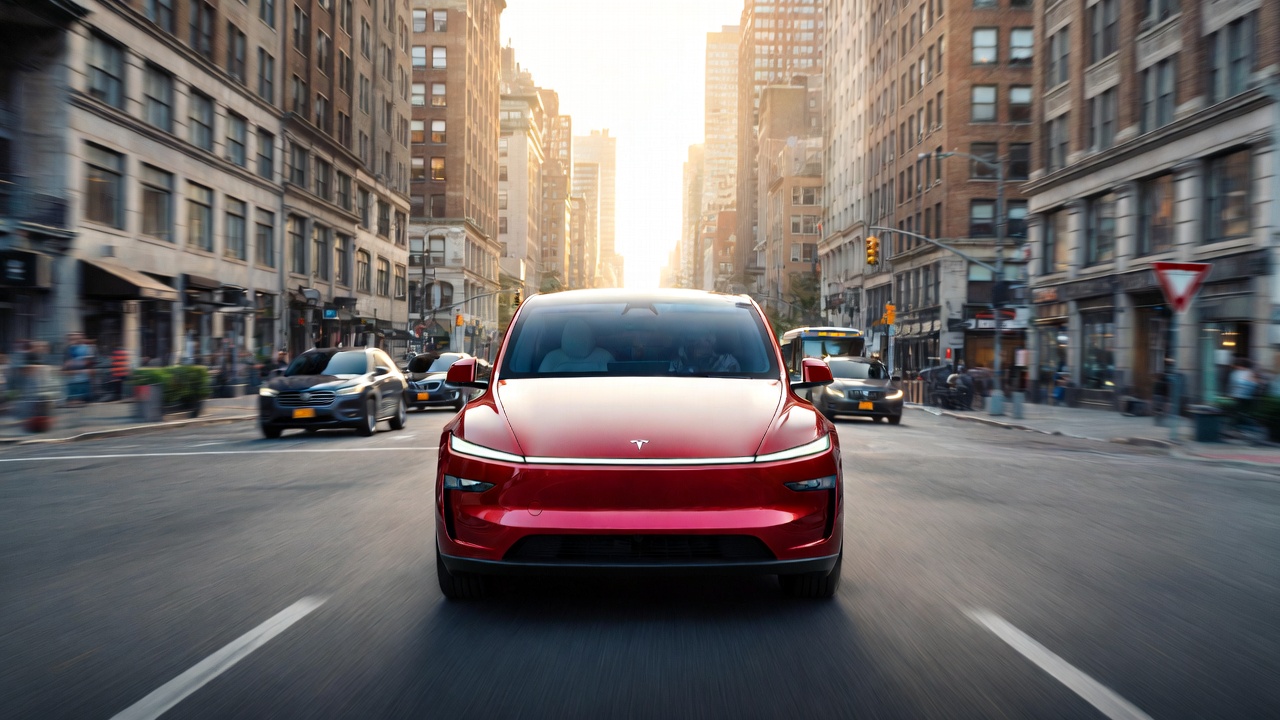
Elon Musk is making the case that satellite internet, not fiber or cellular towers, will end up wired into every car on the road. In a string of posts on X, the SpaceX CEO wrote that all cars will have Starlink in the future and called satellite connectivity the only way to get super high bandwidth to billions of vehicles.
The posts started with Musk endorsing a Cloudflare forecast that traffic generated by autonomous AI agents will soon dwarf traffic generated by humans browsing the internet, a shift he described as not a close call at all. From there he narrowed the argument to infrastructure, writing that the only system that can support the insanely fast bandwidth growth needed by AI is Starlink, before extending the logic to cars specifically.
AI agentic Internet traffic will obviously VASTLY exceed human usage. Not a close call at all.
Cloudflare’s forecast is accurate. https://t.co/VztgrinN5k pic.twitter.com/Wo4FiRKjPU
— Elon Musk (@elonmusk) August 9, 2026
The timing lines up with Tesla’s own hardware decisions. On July 20, Tesla confirmed the Cybercab would ship with a Starlink V5 terminal built into its roof, the first time the company had put satellite hardware in a production vehicle. A day later, Tesla’s head of AI, Ashok Elluswamy, explained the connection wasn’t there for safety and that Cybercab’s driving stack runs entirely on onboard cameras and compute, while the satellite link exists for navigation, customer service, and fleet management instead. Musk followed with his own post about the feature, saying riders would be able to watch 4K streaming video during rides.
By July 22, Musk had already said Starlink would extend beyond Cybercab to Tesla’s full lineup. Sunday’s posts push that same logic outward again, this time framed as a requirement across the industry rather than a feature specific to Tesla, and tied directly to the bandwidth AI systems are expected to consume.
SpaceX’s newest Starmind will make earth data centers obsolete
-
The AI argument has been building on SpaceX’s side for months. The company has an FCC filing pending for a third generation Starlink constellation, and it has separately proposed Starmind, a constellation of up to a million satellites designed to run AI computation directly in orbit rather than just relay data. Musk has said he expects space to become the cheapest place to deploy AI compute within two to three years. Starlink and Starmind serve different jobs inside that vision, one moving data and the other processing it, but Sunday’s posts treat vehicles as one more category of hardware that will eventually need both.
None of this changes anything for Tesla owners today. Cars already on the road keep running on LTE and Wi-Fi, and Tesla hasn’t outlined a retrofit path for existing vehicles. The July 22 commitment applies to future production, not the fleet already delivered. What Musk added on Sunday is the reasoning: satellite connectivity isn’t a Cybercab novelty, it’s a bet that ground based networks won’t keep up with how much data cars, robots, and AI systems are about to generate.

India tells Elon Musk’s X to “Follow the Law” in latest censorship update

Tesla Cybercab launch preparations have begun


