Energy
CA’s solar tax supporters are trying to run a “wealthy vs disadvantaged” narrative: It doesn’t have to be

A look at the California Public Utilities Commission’s (CPUC) ‘s 204-page proposal for its proposed new net metering rules (NEM 3.0), as well as the comments of the initiative’s supporters, shows something interesting. Supporters of NEM 3.0 are arguing that the current net metering rules, NEM 2.0, are practically an assault on disadvantaged households and a multi-billion subsidy for wealthy homeowners.
This narrative could be found all over the CPUC’s NEM 3.0 proposal. In the document, the commission argued that the existing net energy metering tariff “negatively impacts non-participating customers; is not cost-effective; and disproportionately harms low-income ratepayers” since homeowners without solar are being shouldered with the price of maintaining the grid. A study of the state’s policies further noted that California ratepayers spent about $3 billion a year to support net metering.
As critics of the initiative, such as Tesla and other renewable companies and organizations in the state, launched efforts to combat the NEM 3.0 proposal, organizations supporting the CPUC’s proposal have adopted a pretty similar stance. Affordable Clean Energy for All, a coalition of groups that include open NEM 3.0 backers like Pacific Gas & Electric, Southern California Edison, and San Diego Gas & Electric, has been particularly active in pushing the idea that NEM 2.0 takes from the disadvantaged and gives to the wealthy.
Kathy Fairbanks, a spokeswoman from Affordable Clean Energy for All, highlighted this recently. “It’s hypocritical that people who claim to want to help disadvantaged communities are advocating to keep a regressive policy that takes from the poor and gives to publicly-traded companies to fatten their profits, increase their stock price and shareholder wealth,” she said.
But inasmuch as a “rich vs. poor” concept is compelling, such a simplistic narrative hardly addresses the issues that critics are bringing up about NEM 3.0. While there is some argument in the idea that companies like Tesla are fighting the proposal since it is involved in the residential solar business, the fact remains that rooftop solar in California is growing fastest in working and middle-class neighborhoods. Not millionaires in their massive mansions — just regular working individuals that are learning the advantages and practicality of renewable energy.
Solar Rights Alliance Director Dave Rosenfeld mentioned this in a statement last month, as critics of NEM 3.0 delivered over more than 120,000 public comments to the California Public Utilities Commission (CPUC) and Governor Gavin Newsom. “This is where the rubber hits the road on blackouts, rising electricity bills, and air pollution. The correct path is to help millions more working and middle-class people get solar so we can keep up our progress and reject the utility profit grab that threatens to take us backwards,” Rosenfeld said.
Contrary to the idea that net metering takes from the disadvantaged and gives to the wealthy, an analysis by national grid modeling experts Vibrant Clean Energy has estimated that the continued growth of distributed energy resources (DER) such as rooftop, community solar, and energy storage, could actually save California ratepayers $120 billion over the next 30 years. “What our model finds is that when you account for the costs associated with distribution grid infrastructure, distributed energy resources can produce a pathway that is lower cost for all ratepayers and emits fewer greenhouse gas emissions,” Vibrant Clean Energy CEO Dr. Christopher Clack said.
While the CPUC seems very determined to ensure that NEM 3.0 is approved, the voices against the initiative are growing louder. Apart from Tesla CEO Elon Musk, who called the proposal “bizarre” and “anti-environment,” other notable personalities have expressed their criticism of NEM 3.0 online. These include, interestingly enough, two actors who played Marvel’s The Incredible Hulk on the big screen, Edward Norton and Mark Ruffalo, as well as basketball legend Bill Walton. California Governor Gavin Newsom also seems a bit more open-minded than the CPUC, noting that there’s more work to be done in the NEM 3.0 proposal.
“That draft plan that was recently released, I just had a chance to review, and I’ll say this about the plan: We still have some work to do… Do I think changes need to be made? Yes, I do,” Newsom recently said.
The California Public Utilities Commission may vote on its NEM 3.0 proposal as early as January 27, 2022.
Don’t hesitate to contact us with news tips. Just send a message to tips@teslarati.com to give us a heads up.


Energy
Tesla Semi factory is getting a celebration nobody expected
Tesla will inaugurate its Nevada Semi factory September 24, five months after production quietly began ramping.

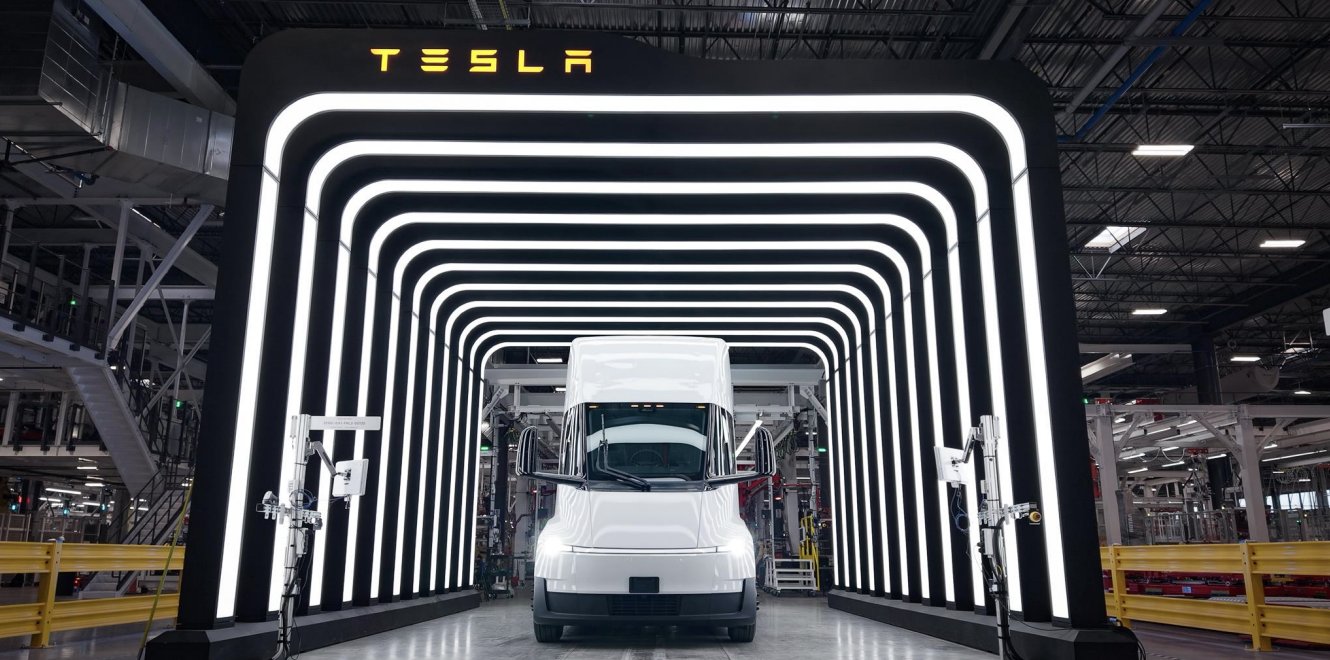
Tesla says it will officially inaugurate its new Semi factory in Nevada next month. The Tesla Semi account posted the announcement on X, sharing a graphic titled “Semi Rollout” with a date of September 24. No further details were given about the format of the event or who would attend.
While Tesla’s dedicated Semi plant in Sparks, adjacent to Gigafactory Nevada, opened back in April, with the first trucks rolling off the high volume line on April 29, the timing for the factory inauguration comes at a surprise. The ribbon cutting event five months into production is a break from how Tesla has usually handled its other factories, where the first truck or car off the line typically served as the milestone moment.
Inauguration of new Semi factory in Nevada next month pic.twitter.com/a8kAlxrOOn
— Tesla Semi (@tesla_semi) August 24, 2026
The 1.7 million square foot factory was built as part of a $3.6 billion expansion Tesla announced in early 2023, and it shares a site with the battery cell lines that feed the Semi’s structural pack, a decision meant to remove the supply bottleneck that delayed the truck for years. The plant is designed for 50,000 trucks a year at full ramp. Semi program director Dan Priestley has said production “is now ramping” rather than claiming it has reached scale.
Nine years passed between the Semi’s 2017 unveiling and this stage of production, with the truck slipping from an original 2019 target through hand built pilot units for PepsiCo and a slow build out of the Nevada plant. An inauguration event now gives Tesla a stage to talk up that ramp and reset expectations for how many trucks it can begin delivering at scale.
The September date also lines up with the Semi’s next milestone. Tesla confirmed the truck is heading to Europe with a full unveiling at the IAA Transportation trade show in Hannover, Germany, running September 15 through 20. Between the Nevada event and the Hannover reveal, Tesla has roughly a week and a half in September to make the case that the Semi is now a truck being built and sold on two continents rather than tested in a handful of fleets.


Tesla Energy has introduced the Powerwall Lease in conjunction with Tesla Electric, making the service available in Texas. This new option delivers whole-home backup power using two Powerwall units for a net monthly cost of $35 after credits, accompanied by a low fixed electricity rate.
Under the lease terms, customers pay a one-time order fee of $100. The base lease payment for the two Powerwalls is approximately $122 per month during the first year, subject to a 3 percent annual escalator thereafter. Enrollment in a qualifying Tesla Electric Backup plan or Virtual Power Plant plan provides an $87 monthly credit.
Powerwall Lease is now available with Tesla Electric in Texas
Whole-home backup for $35/month, with a low fixed electricity rate
– Two Powerwalls, $0 installation
– Storm Watch outage protection
– One app to manage it all pic.twitter.com/oTzqc6K3aF— Tesla Energy (@teslaenergy) August 13, 2026
This credit lowers the effective cost to roughly $35 per month plus applicable tax.
Installation of the standard system carries no additional charge. The package features Storm Watch for outage protection and allows complete management through a single Tesla application. The system supplies continuous whole-home backup capability.
The Powerwall system enables households to maintain electricity during severe storms that disrupt the utility grid. When outages occur, the batteries automatically provide seamless backup power to the home.
Tesla announces 100k Powerwalls are participating in Virtual Power Plants
Tesla Storm Watch monitors weather forecasts and ensures the units are fully charged ahead of anticipated severe weather events so that power remains available throughout the disruption, keeping lights, refrigeration, and other essential systems operating without interruption.
Availability is restricted to select Texas locations where retail electric choice exists. Participants must lease exactly two Powerwall units and maintain continuous enrollment with Tesla Electric. Solar panels cannot be included under this particular lease arrangement.
The monthly credit activates automatically once the system is installed, receives permission to operate, and enrollment is confirmed. To retain the credit, customers are required to stay enrolled in Tesla Electric and fulfill all program conditions.
Nonstandard installations that involve electrical upgrades or special permitting may lead to extra expenses and might impact eligibility for the credit, so be sure to check with either your installer or Tesla to ensure you will still qualify.
Elon Musk
Inside Tesla’s secretive $10 Billion “Project Crystal Sun” filing
Tesla filed for a $10.1 billion Fort Bend solar factory, but the site isn’t confirmed.
Tesla has filed paperwork in Texas for a second massive manufacturing project in the same week it locked down its chip fabrication site, this time for a $10.1 billion solar cell plant in Fort Bend County. The filing, submitted July 22 under the state’s Jobs, Energy, Technology and Innovation Act and first surfaced by Sawyer Merritt on X, lists an internal project name of “Project Crystal Sun” and targets a site off FM 762 and FM 1994 near Richmond, about 40 minutes outside Houston.
Tesla is planning to build a $10.1 billion vertically integrated solar cell manufacturing facility in Fort Bend County, Texas, about 40 minutes from Houston, according to a new public application filing.
Tesla is aiming to start construction this year and finish in 2028, with… pic.twitter.com/f3HIK5HGST
— Sawyer Merritt (@SawyerMerritt) August 7, 2026
The application, prepared by Kroll Tax Services on Tesla’s behalf, spans five parcels totaling roughly 3,000 acres within the Lamar Consolidated Independent School District. Tesla wants a 10 year property tax limitation in exchange for the investment, split as $1.5 billion in real property and $8.6 billion in equipment and personal property. The company projects 9,712 permanent jobs once the plant reaches full operation, with 1,147 peak construction jobs during a build window running from this year through 2028 and commercial operations targeted for the first quarter of 2029.
Tesla is not fully committed to Fort Bend County yet. The filing states the company is weighing the site against an unnamed out of state alternative, and frames the tax abatement as what would make Texas competitive against that option. If the district and county decline the incentive, Tesla says it may build elsewhere.
Tesla Megapack Megafactory in Texas advances with major property sale
The plant would handle the full solar cell production chain in one facility, according to the filing, covering wafer and ingot manufacturing, coating, metallization and printing lines, cell testing, automated material handling and cleanroom infrastructure. That scope points to Tesla vertically integrating a part of its supply chain it currently sources largely from overseas partners, mirroring the approach behind its expanding Megapack production in Brookshire, Texas, where Tesla has already built out two buildings for its grid battery business.
The timing lines up closely with Tesla and SpaceX’s other big Texas commitment this month. SpaceX confirmed its Terafab chip factory would land in Grimes County days before this filing surfaced, with construction on that $16.8 billion project starting almost immediately after local officials met with residents. Terafab is meant to produce the AI chips running Tesla’s Optimus robots and Full Self-Driving software, while a solar cell plant would feed a different part of the business, the panels and storage systems Tesla sells to homeowners, businesses and utilities, and increasingly needs to power its own data centers.
Musk has talked about building domestic solar manufacturing capacity before, tying it to the amount of power Tesla’s AI ambitions will require.

Tesla uber bull Ron Baron says ‘the time to buy the stock is now’

SpaceX’s next Starship launch is about to attempt its biggest leap yet


