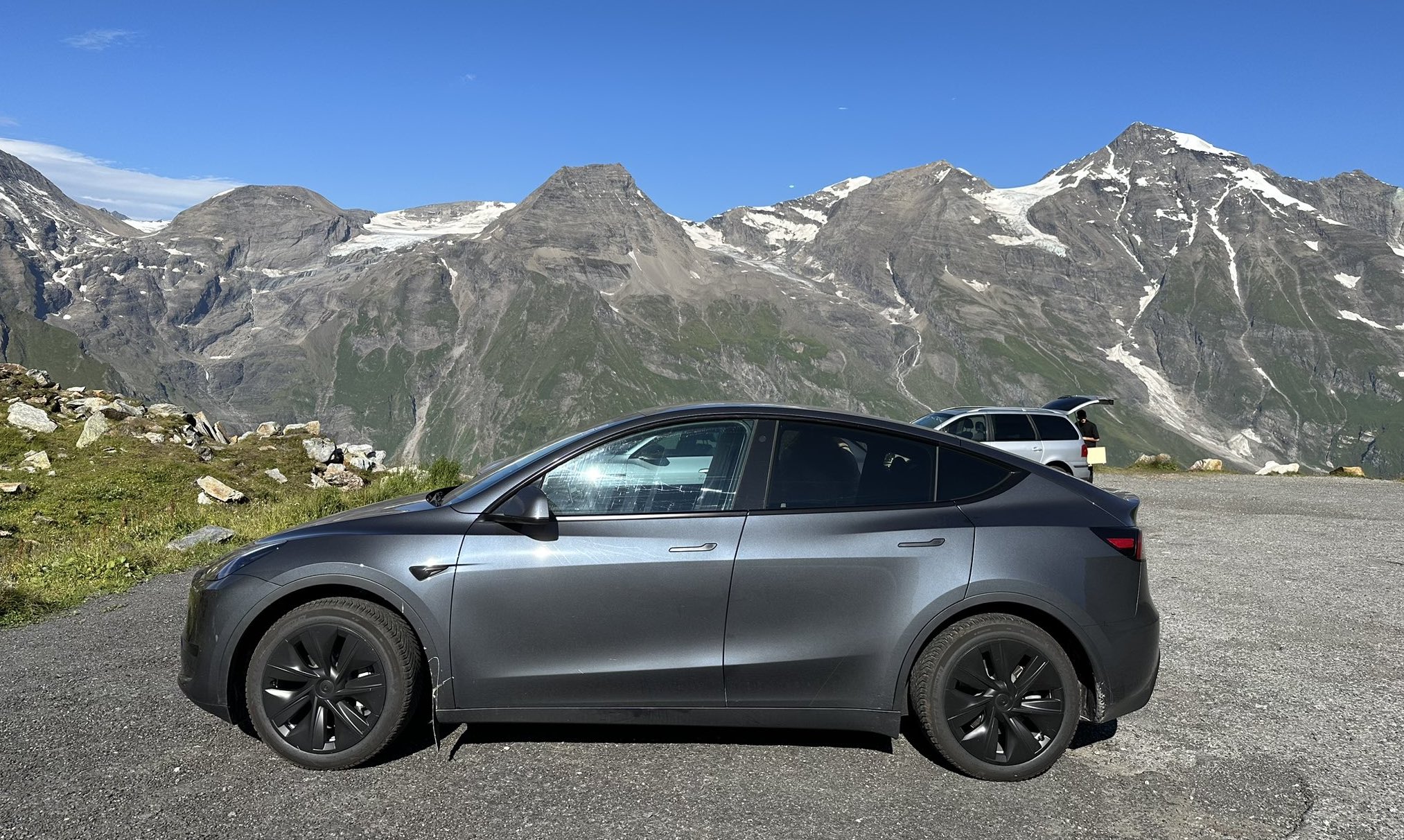
Tesla Model Y
Tesla Australia deliveries suffers setback over biohazard concerns

Tesla Australia deliveries have stalled over the past few months. The issue stems from the Pure Car and Truck Carrier (PCTC) Glovis Caravel, which has been prohibited from making deliveries due to biohazard concerns.
According to AIS data, the Glovis Caravel arrived in Brisbane, Australia, from China at the end of October. The Clovis Caravel reportedly carried a few “months worth” of Model Y deliveries from China.
Australia’s Department of Agriculture, Fisheries, and Forestry (DAFF) confirmed multiple biohazard risks onboard the Clovis Caravel, including Yellow Spotted Stink Bugs.
“There were multiple detections including Yellow Spotted Stink Bug, which poses a significant threat to Australia’s plant health and environment because of the damage it can do to agriculture crops, fruit, and ornamental trees,” a DAFF spokesperson told the Daily Mail.
Tesla customers in Australia are understandably frustrated by their delivery issues. The customers affected by the Clovis Caravel delivery would have purchased new Tesla Model Y units as early as August with an October delivery date.
However, they have received notices moving their expected delivery dates to before the end of January. Tesla Australia customers were also given the choice to receive a different vehicle from the next batch of Model Y units expected to arrive in Australia.
The Clovis Caravel has been circling offshore from Brisbane since her arrival in October, with the crew attempting to fumigate the vessel. The Australian government turned her away—along with her shipment of Teslas—with orders to return to Shanghai.
The Teslarati team would appreciate hearing from you. If you have any tips, contact me at maria@teslarati.com or via X @Writer_01001101.



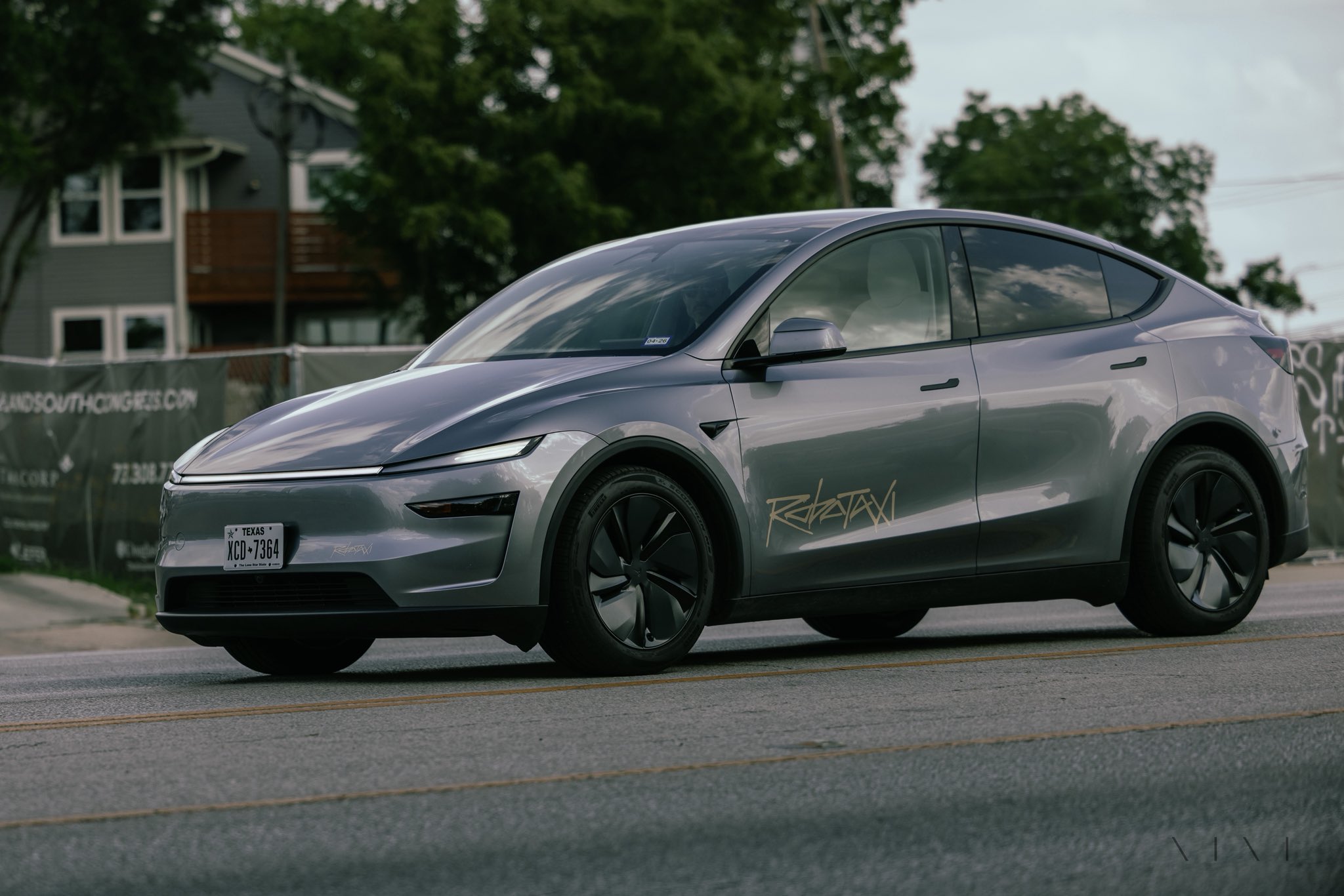
Elon Musk says that Tesla could test adding customer-owned vehicles to the Robotaxi platform as soon as December.
In a reply on X to an Austin-based Uber driver who uses a Model Y with Full Self-Driving and keeps only 49-63% of fares after the platform’s cut, Musk wrote:
“Coming soon. If things well, may start trials next month. Much better to manage a fleet of cars than have to drive just one car by yourself!”
@apostlejohn @WorldlyReviewer Coming soon. If things well, may start trials next month.
Much better to manage a fleet of cars than have to drive just one car by yourself!
— Elon Musk (@elonmusk) November 16, 2026
The exchange highlights the appeal of passive income from an autonomous vehicle versus actively driving for rideshare platforms.
This potential December start is technically earlier than prior company guidance, but it also aligns with the currently-projected first delivery of the Tesla Cybercab, a vehicle that has no manual controls.
Nevertheless, Tesla planned to bring customer vehicles into the fleet later on. During Tesla’s Q3 earnings call, AI leadership had pointed to roughly the second quarter of 2027 for customer vehicles joining the network. Musk’s comment suggests an accelerated pilot, most likely beginning in Austin, where Tesla’s Robotaxi service has operated longest and where new features typically roll out first.
December is also the target month for the first customer deliveries of the Cybercab. In mid-November, Tesla began inviting select buyers to purchase the purpose-built, two-seat vehicle for personal use at $29,990 plus a required $299 monthly Autonomy Subscription, with estimated deliveries in Austin.
Tesla Cybercab goes on sale for $29,990, slated for December deliveries
Those initial private Cybercabs are restricted to personal use within existing Robotaxi zones and do not automatically include commercial network participation; the large majority of Cybercabs are expected to remain Tesla-owned fleet vehicles.
The coincidence of the two December milestones underscores Tesla’s parallel paths. Customer Model Ys already on the road with FSD hardware could rapidly enlarge the vehicle pool for unsupervised trials, while the Cybercab, which is void of a steering wheel or pedals and equipped with only dedicated Robotaxi hardware, arrives as a purpose-built platform.
Hardware differences, such as additional cameras or cleaning systems on company Robotaxis, may constrain which Model Ys are eligible at the outset. Regulatory approvals, insurance arrangements, and software readiness will also determine whether the “if things go well” condition is met.
For owners, successful trials would fulfill a vision Musk first sketched in Tesla’s 2016 Master Plan: vehicles that earn money while their owners sleep or work.
Combined with the arrival of privately owned Cybercabs in the same month, December could mark the transition from Tesla-controlled Robotaxi operations to a broader ecosystem in which both company fleets and customer vehicles contribute to the company’s autonomous ride-hailing platform, which continues expanding.
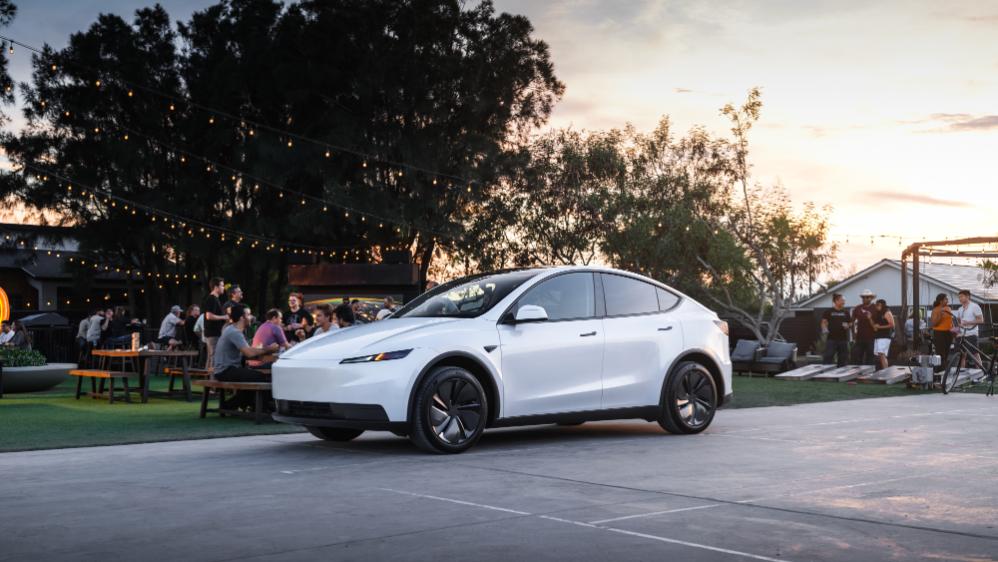
Tesla has trimmed its Model Y offerings as its Standard All-Wheel-Drive configuration has been removed from the online configurator after roughly nine months on sale. The move follows the removal of the Cybertruck, as its trims have also been minimized as that vehicle heads for total discontinuation at the end of Summer 2027.
Launched in February 2026 as a mid-tier dual-motor option between the Rear-Wheel-Drive model and the Premium trims, the Standard All-Wheel-Drive Model Y offered 294 miles of range and a 4.6-second 0-60 mph time in a stripped-down package.
🚨 Tesla has pulled the $41,990 Model Y AWD from its U.S. configurator after nine months on sale.
The cheapest AWD Model Y you can order is now the $49,990 Premium AWD, with Premium deliveries quoted for Jan–Mar 2027.
The $39,990 RWD stays, and AWD units remain in inventory. https://t.co/uROJp2lVpx
— TESLARATI (@Teslarati) November 13, 2026
With it gone, the cheapest new AWD Model Y buyers can configure is now the Premium AWD at $49,990, with estimated deliveries pushed into January–March 2027. The $39,990 rear-wheel-drive Model Y remains available for custom orders, and some AWD units are still listed in inventory.
The move arrives days after Tesla sharply narrowed its Cybertruck lineup. New orders for the Dual Motor AWD and Premium AWD versions have been disabled, leaving only the high-performance Cyberbeast—priced around $109,990 before fees—as the sole configurable option.
Elon Musk has stated that Cybertruck production at Gigafactory Texas will wind down around the middle to late summer of 2027 to free manufacturing space for greater Cybercab output. Tesla has raised prices on remaining trims and is prioritizing higher-margin builds while working through an existing order backlog that exceeds what the line can complete before conversion.
These parallel decisions reflect a broader effort to simplify Tesla’s retail customer lineup. Lower-volume or lower-margin variants are being phased out or deprioritized in favor of core, higher-spec models that generate stronger profitability and clearer production planning.
For the Model Y, this concentrates volume on the remaining RWD and Premium configurations while Premium deliveries already stretch into 2027. For the Cybertruck, it accelerates the transition away from a stainless-steel pickup that underperformed relative to initial volume expectations.
Tesla Model Y Standard Full Review: Is it worth the lower price?
The freed capacity and reduced complexity directly support Cybercab scaling. Tesla began pilot Cybercab production at Giga Texas in early 2026, launched paid autonomous rides in Austin in September, and is preparing for substantial volume growth.
By streamlining the existing vehicle portfolio, the company is reallocating factory space, engineering attention, and supply-chain resources toward its purpose-built Robotaxi, which lacks a steering wheel or pedals and is designed exclusively for unsupervised autonomy.
The result is a leaner retail lineup today and a clearer path to high-volume Cybercab deployment tomorrow.
Energy
Tesla Model 3 and Model Y can now do what only Cybertruck could
Tesla Model 3 and Model Y can power your home with Powerwall 3 during outages.

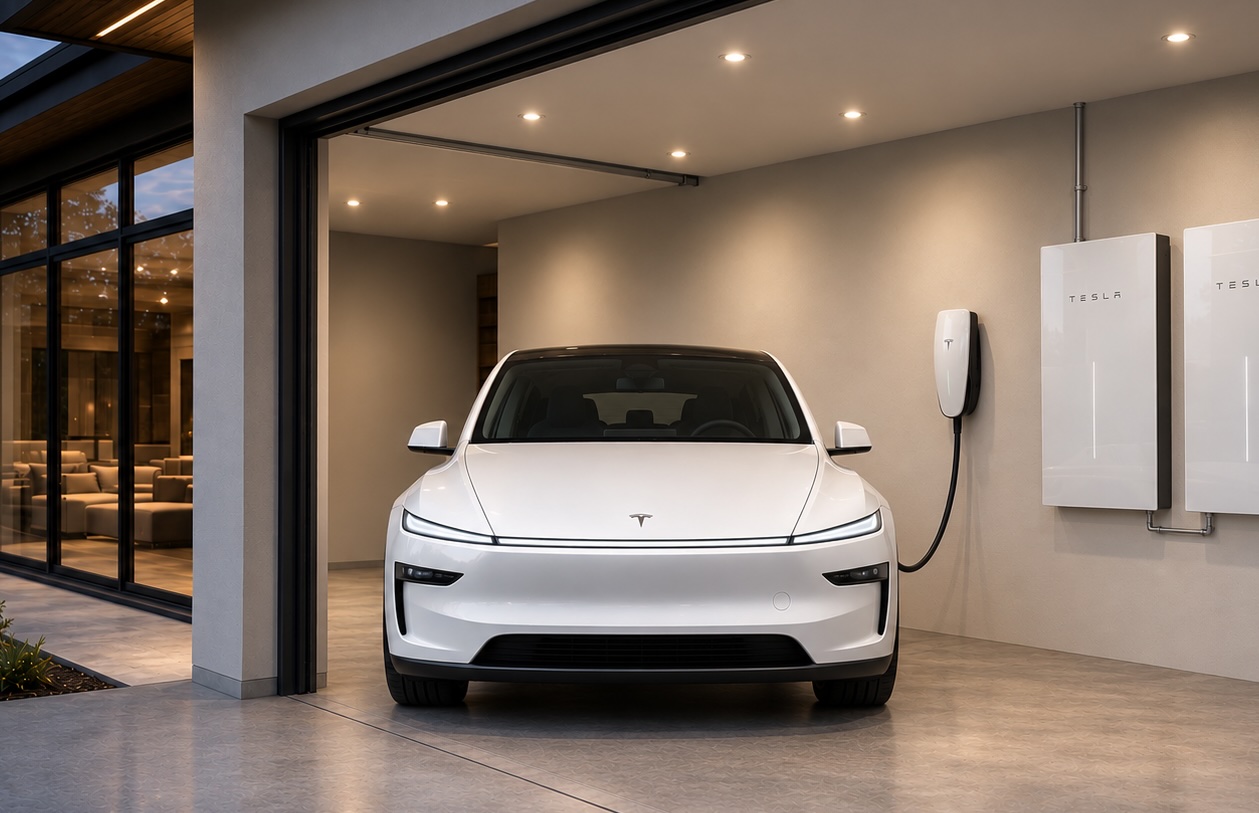
Tesla has turned its two top sellers into backup batteries for the house.
Tesla Energy announced on Tuesday that Powershare Home Backup is now available for new Model 3 and Model Y vehicles paired with a Powerwall 3, saying the car can “extend your home backup by over 2 days.” Minutes later, Tesla’s main account quoted the post with a broader pitch: “With Powerwall 3, every Tesla can now serve as your home’s backup battery.”
Until this week, the Cybertruck was the only Tesla that could send power back into a home, and that capability only began working alongside Powerwall 3 last month, after years of ambitious targets.
Tesla’s updated Powershare page says every Model 3 and Model Y ordered in the U.S. or Puerto Rico on or after October 1, 2026 can use the feature. Some, but not all, earlier cars also qualify. Owners can check on the touchscreen under Software, then Additional Vehicle Information, where a capable car shows “Powershare Support: Enabled.” As Electrek reported, bidirectional power on the two cars runs through an inverter Tesla calls PCS2 Lite, and the company has not said when that part entered production on each trim.
The home side is simpler. A house that already has a Powerwall 3 and either a Wall Connector 3 or Universal Wall Connector needs no additional equipment, and Tesla says compatibility is enabled through a software update. When the grid drops, the Powerwall and the car work together, with up to 11.52 kW of continuous power available. Tesla’s “over two days” estimate assumes a home using 30 kWh per day and a car starting at a 90 percent charge. Standard trims are rated for up to two days, while the Cybertruck adds more than three.
There are limits. Powerwall 2 and Powerwall+ support is listed as “coming soon.” Model S and Model X are not included, and Grid Support, the program that lets Cybertruck owners in Texas send power back to the grid during demand spikes for bill credits, is not available for Model 3 or Model Y.
The rollout also lines up with something Elon Musk said more than three years ago. At Tesla’s March 2023 Investor Day, Musk said, “I don’t think very many people are going to want to use bidirectional charging, unless you have a Powerwall.” Tesla has now shipped the feature for its volume cars with exactly that requirement attached.
The Powerwall pairing was the hard part on Cybertruck. Tesla told owners in December 2025 that Powershare with Powerwall had been pushed to mid 2026, and lead engineer Wes Morrill explained that two devices capable of forming a home’s grid have to negotiate which one leads during an outage, across multiple generations of hardware. With that work done for the truck, Tesla was able to extend it to the Model 3 and Model Y within a month.
Ford and GM have offered home backup from their EVs for several years, but both require a separate inverter and backup hardware. Tesla’s version leans on equipment many Powerwall 3 owners already have on the wall. Powershare for the two cars also ships as part of software update 2026.38.3, the same release that began delivering Halloween Mode on Tuesday.

Tesla may test customer-owned Robotaxis as early as next month, Musk says

FAA turned down free Starlink offer before nationwide ground stop, Elon Musk says


