News
Buy Tesla or Build One: Why Apple Should Make a Car

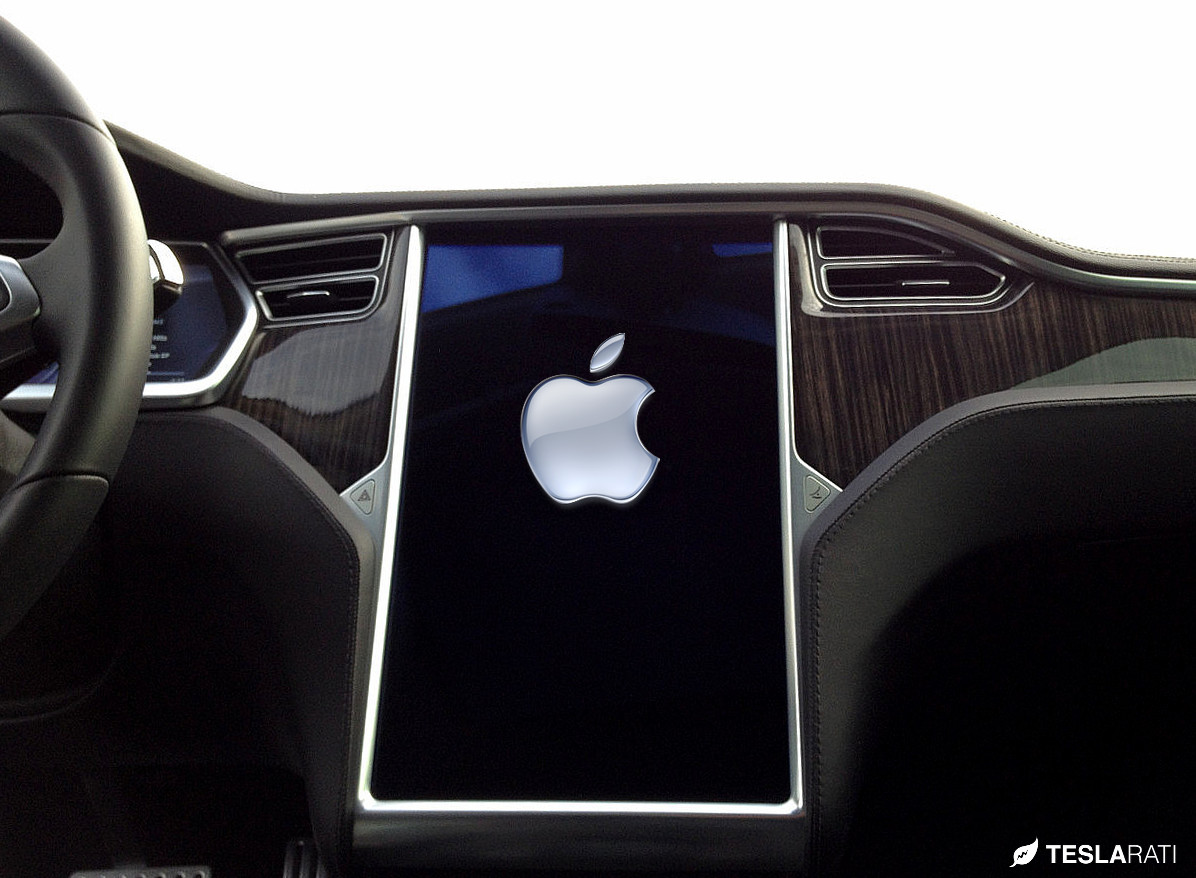
Once Upon a Tesla
First there were the rumors that Apple might buy Tesla. Then came the loose talk about Apple employing an army of engineers to build their own car, many apparently leaving Tesla to join the effort and cashing in nicely. Now the rumors about Apple buying Tesla are back. Really, it’s hard to keep up.
It’s difficult to believe that the closed shop and tight-lipped Apple culture would purposely leak this kind of intel. Was it a disgruntled employee? Perhaps it’s just more difficult to keep a secret these days with Social Media eavesdropping as if it were a fly on the wall. Or, maybe it’s nothing at all.
Disclaimer
I drive a Model S and own TSLA stock. I’m an Apple fan, but don’t own APPL. My first computer was a Macintosh Powerbook 165 Series made in 1993. I still have it and it boots up even today. I’ve purchased a vast number of Apple products over the decades and I can’t think of a brand I’m more invested in than Apple. As an admirer of great design they won me over early on and continue to do so. And, I’ll be one of the first to get my wrist on the Apple Watch in April.
Barriers Were Made to be Broken
The idea of Apple designing and building a car is not new. For years many of us have been playing the game, “What would (fill in the blank) look like if Apple made it?” It’s right up there with the design school project to sketch out the “internet enabled refrigerator.” Apple broke the music barrier, the phone barrier and the design barrier for computers. Tesla broke the electric car barrier and they did it in ten years. They are the Jackie Robinson of the auto industry having flung open the door to electric vehicles while traditional auto makers refused to even seriously try.
Certainly there is some effort out of Detroit and others as of late and they should be applauded for realizing their miss. Mr. Musk’s gift of releasing Tesla’s patents was completely in line with the Tesla Way. I wonder how much of that intellectual property is being incorporated by others? My guess is not much. Companies prefer to take credit for their own innovation and invention; always thinking they can do it better.
Panic in Detroit
The media likes stirring the pot about how BMW is going to eat Tesla’s lunch and GM could put Tesla out of business tomorrow. And how Porsche is developing a “Tesla Fighter.” Today’s electric car activity outside of Tesla would not even be in the blue sky discussions if it weren’t for the success of the Model S. Tesla should not be dismissed as an “ankle biter,” which I would define as a non-threatening annoyance. Tesla is in fact a real threat to the car “smoke stack” industry. Respect Tesla or not, but know they are not going away. They may evolve or merge and it may not always be about cars, but it will likely be about some combination of energy and transportation, built on software and brilliant design.
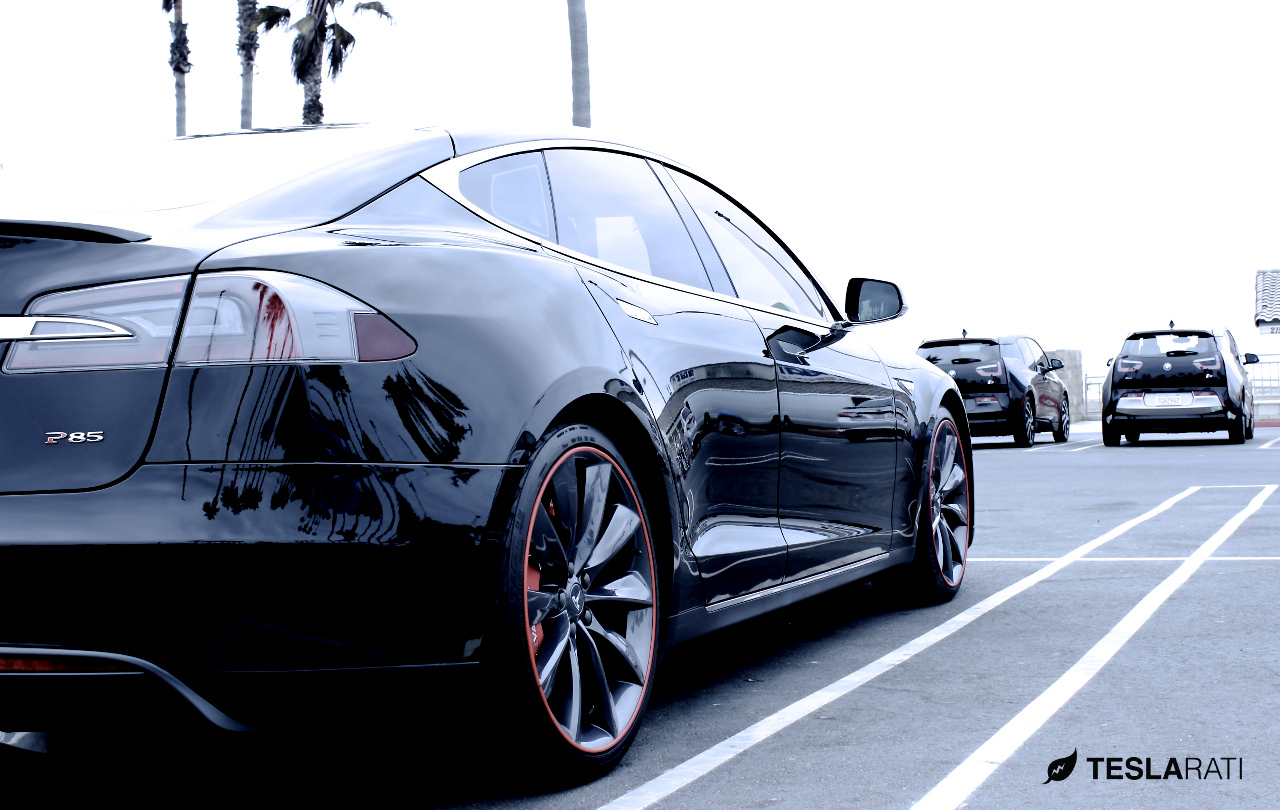
Tesla’s 85kWh Model S encountering new competition in the EV space from BMW.
I make no bold predictions about Tesla’s potential market cap or when Apple will buy Tesla or for how much. That’s not my arena so I will stay in my lane. I agree it’s fun, but the stakes are on an entirely new level here. This activity is about something more important than corporate profits. (I know profits are important. I work in financial services). Tesla is fundamentally about designing and enabling an entirely new future that is more environmentally responsible than the past and better for consumers.
Tesla should inspire our imagination, not make us think about their stock price or how many cars they sold yesterday. Google didn’t think about their stock price when they launched their Autonomous Car project. Newer companies have a distinct advantage in that they don’t need to repack their baggage. When you lack a history it’s easier to make a better future.
It’s fascinating to me that Tesla and potentially Apple have more insight into what the “car of the future” could be than GM, Ford, or Chrysler. Is Silicon Valley the new Detroit?
Why Apple Must try for a Car
The world has become more connected over the last few years. The Internet of Things, powerful wireless connectivity and the transition to internet IPv6 will greatly expand the number of IP addresses that can be supported and makes a fully connected world possible. Apple’s seamless integration of device, content and software has made that world vision believable.
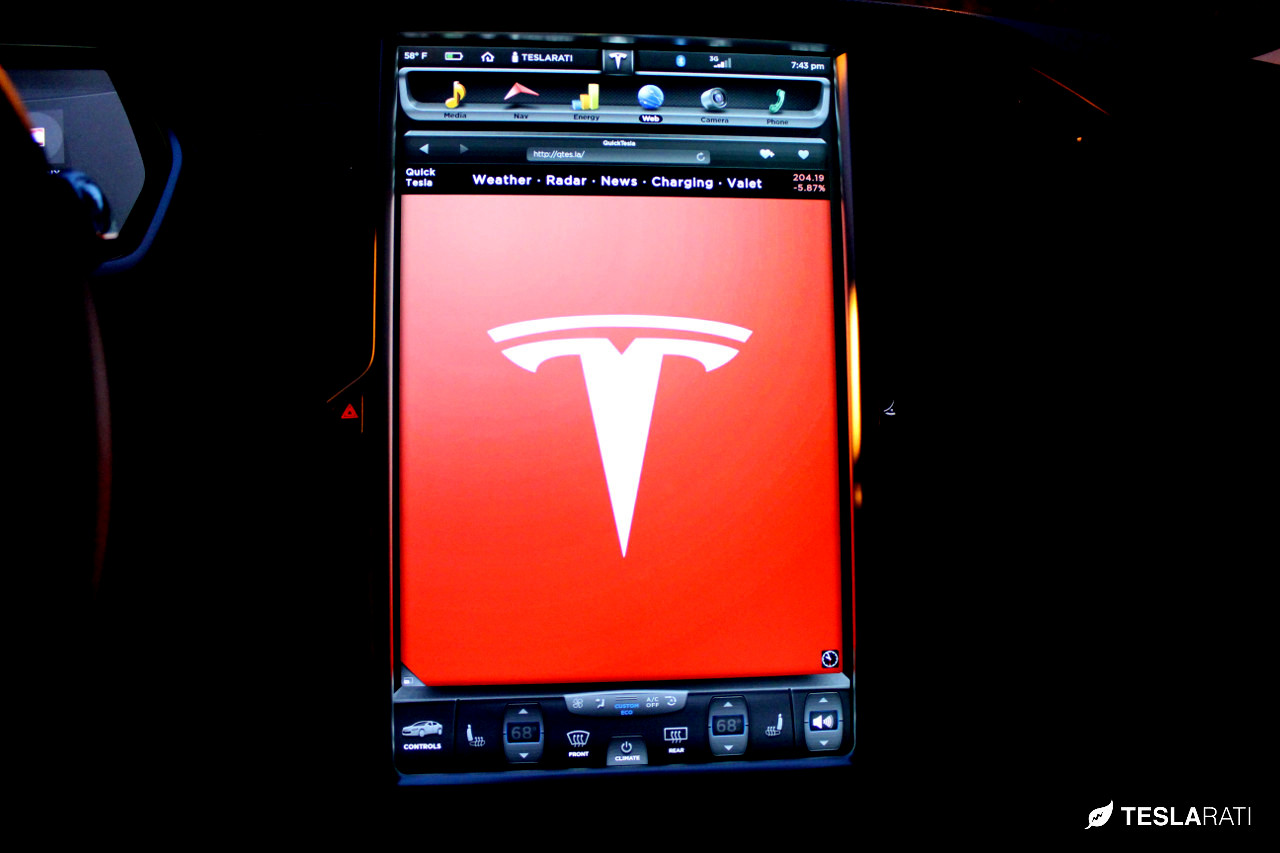
A large 17″ touchscreen center stack on the Model S provides an iPad-like experience.
A large touchscreen in a car like the Tesla could emulate your Mac, or iPad, or iPhone screen with shared apps and programs. My iCalendar already synchs with that touchscreen from my iPhone as soon as I open the door. Apple’s software capabilities could take this to fascinating extremes. Music, programs, even Siri are all possible in an Apple Car operating system. Not to mention self-driving cars and the ultimate vision to eliminate collisions.
I believe the challenge for Apple lies in the hardware. A car is not a music player or a phone. No one drives an Apple product. It doesn’t have wheels or doors; nor does it carry precious human cargo. There are very few laws that govern phone safety. No crash tests to pass, or airbags to install. A car is not just a software engineering exercise that needs a shell. It’s a big, complex, and messy manufacturing problem that cannot be outsourced to Foxconn.
Tesla does have amazing software, but it did not, and could not abandon the deeply ingrained culture of what it means to own and drive a car. Tesla’s big robotic engineering science coupled with Apple’s software capabilities would make an unstoppable combination.
Tim Cook tackling transportation is akin to Steve Jobs entering the retail space. It makes perfect sense for Apple and Apple’s vision. Their culture is to be a catalyst for innovation, vision and ultimately forward change. These are arguably the most important attributes for any business or culture.
If Apple is serious about making a car, they can choose their adventure. Buy Tesla, or build it on their own. Either way, I’m excited that we have another bright set of minds at work on disrupting a carbon monopoly. If Apple is now seriously in the game, it’s GM, Ford, Chrysler, BMW, Toyota, Honda, Nissan, BMW, Subaru… who should keep an eye on their lunch.
My One Prediction
Fast forward to 2021. Apple unveils their version of a car. Turns out I do have a prediction after all, and it’s rock solid. Apple will not sell their cars through a dealership network.


Elon Musk
SpaceX just got the green light Starship has waited years for
The FAA has cleared Starship Flight 14, setting up SpaceX’s first orbital attempt on Monday.

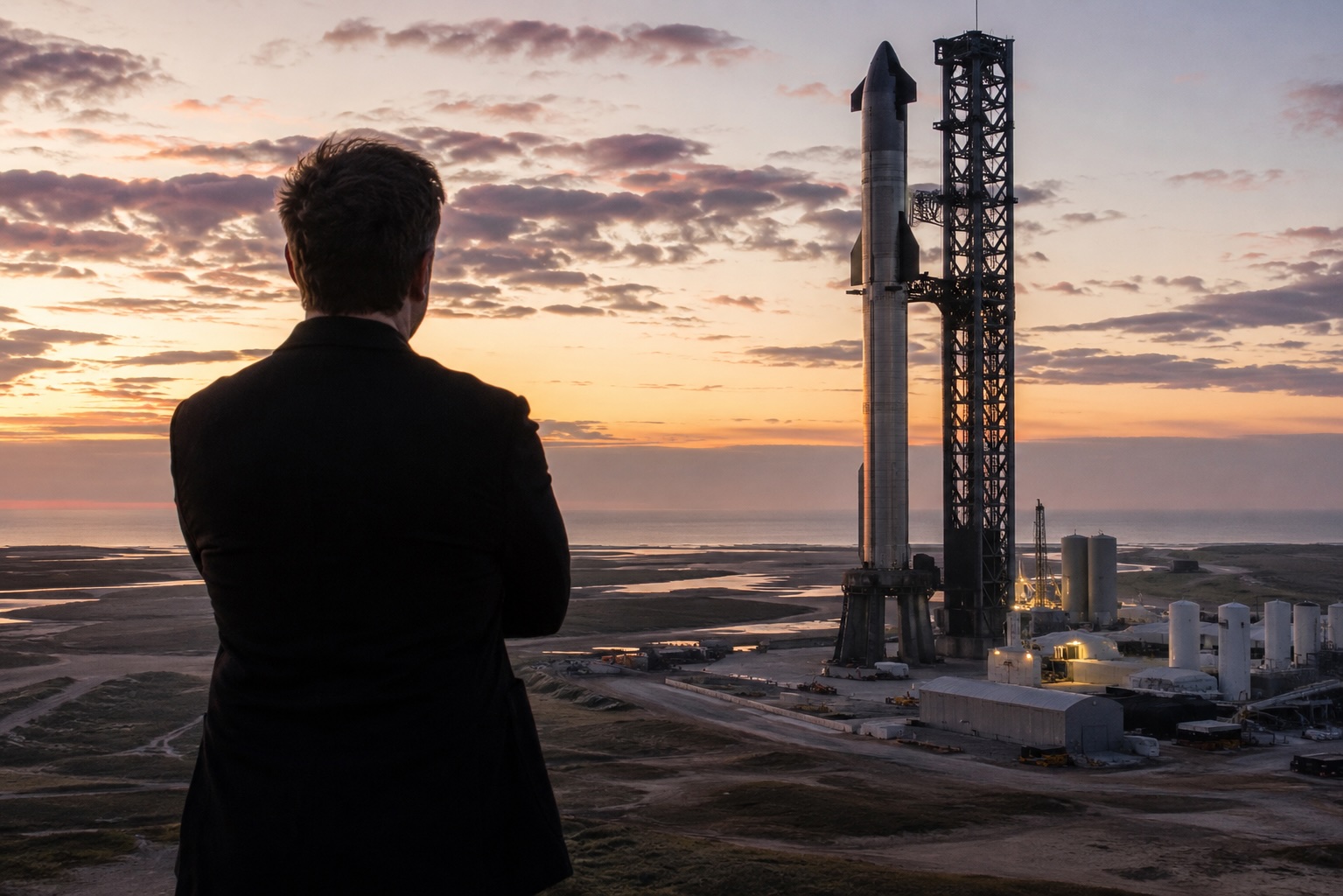
SpaceX has cleared the last regulatory hurdle standing between Starship and its first trip to orbit. The Federal Aviation Administration issued the launch license for Starship Flight 14 late Saturday, keeping the mission on track for liftoff Monday, September 28, from Pad 2 at Starbase, Texas.
The 75 minute launch window opens at 7:15 a.m. Central, and Boca Chica Beach closures are also scheduled for September 29 and 30 as backup dates. This will be Starship’s first revenue generating mission.
The license was the missing piece after SpaceX completed a full wet dress rehearsal with Booster 21 and Ship 41 on September 24. At the time, the company said the flight remained on track pending regulatory approval. Because Flight 14 flies an orbital profile, the FAA had to sign off on a modified license that met its safety, payload and financial responsibility requirements.
Observers combing through the new FAA paperwork also noticed that lightning no longer appears among Starship’s listed launch hazards. If that holds, it matters more for where Starship is headed than for Monday’s attempt. Florida and Louisiana, home to LC-39A and the planned Starbase Louisiana site, see some of the most frequent lightning in the United States.
SpaceX tells the FCC that Starship Flight 14 is going to orbit
Flight 14 is the mission SpaceX has been building toward for months. Ship 41 will carry 26 Starlink V3 satellites, the first operational V3 units to be deployed, and attempt roughly six orbits at about 275 kilometers over a flight lasting just under 10 hours. SpaceX says the ship will only perform its orbital insertion burn after flight controllers confirm enough hardware redundancy remains for the deorbit burn at the end of the mission. Ship 41 is targeting a splashdown in the Pacific west of Chile, while Super Heavy will return to the Gulf of Mexico.
The date carries some symbolism as well. A Monday launch would come 10 years and one day after Elon Musk first presented the Interplanetary Transport System, the design that became Starship, at the International Astronautical Congress in Guadalajara, Mexico.
SpaceX has not announced what comes next, but air traffic planning slides reported this week, list Flight 15 no earlier than October 19 and a first Starship launch from LC-39A in Florida no earlier than October 30. Both dates depend on how Monday goes.
News
SpaceX completes another secret Pentagon launch, adding to suspected Starshield buildout
SpaceX launched the classified USSF-385 mission from Vandenberg, landing its booster on a tenth flight.
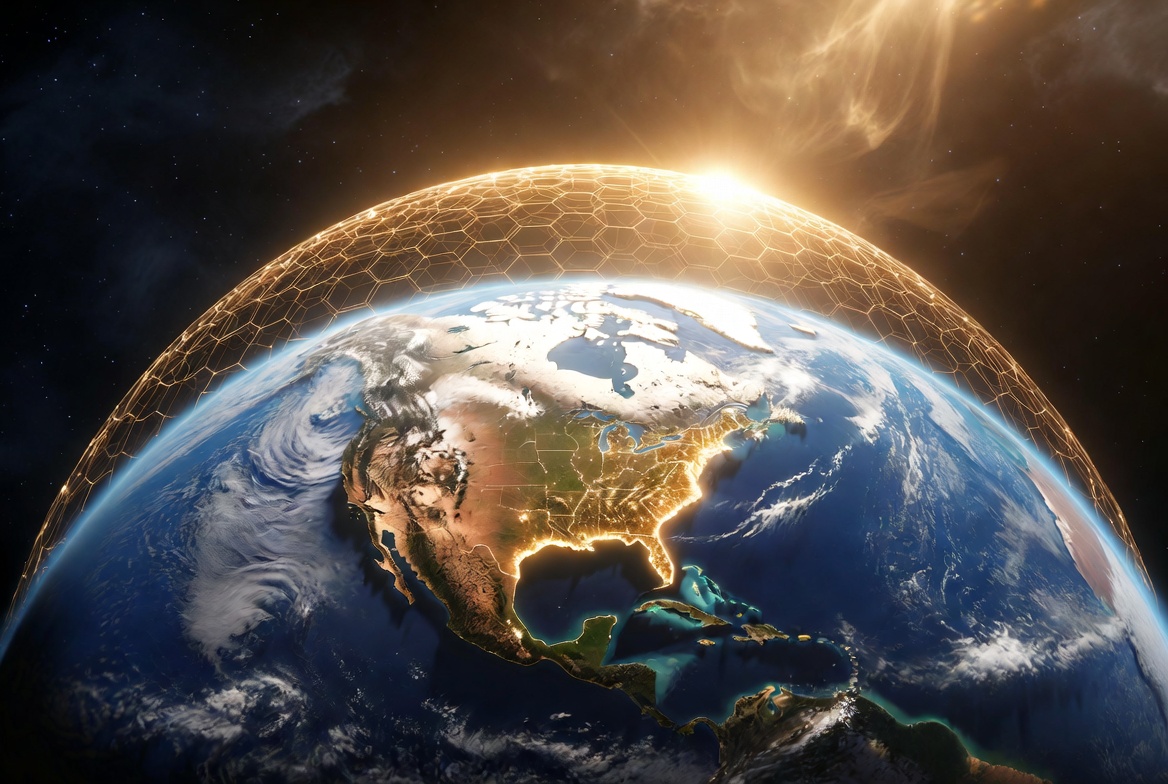
SpaceX launched another classified mission for the U.S. Space Force from California early Saturday morning, and the Falcon 9 booster that carried it landed on a drone ship in the Pacific for the tenth time. The USSF-385 mission lifted off from Space Launch Complex 4E at Vandenberg Space Force Base at 7:00 a.m. PT.
Booster B1100 touched down on Of Course I Still Love You roughly eight and a half minutes after liftoff. It was the booster’s tenth flight and tenth successful landing, following the NROL-95 national security mission and eight Starlink launches. Its previous flight, a Starlink Group 15 mission on August 22, came just 35 days earlier. SpaceX ended its livestream shortly after the landing, which is standard for classified payloads, and neither the company nor the Space Force has said what the rocket carried.
Watch Falcon 9 launch the USSF-385 mission from pad 4E in California https://t.co/CAdbx85Ydy
— SpaceX (@SpaceX) September 26, 2026
USSF-385 is the fourth Space Force launch from the same Vandenberg pad in roughly six weeks, following USSF-366 on August 15, USSF-153 on September 10, and USSF-259 on September 17. When SpaceX flew USSF-366 in August, independent trackers noted that the rocket’s stage drop zones matched SpaceX’s Starlink Group 15 missions, pointing to Starshield, the government version of the Starlink satellite bus. The Space Force later cataloged 23 satellites after both USSF-366 and USSF-153, while USSF-259 placed 17 satellites into a different orbital plane, per KeepTrack. Launch databases describe USSF-385 the same way, though the payload remains officially unidentified.
The cadence lines up with the contracts, because in July, the Space Force awarded SpaceX $1.6 billion in task orders for 18 Falcon 9 missions from Vandenberg through the end of 2027. SpaceX also holds contracts to build pieces of that same network, which pushed its Pentagon contract total for 2026 past $8 billion.
Saturday’s flight was also the sixth and final Falcon 9 launch from Vandenberg in September, according to Spaceflight Now, while only one Falcon 9 flew from the East Coast this month as SpaceX shifts its Florida infrastructure toward Starship. Launch trackers list it as SpaceX’s 112th mission of 2026 and the 108th Falcon 9 flight of the year, with SLC-4E turned around about six and a half days after its previous launch.
The West Coast pad will not stay quiet for long, considering SpaceX has another Starlink mission scheduled from SLC-4E on September 30. Meanwhile, in Texas, the company is two days away from Starship Flight 14, which is targeting Monday at 7:15 a.m. CT for the vehicle’s first attempt to reach orbit.
News
Tesla hints at new Roadster design in surprise clip
Tesla ended its Semi event with a Roadster teaser revealing a new front light bar.
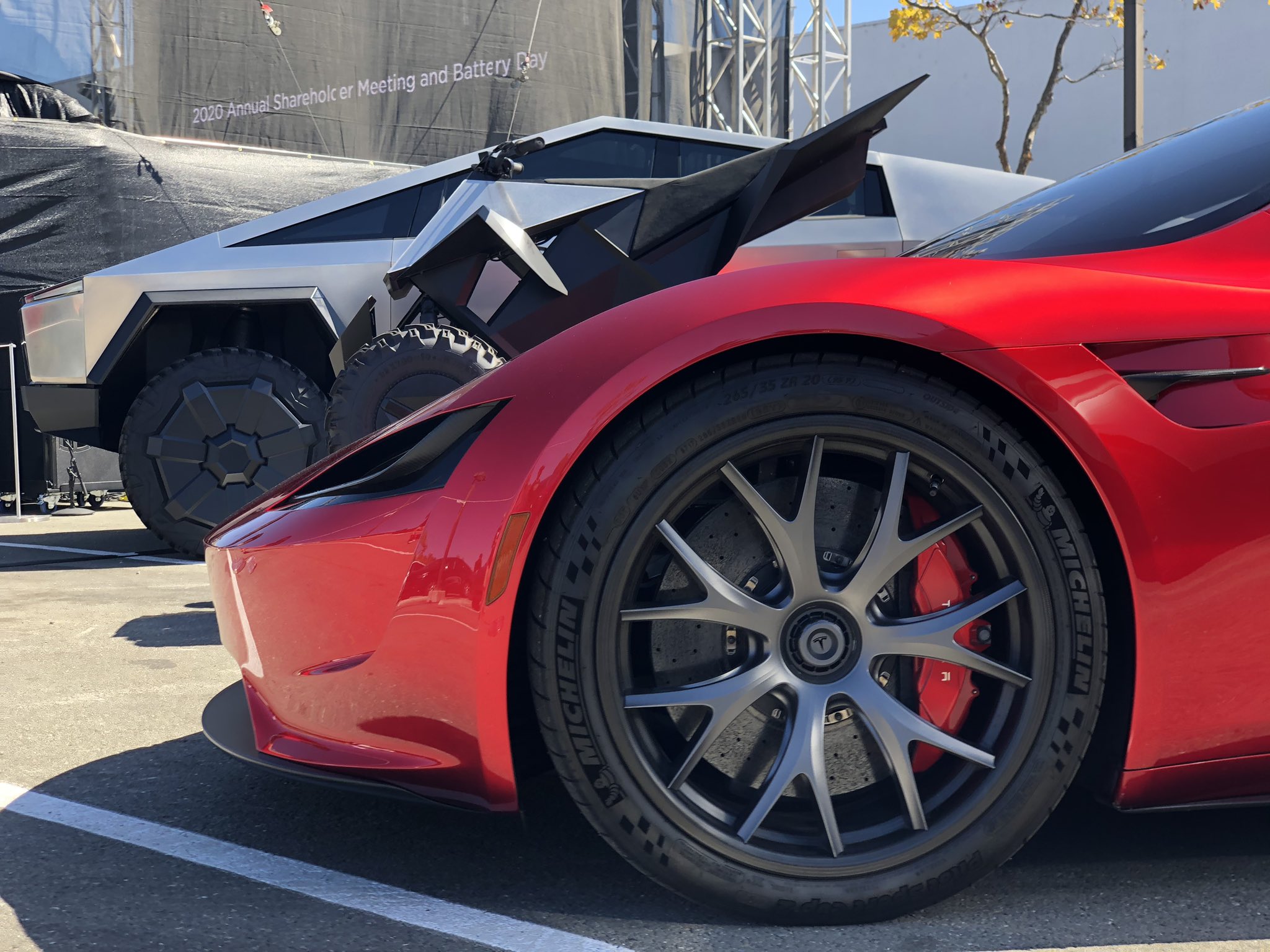
Tesla closed out its Semi event in Nevada on Thursday night with a nod to its own history, dropping a short Roadster teaser that suggests the production car will look noticeably different from the prototype first shown in 2017.
“We can’t have a Semi event without the Roadster,” Tesla engineering executive Lars Moravy told the crowd before the clip played. The line was a deliberate callback. Tesla first revealed the next generation Roadster in November 2017 by driving it out of the back of a Semi trailer at the truck’s original unveiling in Hawthorne, California.
The new video opens on trailer doors swinging apart in the dark. A thin white light bar glows across what appears to be the nose of the car, Tesla and SpaceX logos flash over the frame, and the Roadster name appears before the clip ends on “See you next week.” Tesla posted the nine second clip on X after the livestream wrapped.
See you next week pic.twitter.com/BT52bGVxFu
— Tesla (@Tesla) September 25, 2026
The light bar is the most concrete design detail so far. The 2017 prototype used two separate curved headlamp pods, while a connected front light strip would bring the Roadster in line with the Cybertruck, Cybercab, Semi, and refreshed Model Y. Sawyer Merritt was among the first to point out what looked like part of a SpaceX logo in the video, something Tesla has not addressed.
That logo fits the buildup around the optional SpaceX Package, which Elon Musk has long said would use cold gas thrusters to improve acceleration and possibly allow the car to briefly leave the ground. Tesla’s “Go for launch” post on September 12 set the October 1 date, and invitations sent to reservation holders place the event in Waco, Texas, at 8:30 p.m. Eastern. Waco sits roughly 20 minutes from SpaceX’s McGregor rocket test site, where the FAA has put a temporary flight restriction in place from September 18 through October 2, covering a 1.5 nautical mile radius from the surface up to 10,000 feet.
Tesla is also taking money ahead of the reveal. The company reopened Roadster reservations earlier this week with a $5,000 refundable card payment, followed by a $45,000 wire transfer due within 10 days. That puts buyers at $50,000 committed before Tesla has published a price.
The original pitch set a high bar: 0 to 60 mph in 1.9 seconds before any upgrades, 620 miles of range, a top speed above 250 mph, and production in 2020. That timeline has slipped repeatedly, and Tesla has since pointed to production at Gigafactory Texas no earlier than 2027. The company has said next Thursday’s event will include pricing, specifications, and production targets, the three details original reservation holders have been waiting on for nearly nine years.

SpaceX just got the green light Starship has waited years for

SpaceX completes another secret Pentagon launch, adding to suspected Starshield buildout


