SpaceX
SpaceX’s Starbase nears city status with voter support
With 90% voter support expected, Starbase City could soon become reality. The space-age town will support SpaceX’s mission to Mars.


Starbase is on the cusp of becoming the nation’s newest municipality. Local voters are casting ballots and deciding whether to incorporate the Starbase community. The voting process, which runs until May 3, 2025, could transform the unincorporated area into a space-age city.
Starbase is located in Cameron County’s Rio Grande Valley, 25 miles east of Brownsville, Texas. It is home to SpaceX’s Starship facility and houses fewer than 300 residents, including 120 children.
Elon Musk relocated SpaceX’s headquarters from Hawthorne, California, to Starbase in 2024, envisioning a futuristic town for his workforce. Musk pitched the concept of a space-age city four years ago and has repeatedly talked about it over the years.
The proposed Starbase city would span 1.5 square miles—roughly the size of New York’s Central Park. It would potentially house 3,500 SpaceX employees. A petition filed earlier this year triggered the vote to establish Starbase as a Type C municipality. SpaceX believes Starbase needs to be incorporated to support its mission to travel to Mars.
The vote is expected to pass, with 90% of the 279 eligible voters expected to favor establishing a Starbase city. Voters will also select a mayor and two commissioners for the new city. Bobby Peden is currently the only candidate for Mayor of Starbase. Meanwhile, Jordan Buss and Jenna Petrzelka are running for commissioner.
Starbase’s incorporation would mark a bold step in Musk’s vision, creating a hub tailored to SpaceX’s Mars ambitions. As voting continues, the outcome could redefine the Rio Grande Valley, establishing a unique, company-driven municipality centered on space exploration.



Give the gift of Tesla upgrades.
Shop for someone else or treat yourself. Get more shopping power with a Teslarati gift card.

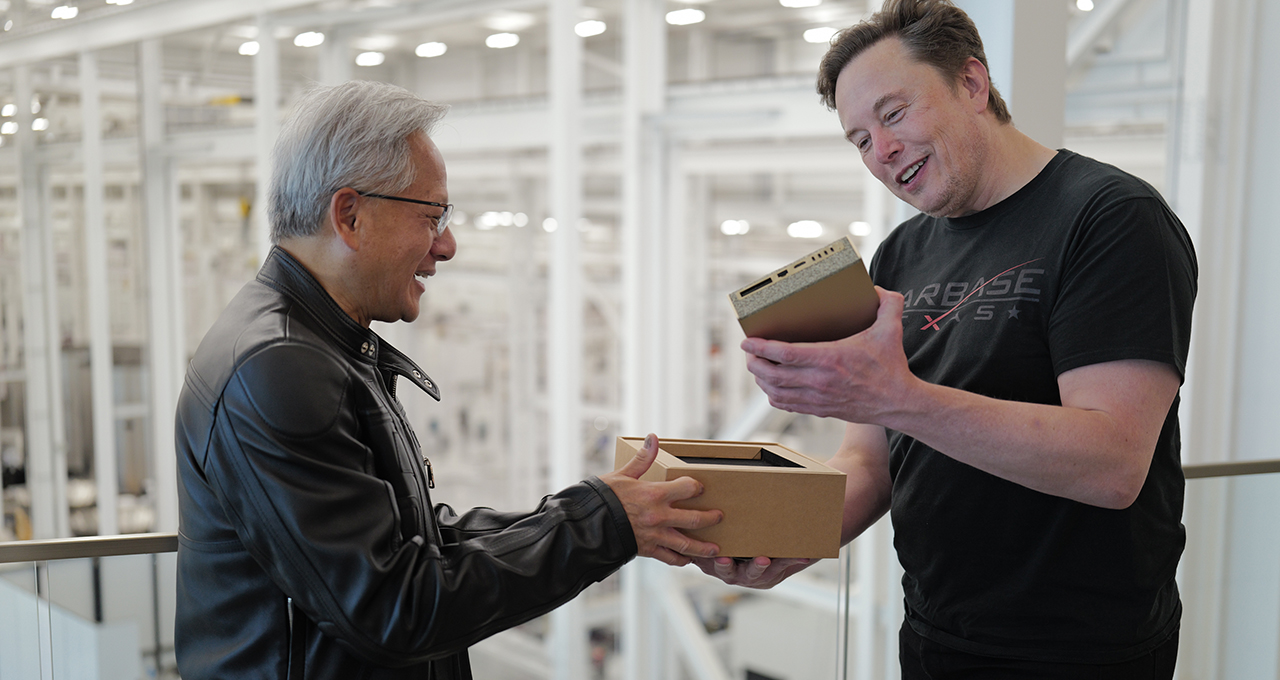
Tesla and SpaceXAI CEO Elon Musk has reacted to Jensen Huang’s return to NVIDIA as President, CEO, and Board Director, a move that Musk has been calling for since Huang was removed by the chip maker’s board.
“The mistake has been corrected,” Musk said as NVIDIA announced in a press release this morning that it would reinstate Huang as President, CEO, and Board Director:
The mistake has been corrected
— Elon Musk (@elonmusk) November 23, 2026
NVIDIA said that it “believes Jensen is the right person to lead NVIDIA, and that his reinstatement is in the best interests of our stockholders, employees, partners and customers,” according to Harvey C. Jones, Chair of the Board.
Huang said he was “honored” to return to the company and said he take his role “with the greatest humility and renewed commitment.”
After Huang was accused of having an affair with a Chinese spy and selling chips to China illegally, he was removed from NVIDIA’s CEO, President, and Board Chair role. This decision was met with a lot of pushback from NVIDIA’s partners, including Tesla and SpaceX, both of which utilize NVIDIA products for its SI efforts.
NVIDIA said it has recently formed a National Security and Export Control Committee to “oversee trade compliance and national security risks. The committee is engaging counsel with experience in national security matters, and such counsel will be retaining advisors with expertise in national security matters.”
The search for a Chief Compliance Officer is also underway, the company said in its release.
The broader implications for Tesla and SpaceXAI as Jensen’s return is now official are positive. Musk and Huang have a great relationship, so their partnership momentum sees a lot of benefits from his reinstatement. Additionally, SpaceXAI is building AI compute exclusively on NVIDIA GPUs.
Musk has said on various occasions that Huang is the best option for NVIDIA, stating that “there’s no one that can really replace Jensen.”
The biggest win for the three parties in the near-term is supply and delivery certainty is now restored. With proper management and Huang’s guidance, it is hard to believe NVIDIA will not pick right back up where it left off.
This gives Tesla and SpaceXAI time for their own chip efforts, and also keeps them locked into what Musk’s views as the leading architecture versus going to competitors or alternatives.
However, there are still some risks and uncertainty, especially considering the underlying investigations into Huang continue, and any residual national security scruitny could complicate government-related work or exports.
Elon Musk
Sean Duffy fires back at Elon Musk over free Starlink
Sean Duffy says the FAA picked a ground network over Starlink, and Musk isn’t impressed.

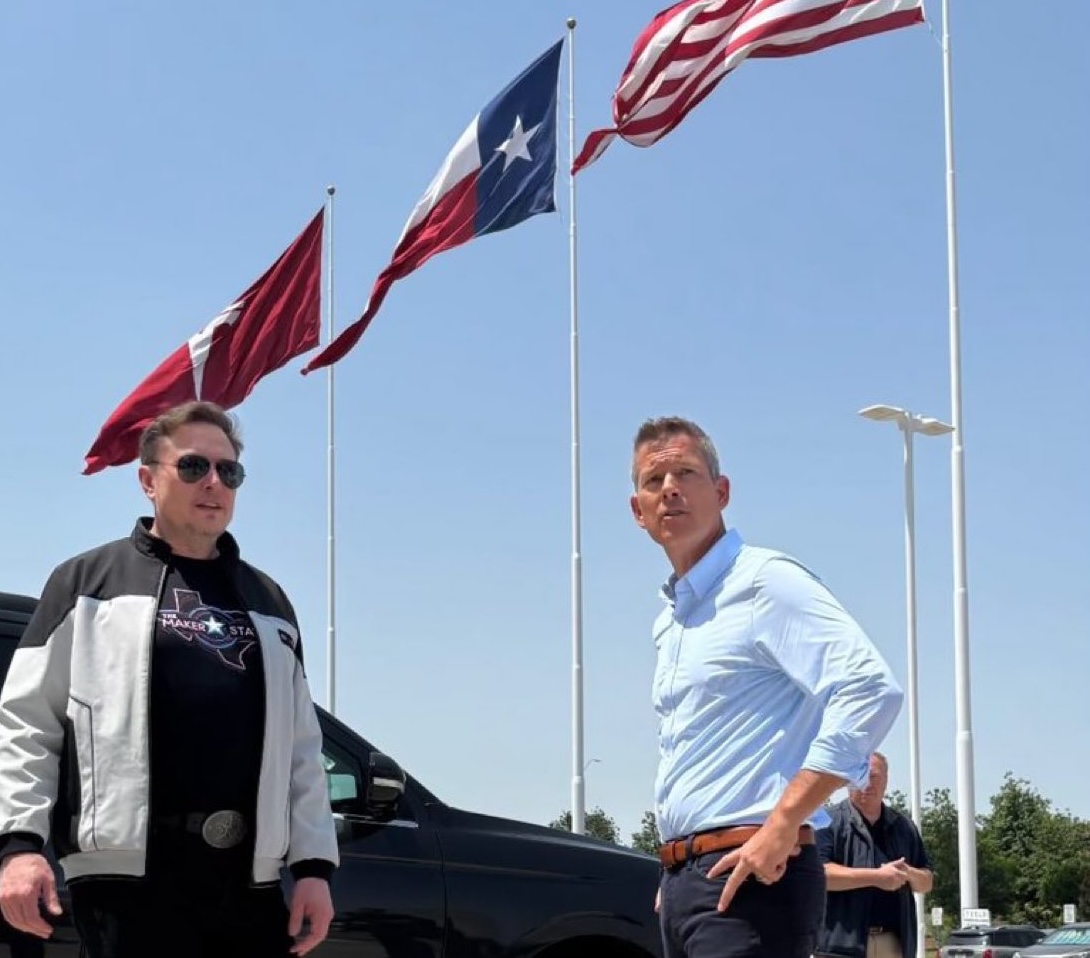
Transportation Secretary Sean Duffy has responded to Elon Musk’s claim that the Federal Aviation Administration turned down free Starlink terminals before last week’s nationwide ground stop, saying the department chose a ground-based network after running into problems with an earlier version of the satellite service. Musk’s reply was a single emoji: “🤦♂️.”
Speaking at a press conference, Duffy said Starlink had been useful in some parts of the system. “I’ve worked well with Elon, and he, Starlink was a great solution for some of our assets in Alaska, but we sent Starlink, in one of its prior iterations, to our tech lab, and, there was some issues that we had to navigate, and we thought that the best method is to have a network that’s based on the ground,” Duffy said, according to a transcript published by ZeroHedge. “Now, I think what he’s doing with Starlink and the speed is remarkable, but, our airspace is very big. We have assets everywhere. And so, again, we used him for different parts of the airspace.”
Duffy did not dispute that the offer was made. He also did not say what problems the FAA found during testing.
The exchange started Monday, when Musk wrote on X, “Free Starlinks for FAA were offered to Sec Duffy, but he said they were not needed. As it turns out, they were,” as Teslarati reported. That post came three days after the FAA grounded departures nationwide on November 13, when its legacy equipment became unstable as data flooded its telecommunications network at 1,000 connection attempts every four to five seconds. The FAA traced the flood to a radar site in Amarillo, Texas, and a radio site in El Dorado, Arkansas, where L3Harris had been installing a new router. Roughly 12,462 flights were canceled that day.
As I was saying …
Free Starlinks for FAA were offered to Sec Duffy, but he said they were not needed. As it turns out, they were.
— Elon Musk (@elonmusk) November 16, 2026
Duffy has also signaled frustration with L3Harris, which runs the FAA’s current network. “I want to get away from L3Harris and get to a new one, but they own the network,” he said. “I can’t cancel the network that they own.” He has asked Congress for $50 billion to modernize air traffic control, arguing against “a patchwork, a fix to a system that’s critical for every single family.”
The FAA’s position on satellite links predates this week. In a July 2025 letter to lawmakers, FAA Administrator Bryan Bedford said the agency “would not use Starlink (or any satellite service) as the sole communications technology” for safety-critical air traffic services. Reuters reported at the time that the FAA was not considering replacing its L3Harris and Verizon contracts with Starlink. Verizon’s FAA Enterprise Network Services contract, awarded in 2023, is valued at up to $2.4 billion over 15 years.
Musk first pressed the issue in February 2025, while he was leading the Department of Government Efficiency, writing that “the Verizon system is not working and so is putting air travelers at serious risk” before correcting himself days later to blame L3Harris. SpaceX said at the time it was supplying Starlink kits to the FAA at no cost and had no intent to take over any existing contract.
Elon Musk
FAA turned down free Starlink offer before nationwide ground stop, Elon Musk says
Elon Musk says the FAA declined free Starlink terminals before last week’s nationwide ground stop.
Elon Musk says the Federal Aviation Administration could have had Starlink backing up its air traffic communications for free, and he is pointing to last week’s nationwide ground stop as proof it was needed. “As I was saying … Free Starlinks for FAA were offered to Sec Duffy, but he said they were not needed. As it turns out, they were,” Musk wrote on X Monday.
Musk was quoting his own post from February 2025, when he wrote that “the ancient system that is rapidly declining in capability was made L3Harris,” while a newer replacement system from Verizon was “not yet operational.” The Department of Transportation has not responded publicly to Musk’s account of the offer.
The outage behind the post began at about 3:30 p.m. ET on Friday, November 13. According to the FAA’s own account, its legacy equipment became unstable when data began flooding its FAA Telecommunications Infrastructure network at a rate of 1,000 connection attempts every four to five seconds. The agency traced the flood to two locations, a radar site in Amarillo, Texas, and a radio communications site in El Dorado, Arkansas, where L3Harris had been installing a new router.
Instability spread across 17 of the FAA’s 22 Air Route Traffic Control Centers. The agency grounded departures nationwide while about 3,500 aircraft already in the air landed safely, and lifted the stop at 8:15 p.m. ET. Operators canceled roughly 12,462 flights that day, though the FAA notes not all of those were directly caused by the ground stop. L3Harris blocked the two sites to stabilize the network, and the FAA disabled the same router function on about 60 similar units. Officials found no sign of a cyberattack.
Transportation Secretary Sean Duffy has blamed prior administrations and dated systems, and has called on Congress to fund a $50 billion overhaul of the system.
Musk’s history with the FAA network goes back to early 2025, when he was leading the Department of Government Efficiency. He claimed on X that the system was failing and putting air travelers at risk, initially blaming Verizon before correcting himself to name L3Harris. The FAA confirmed at the time it was testing Starlink terminals, one at its Atlantic City, New Jersey facility and two at “non-safety critical sites” in Alaska. SpaceX said it was providing the kits at no cost and had no intent to take over any existing FAA contract.
Duffy described Starlink then as “part of a solution” rather than a replacement. By July 2025, the FAA told lawmakers it was not considering replacing its L3Harris and Verizon telecommunications contracts with Starlink.
Whether Starlink would have prevented Friday’s disruption is not clear. The FAA described a fault inside its terrestrial network rather than a loss of connectivity, and Musk did not explain how satellite links would have been used. His post does put SpaceX back in the conversation as Washington debates how to pay for the next air traffic control system. SpaceX already supplies Starlink to commercial airlines for inflight connectivity, and United’s rollout required FAA certification for each aircraft type.

Tesla FSD v15’s ‘Reality View’ has one complaint and Musk has the solution

Tesla and SpaceXAI CEO Elon Musk reacts to Jensen Huang’s NVIDIA return


