Elon Musk
The Pentagon taps Elon Musk to design the battlefield of the future
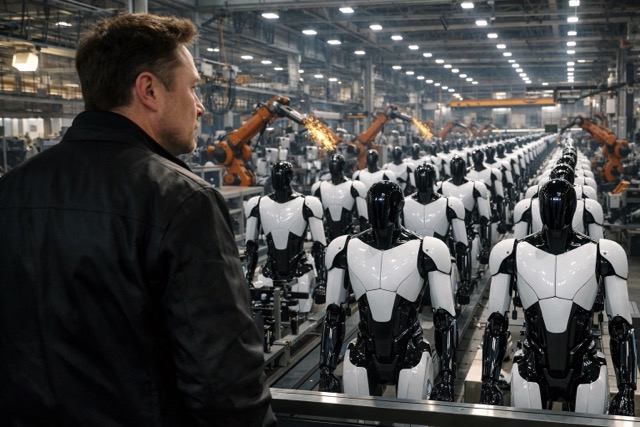
Hegseth named Elon Musk to help lead Project Meridian, a Pentagon study of future warfare.

Elon Musk has a new role in the Trump administration. Defense Secretary Pete Hegseth announced on war.gov Wednesday that Musk will help lead Project Meridian, a new Pentagon study meant to identify the weapons and technologies the U.S. military will need to fight wars decades from now.
Hegseth unveiled the project during his State of the Force address at Marine Corps Base Quantico in Virginia. Musk will direct the effort alongside Anduril founder Palmer Luckey and former House Speaker Newt Gingrich, working under Pentagon Chief Technology Officer Emil Michael. All three men were in attendance, and Hegseth said their first meeting would take place directly after the speech inside a secure compartmented facility, according to The Hill.
Hegseth said the group “will be focused on discovering, developing, and fielding the weapons and systems that our children and our grandchildren will need in their lifetimes, without any creative limitations or restrictions, on any future battlefield, from under the Earth to beyond the Moon.” He added that Meridian is not meant to produce new strategy or policy documents.
SpaceX to become America’s Military data backbone for missiles, drones, and warfighters
A memo released after the announcement gives Michael until January 28, 2027, to deliver findings, a window of 120 days. It names artificial intelligence, autonomy, directed energy, robotics and biotechnology as the fields expected to change how wars are fought. The results will come as a public report with a classified annex. The memo says the study will run through a partner organization it does not name, and it does not mention Musk directly. His role comes from Hegseth’s speech and a Pentagon press release.’
Musk had not commented publicly on the appointment as of Wednesday evening. This will be Musk’s first official advisory role in the administration since he left DOGE last year.
The mandate overlaps heavily with Musk’s companies. SpaceX is one of the Pentagon’s largest contractors, with 2026 defense awards topping $8 billion, much of it tied to launches and a suspected Starshield buildout out of Vandenberg. The Pentagon’s release says Meridian will examine domains “from subterranean depths to the cislunar frontier,” which maps onto The Boring Company’s tunneling and Starship’s lunar plans. Tesla’s work on autonomy and Optimus falls within the fields the memo lists.
Meridian was one of six initiatives Hegseth announced Wednesday. Another is a new Autonomous Warfare Command, which the department wants operating as a four-star combatant command by October 1, 2027.
The news lands a day before SpaceX is scheduled to fly a classified National Reconnaissance Office payload on Falcon Heavy, one of three launches the company has planned for Thursday.



Give the gift of Tesla upgrades.
Shop for someone else or treat yourself. Get more shopping power with a Teslarati gift card.
Elon Musk
SpaceX rejects $738M fed subsidy, betting on Starlink alone
SpaceX gave up hundreds of millions in broadband grants, yet Starlink is still showing up.
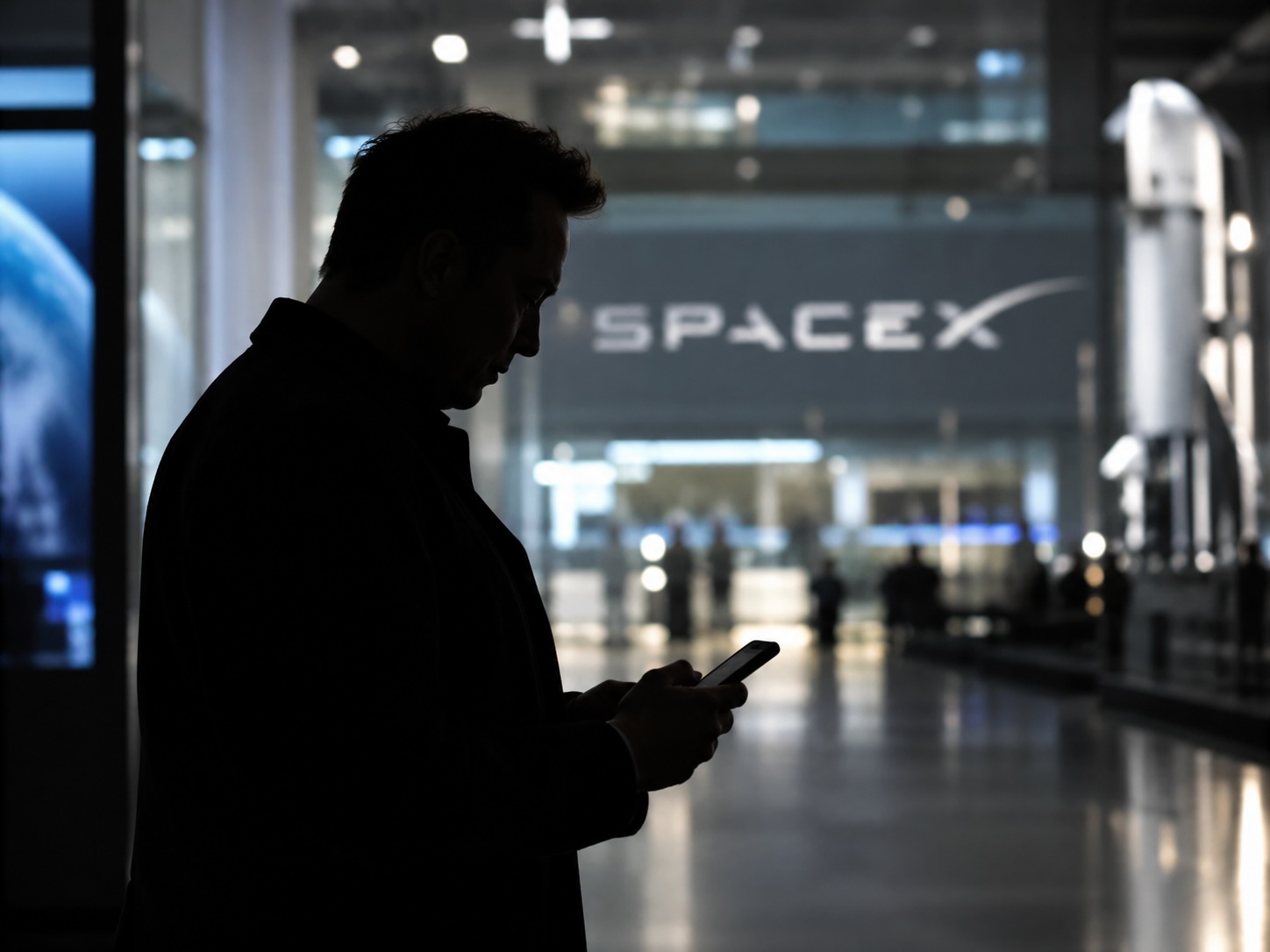
SpaceX is walking away from roughly $738 million in federal broadband subsidies while still committing to connect the rural homes and businesses Starlink won under the program.
The National Telecommunications and Information Administration (NTIA) said SpaceX will serve every location awarded to it under the Broadband Equity, Access, and Deployment (BEAD) program at no cost to the program. A senior NTIA official told Broadband Breakfast that SpaceX approached the agency with the idea after struggling with differing contract terms across all 50 states, including state demands for financial reporting and penalties for defaulting.
“I am pleased this new agreement has the potential to save taxpayers hundreds of millions of dollars while getting more Americans connected faster,” NTIA Administrator Arielle Roth said. Telecompetitor, citing administration officials, put the forgone amount lower, at about $636 million.
Under NTIA’s new model agreement, SpaceX must still meet BEAD’s minimum speeds of 100 Mbps down and 20 Mbps up, pass the program’s performance testing, and file a report every six months. New subscribers at covered locations will receive the Starlink dish and router at no cost, and SpaceX must offer a low cost service plan. The monthly subscription itself is not waived.
The deal drops BEAD’s financial audit, procurement, and reporting provisions. States also cannot levy penalties if SpaceX falls short, and their only remedy is to return those locations to the program for a new award.
State broadband offices now have two options: sign the model agreement or rebid the SpaceX locations at a cost in line with their already approved plans. Some states had already signed contracts with SpaceX, but the NTIA official said those agreements are no longer on the table. Two state officials told Broadband Breakfast the directive caught states by surprise.
SpaceX still gains something by staying in. Holding its BEAD locations with a $0 award keeps other federal broadband money from flowing to competitors in those rural areas, according to the NTIA official.
Starlink’s role in BEAD expanded after NTIA’s 2025 “Benefit of the Bargain” overhaul dropped the program’s preference for fiber and opened awards to low Earth orbit satellite providers. Arizona, for example, awarded SpaceX $17.1 million to cover 10,749 locations, while Virginia awarded $3.3 million for 5,579.
Elon Musk reshared Sawyer Merritt’s summary of the NTIA terms on X, adding a single word: “Starlink.” The move comes a week after Musk said the FAA turned down a free Starlink offer before a nationwide ground stop, a claim that drew a public rebuttal from Transportation Secretary Sean Duffy. Musk has also hinted that Starlink could come to every Tesla as the company pursues Unsupervised FSD.

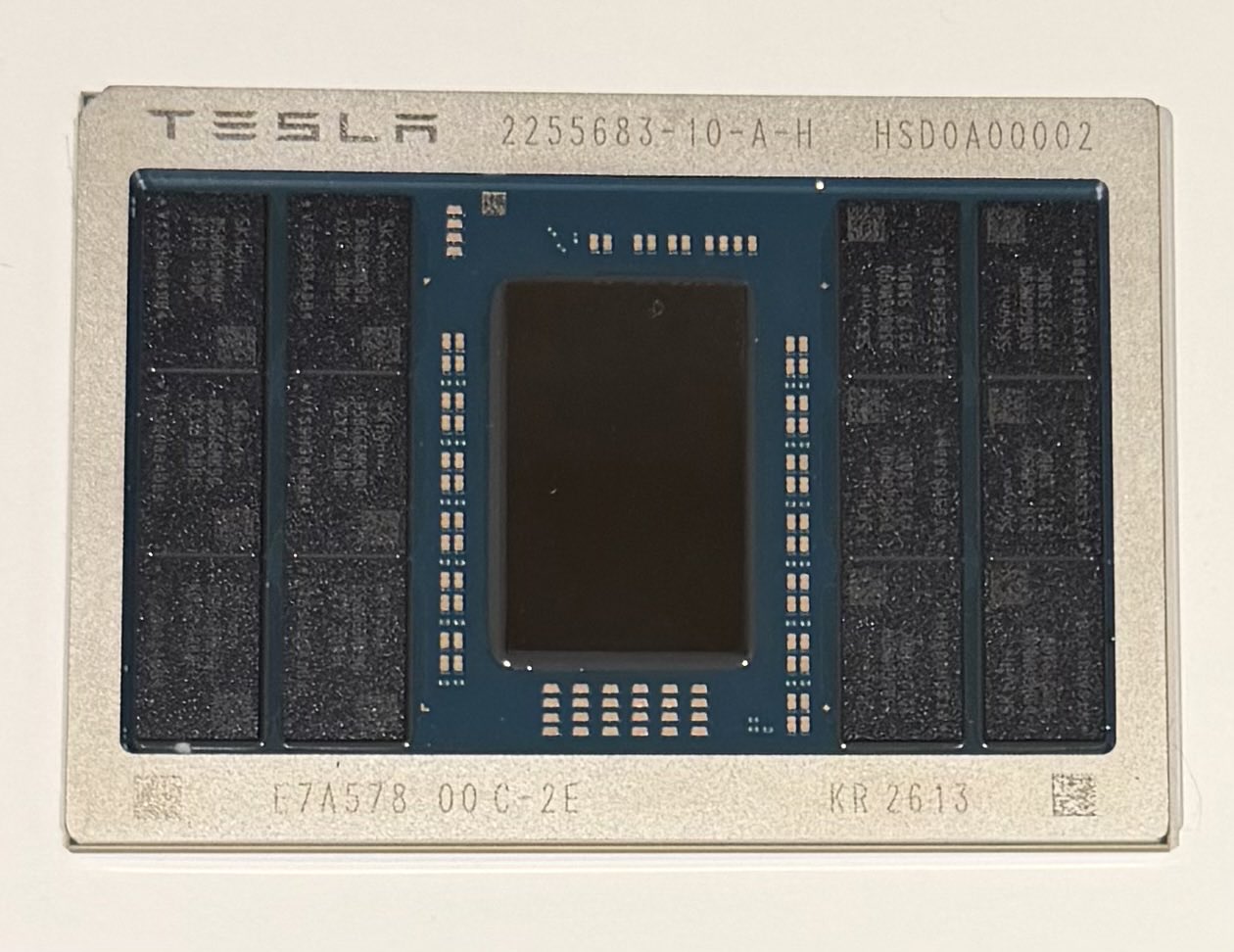
Tesla will set aside its AI5 chip exclusively for the Optimus robot, a product that CEO Elon Musk said he believes will one day be the biggest in the world. The decision sparked conversation regarding AI4’s prowess and capability as a self-driving chip, and less-than-fond memories of the Hardware 3 conundrum that many owners find themselves in to this day.
Musk stated on November 22 that Tesla vehicles will remain on the AI4 computer, which he said it sufficient to achieve “superhuman driving,” while the next generation AI5 chip will be set aside for Optimus. Musk was initially asked by a Hardware 3 Model Y owner when AI5 would appear in new cars.
@JBrunner8484 @BLKMDL3 @wholemars It’s going to Optimus. Cars will remain at AI4. That’s enough to solve superhuman driving.
— Elon Musk (@elonmusk) November 22, 2026
“It’s going to Optimus. Cars will remain at AI4. That’s enough to solve superhuman driving,” Musk wrote. The exchange quickly drew high engagement and follow-up questions from owners about potential retrofits for AI3 vehicles and the status of FSD.
The statement is consistent with some comments Musk made in the first quarter earnings call. In April, he said that AI5 would be prioritized for Optimus and the company’s AI training clusters rather than vehicles, because AI4 had already proven to offer enough computing capability for unsupervised self-driving at safety levels well above that of humans.
Musk also said on that call that Hardware 3 vehicles would lack the capacity for unsupervised self-driving, and that Tesla would be working on an upgrade plan for those owners if they wanted to bolster their cars with new cameras and a computer.
At one time, HW3 owners were led to believe fully unsupervised FSD would be capable with their vehicles. That revelation was dismissed and earlier this year, they were given clarity.
AI4, also known as HW4, is the computer currently installed in new Tesla vehicles. It powers recent FSD software, including the v15 series that introduced the “Reality View” overhead visualization generated in real time on the car’s AI accelerators. Tesla has also discussed an intermediate AI4+ or AI4.5 variant focused mainly on increased memory and modest performance gains, driven in part by rising memory and storage costs.
Tesla Full Self-Driving v15: Reality View review, new features explained
Musk noted around the same time that the AI4 computer itself had roughly doubled in cost due to those component price increases.
By directing AI5 toward Optimus, Tesla is allocating its highest-performance silicon to the humanoid robot and training infrastructure. AI5 has reached tape-out and entered pilot production, with broader volume manufacturing targeted for 2027.
The decision underscores Tesla’s view that vehicle autonomy can be solved on existing AI4 hardware while the more complex perception, planning, and motor-control demands of a general-purpose humanoid robot benefit from the next chip generation.
For current and prospective Tesla owners, Musk’s message is that AI4 cars already have the hardware headroom necessary for fully autonomous travel. Customers should see if as welcome clarification that could influence purchasing decisions for them moving forward.
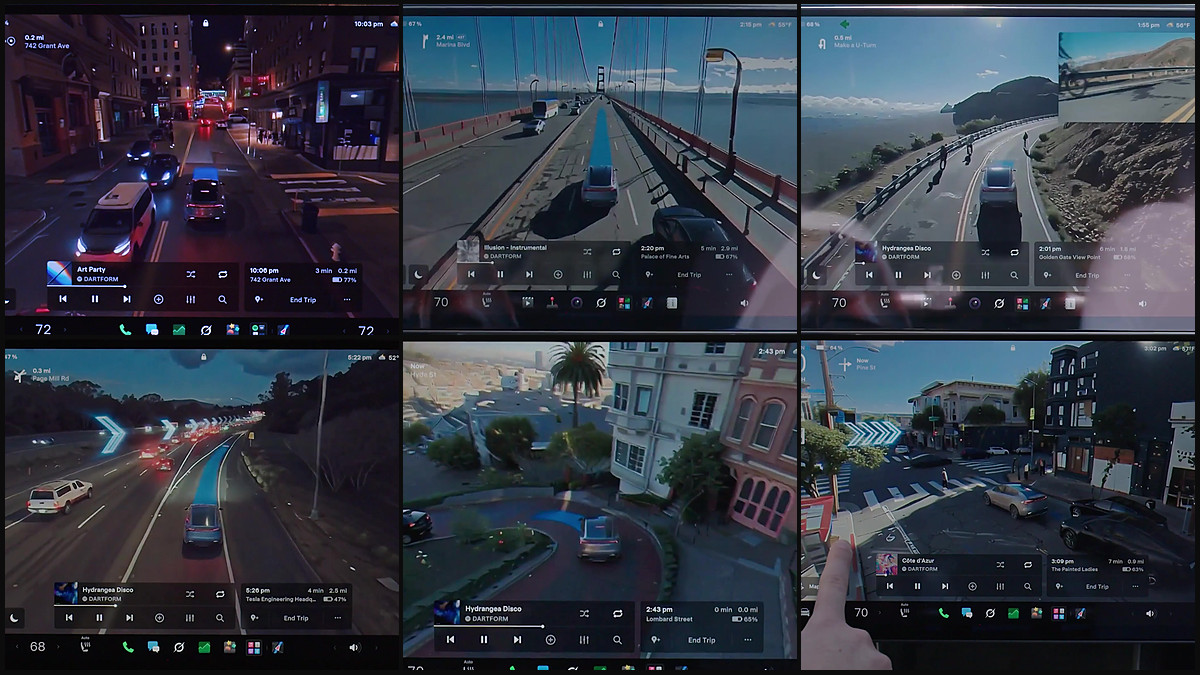
Tesla Full Self-Driving version 15’s biggest feature, “Reality View,” has one complaint, but in typical fashion, CEO Elon Musk already announced a solution.
Upon the release of the v15 Full Self-Driving suite on Saturday, one of the first impressions of the new Reality View feature is that there is a bit of input lag on the screen when dragging your finger to change perspectives. The rendering is also a fraction of a second behind what you would see out of your windshield.
Tesla Full Self-Driving v15: Reality View review, new features explained
Here’s my first impressions of the Reality View feature. You can hear me explicitly mention that it is not quite as responsive as past Driver Visualization techniques that Tesla has used:
🚨 Tesla Reality View – First Impressions https://t.co/uSTS94P8Qg
— TESLARATI (@Teslarati) November 22, 2026
Upon the initial impressions that we and many other Tesla owners put out, Musk was able to show that the company is aware of the slight latency in FSD v15, but it can be easily combatted.
He already has a solution that will resolve any lag or latency that is present:
“Currently, the latency is a bit high due to compute constraints, but we have ways to interleave newer UVE features along the diffusion transformer layers to cut roughly 35% of the latency.”
The primary near-term fix does not require new hardware. Tesla plans to interleave newer UVE features along the layers of the diffusion transformer. By injecting fresher encoder data deeper into the denoising process rather than relying solely on earlier features, the model can converge on accurate visualizations faster.
Musk estimated this change will cut roughly 35 percent of the latency.
Reality View is produced by a roughly 1-billion-parameter diffusion model that runs separately from the main driving stack. It draws on the same sequence of Tesla Universal Vision Encoder (UVE) features used by the larger 3-billion-parameter model that outputs driving actions. The system takes the previous Reality View frame, adds noise, and denoises it into the current visualization.
It generates short video chunks, eight images at 36 frames per second at UI-screen resolution, using half of one TRIP accelerator engine, processing every UVE frame at 18 Hz and spreading the work across four cycles.

SpaceX rejects $738M fed subsidy, betting on Starlink alone

Tesla eyes AI5 chip as exclusive Optimus trait, not needed for self-driving


