News
Five things that are keeping Tesla Full Self-Driving supervised

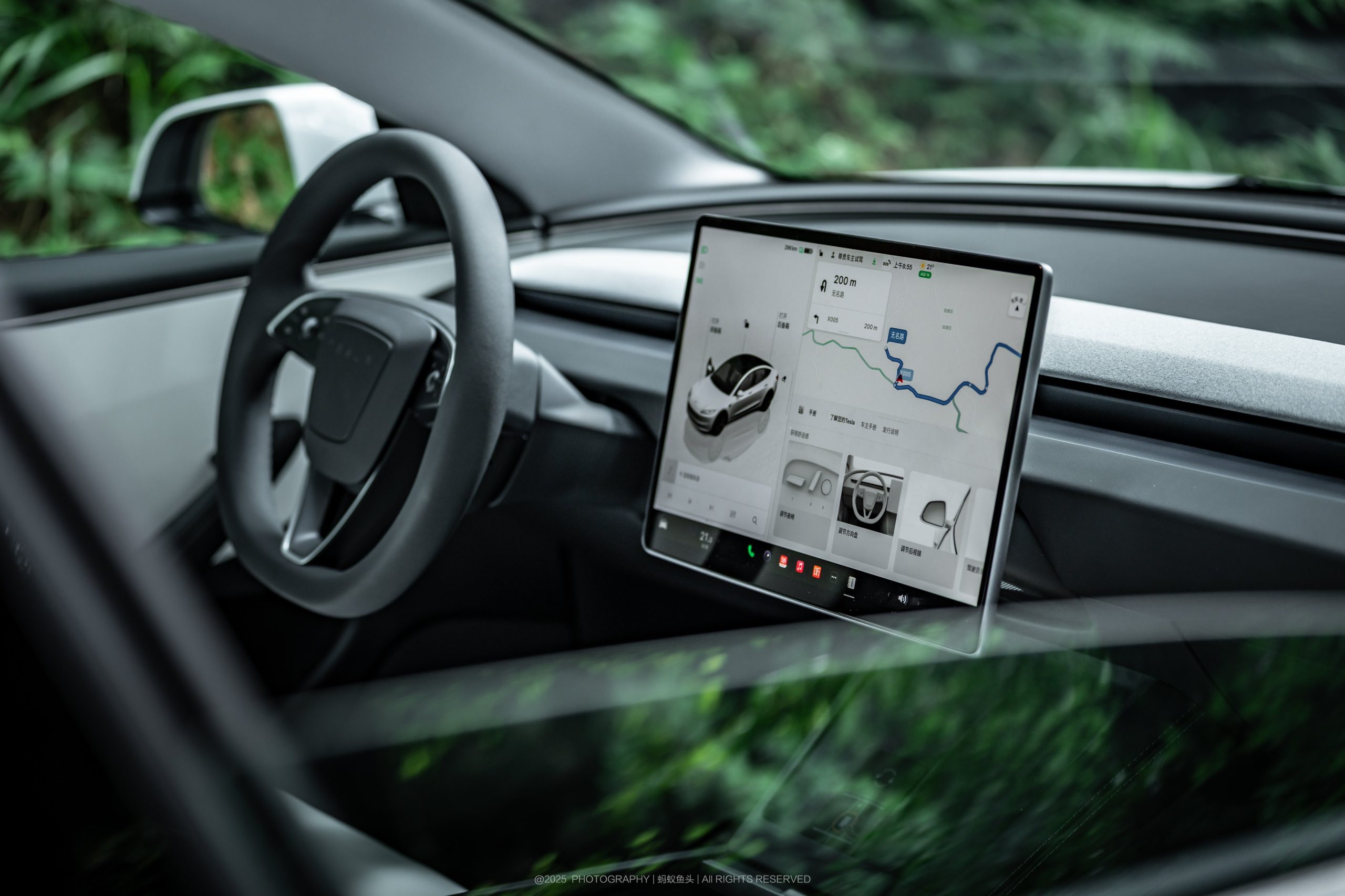
Tesla Full Self-Driving is really good. I have used it for over 10,000 of my 13,000 miles of driving since FSD v14 launched around this time last year, equating to about 76 percent of my miles using the suite. It’s truly the only way I prefer to travel, but admittedly I save some of the more fun drives for myself.
Even with all of the great things it has done for me, including saving me from being involved in an accident, there are still a handful of things that it needs to improve on. These issues recur from update to update, and while there have been some improvements, they still give me reasons to either soft or hard intervene.
A soft intervention means an adjustment that is needed without disengaging the suite, like manually using a turn signal to change lanes while the car still operates on FSD. What I’d consider to be a “hard intervention” is anything that requires me to disengage the suite altogether, like missing a turn or performing a maneuver I’m uncomfortable with. Of course, some hard interventions will be subjective.
Here are the five things I’d like to see Tesla really focus on through the final versions of v14 and hope to see completely improved with v15.
Speed Limit Recognition and Adjustment
There are entirely too many instances of FSD traveling at a speed that is just totally outrageous. While some of these events can occur on Hurry Mode, I’ve even had issues with it on Standard from time to time, and despite wanting more aggressive maneuvers or a slight bit of urgency, I don’t want to worry about getting a ticket while doing it.
The two areas I notice it the most are in school zones and on local roads. When a Speed Limit changes from 45 to 35, FSD does not always slow down in a way that would appease local law enforcement. On Hurry, 52-55 is pretty standard for a rate of travel in a 45 MPH zone. When it changes to 35, FSD shows zero urgency to slow down to an appropriate speed.
School Zones have been a true pain point, and as recently as last week, I had an issue with it:
Threw FSD into Sloth to see how it handled this school zone. You can see well before I enter it, the car is traveling 34 MPH, one MPH under the limit.
Still not slowing down nearly enough.
@Tesla_AI, not 25, not 30…15 MPH in School Zones https://t.co/YQuQ8ydhKh
— TESLARATI (@Teslarati) September 29, 2026
Realistically, most Speed Limit issues are a soft intervention, as I simply scroll into a slower Speed Profile to get the car to slow down. School Zones are a hard intervention, as they require me to completely take over and travel at the posted 15 MPH limit. Even on Sloth, it simply does not get down to a low enough speed.
Parking
Parking is one thing that has really improved over time, but there are still some pretty considerable hoops Tesla needs to jump through to get it to a point where it can be unsupervised.
Parking preferences seem to be where a lot of these issues will be resolved, as most of my complaints come from the fact that the place FSD chooses to park are usually not where I would personally choose to park. This morning, for example, when I arrived at the gym, FSD chose to park next to a vehicle that was parked with its two tires in the spot that FSD picked.
This is a big reason Parking Preferences with Supervised FSD will be so valuable.
If possible, parking a little further away and being distant from people like this is worth it. https://t.co/3Ac71KQiQ3
— TESLARATI (@Teslarati) June 7, 2026
There were three spots in between that car and the nearest car, so FSD could have chosen the spot that would have given a one-spot buffer between the two vehicles. In a parking lot full of empty spots, don’t be that guy who parks next to a car.
Generally, parking performance is vastly improved from where it was a year ago; I rarely am adjusting how it pulls or backs into a spot on v14.3.10, but in earlier versions, I definitely had my problems. It’s gotten really good since, and this version has been the best in terms of parking performance. It’s more about the places FSD choose to park, and not necessarily the parking itself.
There are also no options or map data to allow you to choose a charger at a place like a grocery store if it offers charging. These are things that are a bit more complex, but they will be needed for unsupervised FSD operation.
Navigation
Navigation was always going to be on this list, simply because it is one of the most inconsistent and mind-boggling things about FSD. Even after a year of intervening, sending voice notes, and overriding decisions, FSD still tries to take me out of my neighborhood the wrong way. You cannot turn left out of my neighborhood’s main entrance and exit, only right. Navigation still prompts a left turn out of my neighborhood’s main entrance and exit, instead of going around the neighborhood and exiting where a left turn is legal.
Tesla rolled out Preferred Routes with the Summer Update, and this has resolved some of the issues. I also found my own personal workaround:
🚨See if this cool Tesla Navigation Hack works for you!
I have used it to get out of my neighborhood legally with FSD, thus enabling completely hands-free drives! https://t.co/DlDsCQjxRI
— TESLARATI (@Teslarati) July 16, 2026
Some of the more mind-boggling things that FSD used to do with Navigation have been remedied, but it is still a frequent complaint for me and many other owners. I’d just like to see it adopt those preferred routes more frequently and maybe learn them a little faster.
Certain Highway Behaviors
Highway travel is the most consistent and perhaps FSD’s best use case. There is nothing better than having FSD handle busy highway traffic or just long, monotonous, and boring drives. I love to use it for my trips to the Flight 93 Memorial where I volunteer. When I drove manually, I chose to get a hotel and stay overnight because it’s about a 2.5 hour drive. FSD lets me make the drive, put in a volunteering shift, and drive home, without much fatigue. I have found that this is where FSD is most valuable for me, personally.
However, there are a few things FSD does on the highway that are just weird.
One thing I’ve had issues with as of late is that there will be times when I’m about a mile from my exit, the car is in the left lane and is traveling faster than the traffic in the cruising late. Instead of completing a pass and then getting over with no traffic ahead, the car will sometimes drastically and suddenly slow down, switch to the slow lane, and get behind a vehicle — all with a mile until the exit. On average, I’ll have around one minute from the time I get to my exit if it’s a mile away, because in most cases, I’m traveling somewhere around 60 MPH on the highway.
There is no reason to not complete that last pass, then get into the right lane, and have an unobstructed path to the exit. This is one of the more strange behaviors I’ve seen it do, and it really does feel like a bug. Here’s an example of it from FSD v14.3.7:
🚨 Tesla FSD v14.3.7 did nearly the exact opposite — nearly 2.5 miles before the exit it got over into the slow lane and got behind much slower traffic.
Now, v14.3.8, anecdotally, waited til the last minute to get off the highway https://t.co/Lc9vAKDyQC
— TESLARATI (@Teslarati) August 29, 2026
I ended up overriding the turn signal and using the accelerator to nudge the car to do what I wanted it to do. There was no reason to get in the left lane and add to the congestion in that lane.
Another thing that FSD does frequently is camps in the left lane, especially on Hurry. Cruising in the passing lane is illegal in Pennsylvania, and I know it is not a crime to do that everywhere. However, it is here, and I really wish the car was a little quicker to get over in the left lane when it’s cruising.
Here’s a pretty drastic example I had just a couple weeks back:
Recognizing Drastic Changes in Road Condition
I think anyone who has ever used FSD knows that potholes are a huge issue, but so are large bumps or sudden changes in road condition. At the intersection of Kreutz Creek Rd. and Rt. 462 in Hellam, PA the roads are nearly set up as a ramp, and going over it at a speed of over 35 MPH can send your head into the glass roof, your butt off your seat, and a brace for the sudden thud that is inevitably coming when you finally touch back down again.
You can see here I tried to change Speed Profiles quickly, but I did it a tad too late:
This is that big bounce that I mentioned in the quoted post.
It’s just a tad too drastic to take at the speed FSD wants to go over it. You can see me quickly swipe down into Sloth, but I intervened. https://t.co/81Oc82ZJcZ
— TESLARATI (@Teslarati) August 2, 2026
There are other roads in my area that should not be taken at even the posted Speed Limit because of the damage it could do to your car. Here’s another, where I disengaged FSD altogether:
🚨 I’ve talked in the past about my struggles with FSD when large bumps or sudden changes in sloping are approaching.
Today I tried switching down into Sloth from Standard but I did it a tad too late and I had to take over. You can see this isn’t a bump you take at 35 MPH https://t.co/f4tK13hsz1
— TESLARATI (@Teslarati) September 6, 2026
The recognition of these bumps is so crucial for two main reasons: they can cause injury, and they can cause damage to the car. These are reasons why the suite is supervised and drivers should remain attentive. I could not imagine going over that bump at an excessive speed if I had back issues, or if I were older.
Potholes are rarely recognized and usually require a lead car to avoid them. I had FSD use a lead car to avoid a pretty sizeable manhole cover a few weeks back:
🚨 Interesting observation on FSD v14.3.8 – Make note of the van in front of me as it swerves out of the way of a sewer cover
FSD followed this behavior, but interestingly did not swerve for the next sewer cover
What do we make of this? https://t.co/RO19941AIP
— TESLARATI (@Teslarati) September 2, 2026
Tesla says that there are improvements coming for potholes, so hopefully that means these bumps will also be recognized consistently.



Give the gift of Tesla upgrades.
Shop for someone else or treat yourself. Get more shopping power with a Teslarati gift card.
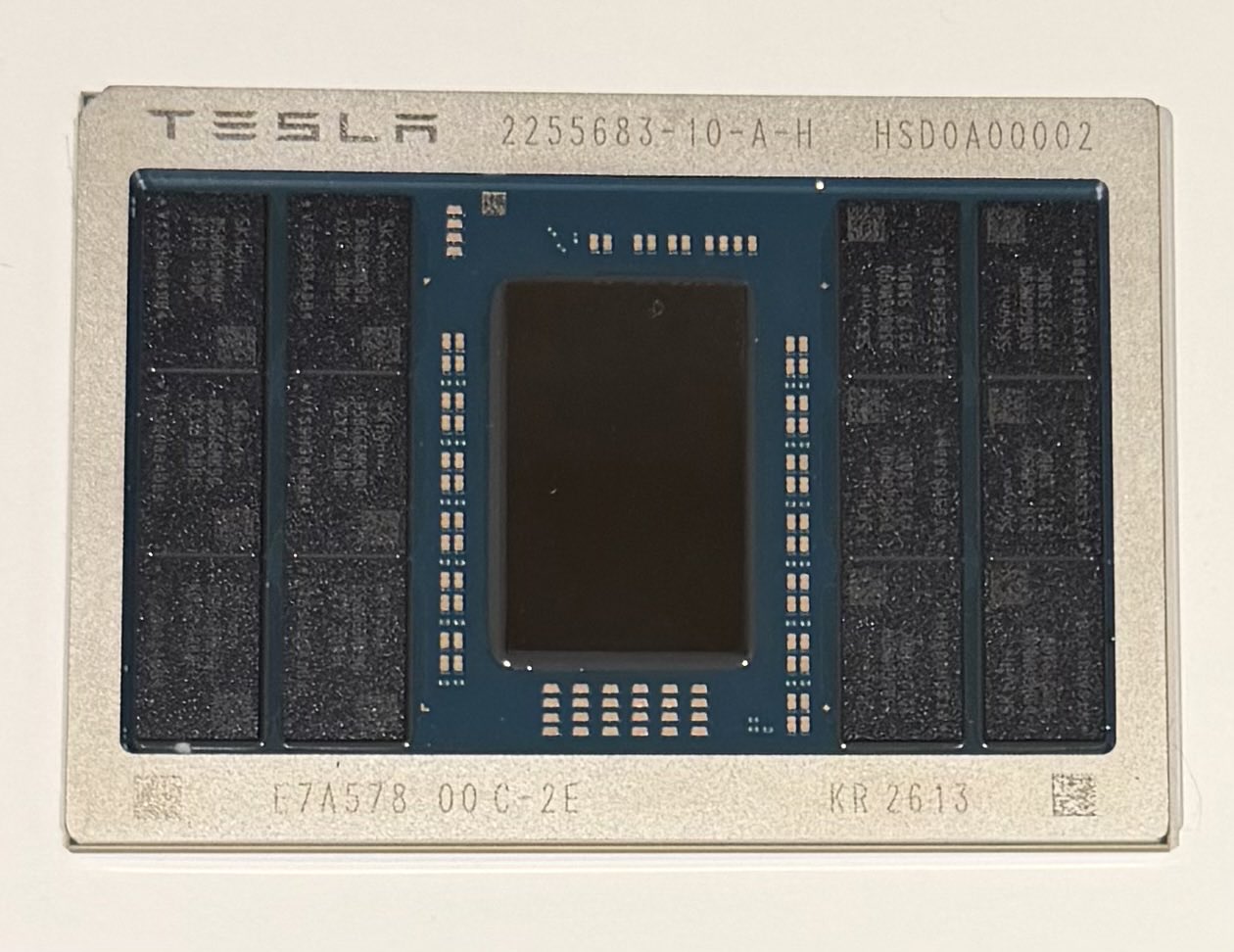
Tesla will set aside its AI5 chip exclusively for the Optimus robot, a product that CEO Elon Musk said he believes will one day be the biggest in the world. The decision sparked conversation regarding AI4’s prowess and capability as a self-driving chip, and less-than-fond memories of the Hardware 3 conundrum that many owners find themselves in to this day.
Musk stated on November 22 that Tesla vehicles will remain on the AI4 computer, which he said it sufficient to achieve “superhuman driving,” while the next generation AI5 chip will be set aside for Optimus. Musk was initially asked by a Hardware 3 Model Y owner when AI5 would appear in new cars.
@JBrunner8484 @BLKMDL3 @wholemars It’s going to Optimus. Cars will remain at AI4. That’s enough to solve superhuman driving.
— Elon Musk (@elonmusk) November 22, 2026
“It’s going to Optimus. Cars will remain at AI4. That’s enough to solve superhuman driving,” Musk wrote. The exchange quickly drew high engagement and follow-up questions from owners about potential retrofits for AI3 vehicles and the status of FSD.
The statement is consistent with some comments Musk made in the first quarter earnings call. In April, he said that AI5 would be prioritized for Optimus and the company’s AI training clusters rather than vehicles, because AI4 had already proven to offer enough computing capability for unsupervised self-driving at safety levels well above that of humans.
Musk also said on that call that Hardware 3 vehicles would lack the capacity for unsupervised self-driving, and that Tesla would be working on an upgrade plan for those owners if they wanted to bolster their cars with new cameras and a computer.
At one time, HW3 owners were led to believe fully unsupervised FSD would be capable with their vehicles. That revelation was dismissed and earlier this year, they were given clarity.
AI4, also known as HW4, is the computer currently installed in new Tesla vehicles. It powers recent FSD software, including the v15 series that introduced the “Reality View” overhead visualization generated in real time on the car’s AI accelerators. Tesla has also discussed an intermediate AI4+ or AI4.5 variant focused mainly on increased memory and modest performance gains, driven in part by rising memory and storage costs.
Tesla Full Self-Driving v15: Reality View review, new features explained
Musk noted around the same time that the AI4 computer itself had roughly doubled in cost due to those component price increases.
By directing AI5 toward Optimus, Tesla is allocating its highest-performance silicon to the humanoid robot and training infrastructure. AI5 has reached tape-out and entered pilot production, with broader volume manufacturing targeted for 2027.
The decision underscores Tesla’s view that vehicle autonomy can be solved on existing AI4 hardware while the more complex perception, planning, and motor-control demands of a general-purpose humanoid robot benefit from the next chip generation.
For current and prospective Tesla owners, Musk’s message is that AI4 cars already have the hardware headroom necessary for fully autonomous travel. Customers should see if as welcome clarification that could influence purchasing decisions for them moving forward.
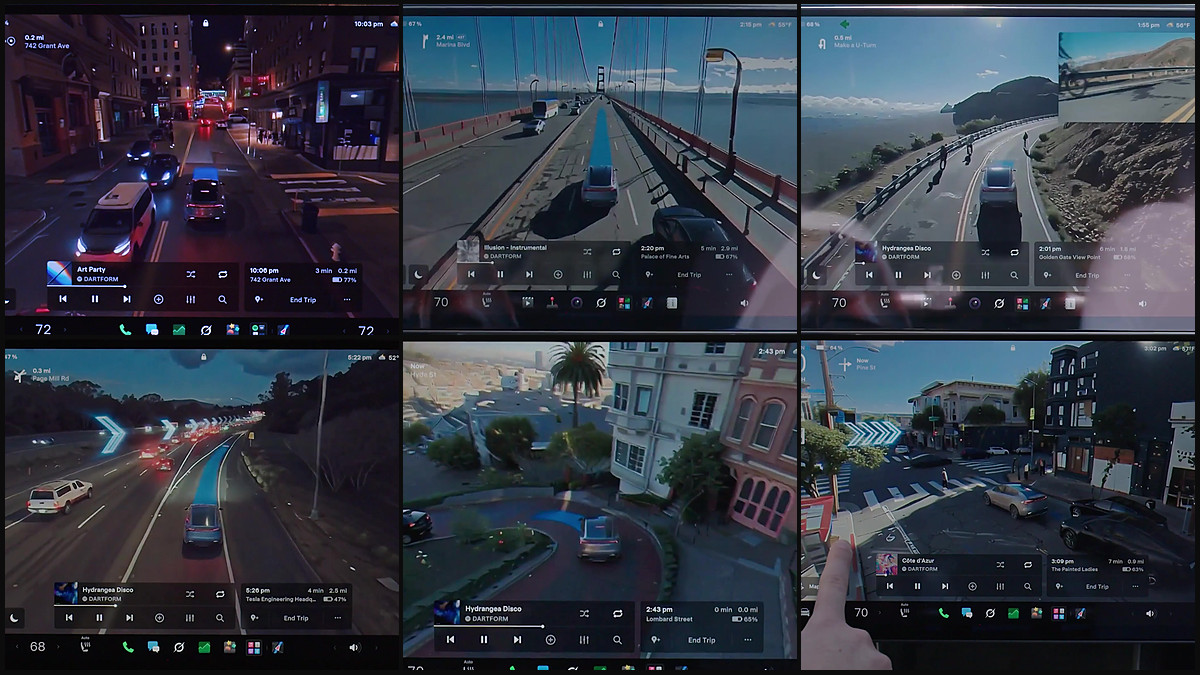
Tesla Full Self-Driving version 15’s biggest feature, “Reality View,” has one complaint, but in typical fashion, CEO Elon Musk already announced a solution.
Upon the release of the v15 Full Self-Driving suite on Saturday, one of the first impressions of the new Reality View feature is that there is a bit of input lag on the screen when dragging your finger to change perspectives. The rendering is also a fraction of a second behind what you would see out of your windshield.
Tesla Full Self-Driving v15: Reality View review, new features explained
Here’s my first impressions of the Reality View feature. You can hear me explicitly mention that it is not quite as responsive as past Driver Visualization techniques that Tesla has used:
🚨 Tesla Reality View – First Impressions https://t.co/uSTS94P8Qg
— TESLARATI (@Teslarati) November 22, 2026
Upon the initial impressions that we and many other Tesla owners put out, Musk was able to show that the company is aware of the slight latency in FSD v15, but it can be easily combatted.
He already has a solution that will resolve any lag or latency that is present:
“Currently, the latency is a bit high due to compute constraints, but we have ways to interleave newer UVE features along the diffusion transformer layers to cut roughly 35% of the latency.”
The primary near-term fix does not require new hardware. Tesla plans to interleave newer UVE features along the layers of the diffusion transformer. By injecting fresher encoder data deeper into the denoising process rather than relying solely on earlier features, the model can converge on accurate visualizations faster.
Musk estimated this change will cut roughly 35 percent of the latency.
Reality View is produced by a roughly 1-billion-parameter diffusion model that runs separately from the main driving stack. It draws on the same sequence of Tesla Universal Vision Encoder (UVE) features used by the larger 3-billion-parameter model that outputs driving actions. The system takes the previous Reality View frame, adds noise, and denoises it into the current visualization.
It generates short video chunks, eight images at 36 frames per second at UI-screen resolution, using half of one TRIP accelerator engine, processing every UVE frame at 18 Hz and spreading the work across four cycles.
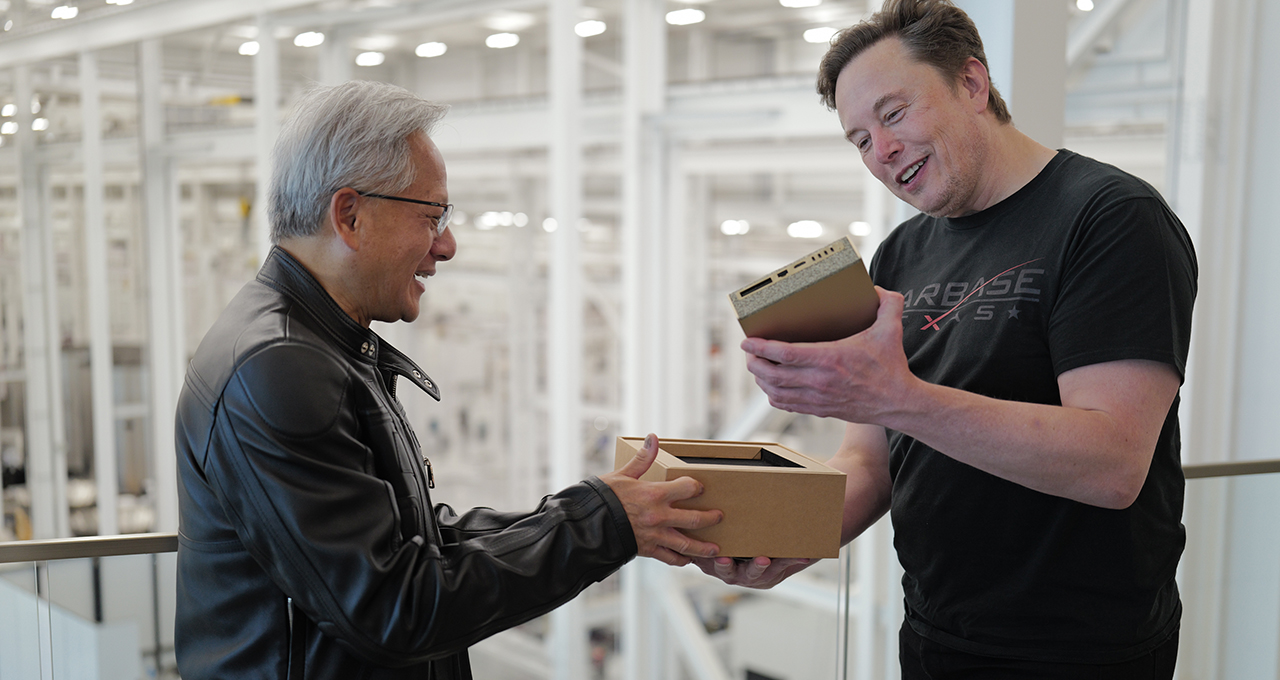
Tesla and SpaceXAI CEO Elon Musk has reacted to Jensen Huang’s return to NVIDIA as President, CEO, and Board Director, a move that Musk has been calling for since Huang was removed by the chip maker’s board.
“The mistake has been corrected,” Musk said as NVIDIA announced in a press release this morning that it would reinstate Huang as President, CEO, and Board Director:
The mistake has been corrected
— Elon Musk (@elonmusk) November 23, 2026
NVIDIA said that it “believes Jensen is the right person to lead NVIDIA, and that his reinstatement is in the best interests of our stockholders, employees, partners and customers,” according to Harvey C. Jones, Chair of the Board.
Huang said he was “honored” to return to the company and said he take his role “with the greatest humility and renewed commitment.”
After Huang was accused of having an affair with a Chinese spy and selling chips to China illegally, he was removed from NVIDIA’s CEO, President, and Board Chair role. This decision was met with a lot of pushback from NVIDIA’s partners, including Tesla and SpaceX, both of which utilize NVIDIA products for its SI efforts.
NVIDIA said it has recently formed a National Security and Export Control Committee to “oversee trade compliance and national security risks. The committee is engaging counsel with experience in national security matters, and such counsel will be retaining advisors with expertise in national security matters.”
The search for a Chief Compliance Officer is also underway, the company said in its release.
The broader implications for Tesla and SpaceXAI as Jensen’s return is now official are positive. Musk and Huang have a great relationship, so their partnership momentum sees a lot of benefits from his reinstatement. Additionally, SpaceXAI is building AI compute exclusively on NVIDIA GPUs.
Musk has said on various occasions that Huang is the best option for NVIDIA, stating that “there’s no one that can really replace Jensen.”
The biggest win for the three parties in the near-term is supply and delivery certainty is now restored. With proper management and Huang’s guidance, it is hard to believe NVIDIA will not pick right back up where it left off.
This gives Tesla and SpaceXAI time for their own chip efforts, and also keeps them locked into what Musk’s views as the leading architecture versus going to competitors or alternatives.
However, there are still some risks and uncertainty, especially considering the underlying investigations into Huang continue, and any residual national security scruitny could complicate government-related work or exports.

Tesla eyes AI5 chip as exclusive Optimus trait, not needed for self-driving

Tesla FSD v15’s ‘Reality View’ has one complaint and Musk has the solution


