News
Tesla factory workers intensify unionization efforts, file charges with National Labor Board

Tesla has dismissed charges filed by the Unfair Labor Practice with the National Labor Relations Board by two employees as “entirely without merit,” stating that it will respond to the allegations as part of the NLRB process.
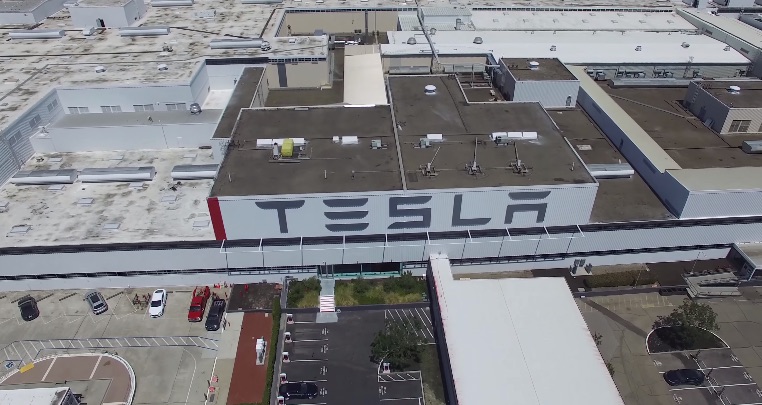
In the latest chapter of the fight to unionize the Tesla Fremont factory, the United Autoworkers Union is again attempting to sway employees to the cause by filing an unfair labor practice charge, alleging illegal surveillance, coercion, intimidation and prevention of worker communications by Tesla in an effort to prevent or otherwise hinder unionization of the Fremont factory.
In response to past attempts by the UAW to influence workers at the Fremont factory to form a union, Tesla CEO Elon Musk made his pitch to employees against unionization in a letter to employees where he extolled the benefits Tesla was already providing without a union. The basis behind his argument hinged largely on the valuation of Tesla stock issued to employees and the subsequent increase in price of that stock.
Tesla was called to task in the charges for what is being characterized as an overly broad confidentiality agreement. Tesla has always operated more like a Silicon Valley technology company than a car manufacturer, and its company policy on confidentiality reflects that of technology companies that produce highly competitive, industry shifting tech that are often bound by strict deadlines.
In the midst of leading the disruption of several industries, while making headlines for every move the company makes, it comes as no surprise that Tesla opted for an overly broad confidentiality agreement. However, the confidentiality agreement was deemed to be so broad that the company was contacted by five members of the California legislature and a number of organizations in the Bay Area in a request to loosen up wording of the agreement and ensure it did not infringe upon employee rights. According to a report by Capital and Main, the statement currently includes language requiring confidentiality in relation to “everything that you work on, learn about or observe in your work about Tesla.”
The new charges also call out Tesla for alleged violations in several specific areas, one of which was preventing the distribution of flyers by employees at shift change on company property. After several workers handed out literature about unionization at the factory in February, Tesla fired back with a new policy stating that workers “were not allowed to pass out any literature unless it was pre-approved by the Employer.” The charges make a plea that employees should have the right to bring up issues and to talk about them amongst themselves as a means of driving towards resolution.
The charges will be reviewed by the NLRB which will make a determination after gathering input from all parties involved.
These charges highlight the challenge Tesla faces as it seeks to ramp up factory operations as part of the Model 3 production ramp. With all hands on deck to deliver Model 3, Tesla has its work cut out for it as it seeks to balance the rights, needs and morale of its employees with the needs of the business.
Here’s the full text of Musk’s company wide email that was published by TechCrunch in February that discusses unionization efforts taking place at the factory. We’ve also obtained a copy of Tesla’s confidentiality agreement to employees which we’ve embedded below.
For Tesla to become and remain one of the great companies of the 21st century, we must have an environment that is as safe, fair and fun as possible. It is incredibly important to me that you look forward to coming to work every day. For that, we must be a fair and just company – the only kind worth creating.
This is vital to succeed in our mission to accelerate the advent of a clean, sustainable energy future. The forces arrayed against us are many and incredibly powerful. This is David vs Goliath if David were six inches tall! Only by being smarter, faster and working well as a tightly integrated team do we have any chance of success. We should never forget the history of car startups originating in the United States: dozens have gone bankrupt and only two, Tesla and Ford, have not. Despite the odds being strongly against us, my faith in you is why I am confident that we will succeed.
That is why I was so distraught when I read the recent blog post promoting the UAW, which does not share our mission and whose true allegiance is to the giant car companies, where the money they take from employees in dues is vastly more than they could ever make from Tesla.
The tactics they have resorted to are disingenuous or outright false. I will address their underhanded attacks below. While this discussion focuses on Fremont, these same principles apply to every Tesla facility worldwide.
Safety First
The workplace issue that comes before any other is safety. If you do not have your health, then nothing else matters. Simply due to size and bad luck, there will always be some injuries in a company with over 30,000 employees, but our goal is simple: to have as close to zero injuries as possible and be the safest factory in the auto industry by far. The Tesla executive team and I are absolutely committed to this goal.
That is why I was particularly troubled by the safety claim in last week’s blog post, which said: “A few months ago, six out of eight people in my work team were out on medical leave at the same time due to various work-related injuries. I hear the ergonomics are even more severe in other areas of the factory.”
Obviously, this cannot be true: if three quarters of his team suddenly went on medical leave, we would not be able to operate that part of the factory. Furthermore, if things were really even worse in other departments, that would mean something like 80% or more of the factory would be out on injury, production would drop to virtually nothing and the parking lot would be almost empty. As you know firsthand, we have the *opposite* problem – there is never enough room to park! In fact, we are working at top speed to build more parking. Also, hopefully our darn BART train station will open before all hell freezes over!
After looking into this claim, not only was it untrue for this individual’s team, it was untrue for any of the hundreds of teams in the factory.
That said, reducing excess overtime and improving safety are extremely important. This is why we hired thousands of additional team members to create a third shift, which has reduced the burden on everyone. Moreover, since the beginning of Tesla production at Fremont five years ago, there have been dedicated health and safety experts covering the factory and we hold regular safety meetings with operations leaders. Since the majority of the injuries in the factory are ergonomic in nature, we have an ergonomics department focused exclusively on this issue.
The net result is that since January 1st, our total recordable incident rate (TRIR) is under 3.3, which is less than half the industry average of 6.7.
Of course, the goal is to have as close to zero injuries as humanly possible, so we need to keep improving. If you have a safety concern or an idea on how to make things better, please let your manager, safety representative or HR partner know. You can also send an anonymous note through the Integrity Hotline (this applies broadly to any problems you notice at our company) or you can email safety@tesla.com.
Compensation
At Tesla, we believe it is important for everyone to be an owner of the company. This is your company. That is why, unlike other car companies, everyone is awarded shares and you get to buy stock at a discount compared to the public through the employee stock purchase program. Last year, stock equity grants were increased significantly and it will happen again later this year once Model 3 achieves high volume.
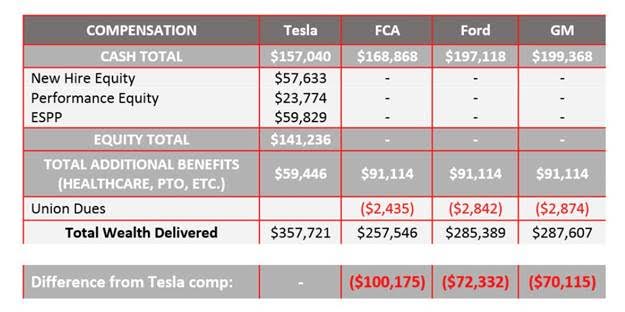
The chart below contrasts the total comp received by a Tesla production team member who started on January 1, 2013 against the total comp received over the same period at GM, Ford, and Fiat Chrysler. A four year period is used because that’s the vesting length of a new hire equity grant. I believe the equity gain over the next four years will be similar. As shown below, a Tesla team member earned between $70,000 and $100,000 more in total compensation than the employees at other US auto companies!
Work Hours
Another issue raised in the UAW blog was hours worked. First, I want to recognize how hard you worked to make our company successful. Those hours mattered to you, to your family and to our company, and I can’t tell you how much I appreciate them.
However, the pace needs to be sustainable. This is why the third shift was established and why we created alternate work schedules based on feedback from various teams in the factory.
These changes have had a big impact. The average amount of hours worked by production team members this year is about 43 hours per week. The percentage of overtime hours has declined by almost 50% since the super tough time we had last year achieving rate on the Model X, which is probably the hardest car to build in history. What an amazing accomplishment! It is also a lesson learned, which is why Model 3 is designed to be dramatically easier to manufacture.
Fun
As we get closer to being a profitable company, we will be able to afford more and more fun things. For example, as I mentioned at the last company talk, we are going to hold a really amazing party once Model 3 reaches volume production later this year. There will also be little things that come along like free frozen yogurt stands scattered around the factory and my personal favorite: a Tesla electric pod car roller coaster (with an optional loop the loop route, of course!) that will allow fast and fun travel throughout our Fremont campus, dipping in and out of the factory and connecting all the parking lots. It’s going to get crazy good ?
Thanks again for all your effort and I look forward to working alongside you to create an amazing future!
Elon
[pdf-embedder url=”http://www.teslarati.com/wp-content/uploads/2017/04/Tesla-Employee-Confidentiality-Agreement.pdf”]



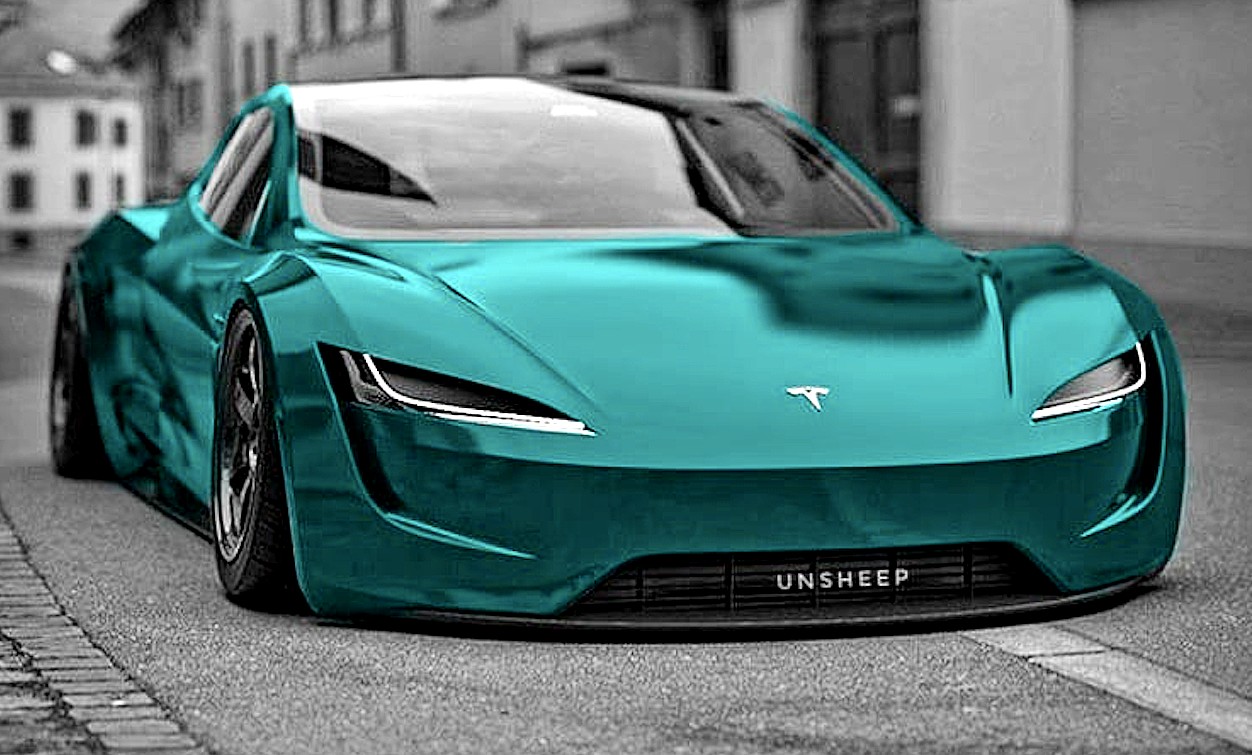
Tesla has reopened reservations for its long-delayed next-generation Roadster, asking buyers for a $50,000 deposit just days before an October 1 reveal event in Waco, Texas. The move revives a reservation process first launched in 2017 and later paused when Tesla pulled pricing from its website in 2021.
The reservation page requires an immediate $5,000 credit-card payment, described as fully refundable, followed by a $45,000 wire transfer due within 10 days, which is identical to what was expected previously. Reservations are not considered final until the wire clears.
The structure matches the 2017 terms Tesla used when it first collected deposits after unveiling a prototype. Tesla has not published a confirmed retail price or production start date on the order page.
Go buy a Roadster pic.twitter.com/n7rhouAmIS
— TESLARATI (@Teslarati) September 21, 2026
The October 1 event is scheduled in Waco, about 90 minutes north of Tesla’s Austin headquarters and near SpaceX’s McGregor rocket test site. Tesla sent invitations to existing reservation holders and posted a “Go for launch” teaser on September 12.
The Federal Aviation Administration (FAA) established a temporary flight restriction over the McGregor area from September 18 through October 2, consistent with plans for a demonstration involving SpaceX-designed cold-gas thrusters. Elon Musk has previously described the optional package as enabling extreme acceleration or brief hovering. Tesla has said the event will include pricing, specifications, and production targets.
The second-generation Roadster was first shown in November 2017 during Tesla’s Semi launch. Musk promised production in 2020, with claimed performance of 0-60 mph in 1.9 seconds, more than 250 mph top speed, and roughly 620 miles of range.
Those targets have slipped repeatedly.
Tesla later pointed to 2022, 2023, 2024, and 2025-2026 before indicating production would not begin until 2027 or 2028 at Gigafactory Texas. Design work has continued, with reports of a sharper, Cybertruck-influenced look replacing the original curvy prototype.
Original reservation holders who paid $50,000 in 2017, or $250,000 for the Founders Series, have waited nearly nine years without a production car. Some high-profile customers canceled. Tesla’s decision to reopen orders now, after previously shutting them down, tests whether new buyers will commit substantial funds before seeing a finalized production vehicle. The October 1 event is intended to answer remaining questions about what those buyers will actually receive and when.

Tesla’s Full Self-Driving (Supervised) is heading to Czechia after the Czech Ministry of Transport recognised the Dutch RDW’s provisional type approval, making the country the seventh EU member state to clear the system for public roads. Tesla Europe announced on 21 September 2026 that “FSD Supervised is now approved in Czechia” and that rollout “will begin soon.”
The decision marks a notable reversal. Earlier in 2026, Prague had declined to automatically recognise the Netherlands’ April approval, citing concerns over speed-limit compliance, traffic-sign recognition and driver-attention monitoring, and arguing that a coordinated EU approach was preferable. Officials said months of expert review, talks with Tesla and other member states, and real-world data from countries already using the system resolved those issues.
🚨 Tesla FSD heading to Czechia 🇨🇿 pic.twitter.com/mkzlM9QjrB
— TESLARATI (@Teslarati) September 21, 2026
“Safety remains the top priority,” the ministry stated.
FSD Supervised remains a Level 2 driver-assistance system: the driver must stay engaged and is legally responsible. Eligible vehicles need AI4, the company’s most up-to-date hardware version. Tesla is expected to push the feature over the air in the coming days, following the pattern seen after earlier national approvals.
Europe’s rollout began when Dutch regulator RDW issued a provisional EU type approval on 10 April 2026 after extensive testing. Mutual recognition then produced a rapid cascade: Lithuania (20 May), Estonia (29 May), Denmark (9 June), Belgium (10 June) and Slovenia (7 September). Czechia now completes that list of seven.
The approvals cover only a modest share of the EU population, but they add political weight ahead of a 6 October vote by the Technical Committee on Motor Vehicles. A qualified majority, at least 15 of 27 member states representing 65 percent of the EU population, could open the remaining markets, including large ones such as Germany, France, Italy and Spain that have so far preferred to wait for a bloc-wide decision.
For Czech Tesla owners, the immediate prize is access to the same supervised highway and city driving already available in the other six countries. For Tesla, each new market generates additional European driving data and strengthens the case that FSD Supervised can operate safely under the continent’s varied road rules. The Czech approval is therefore both a local milestone and another incremental step toward a wider European launch.
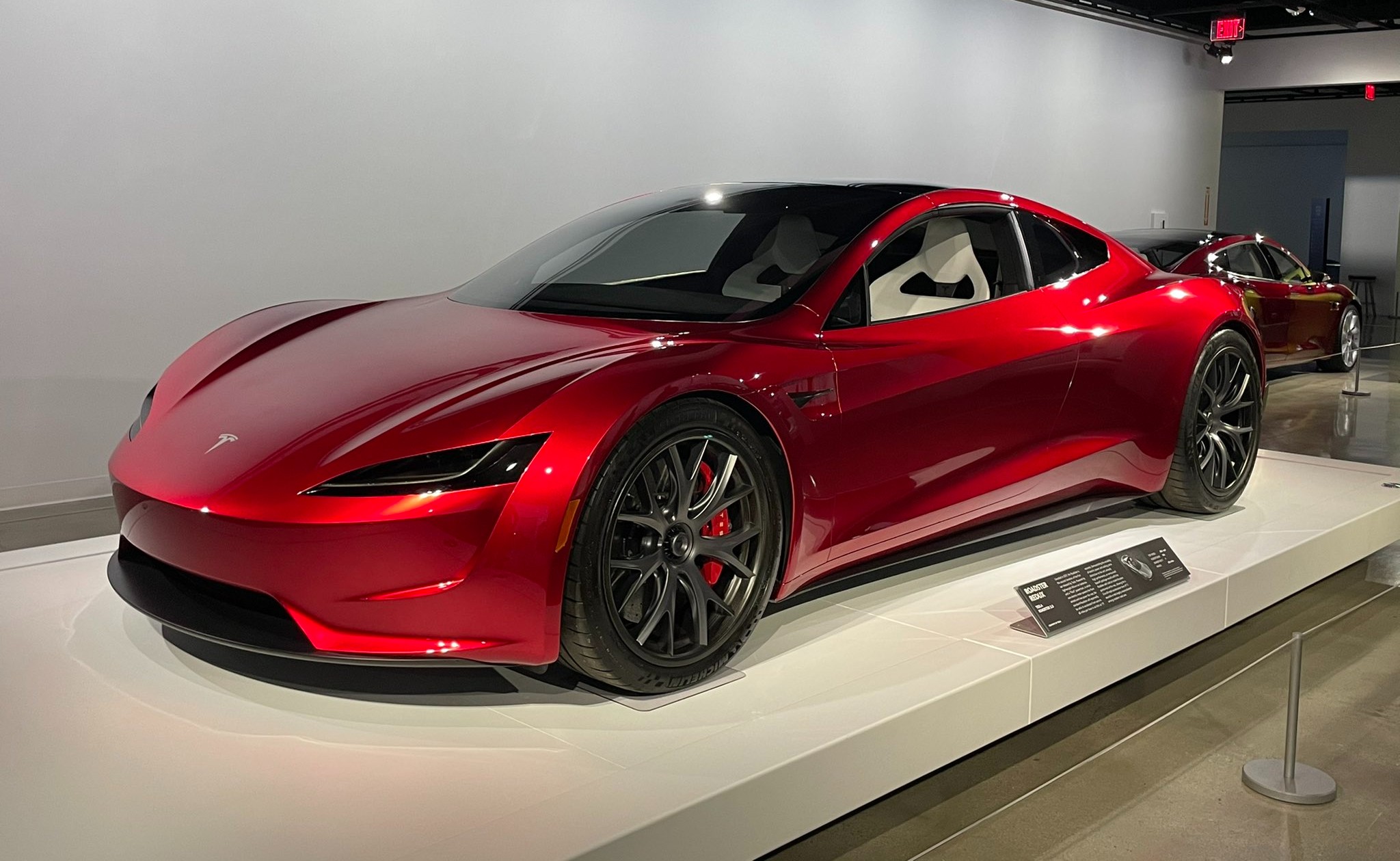
The Federal Aviation Administration (FAA) has established a Temporary Flight Restriction over SpaceX’s McGregor, Texas, rocket development and test facility, a move widely viewed as preparation for Tesla’s October 1 Roadster reveal. The restriction took effect September 18 and runs through October 2.
NOTAM FDC 6/3825 covers a 1.5-nautical-mile radius around the site near Waco and extends from the surface to 10,000 feet above ground level. The FAA cited hazards under 14 CFR 91.137(a)(3) and barred aircraft and drones from the zone. Tesla’s invitation to reservation holders already placed the event in Waco, about 20 minutes from McGregor, making the timing and location more than coincidental.
A TFR has appeared around SpaceX’s McGregor Testing Site up to 10,000ft and runs through until the 2nd of October 👀 pic.twitter.com/rcZ4p4JkLm
— Niall Anderson (@INiallAnderson) September 18, 2026
What stands out is the altitude. Typical recent TFRs at McGregor for engine static fires and component tests have used far lower ceilings, often around 2,000 feet. Raising the limit to 10,000 feet is unusually high even compared with some Starbase restrictions and signals operations that go beyond a standard ground-level engine test.
That extra airspace has fueled speculation about the long-promised SpaceX Package for the Roadster. Elon Musk has described cold-gas thrusters that could deliver sub-one-second 0-60 times and, more dramatically, brief lift-off. Reports earlier this year indicated Tesla planned a remote-controlled demonstration at McGregor in which the car would leave the ground with no one inside; spectators kept hundreds of yards away because of the noise.
The 10,000-foot envelope would give operators a large safety buffer even if the vehicle only hovers a short distance.
Tesla has not confirmed a flight demo. The company has only used the phrase “Go for launch” and posted a teaser image of the car on what looks like a launch pad. The TFR itself mentions only hazards. Still, closing airspace this high and this close to the reveal date strongly suggests the event will include more than a static display.
Whether the Roadster actually hovers on October 1 remains to be seen. What is certain is that the FAA has cleared a large vertical slice of Texas sky for whatever Tesla and SpaceX intend to show. Reservation holders heading to Waco will be among the first to find out if the car can do more than drive.

Tesla Roadster is available for order once again following brief hold

Tesla Full Self-Driving expands to another European country


