
Space
Famous Mars meteorite discovered with interesting, new organics

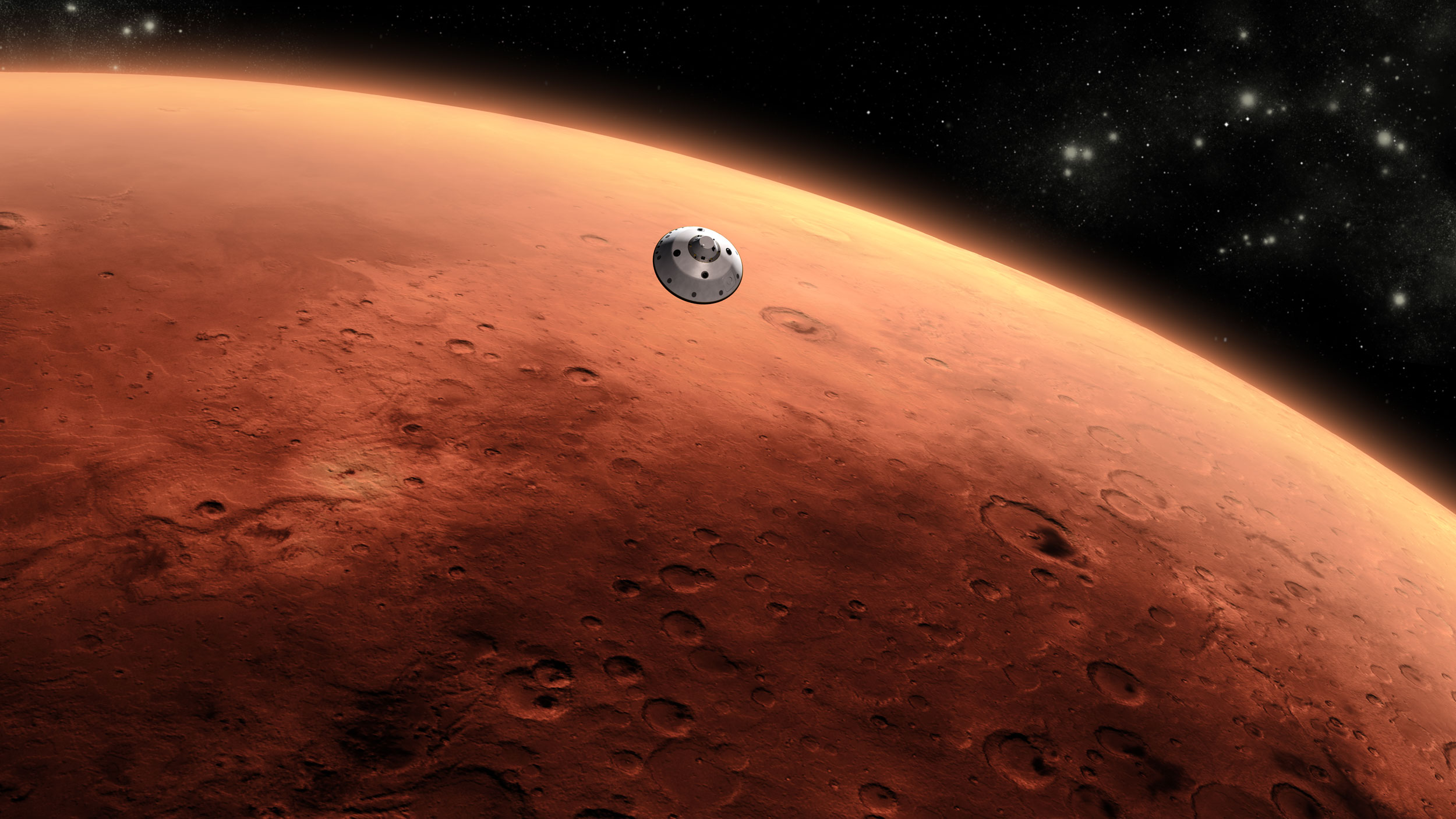
Scientists are looking at Mars in a whole new way. That’s because a new analysis of a famous piece of the red planet has revealed something exciting: traces of nitrogen.
Nitrogen, together with organic molecules — carbon-rich molecules that are considered the building blocks of life as we know it — have been spotted in the Alan Hills meteorite, a new study suggests.
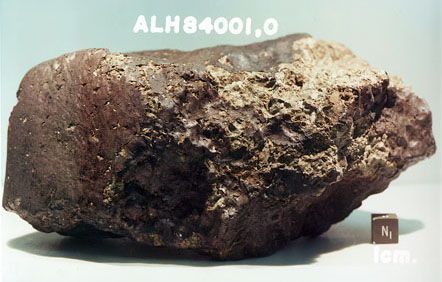
The Alan Hills sample was discovered in Antarctica in 1984 and is one of the largest, most famous meteorites from Mars. That’s because it sparked quite the controversy when it was first found. Some of the first analysis of the rock suggested that the sample contained microbial fossils. This led to rumors that scientists might have spotted their firsts signs of Martian life.
Over billions of years, Mars has been stripped of its atmosphere, and as such, its surface is subjected to cosmic radiation as well as blasts from interstellar objects. Sometimes the blasts are so powerful that chunks of rock are ejected into space and eventually land on other planetary bodies such as the moon or Earth.
Scientists estimate that the Alan Hills sample arrived on our planet at least 13,000 years ago and that the sample itself is around 4 billion years old. This 4-lb. chunk of rock is the oldest known meteorite from Mars that we’ve found.
Mars, as we know it today, appears to be a pretty inhospitable place for life. But that wasn’t always the case. Mars was once a lush, wet world, and new evidence points to the fact that an ancient chunk of the red planet is harboring traces of organic molecules.
These types of carbon-rich molecules are the building blocks of life. Their presence does not necessarily qualify as a definitive sign that life was once present on Mars, but it bolsters the case. That’s because this particular sample doesn’t just contain a random set of organic molecules; it contains traces of nitrogen explicitly.
And nitrogen is something that life here on Earth depends on.

The Allan Hills 84001 meteorite is a famous hunk of Martian rock that was found in a region of Antarctica called Allan Hills in 1984. The new study, conducted by a group of researchers from the Japanese Space Agency (JAXA), indicates that not only does the sample contain nitrogen, but that the nitrogen was found within carbonate minerals in the rock. These types of minerals typically form in groundwater, so this could be further evidence to support the notion that Mars was once a wet world.
To make this discovery, the team from JAXA, led by Mizuho Koike, used a technique called X-ray spectroscopy to determine that the nitrogen was hiding in the carbonate minerals. Even though the Alan Hills sample has been in the news before, this was the first definitive evidence that there was nitrogen in the meteorite.
This discovery does not mean that the researchers have found signs of life on Mars. The presence of nitrogen and the carbonate minerals can be produced both biotically and abiotically. Scientists do not yet know how these molecules formed, but they have ruled out that they were somehow contaminated by Earth minerals.

But how were they formed? According to the researchers, there are two possibilities: either the organics originated on Mars, or they came from outside the planet. Mars was bombarded by comets and other rock and dust particles, and it’s possible that some of them may have been trapped inside the minerals as they formed.
Researchers will soon have other Martian rocks to compare these results to. This summer, NASA is launching the Perseverance Mars rover. The six-wheeled robot will land in on Mars in a region called Jezero Crater. The agency selected this spot as the landing site because it’s believed to be an ancient river delta and could contain minerals known to preserve microfossils here on Earth.
The rover’s task will be to search for signs of a past life as well as to bag up samples that will be sent to Earth on later missions. Once researchers have access to pristine Martian samples, they will be able to expand their knowledge of the red planet. And perhaps even be able to tell if Mars ever hosted life.








News
SpaceX Ax-4 Mission prepares for ISS with new launch date
SpaceX, Axiom Space, and NASA set new launch date for the Ax-4 mission after addressing ISS & rocket concerns.

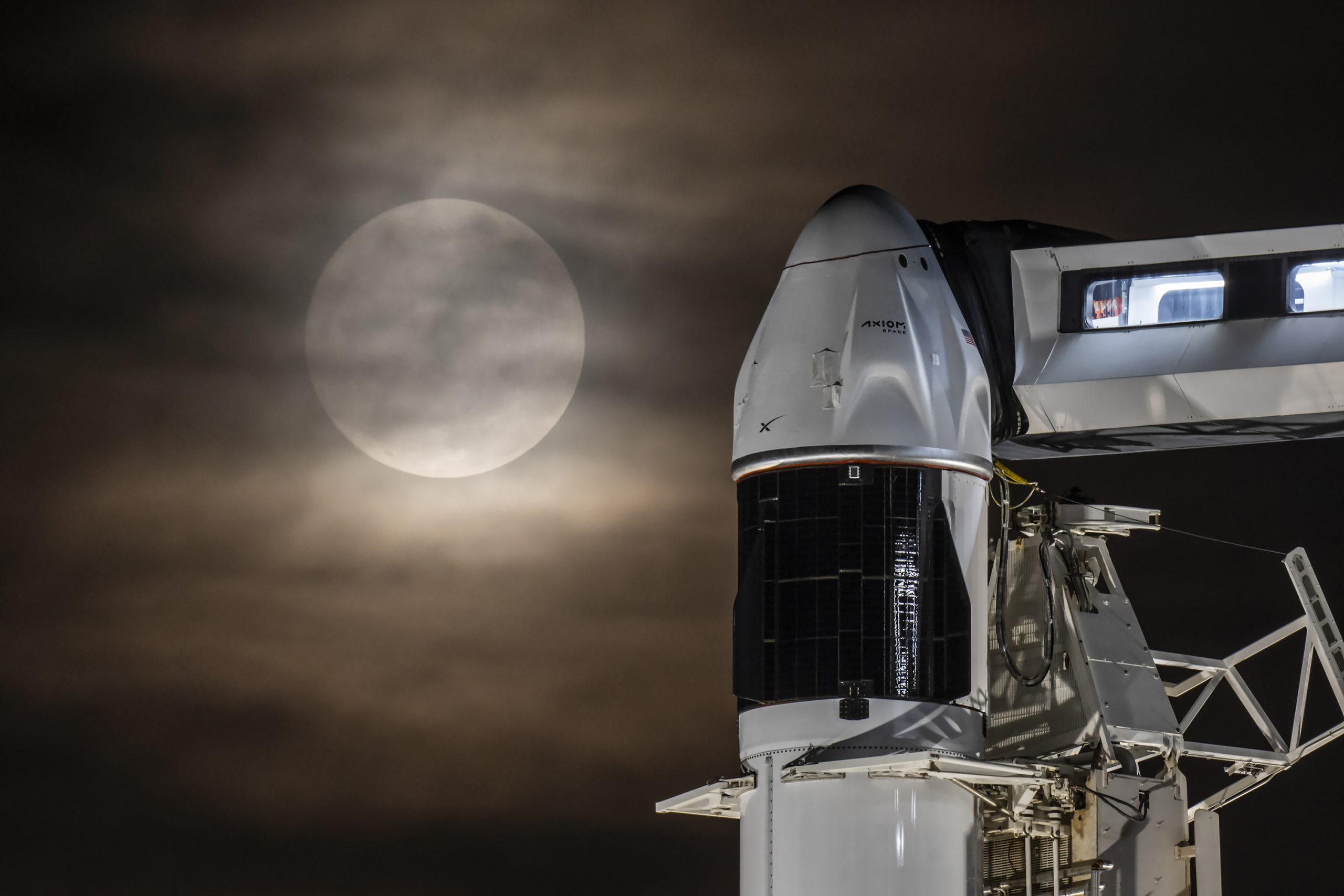
SpaceX is preparing for a new launch date for the Ax-4 mission to the International Space Station (ISS).
SpaceX, Axiom Space, and NASA addressed recent technical challenges and announced a new launch date of no earlier than Thursday, June 19, for the Ax-4 mission. The delay from June 12 allowed teams to assess repairs to small leaks in the ISS’s Zvezda service module.
NASA and Roscosmos have been monitoring leaks in the Zvezda module’s aft (back) segment for years. However, stable pressure could also result from air flowing across the hatch seal from the central station. As NASA and its partners adapt launch schedules to ensure station safety, adjustments are routine.
“Following the most recent repair, pressure in the transfer tunnel has been stable,” a source noted, suggesting the leaks may be sealed.
“By changing pressure in the transfer tunnel and monitoring over time, teams are evaluating the condition of the transfer tunnel and the hatch seal between the space station and the back of Zvezda,” the source added.
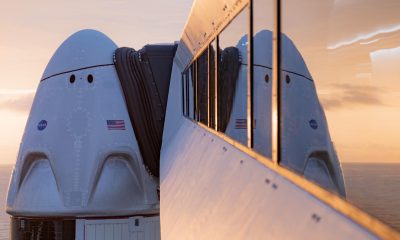
SpaceX has also resolved a liquid oxygen leak found during post-static fire inspections of the Falcon 9 rocket, completing a wet dress rehearsal to confirm readiness. The Ax-4 mission is Axiom Space’s fourth private astronaut trip to the ISS. It will launch from NASA’s Kennedy Space Center in Florida on a Falcon 9 rocket with a new Crew Dragon capsule.
“This is the first flight for this Dragon capsule, and it’s carrying an international crew—a perfect debut. We’ve upgraded storage, propulsion components, and the seat lash design for improved reliability and reuse,” said William Gerstenmaier, SpaceX’s vice president of build and flight reliability.
The Ax-4 mission crew is led by Peggy Whitson, Axiom Space’s director of human spaceflight and former NASA astronaut. The Ax-4 crew includes ISRO astronaut Shubhanshu Shukla as pilot, alongside mission specialists Sławosz Uznański-Wiśniewski from Poland and Tibor Kapu from Hungary. The international team underscores Axiom’s commitment to global collaboration.
The Ax-4 mission will advance scientific research during its ISS stay, supporting Axiom’s goal of building a commercial space station. As teams finalize preparations, the mission’s updated launch date and technical resolutions position it to strengthen private space exploration’s role in advancing space-based innovation.
News
Starlink India launch gains traction with telecom license approval
Starlink just secured its telecom license in India! High-speed satellite internet could go live in 2 months.

Starlink India’s launch cleared a key regulatory hurdle after securing a long-awaited license from the country’s telecom ministry. Starlink’s license approval in India paves the way for commercial operations to begin, marking a significant milestone after a three-year wait.
The Department of Telecommunications granted Starlink a Global Mobile Personal Communication by Satellite (GMPCS) license, enabling it to roll out its high-speed internet service. Local reports hinted that Starlink plans to launch its services within the next two months. Starlink India’s services are expected to be priced at ₹3,000 per month for unlimited data. Starlink service would require a ₹33,000 hardware kit, including a dish and router.
“Starlink is finally ready to enter the Indian market,” sources familiar with the rollout plans confirmed, noting a one-month free trial for new users.
Starlink’s low-Earth orbit satellite network promises low-latency, high-speed internet that is ideal for rural India, border areas, and hilly terrains. With over 7,000 satellites in orbit and millions of global users, Starlink aims to bridge India’s digital divide, especially in areas with limited traditional broadband.
Starlink has forged distribution partnerships with Indian telecom giants Reliance Jio and Bharti Airtel to streamline deployment and retail logistics. However, the company still awaits spectrum allocation and final clearances from India’s space regulator, IN-SPACe, and national security agencies before its full launch, expected before August 2025.
India’s satellite internet market is becoming increasingly competitive, with Starlink joining rivals like OneWeb and Jio Satellite Communications. While Starlink positions itself as a premium offering, its entry has sparked debate among domestic telecom operators over spectrum pricing.
Local reports noted that other players in the industry have raised concerns over the lower regulatory fees proposed for satellite firms compared to terrestrial operators, highlighting tensions in the sector.
Starlink India’s launch represents a transformative step toward expanding internet access in one of the world’s largest markets. Starlink could redefine connectivity for millions in underserved regions by leveraging its advanced satellite technology and strategic partnerships. As the company navigates remaining regulatory steps, its timely rollout could set a new standard for satellite internet in India, intensifying competition and driving innovation in the telecom landscape.
Elon Musk
SpaceX to decommission Dragon spacecraft in response to Pres. Trump war of words with Elon Musk
Elon Musk says SpaceX will decommission Dragon as a result of President Trump’s threat to end his subsidies and government contracts.

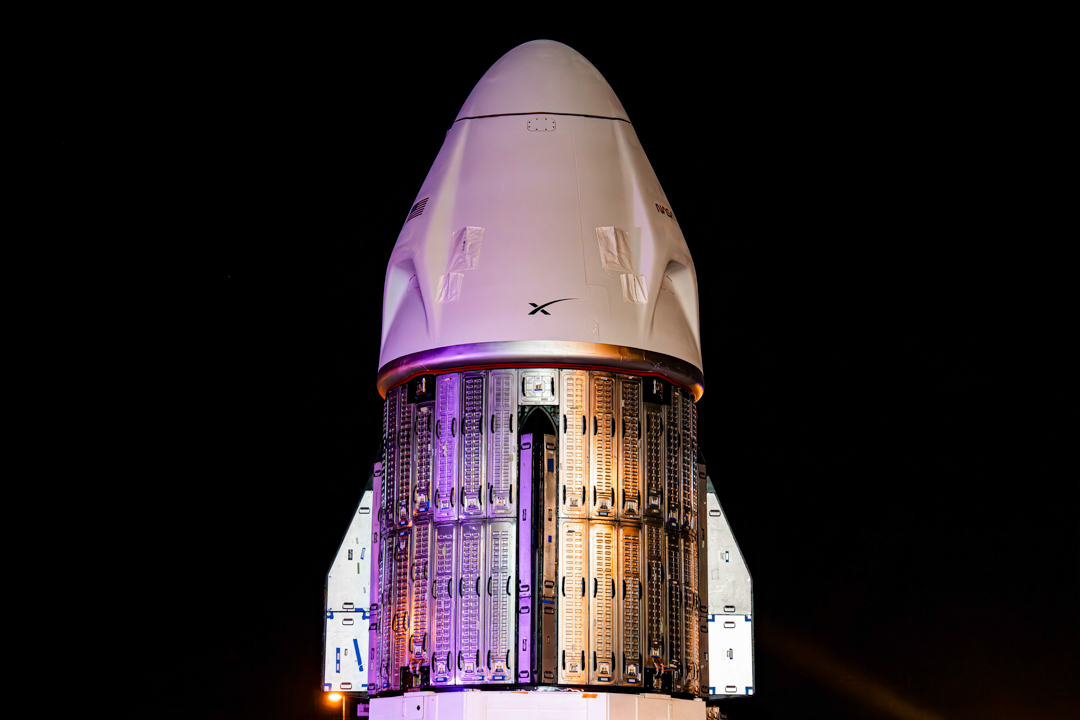
SpaceX will decommission its Dragon spacecraft in response to the intense war of words that President Trump and CEO Elon Musk have entered on various social media platforms today.
President Trump and Musk, who was once considered a right-hand man to Trump, have entered a vicious war of words on Thursday. The issues stem from Musk’s disagreement with the “Big Beautiful Bill,” which will increase the U.S. federal deficit, the Tesla and SpaceX frontman says.
How Tesla could benefit from the ‘Big Beautiful Bill’ that axes EV subsidies
The insults and threats have been brutal, as Trump has said he doesn’t know if he’ll respect Musk again, and Musk has even stated that the President would not have won the election in November if it were not for him.
President Trump then said later in the day that:
“The easiest way to save money in our Budget, Billions and Billions of Dollars, is to terminate Elon’s Government Subsidies and Contracts. I was always surprised that Biden didn’t do it!”
Musk’s response was simple: he will decommission the SpaceX capsule responsible for transporting crew and cargo to the International Space Station (ISS): Dragon.
🚨 Elon says Dragon will be decommissioned immediately due to President Trump’s threats to terminate SpaceX’s government contracts https://t.co/XNB0LflZIy
— TESLARATI (@Teslarati) June 5, 2025
Dragon has completed 51 missions, 46 of which have been to the ISS. It is capable of carrying up to 7 passengers to and from Earth’s orbit. It is the only spacecraft that is capable of returning vast amounts of cargo to Earth. It is also the first private spacecraft to take humans to the ISS.
The most notable mission Dragon completed is one of its most recent, as SpaceX brought NASA astronauts Butch Wilmore and Suni Williams back to Earth after being stranded at the ISS by a Boeing Starliner capsule.
SpaceX’s reluctance to participate in federally funded projects may put the government in a strange position. It will look to bring Boeing back in to take a majority of these projects, but there might be some reluctance based on the Starliner mishap with Wilmore and Williams.
SpaceX bails out Boeing and employees are reportedly ‘humiliated’

Tesla cleared in Canada EV rebate investigation

Tesla Semis to get 18 new Megachargers at this PepsiCo plant

Tesla sales soar in Norway with new Model Y leading the charge


-

 Elon Musk2 weeks ago
Tesla investors will be shocked by Jim Cramer’s latest assessment
-

 Elon Musk2 days ago
xAI launches Grok 4 with new $300/month SuperGrok Heavy subscription
-

 Elon Musk4 days ago
Elon Musk confirms Grok 4 launch on July 9 with livestream event
-

 News1 week ago
Tesla Model 3 ranks as the safest new car in Europe for 2025, per Euro NCAP tests
-

 Elon Musk2 weeks ago
A Tesla just delivered itself to a customer autonomously, Elon Musk confirms
-

 Elon Musk1 week ago
xAI’s Memphis data center receives air permit despite community criticism
-

 News2 weeks ago
Xiaomi CEO congratulates Tesla on first FSD delivery: “We have to continue learning!”
-

 News2 weeks ago
Tesla sees explosive sales growth in UK, Spain, and Netherlands in June