

News
Elon Musk’s deposition on Twitter case delayed amid efforts to close deal: report

Twitter has reportedly agreed to delay Elon Musk’s deposition that was scheduled for Thursday. The social media company’s decision comes as Twitter and Musk’s teams negotiate how to finalize the Tesla CEO’s $44 billion acquisition of the company, according to sources reportedly familiar with the matter.
Elon Musk’s Twitter saga has been ongoing for months, with the Tesla CEO stating that he would purchase the company in April before announcing later that he was pausing his buyout over concerns about the social media platform’s spam and bot accounts. The two parties’ legal battle has been quite bitter, with both sides accusing the other of being uncooperative, among others.
Musk and Twitter are set to face each other in court on October 17, though it remains to be seen if the trial will indeed happen. After all, Musk had recently written to Twitter to let the social media company know that he was ready to complete his buyout at the initially agreed-upon price of $54.20 per share.
According to court papers, Musk was set to appear on Thursday at 9.30 a.m. at the Wilson Sonsini Goodrich & Rosati offices in Austin, Texas. As noted by the Financial Times, Twitter’s chief litigator, Bill Savitt of Wachtell, Lipton, was set to depose the Tesla CEO for two days. Musk had canceled a previously scheduled deposition over Covid-related concerns.
The delay in Musk’s deposition comes amid Twitter’s efforts to ask the court for specific contractual guarantees which would ensure Musk will complete his acquisition. Citing a person reportedly familiar with the matter, The Wall Street Journal also noted that Musk and Twitter had previously held discussions about possible price cuts to the deal. The talks, however, were unsuccessful.
Kathaleen McCormick, the judge who would be overseeing Musk and Twitter’s trial, has noted that she has not received any filings from either camp to move for a stay. “The parties have not filed a stipulation to stay this action, nor has any party moved for a stay. I, therefore, continue to press on toward our trial set to begin on October 17,” the judge said.
Don’t hesitate to contact us with news tips. Just send a message to simon@teslarati.com to give us a heads up.



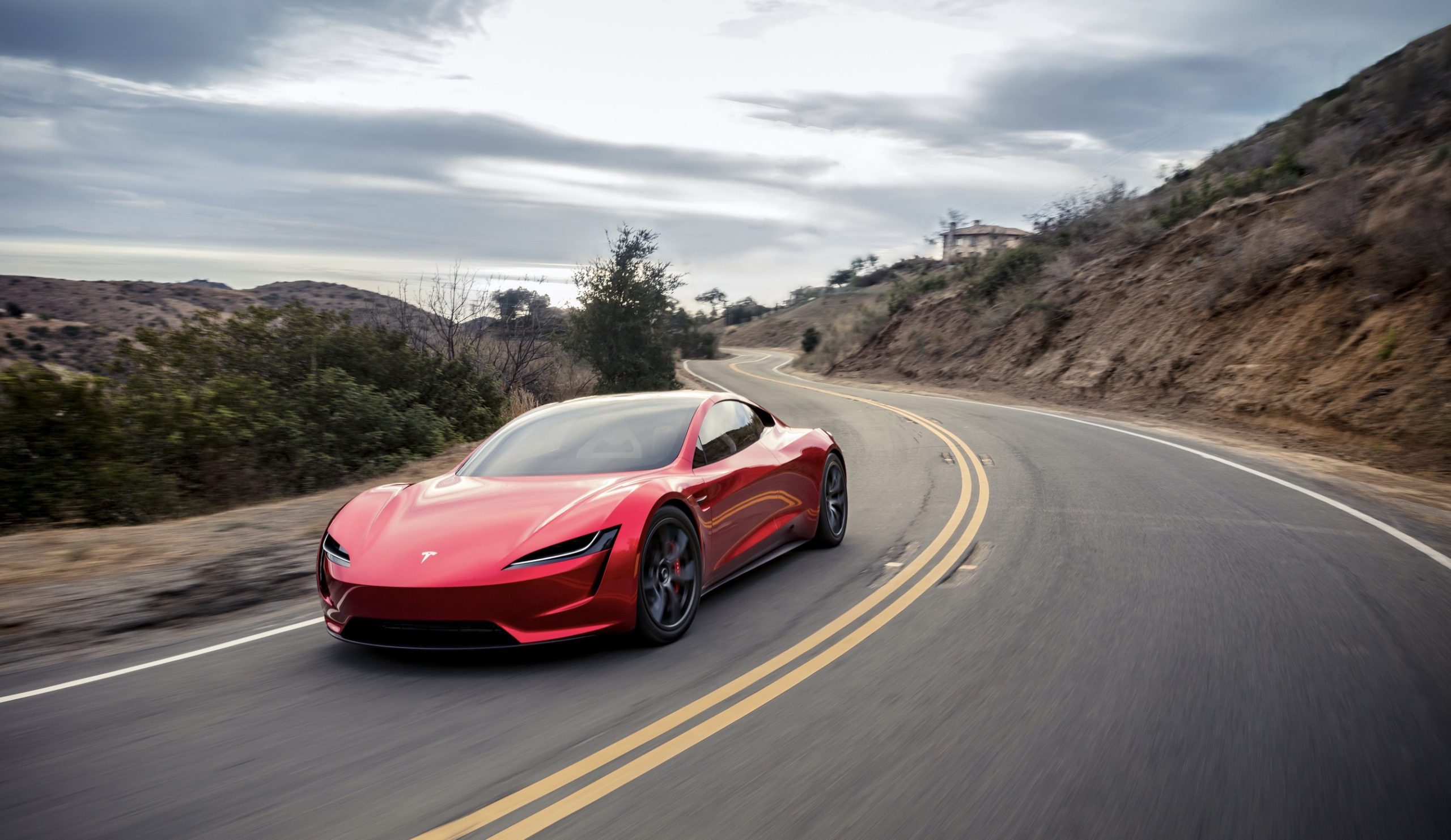
Tesla unveiled a juicy new detail on the Roadster, its long-delayed supercar project, and additionally hinted at a new unveiling timeline, as it appears yet another month will pass without seeing the capabilities of the vehicle.
Vice President of Vehicle Engineering at Tesla, Lars Moravy, revealed on the Ride the Lightning podcast that the Roadster will be built at Gigafactory Texas, adding that “you’ll start to see a lot of things unfold in the next months.”
While we get a good detail on the plant of manufacture, we also get another letdown, as it appears the unveiling event will not take place in May, as CEO Elon Musk hinted during the Earnings Call.
Franz von Holzhausen revealed in the Ride the Lightning podcast that the Tesla Roadster will be built at Gigafactory Texas https://t.co/t9Bu9k824Q pic.twitter.com/TT01IWJaFD
— TESLARATI (@Teslarati) May 24, 2026
The Roadster was first unveiled back in 2017, alongside the Semi, which entered production earlier this year. It was Tesla’s attempt at a true supercar; it would be rare, expensive, and lightning quick, among other incredible capabilities, like potentially hovering for a short period thanks to a collaboration project with SpaceX.
However, the vehicle was set to be delivered in 2020. Parts and supply chain issues due to the COVID-19 pandemic started these delays, and since then, Tesla, and specifically Musk, have wanted to push the capabilities of the Roadster to somewhere the human mind may not be able to currently comprehend.
Both Chief Designer Franz von Holzhausen and Moravy have said many things about the Roadster over the past few years, hinting that the car truly could be worth the wait. However, the continuous delays we’ve seen have undoubtedly been discouraging.
With that being said, it’s not like Tesla has been doing nothing. Instead, the company has been focusing on revamping current models, phasing out others, and working on developing the cars of the future, specifically, the Cybercab, which entered production at Giga Texas in April.
Despite the Roadster’s delays, there is still a ton of anticipation for the vehicle to be released. It will have a steering wheel, as Musk said it will be “the best of the last of the human-driven cars.”

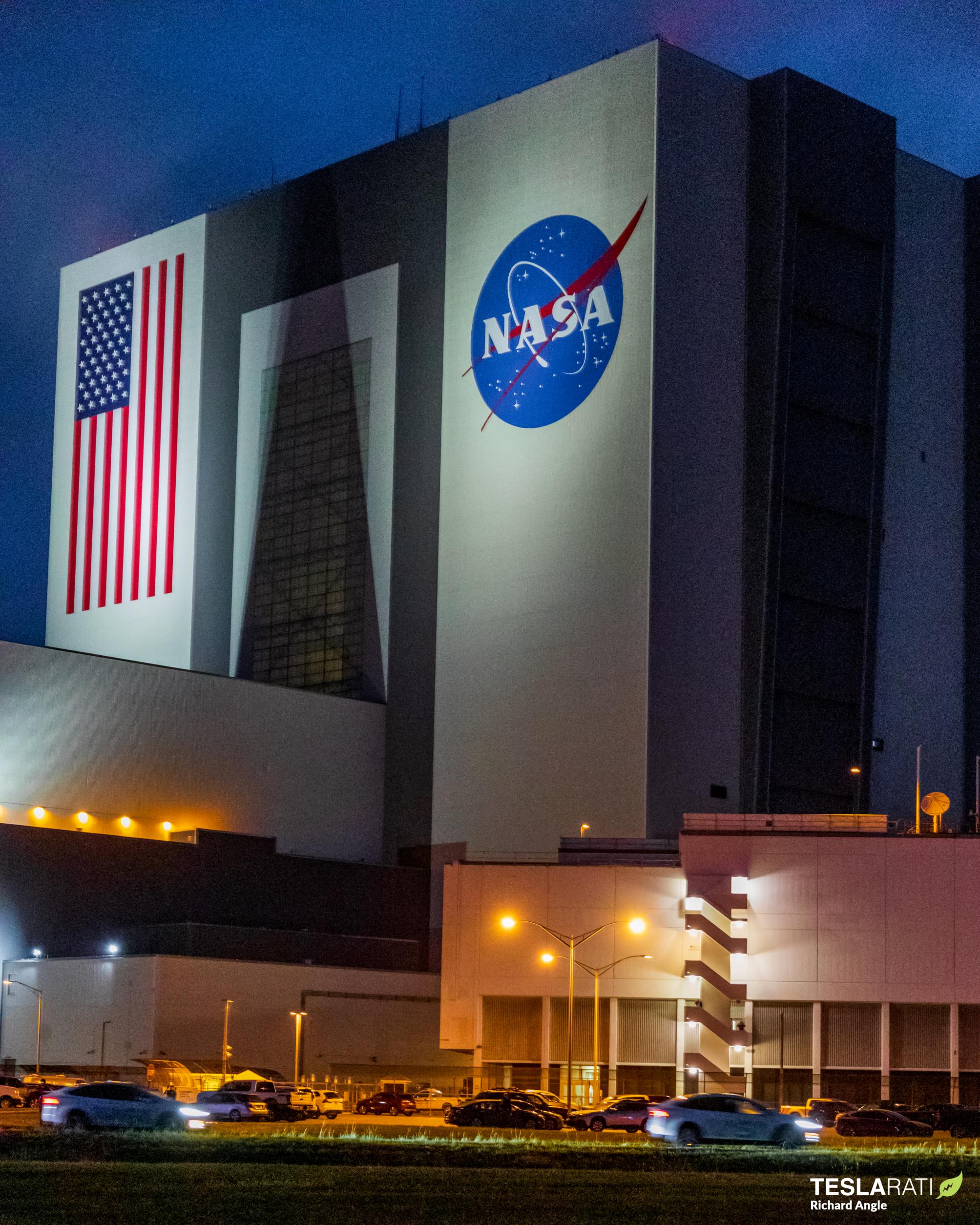
NASA has filed a procurement notice announcing its intent to add six post-certification missions to SpaceX’s existing Commercial Crew Transportation Capability contract. The agency said it would order up to three of those missions immediately upon adding them to the contract, with the remaining three available as needed through the end of the International Space Station’s planned operations in 2030.
The reason for the expansion is straightforward. NASA cited recently shortened ISS mission durations, technical issues and schedule delays encountered by Boeing, the allocation of missions between Boeing and SpaceX, and the ongoing technical challenges of maintaining a reliable crew transportation capability as the driving factors behind the decision. Boeing’s CST-100 Starliner has still not been certified for crewed flights, and a cargo-only Starliner mission was not included on NASA’s most recent mission manifest. With Boeing effectively sidelined for the foreseeable future, SpaceX is the only American company capable of rotating crews to the station.
The history behind this contract tells the fuller story of how SpaceX got here. NASA originally awarded SpaceX its Commercial Crew contract in 2014 for $2.6 billion. In 2022 NASA modified the contract to add five missions covering Crew-10 through Crew-14, worth $1.436 billion, bringing the total contract value at that point to $4.9 billion. The recent May 18 filing by NASA extends that runway further, with Crew-12 currently docked at the station and Crew-13 assigned and targeting a mid-September 2026 launch.
According to a report by SpaceNews, NASA stated in its filing: “It is necessary to award additional PCMs to SpaceX given the recently shortened ISS mission durations, technical issues and schedule delays encountered by Boeing, the allocation of missions between Boeing and SpaceX, NASA’s projections for when an alternative crew transportation system may become available, and the ongoing technical challenges of maintaining a reliable capability for crewed flights to ISS.”
No dollar value for the new six missions has been publicly confirmed yet, but based on the 2022 precedent of roughly $287 million per mission, the new block could represent close to $1.7 billion in additional contract value. With SpaceX simultaneously preparing Starship as NASA’s Artemis lunar lander, filing its S-1 for a June IPO, and now absorbing more ISS crew rotation work, the company’s role as the primary contractor for American human spaceflight is no longer a matter of circumstance. It is NASA policy.
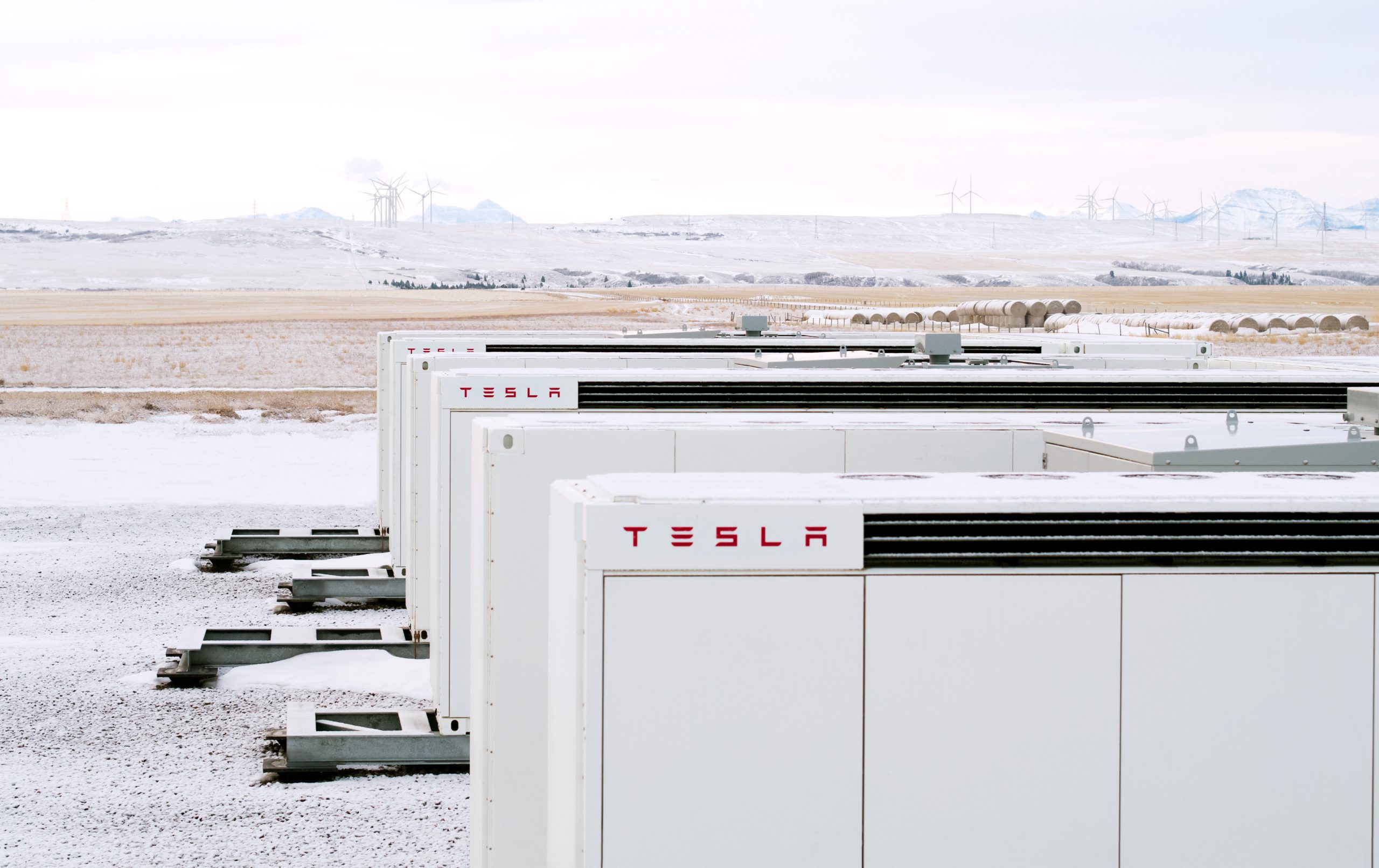
In a notable intersection of Big Tech powerhouses, Meta, led by Mark Zuckerberg, has partnered with Canadian energy infrastructure giant Enbridge on a significant renewable energy initiative that will rely on battery technology from Elon Musk’s Tesla.
The project, which was announced this week, marks another step in Meta’s aggressive push to power its expanding data center operations with clean energy, dispelling many of the complaints people have about them.
This new development is located near Cheyenne, Wyoming, and will feature a 365-megawatt (MW) solar farm paired with a 200 MW/1,600 megawatt-hour (MWh) battery energy storage system, also known as BESS. Tesla is providing the batteries for the project, valued at roughly $200 million.
The story was originally reported by Utility Dive.
This Wyoming project represents the first phase of Enbridge and Meta’s joint “Cowboy Project.” Once operational, it will deliver power to Meta’s regional data centers through Cheyenne Light, Fuel, and Power under Wyoming’s Large Power Contract Service tariff.
This tariff, originally developed in collaboration with Microsoft and Black Hills Energy, is designed specifically for large loads like data centers. It ensures that the renewable supply serves hyperscale customers without impacting retail electricity rates for other users.
The battery system will operate under a long-term tolling agreement, providing dispatchable capacity that enhances grid reliability. During periods of high demand, the utility can access the backup generation, addressing one of the key challenges of integrating large-scale renewables with the explosive growth of data center electricity demand driven by artificial intelligence.
This latest collaboration builds on prior joint efforts between Enbridge and Meta in Texas, including the 600 MW Clear Fork Solar, 152 MW Easter Wind, and 300 MW Cone Wind projects. Together with the Wyoming initiative, the companies have now partnered on roughly 1.6 gigawatts (GW) of combined solar, wind, and storage capacity.
The deal highlights the intensifying demand for reliable, low-carbon power from technology giants. Meta has committed to supporting its data center growth with renewable energy, joining peers like Microsoft and Google in seeking large-scale solutions. Enbridge’s Allen Capps described the project as “one of the larger utility-scale battery installations supporting U.S. data center operations and growth.”
The involvement of Tesla’s battery technology adds an intriguing layer, linking two of the world’s most prominent tech leaders—Zuckerberg and Musk—in the clean energy transition.
As data centers continue to drive unprecedented electricity load growth across the United States, projects like this one illustrate how hyperscalers are turning to strategic partnerships with traditional energy players and innovative storage solutions to meet both sustainability goals and reliability needs.

Tesla unveils juicy new detail on the Roadster and hints at new unveil timeline

NASA just gave SpaceX more crew missions because Boeing can’t certify


