
Investor's Corner
The epic battle between Elon Musk and the Tesla haters

In a fascinating article in Institutional Investor, Michelle Celarier writes that Tesla [NASDAQ: TSLA] is: “the biggest short in the U.S. market; about 27 percent of Tesla’s free float is short, for a value as high as $10 billion” according to S3 Analytics, a firm that tracks short sales. That said, “the stock has soared more than 1,300 percent since Tesla went public in 2010. It is the first automaker to go public since Ford in 1956, making it one of the darlings of the post-financial-crash bull market.”
Photo credit: Tesla
It turns out that one of the most notorious Tesla shorts is Mark Spiegel. And Spiegel hasn’t even driven a Tesla yet. He says, “I’m more into sports cars.” According to Celarier, “Spiegel has become something of a zealot on Tesla. His small hedge fund, Stanphyl Capital Management, runs a mere $8.5 million, given that it was down 20 percent this year through August. That’s largely due to his short of Tesla, which had gained 74 percent this year, making it the worst-performing short of the year.”
However, there are bigger players out there shorting Tesla. Celarier reports that: “Everyone who’s anyone in Wall Street’s small and clubby world of short sellers has been short Tesla at one point or another… In the past, some of them also shorted Google and Amazon — other high flyers who weren’t making a profit — and somewhat sheepishly [now] admit they were wrong. Clearly, these guys are not dreamers from California’s La La Land, and Musk’s grand plans and his ‘save the world’ ethos can elicit a few eye rolls.”
Another well-known Tesla short, James Chanos of Kynikos Associates, “has been railing against Tesla for at least two years on CNBC and at numerous conferences. He has gone so far as to call Tesla a cult.” Speaking of Tesla’s CEO Elon Musk, Chanos proclaims, “People want to believe he’s some sort of visionary… In a milieu of boring people, they think he is changing the world. He’s not boring. He’s somebody they can attach their hopes and dreams to.”
Photo credit: David Paul Morris/Bloomberg
So why does Tesla attract so many arguments on Wall Street? On the one hand, “Looking at its balance sheet, Tesla is [considered] the perfect short. But its pioneering status in an industry facing wrenching technological upheaval, and its charismatic CEO, has won it legions of admirers and turned it into a battleground stock. Sure, Tesla’s lofty stock price makes it a risky buy — but also a perilous short.”
Anger and hope permeate both camps of investors. “Short sellers berate Tesla investors as momentum chasers, tree-huggers, or simply Elon Musk groupies, but these investors have bought into a vision that has already made great leaps toward building a sustainable energy ecosystem — a costly endeavor that has no shortage of well-heeled enemies.”
And while an army of short sellers persist, plenty of Wall Street’s power players remain steadfast Tesla longs: “The biggest holders, aside from Musk, are mutual funds like Fidelity Investments, which has owned the stock since the IPO. With a current 12.8 percent stake (down from a high of 15 percent), the mutual fund giant is the largest institutional investor in Tesla, and portfolio manager Kyle Weaver says Fidelity has a long-term perspective on the company that is playing out largely as expected.”
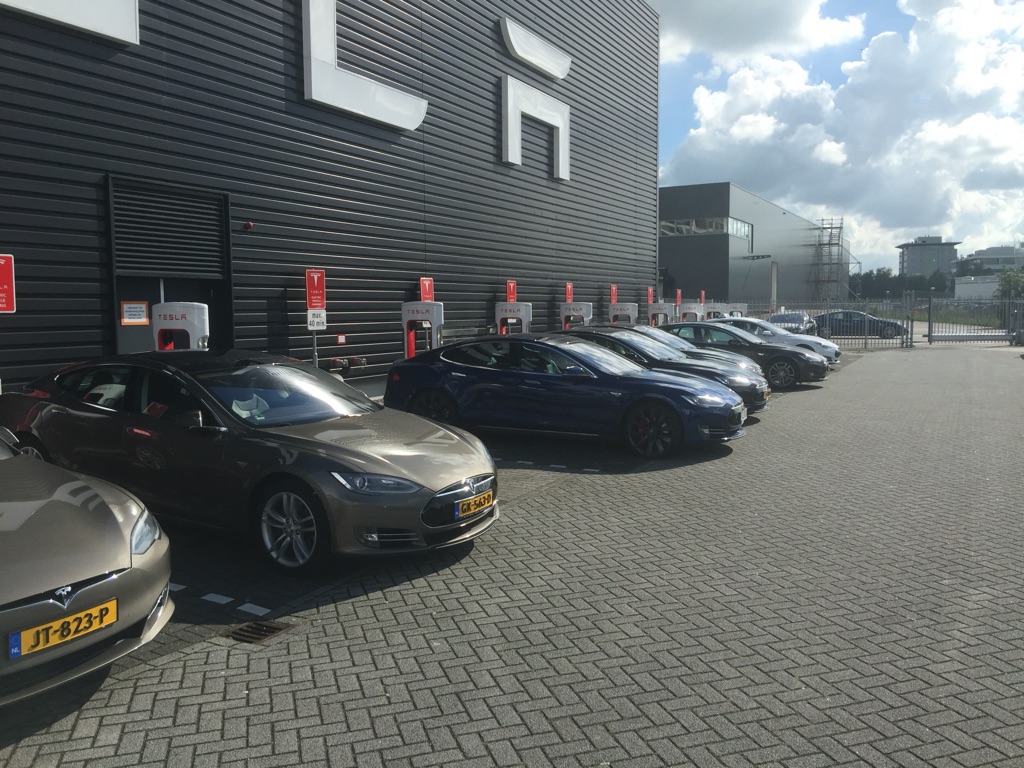
Tesla fleet lined up outside of the service center in Amsterdam [Photo credit: Teslarati App]
“It was the worst short I’ve ever had,” says Whitney Tilson, managing partner of Kase Capital Management, who was short when the stock went from $35 to $205. Last month, Tilson told investors he’s shutting down his funds due to poor performance. Tilson explains, “I can do the numbers and see how much money the company is losing, but you’re short an incredibly maniacally driven CEO, with maniacally driven engineers assaulting the world’s largest industry. If they succeed, Tesla could be a $400 billion market cap company.”“The internal combustion engine is toast long term. It’s game over. The costs of making an internal combustion engine do not go down, while the cost of battery technology has gone down every year,” says Fidelity’s Weaver. “The secular trends that will drive Tesla’s fundamentals are a decades-long trend.” He also applauds Tesla’s environmental mission, “I don’t want to bet against that in an emotional sense.”
Musk is also not afraid to openly attack Wall Street’s short sellers. Let’s not forget, “Musk, who has talked about being bullied as a child, seems to delight in taunting his tormentors. In 2013 he gloated on Twitter, ‘Seems to be some stormy weather over in Shortville these days,’” and once cautioned short sellers that a “tsunami of hurt” was coming in a televised interview.
Celarier writes, “To be sure, a mania surrounds Tesla… [and] betting against Musk is a tough proposition. Tesla has already survived near-bankruptcy events, and Musk has plenty of friends in tech companies with much higher valuations, like Larry Page at Google, that could afford to partner with Tesla or take it over. (Google had struck a handshake deal to buy Tesla during a near-death moment in 2013, according to Vance’s biography.)”
There’s also massive opportunity for Tesla in China: “Earlier this year, China’s Tencent Holdings took a 5 percent stake in Tesla. China is proposing to mandate a zero-emissions standard in 12 percent of new cars by 2020 and is considering letting wholly owned foreign electric-car companies operate there. The Chinese market is expected to be huge, and Tesla is charging ahead there. It is already building a new supercharger network in the country and plans to both build and sell cars there.”
Such realities make shorting Tesla, for all its financial shortcomings, a difficult call. As Tilson puts it, “I don’t want to be short open-ended situations. The tail risk is just too high.”
===
Note: Article by Matt Pressman, originally published on evannex.com
Source: Institutional Investor




Elon Musk
Tesla analysts believe Musk and Trump feud will pass
Tesla CEO Elon Musk and U.S. President Donald Trump’s feud shall pass, several bulls say.

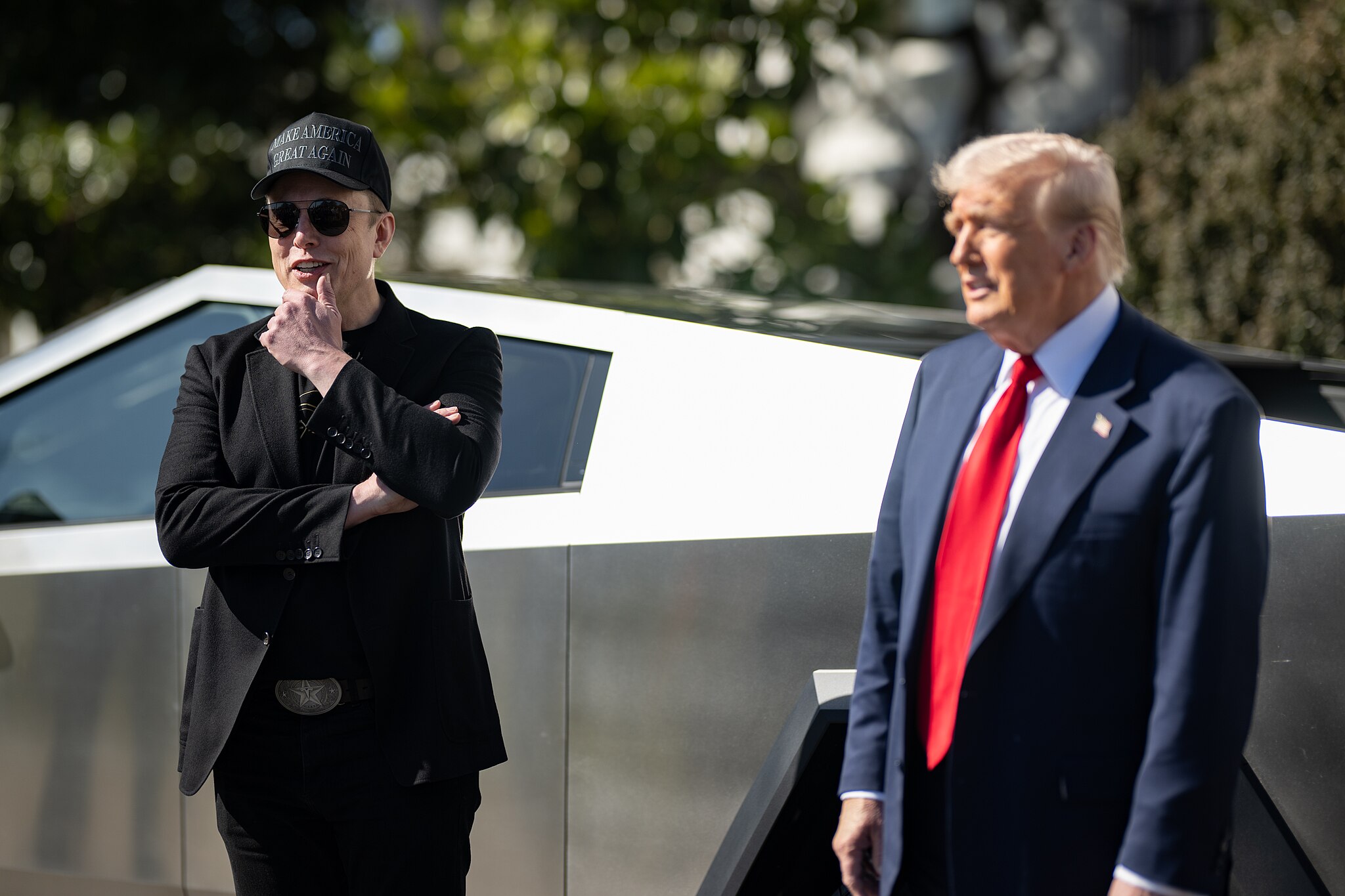
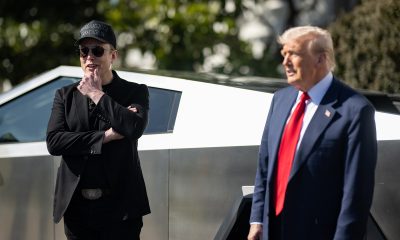
Tesla analysts are breaking down the current feud between CEO Elon Musk and U.S. President Donald Trump, as the two continue to disagree on the “Big Beautiful Bill” and its impact on the country’s national debt.
Musk, who headed the Department of Government Efficiency (DOGE) under the Trump Administration, left his post in May. Soon thereafter, he and President Trump entered a very public and verbal disagreement, where things turned sour. They reconciled to an extent, and things seemed to be in the past.
However, the second disagreement between the two started on Monday, as Musk continued to push back on the “Big Beautiful Bill” that the Trump administration is attempting to sign into law. It would, by Musk’s estimation, increase spending and reverse the work DOGE did to trim the deficit.
Every member of Congress who campaigned on reducing government spending and then immediately voted for the biggest debt increase in history should hang their head in shame!
And they will lose their primary next year if it is the last thing I do on this Earth.
— Elon Musk (@elonmusk) June 30, 2025
President Trump has hinted that DOGE could be “the monster” that “eats Elon,” threatening to end the subsidies that SpaceX and Tesla receive. Musk has not been opposed to ending government subsidies for companies, including his own, as long as they are all abolished.
How Tesla could benefit from the ‘Big Beautiful Bill’ that axes EV subsidies
Despite this contentious back-and-forth between the two, analysts are sharing their opinions now, and a few of the more bullish Tesla observers are convinced that this feud will pass, Trump and Musk will resolve their differences as they have before, and things will return to normal.
ARK Invest’s Cathie Wood said this morning that the feud between Musk and Trump is another example of “this too shall pass:”
BREAKING: CATHIE WOOD SAYS — ELON AND TRUMP FEUD “WILL PASS” 👀 $TSLA
She remains bullish ! pic.twitter.com/w5rW2gfCkx
— TheSonOfWalkley (@TheSonOfWalkley) July 1, 2025
Additionally, Wedbush’s Dan Ives, in a note to investors this morning, said that the situation “will settle:”
“We believe this situation will settle and at the end of the day Musk needs Trump and Trump needs Musk given the AI Arms Race going on between the US and China. The jabs between Musk and Trump will continue as the Budget rolls through Congress but Tesla investors want Musk to focus on driving Tesla and stop this political angle…which has turned into a life of its own in a roller coaster ride since the November elections.”
Tesla shares are down about 5 percent at 3:10 p.m. on the East Coast.
Elon Musk
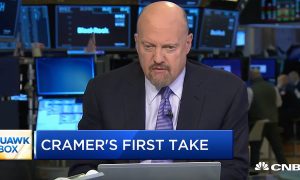
Tesla investors will be shocked by Jim Cramer’s latest assessment
Jim Cramer is now speaking positively about Tesla, especially in terms of its Robotaxi performance and its perception as a company.
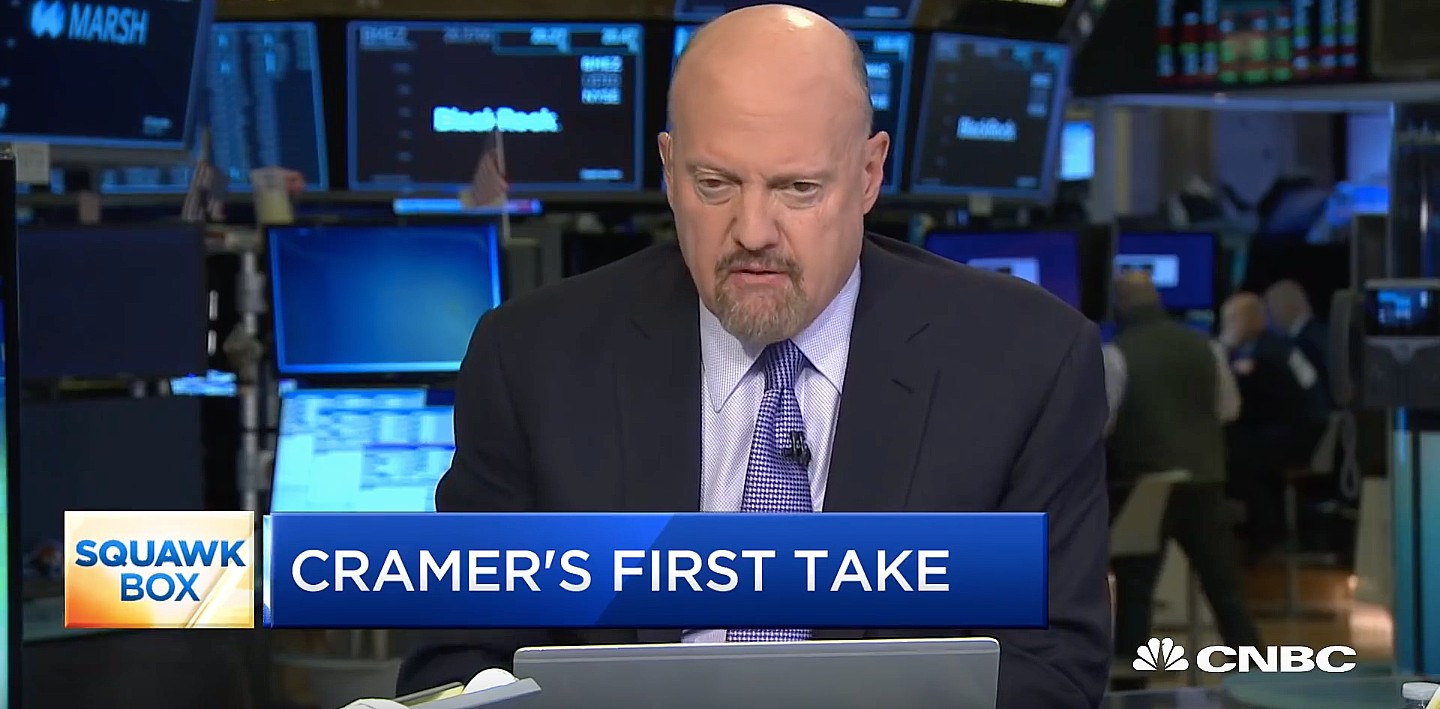
Tesla investors will be shocked by analyst Jim Cramer’s latest assessment of the company.
When it comes to Tesla analysts, many of them are consistent. The bulls usually stay the bulls, and the bears usually stay the bears. The notable analysts on each side are Dan Ives and Adam Jonas for the bulls, and Gordon Johnson for the bears.
Jim Cramer is one analyst who does not necessarily fit this mold. Cramer, who hosts CNBC’s Mad Money, has switched his opinion on Tesla stock (NASDAQ: TSLA) many times.
He has been bullish, like he was when he said the stock was a “sleeping giant” two years ago, and he has been bearish, like he was when he said there was “nothing magnificent” about the company just a few months ago.
Now, he is back to being a bull.
Cramer’s comments were related to two key points: how NVIDIA CEO Jensen Huang describes Tesla after working closely with the Company through their transactions, and how it is not a car company, as well as the recent launch of the Robotaxi fleet.
Jensen Huang’s Tesla Narrative
Cramer says that the narrative on quarterly and annual deliveries is overblown, and those who continue to worry about Tesla’s performance on that metric are misled.
“It’s not a car company,” he said.
He went on to say that people like Huang speak highly of Tesla, and that should be enough to deter any true skepticism:
“I believe what Musk says cause Musk is working with Jensen and Jensen’s telling me what’s happening on the other side is pretty amazing.”
Tesla self-driving development gets huge compliment from NVIDIA CEO
Robotaxi Launch
Many media outlets are being extremely negative regarding the early rollout of Tesla’s Robotaxi platform in Austin, Texas.
There have been a handful of small issues, but nothing significant. Cramer says that humans make mistakes in vehicles too, yet, when Tesla’s test phase of the Robotaxi does it, it’s front page news and needs to be magnified.
He said:
“Look, I mean, drivers make mistakes all the time. Why should we hold Tesla to a standard where there can be no mistakes?”
It’s refreshing to hear Cramer speak logically about the Robotaxi fleet, as Tesla has taken every measure to ensure there are no mishaps. There are safety monitors in the passenger seat, and the area of travel is limited, confined to a small number of people.
Tesla is still improving and hopes to remove teleoperators and safety monitors slowly, as CEO Elon Musk said more freedom could be granted within one or two months.
Investor's Corner
Tesla gets $475 price target from Benchmark amid initial Robotaxi rollout
Tesla’s limited rollout of its Robotaxi service in Austin is already catching the eye of Wall Street.

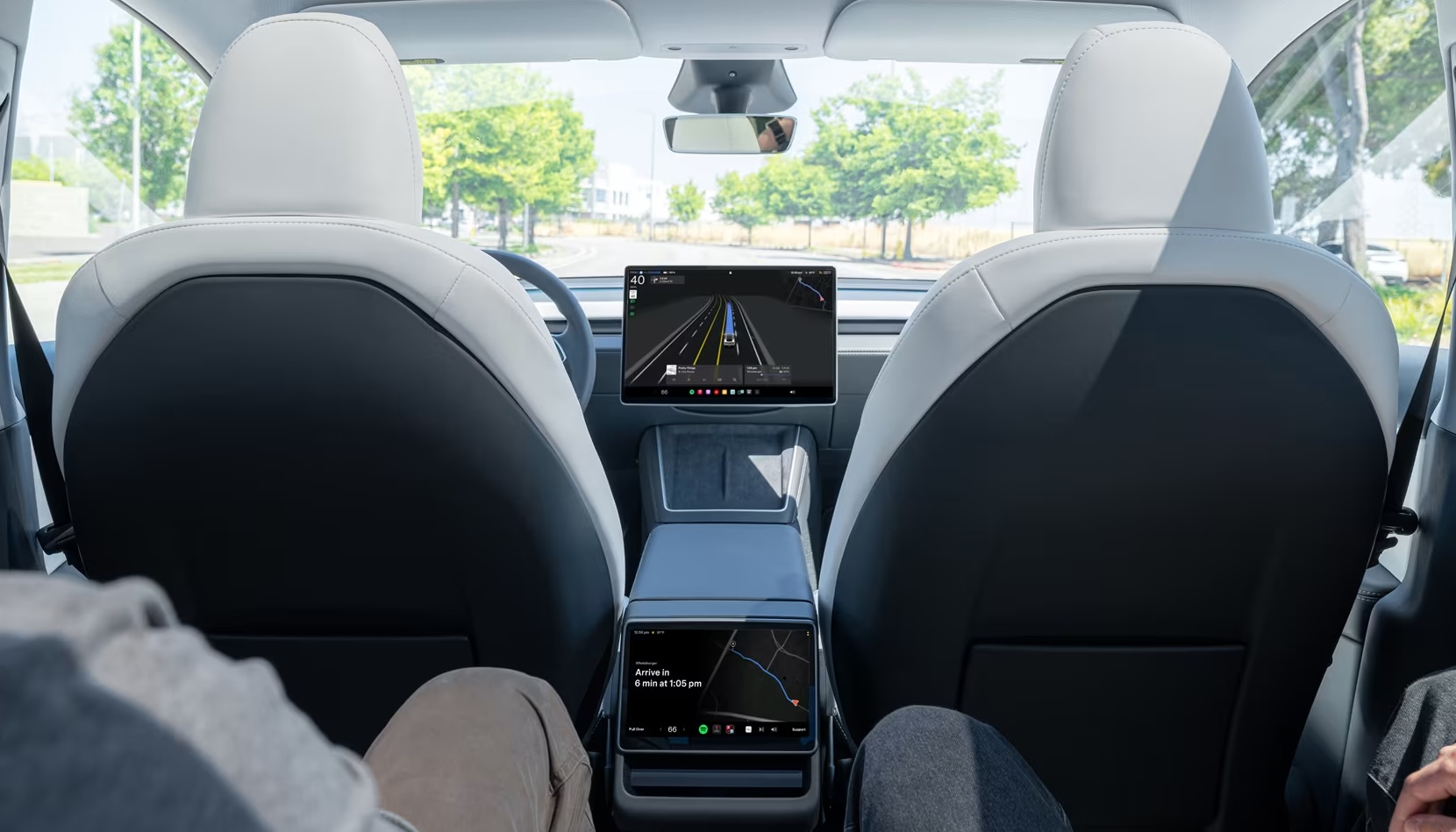
Venture capital firm Benchmark recently reiterated its “Buy” rating and raised its price target on Tesla stock (NASDAQ: TSLA) from $350 to $475 per share, citing the company’s initial Robotaxi service deployment as a sign of future growth potential.
Benchmark analyst Mickey Legg praised the Robotaxi service pilot’s “controlled and safety-first approach,” adding that it could help Tesla earn the trust of regulators and the general public.
Confidence in camera-based autonomy
Legg reiterated Benchmark’s belief in Tesla’s vision-only approach to autonomous driving. “We are a believer in Tesla’s camera-focused approach that is not only cost effective but also scalable,” he noted.
The analyst contrasted Tesla’s simple setup with the more expensive hardware stacks used by competitors like Waymo, which use various sophisticated sensors that hike up costs, as noted in an Investing.com report. Compared to Tesla’s Model Y Robotaxis, Waymo’s self-driving cars are significantly more expensive.
He also pointed to upcoming Texas regulations set to take effect in September, suggesting they could help create a regulatory framework favorable to autonomous services in other cities.
“New regulations for autonomous vehicles are set to go into place on Sept. 1 in TX that we believe will further help win trust and pave the way for expansion to additional cities,” the analyst wrote.
Tesla as a robotics powerhouse
Beyond robotaxis, Legg sees Tesla evolving beyond its roots as an electric vehicle maker. He noted that Tesla’s humanoid robot, Optimus, could be a long-term growth driver alongside new vehicle programs and other future initiatives.
“In our view, the company is undergoing an evolution from a trailblazing vehicle OEM to a high-tech automation and robotics company with unmatched domestic manufacturing scale,” he wrote.
Benchmark noted that Tesla stock had rebounded over 50% from its April lows, driven in part by easing tariff concerns and growing momentum around autonomy. With its initial Robotaxi rollout now underway, the firm has returned to its previous $475 per share target and reaffirmed TSLA as a Benchmark Top Pick for 2025.

Tesla reveals it is using AI to make factories more sustainable: here’s how

Tesla analysts believe Musk and Trump feud will pass

Tesla scrambles after Musk sidekick exit, CEO takes over sales


-
 Elon Musk1 day ago
Tesla investors will be shocked by Jim Cramer’s latest assessment
-
 News6 days ago
Tesla Robotaxi’s biggest challenge seems to be this one thing
-

 News2 weeks ago
Tesla’s Grok integration will be more realistic with this cool feature
-
 Elon Musk2 weeks ago
Elon Musk slams Bloomberg’s shocking xAI cash burn claims
-
 News2 weeks ago
Tesla China roars back with highest vehicle registrations this Q2 so far
-
 News2 weeks ago
Texas lawmakers urge Tesla to delay Austin robotaxi launch to September
-
 News2 weeks ago
Tesla dominates Cars.com’s Made in America Index with clean sweep
-
 Elon Musk1 week ago
First Look at Tesla’s Robotaxi App: features, design, and more