
News
PHOTOS: Northern Lights provide stellar U.S. views as Starlink put under pressure by solar storm

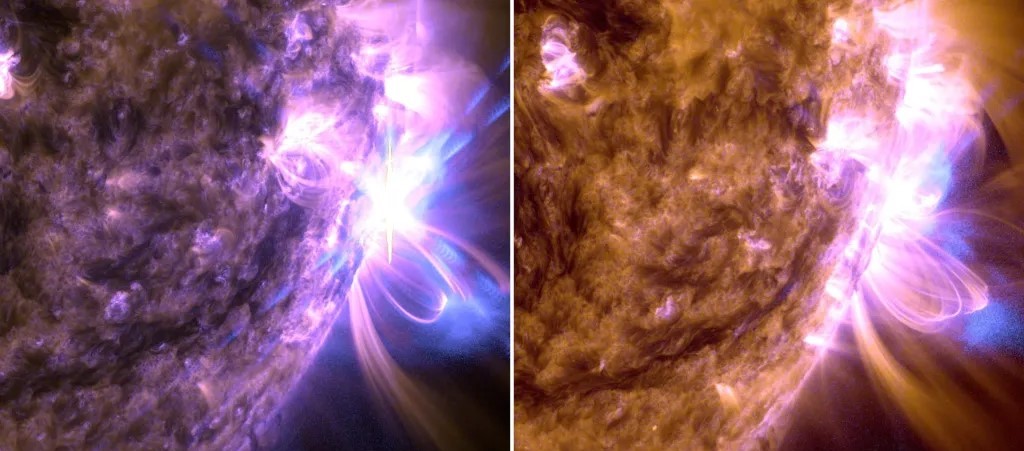
Last weekend, Earth was directly hit by a major Solar storm, and millions were treated to a view of the Northern and Southern lights for the first time.
The storm triggered the Northern Lights to descend much further south than normal, providing brilliant moving lights in the skies usually reserved for those in the far northern and southern hemispheres.
Despite its raw beauty, the storms were a major cause of concern among satellite operators, including SpaceX, which, as of this writing, has 5,999 Starlink satellites orbiting around Earth.
Elon Musk posted, acknowledging that it would be a major test for their constellation, which had previously lost satellites due to Solar storm activity.
Major geomagnetic solar storm happening right now. Biggest in a long time. Starlink satellites are under a lot of pressure, but holding up so far. pic.twitter.com/TrEv5Acli2
— Elon Musk (@elonmusk) May 11, 2024
The Vice President of Starlink Engineering, Michael Nicolls, posted that all of their Starlink satellites, including those recently launched, survived the storm. The satellites that were recently launched were at a much greater risk as atmospheric drag increases and could cause an unintentional de-orbit.
Here are some of our favorite pictures we spotted over on X.
We’re not done with #NorthernLights photos right? Still going through my treasure chest of content and I think I have a new favorite. The colors, banding, pillars and arcs were just unbelievable to watch explode in the northwestern sky during this solar storm substorm. pic.twitter.com/LuyMt7o4Zc
— Nick Stewart (@NStewWX) May 13, 2024
A beautiful view of the Aurora Borealis from Nick Stewart who was in South Dakota.
As noted earlier, the Northern Lights were visibly much further South, including South Florida. The red hue of the lights seen from Florida is due to the Aurora being at a much higher altitude than the greens and blues seen further North.
Occasional pillars, but mostly a diffuse red glow at this point. Still incredible this far south. Taken along US-27 west of Fort Lauderdale, FL at 11:45pm. #aurora @NWSMiami @TweetAurora @AuroraNotify pic.twitter.com/m22PdWkRVL
— Luke Culver (@LukeCulverWx) May 11, 2024
One of the last major storms, known as the Carrington Event, occurred in 1859 with Aurora being visible as far South as Cuba. That storm ignited telegraph lines at the time, causing major outages. While this storm wasn’t as strong, there is always a risk to our current infrastructure, and luckily, it seems no satellite operators suffered any major damage or losses, and ground power stations suffered no blackouts.
The Sunspot that caused the Coronal Mass Ejections has now rotated away from Earth, but it doesn’t mean we are out of the line of fire, as a new one could pop up at any time and send another one our way. This storm provided a great test for satellite operators who now have valuable data to help sturdy their satellites against future Solar storms.
Check out some other awesome photos of the Northern Lights:
Northern lights over Mount Shasta in California, during the historic solar storm last night! #aurora pic.twitter.com/g5EBmPQ7WX
— Jeff Boyce (@Negative_Tilt) May 11, 2024
I’m sorry I didn’t share this sooner. Check out this AMAZING shot of the Northern Lights that was taken between Friday night & Saturday morning. This photo features the trifecta: Aurora Borealis, Milky Way & Mount St. Helens. Thanks to Ian Reed for sharing! pic.twitter.com/aqRGyJfvWv
— Jeff Forgeron (@WeatherJefe) May 15, 2024
Northern lights over NE Ohio. pic.twitter.com/FrdW1pR9M5
— Michael Collier (@MikeACollier) May 11, 2024
A super rare display of aurora borealis / northern lights washed over the Bay Area early this morning ✨
? by Pankaj Bhargava @punksworld on IG pic.twitter.com/FlWGpLUIi3
— DoTheBay (@DoTheBay) May 11, 2024
Were you able to witness this possibly once-in-a-lifetime event? If so, where were you able to witness the Aurora from?
Questions or comments? Shoot me an email at rangle@teslarati.com, or Tweet me @RDAnglePhoto.









News
Tesla China breaks 8-month slump by selling 71,599 vehicles wholesale in June
Tesla China’s June numbers were released by the China Passenger Car Association (CPCA) on Tuesday.

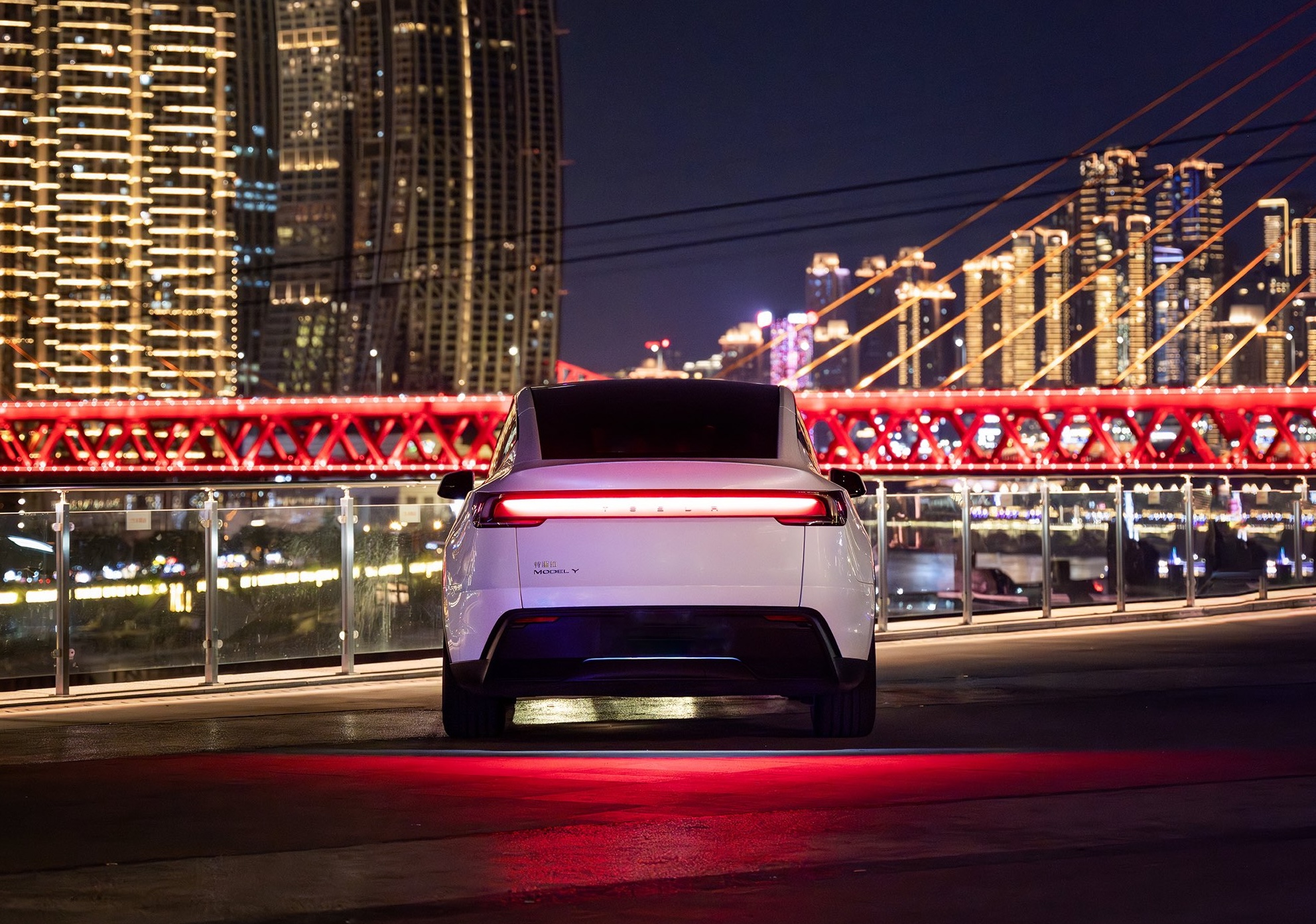
Tesla China was able to sell 71,599 vehicles wholesale in June 2025, reversing eight consecutive months of year-over-year declines. The figure marks a 0.83% increase from the 71,599 vehicles sold wholesale in June 2024 and a 16.1% jump compared to the 61,662 vehicles sold wholesale in May.
Tesla China’s June numbers were released by the China Passenger Car Association (CPCA) on Tuesday.
Tesla China’s June results in focus
Tesla produces both the Model 3 and Model Y at its Shanghai Gigafactory, which serves as the company’s primary vehicle export hub. Earlier this year, Tesla initiated a changeover for its best-selling vehicle, the Model Y, resulting in a drop in vehicle sales during the first and second quarters.
Tesla’s second-quarter China sales totaled 191,720 units including exports. While these numbers represent a 6.8% year-over-year decline for Tesla China, Q2 did show sequential improvement, rising about 11% from Q1 2025, as noted in a CNEV Post report.
For the first half of the year, Tesla sold 364,474 vehicles wholesale. This represents a 14.6% drop compared to the 426,623 units sold wholesale in the first half of 2024.
China’s competitive local EV market
Tesla’s position in China is notable, especially as the new Model Y is gaining ground in the country’s BEV segment. That being said, Tesla is also facing competition from impressive local brands such as Xiaomi, whose new YU7 electric SUV is larger and more affordable than the Model Y.
The momentum of the YU7 is impressive, as the vehicle was able to secure 200,000 firm orders within three minutes and over 240,000 locked-in orders within 18 hours. Xiaomi’s previous model, the SU7 electric sedan, which is aimed at the Tesla Model 3, also remains popular, with June deliveries surpassing 25,000 units for the ninth straight month.
While China’s EV market is getting more competitive, Tesla’s new Model Y is also ramping its production and deliveries. Needless to say, Tesla China’s results for the remaining two quarters of 2025 will be very interesting.
Elon Musk
Tesla reveals it is using AI to make factories more sustainable: here’s how
Tesla is using AI in its Gigafactory Nevada factory to improve HVAC efficiency.

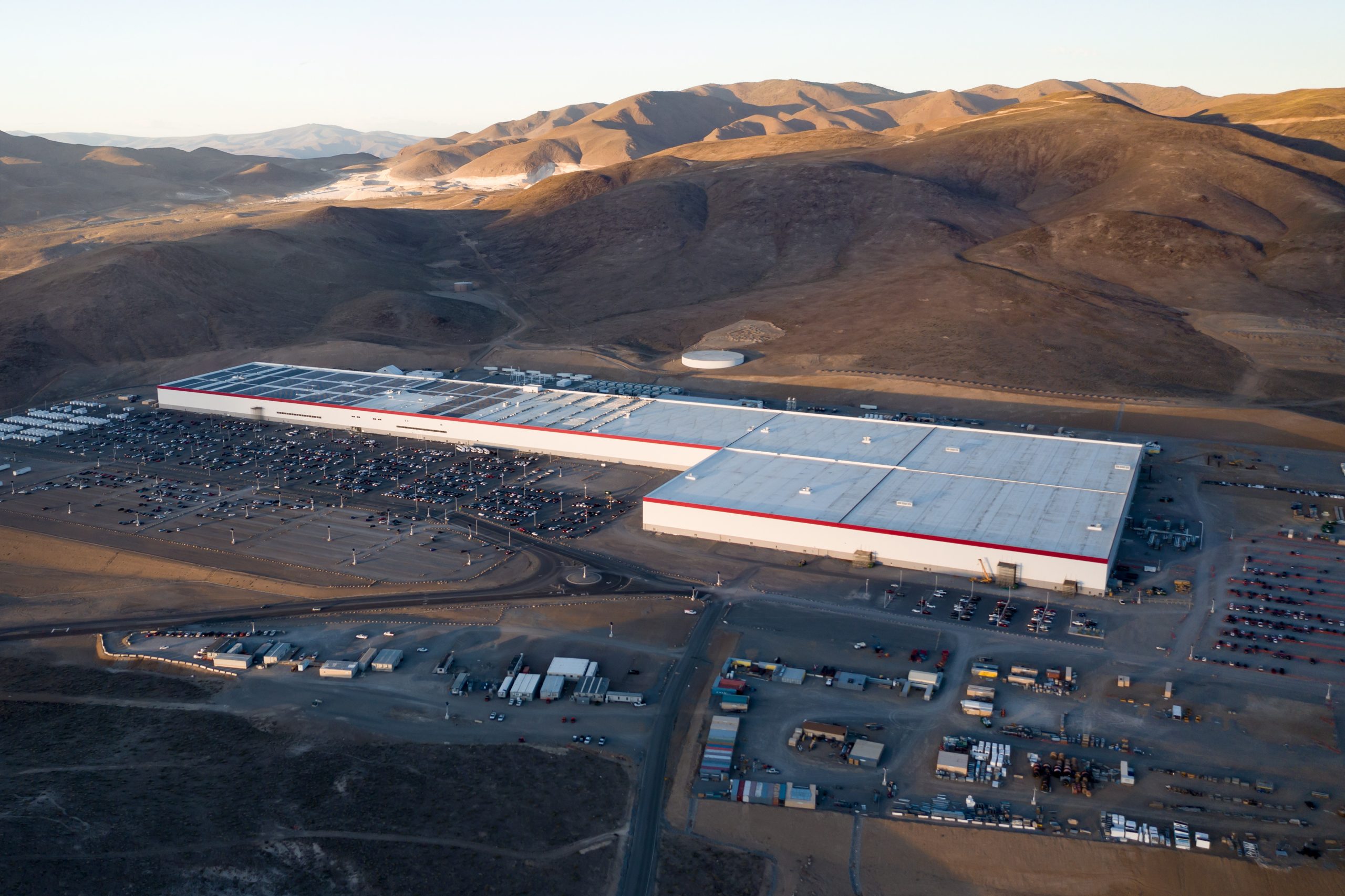
Tesla has revealed in its Extended Impact Report for 2024 that it is using Artificial Intelligence (AI) to enable its factories to be more sustainable. One example it used was its achievement of managing “the majority of the HVAC infrastructure at Gigafactory Nevada is now AI-controlled” last year.
In a commitment to becoming more efficient and making its production as eco-friendly as possible, Tesla has been working for years to find solutions to reduce energy consumption in its factories.
For example, in 2023, Tesla implemented optimization controls in the plastics and paint shops located at Gigafactory Texas, which increased the efficiency of natural gas consumption. Tesla plans to phase out natural gas use across its factories eventually, but for now, it prioritizes work to reduce emissions from that energy source specifically.
It also uses Hygrometric Control Logic for Air Handling Units at Giafactory Berlin, resulting in 17,000 MWh in energy savings each year. At Gigafactory Nevada, Tesla saves 9.5 GWh of energy through the use of N-Methylpyrrolidone refineries when extracting critical raw material.
Perhaps the most interesting way Tesla is conserving energy is through the use of AI at Gigafactory Nevada, as it describes its use of AI to reduce energy demand:
“In 2023, AI Control for HVAC was expanded from Nevada and Texas to now include our Berlin-Brandenburg and Fremont factories. AI Control policy enables HVAC systems within each factory to work together to process sensor data, model factory dynamics, and apply control actions that safely minimize the energy required to support production. In 2024, this system achieved two milestones: the majority of HVAC infrastructure at Gigafactory Nevada is now AI-controlled, reducing fan and thermal energy demand; and the AI algorithm was extended to manage entire chiller plants, creating a closed-loop control system that optimizes both chilled water consumption and the energy required for its generation, all while maintaining factory conditions.”
Tesla utilizes AI Control “primarily on systems that heat or cool critical factory production spaces and equipment.” AI Control communicates with the preexisting standard control logic of each system, and any issues can be resolved by quickly reverting back to standard control. There were none in 2024.
Tesla says that it is utilizing AI to drive impact at its factories, and it has proven to be a valuable tool in reducing energy consumption at one of its facilities.
Elon Musk
Tesla analysts believe Musk and Trump feud will pass
Tesla CEO Elon Musk and U.S. President Donald Trump’s feud shall pass, several bulls say.
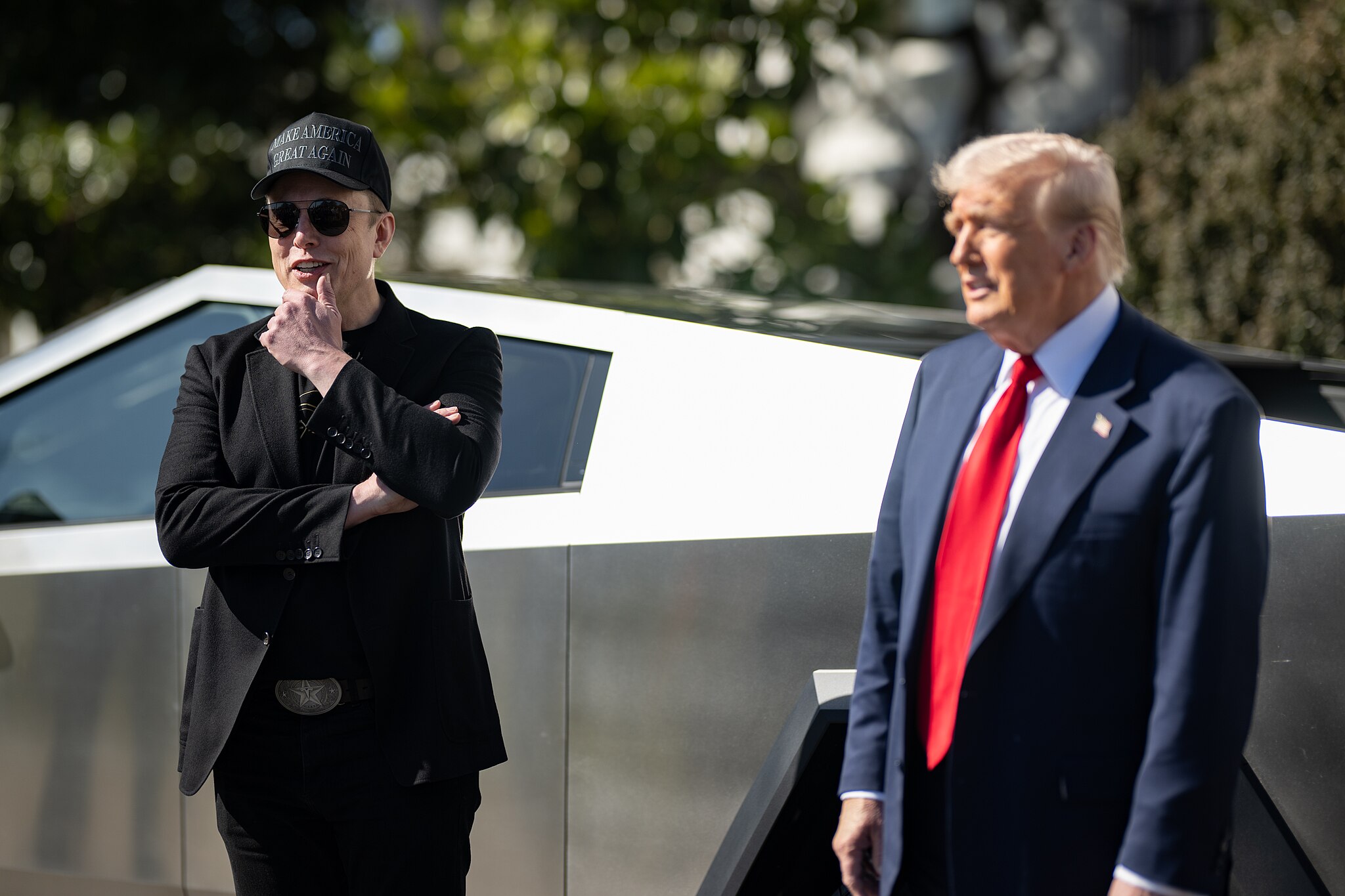
Tesla analysts are breaking down the current feud between CEO Elon Musk and U.S. President Donald Trump, as the two continue to disagree on the “Big Beautiful Bill” and its impact on the country’s national debt.
Musk, who headed the Department of Government Efficiency (DOGE) under the Trump Administration, left his post in May. Soon thereafter, he and President Trump entered a very public and verbal disagreement, where things turned sour. They reconciled to an extent, and things seemed to be in the past.
However, the second disagreement between the two started on Monday, as Musk continued to push back on the “Big Beautiful Bill” that the Trump administration is attempting to sign into law. It would, by Musk’s estimation, increase spending and reverse the work DOGE did to trim the deficit.
Every member of Congress who campaigned on reducing government spending and then immediately voted for the biggest debt increase in history should hang their head in shame!
And they will lose their primary next year if it is the last thing I do on this Earth.
— Elon Musk (@elonmusk) June 30, 2025
President Trump has hinted that DOGE could be “the monster” that “eats Elon,” threatening to end the subsidies that SpaceX and Tesla receive. Musk has not been opposed to ending government subsidies for companies, including his own, as long as they are all abolished.
How Tesla could benefit from the ‘Big Beautiful Bill’ that axes EV subsidies
Despite this contentious back-and-forth between the two, analysts are sharing their opinions now, and a few of the more bullish Tesla observers are convinced that this feud will pass, Trump and Musk will resolve their differences as they have before, and things will return to normal.
ARK Invest’s Cathie Wood said this morning that the feud between Musk and Trump is another example of “this too shall pass:”
BREAKING: CATHIE WOOD SAYS — ELON AND TRUMP FEUD “WILL PASS” 👀 $TSLA
She remains bullish ! pic.twitter.com/w5rW2gfCkx
— TheSonOfWalkley (@TheSonOfWalkley) July 1, 2025
Additionally, Wedbush’s Dan Ives, in a note to investors this morning, said that the situation “will settle:”
“We believe this situation will settle and at the end of the day Musk needs Trump and Trump needs Musk given the AI Arms Race going on between the US and China. The jabs between Musk and Trump will continue as the Budget rolls through Congress but Tesla investors want Musk to focus on driving Tesla and stop this political angle…which has turned into a life of its own in a roller coaster ride since the November elections.”
Tesla shares are down about 5 percent at 3:10 p.m. on the East Coast.

Tesla China breaks 8-month slump by selling 71,599 vehicles wholesale in June

Tesla reveals it is using AI to make factories more sustainable: here’s how

Tesla analysts believe Musk and Trump feud will pass


-
 Elon Musk2 days ago
Tesla investors will be shocked by Jim Cramer’s latest assessment
-
 News7 days ago
Tesla Robotaxi’s biggest challenge seems to be this one thing
-

 News2 weeks ago
Tesla’s Grok integration will be more realistic with this cool feature
-
 Elon Musk2 weeks ago
Elon Musk slams Bloomberg’s shocking xAI cash burn claims
-
 News2 weeks ago
Tesla China roars back with highest vehicle registrations this Q2 so far
-
 News2 weeks ago
Texas lawmakers urge Tesla to delay Austin robotaxi launch to September
-
 News2 weeks ago
Tesla dominates Cars.com’s Made in America Index with clean sweep
-
 Elon Musk1 week ago
First Look at Tesla’s Robotaxi App: features, design, and more