
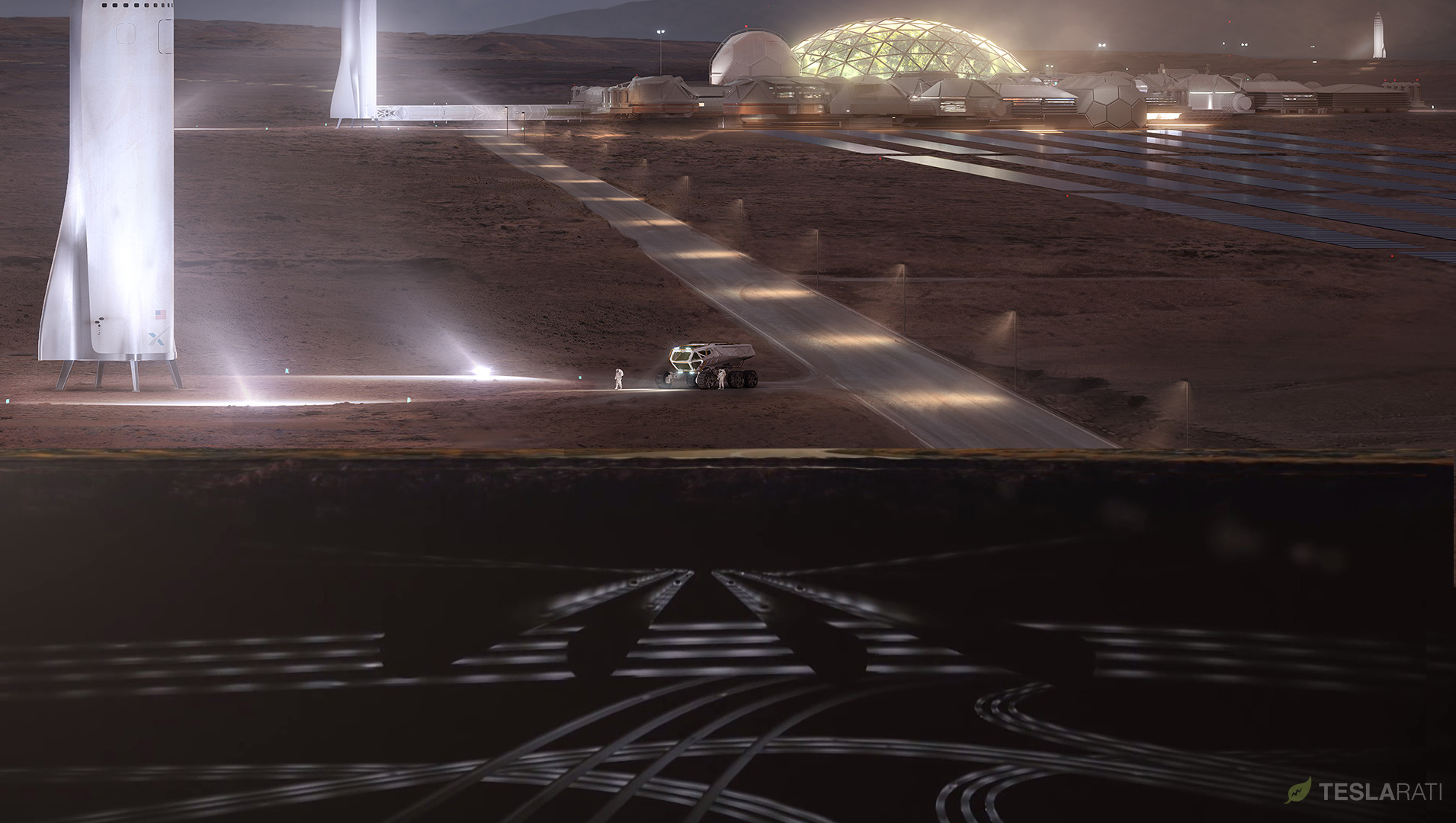
SpaceX
SpaceX’s first private Mars conference is focusing on the ‘how’ of living on the red planet

Earlier this week, SpaceX kicked off an under-the-radar conference focused on the technological and strategic requirements for building and sustaining a permanent human presence on Mars.
Likely the first of many more to come over the next few years, guests of SpaceX’s 2018 Mars Workshop include several dozen attendees (50-100) and a few dozen government agencies, academic institutions, and companies.
At the inaugural @SpaceX Mars Workshop, planning how to put humans on Mars, then how to have 100s living there. So exciting! pic.twitter.com/25jXutKzhX
— Dr. Phil Metzger (@DrPhiltill) August 7, 2018
Likely for a number of political and practical reasons, SpaceX’s first Mars Workshop has been kept very quiet, likely including NDAs for attendees, media embargoes, and more. In this case, the extremely preliminary nature of the discussions and the attendance of a wide array of NASA representatives made excessive publicity somewhat undesirable. NASA’s Space Launch System (SLS) rocket and #JourneyToMars media program – themselves motivated primarily by political forces and NASA’s own ‘contractors’ (Boeing, Lockheed Martin, Aerojet-Rocketdyne, etc.) – could quite reasonably feel threatened by the highly-publicized attendance of NASA officials at a SpaceX Mars Workshop.
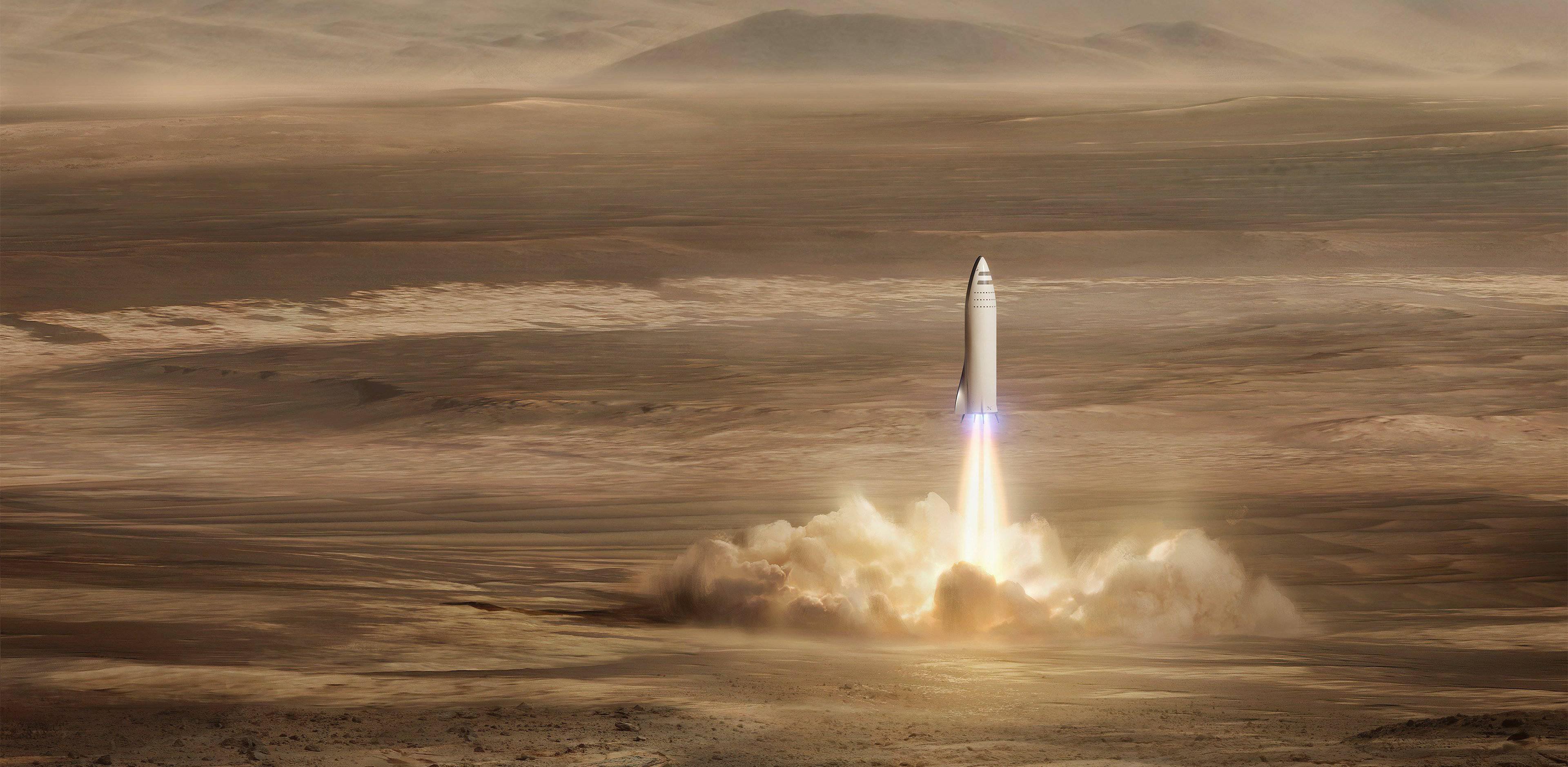
What to bring to Mars
Whether SpaceX’s first BFR launches to Mars happen in 2022 or 2030, it will remain true that every single kilogram of cargo included on those foundational missions will need to be laser-focused on autonomously creating and sustaining significant infrastructure on another planet. As it turns out, Earthbound humans are currently quite good at doing the Earthly equivalent, albeit with much less automation than SpaceX will need to replicate it on Mars.
Regardless of the rationale behind the secrecy, it means that non-attendees currently know next to nothing about the event. The most valuable information provided thus far happens to be a list of the groups involved in the workshop. By no means a coincidence, at least four of the groups in attendance are primarily focused on or at least have secondary expertise in mining, drilling, resource extraction, or industrial machinery: Colorado School of Mines, Tesla, Bechtel Corporation (engineering & construction), Caterpillar Inc (heavy machinery design and production), and Schlumberger (oilfield services).
More tangentially, Japan’s space agency (JAXA) is in attendance and is known to have a working with Japanese heavy machinery manufacturer Kajima, kindled for the purpose of designing and building industrial equipment specifically optimized for use beyond Earth.
-
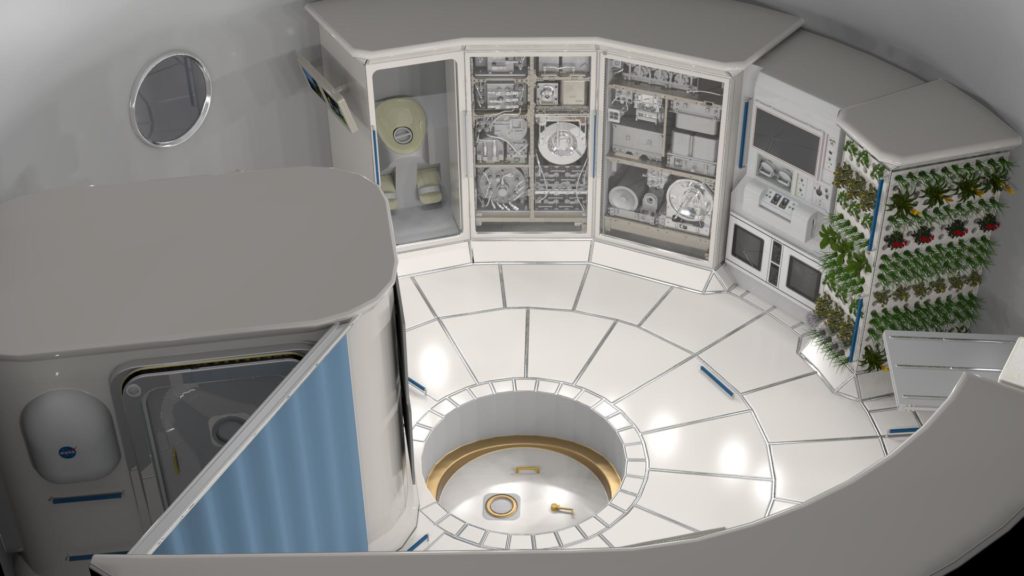
- A NASA deep space habitat concept, potentially representative of something that might also work well on Mars. (NASA)
-
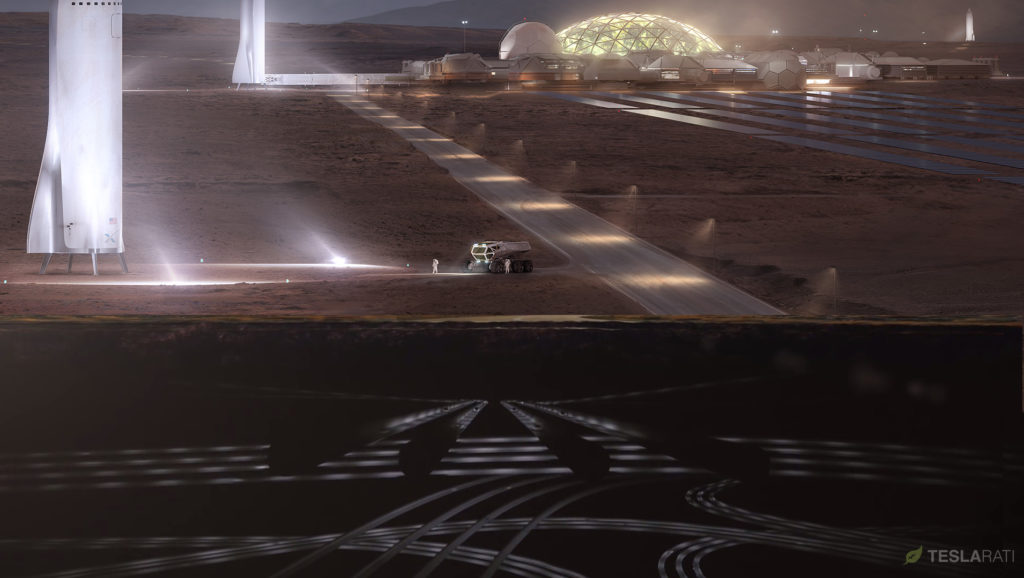
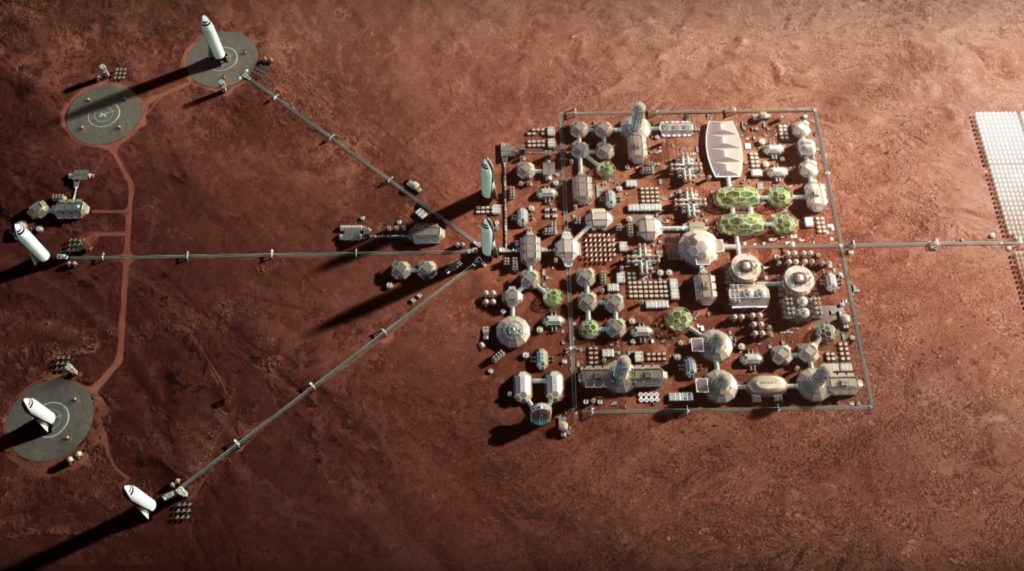
- SpaceX executives believe The Boring Company will one day help humans live on Mars. (Teslarati/SpaceX)
Schlumberger may initially feel like an unsavory addition, but it is simply undeniable that oil and gas extraction companies are the global experts of finding, characterizing, and extracting underground resources in a liquid or gas state. Schlumberger also happens to specialize in groundwater extraction, an absolute necessity for prospecting and extracting meaningful quantities of water from liquid (if they exist on Mars) or ice aquifers (definitely present).
With its first Mars Workshop, SpaceX is clearly setting itself up to be a massive force in the currently obscure fields of interplanetary colonization, habitation, and in-situ resource extraction (ISRU). If SpaceX chooses to double down on these regular conferences with some form of grant awards for exceptional research, the company could rapidly become the primary leader (and beneficiary) of cutting-edge research that will be absolutely necessary for building colonies on Mars and throughout the solar system.
For prompt updates, on-the-ground perspectives, and unique glimpses of SpaceX’s rocket recovery fleet (including fairing catcher Mr Steven) check out our brand new LaunchPad and LandingZone newsletters!









News
SpaceX launches Ax-4 mission to the ISS with international crew
The SpaceX Falcon 9 launched Axiom’s Ax-4 mission to ISS. Ax-4 crew will conduct 60+ science experiments during a 14-day stay on the ISS.

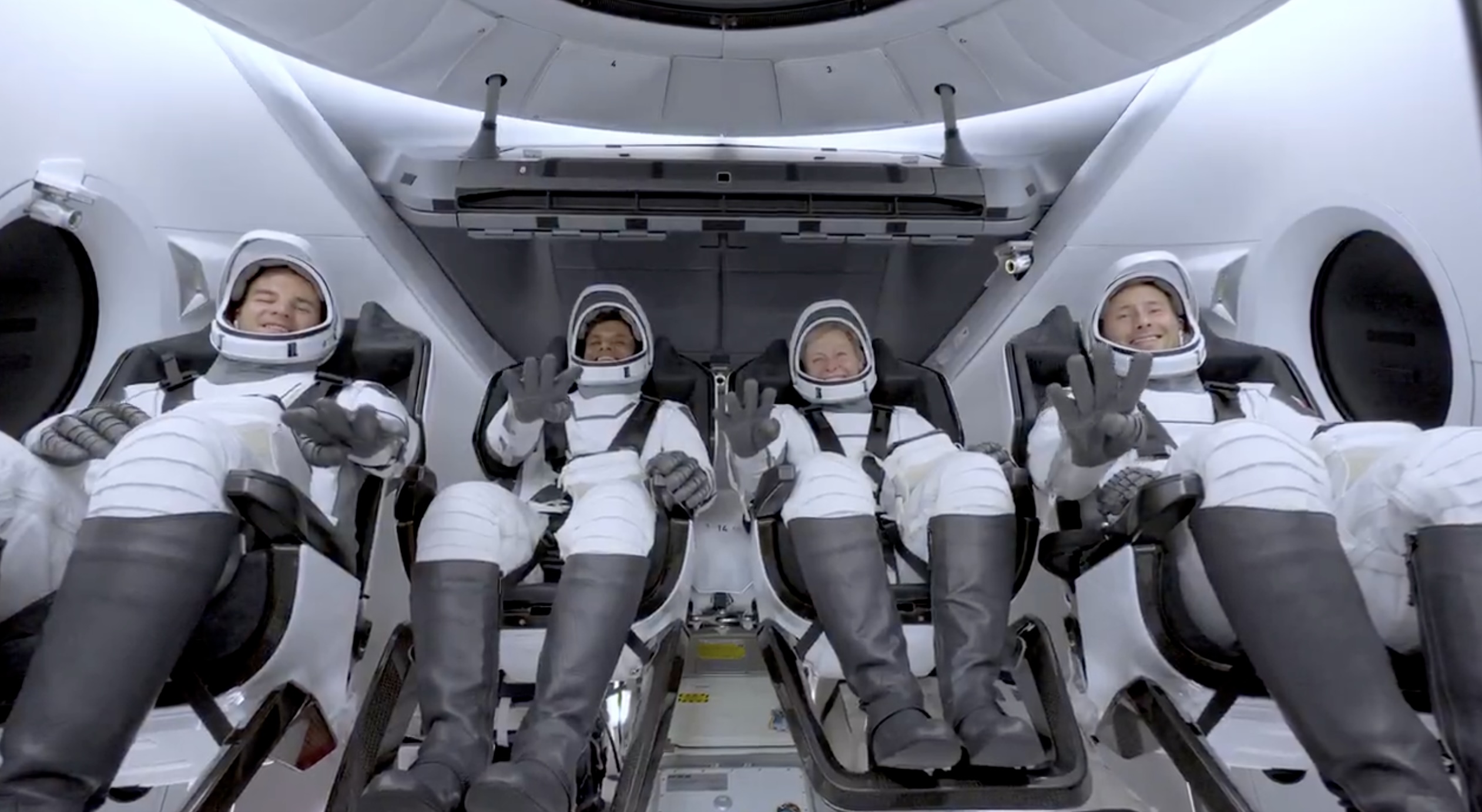
SpaceX launched the Falcon 9 rocket kickstarting Axiom Space’s Ax-4 mission to the International Space Station (ISS). Axiom’s Ax-4 mission is led by a historic international crew and lifted off from Kennedy Space Center’s Launch Complex 39A at 2:31 a.m. ET on June 25, 2025.
The Ax-4 crew is set to dock with the ISS around 7 a.m. ET on Thursday, June 26, 2025. Axiom Space, a Houston-based commercial space company, coordinated the mission with SpaceX for transportation and NASA for ISS access, with support from the European Space Agency and the astronauts’ governments.
The Ax-4 mission marks a milestone in global space collaboration. The Ax-4 crew, commanded by U.S. astronaut Peggy Whitson, includes Shubhanshu Shukla from India as the pilot, alongside mission specialists Sławosz Uznański-Wiśniewski from Poland and Tibor Kapu from Hungary.
“The trip marks the return to human spaceflight for those countries — their first government-sponsored flights in more than 40 years,” Axiom noted.
Shukla’s participation aligns with India’s Gaganyaan program planned for 2027. He is the first Indian astronaut to visit the ISS since Rakesh Sharma in 1984.
Axiom’s Ax-4 mission marks SpaceX’s 18th human spaceflight. The mission employs a Crew Dragon capsule atop a Falcon 9 rocket, designed with a launch escape system and “two-fault tolerant” for enhanced safety. The Axiom mission faced a few delays due to weather, a Falcon 9 leak, and an ISS Zvezda module leak investigation by NASA and Roscosmos before the recent successful launch.
As the crew prepares to execute its scientific objectives, SpaceX’s Ax-4 mission paves the way for a new era of inclusive space research, inspiring future generations and solidifying collaborative ties in the cosmos. During the Ax-4 crew’s 14-day stay in the ISS, the astronauts will conduct nearly 60 experiments.
“We’ll be conducting research that spans biology, material, and physical sciences as well as technology demonstrations,” said Whitson. “We’ll also be engaging with students around the world, sharing our experience and inspiring the next generation of explorers.”
SpaceX’s Ax-4 mission highlights Axiom’s role in advancing commercial spaceflight and fostering international partnerships. The mission strengthens global space exploration efforts by enabling historic spaceflight returns for India, Poland, and Hungary.
News
Starlink Cellular’s T-Mobile service to grow with third-party app data
From Oct 2025, T-Satellite will enable third-party apps in dead zones! WhatsApp, X, AccuWeather + more coming soon.
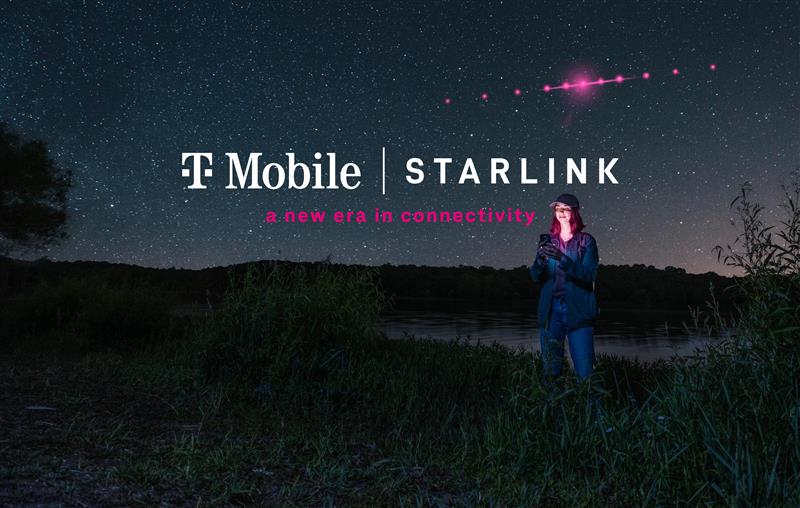
Starlink Cellular’s T-Mobile service will expand with third-party app data support starting in October, enhancing connectivity in cellular dead zones.
T-Mobile’s T-Satellite, supported by Starlink, launches officially on July 23. Following its launch, T-Mobile’s Starlink Cellular service will enable data access for third-party apps like WhatsApp, X, Google, Apple, AccuWeather, and AllTrails on October 1, 2025.
T-Mobile’s Starlink Cellular is currently in free beta. T-Satellite will add MMS support for Android phones on July 23, with iPhone support to follow. MMS support allows users to send images and audio clips alongside texts. By October, T-Mobile will extend emergency texting to all mobile users with compatible phones, beyond just T-Mobile customers, building on its existing 911 texting capability. The carrier also provides developer tools to help app makers integrate their software with T-Satellite’s data service, with plans to grow the supported app list.
T-Mobile announced these updates during an event celebrating an Ookla award naming it the best U.S. phone network, a remarkable turnaround from its last-place ranking a decade ago.
“We not only dream about going from worst to best, we actually do it. We’re a good two years ahead of Verizon and AT&T, and I believe that lead is going to grow,” said T-Mobile’s Chief Operating Officer Srini Gopalan.
T-Mobile unveiled two promotions for its Starlink Cellular services to attract new subscribers. A free DoorDash DashPass membership, valued at $10/month, will be included with popular plans like Experience Beyond and Experience More, offering reduced delivery and service fees. Meanwhile, the Easy Upgrade promotion targets Verizon customers by paying off their phone balances and providing flagship devices like the iPhone 16, Galaxy S25, or Pixel 9.
T-Mobile’s collaboration with SpaceX’s Starlink Cellular leverages orbiting satellites to deliver connectivity where traditional networks fail, particularly in remote areas. Supporting third-party apps underscores T-Mobile’s commitment to enhancing user experiences through innovative partnerships. As T-Satellite’s capabilities grow, including broader app integration and emergency access, T-Mobile is poised to strengthen its lead in the U.S. wireless market.
By combining Starlink’s satellite technology with strategic promotions, T-Mobile is redefining mobile connectivity. The upcoming third-party app data support and official T-Satellite launch mark a significant step toward seamless communication, positioning T-Mobile as a trailblazer in next-generation wireless services.
News
Starlink expansion into Vietnam targets the healthcare sector
Starlink aims to deliver reliable internet to Vietnam’s remote clinics, enabling telehealth and data sharing.

SpaceX’s Starlink expansion into Vietnam targets its healthcare sector. Through Starlink, SpaceX seeks to drive digital transformation in Vietnam.
On June 18, a SpaceX delegation met with Vietnam’s Ministry of Health (MoH) in Hanoi. SpaceX’s delegation was led by Andrew Matlock, Director of Enterprise Sales, and the discussions focused on enhancing connectivity for hospitals and clinics in Vietnam’s remote areas.
Deputy Minister of Health (MoH) Tran Van Thuan emphasized collaboration between SpaceX and Vietnam. Tran stated: “SpaceX should cooperate with the MoH to ensure all hospitals and clinics in remote areas are connected to the StarLink satellite system and share information, plans, and the issues discussed by members of the MoH. The ministry is also ready to provide information and send staff to work with the corporation.”
The MoH assigned its Department of Science, Technology, and Training to work with SpaceX. Starlink Vietnam will also receive support from Vietnam’s Department of International Cooperation. Starlink Vietnam’s agenda includes improving internet connectivity for remote healthcare facilities, developing digital infrastructure for health examinations and remote consultations, and enhancing operational systems.
Vietnam’s health sector is prioritizing IT and digital transformation, focusing on electronic health records, data centers, and remote medical services. However, challenges persist in deploying IT solutions in remote regions, prompting Vietnam to seek partnerships like SpaceX’s.
SpaceX’s Starlink has a proven track record in healthcare. In Rwanda, its services supported 40 health centers, earning praise for improving operations. Similarly, Starlink enabled remote consultations at the UAE’s Emirati field hospital in Gaza, streamlining communication for complex medical cases. These successes highlight Starlink’s potential to transform Vietnam’s healthcare landscape.
On May 20, SpaceX met with Vietnam’s Ministry of Industry and Trade, announcing a $1.5 billion investment to provide broadband internet, particularly in remote, border, and island areas. The first phase includes building 10-15 ground stations across the country. This infrastructure will support Starlink’s healthcare initiatives by ensuring reliable connectivity.
Starlink’s expansion in Vietnam aligns with the country’s push for digital transformation, as outlined by the MoH. By leveraging its satellite internet expertise, SpaceX aims to bridge connectivity gaps, enabling advanced healthcare services in underserved regions. This collaboration could redefine Vietnam’s healthcare infrastructure, positioning Starlink as a key player in the nation’s digital future.

Tesla UK sales see 14% year-over-year rebound in June: SMMT data

Tesla Model 3 ranks as the safest new car in Europe for 2025, per Euro NCAP tests

Why Tesla’s Q3 could be one of its biggest quarters in history


-
 Elon Musk5 days ago
Tesla investors will be shocked by Jim Cramer’s latest assessment
-

 News1 week ago
Tesla Robotaxi’s biggest challenge seems to be this one thing
-
 Elon Musk2 weeks ago
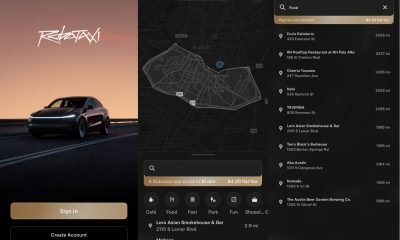
First Look at Tesla’s Robotaxi App: features, design, and more
-
 News2 weeks ago
SpaceX and Elon Musk share insights on Starship Ship 36’s RUD
-

 News2 weeks ago
Watch Tesla’s first driverless public Robotaxi rides in Texas
-
 News1 week ago
Watch the first true Tesla Robotaxi intervention by safety monitor
-

 News2 weeks ago
Tesla has started rolling out initial round of Robotaxi invites
-

 Elon Musk2 weeks ago
Tesla to launch in India in July with vehicles already arriving: report