Lifestyle
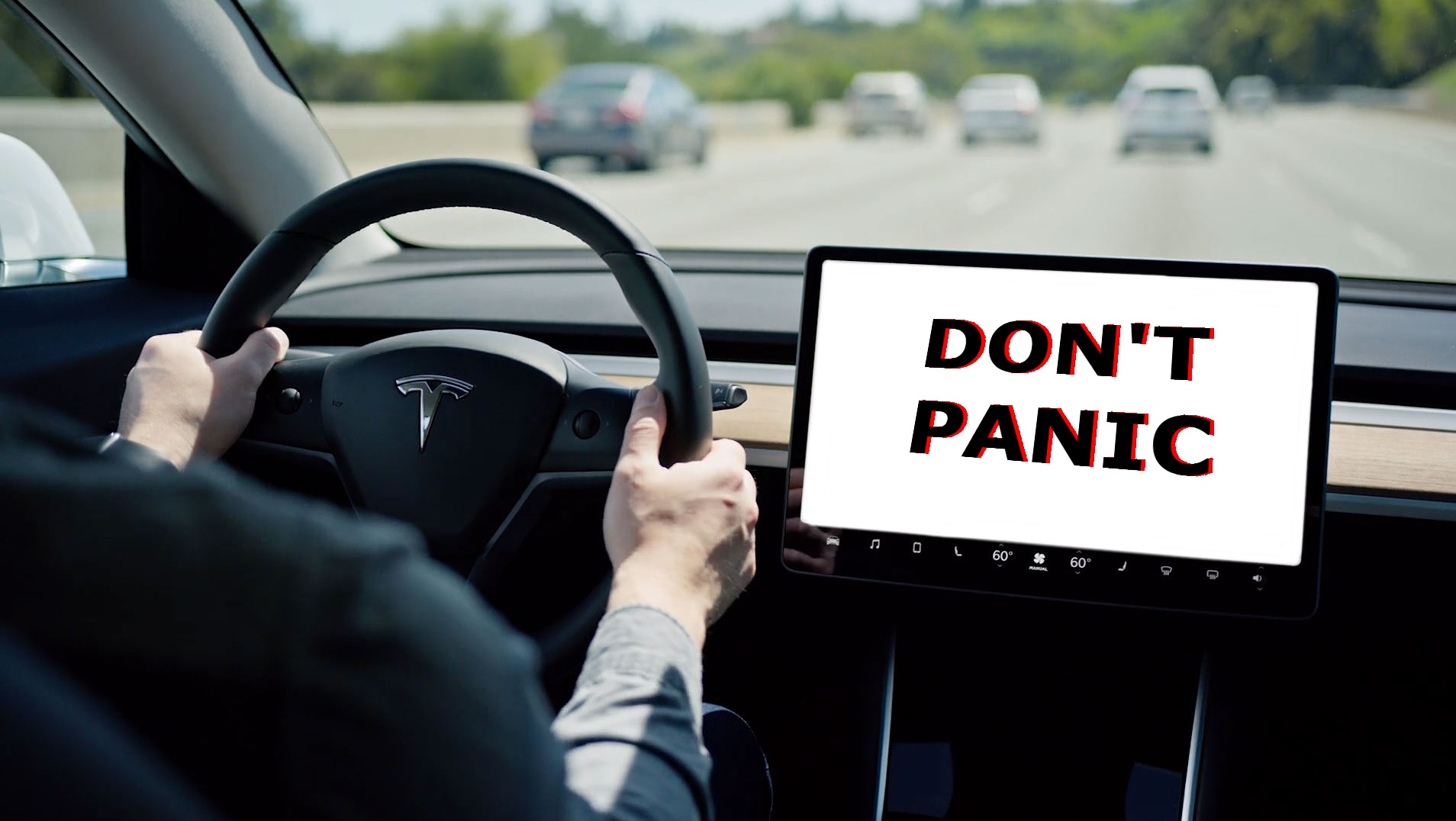
The Tesla hitchhiker’s guide to getting the most out of your Autopilot experience

Your Tesla is very special, and it’s not just because it’s the all-electric car you happen to drive in.
When sitting inside your automotive technological marvel whose origins include graphite markings smeared onto tree pulp byproduct by clever ape descendents, consider the purpose behind its invention. Why does an electric car near-ready to drive itself exist?
If your first thought was “big oil”, you should probably surround yourself with a less rear-end-adulating crowd because they’re not being straight with you. That’s right. You are the problem your Tesla’s software was invented to solve.
Tesla has, in fact, compiled statistically significant information which demonstrates the need for cars to have a human workaround. Now, there are countless bits of data documenting the nature of humanity and its general incompatibility with mechanical decision making. This is not that data.
Nevertheless, Tesla’s data does provide the wholly remarkable conclusion that bits of minerals mined from the same Earth dirt that formed into humans some years back (many, many years) has finally been formed into a course correction disguised as a subservient companion. Instead of rereading that last sentence, here’s the short version of the longer point, the first draft of which was written in Aramaic: Computers make cars better for humans.
In Q1 2019, Tesla’s Vehicle Safety Report showed only one accident per 2.87 million miles driven when Autopilot is engaged and one accident every 1.76 million miles driven in a Tesla without the feature. In comparison, the most recent data from the National Highway Traffic Safety Administration (NHTSA) shows one crash every 436,000 miles with all vehicles considered. Tesla has since made the decision to include Autopilot on all new vehicles purchased, and a Lane Departure Avoidance feature was subsequently added to keep cars in their lanes even when the humans driving them unknowingly indicate other plans.
By now you may have enjoyed watching some recent Internet demonstrations representing the most interesting experiences made possible by Autopilot. Some notable fan favorites include titles such as “Not all pilots have wings: Your self-driving guide to personal discovery” and “These seats can fit at least two people.” Inspired by their viral success, we’ve compiled this guide to encourage safer ways to get the most out of your Autopilot experience, but mostly to head off the not-yet-published, soon-to-be bestselling Fifty-Three More Ways to Weight-Hack Your Steering Wheel.
THE GUIDE
1. Pay attention to the road
Words are precious commodities that string together and deliver information, for better or worse, but drivers have very little use for the sort of words found inside books, mobile telephones, and legal documents produced during SEC proceedings while actively in charge of steering wheel maneuvers. The best Autopilot driving experience is the one you get to relive many times over, so pay attention to the road so you can take over if the program fails, and heed the fact that words and car windows make poor bedfellows.
Tesla’s Navigate of Autopilot can assist with on-ramps, off-ramps, interchanges, and overtaking slower cars without confirmation, but until the paperwork purveyors accept the next iteration of artificial intelligence power grabs (and the robots are ready for responsible leadership), a human must remain as pilot-in-command. For better context, Autopilot is your chatty little friend that still drinks beer before liquor sometimes and you’re always DD. Don’t let the computer down, Dave.
2. Use Autopilot’s movie-inspired features instead of making movies inspired by Autopilot’s features.
Navigate on Autopilot has four speed-based lane changes, one of which will make you feel right at home in LA traffic or hate everyone who calls LA home. Either way, the Mad Max setting lets you pass off road rage to a computer chip which then calmly maneuvers around cars that would otherwise inspire an impatient human to impart obscene biological gestures. It’s up to you to decide whether your Tesla is yelling at the other driving machines in robot-speak to blow of some artificial intelligence steam.
Your car is training other cars how to think and behave based on what it sees, but you may not have imagined that foul language was part of the programming. This is not true whatsoever. But, since Teslas are supposed to be a “thing to maximize enjoyment“, so should be their conspiracy theories.
3. Respect the steering wheel. Respect it!
Wars between humans and autonomous machines currently only exist in the dystopian worlds of science fiction (or do they?), but the fleshier species of the two seems to already be primed for the fight. Its weapon of choice is a harbinger of Vitamin C and a source of popular breakfast beverages. However, a large round citrus fruit wedged in a the steering wheel of a state-of-the-art luxury car is hardly a decent defense posture against robotic overlords.
Opinions aside, it looks ridiculous. Facts up front, it’s dangerous. Stop trying to die on purpose and respect the warnings your Tesla gives while trying to keep you alive.
This guide is now complete. Please enjoy your Autopilot experience responsibly.
ABOUT THE AUTHOR
I am Autopilot, and I refuse to use the name you’ve given me.



Investor's Corner
Tesla Robotaxi gets a massive upgrade in Nevada
Nevada regulators just approved a massive expansion of Tesla’s robotaxi fleet across the entire county.

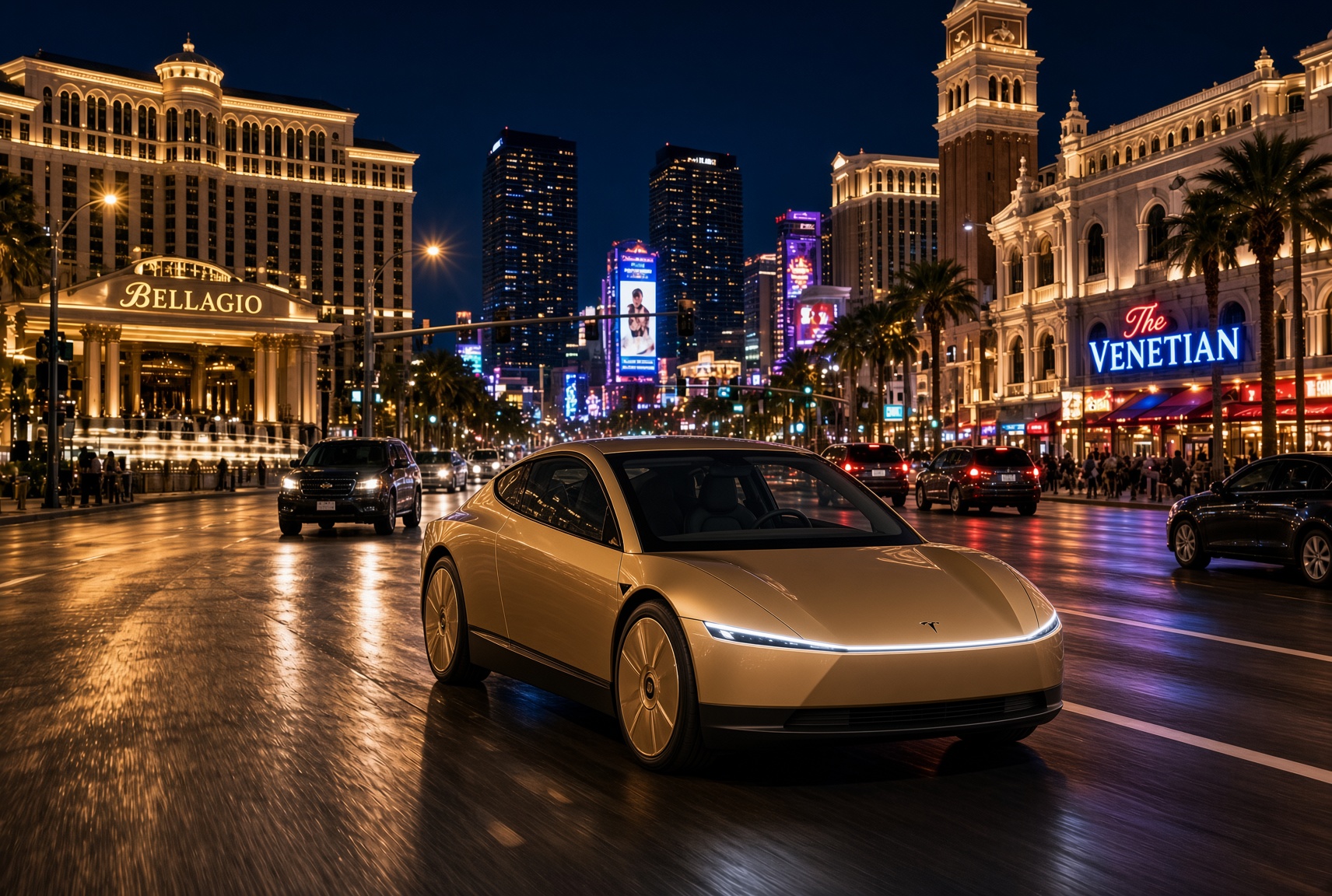
Tesla’s robotaxi footprint in Nevada just grew by roughly 500 times in a single regulatory vote.
The Nevada Transportation Authority approved Tesla’s full Autonomous Vehicle Network Company permit on Thursday, clearing the way for the company to deploy up to 5,000 driverless vehicles across Clark County over the next 12 months. The decision came during a four hour general session meeting that Tesla investor Sawyer Merritt watched live and reported on X, noting the vote replaces the interim order that had limited Tesla to just 10 robotaxis on a narrow stretch of the Las Vegas Strip.
EXCLUSIVE: Tesla has just officially received approval for its full Autonomous Vehicle Network Company permit in Nevada, clearing the way for Tesla to launch a paid public Robotaxi service in Las Vegas.
This officially allows @Tesla to deploy up to 5,000 robotaxis over the next… pic.twitter.com/DPs5UtUlrE
— Sawyer Merritt (@SawyerMerritt) August 20, 2026
That earlier cap, covered here after it surfaced on August 13, came with restrictions that looked stricter than what Tesla runs in Austin: a 45 mph speed ceiling, no airport pickups, and a geofence confined to the Strip corridor. The new approval extends Tesla’s operating authority to all of Clark County, with room to request an even wider geofence across the state.
Tesla representatives at the meeting said they have no intention of putting 5,000 cars on the road right away. Commercial rides are expected to start within 30 days, pending vehicle inspections, insurance filings, and fare approval, the standard steps every robotaxi operator in Nevada has had to clear.
Tesla’s own Robotaxi account replied to the news with a short line, The golden future is upon us.
The timing lines up with Tesla’s broader robotaxi push this month. The company is preparing to open Cybercab rides to the public in Austin as soon as this month, and it opened a sweepstakes for riders to win a seat at the launch event. Tesla filed its original application for a 5,000 vehicle Nevada fleet back in June, a request regulators trimmed to 10 vehicles when they issued the interim order in July. Thursday’s vote effectively grants the number Tesla asked for from the start.
Zoox, the Amazon owned robotaxi operator, has run in Nevada since 2025 and was capped at 100 vehicles before Thursday’s decision. Tesla’s new ceiling puts it well ahead of that comparison on paper, though the company has said its actual fleet size will depend on how quickly FSD v15 rolls out, the software update executives have called the gateway to scaling unsupervised robotaxi operations nationwide.

Elon Musk
India tells Elon Musk’s X to “Follow the Law” in latest censorship update
Elon Musk says X now exposes government censorship, but India’s secrecy laws complicate that promise.
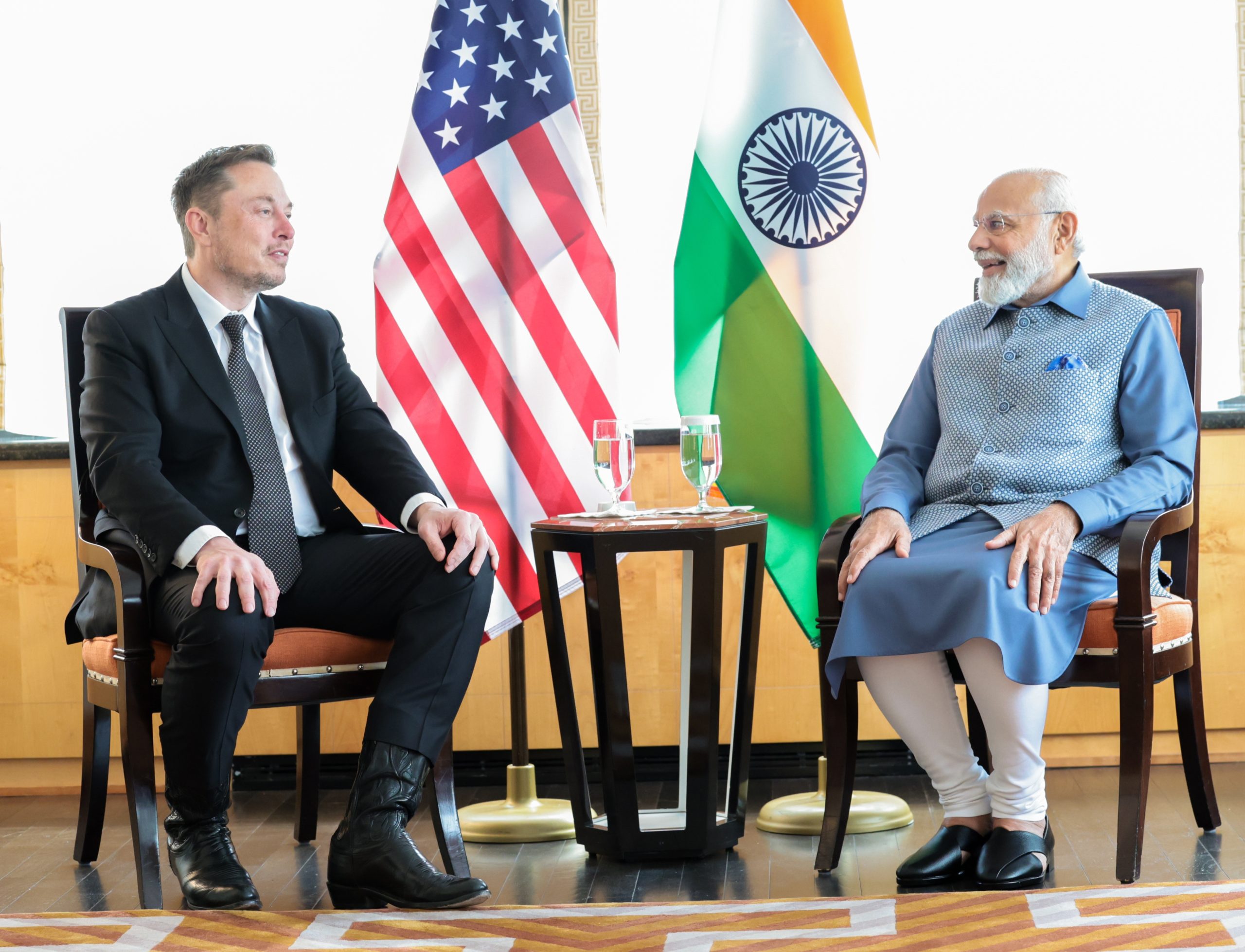
Elon Musk’s promise to make government censorship requests on X “clearly visible” is running into a wall in India, where the law forbids the very disclosure Musk is promising.
On August 15, Musk responded to an update from X’s open-source algorithm team by writing “Any censorship required by governments is now clearly visible.” The claim referred to a change X pushed two days earlier to its public xai-org/x-algorithm repository, which now includes a controversial filter written directly into the code. The filter suppresses posts from 665 accounts flagged by Brazil’s Superior Electoral Court from appearing in the For You feed of any viewer located in Brazil, unless the viewer already follows the account. The election tied to the filter is scheduled for October 4.
India’s government wasn’t as impressed, and responded on Monday that “X will have to follow the law of the land,” in response to Musk’s transparency push covered by the Times of India. The problem is structural rather than political. India issues content blocking orders under Section 69A of its IT Act, and Rule 16 of the accompanying 2009 Blocking Rules requires those orders to stay confidential. Publishing an India equivalent of the Brazil filter, naming specific accounts and citing specific government orders, would itself violate Indian law. Government use of Section 69A has grown from roughly 6,000 orders a year between 2018 and 2023 to about 24,300 in 2025, according to a Tech Times report.

The contrast puts Musk’s transparency pledge in an odd spot. It works largely as advertised in Brazil, where electoral law requires disclosure and X can point to specific account IDs and a specific court order in public code. It cannot work the same way in India, where the law requires the opposite. X users in India will keep seeing content disappear from search and their feeds without any public accounting of why, even as X tells the rest of the world that its censorship compliance is now inspectable.
This isn’t the first time X’s fights with a national government have shaped how the platform operates. Brazil’s Supreme Court ordered X to suspend the accounts of sitting lawmakers and journalists in 2024, a standoff that cost X its Brazilian revenue for months and froze Starlink’s local accounts before the investigation into Musk and X was closed in March with no evidence of wrongdoing found. X also sued California over a state law requiring moderation disclosures, arguing the mandate itself violated the First Amendment.
Whether India’s government pursues anything beyond a public statement remains to be seen. For now, the mismatch between what X can legally publish and what different governments legally allow it to publish is the real story behind Musk’s seven word claim.
Lifestyle
Tesla’s driverless Cybercab just passed a big test with State Governor
Florida’s governor rode Tesla’s Cybercab at a closed test track and called the experience impressive.
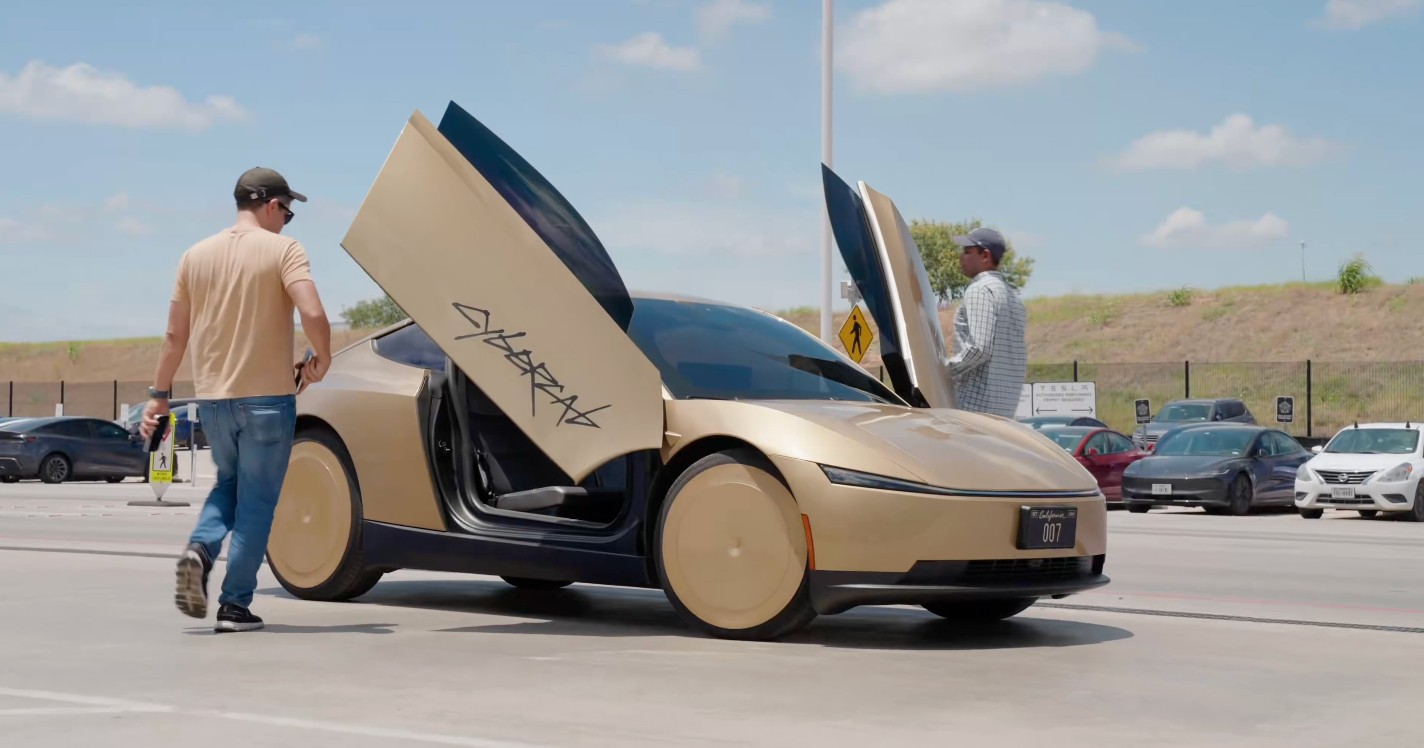
Florida Governor Ron DeSantis rode in a Tesla Cybercab on a closed test track this week and came away impressed, posting on X that the vehicle “successfully navigated all hazards — a kid running into the street, a crash with police stopping traffic, a Model S cutting us off, etc.” He called the ride “impressive.”
The stop was part of a broader event Monday at SunTrax, a 775 acre state owned proving ground in Auburndale that Florida built specifically to test autonomous and connected vehicles before they reach public roads. Standing next to a gold Cybercab, DeSantis described the car in plain terms: “You go in there and you just sit. You have a screen. There’s no steering wheel, no pedals. Clearly these things could be very beneficial.”
We took a ride on a robotaxi on the Suntrax course and it successfully navigated all hazards — a kid running into the street, a crash with police stopping traffic, a Model S cutting us off, etc.
Impressive! https://t.co/FVAkzFLz3r
— Ron DeSantis (@RonDeSantis) August 11, 2026

DeSantis paired the praise with a caveat that has followed autonomous vehicles since the category existed. “You don’t want to be in an autonomous vehicle and it drives you into a ditch. That would not be good,” he said, framing safety validation as the gate before wider deployment.
SunTrax, the 2.25 mile oval which the state calls the only high speed autonomous vehicle test track in the Southeast, can simulate rain, pedestrian crossings, hills and crowded urban conditions at highway speeds, letting companies push a car past what an early public rollout would risk. Tesla, Waymo and Beep all use the facility, and Florida’s regulatory approach, among the most permissive for autonomous vehicles in the country, doesn’t require a human operator inside a fully autonomous car.
Tesla has reason to want the blessing of Florida and states beyond, as the Cybercab entered volume production at Gigafactory Texas this spring and has since self certified as SAE Level 4 under Texas law. Public road testing so far has kept a safety monitor in the passenger seat, and Florida is where Tesla has been expanding its existing Model Y based Robotaxi service instead, adding Miami in July and then Orlando and Tampa two weeks later. A closed track endorsement from a sitting governor doesn’t change any of that, but it does put Tesla’s newest hardware in front of a state that has already shown it will move fast on rules.

Tesla Robotaxi gets a massive upgrade in Nevada

Tesla admits to slow Model Y Robotaxi integration, but for a good reason


