News
Tesla launches new round of layoffs in massive cost-cutting offensive

Tesla has launched a new round of layoffs as part of its massive cost-cutting offensive, trimming multiple facets of its business as it navigates between two major growth waves.
Several weeks ago, Tesla started laying off employees in an effort to save money as it navigates through questionable economic times in its business. While Tesla is stable, the automaker has admitted it is in the process of focusing on one thing: bringing its next-generation lineup of vehicles to market. CEO Elon Musk has said that sacrifices must be made in order to make this happen.
After thousands of employees were laid off in late April, more are evidently losing their jobs as more terminations occurred over the weekend.
Business Insider first reported the most recent round of layoffs.
Several employees have posted on LinkedIn that they received communications from Tesla since Friday that they are no longer a part of the company’s plans.
One employee who is a quality engineer said:
“Those familiar with recent layoff news know that Tesla is making some “hardcore” cuts, and well, it was my time. I had a sense that this was going to happen.”
It was not the only quality engineer who was laid off as Tesla is continuing to get rid of some of its team. Another employee who transferred from one Tesla facility to Buffalo, New York at Gigafactory 2 in March also lost their job.
Another employee who is a Service Advisor said they had been let go. More posts from other employees, even one in the Supercharger team, said they were also impacted by the layoffs:
“Last week, I was impacted by the layoff of the Tesla Supercharger organization. It was a privilege to work on the vehicle interface, envisioning and crafting the next generation of user experiences.”
Musk admitted in a post on X last week that the Supercharger team was being let go as it planned to slow down new projects.
Elon Musk explains reasoning behind Tesla Supercharger team disband
It appears that the layoffs may be more expansive than the 10 percent that Tesla listed in a filing with the SEC when the terminations began.
I’d love to hear from you! If you have any comments, concerns, or questions, please email me at joey@teslarati.com. You can also reach me on Twitter @KlenderJoey, or if you have news tips, you can email us at tips@teslarati.com.


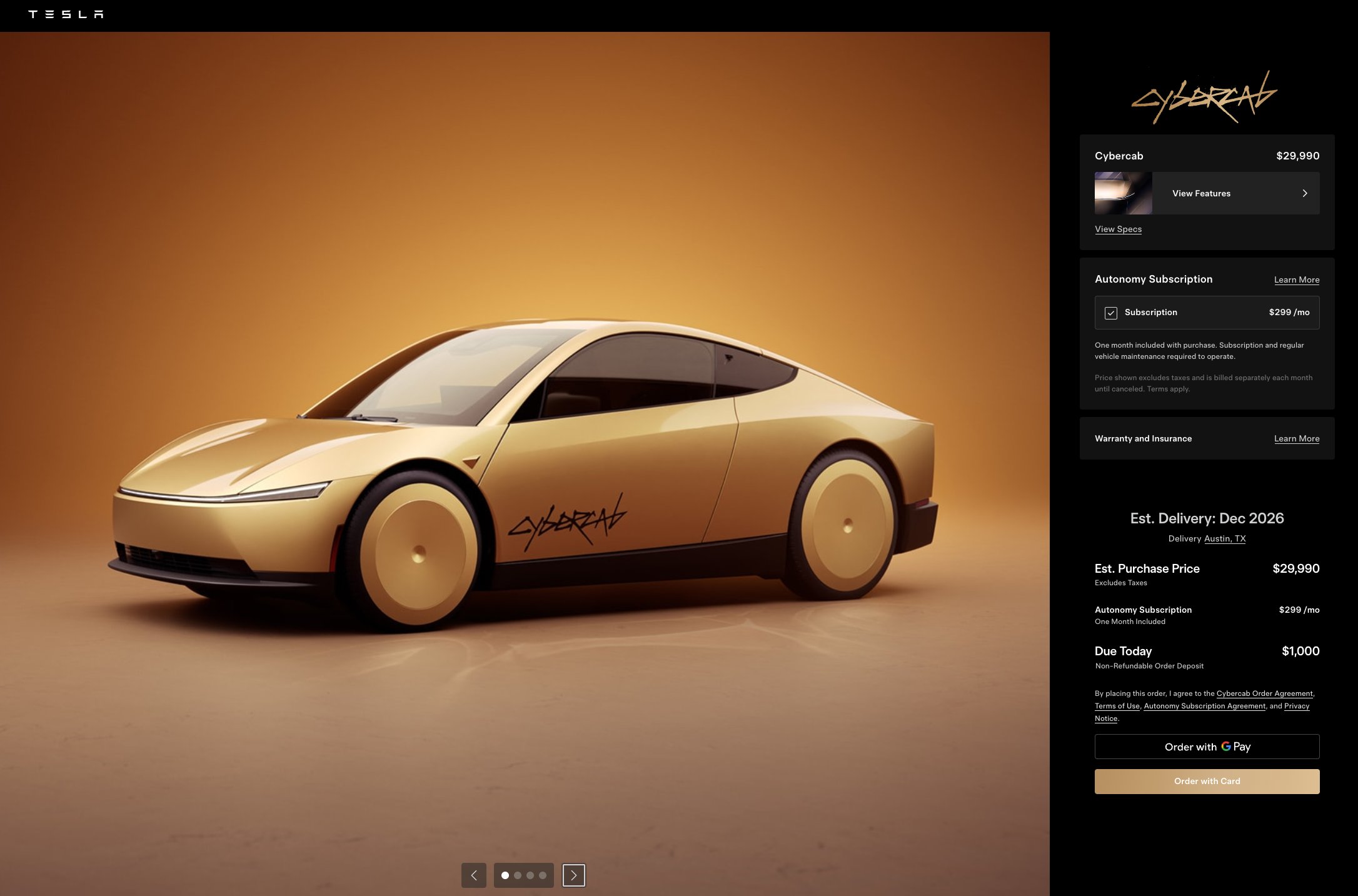
Tesla has officially put the Cybercab up for sale, revealing a bargain price and a $299 per month “Autonomy Subscription” that could hit customer hands as soon as December.
The offer requires a $299 monthly Autonomy Subscription, with the first month included in the purchase price, along with a $1,000 non-refundable order deposit. Tesla’s ordering interface shows deliveries targeted for Austin, Texas.
Tesla says that the Cybercab is making transportation more efficient, affordable and accessible than ever before, and that buyers can order their own Cybercab for personal use.
🚨🚨🚨 BREAKING: Tesla Cybercab is officially on sale for $29,990 with a $299/mo “Autonomy Subscription”
Delivery slotted for December! HUGE!
— TESLARATI (@Teslarati) November 13, 2026
The Cybercab is Tesla’s dedicated robotaxi, a gold-finished, two-passenger vehicle without a steering wheel or pedals, designed from the outset for unsupervised autonomous operation. It has been in limited Robotaxi service in Austin since September 2026, operating alongside Tesla’s larger fleet of Model Y vehicles.
Production takes place at Gigafactory Texas, which launched earlier this year. Tesla has stated for some time that it planned to put Cybercabs on sale by the end of the year, and it looks like they will come through on that promise if everything goes according to plan.
The Autonomy Subscription is mandatory for the vehicle to operate because it is void of a steering wheel and pedals. Tesla notes that the subscription and regular vehicle maintenance are required, indicating that personal owners will depend on the company’s software and service infrastructure rather than traditional ownership models.
One month of the subscription is included with purchase and subsequent months are billed separately until canceled.
This limited personal-sales opening marks a shift from Tesla’s earlier emphasis on fleet and transport-as-a-service operations. During the Q3 2026 Earnings Call, executives indicated that the vast majority of Cybercabs would remain Tesla-owned and used for rideshare service, while still aiming to place some vehicles with customers by year-end.
Elon Musk has previously targeted a price below $30,000, which was a huge point of emphasis for the Cybercab being the central point of Tesla’s “transportation-as-a-service” model.
Availability remains restricted to invited customers rather than a public order page, and the initial deliveries are expected only in the Austin area where unsupervised Robotaxi operations are already active. Buyers will need to accept the geographic and operational constraints of current autonomous deployment, as the vehicle cannot be driven manually outside supported zones.
The move gives a small number of early buyers the chance to own Tesla’s dedicated autonomous vehicle at the long-discussed sub-$30,000 price point, while the bulk of production continues to support the company’s expanding Robotaxi network.
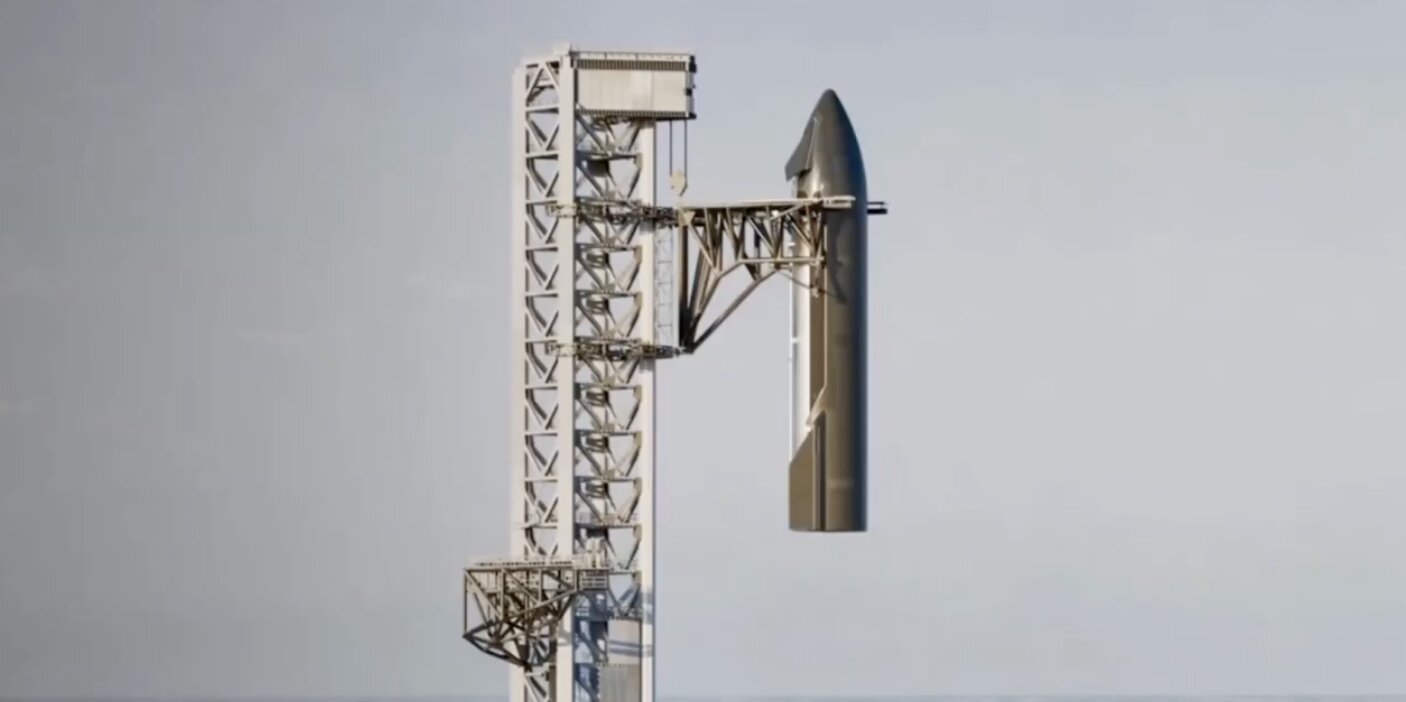
UPDATE: The FAA has granted the license for Starship Flight 15.
Starship Flight 15 License has been granted by the FAA!
Let’s go! https://t.co/DugsgjvYAe
— TESLARATI (@Teslarati) November 13, 2026
SpaceX is set to attempt its 15th test flight of Starship this evening from Starbase, Texas.
SpaceX is targeting Starship Flight 15 for a launch as soon as today, Friday, November 13, pending an FAA Flight License, during a 75-minute window that opens at 4:45 p.m. CT (5:45 p.m. ET) from Orbital Launch Pad 2 at Starbase, Texas. The flight remains pending final regulatory approval.
WATCH Starship Flight 15 here:
https://t.co/C6GnCHyF8p
— TESLARATI (@Teslarati) November 13, 2026
The mission, using Booster 22 and Ship 42, aims to achieve the first full recovery of an orbital launch system. Primary objectives include a tower catch of the Super Heavy booster roughly six and a half minutes after liftoff and the first-ever tower catch of a Starship upper stage after more than 22 hours in space.
SpaceX will perform Starship double catch attempt with Flight 15
Between those catches, Ship 42 is planned to enter a low Earth orbit of about 275 km, complete roughly 14 orbits, and deploy 26 next-generation Starlink V3 satellites (Starlink Group 31-2). Three of those satellites carry cameras to inspect the ship’s heat shield in orbit and help controllers decide whether the vehicle is healthy enough for a return to the tower.
Contingency ocean splashdown options exist if either stage is not cleared for catch.
To watch the attempt, check the link to the broadcast in both X posts in this article. The live webcast is scheduled to begin about 30 minutes before liftoff and is planned to continue through the ship catch the next day, with the possibility of extended onboard views during the orbital coast via Starlink.
Because the schedule is dynamic, check back here or on our social media channels for the latest updates on window timing and regulatory status. A successful dual catch would mark a major milestone toward making Starship a rapidly reusable rocket capable of frequent flights.
WATCH Starship Flight 15 here:
https://t.co/C6GnCHyF8p
— TESLARATI (@Teslarati) November 13, 2026
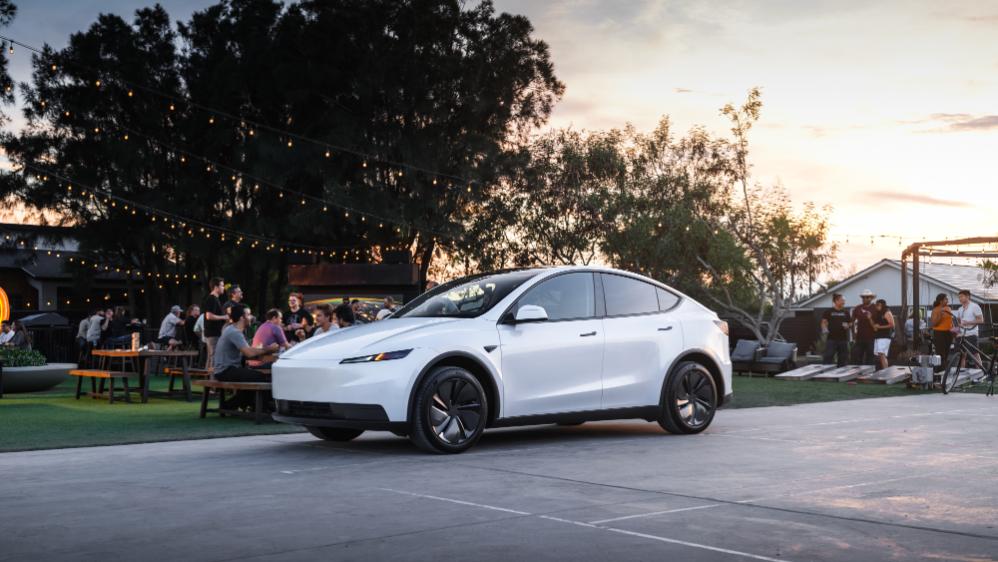
Tesla has trimmed its Model Y offerings as its Standard All-Wheel-Drive configuration has been removed from the online configurator after roughly nine months on sale. The move follows the removal of the Cybertruck, as its trims have also been minimized as that vehicle heads for total discontinuation at the end of Summer 2027.
Launched in February 2026 as a mid-tier dual-motor option between the Rear-Wheel-Drive model and the Premium trims, the Standard All-Wheel-Drive Model Y offered 294 miles of range and a 4.6-second 0-60 mph time in a stripped-down package.
🚨 Tesla has pulled the $41,990 Model Y AWD from its U.S. configurator after nine months on sale.
The cheapest AWD Model Y you can order is now the $49,990 Premium AWD, with Premium deliveries quoted for Jan–Mar 2027.
The $39,990 RWD stays, and AWD units remain in inventory. https://t.co/uROJp2lVpx
— TESLARATI (@Teslarati) November 13, 2026
With it gone, the cheapest new AWD Model Y buyers can configure is now the Premium AWD at $49,990, with estimated deliveries pushed into January–March 2027. The $39,990 rear-wheel-drive Model Y remains available for custom orders, and some AWD units are still listed in inventory.
The move arrives days after Tesla sharply narrowed its Cybertruck lineup. New orders for the Dual Motor AWD and Premium AWD versions have been disabled, leaving only the high-performance Cyberbeast—priced around $109,990 before fees—as the sole configurable option.
Elon Musk has stated that Cybertruck production at Gigafactory Texas will wind down around the middle to late summer of 2027 to free manufacturing space for greater Cybercab output. Tesla has raised prices on remaining trims and is prioritizing higher-margin builds while working through an existing order backlog that exceeds what the line can complete before conversion.
These parallel decisions reflect a broader effort to simplify Tesla’s retail customer lineup. Lower-volume or lower-margin variants are being phased out or deprioritized in favor of core, higher-spec models that generate stronger profitability and clearer production planning.
For the Model Y, this concentrates volume on the remaining RWD and Premium configurations while Premium deliveries already stretch into 2027. For the Cybertruck, it accelerates the transition away from a stainless-steel pickup that underperformed relative to initial volume expectations.
Tesla Model Y Standard Full Review: Is it worth the lower price?
The freed capacity and reduced complexity directly support Cybercab scaling. Tesla began pilot Cybercab production at Giga Texas in early 2026, launched paid autonomous rides in Austin in September, and is preparing for substantial volume growth.
By streamlining the existing vehicle portfolio, the company is reallocating factory space, engineering attention, and supply-chain resources toward its purpose-built Robotaxi, which lacks a steering wheel or pedals and is designed exclusively for unsupervised autonomy.
The result is a leaner retail lineup today and a clearer path to high-volume Cybercab deployment tomorrow.

Tesla Cybercab goes on sale for $29,990, slated for December deliveries

SpaceX Starship Flight 15: How to watch the double catch attempt


