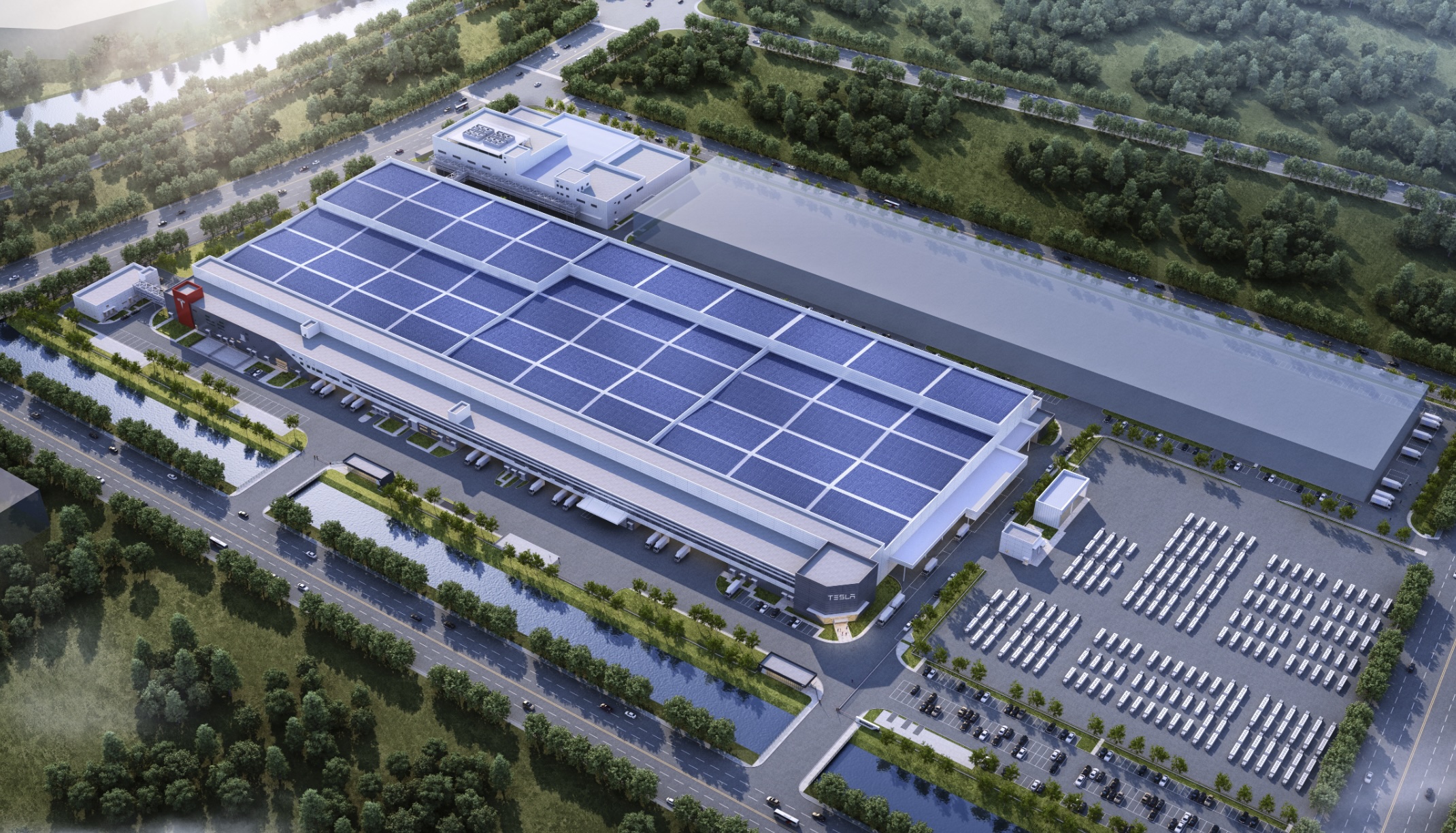
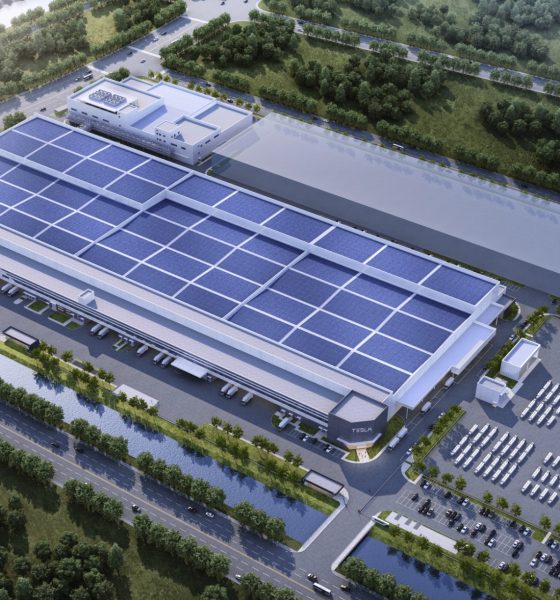

Construction on Tesla’s upcoming Megapack factory in China has been coming along quite quickly, with a new local update stating that the plant has now surpassed the halfway point.
Tesla has reached 60 percent completion on the construction of the Shanghai Megafactory, as reported on Saturday by local media outlet IT Home. The news comes as Tesla aims to start Megapack production in the first quarter of 2025, though it will take some time for the company to ramp up to volume production.
Eventually, the Shanghai Megafactory is expected to match the volume production of Tesla’s Lathrop, California plant, both of which are aiming to reach an annual output of around 40GWh or roughly 10,000 Megapack units per year. The Lathrop Megafactory has also been ramping up production over the past couple of years, especially as demand for Tesla’s grid-scale energy products has been growing.
Tesla Lathrop Megafactory helps energy business see 360% YoY growth
Although Tesla held a signing ceremony for the Shanghai Megafactory last December, building materials for the construction project only began arriving in March. Tesla officially broke ground on the project on May 23, and construction has been progressing at an impressive rate in the months since—not unlike how quickly the company constructed its nearby Gigafactory Shanghai.
Last month, Tesla was thought to have reached about 45 percent completion, showing off just how quickly the company’s latest factory build has been coming together since breaking ground in May. The Shanghai Megafactory site is located in the city’s Lingang New Area industrial park, with the plant taking up around 200,000 square meters (~656,168 sq. ft.) total.
In the second quarter, Tesla deployed 9.4 GWh of battery storage, marking a record-high for single-quarter energy deployments. The record followed 4.1 GWh of battery storage deployments in Q1, which also marked a 157 percent increase year over year. The growth of Tesla Energy follows suit with predictions from Elon Musk made last year, in which he said that energy sales growth would soon begin outpacing that of the company’s automotive business.
What are your thoughts? Let me know at zach@teslarati.com, find me on X at @zacharyvisconti, or send us tips at tips@teslarati.com.


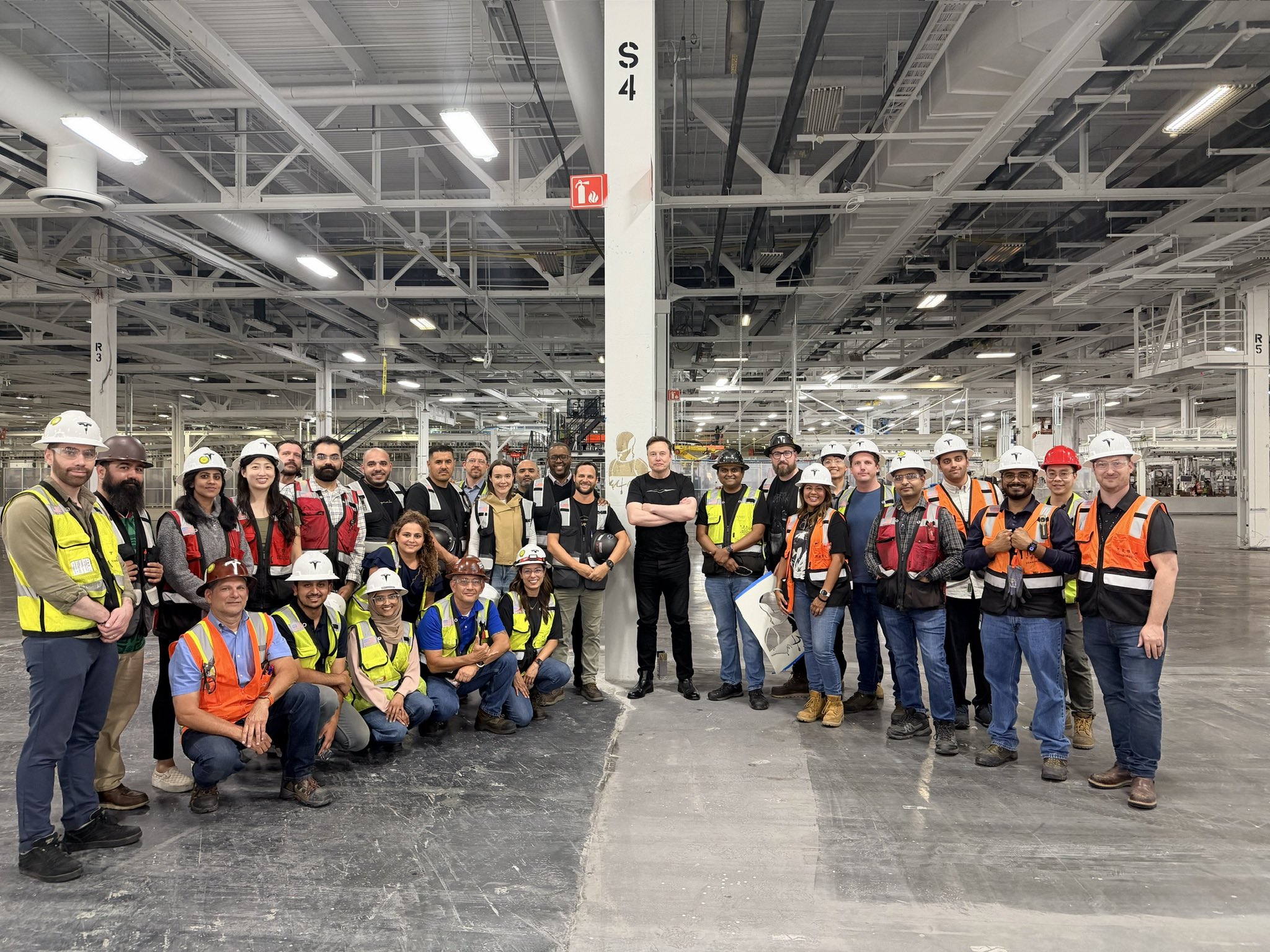
Tesla CEO Elon Musk posted a photo of himself standing with the Optimus production team inside Tesla’s Fremont factory, arms crossed amid workers in hard hats and safety vests. The image captures a pivotal industrial shift: the same facility space once dedicated to building Tesla’s flagship Model S sedan and Model X SUV is now home to the company’s humanoid robot manufacturing line.
Walking the Optimus production line in Fremont pic.twitter.com/ABS0tuRibW
— Elon Musk (@elonmusk) July 1, 2026
Tesla’s Fremont Factory, acquired in 2010 from the former NUMMI joint venture between Toyota and GM, has been the company’s original U.S. manufacturing hub since Model S production began in 2012.
The Model X followed soon thereafter. These premium vehicles offered lower annual volumes, recently around 30,000 combined, compared to the high-volume Model 3 and Model Y lines that continue around the site. Over their combined run, the S and X accounted for roughly 610,000 units.
In late January 2026, during Tesla’s Q4 2025 earnings call, Elon Musk announced the end of Model S and Model X production in Q2 2026. The final vehicles rolled off the line in early May. Rather than retooling for another vehicle, Tesla chose to convert the dedicated S/X assembly area into a dedicated Optimus Gen 3 production line.
Model 3 and Y manufacturing remains unaffected. Tesla’s official Fremont Factory page now lists Optimus alongside the 3 and Y as core products.
The conversion was executed with remarkable speed. After production stopped, crews dismantled the existing vehicle line and installed entirely new modular equipment—including lines sourced from Germany and dozens of sub-lines for actuators, batteries, and other components—in roughly four months.
Musk described the timeline as “insanely fast,” noting it would be unprecedented for any other manufacturer. Initial Optimus output is expected to ramp slowly due to the robot’s roughly 10,000 unique parts and the brand-new production processes involved. The Fremont line targets an eventual capacity of 1 million Optimus units per year.
Tesla isn’t joking about building Optimus at an industrial scale: Here we go
Optimus Development Timeline
- August 19, 2021: Optimus (then called Tesla Bot) formally announced at Tesla’s first AI Day. A concept video showed a person in a suit demonstrating the vision for a general-purpose humanoid capable of dangerous, repetitive, or boring tasks using the same AI architecture as Full Self-Driving.
- 2022: Early prototypes displayed. At the second AI Day in September, semi-functional units demonstrated walking across a stage and basic arm movements
- 2023: September videos showed improved capabilities, including sorting colored blocks, precise limb awareness, and holding a Yoda pose.
- 2024-early 2025: Factory integration videos showed Optimus navigating workspaces and handling objects like battery cells.
- January 2026: Gen 3 mass-production activities began at Fremont, with reports of over 1,000 Gen 3 units already operating inside the factory for real-world learning and AI training
- April 2026: Musk confirms Optimus production on converted Fremont line would begin in late July or August 2026. The Gen 3 reveal, originally eyed for Q1, was pushed closer to production start. A second, much larger Optimus factory at Giga Texas is under construction, with volume production targeted for Summer 2027 and long-term capacity of 10 million units annually
- July 1, 2026: Musk’s on-site visit and team photo confirm the Optimus line is operational and the transition is actively progressing
Tesla positions Optimus as potentially its largest project ever, leveraging vertical integration, AI expertise, and car-like manufacturing know-how to scale humanoid robots first for its own factories and later for broader industrial and consumer use.
The Fremont conversion serves as a critical proving ground for this ambitious new chapter in Tesla’s already-rich history.
Investor's Corner
Tesla gets its latest short from Michael Burry: ‘Happy it jumped back to this level’

Tesla short seller Michael Burry, the subject of the film “The Big Short,” where he was portrayed by Steve Carell, has revealed he has opened a new bet against the stock.
In a new update to his Substack newsletter in a post titled “Trading Post June 30, 2026,” Burry revealed a new set of bets against Tesla, Caterpillar, NVIDIA, Applied Materials Inc., and the iShares Semiconductor ETF.
In regard to Tesla, Burry wrote:
“And finally I shorted Tesla at 416.22. Happy it jumped back to this level.”
This means Burry likely opened his new short position after the company’s recent rally on Wall Street, which saw Tesla shares sink in mid-May, only to recover to well over the $400 mark. Currently, shares trade at around $427.
The company saw a big Tuesday as shares climbed considerably, over 10 percent. The size of the Tesla short was not provided, nor did Burry give any information on the position’s structure, the number of shares, dollar value, or whether options were used in the short.
The Tesla and SpaceX merger everyone is talking about is quietly building
Over the years, Burry has been one of the more vocal critics of Tesla, calling its share price “media inflated,” and saying it was “ridiculously overvalued” as recently as December.
The company has largely transitioned away from being known as an automotive company and instead is much more widely regarded as an AI play, mostly due to its Full Self-Driving efforts, Optimus robot development, and data collection related to both.
This has not pulled those skeptics away from being vocal about their distaste for how Tesla is valued, but there’s no denying that the company is a global force in many things, including sustainable energy, automotive, and AI.
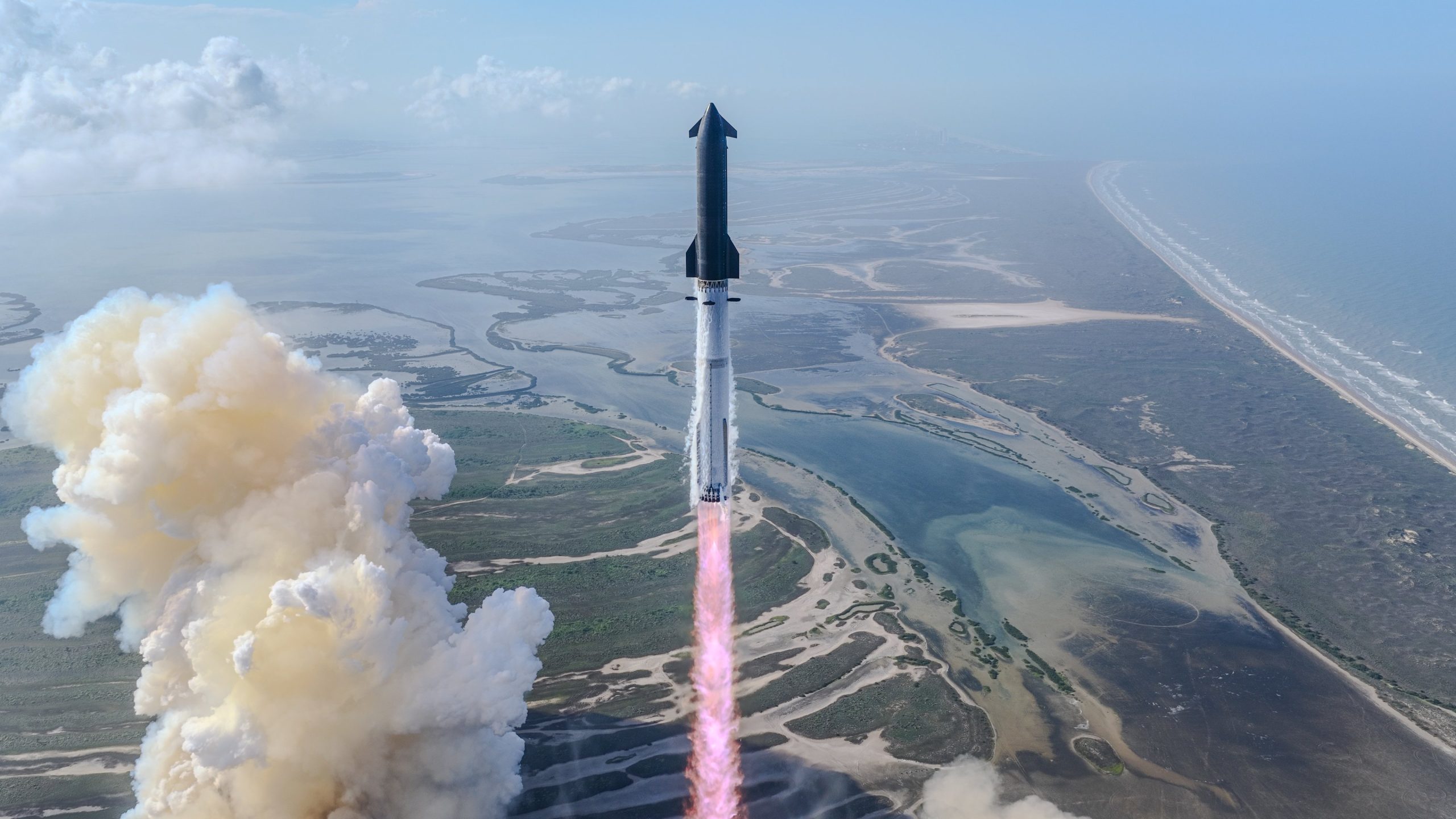
Wedbush Securities is initiating stock coverage on SpaceX (NASDAQ: SPCX), marking the first comments on the company since it went public several weeks ago. Wedbush and its analyst handling coverage, Dan Ives, are widely bullish on fellow Musk company Tesla (NASDAQ: TSLA).
Ives wrote his first note initiating coverage of SpaceX shares on Wednesday with a $190 price target and an ‘Outperform’ rating. The firm believes the company is well positioned off of its IPO because of its wide array of projects, including AI compute power and infrastructure, connectivity projects, and launches.
“We view SpaceX as one of the most differentiated assets within the tech market with a strong footprint across its three core markets, with Starlink driving success with connectivity,” Ives wrote, “Starship launches leading to a demand flywheel and increasing deal flow for its Colossus clusters.”
Elon Musk called it Epic: The full story of SpaceX’s Starship Flight 12
Wedbush leans heavily on Starlink, which they say is the “profitability driver given the strength of its recurring revenue base of ~12 million subscribers as of June 5th.” Ives believes Starlink is still in the “early innings” of penetrating the global telecommunications and broadband market, as it only holds less than a 1 percent share. However, this number is sure to increase over time.
It also highlights the importance of Starship, which it says is an “essential layer” of SpaceX’s overall success. SpaceX developing and displaying the ability to reuse rockets is a major cost and reliability advantage “as it reduces the necessary hardware launch costs while generating a feedback loop for future flights to improve their launch flight rate without accelerating capex spend.”
Finally, SpaceX’s recent AI/Compute projects are also very elementary, Ives writes. It is worth mentioning Wedbush said its $190 price target is derived from a valuation forecast that sees the company yielding roughly $2.48 trillion of implied enterprise value.
There are also some factors that Wedbush did not take into account with its initial coverage. The firm wrote in the note:
“We note that there is optional value coming from Starship’s accelerating scale towards sub-$200/kg unit economics, orbital data centers, and enterprise AI monetization as these factors could drive meaningful upside but these face major hurdles, so we do not take that into account with our valuation.”
SpaceX shares are down just over 2 percent today, trading at around $167 at the time of publication.

Tesla Optimus project fires up as Musk sees production line progress

Tesla gets its latest short from Michael Burry: ‘Happy it jumped back to this level’


