News
Tesla reduces Model S, X and Model 3 deposit to just $100, but there’s a catch

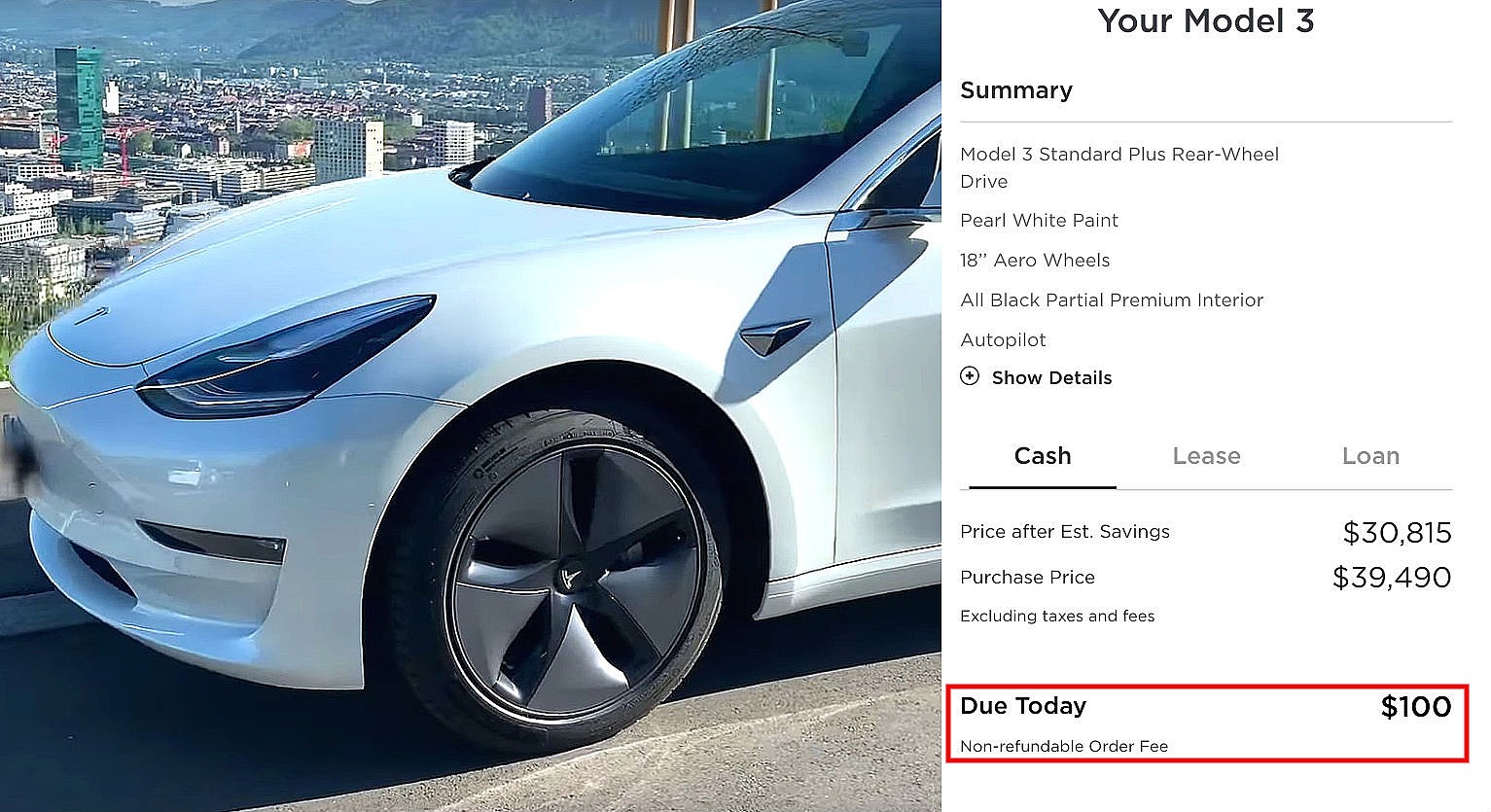
American electric car manufacturer Tesla has lowered the required deposit for its lineup of vehicles. A look at Tesla’s order page for the Model 3, Model S, and Model X, reveals that the company is only requiring a $100 non-refundable deposit from customers who wish to place an order for its electric cars.
This makes the company’s entire electric vehicle lineup more attainable for buyers due to its smaller deposit. However, it comes with a catch. Unlike its previous setup, which required a fully-refundable deposit of $2,500, the recently updated $100 deposit is non-refundable. This means the buyer will only have to pay the $100 deposit, along with taxes and fees at the time of ordering, but they would have to waive their $100 if they choose to cancel their order.
Orders can be accomplished through a credit card, or through Apple Pay, an option CEO Elon Musk rolled out in order to make it more convenient for Apple users to purchase Tesla’s products.
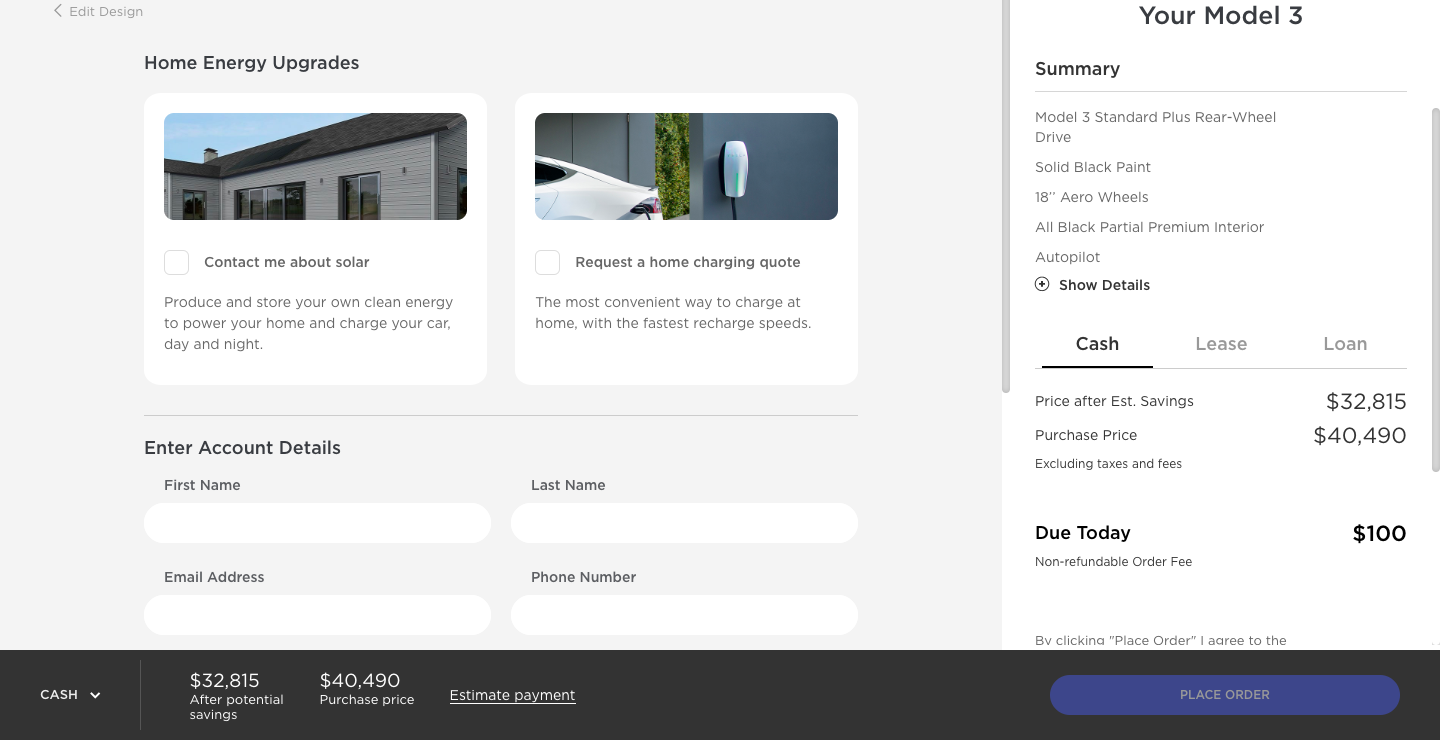
Apart from the reduced deposit, Tesla has also adopted some changes to its vehicle pricing. The Tesla Model 3 Standard Range Plus has increased in price by $500, from $38,990 to $39,490. Tesla has also raised the price of its Solid Black paint option from $750 to $1,000.
Solid Black was initially the standard color option until Elon Musk announced in July that the Silicon Valley-based car manufacturer would be changing its default color to white. Musk noted then that Solid Black would cost $1,000 after the change, but after the default color was shifted to white, Solid Black was priced at $750 instead.
-
- Tesla’s updated Model 3 order page. (Credit: Tesla)
-
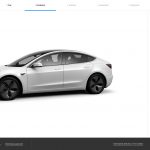
- Tesla’s updated Model 3 order page. (Credit: Tesla)
-
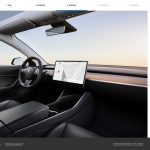
- Tesla’s updated Model 3 order page. (Credit: Tesla)
-
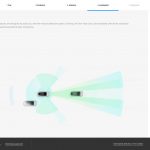
- Tesla’s updated Model 3 order page. (Credit: Tesla)
Tesla’s updated Model 3 order page. (Credit: Tesla)
Currently, the included color option is still the “Pearl White Multi-Coat,” an option the Tesla community seems to enjoy, as it is visibly more attractive than the planned “Simple White” due to its shine. White-colored cars have the reputation of hiding scratches in a more discrete fashion than darker colored cars. However, black cars have advantages as well, as they hide normal, everyday imperfections and residue accumulated from the weather. Pollen and dirt are a great example.
The modifications to pricing will make prospective Tesla owners excited about the decrease in deposit cost, but the upcharge for the Solid Black paint may eventually begin to make the popularity of White Pearl Multi-Coat vehicles even more popular. While the $250 increase is minimal, it may be enough to sway some buyers into purchasing their new all-electric vehicle in its default color.


News
Tesla Full Self-Driving v14.3 rolls out: here’s what’s new
We are in EAP and will be on the road with v14.3 in the coming hours, so we’ll have a lot of things to discuss over the next few days, especially coming from v14.2.2.5, which I called the most “confusing” FSD release of all time.
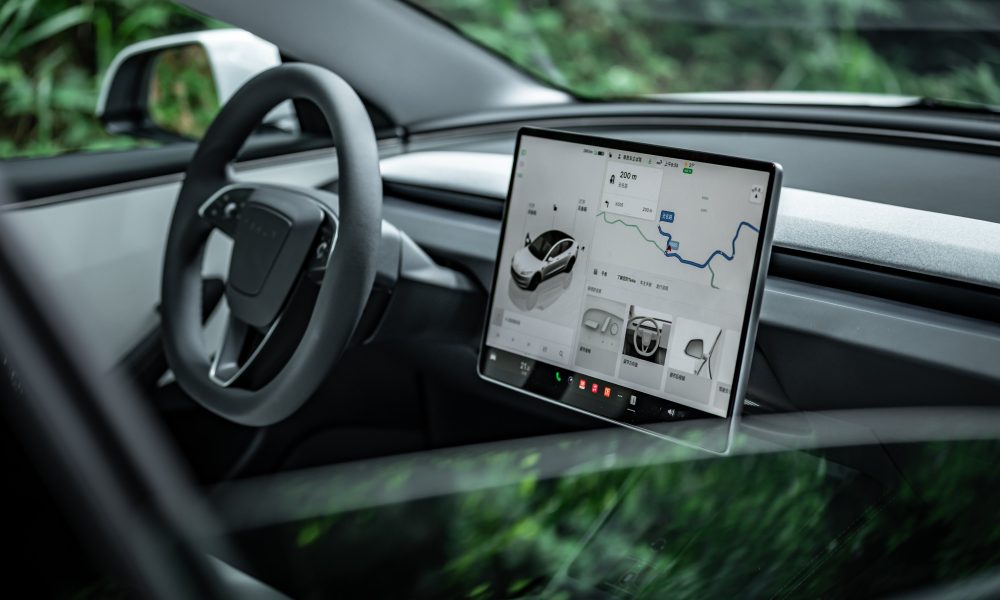
Tesla has officially started rolling out Full Self-Driving v14.3 to Early Access Program (EAP) members, and there are a lot of new improvements.
We are in EAP and will be on the road with v14.3 in the coming hours, so we’ll have a lot of things to discuss over the next few days, especially coming from v14.2.2.5, which I called the most “confusing” FSD release of all time.
🚨 Tesla Full Self-Driving v14.3 is here and it is coming with so many new features
Looks like there will be some MAJOR improvements to the general performance.
Truly seems like it will be significantly different than v14.2 pic.twitter.com/mhdfBLuDup
— TESLARATI (@Teslarati) April 7, 2026
Tesla brought out a lot of improvements, according to the v14.3 release notes, which list a vast number of fixes, new features, and new capabilities.
Here’s what Tesla’s release notes for the v14.3 release state:
- Improved parking location pin prediction, now shown on a map with a P icon.
- Increased decisiveness of parking spot selection and maneuvering.
- Rewrote the Al compiler and runtime from the ground up with MLIR, resulting in 20% faster reaction time and improving model iteration speed.
- Enhanced response to emergency vehicles, school buses, right-of-way violators, and other rare vehicles.
- Mitigated unnecessary lane biasing and minor tailgating behaviors.
- Improved handling of small animals by focusing RL training on harder examples and adding rewards for better proactive safety.
- Improved traffic light handling at complex intersections with compound lights, curved roads, and yellow light stopping – driven by training on hard RL examples sourced from the Tesla fleet.
- Upgraded the Reinforcement Learning (RL) stage of training the FSD neural network, resulting in improvements in a wide variety of driving scenarios.
- Upgraded the neural network vision encoder, improving understanding in rare and low-visibility scenarios, strengthening 3D geometry understanding, and expanding traffic sign understanding.
- Improved handling for rare and unusual objects extending, hanging, or leaning into the vehicle path by sourcing infrequent events from the fleet.
- Improved handling of temporary system degradations by maintaining control and automatically recovering without driver intervention, reducing unnecessary disengagements.
Tesla also listed a handful of future improvements as well:
- Expand reasoning to all behaviors beyond destination handling
- Add pothole avoidance
- Improve driver monitoring system sensitivity with better eye gaze tracking, eye wear handling, and higher accuracy in variable lighting situations
CEO Elon Musk has said that v14.3 could be “where the last big piece of the puzzle finally lands.” We have high expectations for this release because, in a lot of ways, v14.2’s final version was extremely disappointing and seemed to be a regression more than anything.
Nevertheless, Full Self-Driving v14.3 is going to be quite an interesting test, considering this is also the first time Musk has stated it will feel like the car will be “sentient.”
Reasoning will be a bigger piece of the puzzle with this release, although there were some elements of it in v14.2.
Tesla AI Head says future FSD feature has already partially shipped
We plan to travel plenty of miles with it over the next few days, so we’ll keep you posted on what our thoughts are.
News
Tesla Model Y ownership review after six months: What I love and what I don’t
I pay about $25 more a month than I did for my Bronco Sport for my Tesla. It was a no-brainer to switch. Like any car, it isn’t perfect, but my Tesla has more things right than any other car I’ve owned, and that makes it truly incredible.
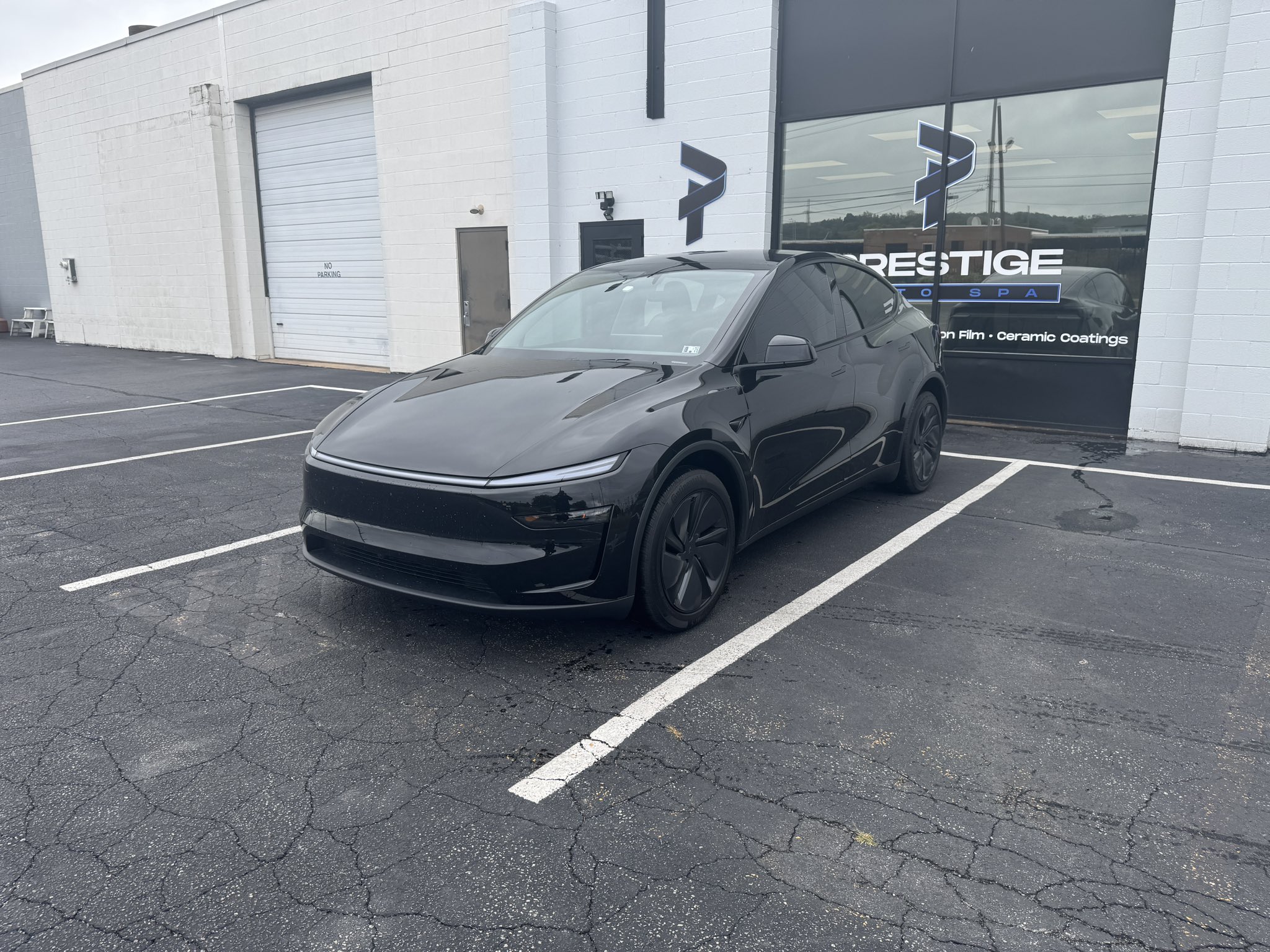
It has been just over six months since I took delivery of my Diamond Black Tesla Model Y Premium Long Range (at that time, it was called the Tesla Model Y Long Range All-Wheel-Drive).
In those six months, I have had the opportunity to experience true and pure electric vehicle ownership, what comes with it after driving a gas vehicle for my entire life, and, to be completely frank, there are not many things I would change.
My brand new ride! Thank you @tesla @elonmusk for building one badass car
Officially a battery boy pic.twitter.com/jzpMawmTZs
— Joey Klender (@KlenderJoey) August 30, 2025
Owning a Tesla was something I never thought I’d do until I owned a house, simply to take advantage of the advantage of home charging. However, I had to take the chance last year with the elimination of the $7,500 electric vehicle tax credit, as well as to avoid the mountainous stack of repair bills that were presenting themselves with my Ford Bronco Sport.
There are a lot of things I love about my Model Y, and there are a handful of things I wish I could change. In this piece, I plan to break down the ownership experience through about six months with my Tesla Model Y, hoping to provide you with enough insight to potentially make a change — or stick with what you have.
Things I Love About My Tesla Model Y
Driving Experience
Tesla really pushes Full Self-Driving and autonomy, but there are times that, as an owner, I feel I need to drive this car manually. Tesla put so much effort into the Model Y’s engineering and driving experience that it feels like a bit of a disservice to have it drive itself around all the time.
The suspension in this vehicle, as well as its ability to handle sharp corners, its quick acceleration, and its ability to hug the road at spirited speeds, is truly something you need to feel for yourself. I personally have never had a car that was truly geared toward driving this way. Other than a short-lived ownership experience with a Honda Civic a few years back (something I won’t ever do again), all of my vehicles have been SUVs or compact crossovers.
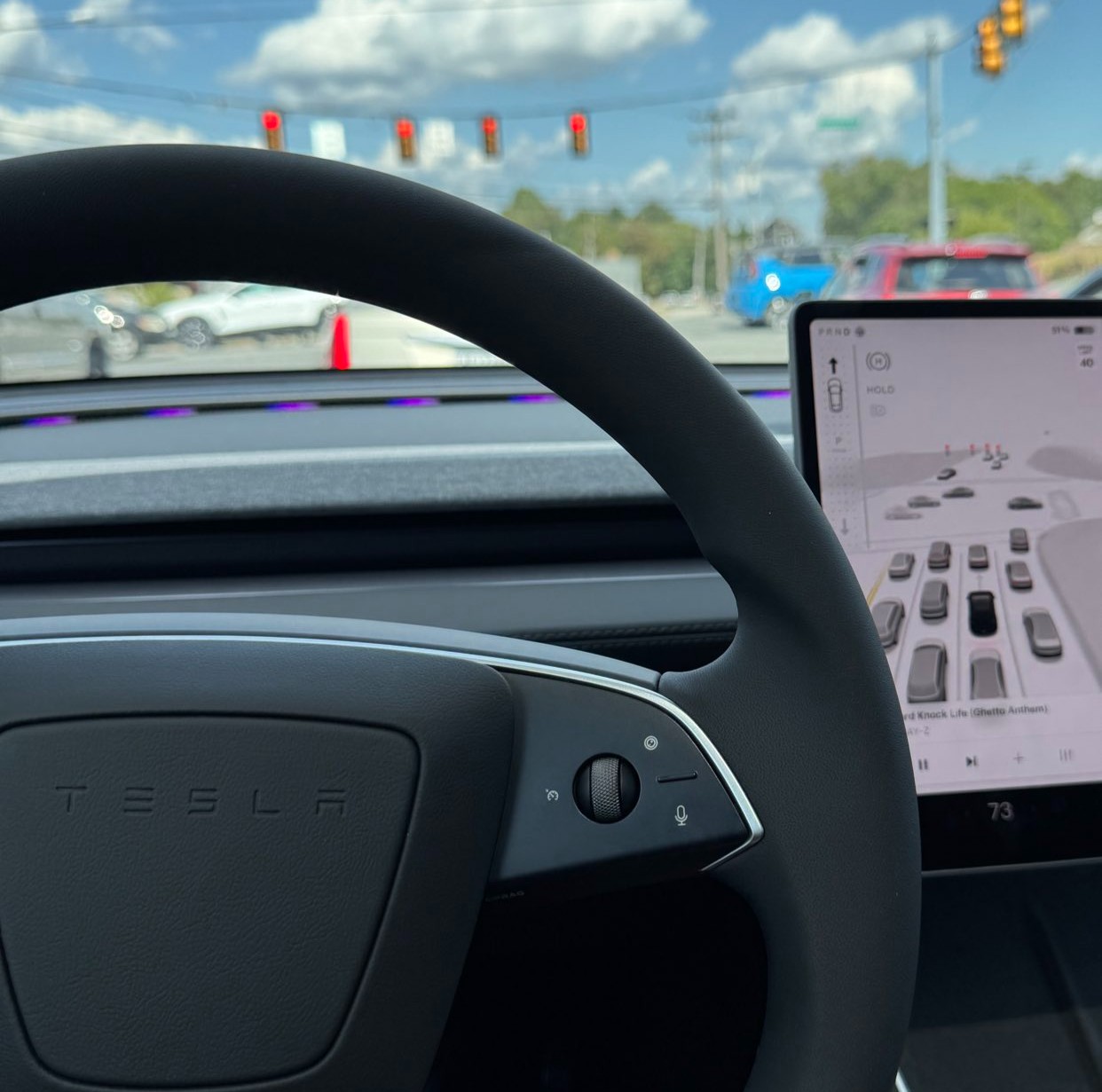
Credit: Joey Klender
Having a car that offers both a fun driving experience and cargo space is what the Model Y truly is all about. It’s a fun car to drive, but it also has a lot of functionality.
It is always a treat when it’s a little warmer out, I can roll the windows down, and take my Model Y to a tight back road in Pennsylvania to have some fun. I have never loved driving in the traditional sense. I don’t hate it, but it’s not necessarily “fun” to me, but that’s probably because I never had a car that was engineered to make the driving experience enjoyable.
This has truly changed my perspective on driving, and the Model Y is probably the second-most-fun car I’ve ever had the pleasure of driving. The first? The Tesla Model S.
Home Charging and Supercharging
Now, Home Charging is relatively new to me, and I covered my process for figuring that out in another article, which is linked here.
https://t.co/zJRwyQDcDE pic.twitter.com/AIhp21omh8
— TESLARATI (@Teslarati) March 15, 2026
Waking up in the morning and having some additional range is really a great feeling — and with gas prices going through the stratosphere, the money I’m saving on gas is something quite special.
Supercharging is also a fun experience for me. Do I wish it were a faster experience? Sure. But there’s plenty to do in the car: Netflix, Hulu, Tesla Arcade, or head into whatever convenience store is nearby, use the restroom, and grab a bite to eat.
I have come to enjoy the evenings that I’ll head over to the Supercharger and plug my car in for half an hour before a longer drive the next day (if I didn’t plug in soon enough at home and need some fast-charging).
Tesla also added a new Supercharging “Wrapped” feature at the end of the year, gamifying the entire Supercharging experience. I’m excited to see all the places I’ve charged at the end of 2026.
Sporty, Clean, and Fun Interior
The interior of my Tesla is probably one of the most underrated features of my car, but it’s definitely my favorite. With vehicles I’ve purchased in the past, the big selling point is the inside for me, not the outside. Of course, I want my car to look good to others, but ultimately, I’m paying the payment and I’m spending 100% of the time I’m using the car on the inside of it.
…and I thought mine was bad https://t.co/xysshGcp2A pic.twitter.com/bsimX94DYH
— TESLARATI (@Teslarati) February 22, 2026
This highlights the need for a comfy, cozy, and capable cabin that has all the features I could want. In Pennsylvania, we have cold winters and hot and humid summers. The Model Y has heated seats and a steering wheel, as well as A/C seats. The HVAC is incredibly capable, customizable, and comfortable for all passengers, allowing them to make adjustments wherever needed.
At night, the black interior coupled with the accent lighting makes for one of the coolest, spaceship-like interiors on the market. Tesla always called it a “Rave Cave,” and it truly feels like it.
Tech: From Full Self-Driving to Other Features
Tech is really the biggest part of owning a Tesla; it is so advanced that it almost feels like it’s not even a car. Full Self-Driving is obviously such a huge advantage, and I’ve talked about it in great detail, both positively and negatively.
I could write 1,000 words on FSD, but I don’t want to focus on it solely, because there are so many other things that need to be highlighted.
One thing Tesla really has over others is the ability to improve its cars continually. Simple features like a charging adjustment, new modes, or activating features that weren’t quite ready previously are all things Tesla has added through Over-the-Air updates.
I don’t know if I could pick just one as a favorite, but in the six months I’ve had my car, the most useful thing I’ve come across outside of FSD is Summon. While it is hit or miss a lot of the time, there are little features, like moving the car forward or back from the Tesla App, that are incredibly useful. Adjusting a park job, making snow shoveling around the car easier, or even moving the car slightly when I’m taking photos or video is incredibly seamless with this functionality.
Cargo and Interior Space
One of my big concerns when going from a Bronco Sport to a Model Y was cargo space, only to find out the Model Y has more space than the Bronco Sport. I always have something in the trunk, whether it is luggage, my golf bag, shoes, or groceries. I’ve never felt like I’ve needed more space in this car, although I’m sure that day will come when I get the boys together for a golf trip and I am driving.
I’ve packed luggage for my Fiancèe and a few of her friends on a trip to Disney with no issues. Four girls going to Disney for five days is a challenge that will frighten even the most capable vehicles. I had no issues.
But what is also great about the Model Y is that it has the room to do other things, like fit an entire mattress for camping. SNUUZU makes an amazing Tesla mattress that I have thrown in the car to watch sunsets. This Summer, I’ll do some camping with it.
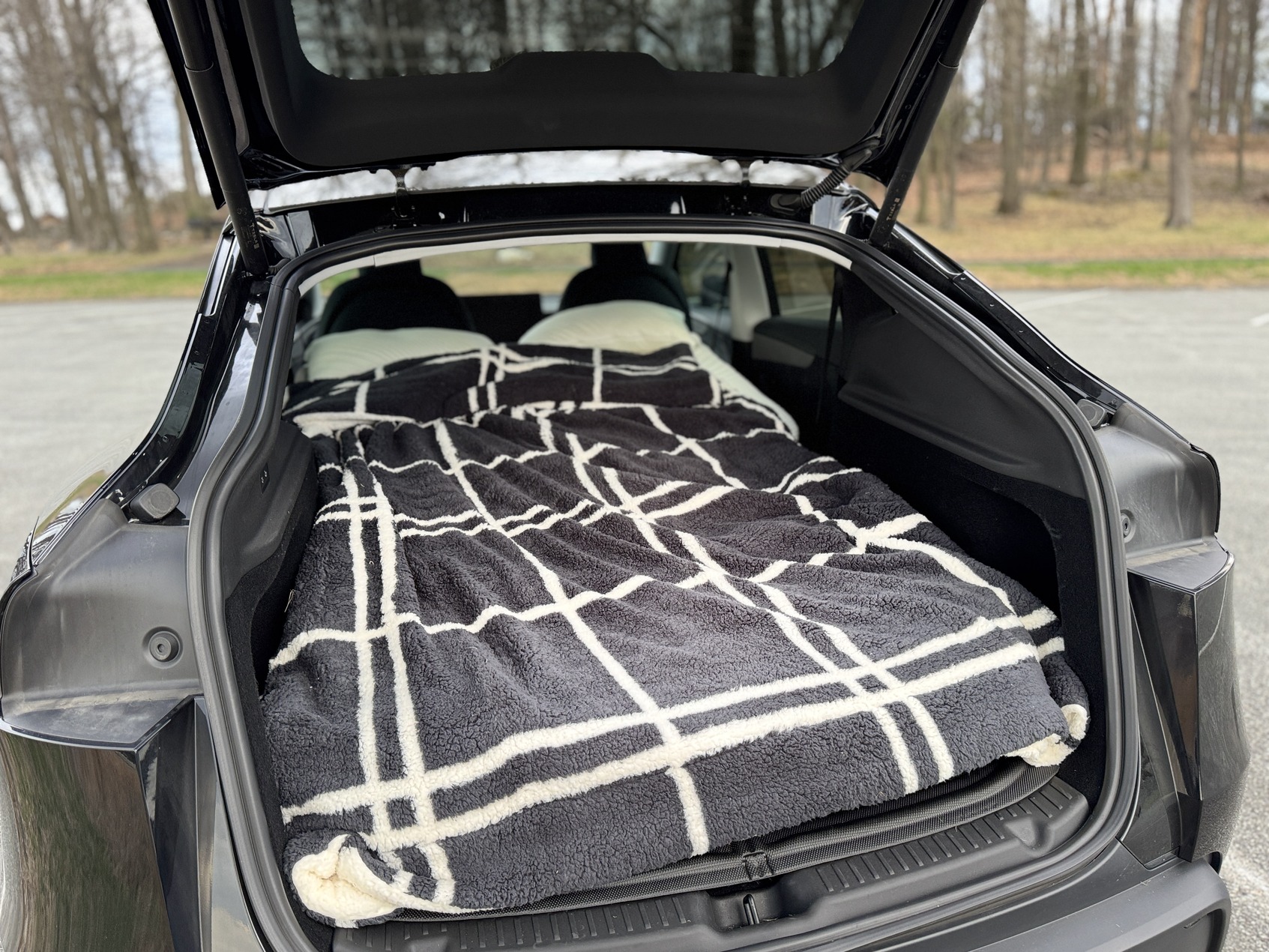
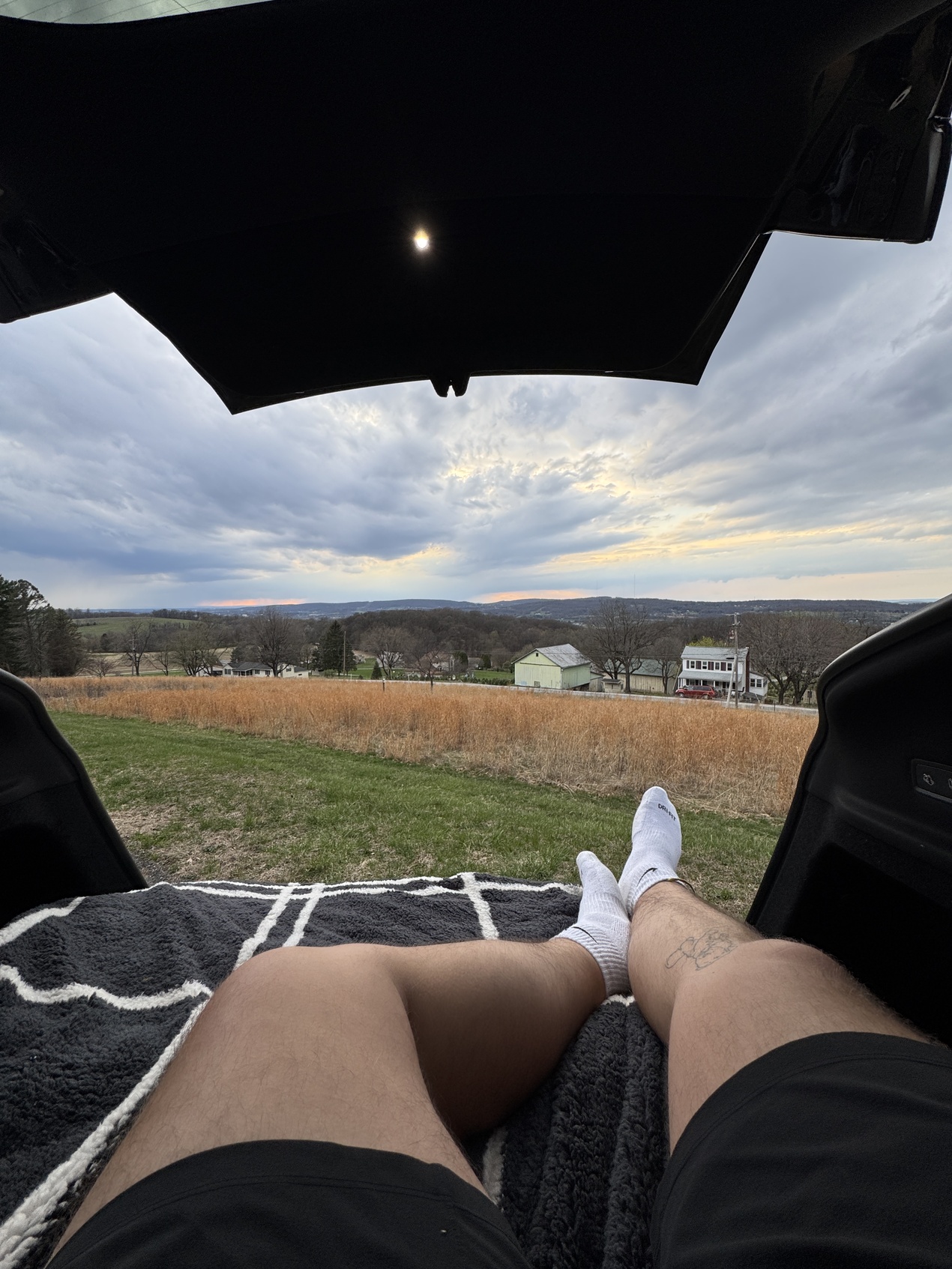
It’s one of the many things about this car that I really love.
Things About My Tesla Model Y I Do Not Love
Winter Range
There’s no getting around the fact that owning this car without a faster charging option at home in the winter is truly frustrating. I was charging much more frequently in January and February than in any other month.
I took a 40-mile round-trip drive to grab some hot wings with friends in January. It took about 105 miles of range.
The cold weather was truly a frustrating time to own an EV, and my problems would have been solved with a Level 2 charger at home. Even still, the drives that were a few hours long were going to be fit with 10-15 minute stops to grab some range at a Supercharger.
Navigation
I really think that Tesla could have the best navigation out there. They always talk about licensing FSD, but if they were to license their Navigation software, I think it could overtake Apple Maps, Waze, and others. With a weather radar, live traffic updates, satellite imagery, and more, the Navigation system is truly the best around.
I’m just going to say it and I know I’ll get some hate for it, but v14.2.2.5 is the worst FSD release since v14.
Constantly in the wrong lane, a lot of weird maneuvers, so many additional nav errors, routing, speed control, parking, and that’s just to name a few.
v14.3 cannot…
— TESLARATI (@Teslarati) March 30, 2026
However, the Navigation itself, meaning the routing, is absolutely abysmal. It doesn’t learn from mistakes, it doesn’t learn more ideal routing, and it doesn’t seem to improve at any point. It still tries to leave my neighborhood by turning left out of a right-turn-only exit. It routinely takes some of the most head-scratching routes to local destinations.
Consistently using the FSD disengage feature to report the problems to Tesla’s AI Team doesn’t seem to yield much of a result. It would be great if there were a “Learn” mode so that it could be less on Tesla to refine things, and the car would just learn automatically.
Cup Holders
This is a really trivial and nitpicky point of criticism, but boy, do these cupholders need to be larger. Many of my reusable water bottles do not fit in them, so I had to grab a $25 cup holder “adapter” from Amazon. It obstructs the center console from opening comfortably, but it is what it is. It fits standard cups, soft drink containers from fast food restaurants, and bottles of water, at least for the most part.
It would be nice if Tesla could think about something for the next Model Y refresh here, although I may be the only one to really complain about them.
Final Thoughts
I pay about $25 more a month than I did for my Bronco Sport for my Tesla. It was a no-brainer to switch. Like any car, it isn’t perfect, but my Tesla has more things right than any other car I’ve owned, and that makes it truly incredible.
Sometimes I am still baffled that this is my car. It feels crazy to drive something that is so far ahead of any other car I’ve driven. Three of my friends own Teslas now, all of us bought them at the same time last year, and all four of us don’t know if we’d ever consider going back.
🚨 Tesla Model Y 6 Month Ownership Review:
What I Love:
✅ Driving Experience
✅ Simplicity
✅ FSD
✅ Constant Improvement via OTA UpdatesWhat I Don’t Love:
🛑 Range in the Winter
🛑 When people who don’t pay my car payment tell me I shouldn’t own a Tesla pic.twitter.com/0zuI04iQMX— TESLARATI (@Teslarati) April 3, 2026
Elon Musk
Elon Musk’s Terafab project locks up massive new partner
Terafab, first revealed by Musk in March, is a massive joint-venture semiconductor complex planned for the North Campus of Giga Texas in Austin.
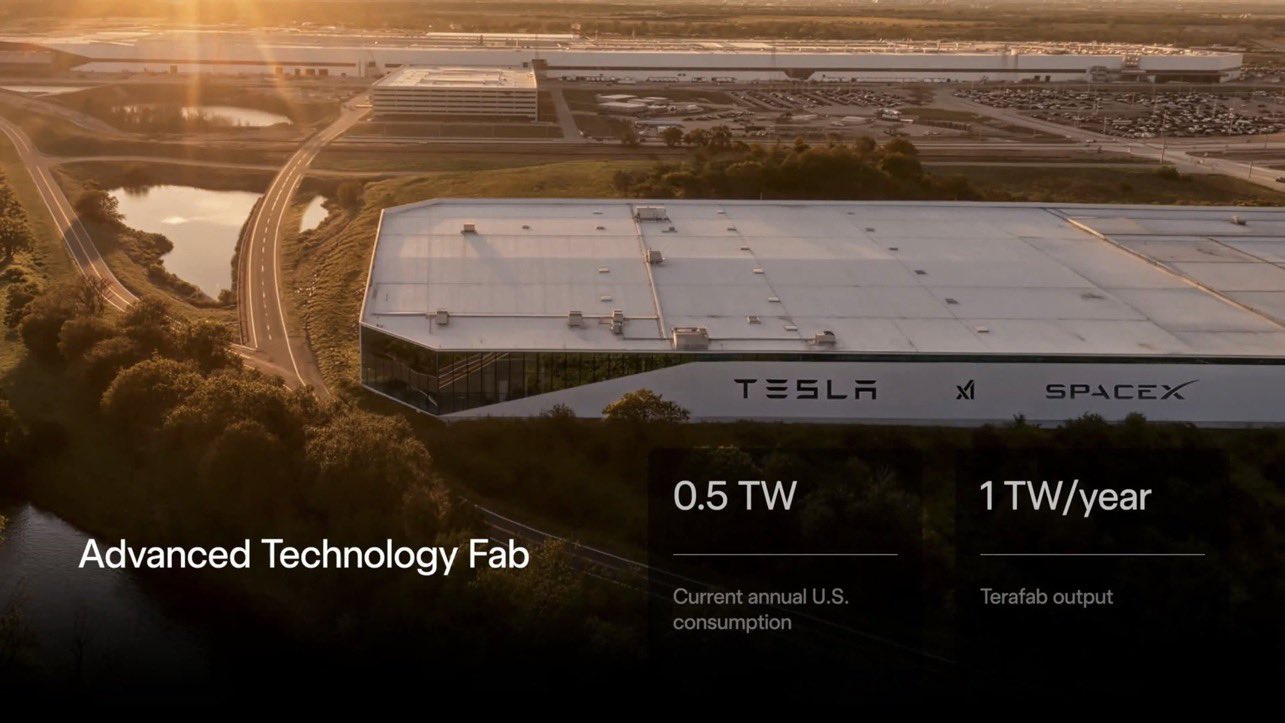
Elon Musk’s Terafab project just locked up a massive new partner, just weeks after the new project was announced by Tesla, SpaceX, and xAI, the three companies that will be direct benefactors from it.
In a landmark announcement on April 7, Intel joined Elon Musk’s Terafab project as a key partner alongside Tesla, SpaceX, and xAI. The collaboration focuses on refactoring silicon fabrication technology to deliver ultra-high-performance chips at unprecedented scale.
Intel CEO Lip-Bu Tan hosted Musk at Intel facilities the prior weekend, underscoring the partnership’s momentum with a public handshake.
Intel is proud to join the Terafab project with @SpaceX, @xAI, and @Tesla to help refactor silicon fab technology.
Our ability to design, fabricate, and package ultra-high-performance chips at scale will help accelerate Terafab’s aim to produce 1 TW/year of compute to power… pic.twitter.com/2vUmXn0YhH
— Intel (@intel) April 7, 2026
Terafab, first revealed by Musk in March, is a massive joint-venture semiconductor complex planned for the North Campus of Giga Texas in Austin. Valued at $20–25 billion, it aims to consolidate the entire chip-making pipeline, design, fabrication, memory production, and advanced packaging in a single location. It should eliminate a majority of Tesla’s dependence on third-party chip fab companies.
The facility will manufacture two primary chip types: energy-efficient edge-inference processors optimized for Tesla’s Full Self-Driving (FSD) systems, Cybercab and Robotaxi, and Optimus humanoid robots, and high-power, radiation-hardened variants for SpaceX satellites and xAI’s orbital data centers.
Elon Musk launches TERAFAB: The $25B Tesla-SpaceXAI chip factory that will rewire the AI industry
The project’s audacious goal is to produce 1 terawatt (TW) of annual compute capacity, roughly 50 times current global AI chip output.
Production is expected to begin modestly and scale rapidly, addressing Musk’s warning that chip supply could soon become the biggest constraint on Tesla, SpaceX, and xAI growth. By vertically integrating manufacturing tailored to their exact needs, Terafab eliminates supply-chain bottlenecks and accelerates iteration for AI training, inference at the edge, and space-based computing.
Intel’s participation is strategically vital. The company will contribute expertise in advanced process technology, high-volume fabrication, and packaging to help Terafab achieve its aggressive targets. For Intel, the deal strengthens its foundry business and positions it as a critical U.S. player in the AI hardware race.
For Musk’s ecosystem, it secures domestic, purpose-built silicon at a time when global capacity meets only a fraction of projected demand for hundreds of millions of robots and orbital AI infrastructure.
This is the latest chapter in Intel-Tesla ties. In November 2025, Musk publicly stated at Tesla’s shareholder meeting that partnering with Intel on AI5 chips was “worth having discussions,” amid concerns about TSMC and Samsung capacity.
Exploratory talks followed, with Intel eyeing custom-AI opportunities. The Terafab integration transforms those conversations into concrete collaboration.
The Intel-Terafab alliance carries broader implications. It bolsters U.S. semiconductor sovereignty, drives innovation in cost- and power-efficient AI silicon, and supports Musk’s vision of exponential progress in autonomy, robotics, and space.
As AI compute demand surges, this partnership could reshape the industry, delivering the silicon backbone for a new era of intelligent machines on Earth and beyond.

Tesla Full Self-Driving v14.3 rolls out: here’s what’s new

Tesla Model Y ownership review after six months: What I love and what I don’t


